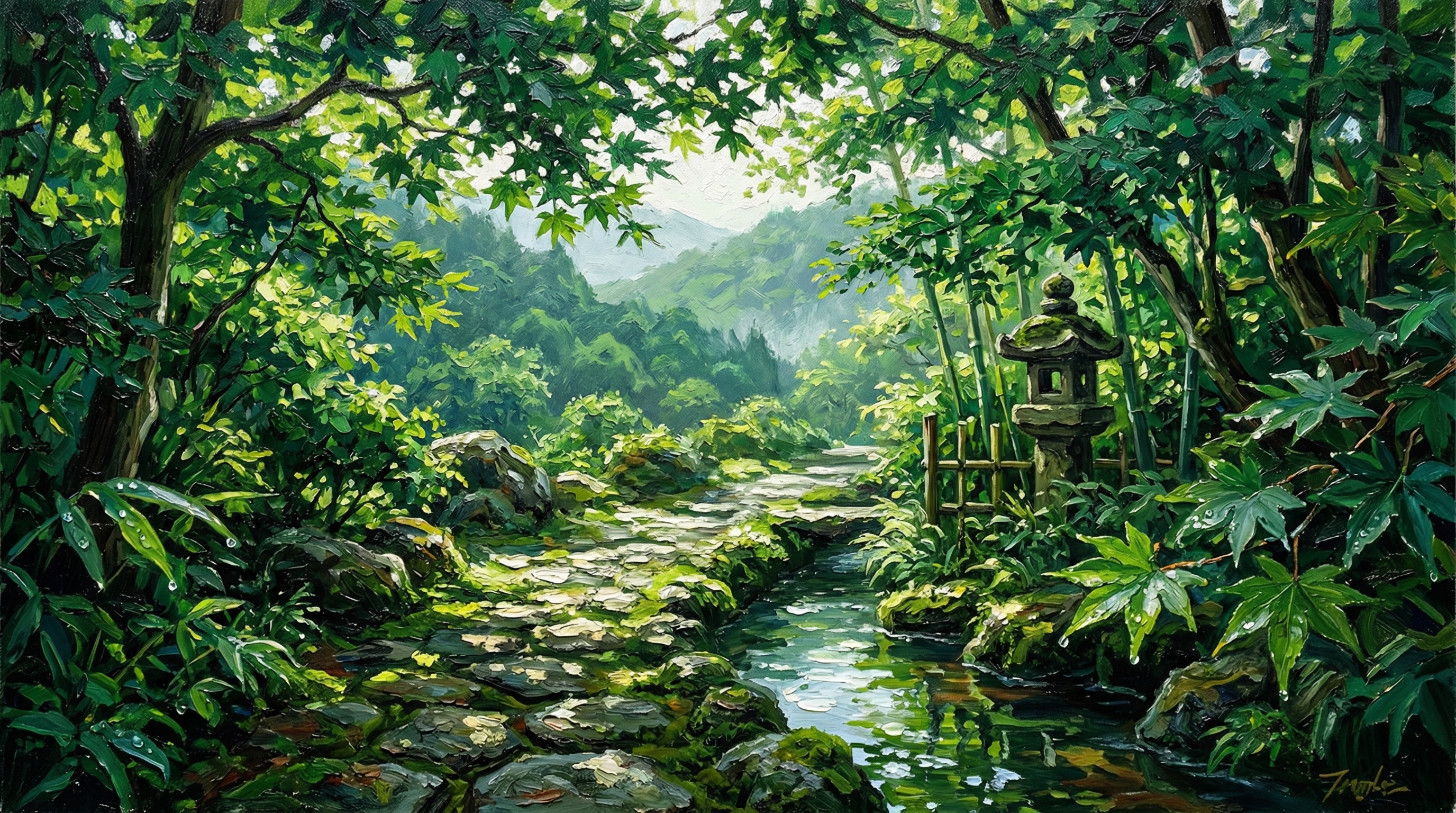
The Silent Lantern in the Emerald Woods
Critique
1. Introduction This oil painting presents a tranquil and atmospheric scene of a stone-paved path winding through a lush, verdant forest. The central focus is a traditional Japanese stone lantern, or toro, which stands as a silent sentinel among the dense foliage. Through its masterful use of green tones and textural depth, the work invites the viewer into a space of meditative silence and natural beauty, capturing the essence of a hidden woodland sanctuary. 2. Description The stone path, rendered in shades of grey and mossy green, leads the eye from the lower left toward a misty, sunlit opening in the background. On the right, a weathered stone lantern is nestled among broad maple leaves and slender bamboo stalks. A small, clear stream flows alongside the path, its surface dotted with reflections of the overhanging canopy. The entire scene is framed by layers of vibrant green maple leaves, some of which appear to have fresh dewdrops on their surfaces. 3. Analysis The artist utilizes a heavy impasto technique, particularly in the rendering of the moss-covered stones and the dense clusters of leaves, giving the painting a rich, three-dimensional quality. The composition is expertly framed by the foliage at the top and sides, creating a "window" effect that enhances the sense of immersion. The color palette is almost entirely composed of varied greens, ranging from deep, shadowed emerald to bright, translucent lime, which together create a complex and realistic representation of forest light. 4. Interpretation and Evaluation The painting evokes a sense of spiritual peace, suggesting a landscape that is both physical and symbolic of an inner journey. The stone lantern serves as a bridge between the man-made and the natural, pointing toward a path of enlightenment or reflection. Technically, the artist demonstrates exceptional skill in managing a monochromatic palette without sacrificing detail or spatial clarity. The balance of light and shadow is particularly effective in suggesting the humid, cool atmosphere of a deep mountain forest. 5. Conclusion A viewer is initially drawn to the work by its overwhelming sense of calm and the beauty of its lush, green environment. Closer examination reveals the subtle interplay of textures and the careful arrangement of symbolic elements like the lantern and the path. This transition from a general feeling of serenity to a deeper understanding of the forest’s quiet complexity is the painting’s primary success. Ultimately, the work stands as a powerful and evocative tribute to the timeless, restorative power of nature.
Same Subcategory
 Quietude in White: The Frozen Pulse of the Garden
Similar Artworks
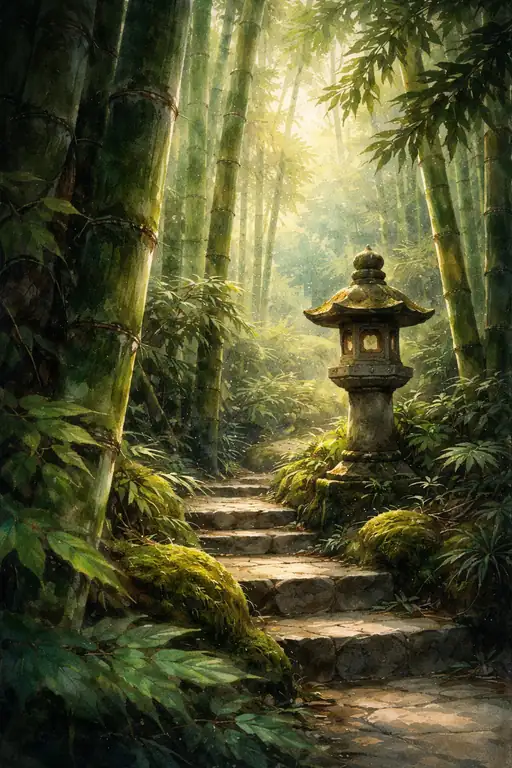 Mystic Light in the Bamboo Path
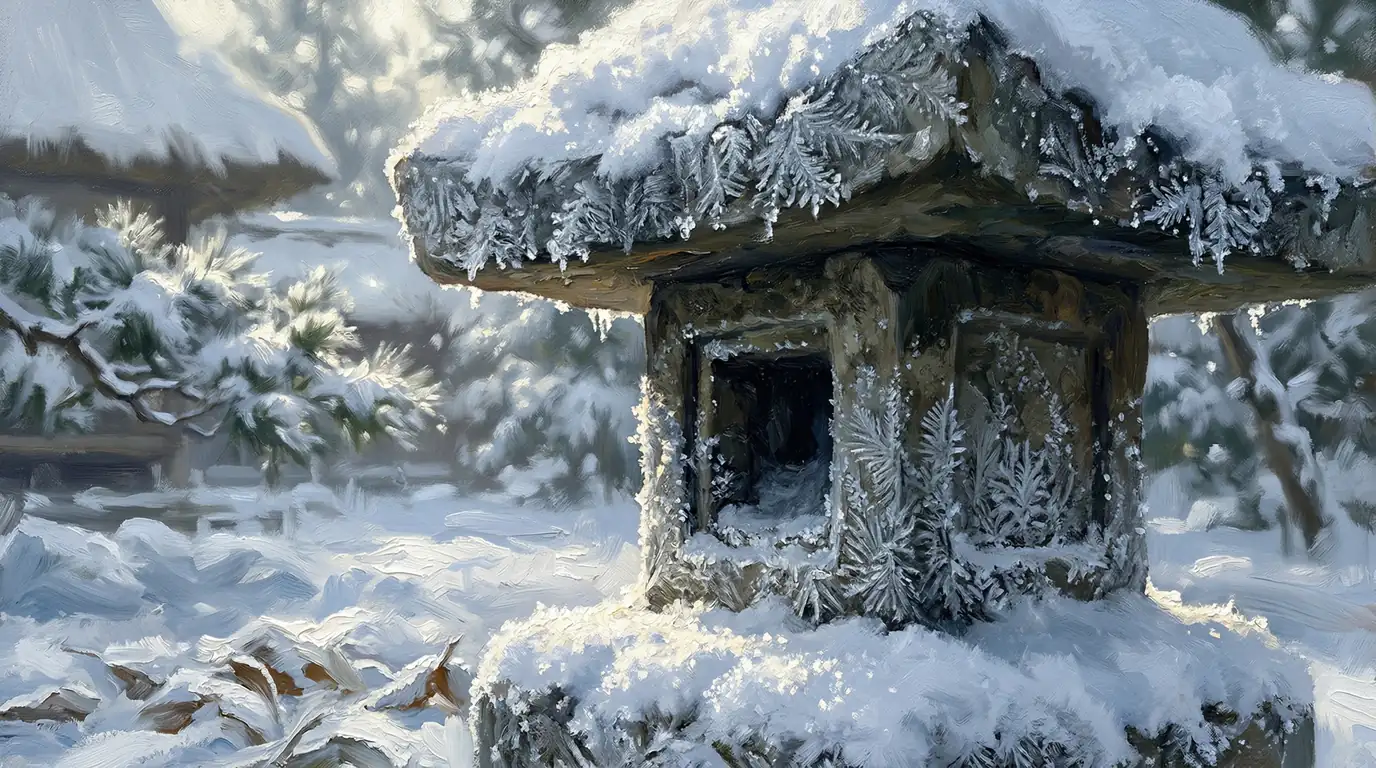 Whispers in the White Silence
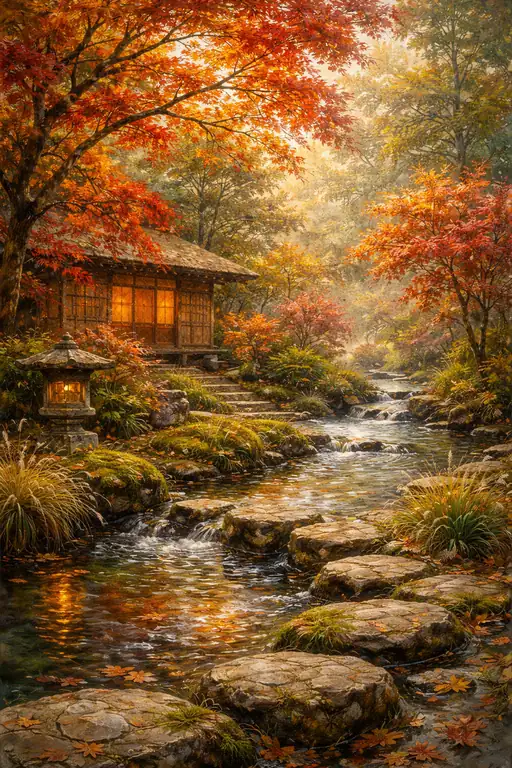 Crimson Leaves of the Old Garden
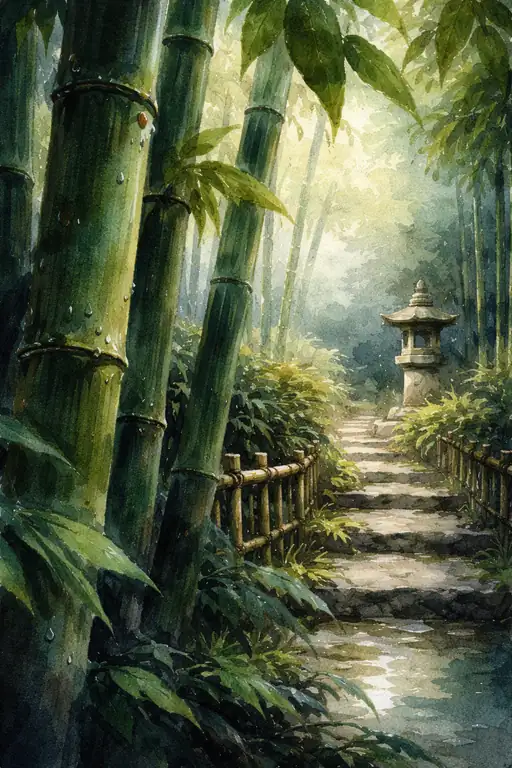 Sunlight Dancing on the Bamboo Path
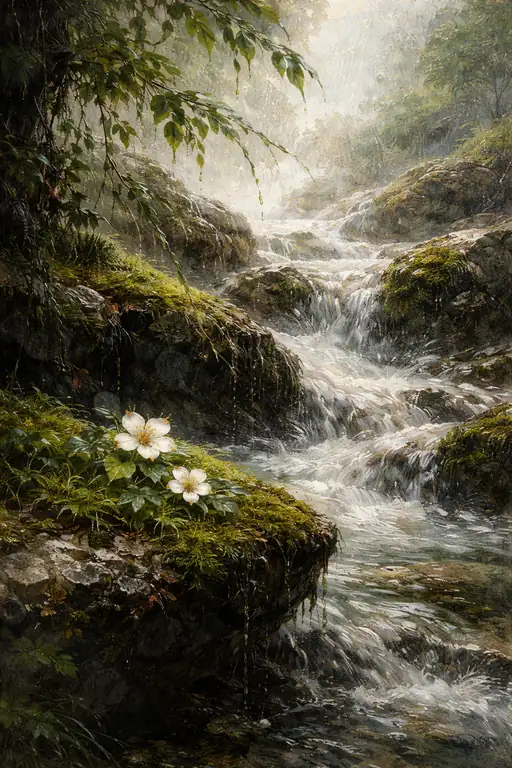 Whispers of the Hidden Waterfall
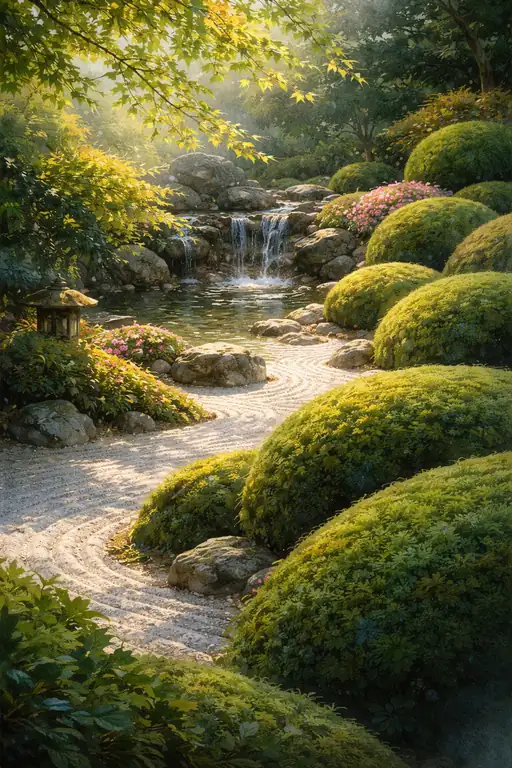 Ripples of the Raked Zen Sea
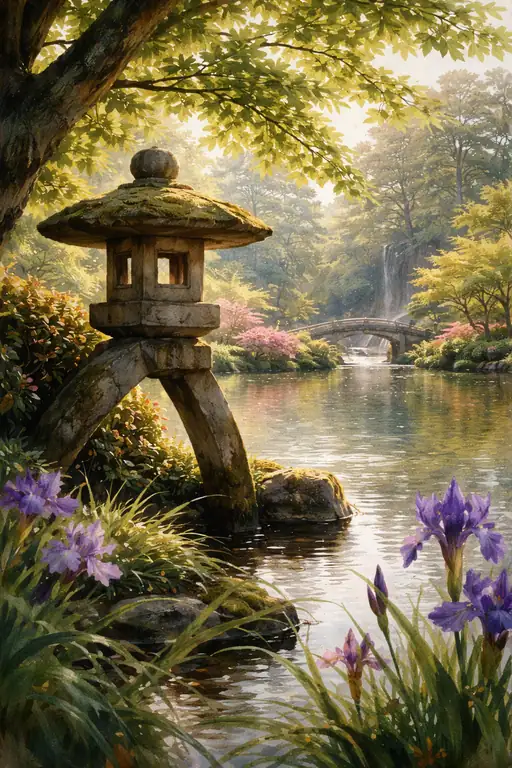 Serenity of the Whispering Waterfall
 Crimson Canopy of Dreams
 Echoes of Golden Leaves
 Passage to the Sacred Grove