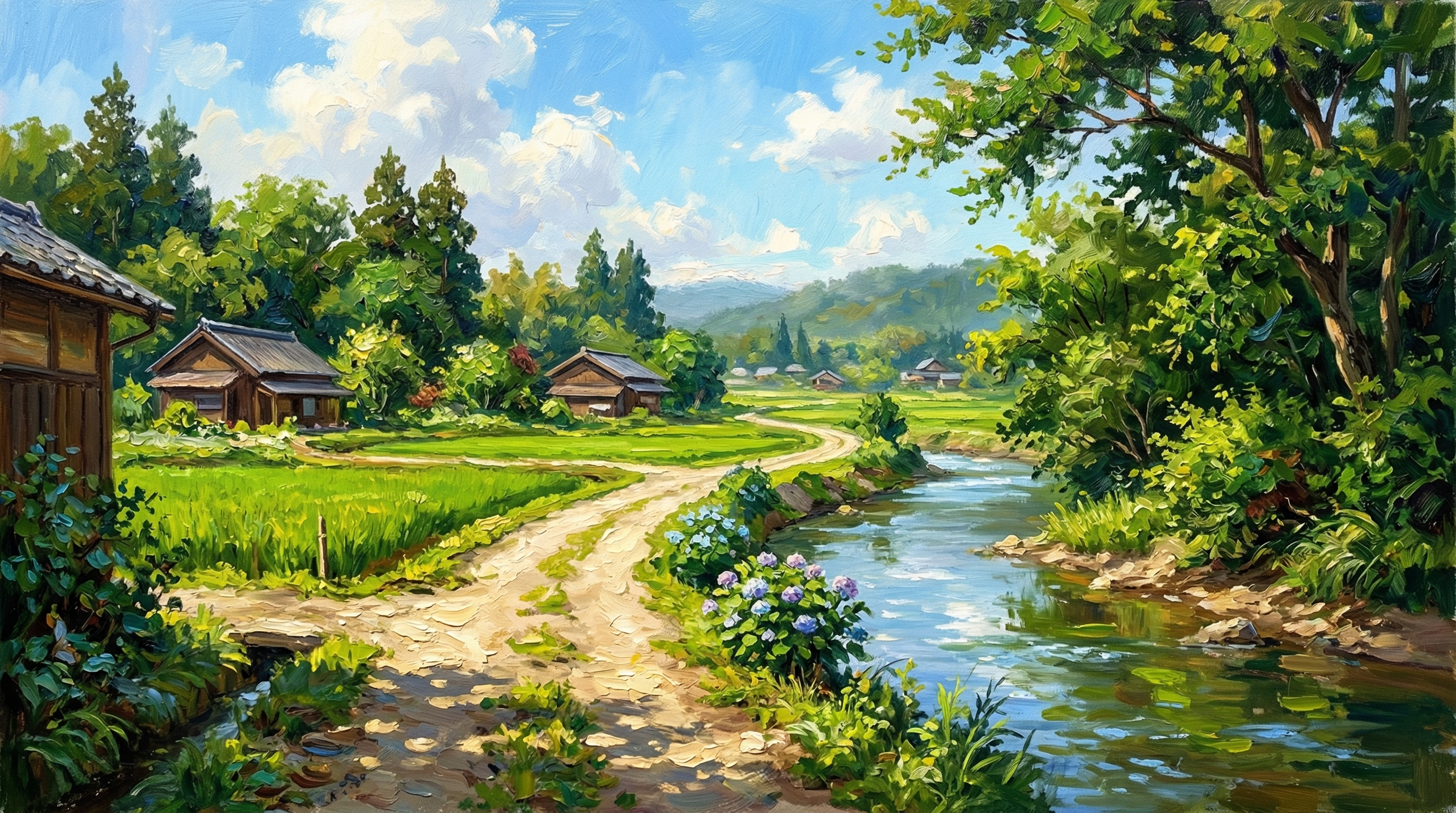
Hydrangea Bloom by the Singing River
Critique
1. Introduction This oil painting captures a refreshing early summer scene in a traditional Japanese village, characterized by a flowing river and blooming hydrangeas. The work emphasizes the serene beauty of the countryside, where human habitation and natural cycles exist in quiet harmony. Through its vibrant color palette and rhythmic composition, the painting evokes a sense of nostalgia and the gentle passage of time in a rural setting. 2. Description A clear, gentle river flows along the right side of the composition, its surface reflecting the bright blue sky and the surrounding greenery. On the left, a sun-dappled dirt path winds past several traditional wooden houses with dark, tiled roofs. Along the edge of this path, clusters of blue and purple hydrangeas are in full bloom, their cool tones providing a focal point against the warm earth tones. In the background, lush green fields and distant hills stretch toward a bright sky filled with soft, white clouds. 3. Analysis The artist employs a vigorous impasto technique, using thick, textural brushstrokes to define the movement of the water and the rugged surface of the path. The composition is organized around the diagonal lines of the river and the path, which create a strong sense of depth and guide the viewer’s eye toward the village center. A harmonious color scheme is achieved by echoing the blue of the sky in the petals of the hydrangeas and the reflections on the water’s surface. 4. Interpretation and Evaluation The painting serves as a celebration of the rainy season’s end and the arrival of early summer, a transition symbolized by the peak of the hydrangeas. The juxtaposition of the flowing river and the stationary houses suggests a balance between change and continuity. Technically, the artist demonstrates skill in capturing the quality of light as it filters through the trees and illuminates the various surfaces. The composition is effectively balanced, with the weight of the buildings on the left counteracted by the open space of the river on the right. 5. Conclusion A viewer is initially struck by the painting’s overall brightness and the cooling effect of the blue floral accents. Closer observation reveals the intricate details of the traditional architecture and the careful rendering of the natural environment, which together create a cohesive sense of place. This transition from immediate sensory pleasure to a deeper appreciation of the cultural landscape is the work’s primary achievement. Ultimately, the painting stands as a tranquil and beautifully executed tribute to the seasonal beauty of the Japanese countryside.
Same Subcategory
Similar Artworks
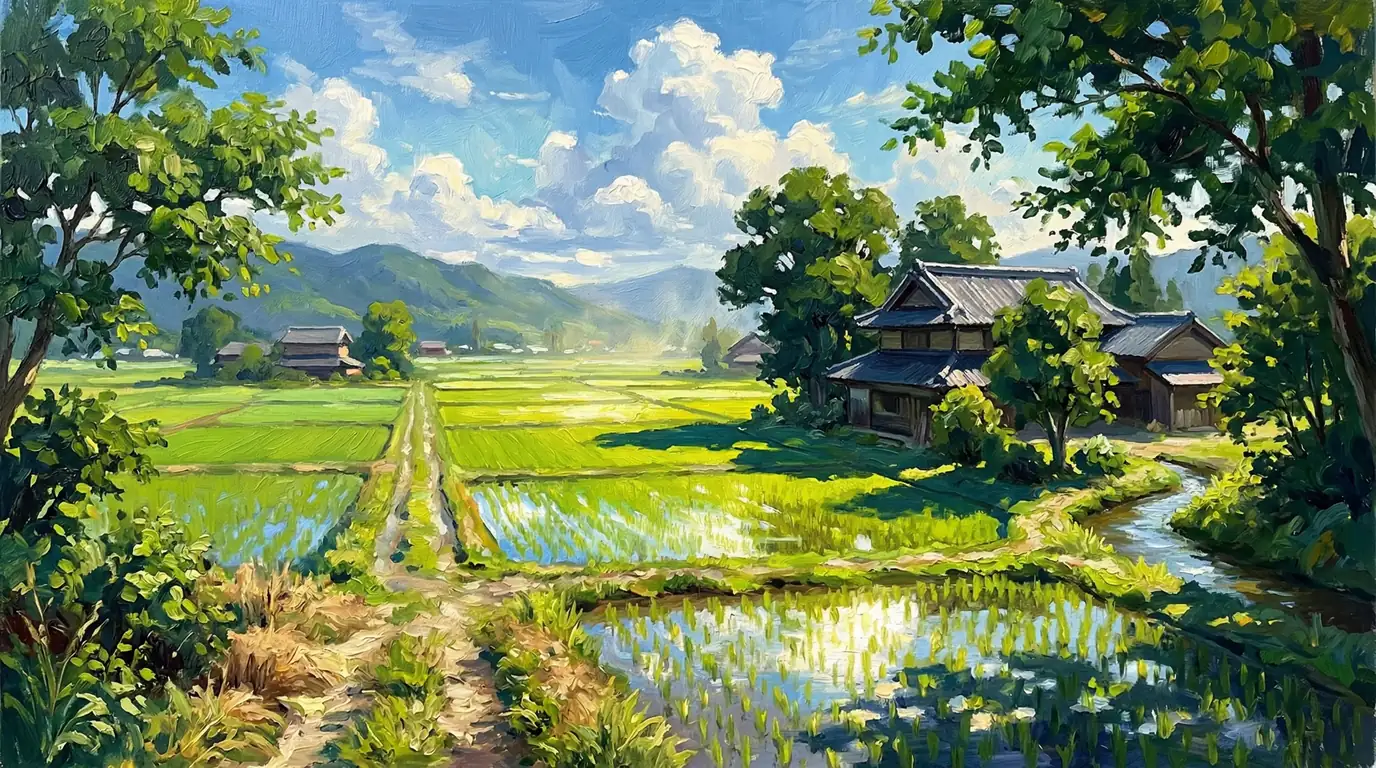 Sky Reflected in the Flooded Fields
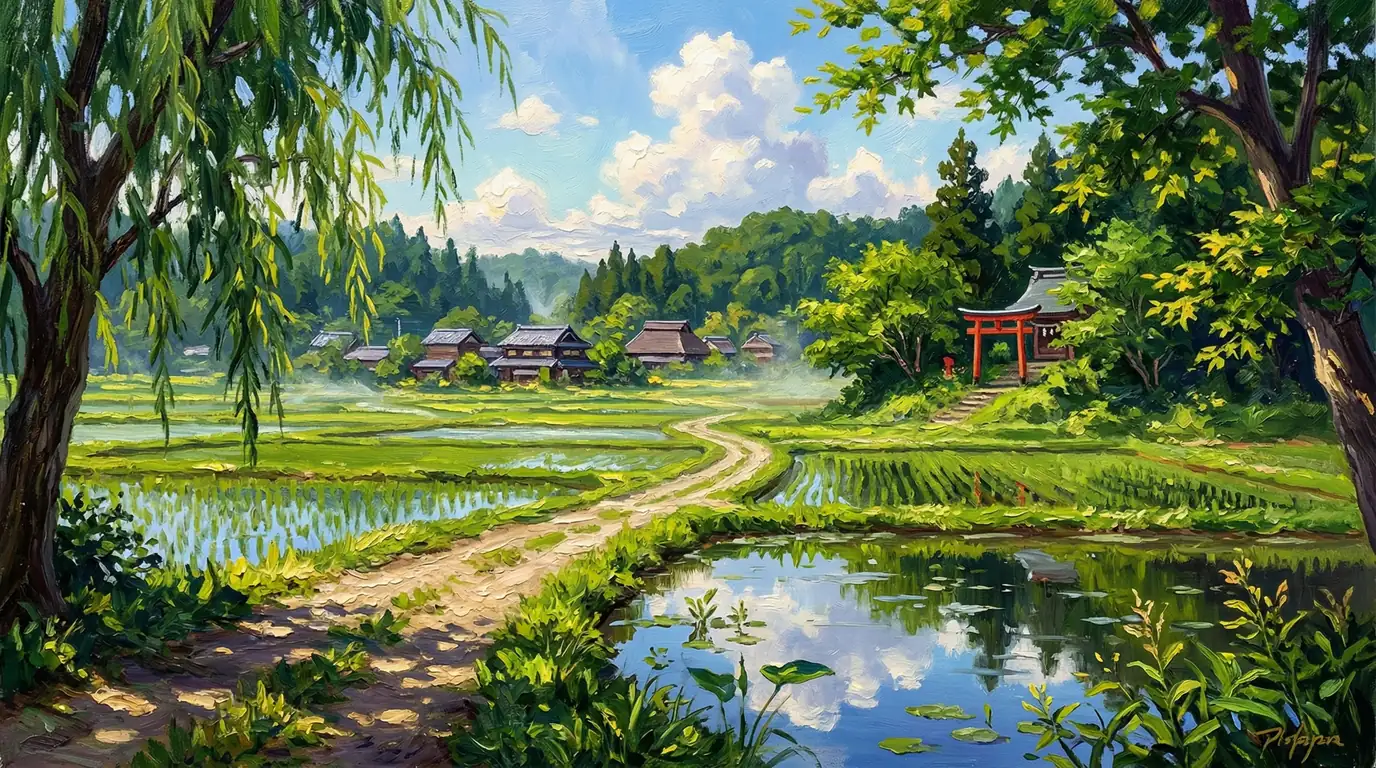 The Shrine Beyond the Summer Fields
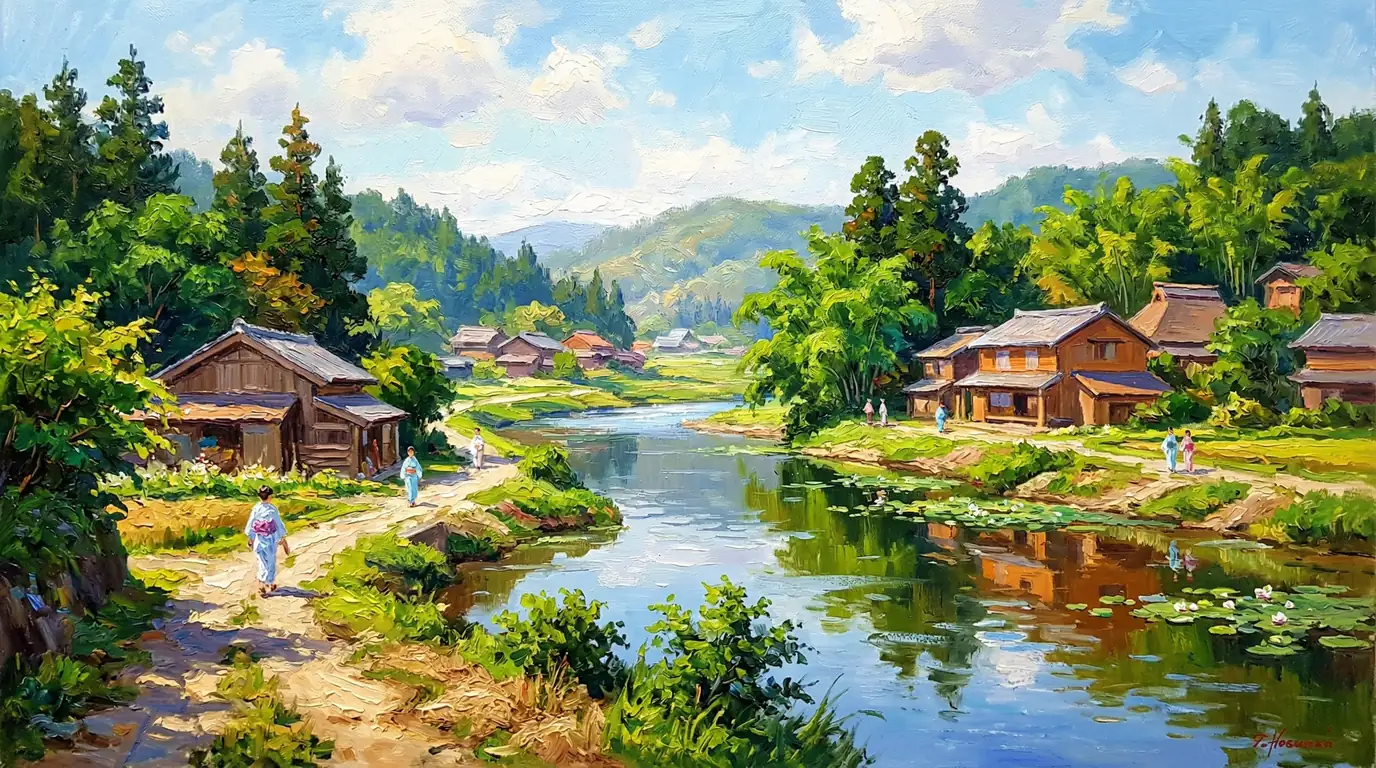 Summer Memories by the River
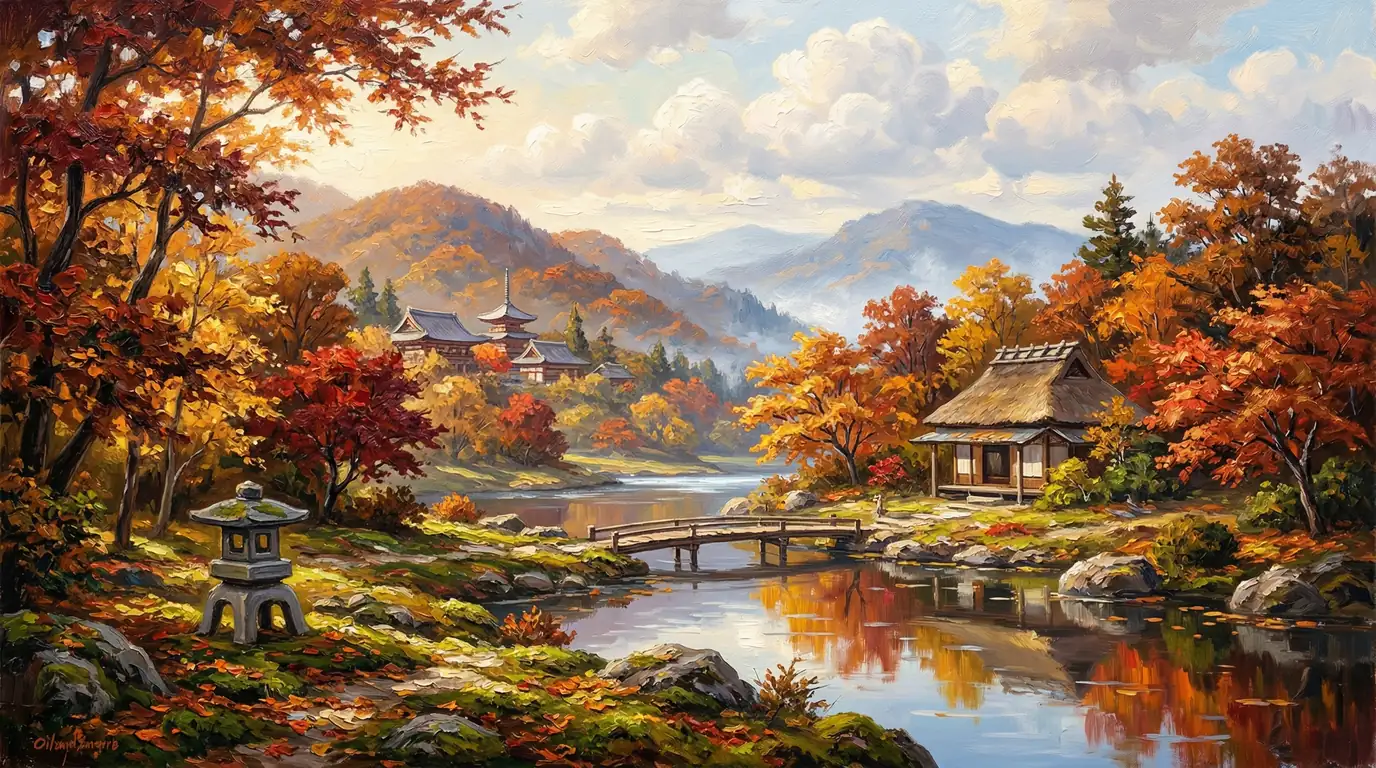 Autumn Panorama of the Thatched Village
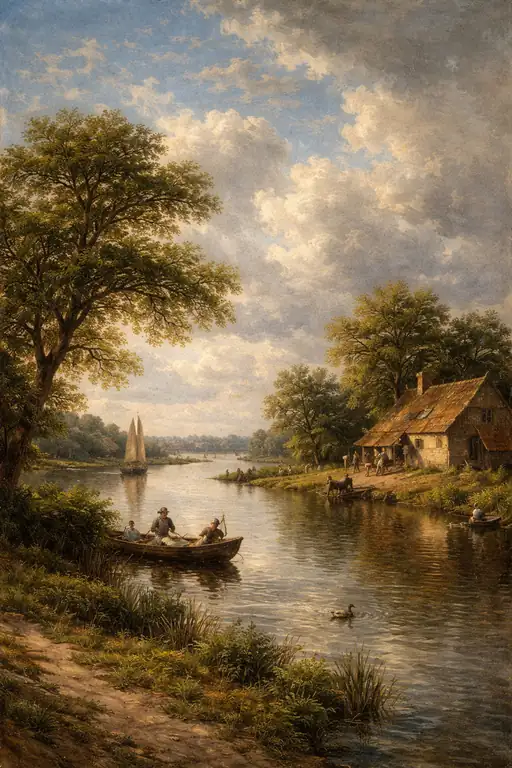 The River's Gentle Song
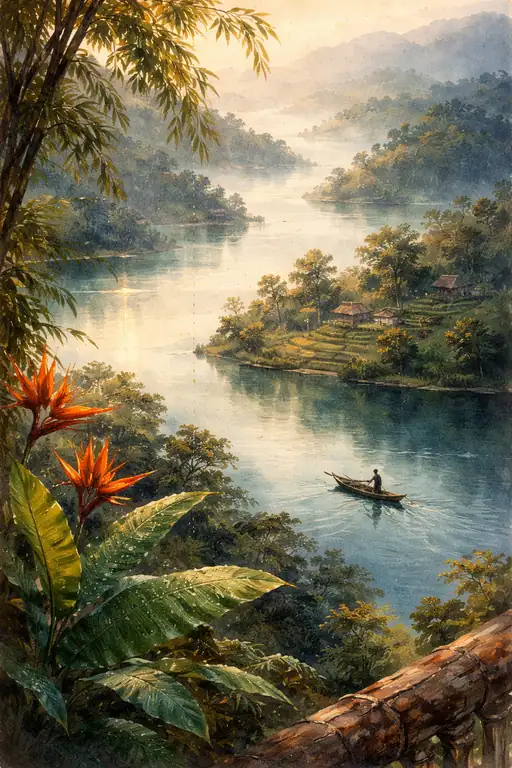 Journey Through the Misty Emerald
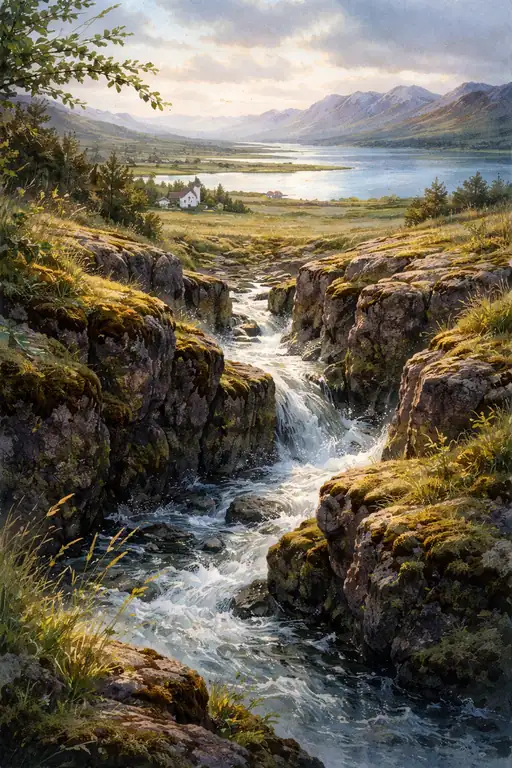 Whispers of the Emerald Valley
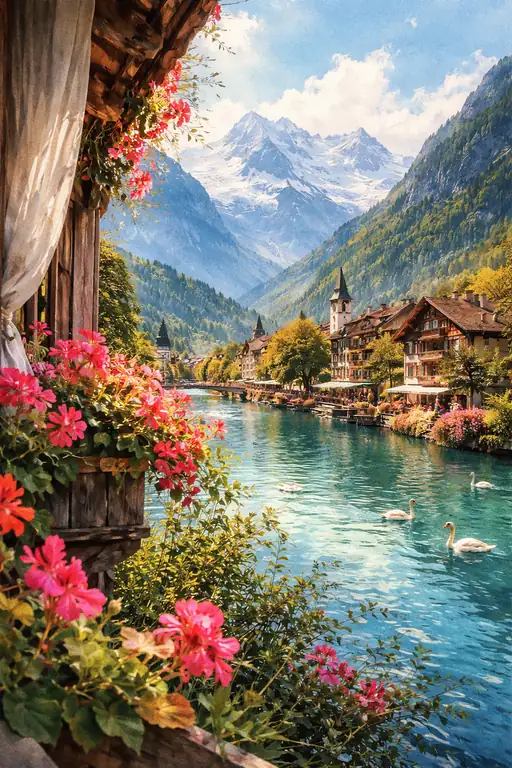 A Balcony in the Alpine Village
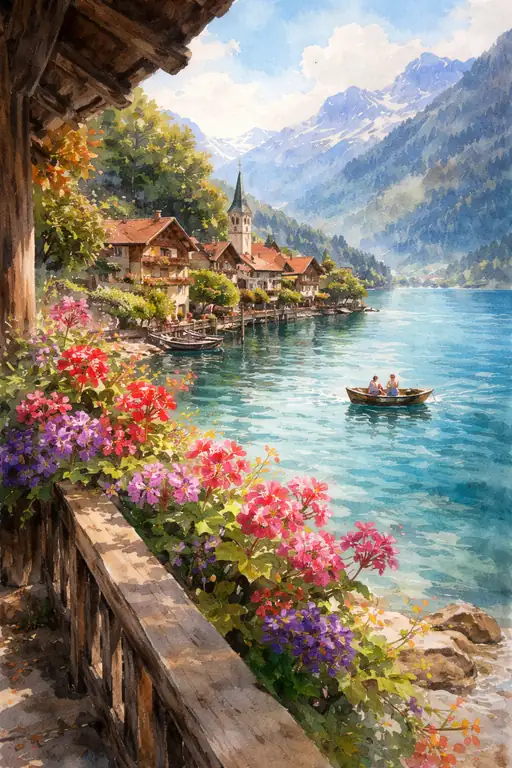 The Floral Chalet in the Sun: A Vibrant Alpine Sanctuary
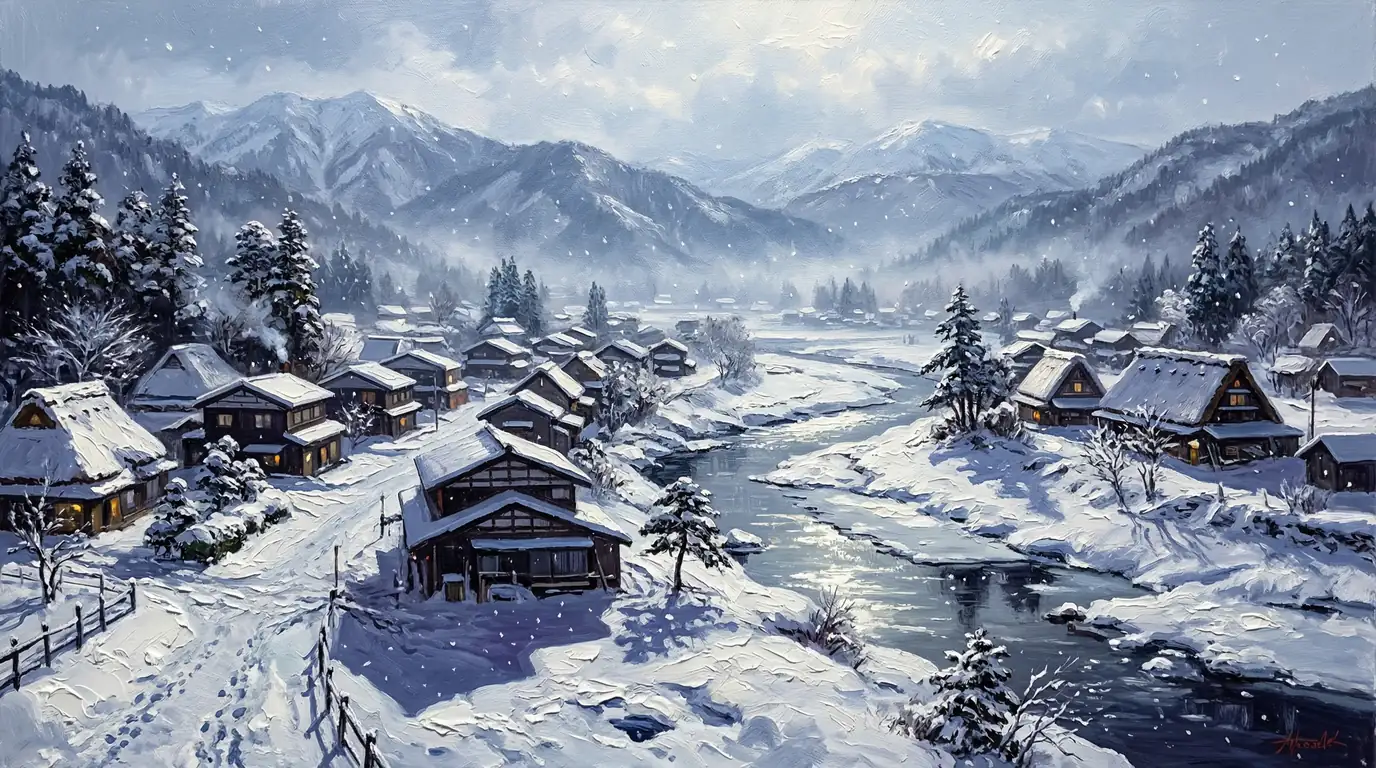 Whispering Snow in the Heart of Silence