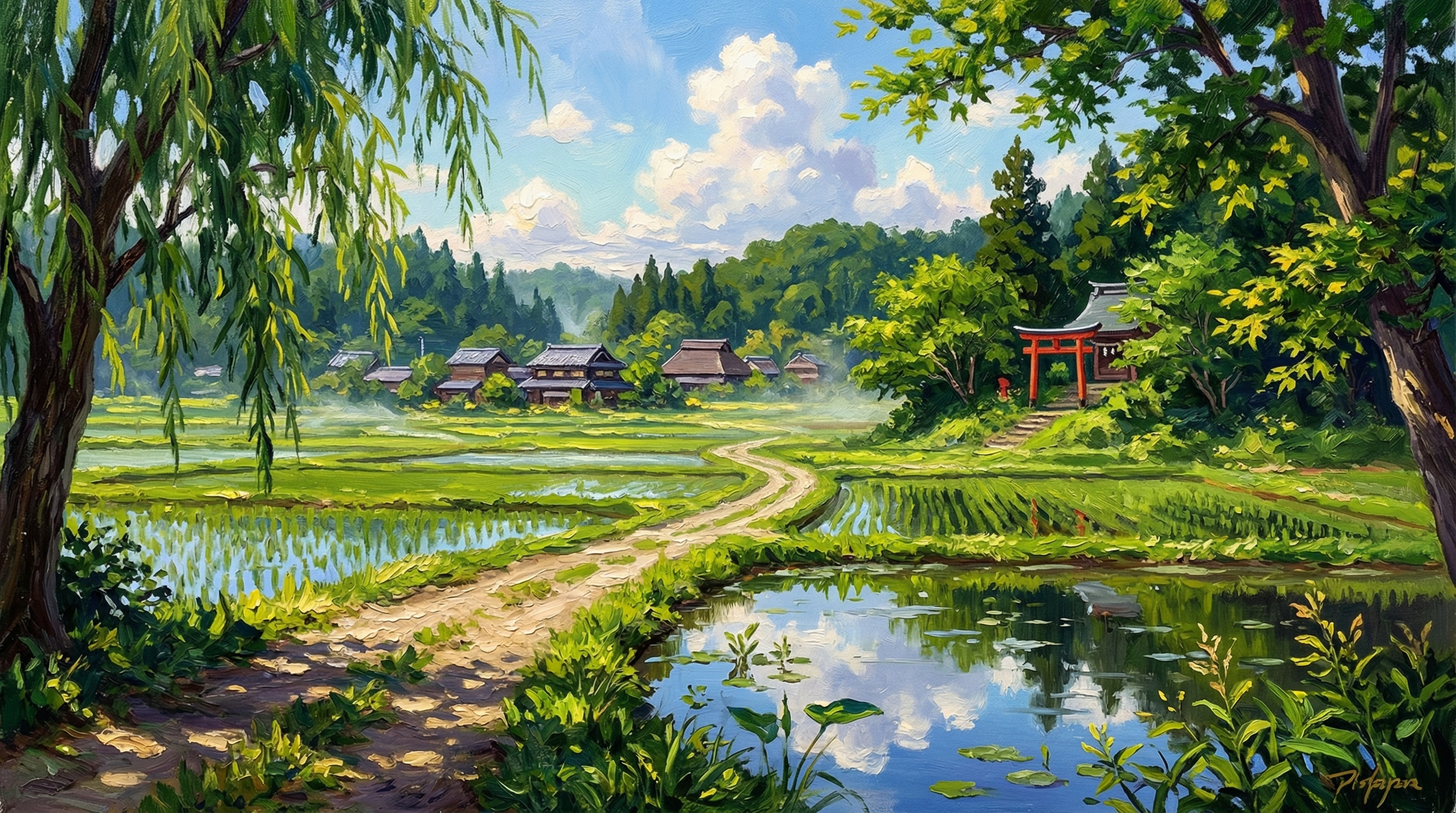
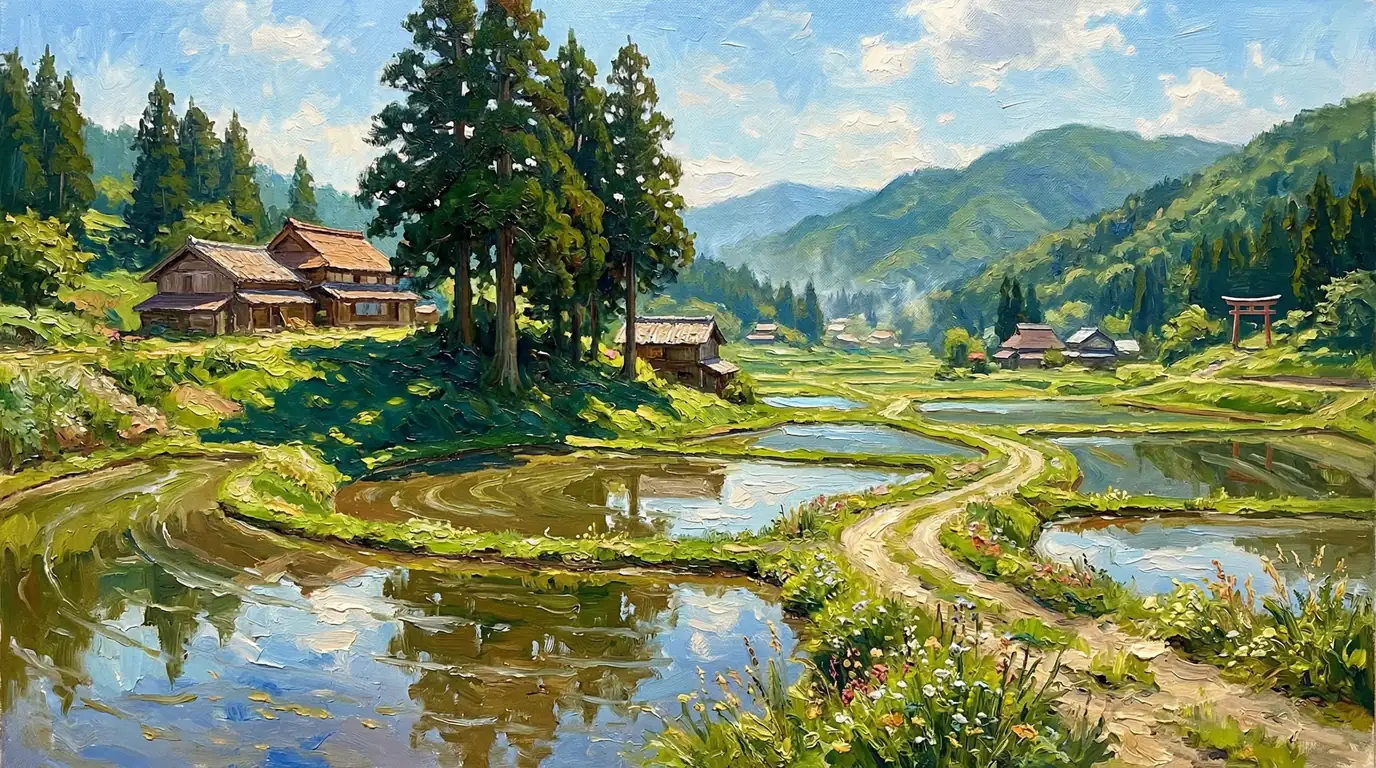
The Shrine Beyond the Summer Fields
Critique
1. Introduction This oil painting presents a panoramic view of a traditional Japanese rural landscape, often referred to as Satoyama, during the height of summer. The scene features a harmonious arrangement of flooded rice paddies, a winding dirt path, and a small shrine marked by a distinctive red torii gate. Through a vibrant palette and expressive brushwork, the artist captures the nostalgic essence of the countryside and the enduring connection between the land and its spiritual heritage. 2. Description In the foreground, a tranquil pool of water reflects the bright blue sky and billowing white clouds, framed by lush aquatic plants. A dirt path curves gracefully from the lower left towards the center, leading the eye toward a cluster of traditional wooden houses with dark, gabled roofs. To the right, a bright red torii gate stands at the entrance to a wooded area, signaling the presence of a hidden shrine. The middle ground is dominated by verdant rice fields, their emerald hues contrasting sharply with the deep greens of the surrounding forest. 3. Analysis The artist employs a dynamic impressionistic style, using short, rhythmic brushstrokes to depict the shimmering surfaces of the water and the rustling leaves of a weeping willow on the left. The composition is structured around leading lines created by the path and the edges of the rice paddies, which provide a clear sense of receding perspective. A high-contrast color scheme, particularly the juxtaposition of the red torii against the green foliage, serves to create focal points that anchor the expansive landscape. 4. Interpretation and Evaluation The painting successfully evokes a sense of peace and seasonal vitality, characteristic of the Japanese summer. The inclusion of the torii gate suggests a landscape that is not only agricultural but also sacred, reflecting a worldview where nature and divinity coexist. Technically, the artist demonstrates great skill in capturing the reflective quality of the flooded paddies, which act as mirrors for the sky. The overall composition is well-balanced, managing a large number of elements without becoming cluttered or fragmented. 5. Conclusion Upon first viewing, the observer is drawn in by the intense brightness and the lush, inviting greenery of the scene. A more deliberate analysis reveals the careful layering of cultural symbols and natural elements that define this specific regional identity. This movement from a general appreciation of the scenery to a recognition of its deeper cultural resonance is the painting's greatest strength. Ultimately, the work stands as a beautiful tribute to the timeless charm and spiritual depth of the rural landscape.
Same Subcategory
Similar Artworks
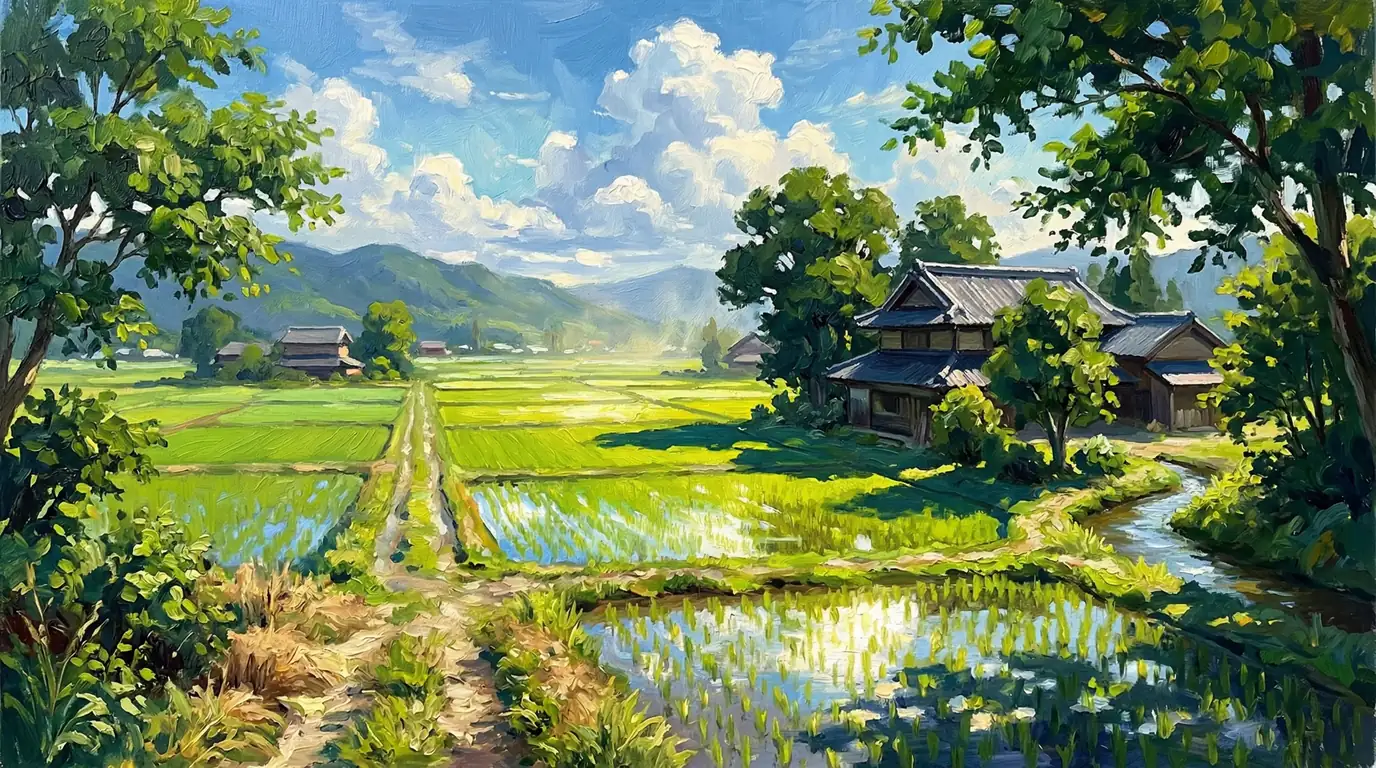 Sky Reflected in the Flooded Fields
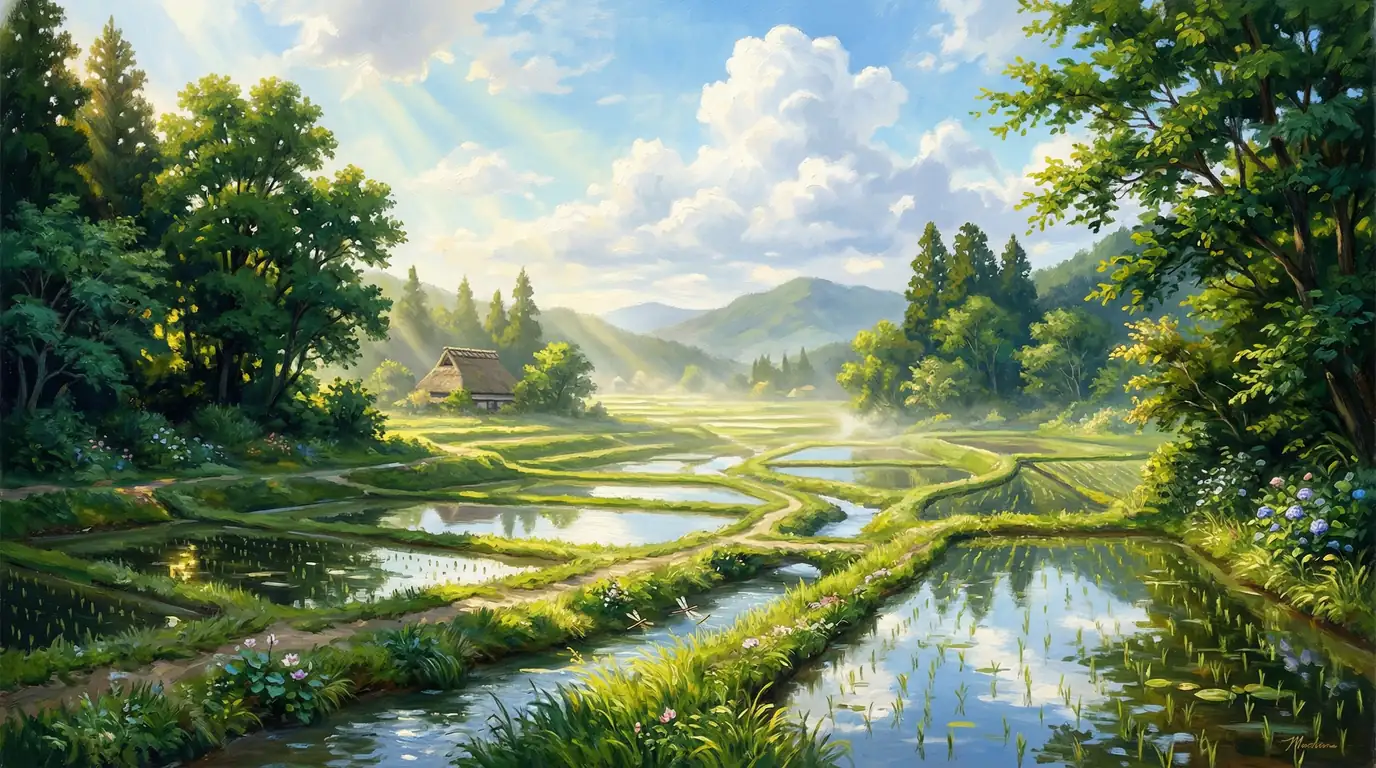 Rays of Hope Over the Terraces
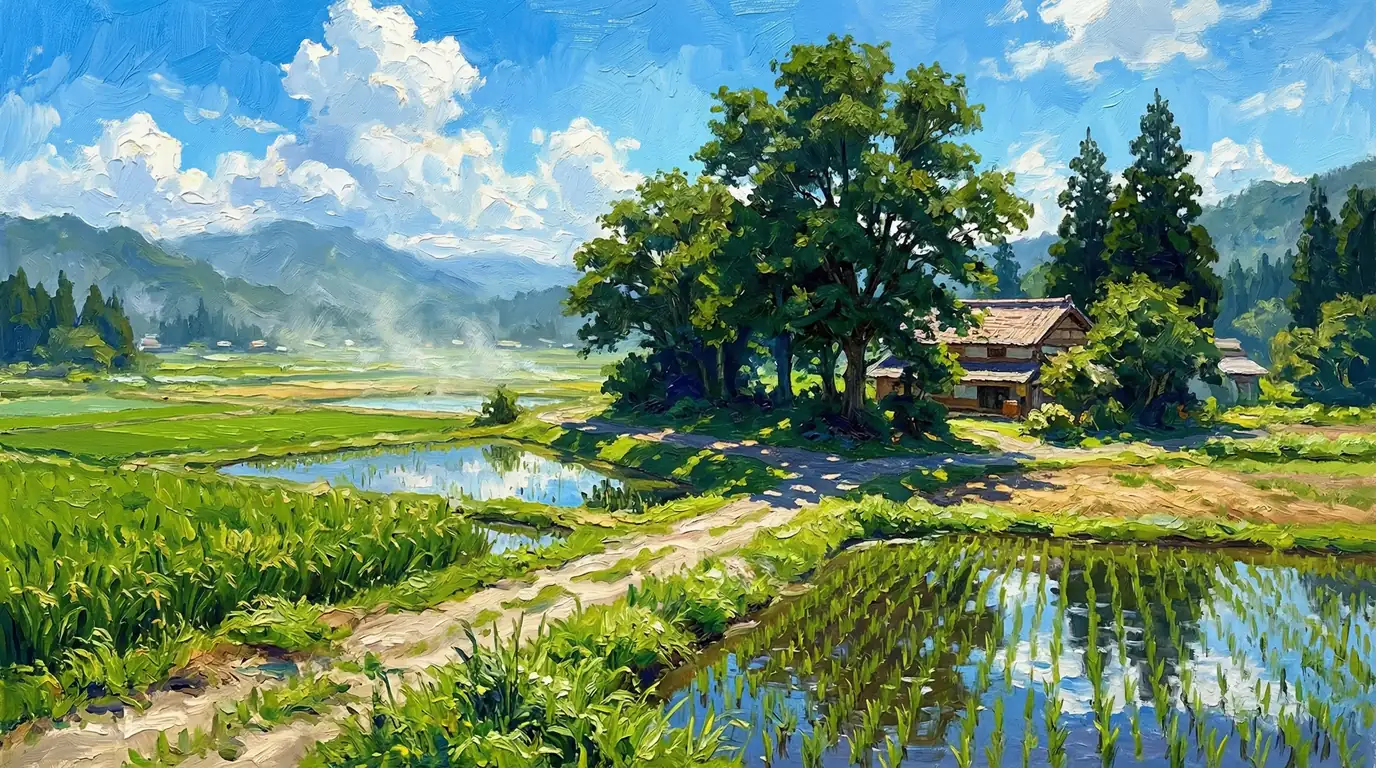 Serenade of the Summer Countryside
 Golden Echoes of the Terrace
 Whispers of the Green Earth: The Eternal Satoyama
 Sunlit Promise of the Harvest
 Summer's Gentle Embrace
 Nostalgia in the Verdant Valley
 Hydrangea Bloom by the Singing River
 Golden Harvest in the Serene Countryside