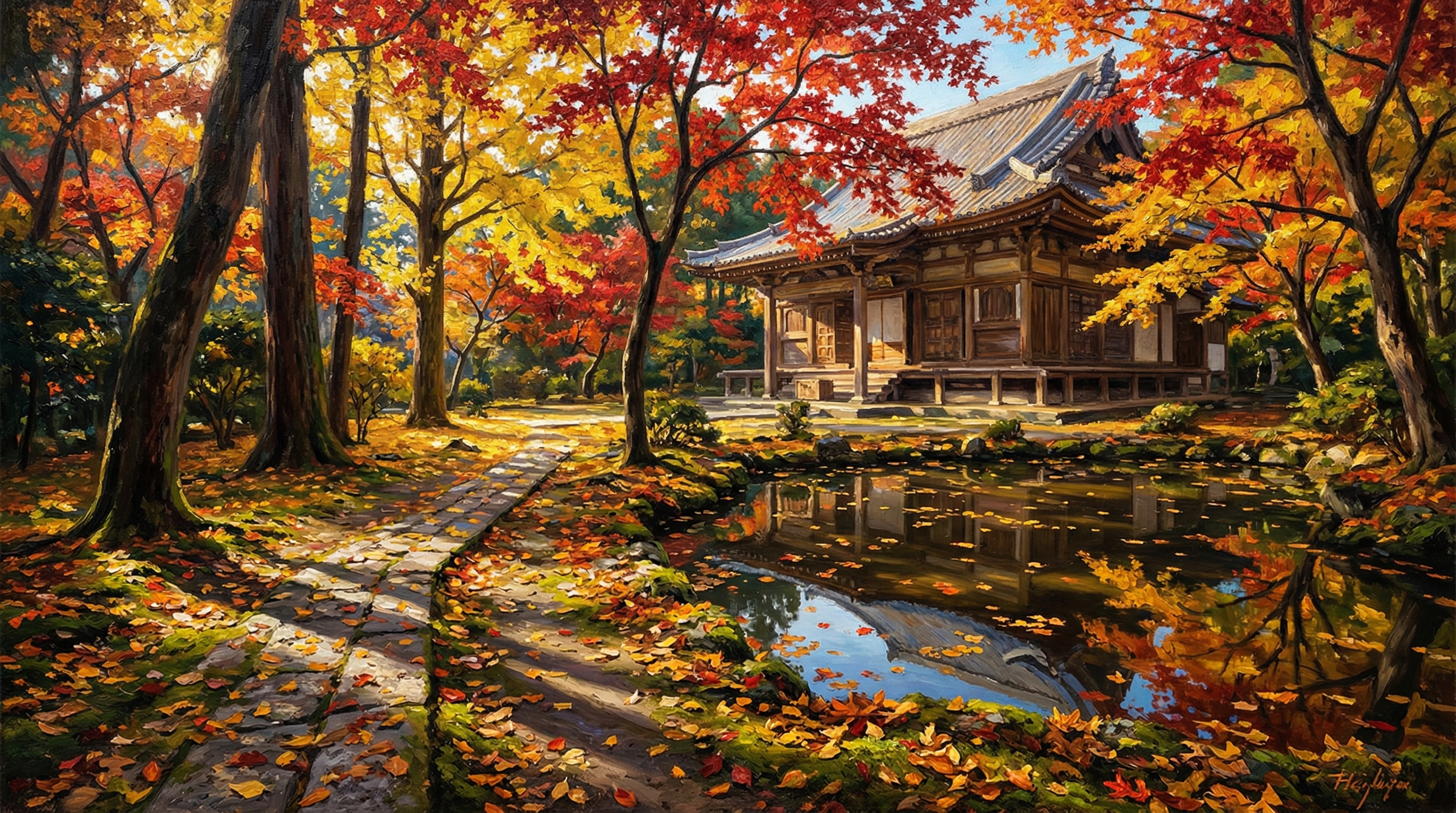
Crimson Reflections at the Temple Pond
Critique
1. Introduction This oil painting captures the quintessential beauty of autumn in a traditional Japanese garden, featuring a wooden temple building beside a tranquil pond. The scene is enveloped in a brilliant display of seasonal foliage, where vibrant oranges and reds dominate the landscape. Through a skillful application of light and texture, the work evokes a sense of meditative stillness and the transient splendor of the changing seasons. 2. Description On the right side of the composition, a meticulously rendered temple with a thatched or tiled roof stands overlooking a small pond. The pond’s dark surface reflects the architectural details of the building and the fiery colors of the surrounding maple trees. A stone-paved path winds from the lower left into the distance, covered in a thick carpet of fallen yellow and orange leaves. Tall, slender deciduous trees frame the scene, their branches heavy with foliage in various stages of autumnal transformation. 3. Analysis The artist utilizes a heavy impasto technique, creating a rich, tactile surface that emphasizes the physical presence of the fallen leaves and the weathered wood of the temple. The color palette is built on the strong contrast between the warm, radiant tones of the autumn leaves and the cool, dark blues and greys of the shadows and reflections. This interplay of complementary colors enhances the visual vibrancy of the scene, while the rhythmic placement of trees creates a clear sense of spatial depth. 4. Interpretation and Evaluation The painting serves as a profound reflection on the Buddhist concept of impermanence, represented through the peak of autumnal beauty. The temple, a symbol of enduring spiritual practice, is juxtaposed with the fleeting brilliance of the maple leaves. Technically, the artist demonstrates remarkable control over light, particularly in how the sun illuminates the side of the temple and the surface of the pond. The composition is expertly handled, leading the viewer’s eye along the path toward the quiet sanctuary. 5. Conclusion A viewer is initially overwhelmed by the intense saturation and warmth of the seasonal colors. Closer inspection reveals the delicate balance between the man-made structure and its natural surroundings, achieved through the harmonizing effects of the reflections in the water. This transition from sensory excitement to a deeper, more reflective state of mind mirrors the experience of visiting such a sacred space. The work stands as a vivid celebration of cultural heritage and natural harmony.
Same Subcategory
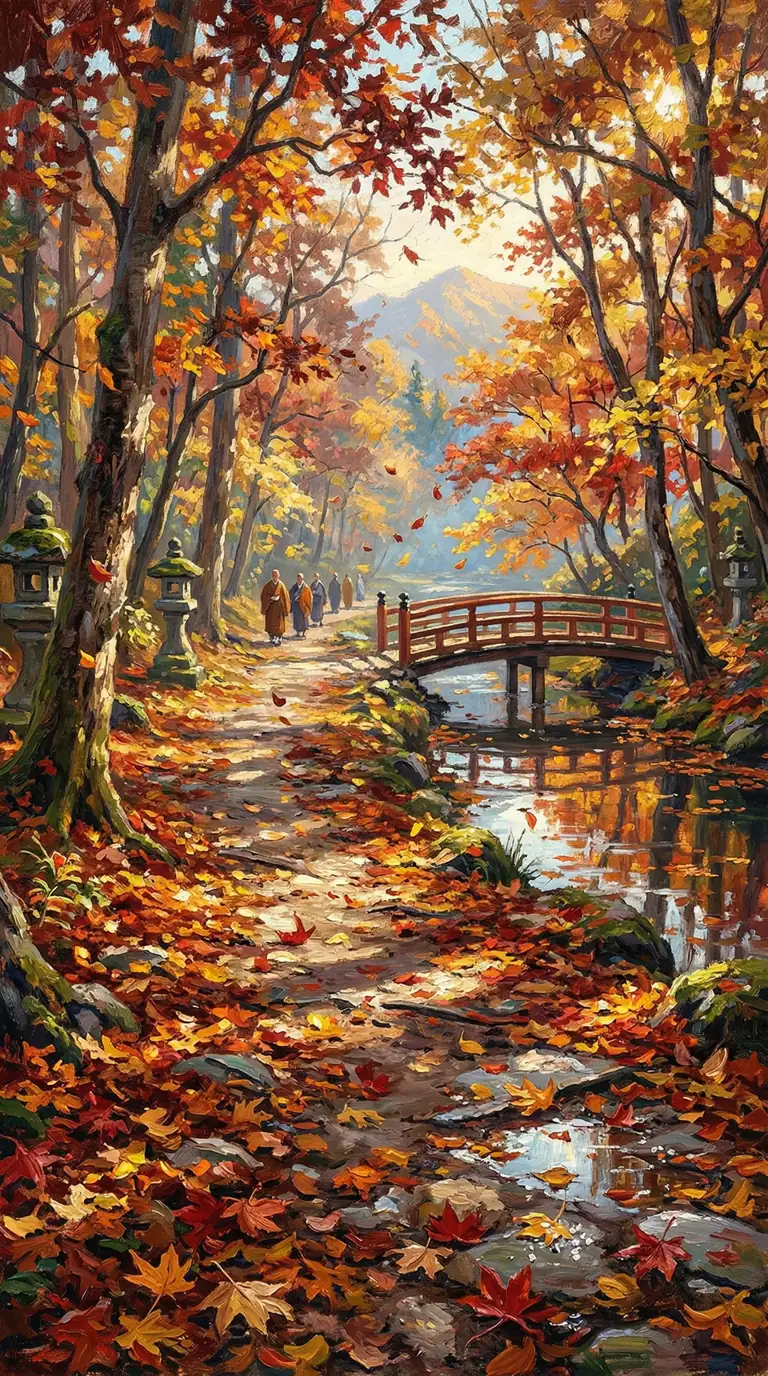 Whispers of the Autumn Trail
Similar Artworks
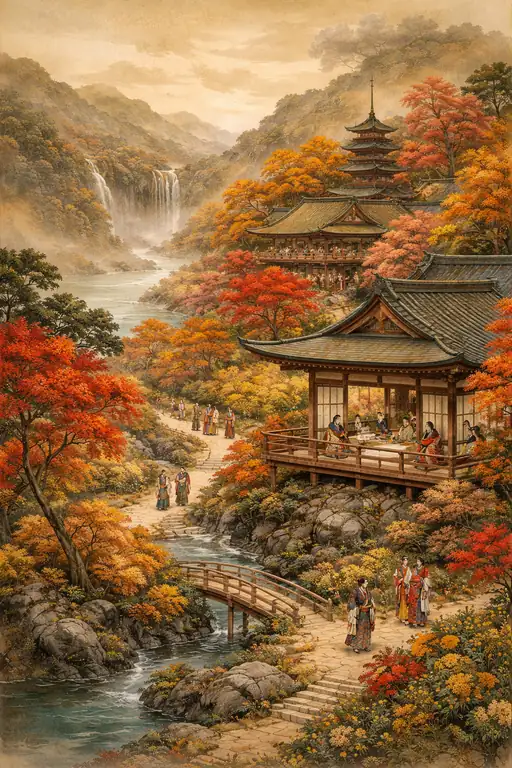 Crimson Canopy
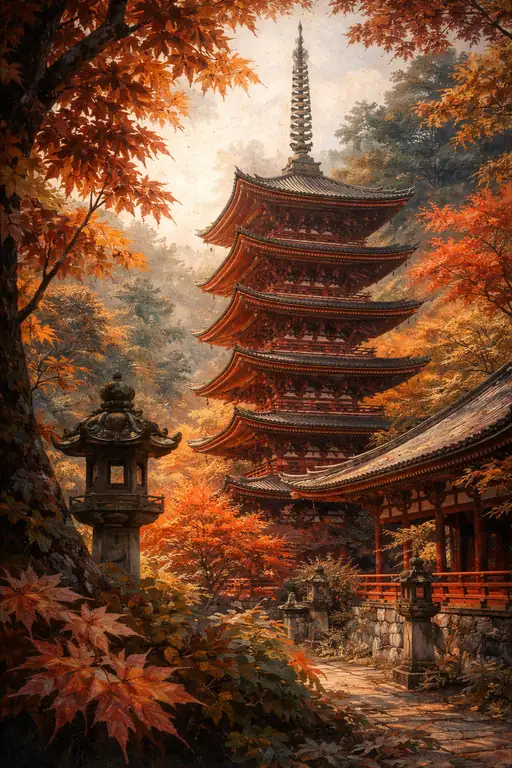 Autumn's Golden Reverie
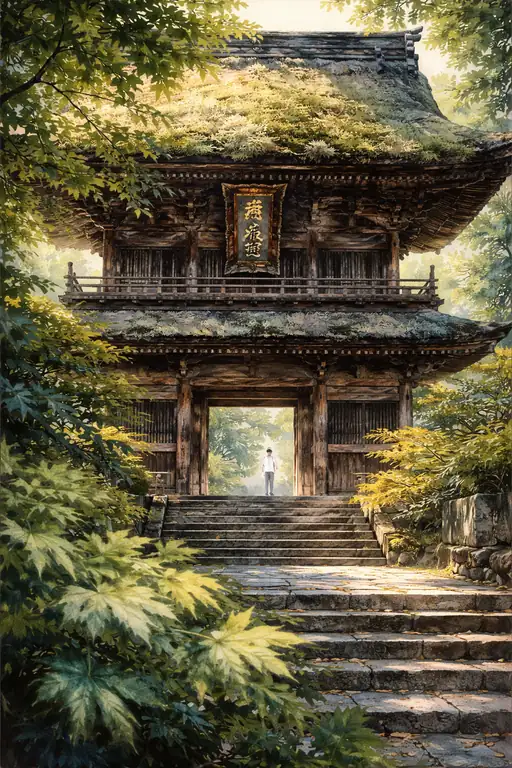 Light Through the Ancient Gate
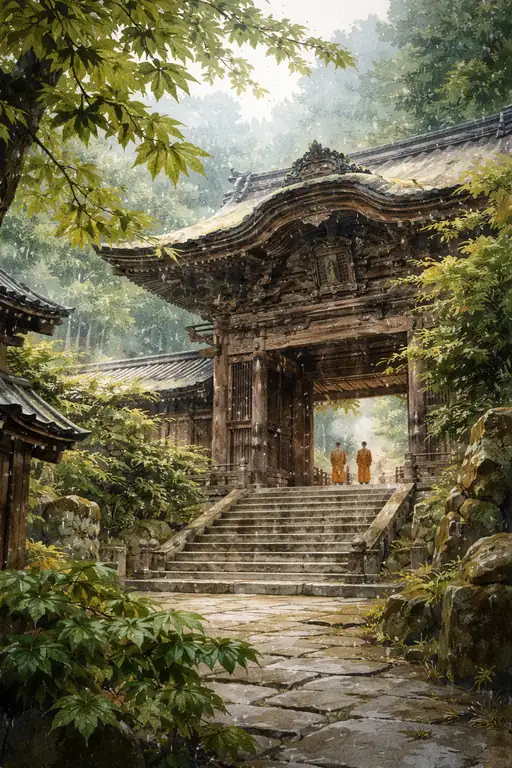 Rain's Serenade in the Sacred Grove
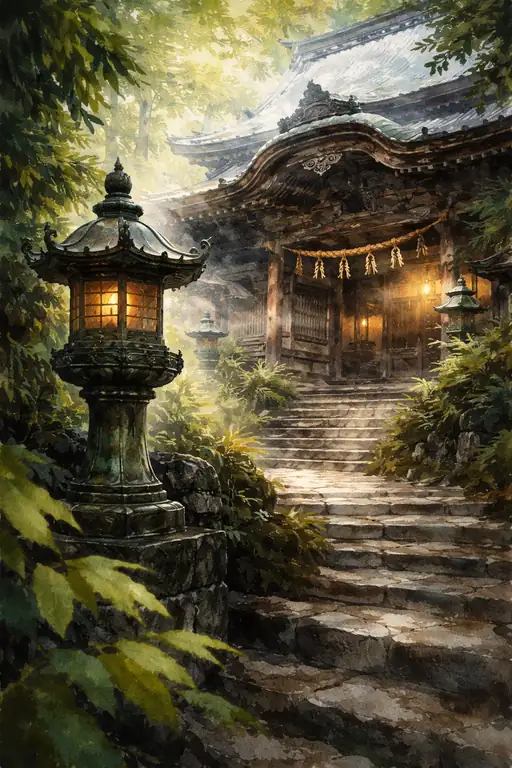 Sanctuary of the Silent Forest
 Echoes of the Divine in the Maple's Light
 Sunlight Upon the Vermilion Pillars
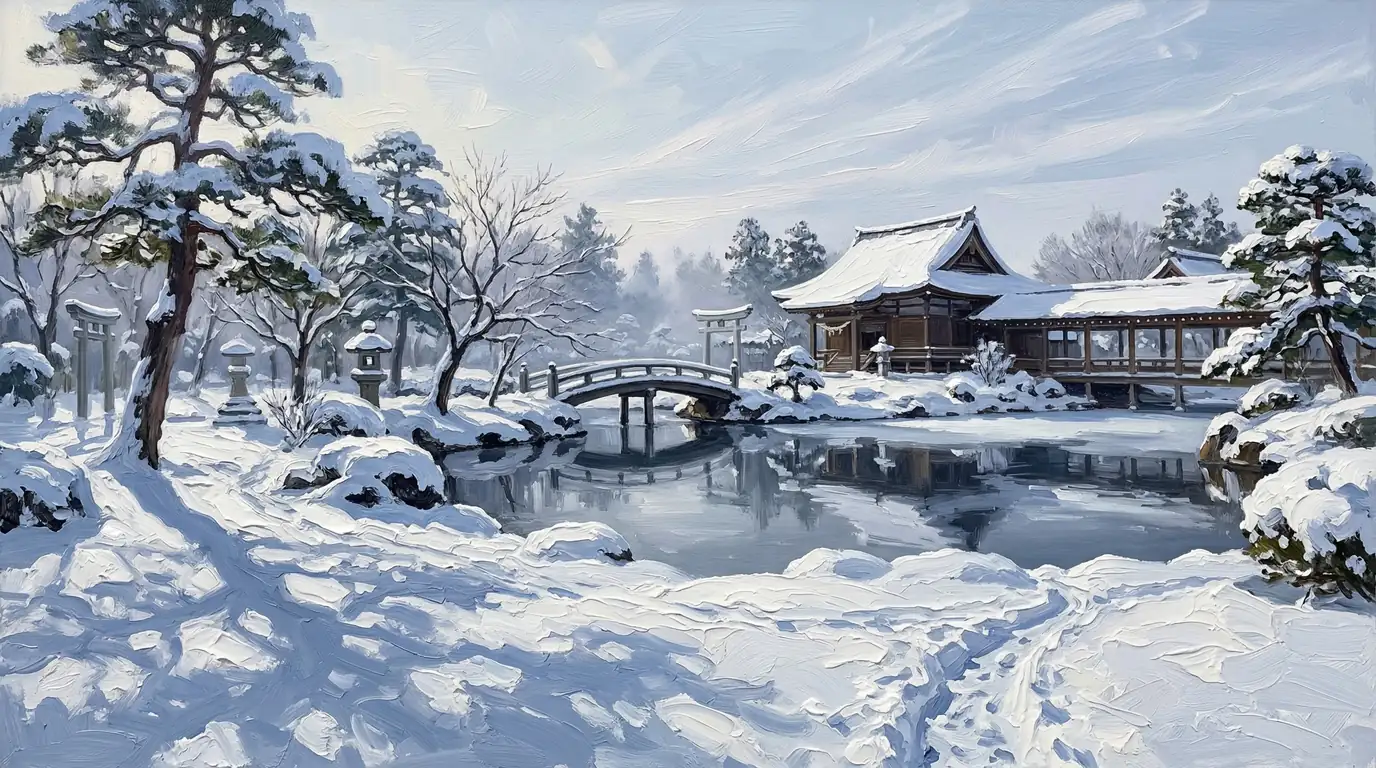 Winter's Hallowed Silence
 Guiding Light in the Mystic Mist
 Reflections of a Glistening Soul