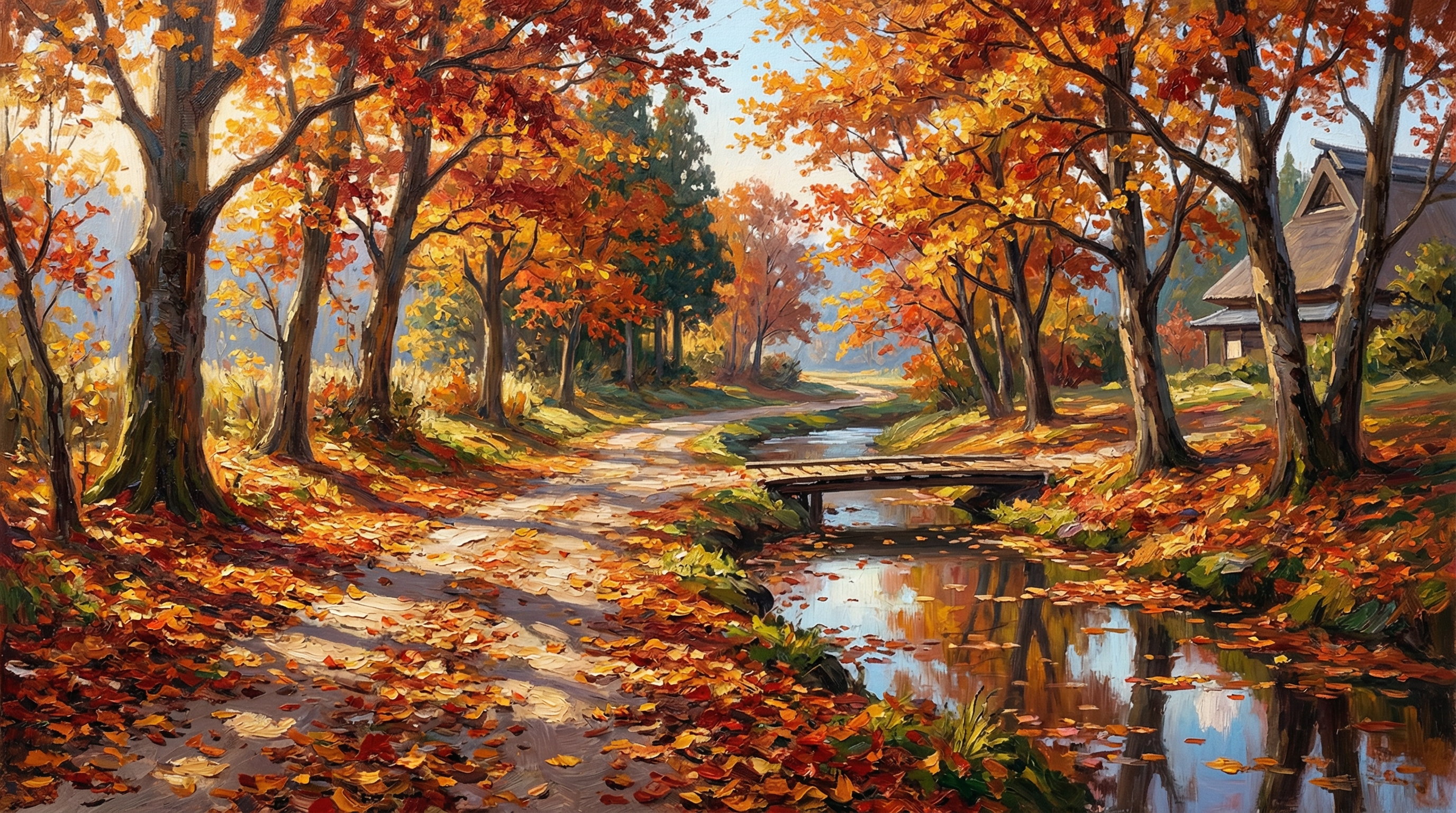
Golden Embers of the Autumn Trail
Critique
1. Introduction This landscape painting captures the peak of autumn in a serene Japanese rural setting. The work focuses on the vibrant transformation of nature, using a rich palette of seasonal colors to evoke nostalgic beauty. The composition balances architectural elements with natural forms, leading the viewer along a winding path and a quiet stream reflecting the brilliance of falling leaves. 2. Description The scene features a dirt path and a meandering stream in the foreground. A simple wooden bridge crosses the water, which reflects the surrounding trees and scattered leaves. On the right, a traditional Japanese house sits quietly among the foliage. The trees are a brilliant mix of reds, oranges, and yellows, while the clear sky provides a pale blue backdrop. 3. Analysis The artist employs a bold impasto technique, particularly for the autumn leaves and the forest floor. These thick brushstrokes create a sense of physical depth and movement. The color palette is dominated by warm tones, expertly contrasted by the cool blues of the stream and sky. The use of light filtering through the trees adds a luminous quality to the composition. 4. Interpretation and Evaluation This piece successfully communicates the fleeting beauty of autumn. The artist’s ability to render the quality of light as it interacts with colored foliage is commendable. The harmonious arrangement of the path, bridge, and house reflects a lifestyle connected to seasonal cycles. The overall execution shows a mastery of both texture and atmospheric perspective. 5. Conclusion In conclusion, what appears as a classic autumn scene is a sophisticated study of light and color. The painting evokes an emotional response through its celebration of nature's transition. It stands as a testament to the landscape genre, capturing a moment of intense visual beauty with technical proficiency and a deep sense of tranquility that resonates with the viewer.
Same Subcategory
 The Last Ember of Autumn's Breath
Similar Artworks
 Crimson Waterfall and the Golden Bridge
 Autumn Flame Over the Bridge
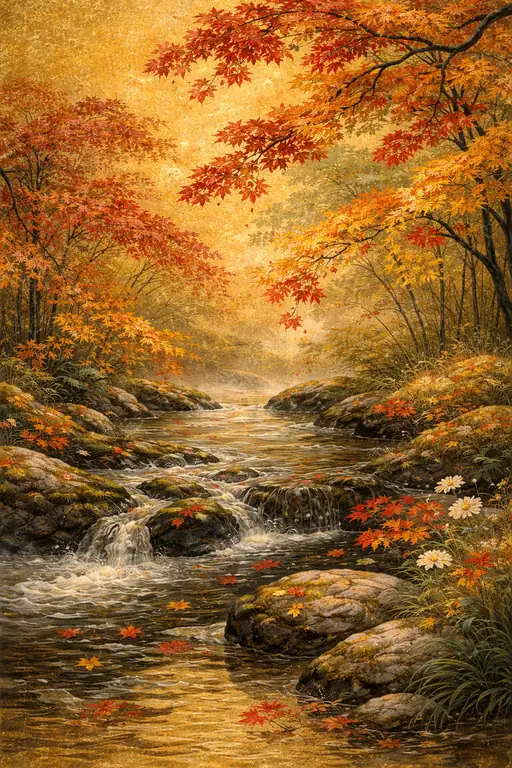 Golden Flow Through the Rocks
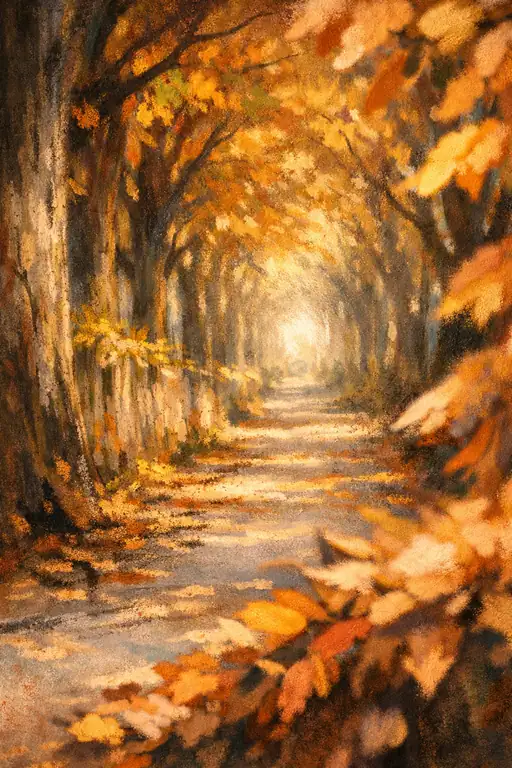 The Golden Corridor
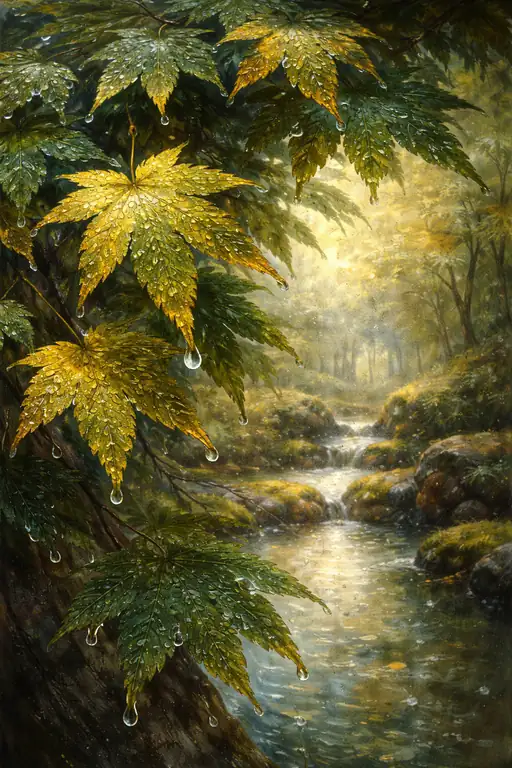 Whispers of the Wet Woods
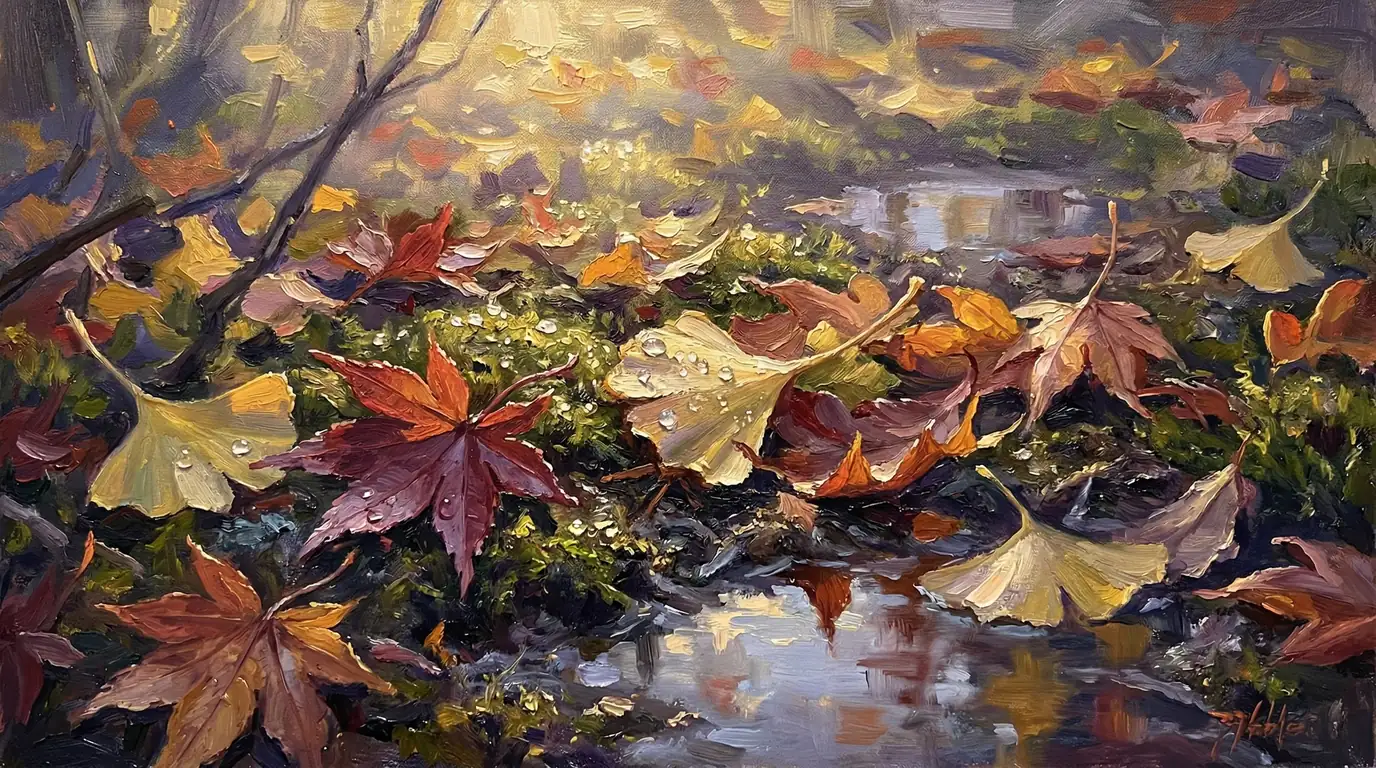 Golden Whispers on a Damp Canvas
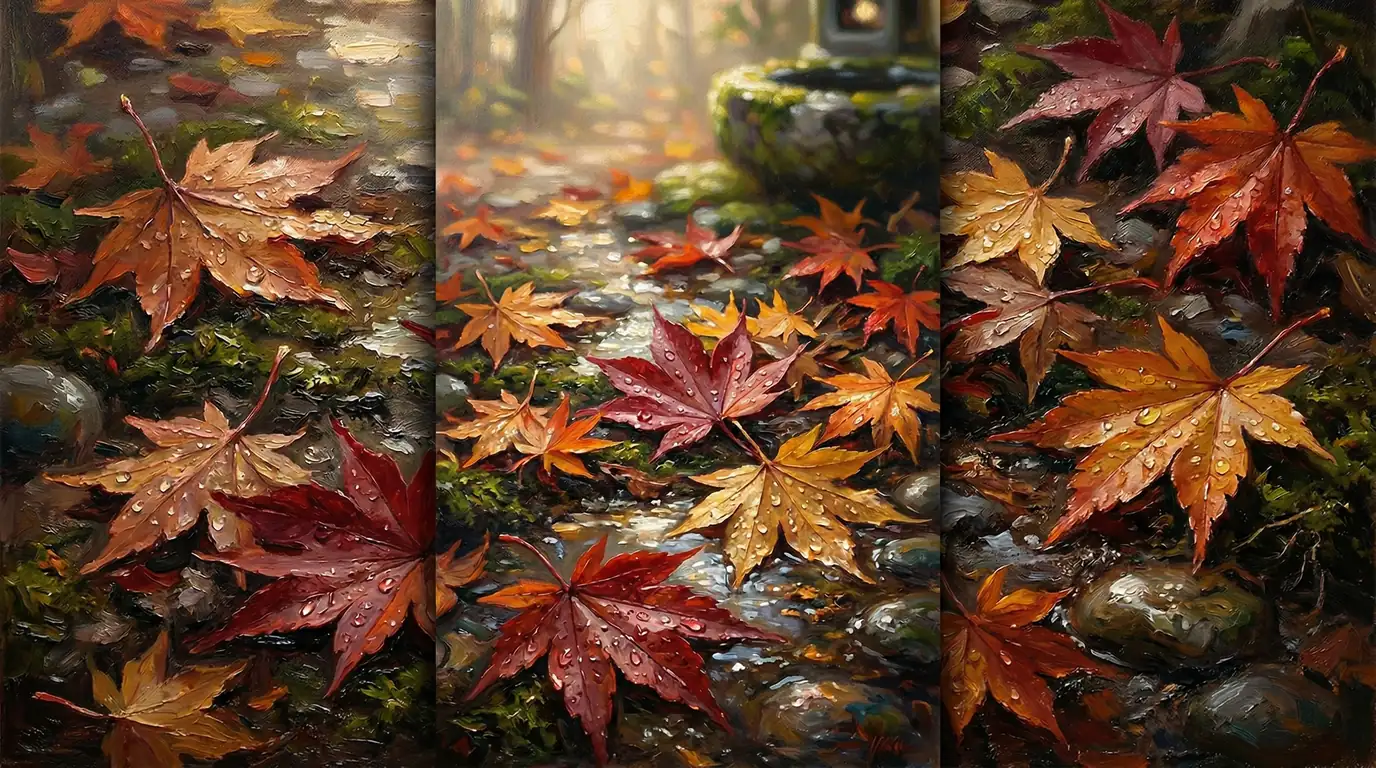 Crimson Tears of the Passing Year
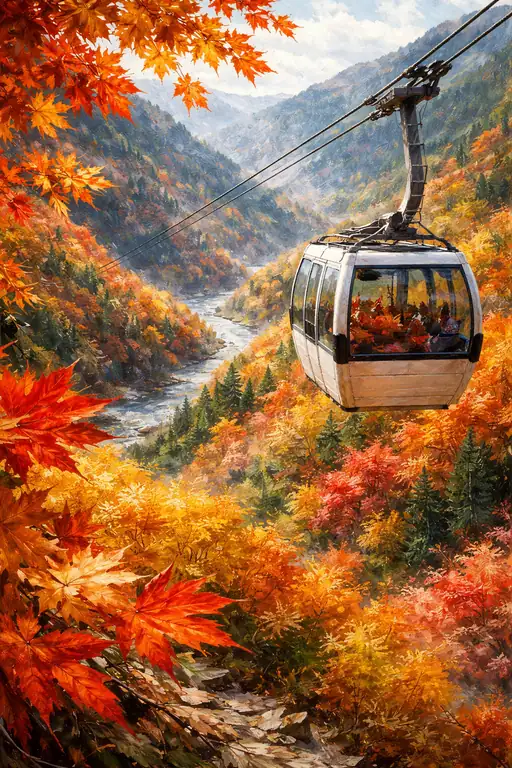 A Journey Through the Crimson Canopy
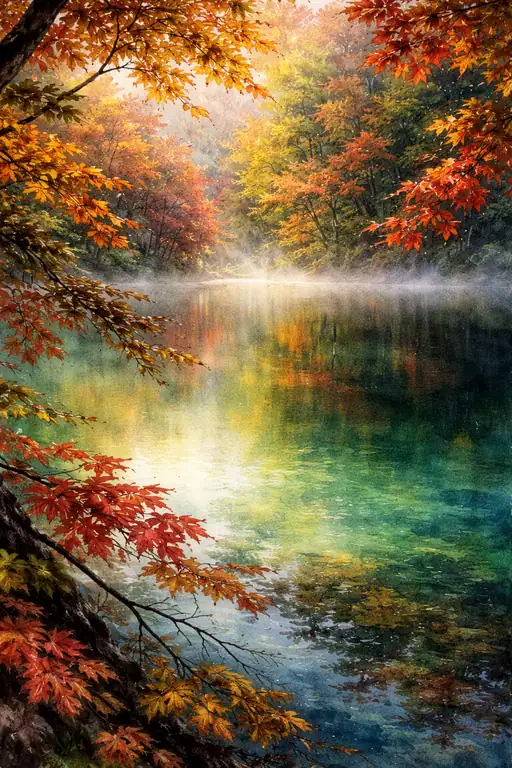 Echoes of Autumn Serenity
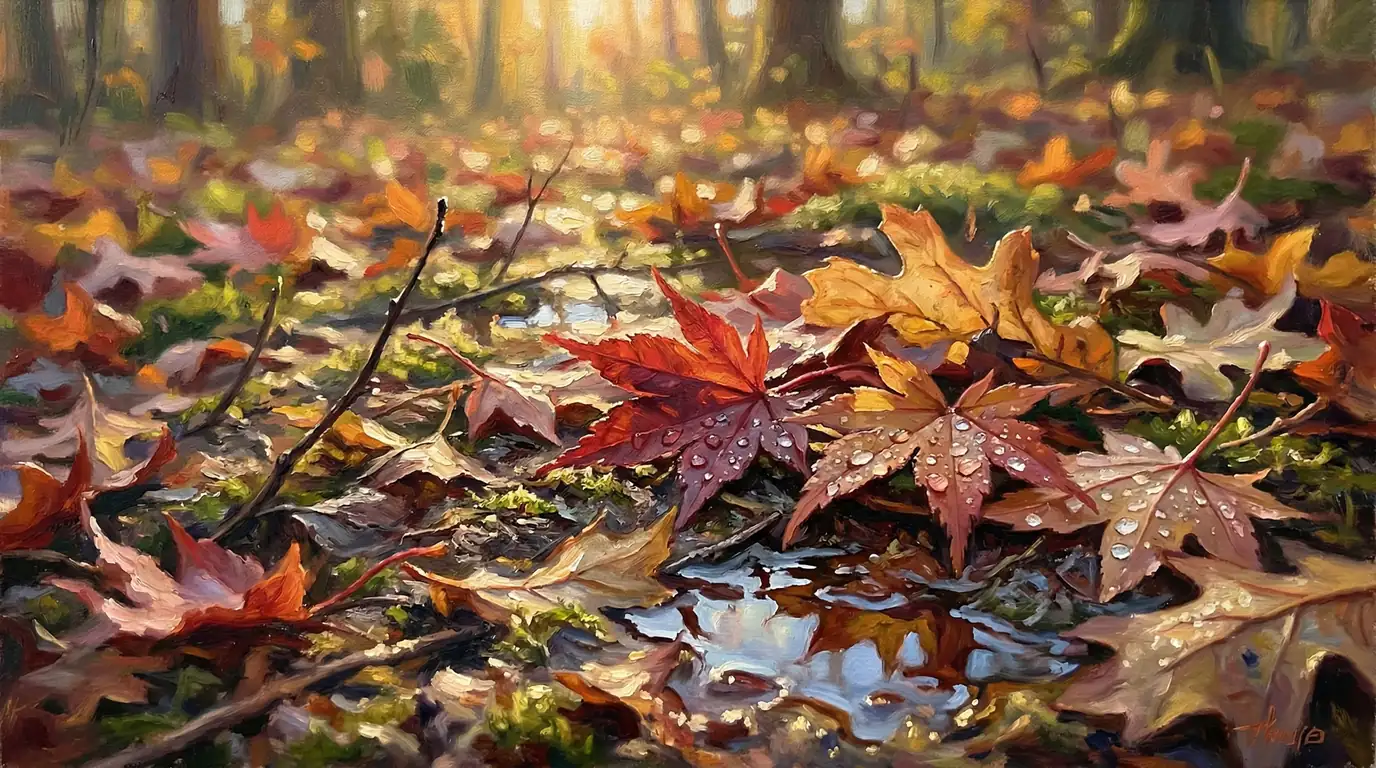 Tears of the Fallen Maple