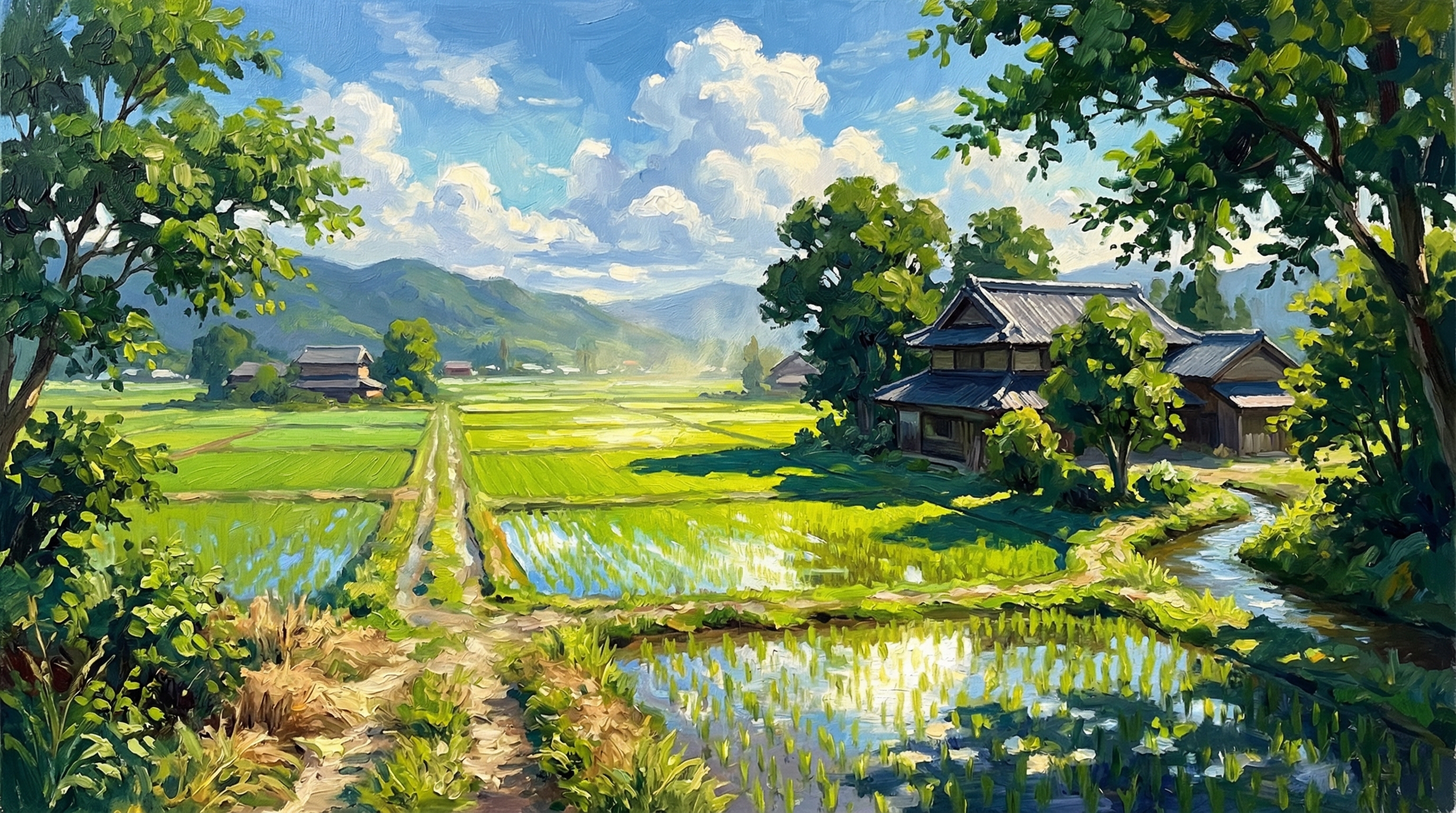
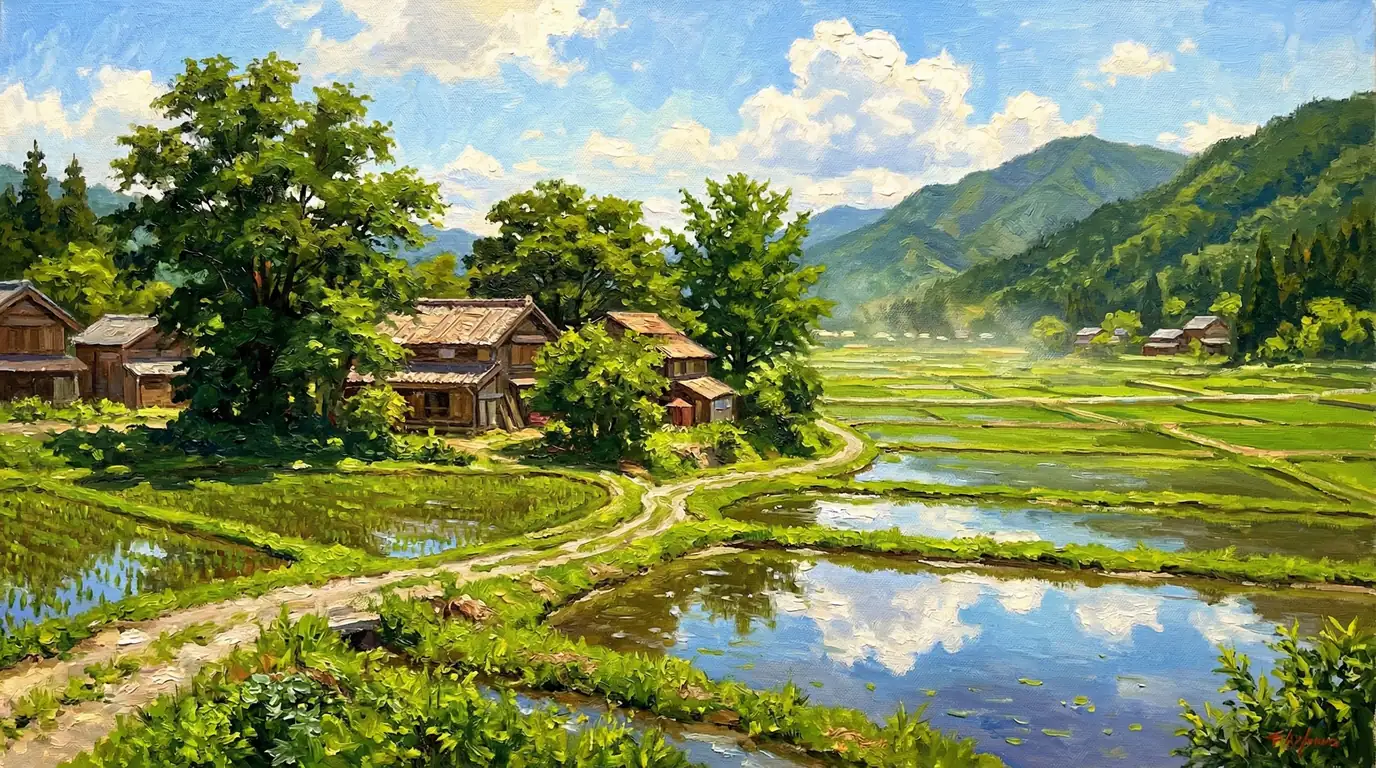
Sky Reflected in the Flooded Fields
Critique
1. Introduction This landscape painting captures a vivid summer day in a traditional Japanese rural village. The work emphasizes the brilliance of natural light and the lushness of the countryside. The composition focuses on flooded rice paddies reflecting a dynamic sky, creating a sense of openness and vitality characteristic of a peaceful midsummer afternoon. 2. Description Bright green rice paddies dominate the foreground, with several plots reflecting the sky. A narrow dirt path leads through the fields toward distant, misty mountains. On the right, traditional wooden houses with dark roofs are nestled among tall, leafy trees. The brilliant blue sky is filled with large, billowing white cumulus clouds, suggesting a hot, humid climate. 3. Analysis The artist employs an expressive style with bold brushstrokes. This technique is effective in rendering the dense foliage and the shimmering reflections in the water. The vibrant color palette features a range of greens, blues, and yellows, balanced by the earthy tones of the buildings. The use of light and shadow creates a strong sense of three-dimensional space. 4. Interpretation and Evaluation This piece successfully communicates the beauty of the Japanese rural landscape. The artist’s ability to capture the specific quality of summer light—intense yet softening in the distance—is a significant achievement. The harmonious arrangement of man-made structures and natural elements reflects a way of life integrated with the land. The execution shows a mastery of color. 5. Conclusion In conclusion, what appears as a simple rural scene is a sophisticated study of light. The painting evokes an emotional response through its celebration of nature's abundance and village life. It stands as a testament to the landscape genre, capturing a moment of summer brilliance with clarity and technical proficiency.
Same Subcategory
Similar Artworks
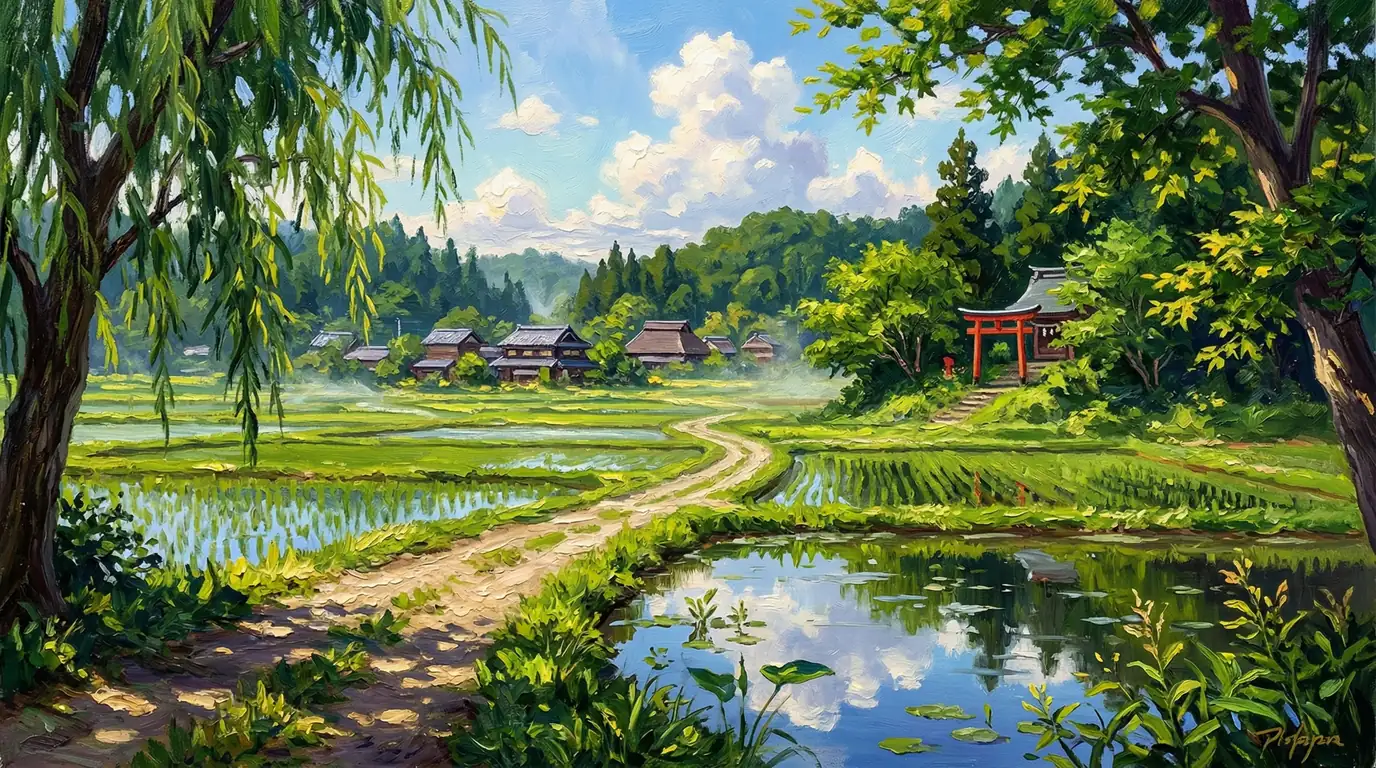 The Shrine Beyond the Summer Fields
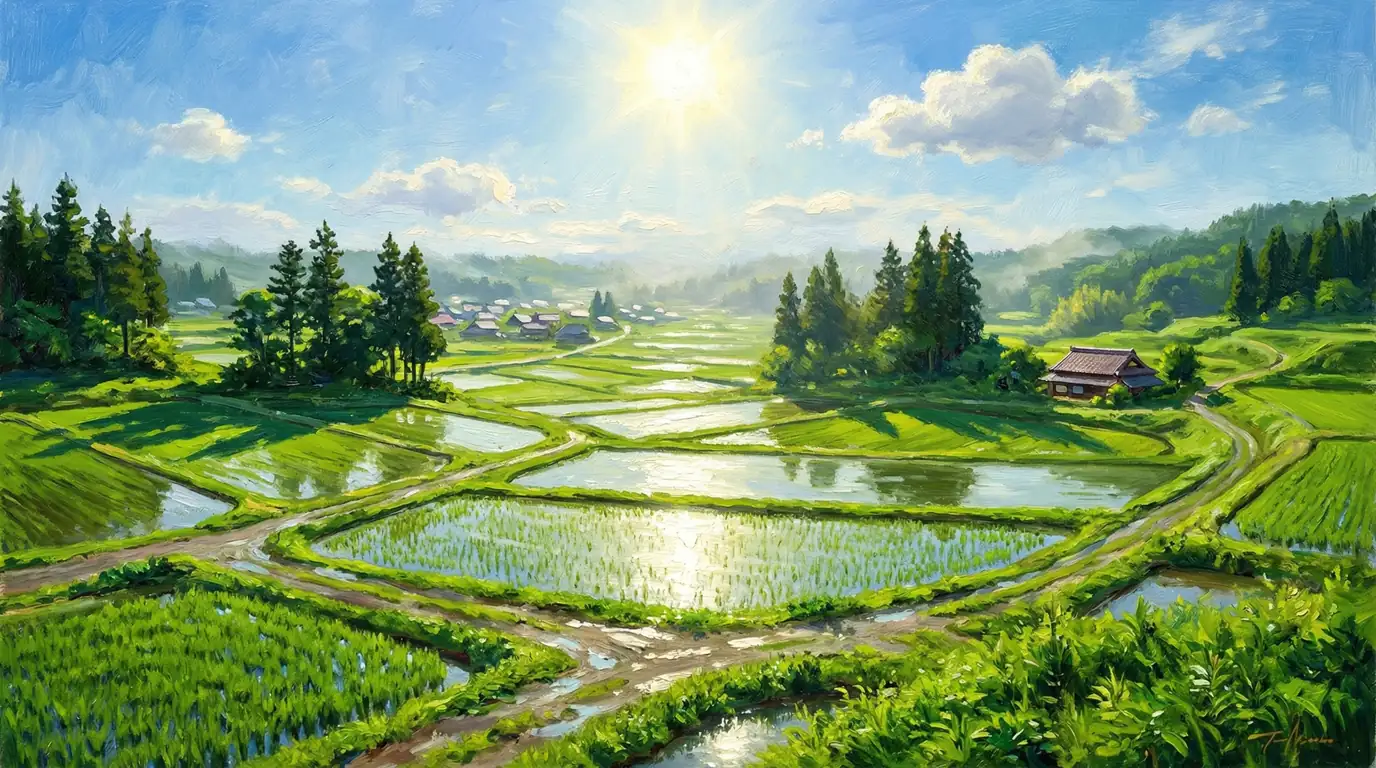 Golden Echoes of the Terrace
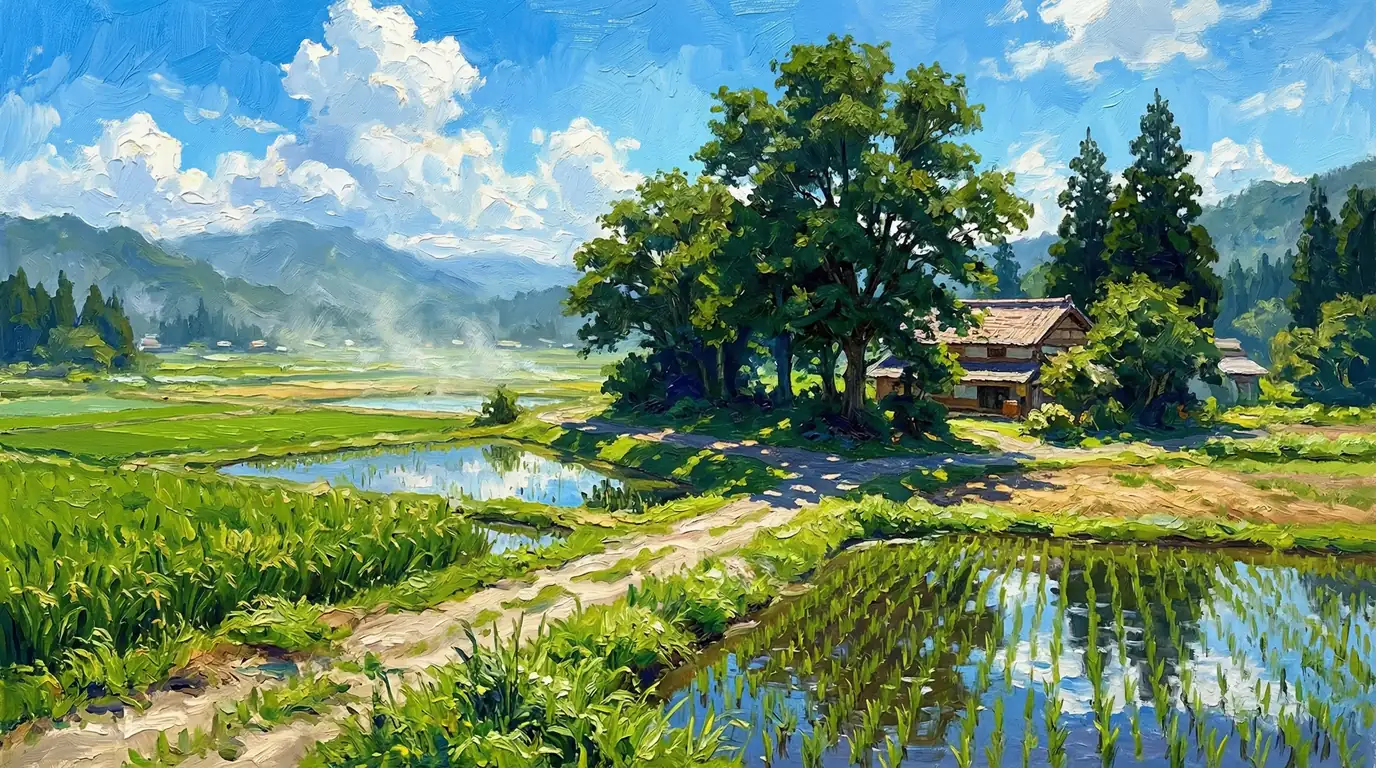 Serenade of the Summer Countryside
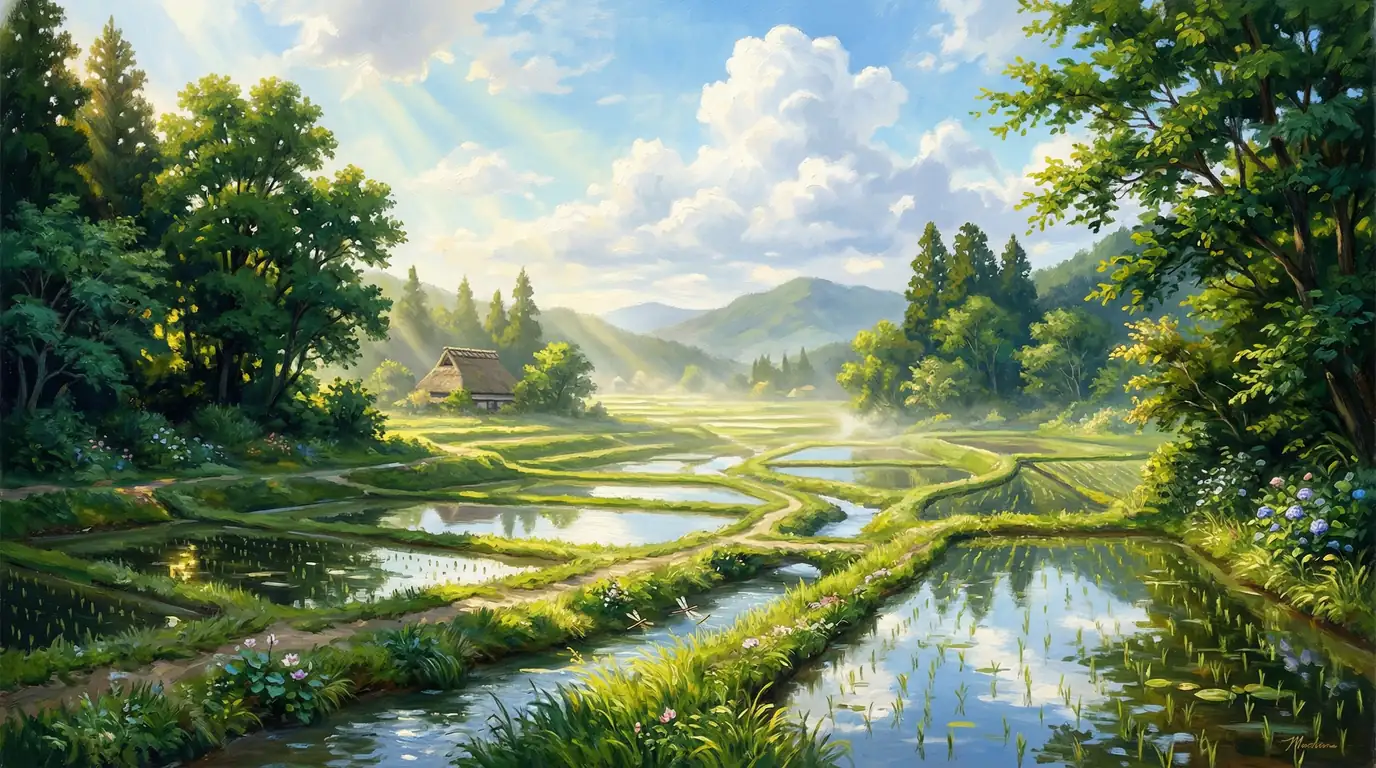 Rays of Hope Over the Terraces
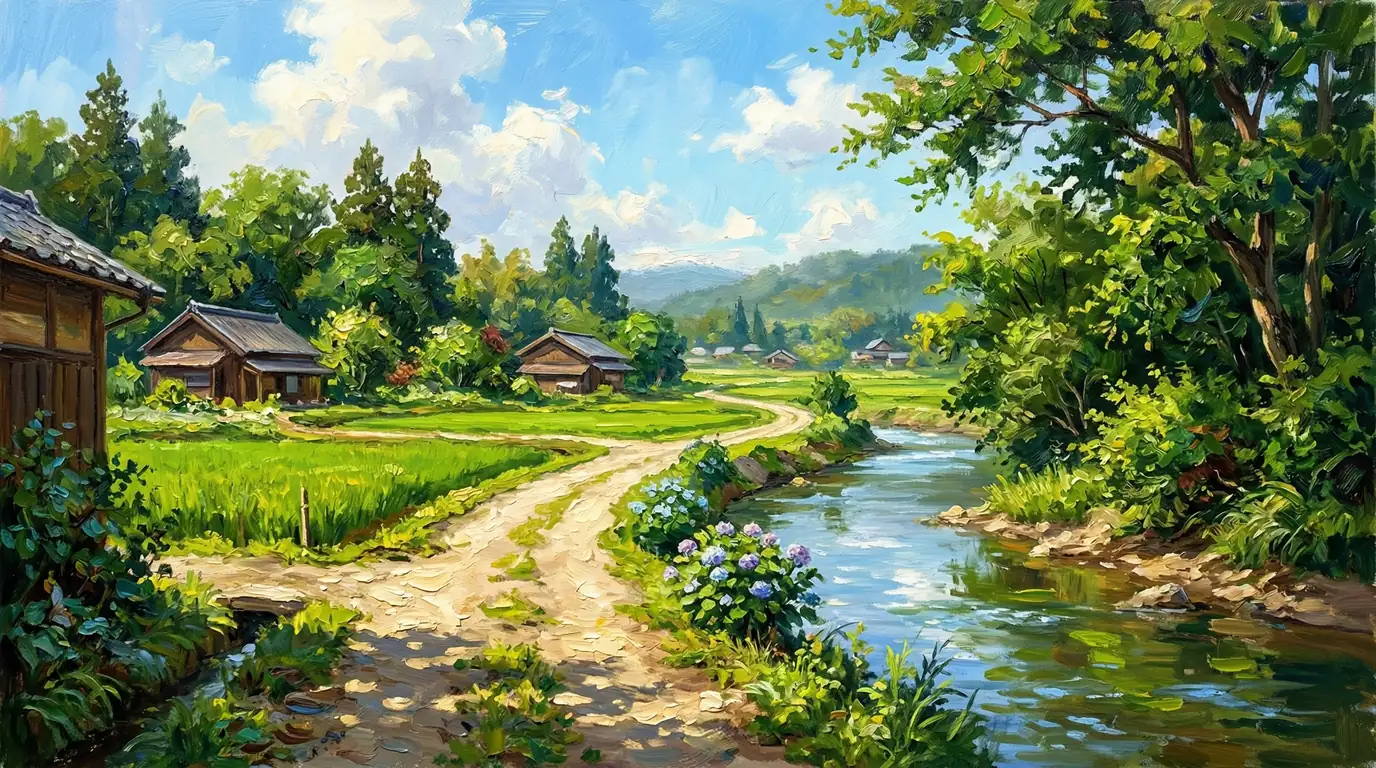 Hydrangea Bloom by the Singing River
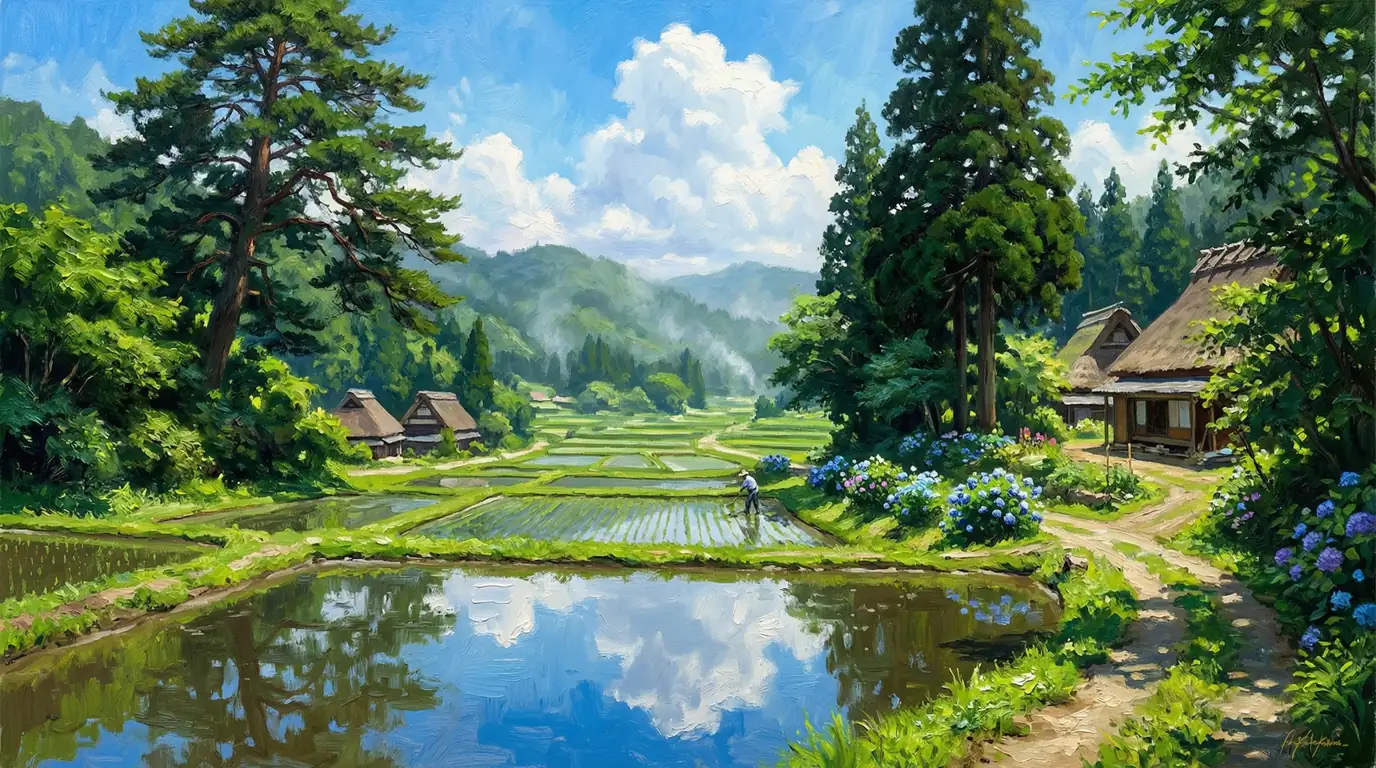 Whispers of the Green Earth: The Eternal Satoyama
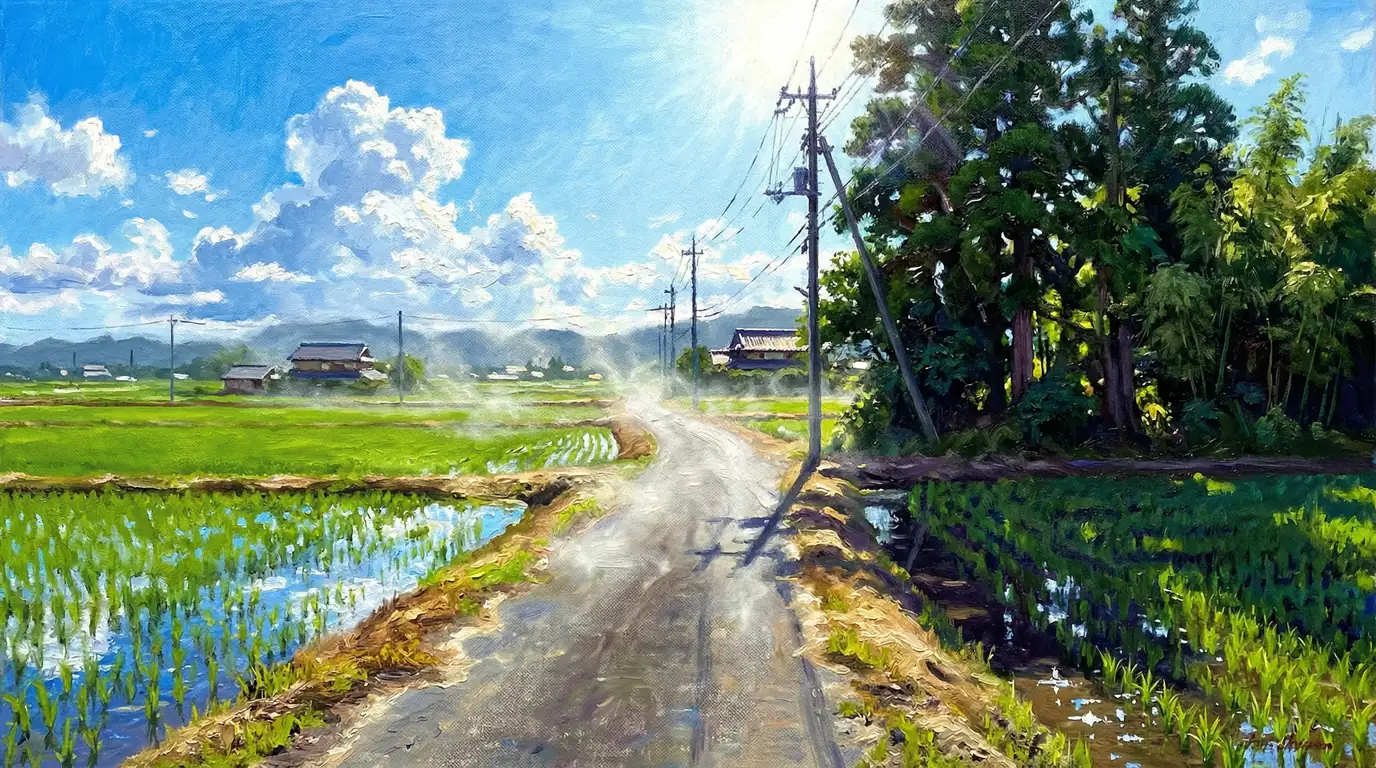 Midsummer Nostalgia
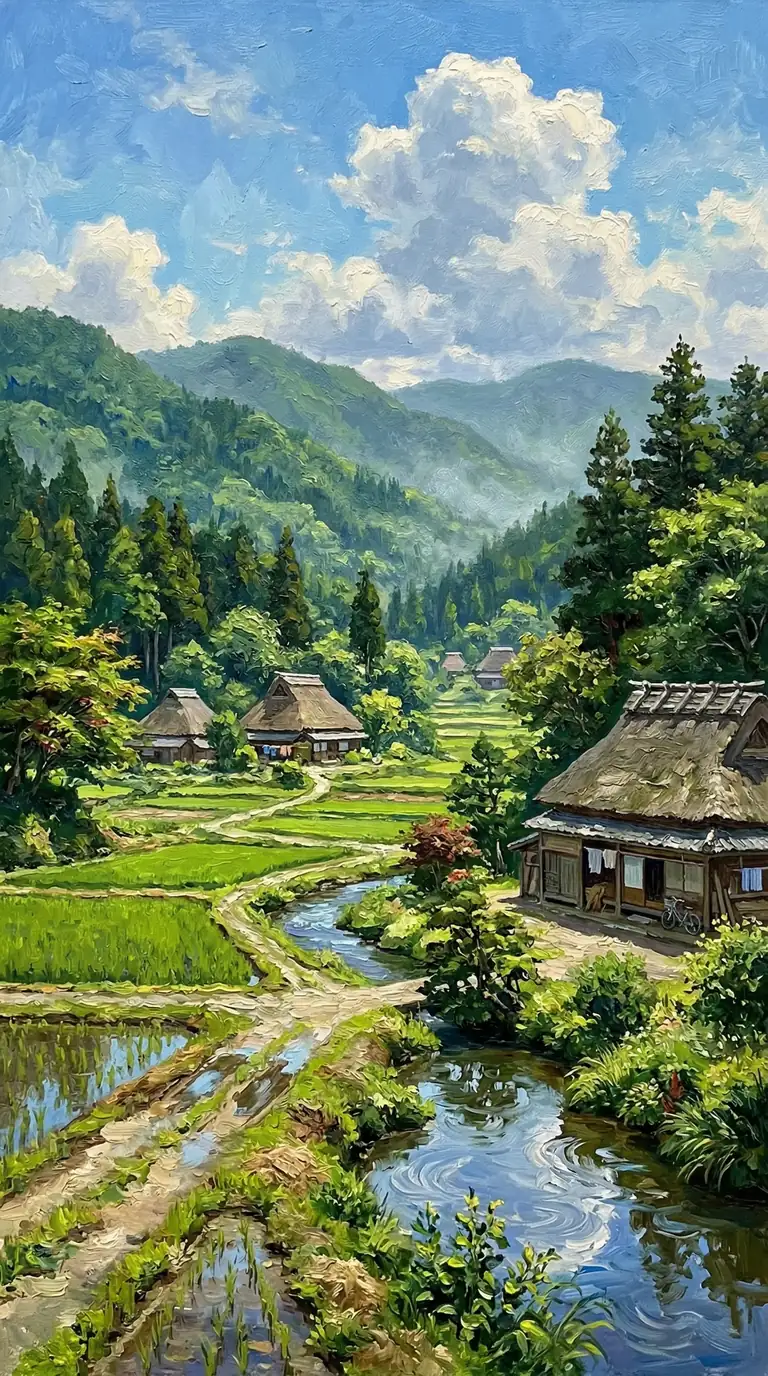
 Summer's Gentle Embrace
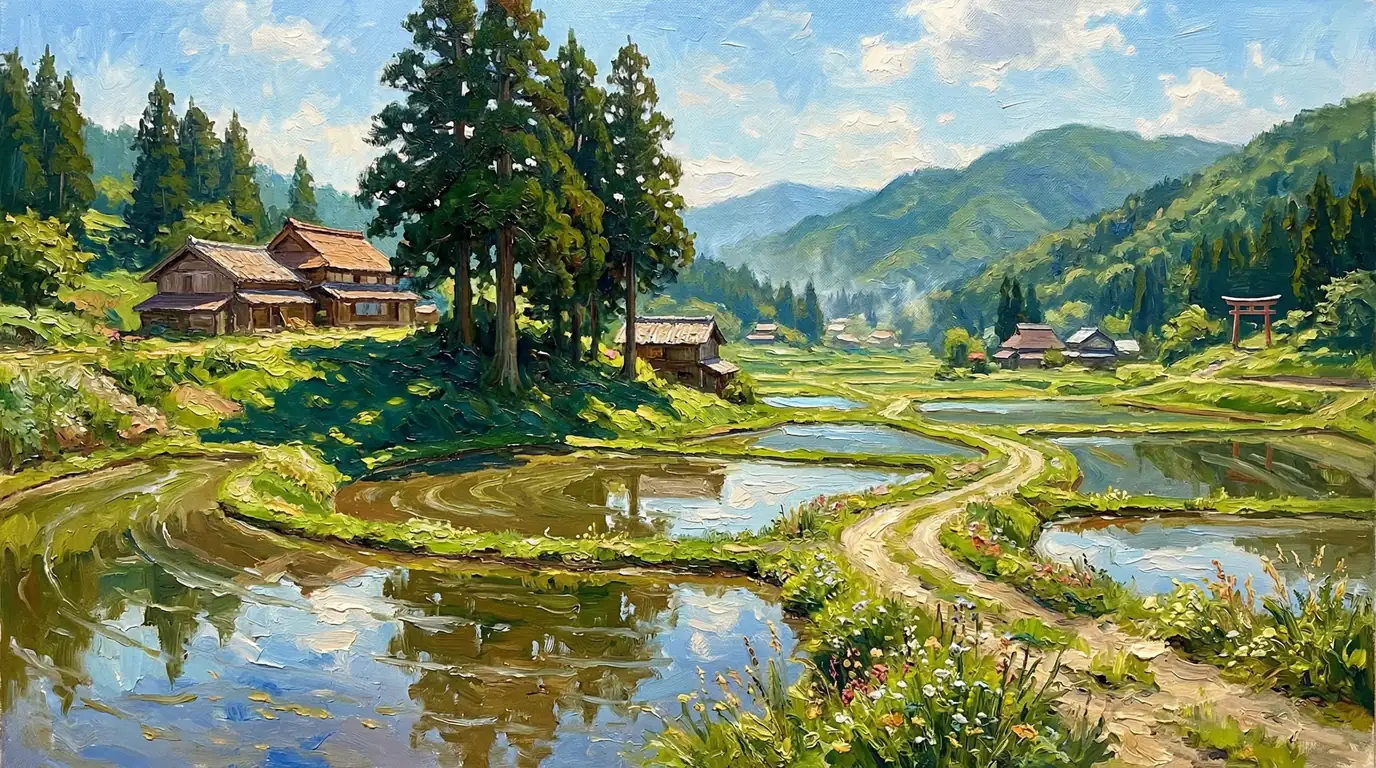 Nostalgia in the Verdant Valley
 Autumn's Ascendancy: A Tapestry of Crimson and Gold