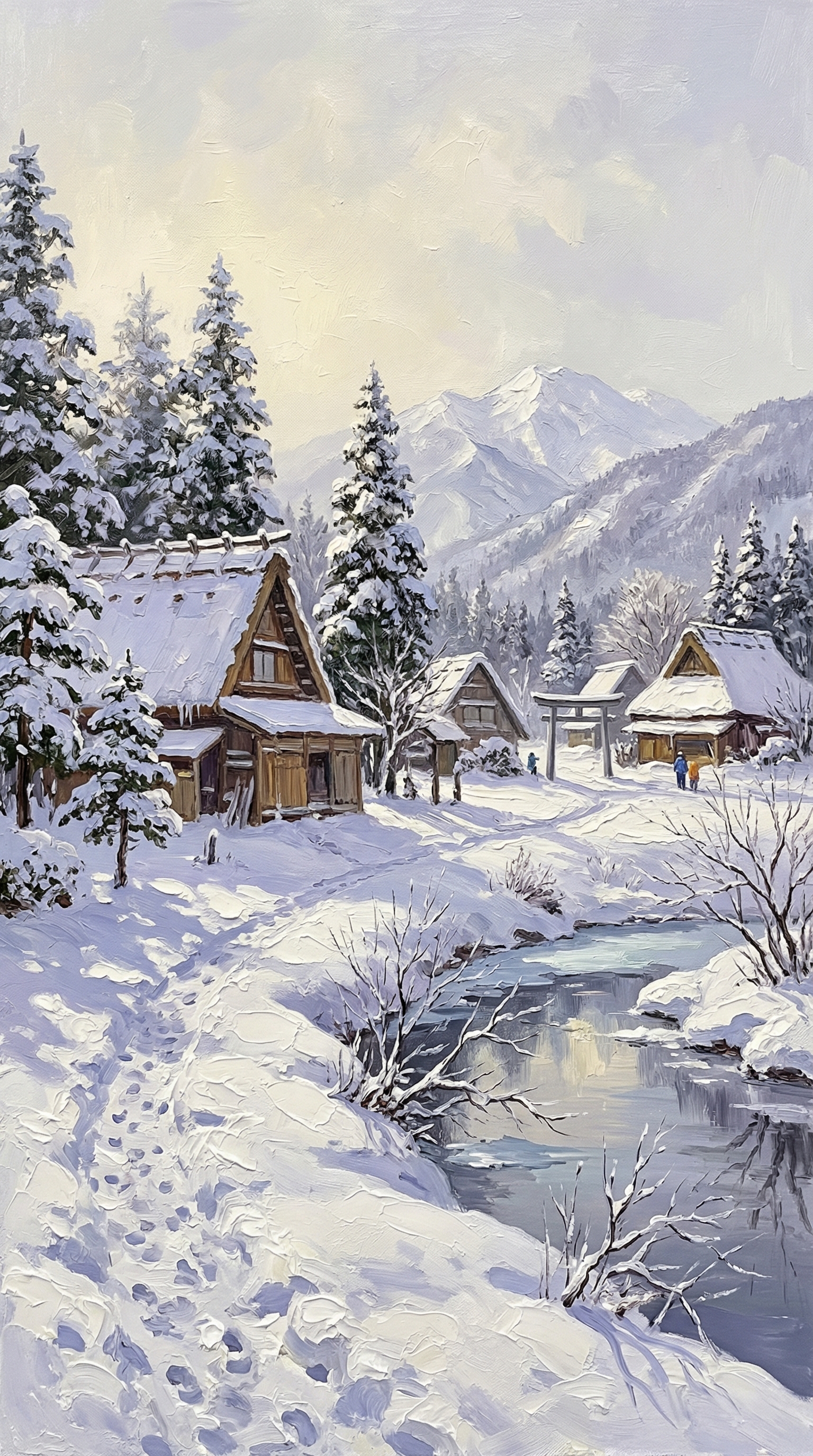
Slumbering Village: A Winter Tale in the Mountains
Critique
1. Introduction This vertical landscape painting depicts a serene, snow-covered Japanese village, featuring traditional thatched-roof houses nestled in a mountainous region. The composition captures a quiet winter morning, where the heavy accumulation of snow has transformed the rural settlement into a monochrome wonderland. The work evokes a sense of nostalgia and peace, celebrating the enduring charm of classical Japanese architecture in harmony with a rugged natural environment. 2. Description The foreground is dominated by a winding snowy path marked by deep footprints, leading the viewer's eye toward several gassho-zukuri style houses with steeply pitched roofs. To the right, a small, dark river reflects the pale sky, its banks piled high with textured snow. A traditional torii gate stands near the center, marking the entrance to a sacred space, while towering, snow-clad mountains rise majestically in the background under a soft, overcast light. 3. Analysis The artist employs a vigorous impasto technique, using thick, rhythmic brushstrokes to convey the physical weight and crystalline texture of the snow. The color palette is primarily composed of various shades of white, with cool blue and violet shadows adding depth and form to the drifts. The warm browns of the wooden structures provide a necessary visual anchor, while the distant mountains are rendered in pale, atmospheric tones that enhance the overall sense of scale and coldness. 4. Interpretation and Evaluation This painting effectively portrays the resilience of traditional rural life and the quiet dignity of a landscape in repose. The footprints on the path suggest a human presence without showing figures directly, creating a narrative of daily labor and persistence amidst the cold. Technically, the rendering of light as it filters through the winter clouds is masterful, as it illuminates the scene with a soft glow that avoids harsh contrasts. The composition is well-balanced, successfully integrating architectural and natural elements. 5. Conclusion Through its rich textures and carefully considered color harmonies, the work elevates a familiar winter scene into a profound exploration of seasonal stillness. The initial impression of a cold, isolated village gradually shifts toward a feeling of cozy insulation and domestic warmth within the houses. Ultimately, the painting provides a meditative experience that invites the viewer to appreciate the silent beauty of winter. It stands as a compelling tribute to the timeless relationship between the Japanese people and their natural surroundings.
Same Subcategory
Similar Artworks
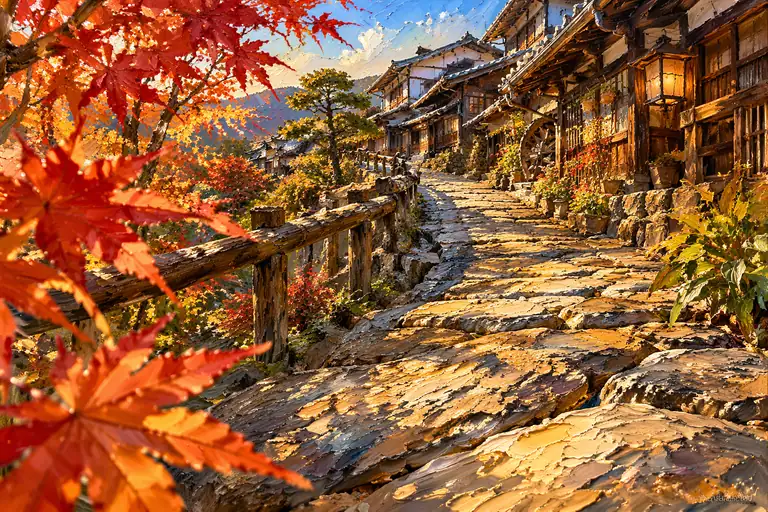 Ascent to the Autumn Skies
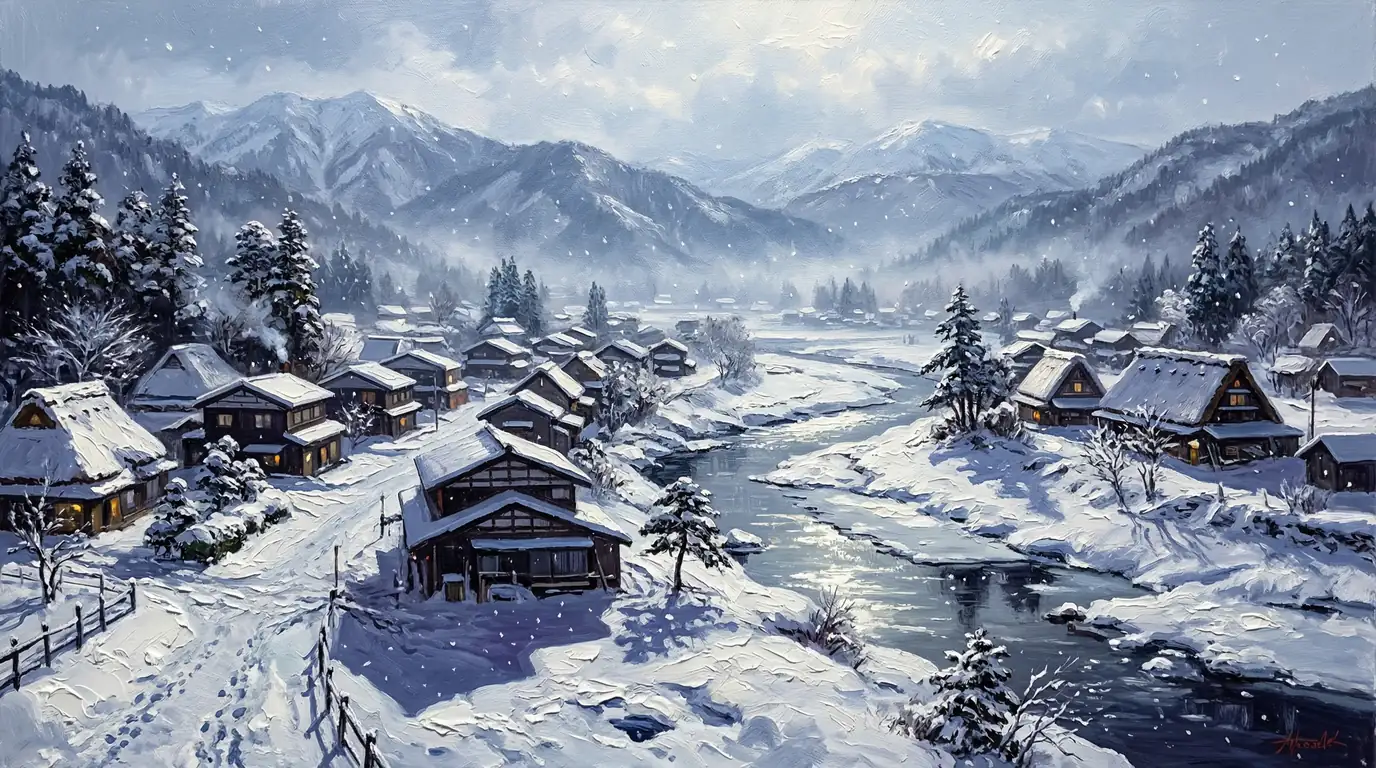 Whispering Snow in the Heart of Silence
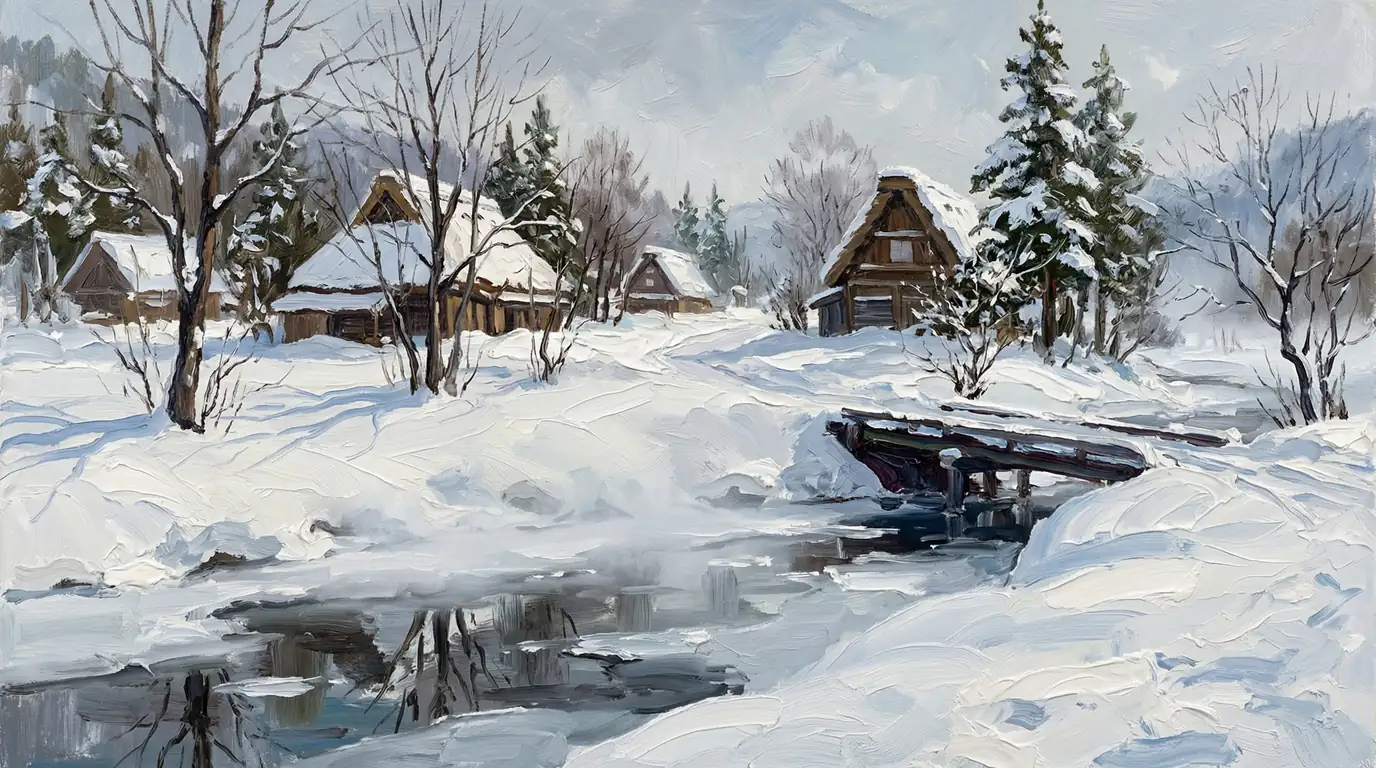 Nostalgic Slumber of the Snowy Hamlet
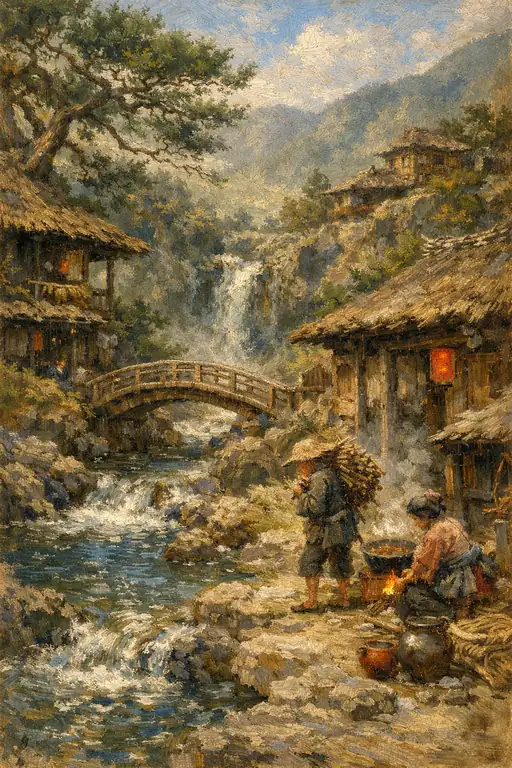 Warmth of the Evening Village
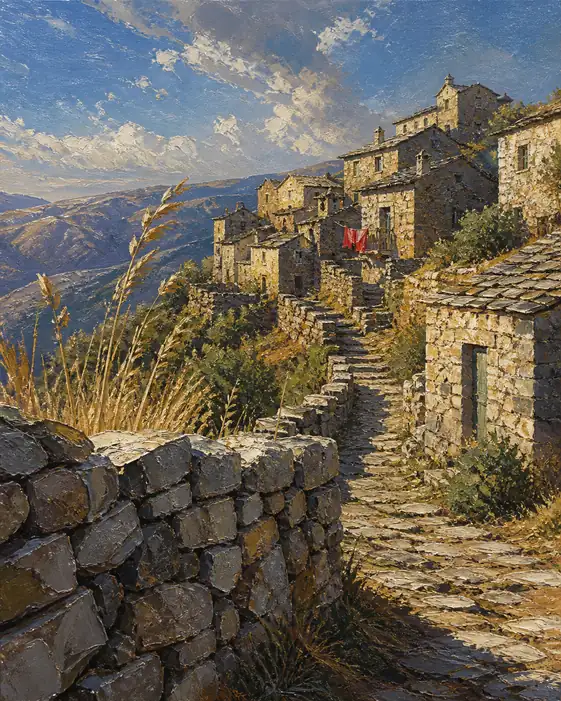 The Ascent of Sunlit Stone
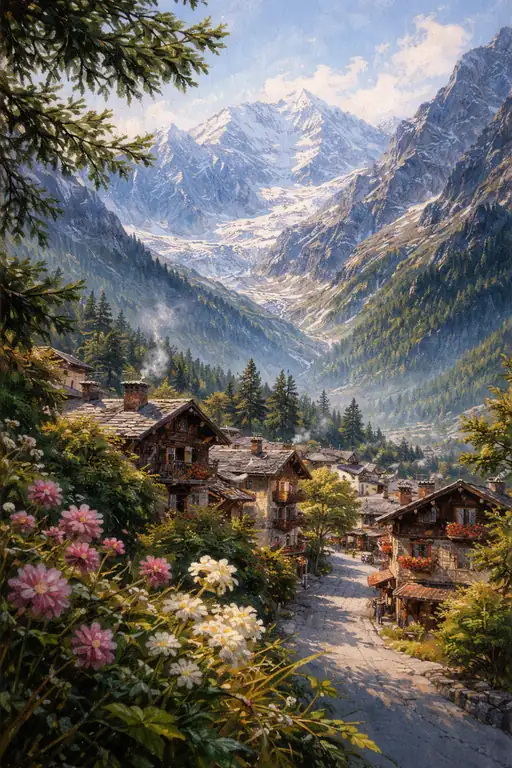 Crisp Echoes of the Alpine Sanctuary
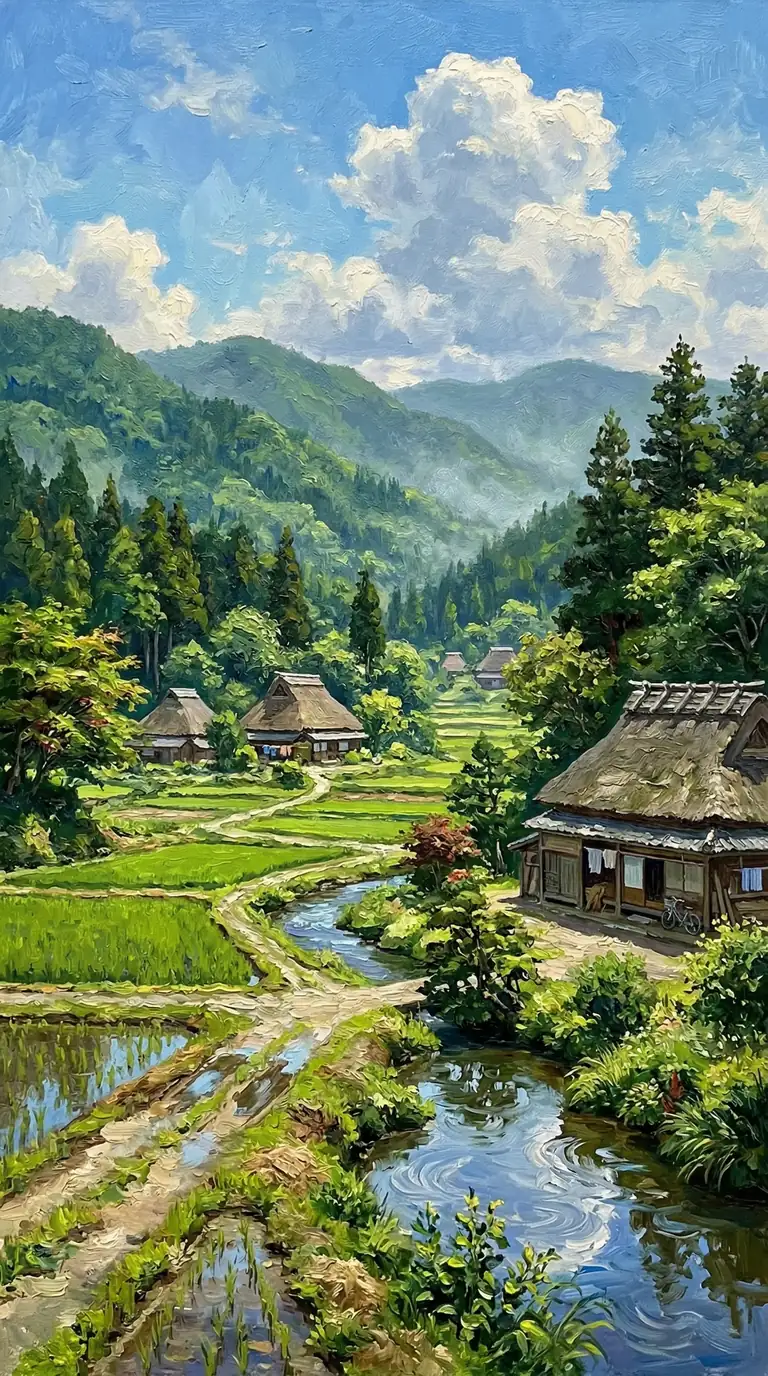 Autumn's Ascendancy: A Tapestry of Crimson and Gold
 Alpine Heartbeat Amidst the Peaks
 The Gentle Welcome of Twilight
 Echoes of Alpine Solitude