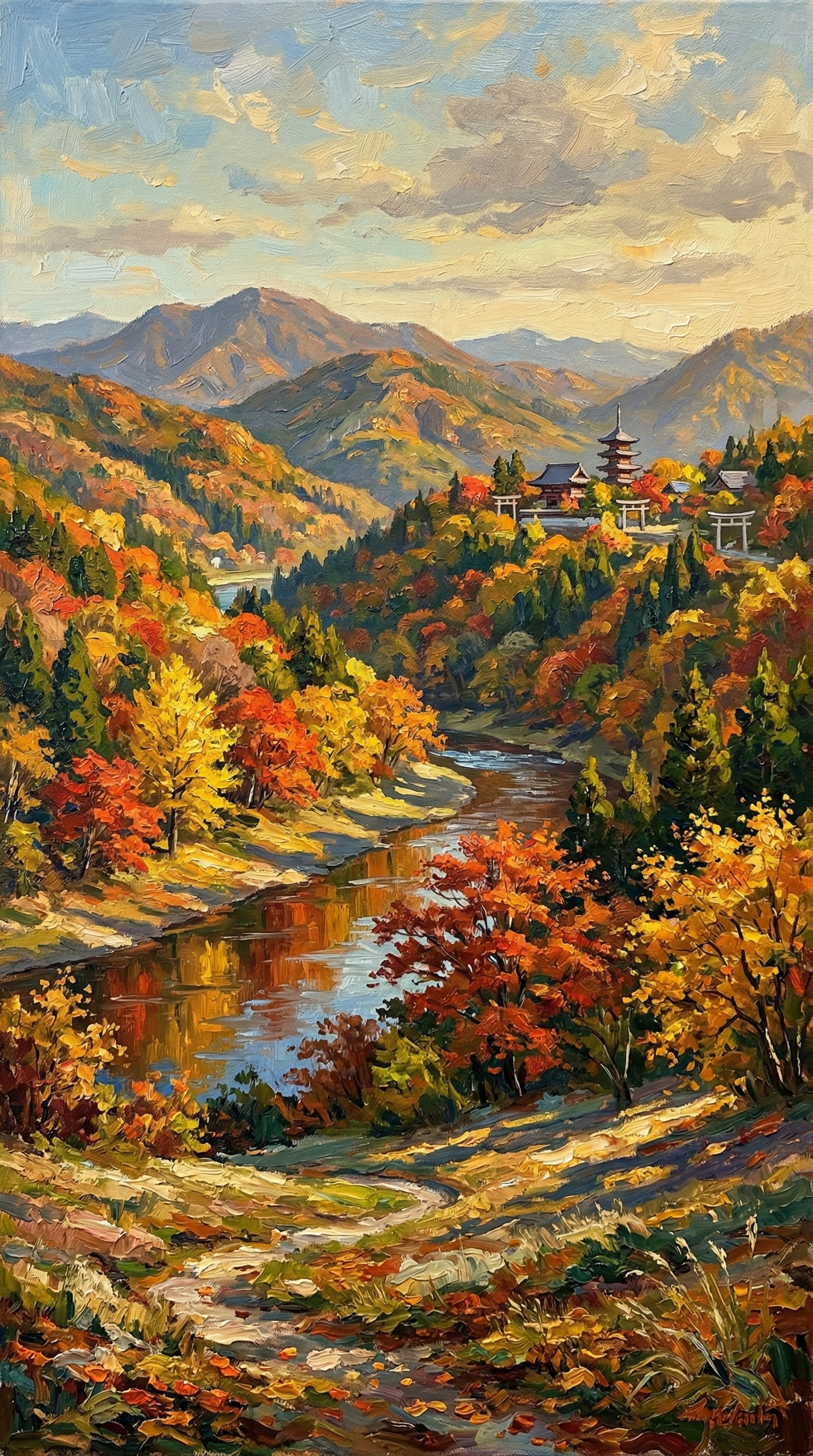
Symphony of the Maple: A Meditative Autumn Walk
Critique
1. Introduction This evocative painting captures the breathtaking splendor of a Japanese autumn, where the landscape is transformed into a vibrant tapestry of reds, oranges, and golds. Set against a backdrop of rolling mountains, the scene harmoniously integrates a traditional Buddhist temple complex into the natural environment. It is a work that celebrates the peak of the season with a profound sense of spiritual tranquility. 2. Description A winding river flows through the center of the composition, its surface reflecting the fiery hues of the surrounding forest. On a distant hillside, a three-story pagoda and several white torii gates stand prominently among the autumn foliage, marking a sacred space within the wild landscape. The sky above is filled with soft, textured clouds, illuminated by the warm, golden light of a late afternoon sun. 3. Analysis The artist utilizes a rich, warm color palette, employing bold and expressive brushstrokes that give the foliage a sense of physical volume and movement. The composition is masterfully structured, with the river’s curve acting as a visual guide that leads the viewer’s eye toward the architectural focal points on the hill. The use of impasto-like techniques adds a tactile quality to the foreground, enhancing the overall depth of the scene. 4. Interpretation and Evaluation The work poignantly illustrates the concept of mono no aware, or the bittersweet appreciation of impermanence, as seen in the fleeting beauty of the autumn leaves. The integration of the temple into the mountain suggests a deep-rooted reverence for nature as a sanctuary. Technically, the painting is exceptional in its ability to capture the specific quality of light that defines an autumn evening in the Japanese highlands. 5. Conclusion Ultimately, the viewer is left with a lasting impression of the landscape’s majestic yet transitory beauty. What begins as a visual feast for the eyes matures into a meditative reflection on the cycles of nature and the human place within them. This painting stands as a powerful testament to the timeless allure of the Japanese wilderness during its most colorful transition.
Same Subcategory
Similar Artworks
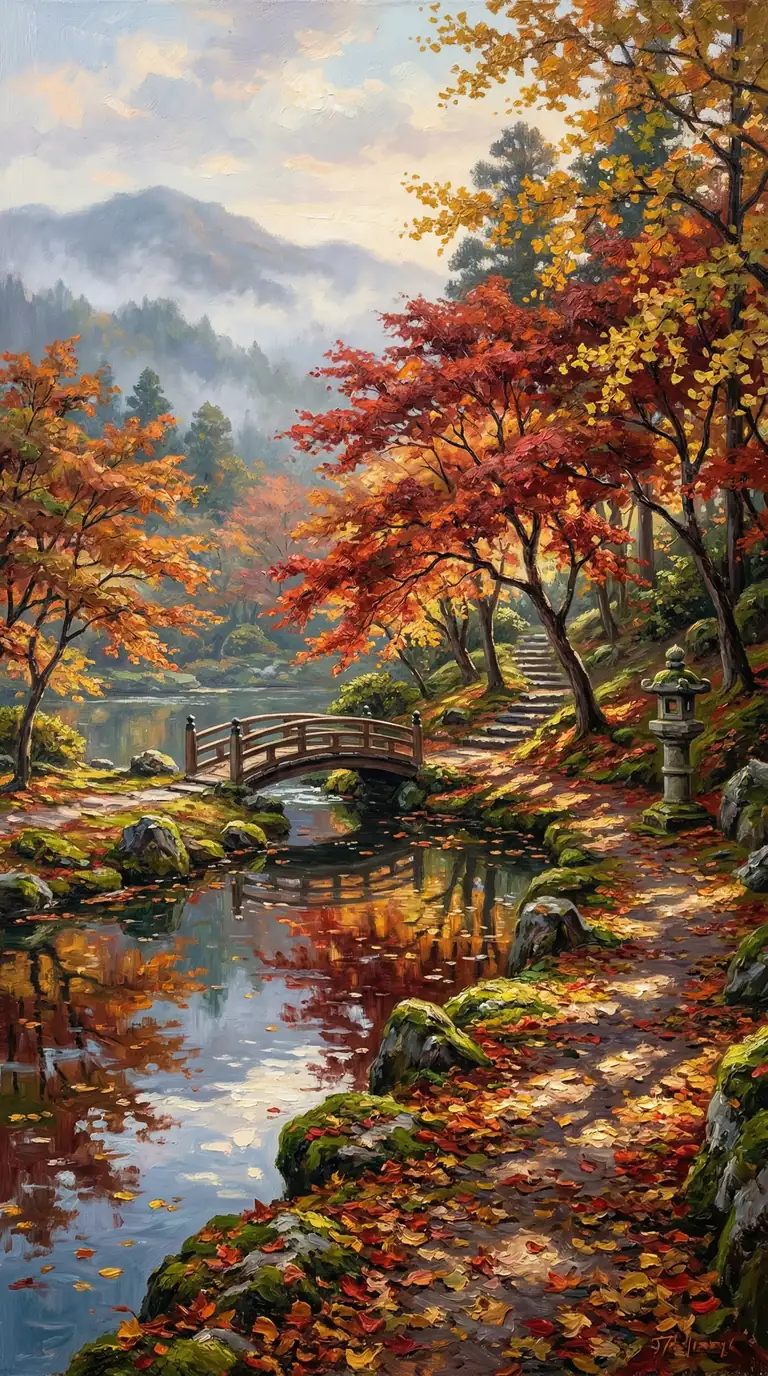 Whispering Crimson: Serenity in the Autumn Garden
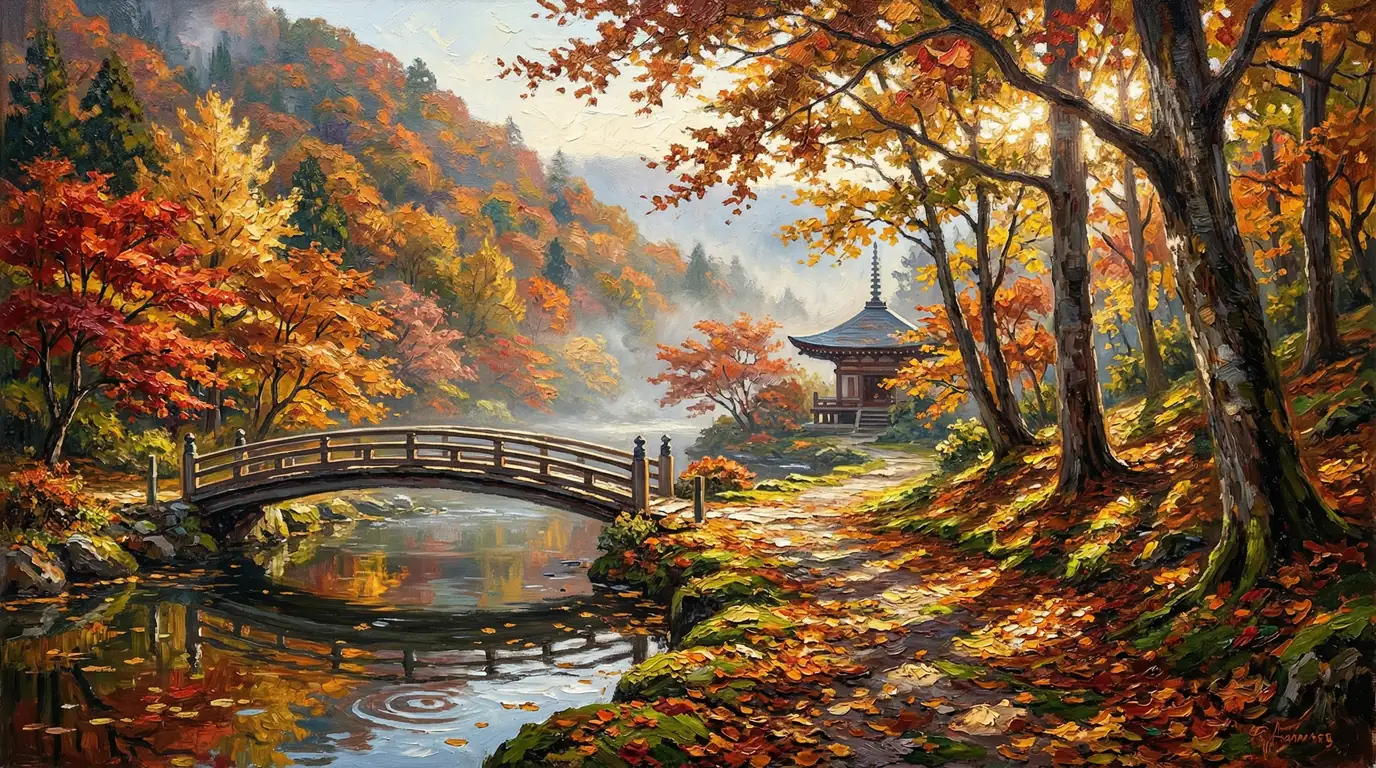 Echoes of the Golden Temple
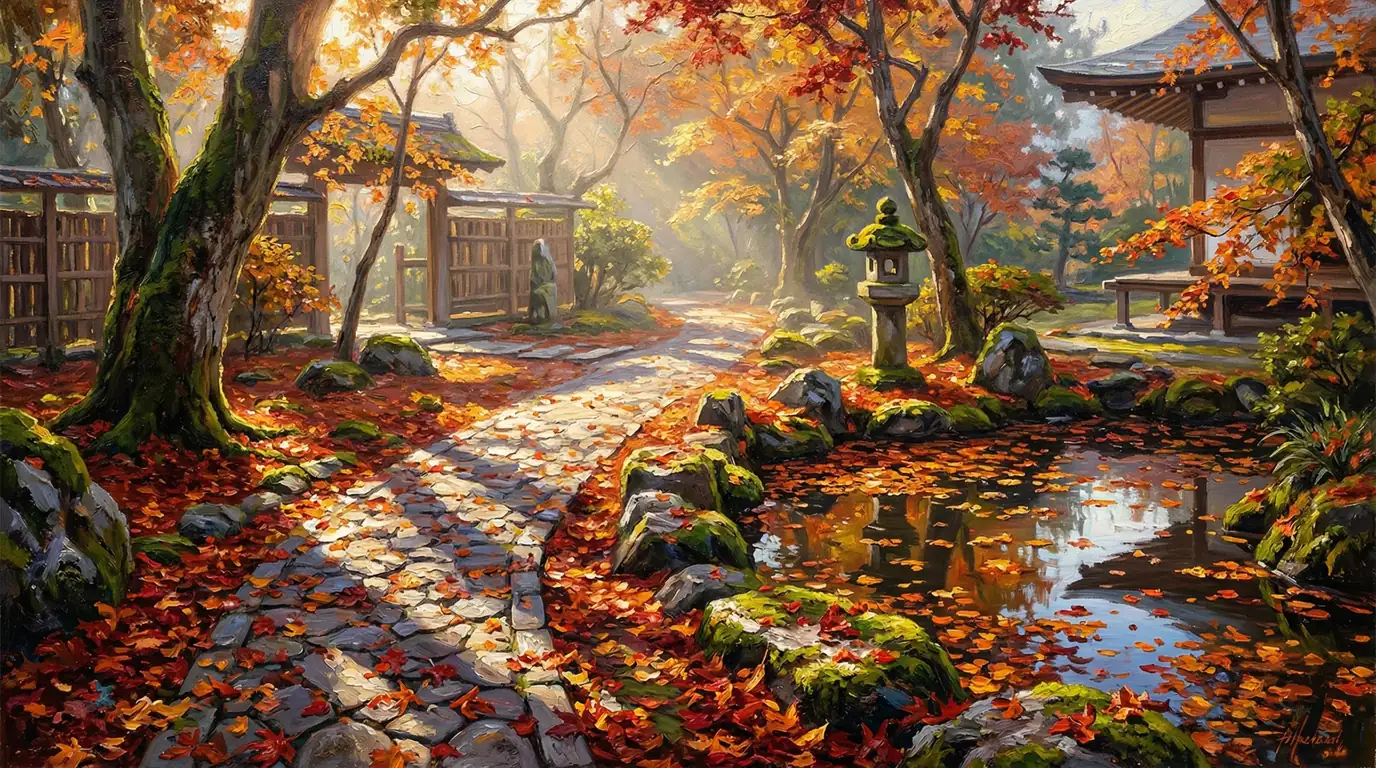 Golden Autumn in the Zen Garden
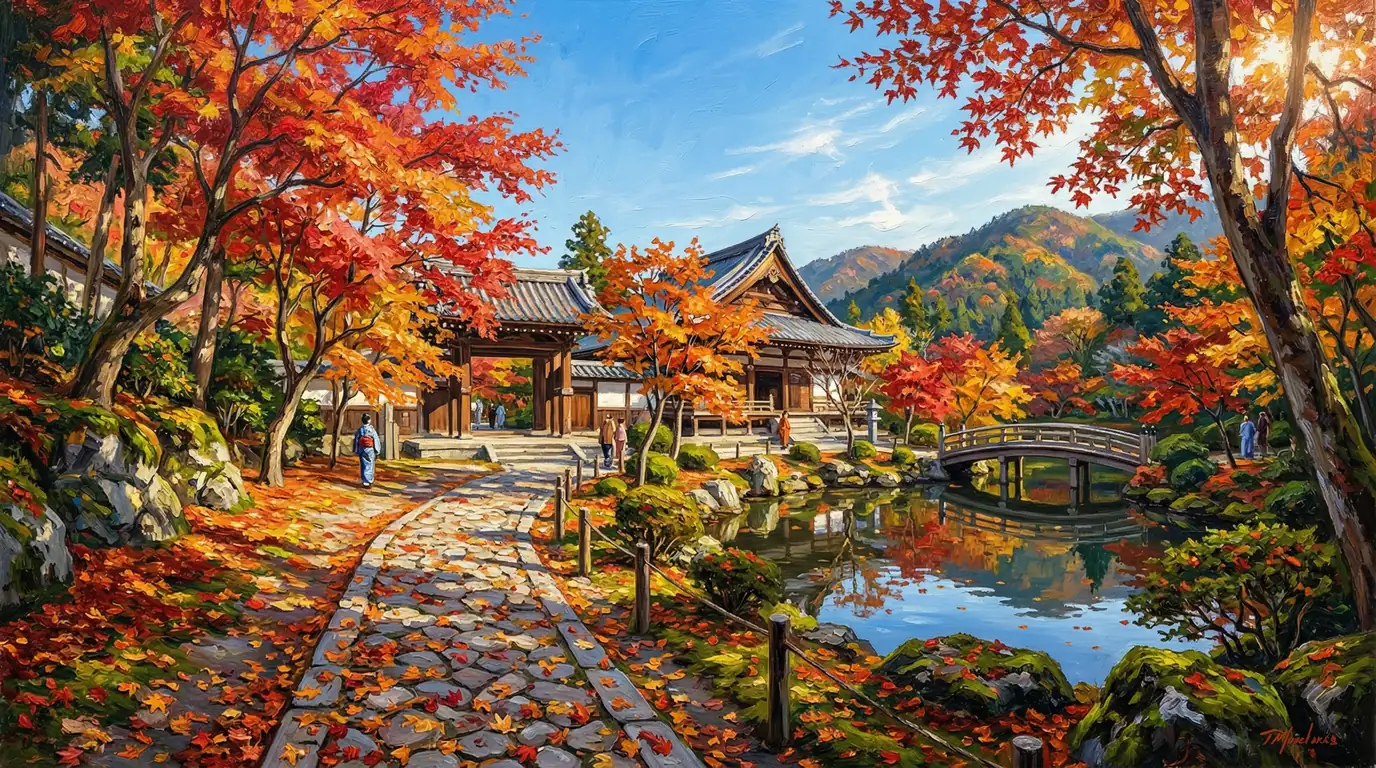 Autumn's Ephemeral Mirror
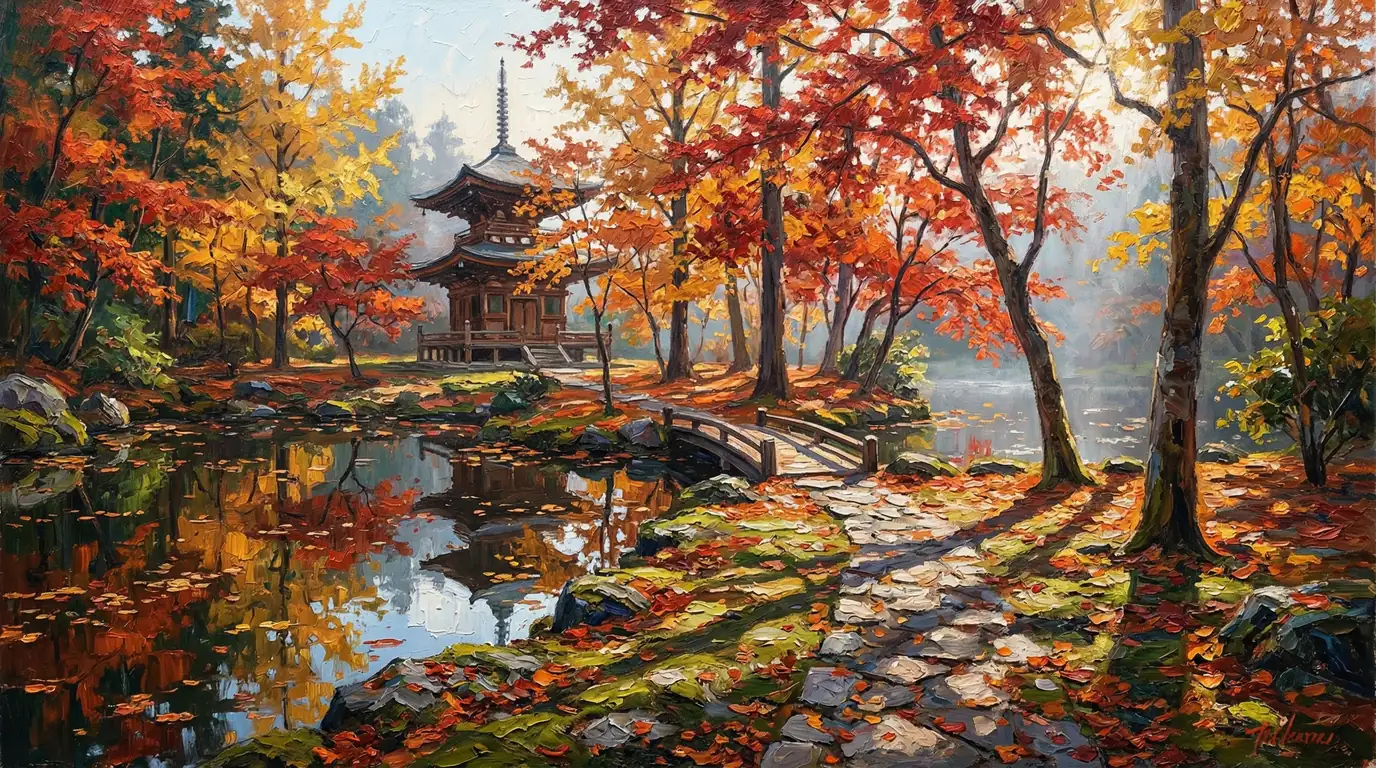 Symphony of Autumn Colors
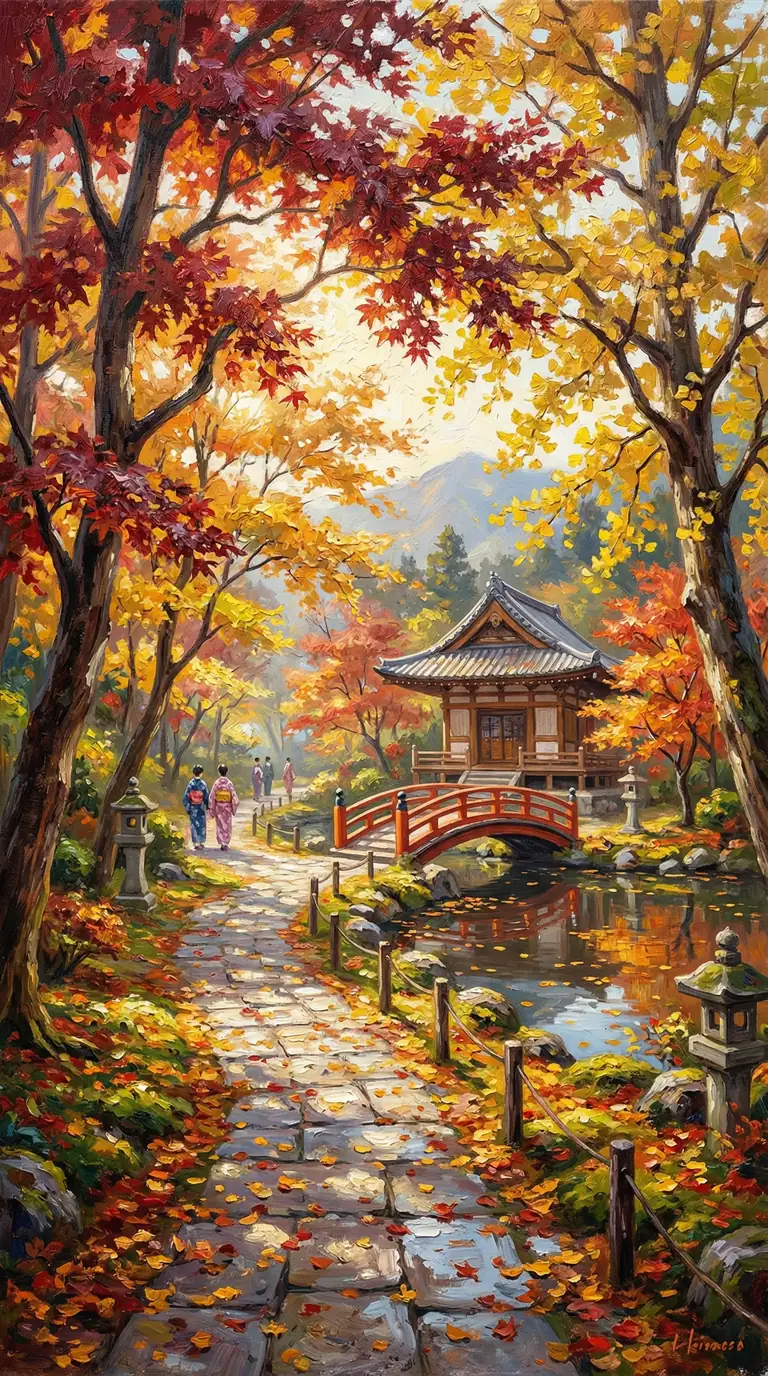 Crimson Canopy: The Golden Echoes of Autumn
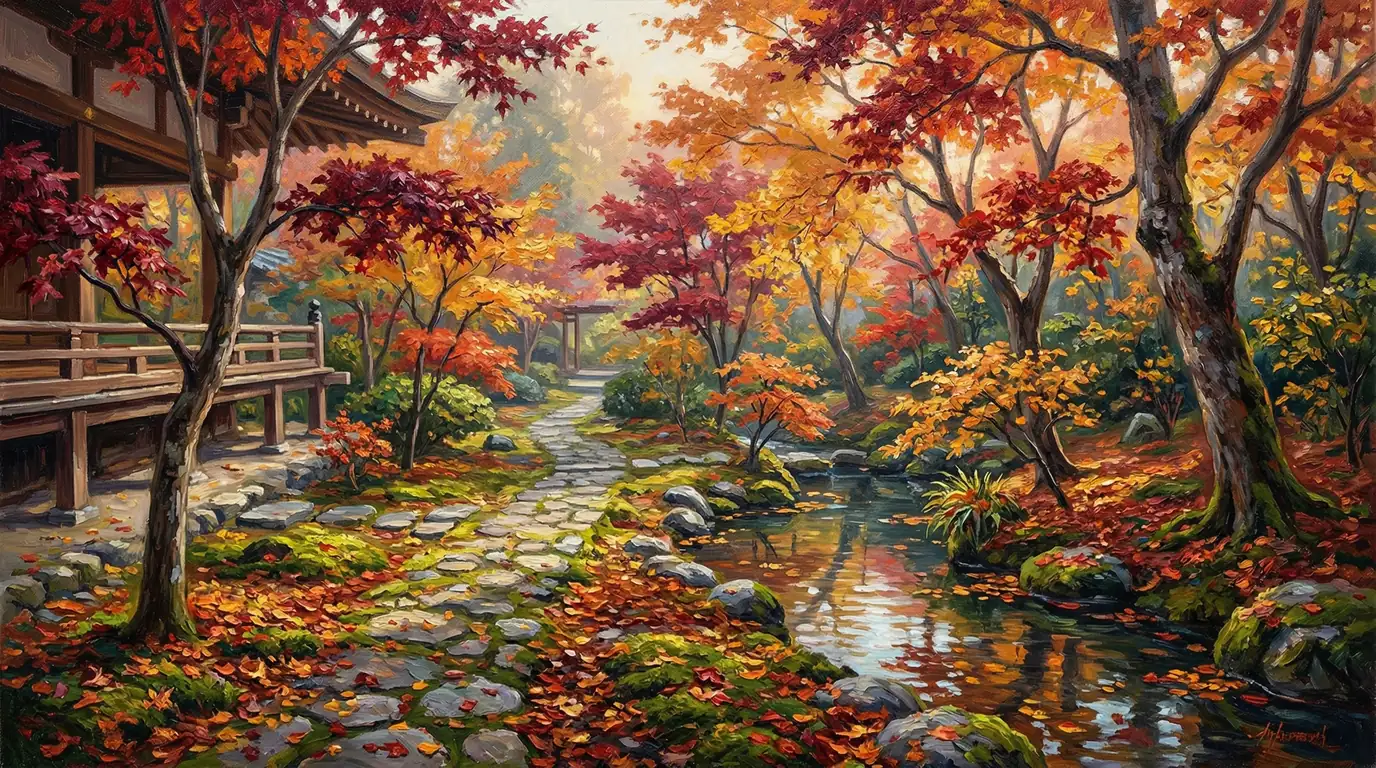 Golden Leaves by the Teahouse
 Fuji from the Wisteria Garden
 Autumn Glow along the Stream
 The Golden Ascent Through Autumn's Embrace