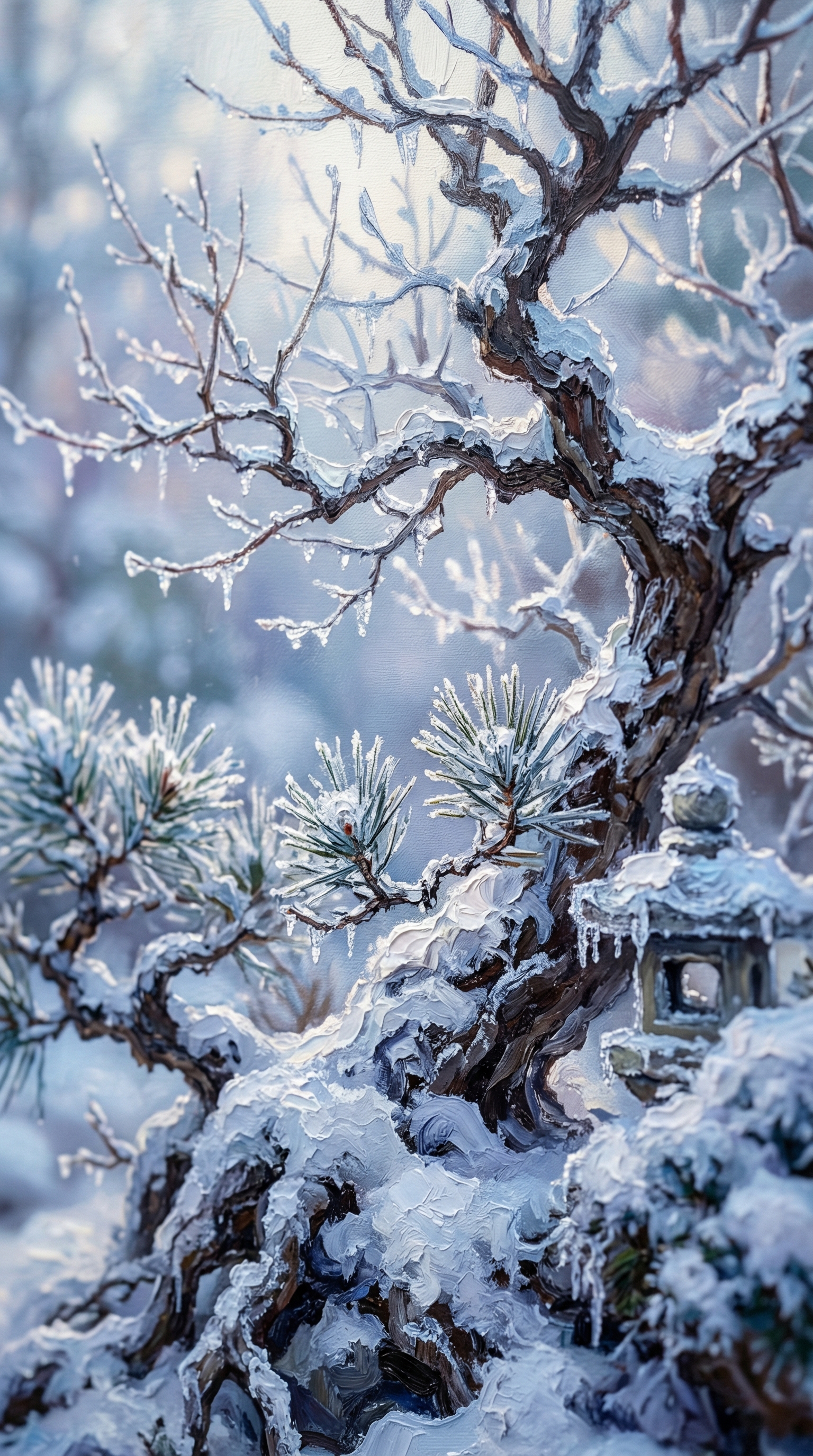
Quietude in White: The Frozen Pulse of the Garden
Critique
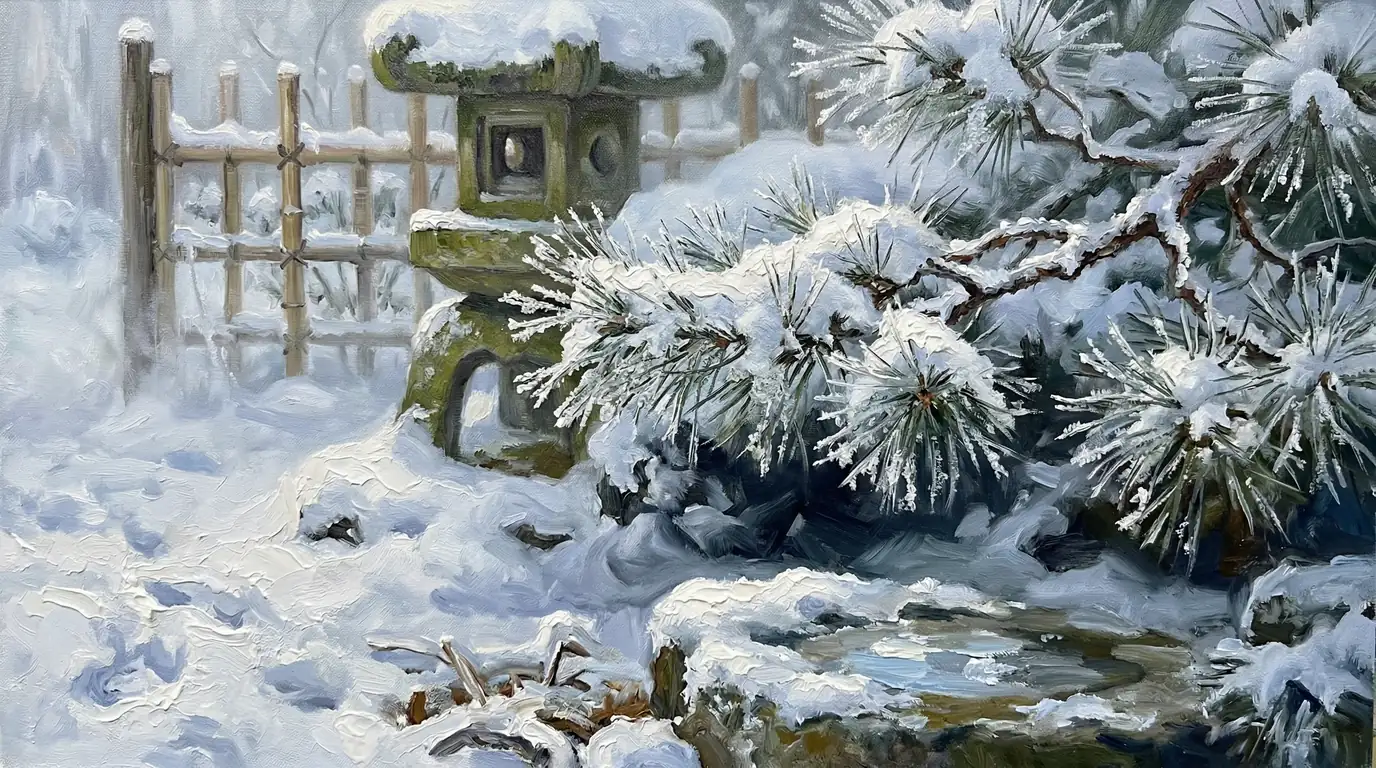
Introduction This oil painting captures a serene winter scene featuring a traditional stone lantern and a pine tree laden with snow. The work emphasizes the tactile qualities of ice and snow through a bold, expressive application of paint. It invites the viewer into a quiet, frozen garden where time seems to stand still. Description In the foreground, a gnarled pine tree extends its branches, which are covered in thick, white impasto representing a heavy snowfall. To the right, a classic Japanese stone lantern, or toro, sits partially buried in the snow, its architectural details softened by the winter cloak. The background is a soft, blurred wash of pale blues and whites, suggesting a misty or overcast winter sky. Analysis The most striking element is the heavy texture, created using a palette knife or thick brushwork to give the snow a three-dimensional quality. This impasto technique contrasts with the thinner, more atmospheric background, creating a sense of depth and focus. The color palette is restricted to cool tones—whites, icy blues, and earthy browns—which reinforces the chilling atmosphere of the scene. Interpretation and Evaluation The painting successfully conveys the weight and stillness of a deep winter. The use of texture is particularly effective, as it captures the physical presence of frozen precipitation rather than just its visual appearance. The composition, with the tree and lantern framing the right side, creates a balanced yet dynamic view that guides the eye through the icy landscape. Conclusion Initially appearing as a simple landscape, the painting reveals a deep appreciation for the textures of nature under extreme conditions. It stands as a powerful testament to the beauty of the quiet, cold moments in a garden. The artist's mastery of impasto brings a modern energy to a traditional subject.
Same Subcategory
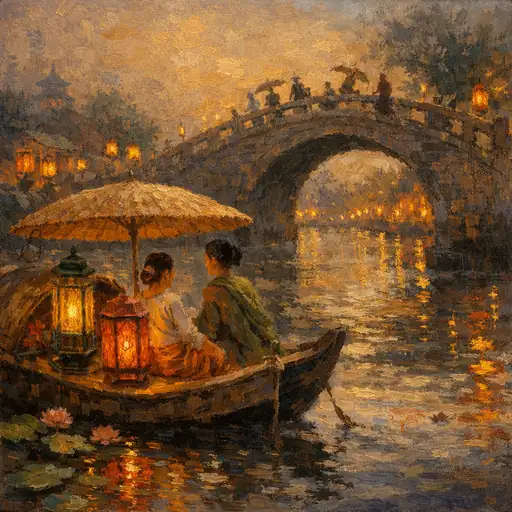 Serenade of Lanterns on the Velvet River
Similar Artworks
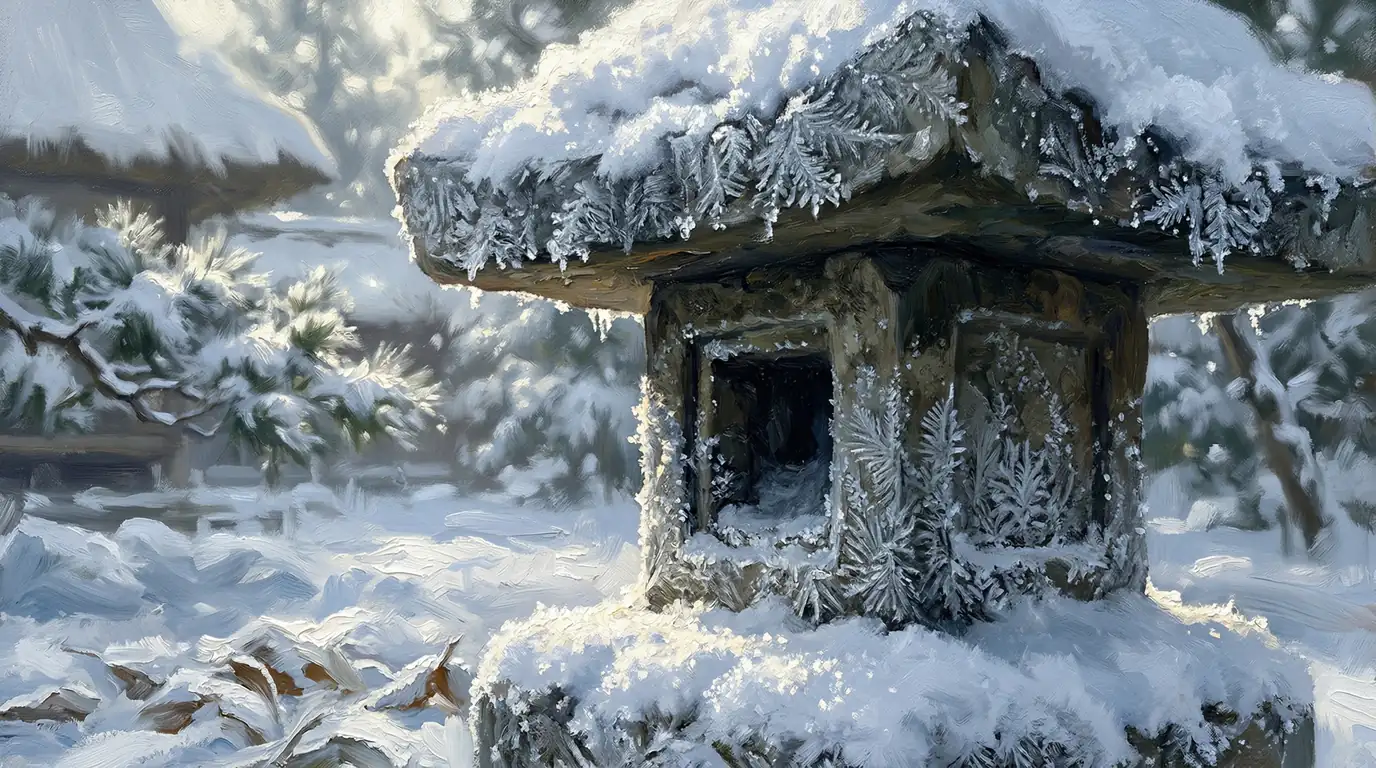 Whispers in the White Silence
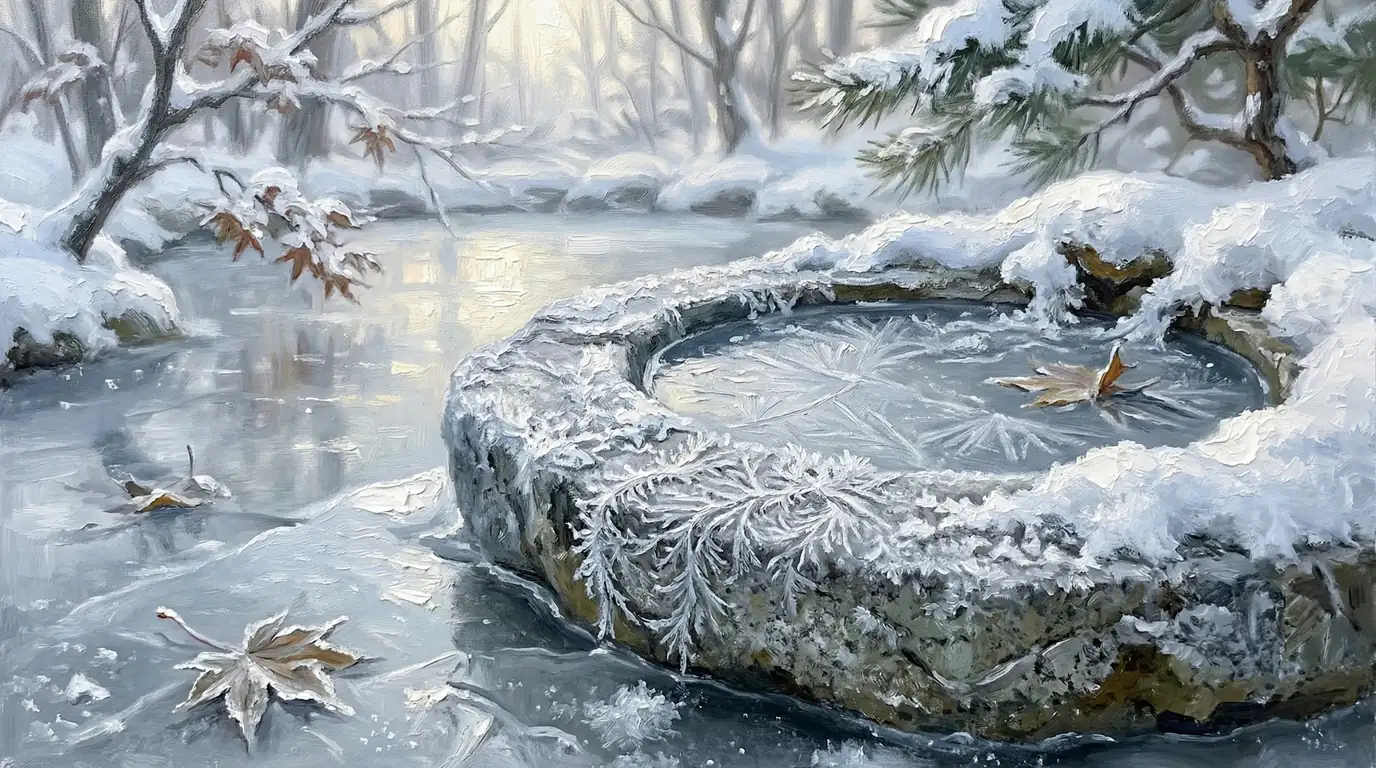 Frosty Morning in the Garden
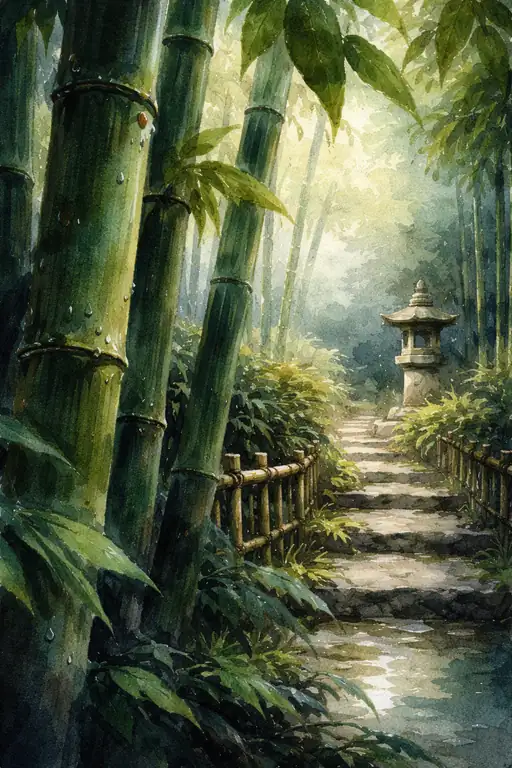 Sunlight Dancing on the Bamboo Path
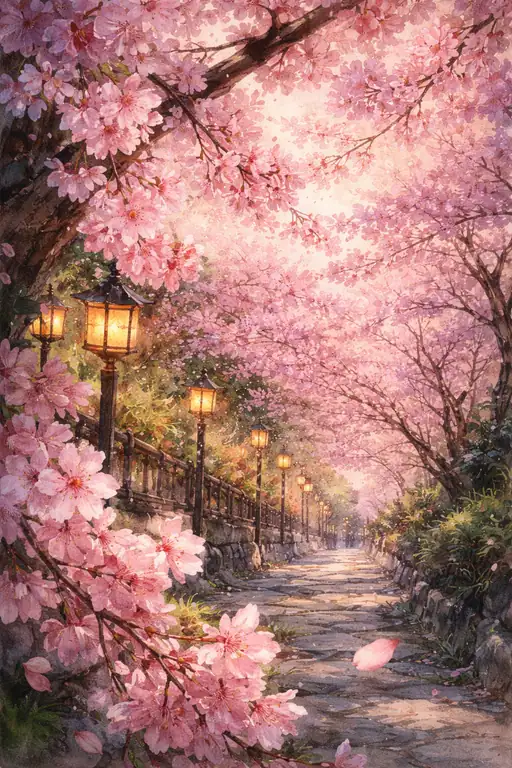 Lanterns and Falling Petals in the Spring Dusk
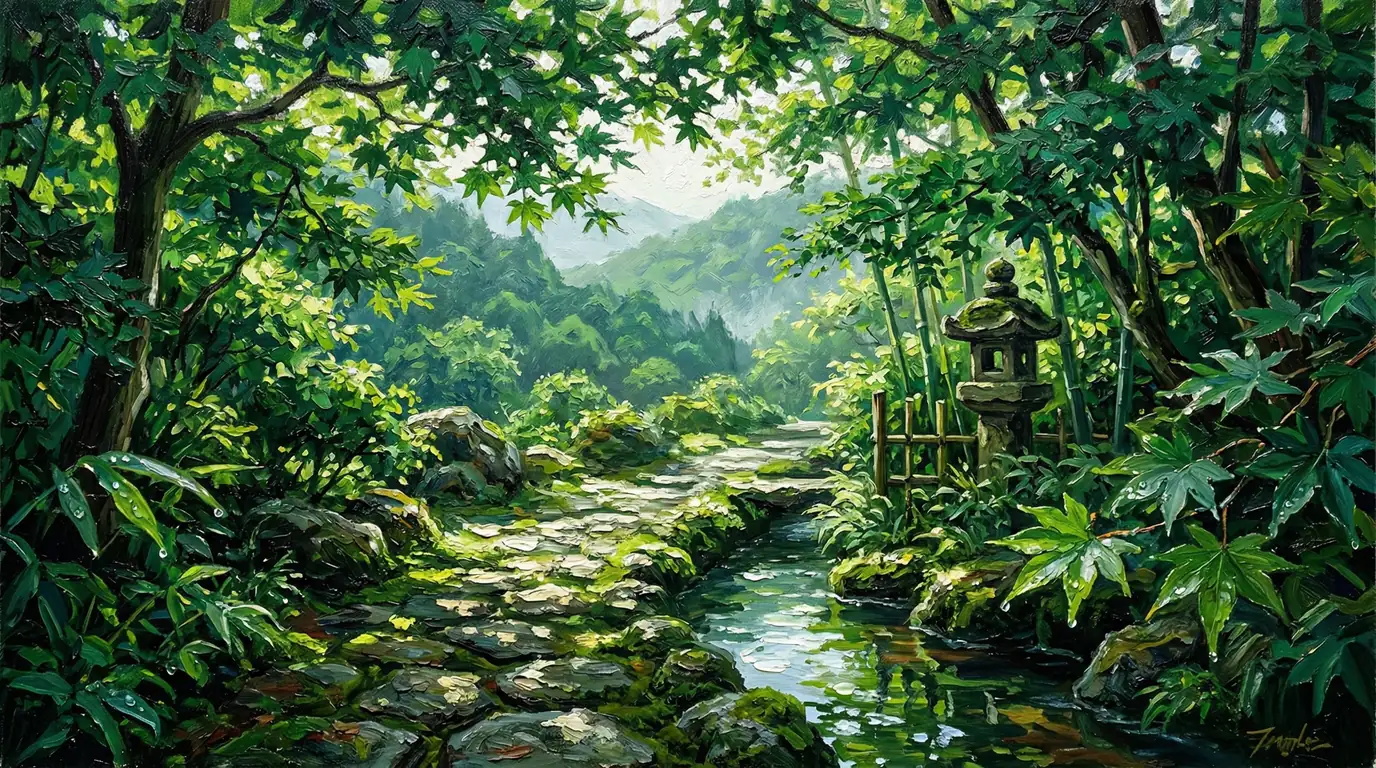 The Silent Lantern in the Emerald Woods
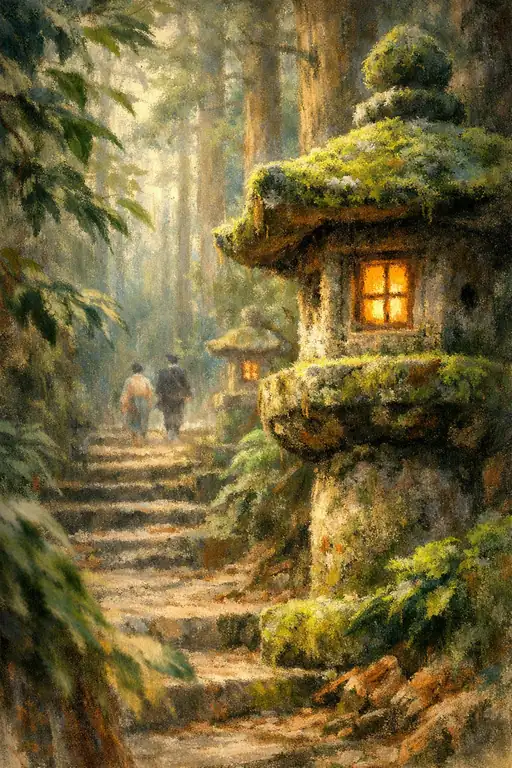 Whispers of the Ancient Woods
 Silent Witness to the Frozen Epoch
 Crimson Leaves of the Old Garden
 Mystic Light in the Bamboo Path
 Passage of the Crimson Light