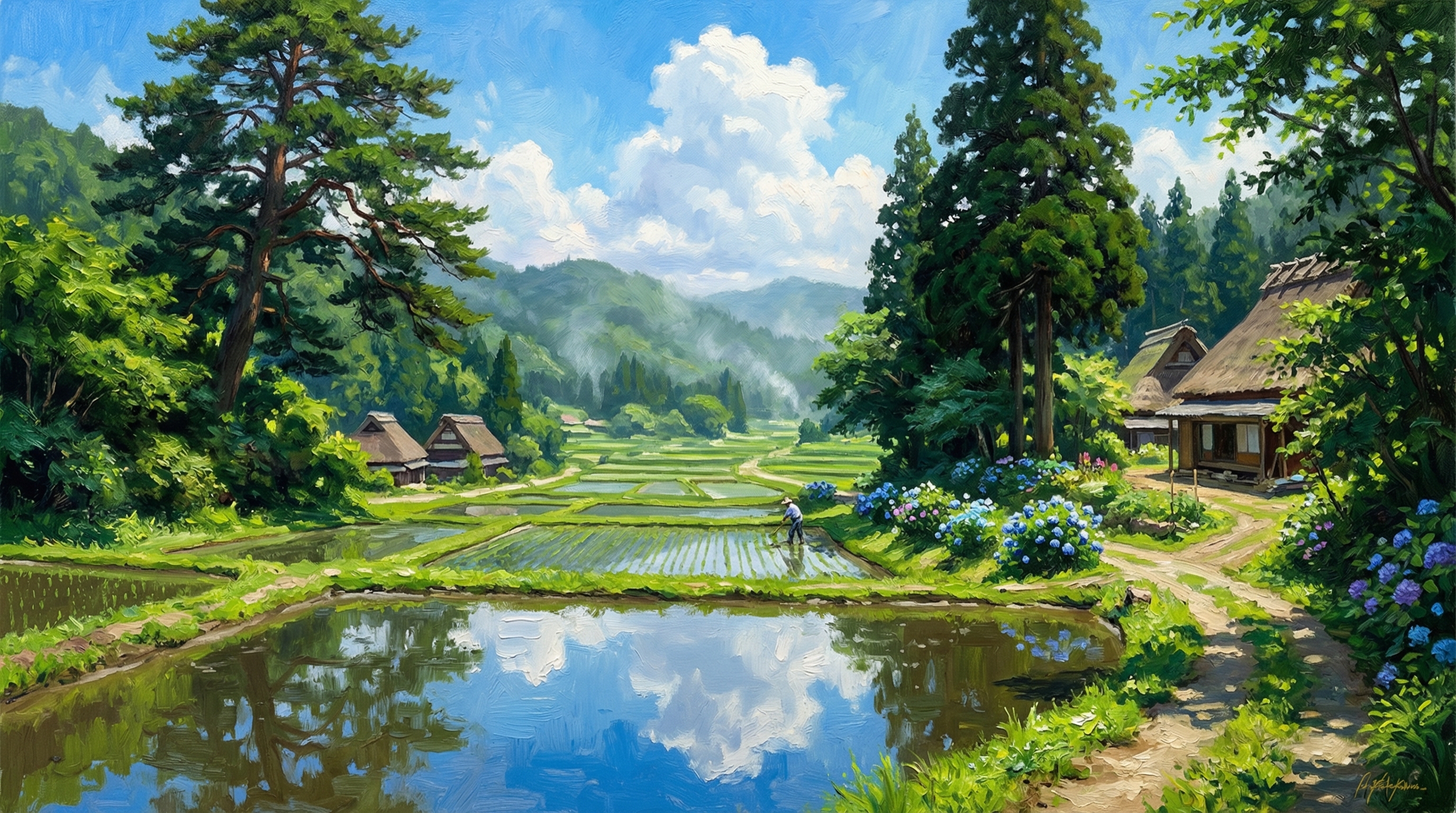
Whispers of the Green Earth: The Eternal Satoyama
Critique
1. Introduction This oil painting presents a vibrant and idealized depiction of a traditional Japanese rural landscape, often referred to as "satoyama." The composition features terraced rice paddies, traditional thatched-roof houses, and lush greenery under a brilliant summer sky. The artist utilizes a bright and saturated color palette to evoke the warmth and vitality of the growing season. This work serves as a nostalgic exploration of agrarian life, emphasizing the harmonious integration of human habitation and the natural environment through rhythmic brushwork and clear, direct lighting. 2. Description In the foreground, a flooded rice paddy reflects the bright blue sky and fluffy white clouds with remarkable clarity. To the right, clusters of blue and purple hydrangeas bloom along a dirt path that leads toward a group of traditional houses with steep, thatched roofs. In the center of the mid-ground, a solitary figure of a farmer can be seen working in one of the terraced fields. The landscape recedes into a series of verdant hills and mountains, partially veiled in a light, atmospheric mist, while tall pine and cedar trees frame the scene on both sides. 3. Analysis The painting is structured around a strong sense of perspective, with the terraced fields leading the viewer's eye toward the distant mountains. The artist employs a variety of brushstrokes, from the short, textured dabs used for the foliage and flowers to the broader, more reflective strokes used for the water and sky. The color scheme is dominated by a range of vibrant greens and deep blues, balanced by the earthy browns of the thatched roofs and paths. Lighting is crisp and bright, suggesting mid-day sun that casts sharp shadows and highlights the various textures of the landscape. 4. Interpretation and Evaluation This work can be interpreted as a tribute to the enduring beauty and cultural significance of the Japanese countryside. The presence of the farmer and the traditional architecture reinforces the theme of a sustainable, long-standing relationship between humanity and the land. Technically, the artist demonstrates significant skill in capturing the reflective properties of the flooded paddies and the complex organic forms of the hydrangeas and trees. The composition is balanced and inviting, providing a sense of peace and abundance that is characteristic of a thriving rural community in summer. 5. Conclusion An examination of the details reveals a sophisticated understanding of both natural light and traditional architectural form. The initial impression of a sunny, picturesque scene is enriched by the artist's attention to the specific flora and the subtle variations in green tones. Ultimately, the painting stands as a successful representation of the satoyama ideal. The combination of vivid colors and textured brushwork ensures that the viewer feels a direct connection to the vitality of the landscape, leaving a lasting impression of cultural heritage and natural harmony.
Same Subcategory
Similar Artworks
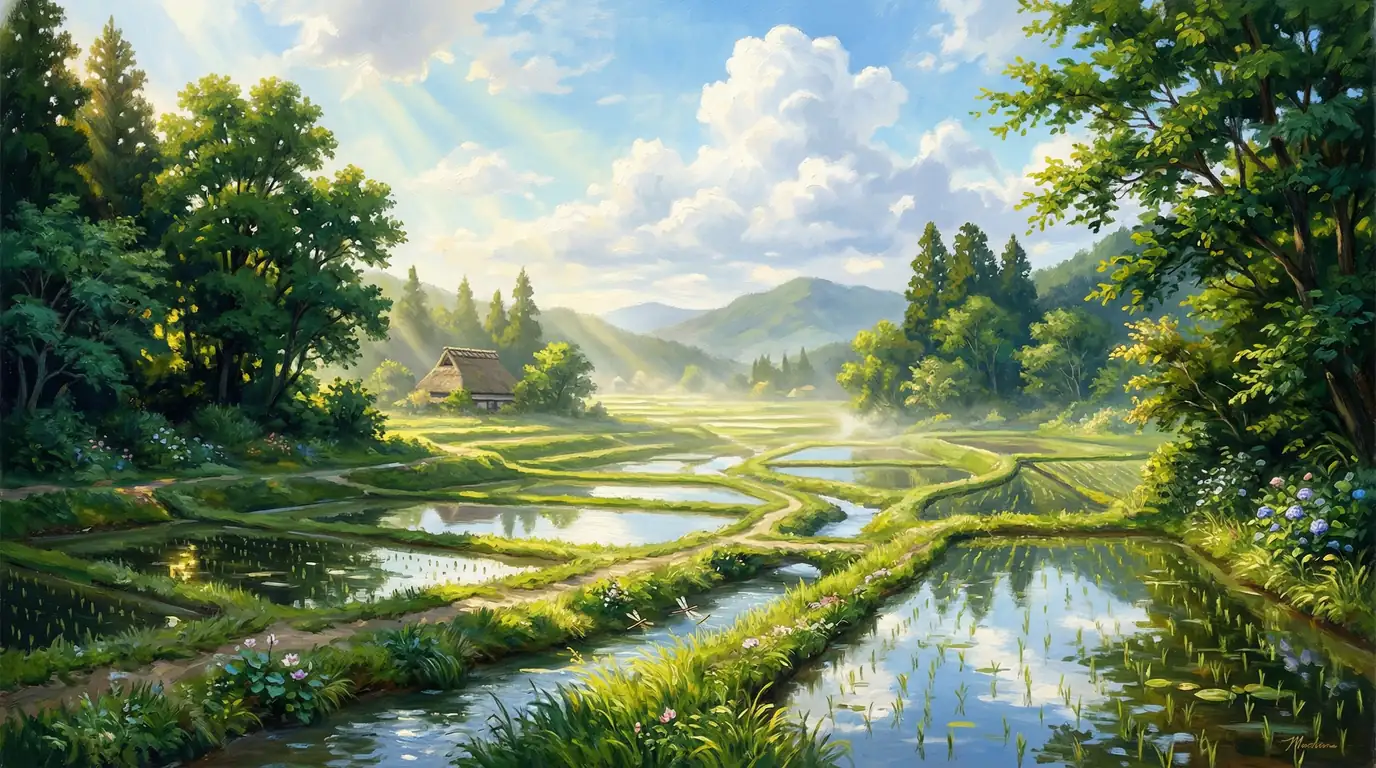 Rays of Hope Over the Terraces
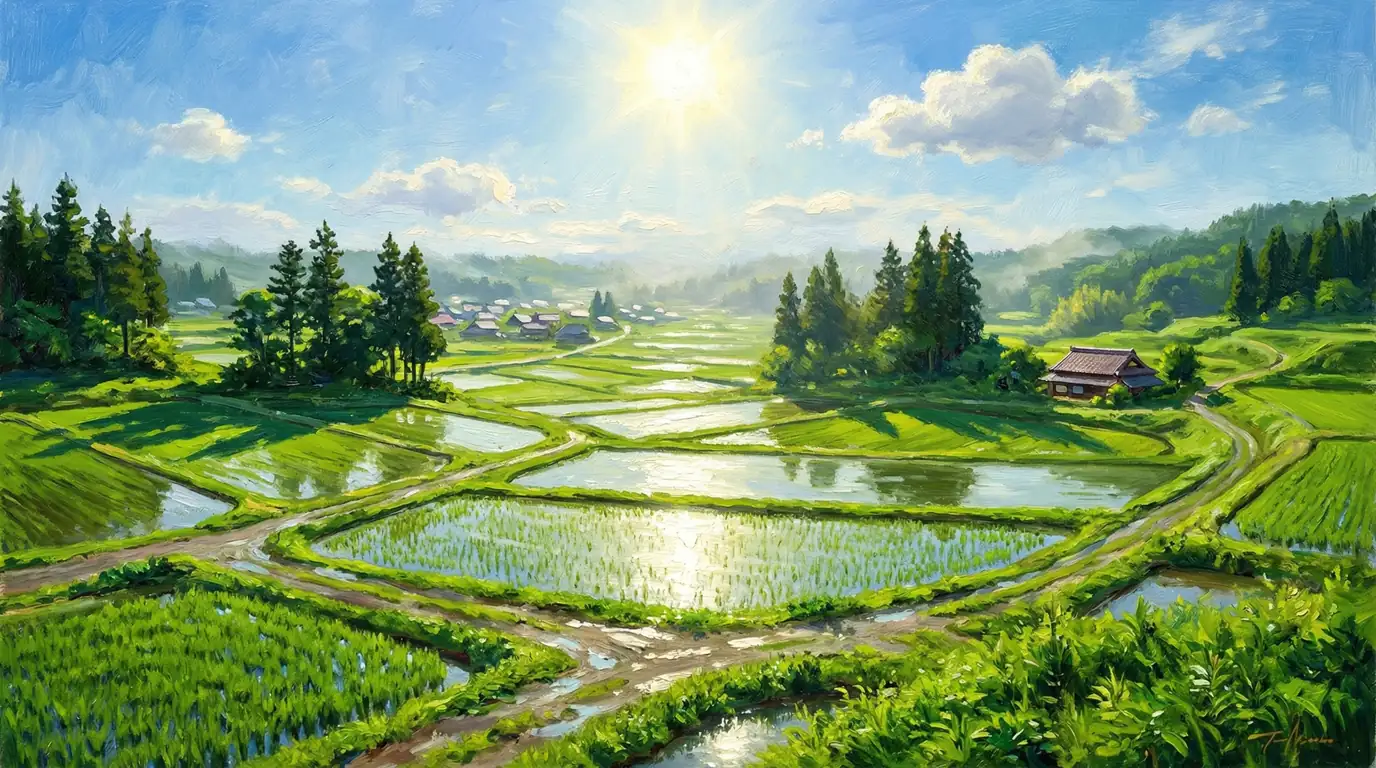 Golden Echoes of the Terrace
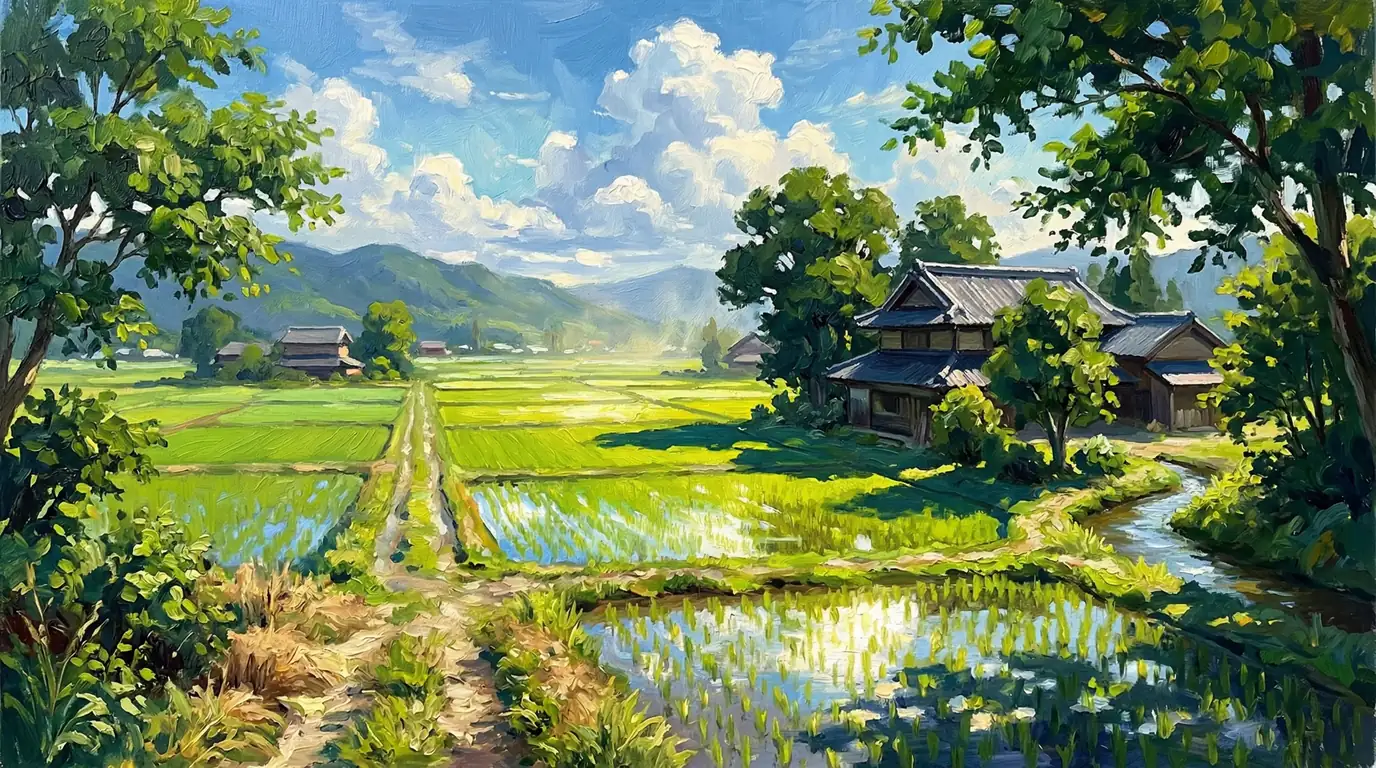 Sky Reflected in the Flooded Fields
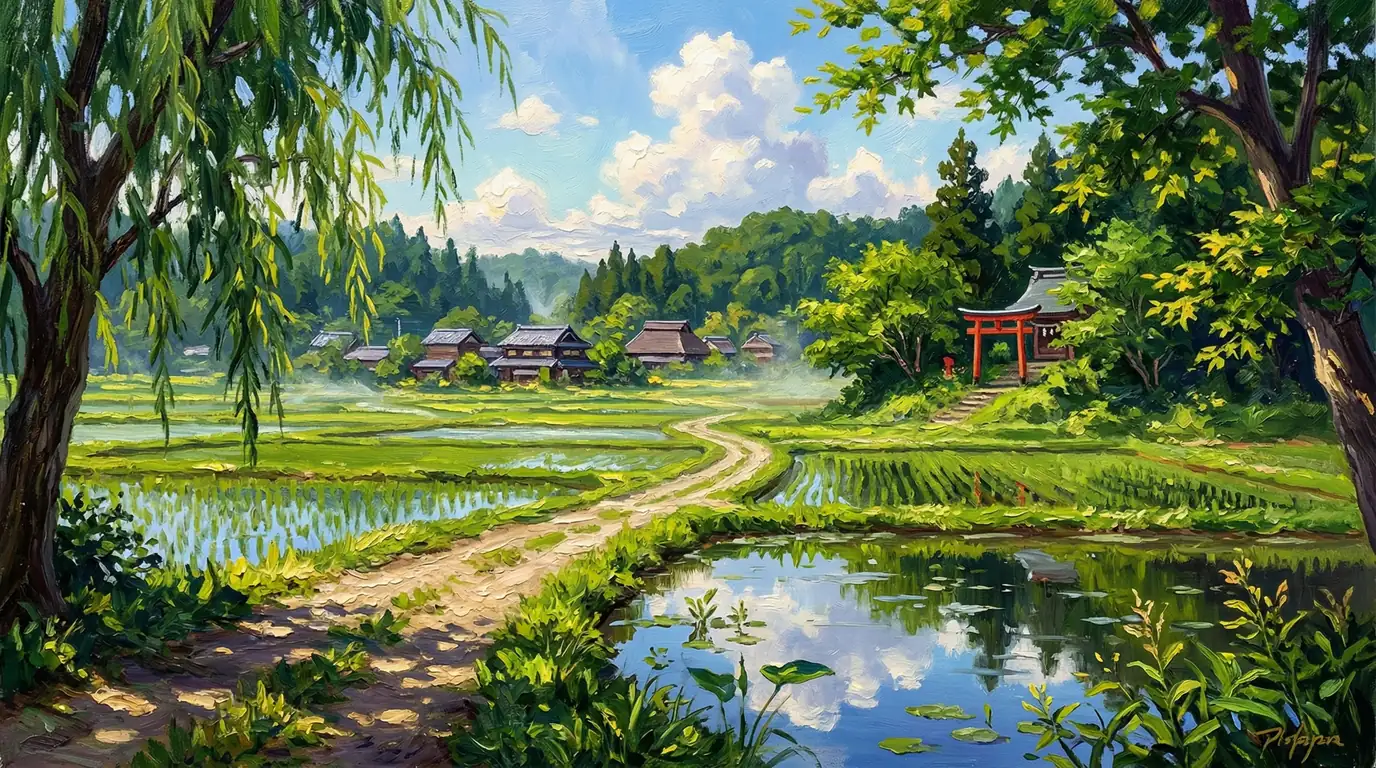 The Shrine Beyond the Summer Fields
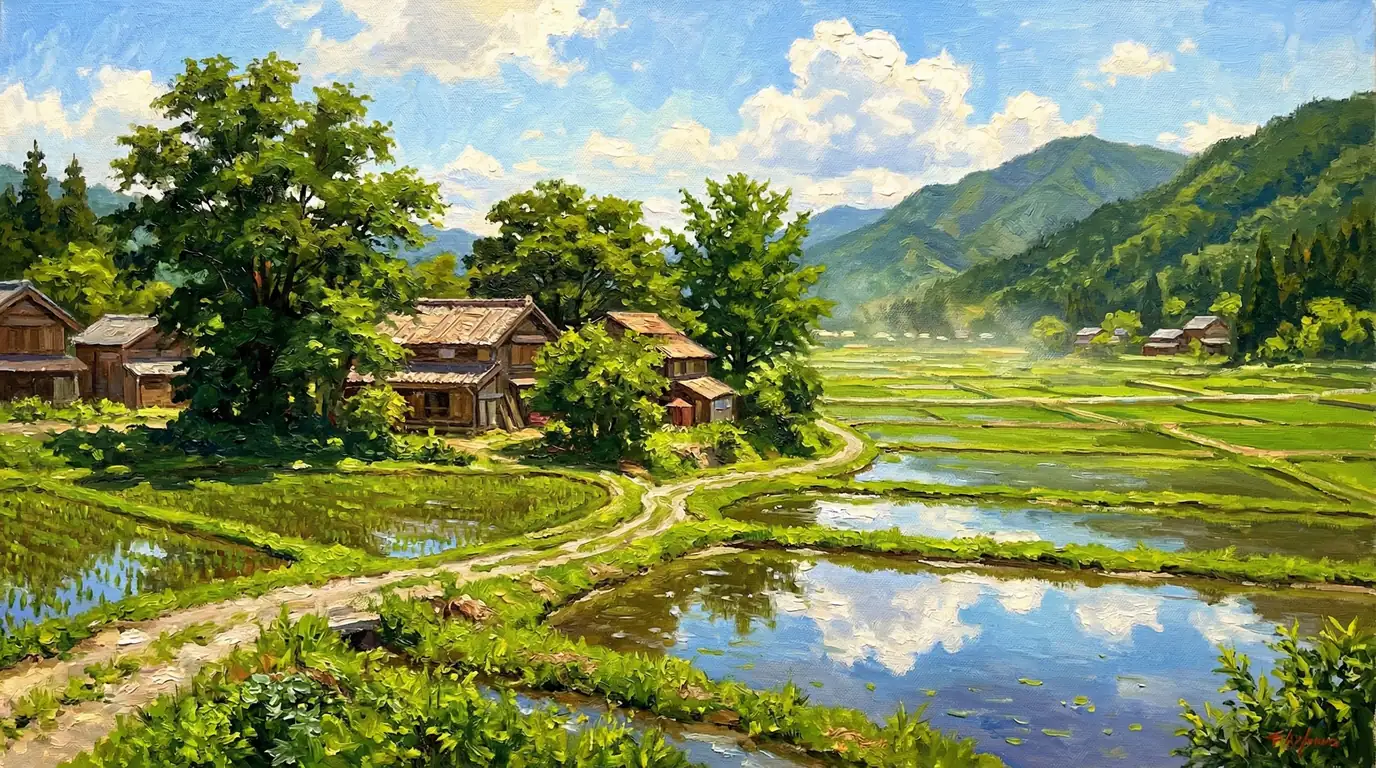 Summer's Gentle Embrace
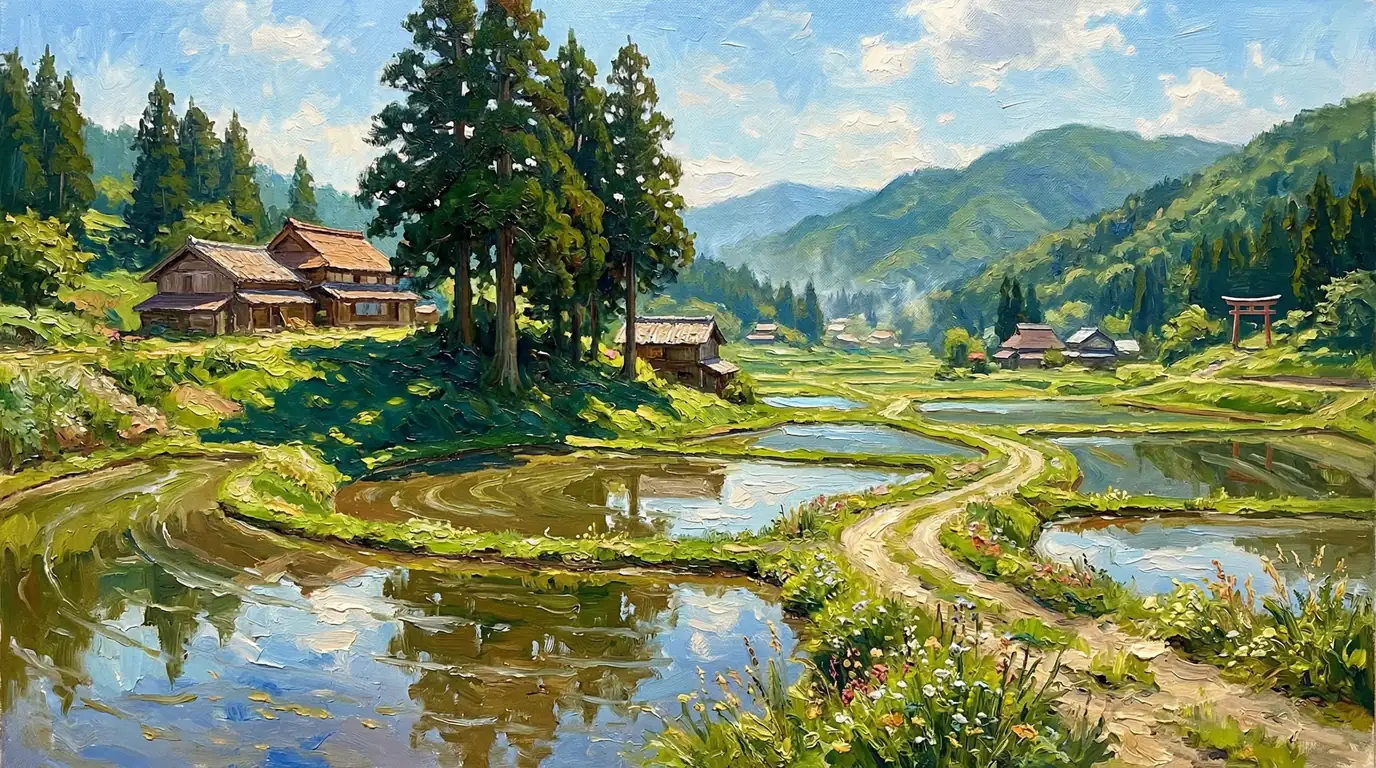 Nostalgia in the Verdant Valley
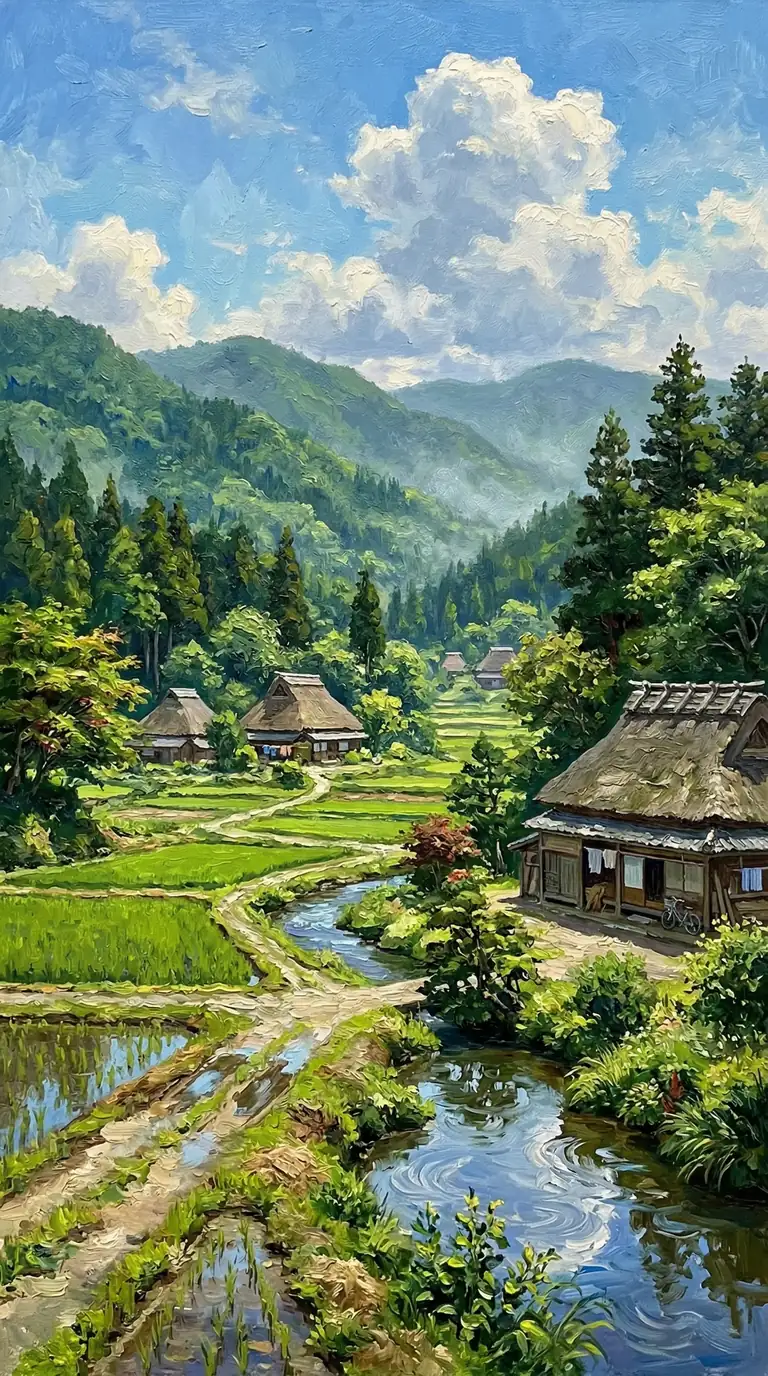 Autumn's Ascendancy: A Tapestry of Crimson and Gold
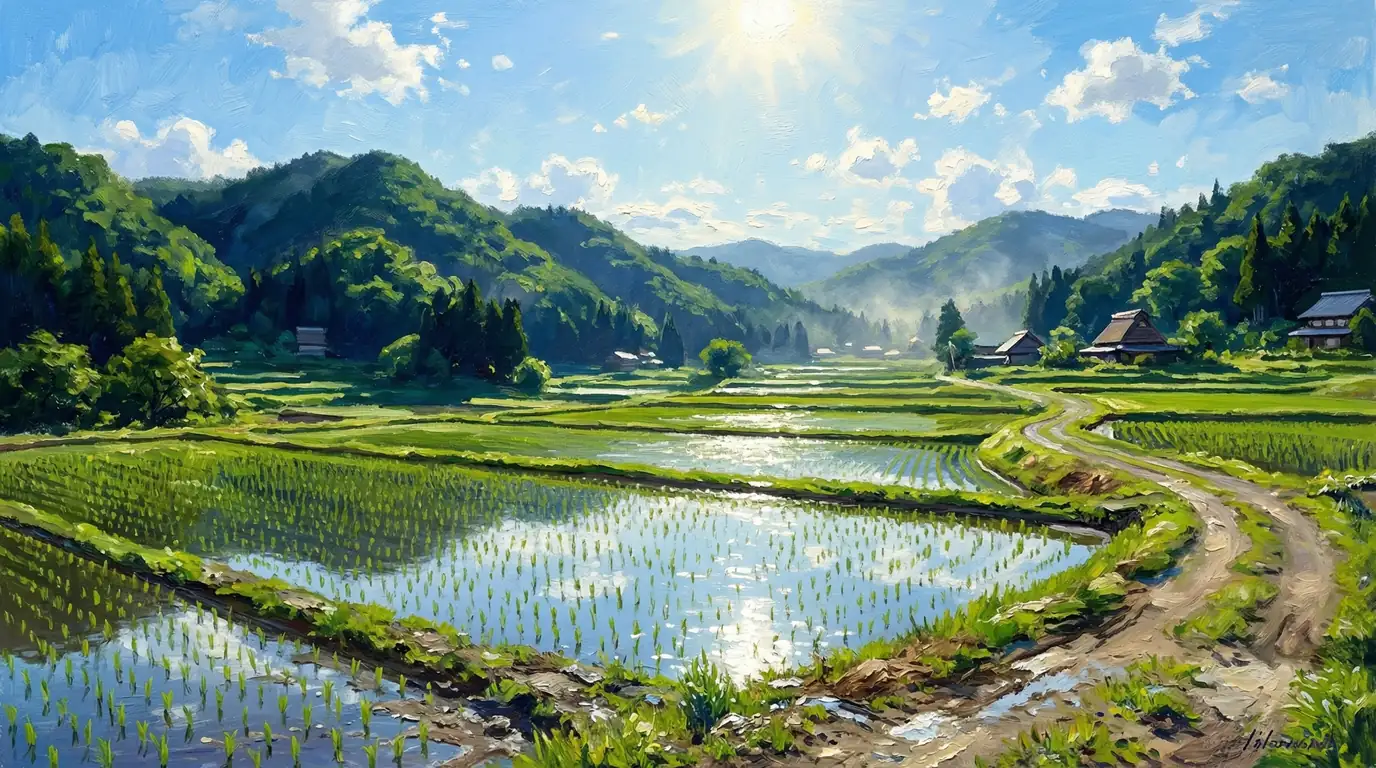 Sunlit Promise of the Harvest
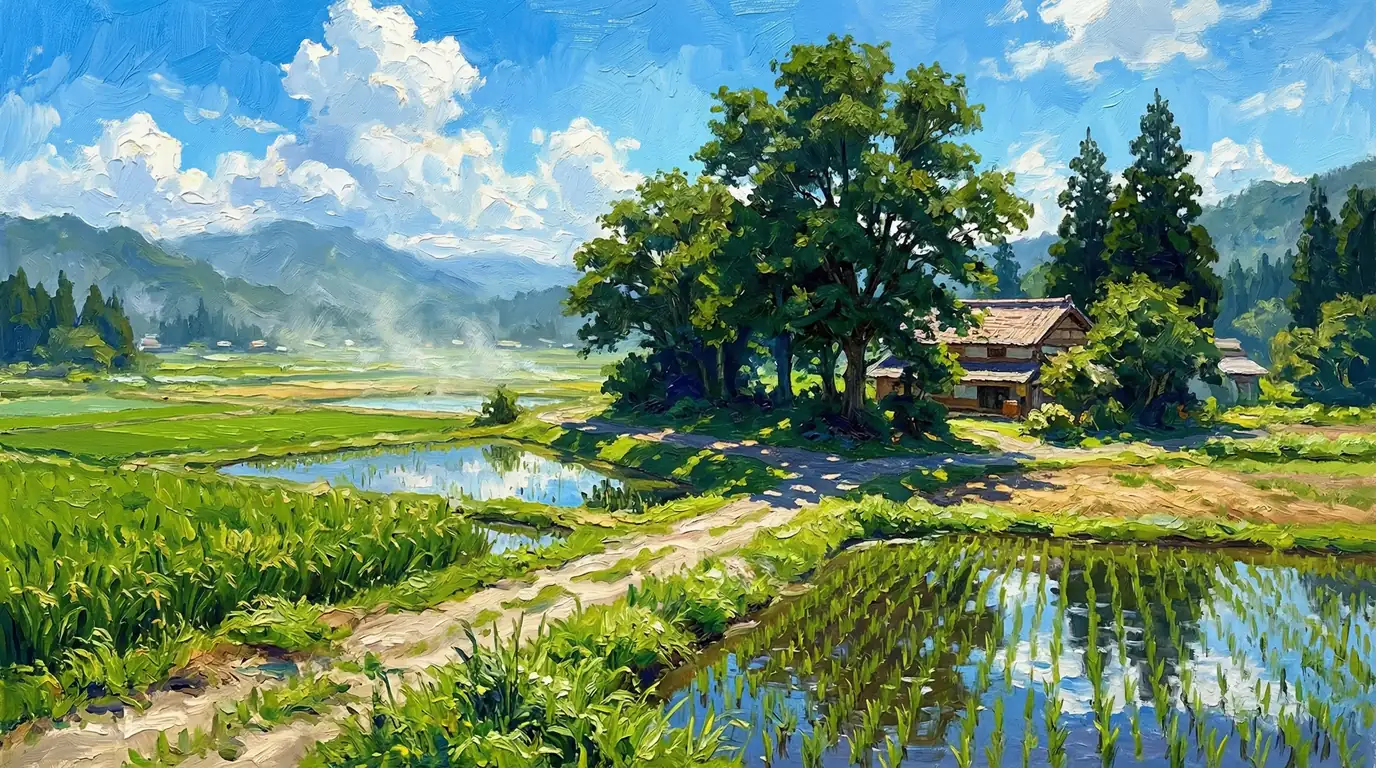 Serenade of the Summer Countryside
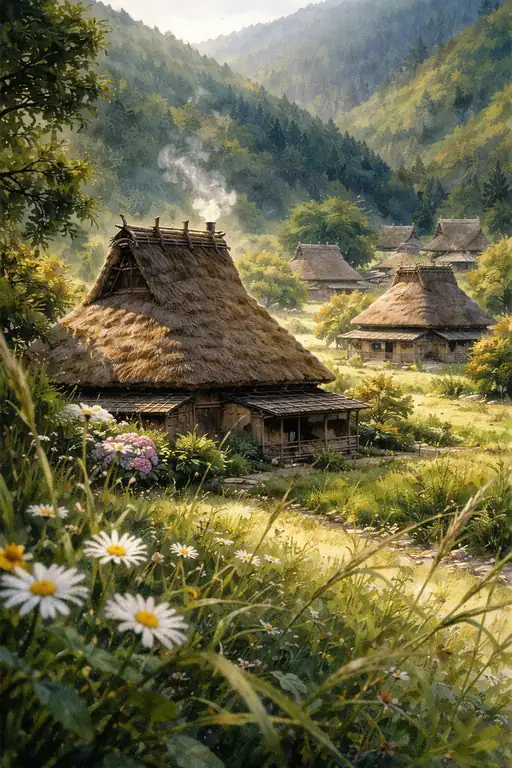 Whispers of the Golden Valley