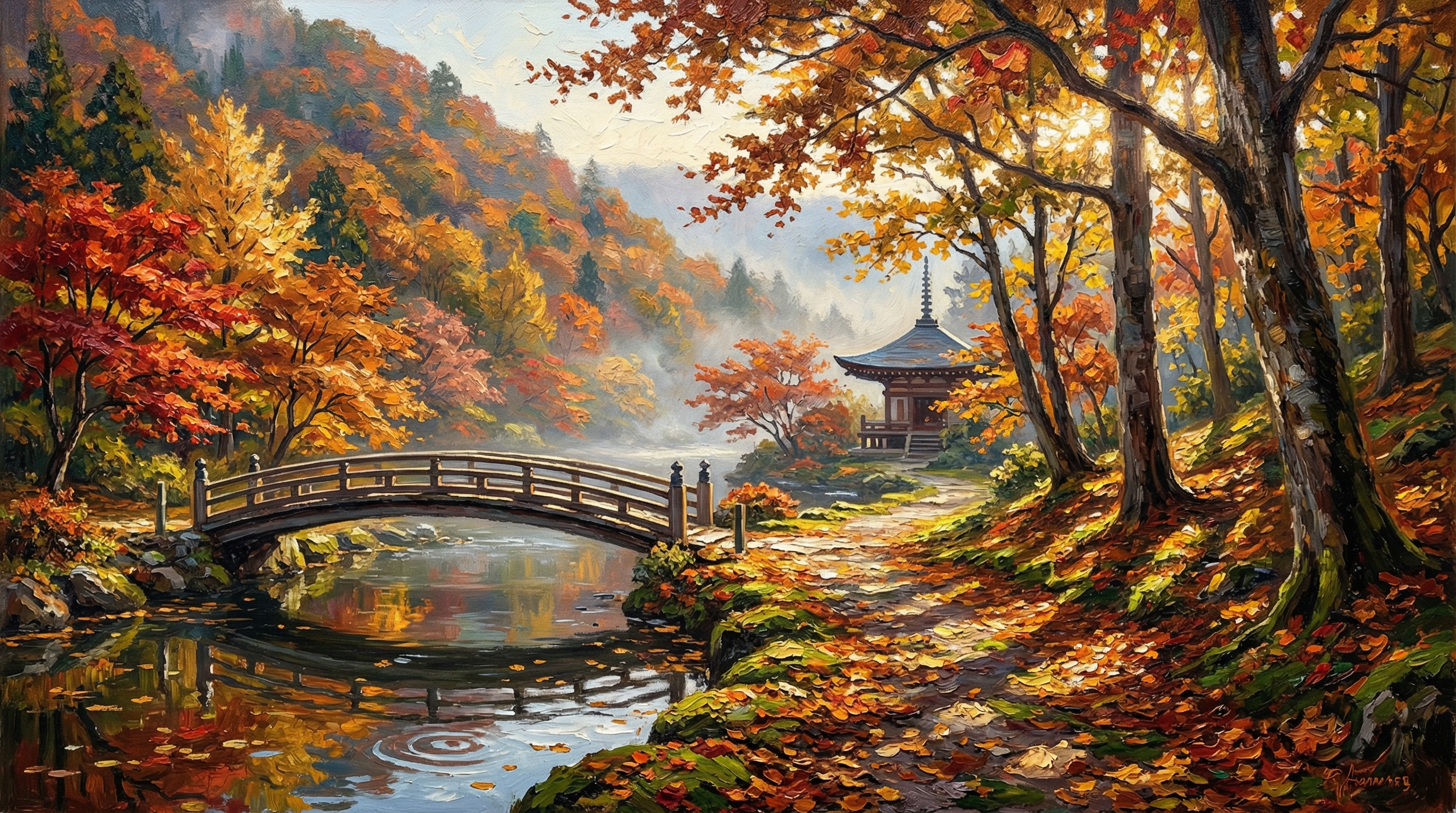
Echoes of the Golden Temple
Critique
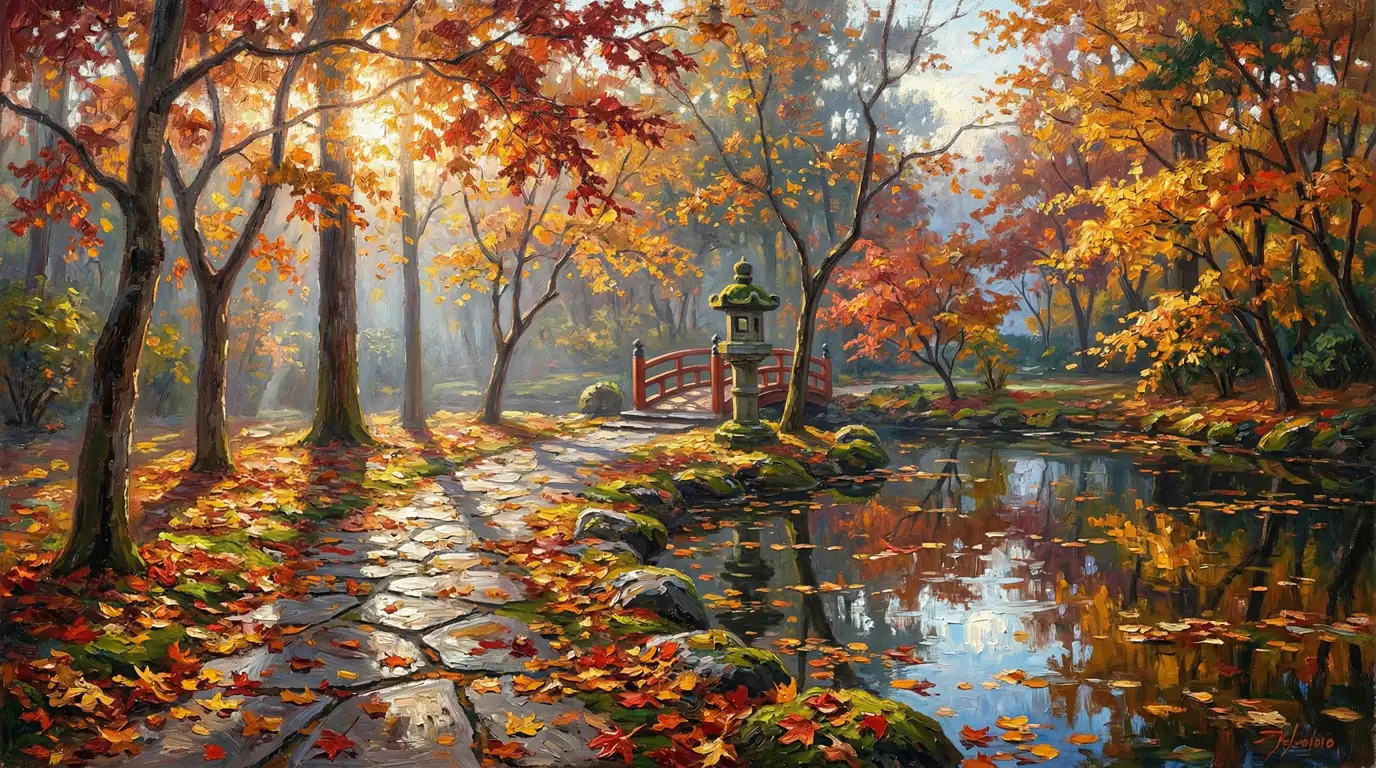
1. Introduction This oil painting depicts a picturesque Japanese landscape during the height of the autumn season. The composition centers on a traditional wooden bridge that crosses a calm pond, surrounded by a vibrant array of trees in shades of gold, orange, and crimson. In the mid-ground, a classic Japanese temple structure with a prominent roof and finial is nestled among the foliage, suggesting a place of spiritual significance. This work captures the fleeting beauty of fall through expressive brushwork and a rich, warm color palette, emphasizing the harmonious relationship between nature and historical architecture. 2. Description The foreground features a path covered in fallen leaves, leading the eye toward an elegantly arched wooden bridge. The pond below reflects the brilliant colors of the surrounding forest and the soft, overcast sky, with subtle ripples on the water's surface. To the right, tall trees with dense autumn foliage frame the scene, their trunks displaying textured bark and dappled sunlight. In the background, rolling hills covered in autumnal trees recede into a gentle mist, creating a sense of atmospheric depth. The temple building is positioned on the far bank, its dark wooden structure providing a solid contrast to the fiery colors of the environment. 3. Analysis The artist employs a heavy impasto technique, where thick applications of paint create a tactile surface that mimics the organic textures of leaves and bark. The color scheme is dominated by warm tones—yellows, oranges, and reds—balanced by the cooler blues and grays of the sky and pond. Lighting is handled with skill, as patches of bright sunlight filter through the canopy to illuminate the path and the bridge. The composition follows a circular flow, guided by the curve of the bridge and the arrangement of the trees, which keeps the viewer's attention focused within the serene landscape. 4. Interpretation and Evaluation This work can be interpreted as a celebration of "koyo," the Japanese tradition of viewing autumn leaves. The inclusion of the temple structure reinforces the idea of nature as a sacred space and the passage of time as a cyclical, spiritual process. Technically, the artist demonstrates a high degree of proficiency in using color and texture to evoke a specific seasonal mood. The contrast between the solid, man-made bridge and the delicate, falling leaves highlights the theme of permanence versus impermanence. The painting successfully conveys a sense of peaceful contemplation and nostalgic beauty. 5. Conclusion While the initial impression is one of overwhelming color, a closer look reveals a carefully balanced study of light and form. The artist's ability to integrate complex architectural details into a wild, organic setting is particularly noteworthy. Ultimately, the painting stands as a powerful tribute to the Japanese autumnal landscape. The combination of vivid hues and rhythmic brushstrokes ensures that the viewer experiences the vitality and serenity of the scene in equal measure, leaving a lasting impression of seasonal splendor.
Same Subcategory
Similar Artworks
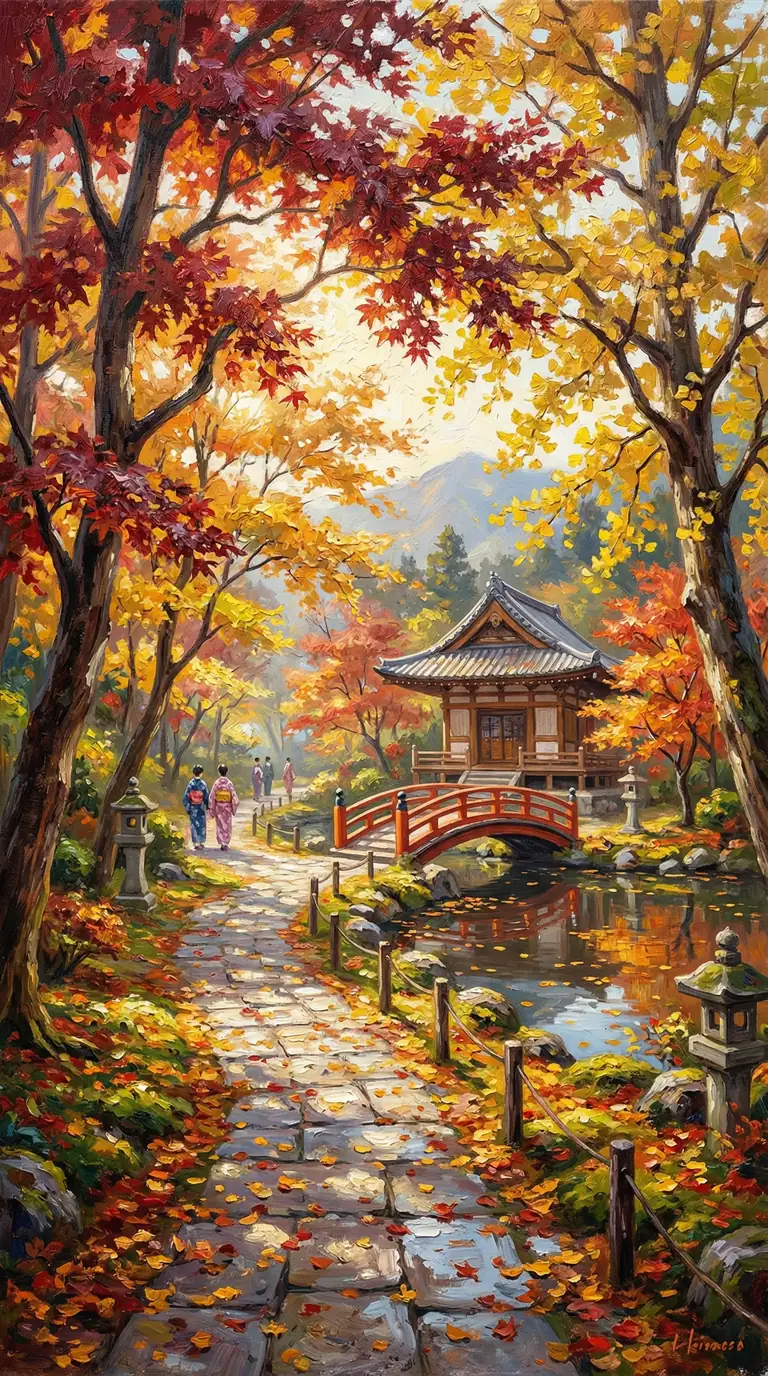 Crimson Canopy: The Golden Echoes of Autumn
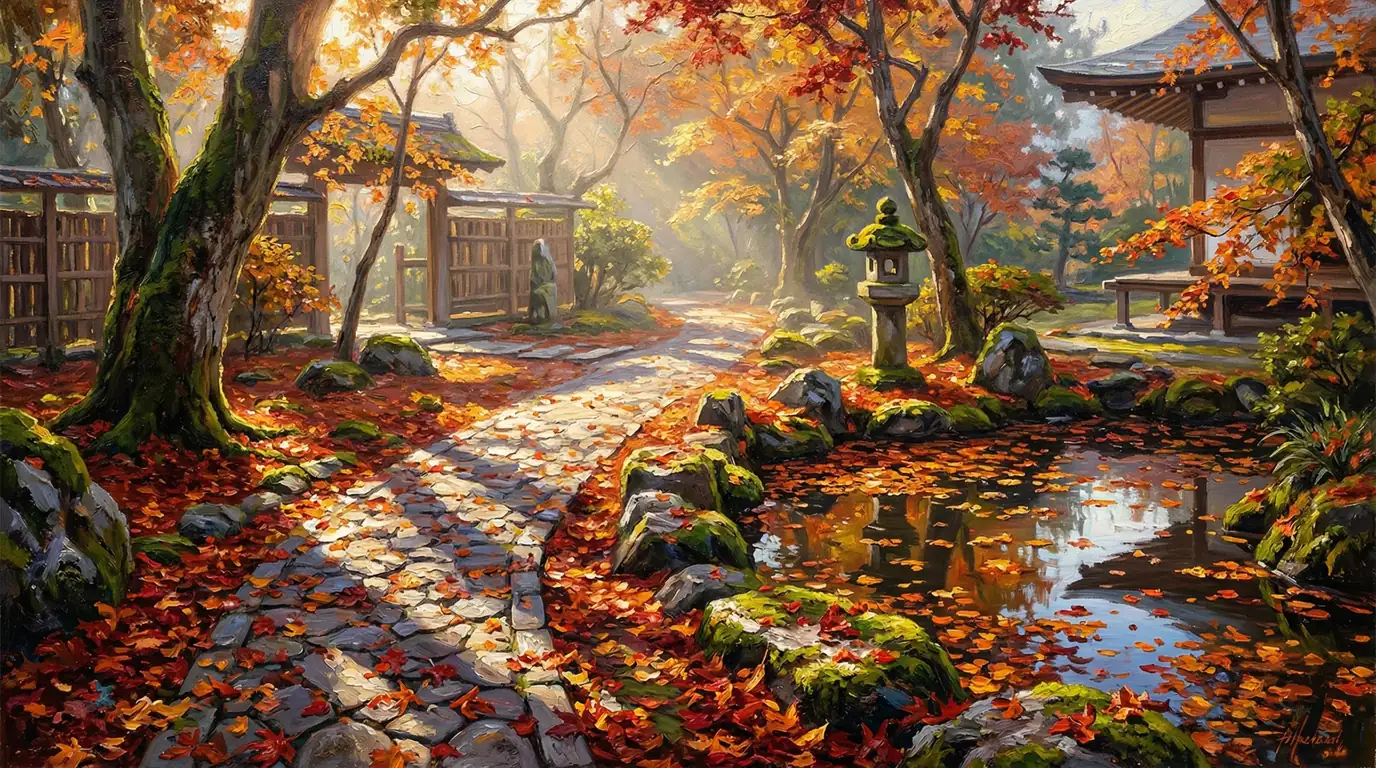 Golden Autumn in the Zen Garden
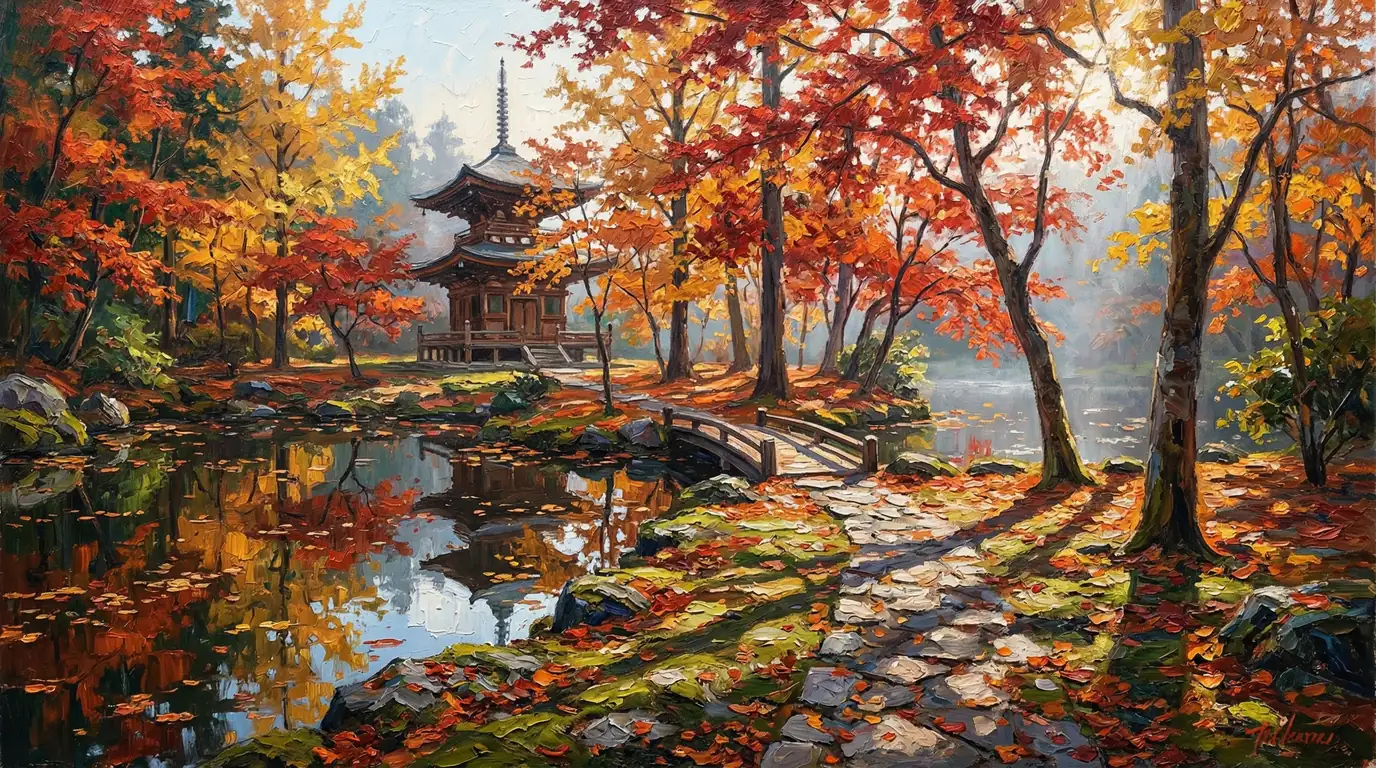 Symphony of Autumn Colors
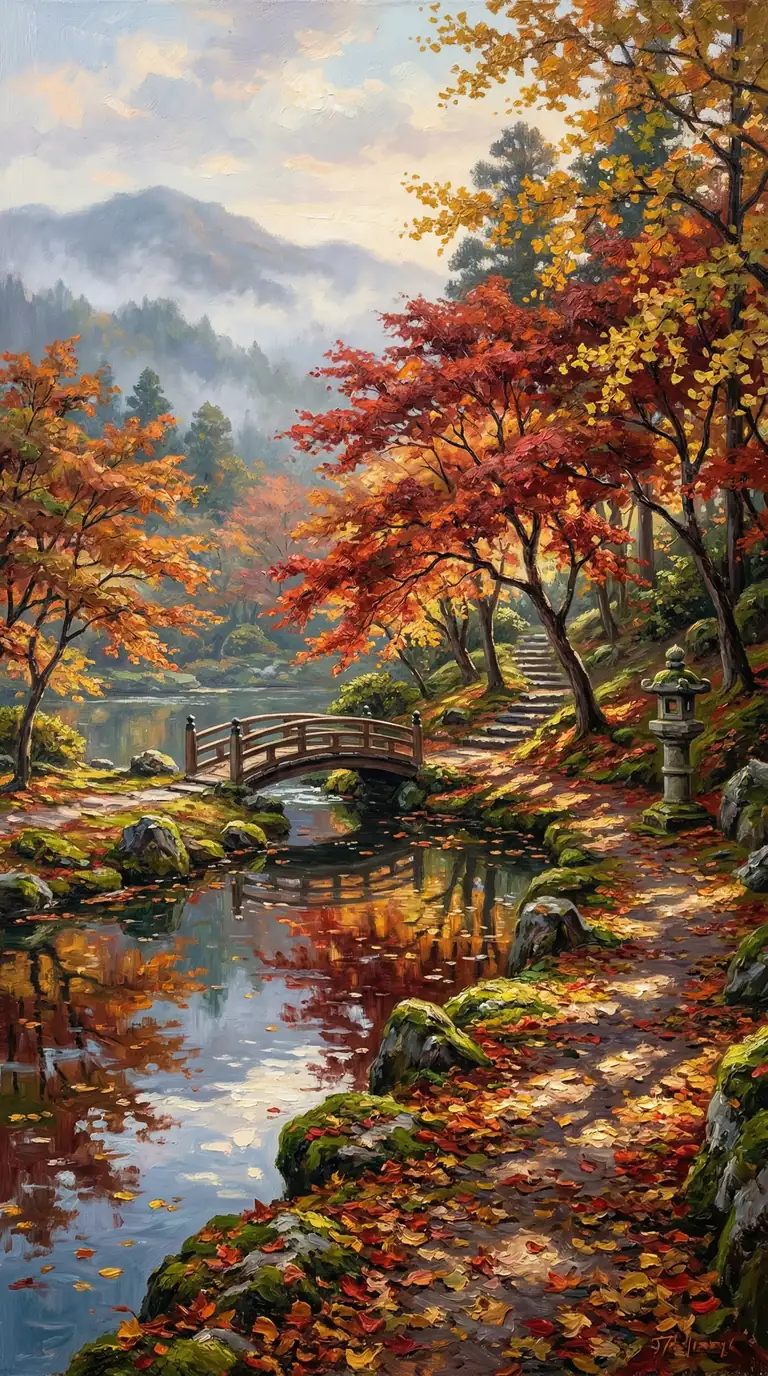 Whispering Crimson: Serenity in the Autumn Garden
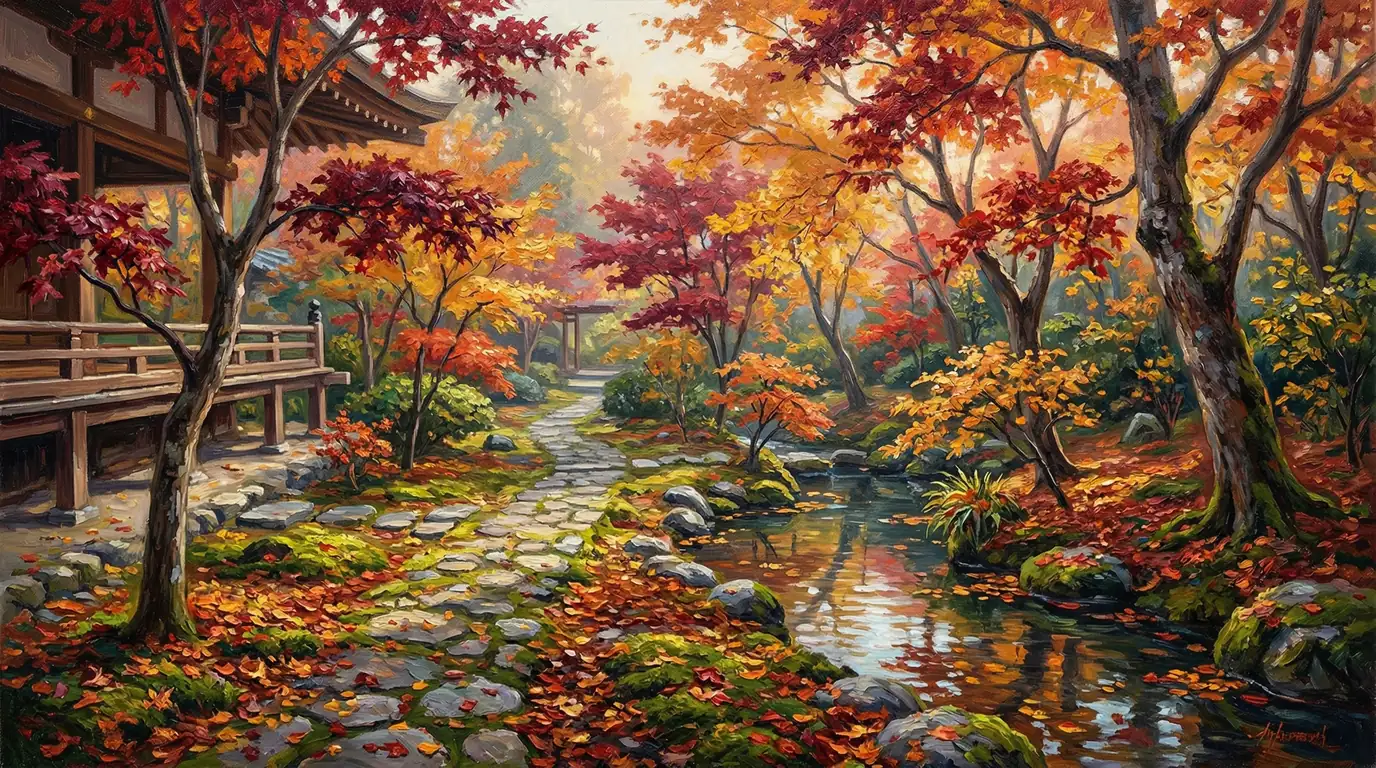 Golden Leaves by the Teahouse
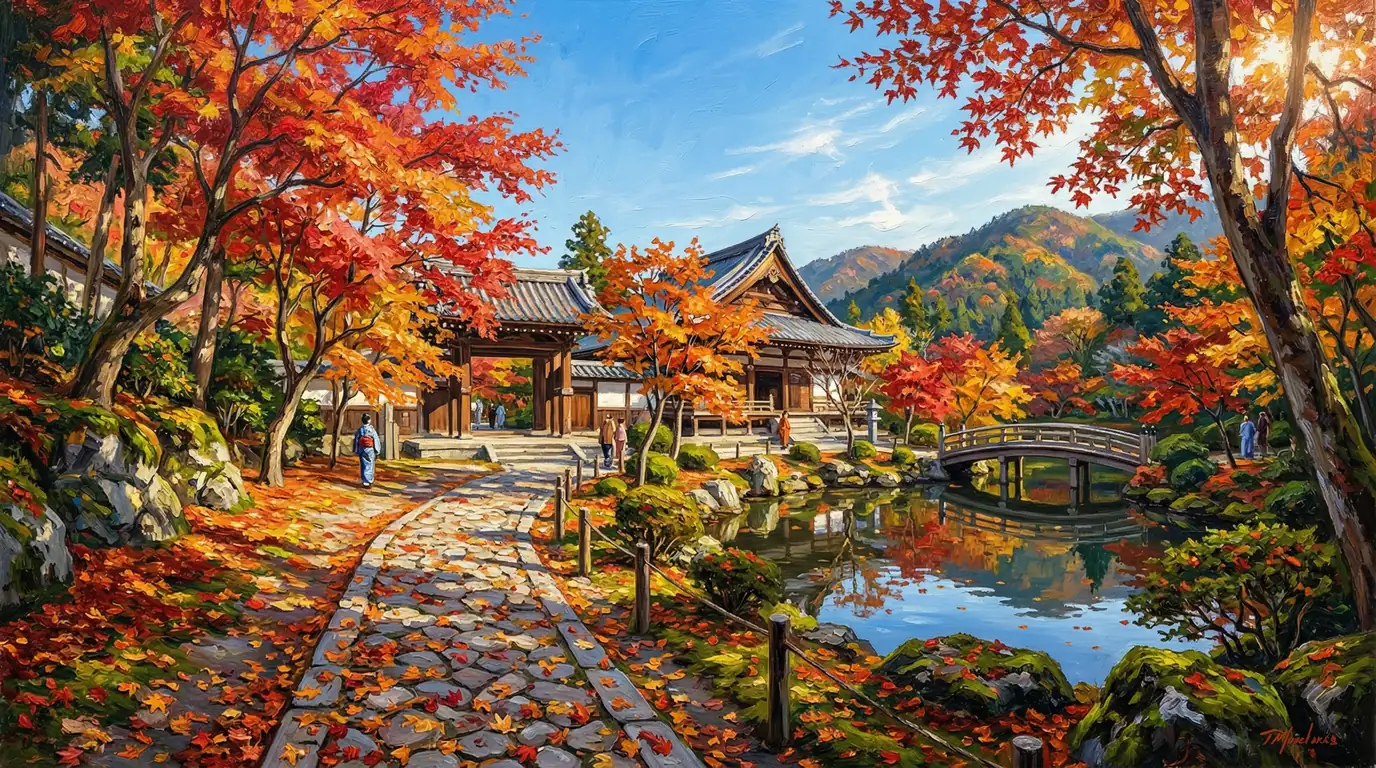 Autumn's Ephemeral Mirror
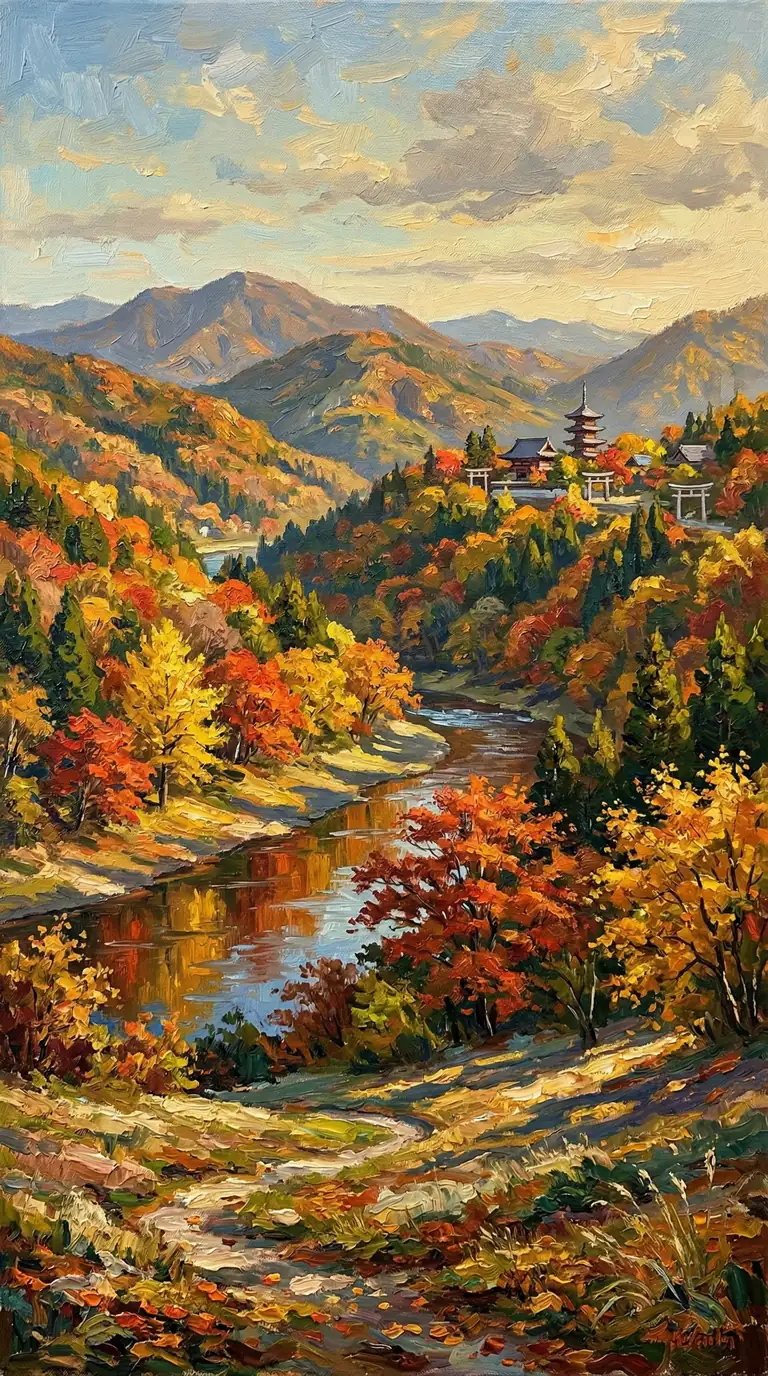 Symphony of the Maple: A Meditative Autumn Walk
 Echoes of the Crimson Bridge
 Autumn Glow along the Stream
 Autumn's Serenity