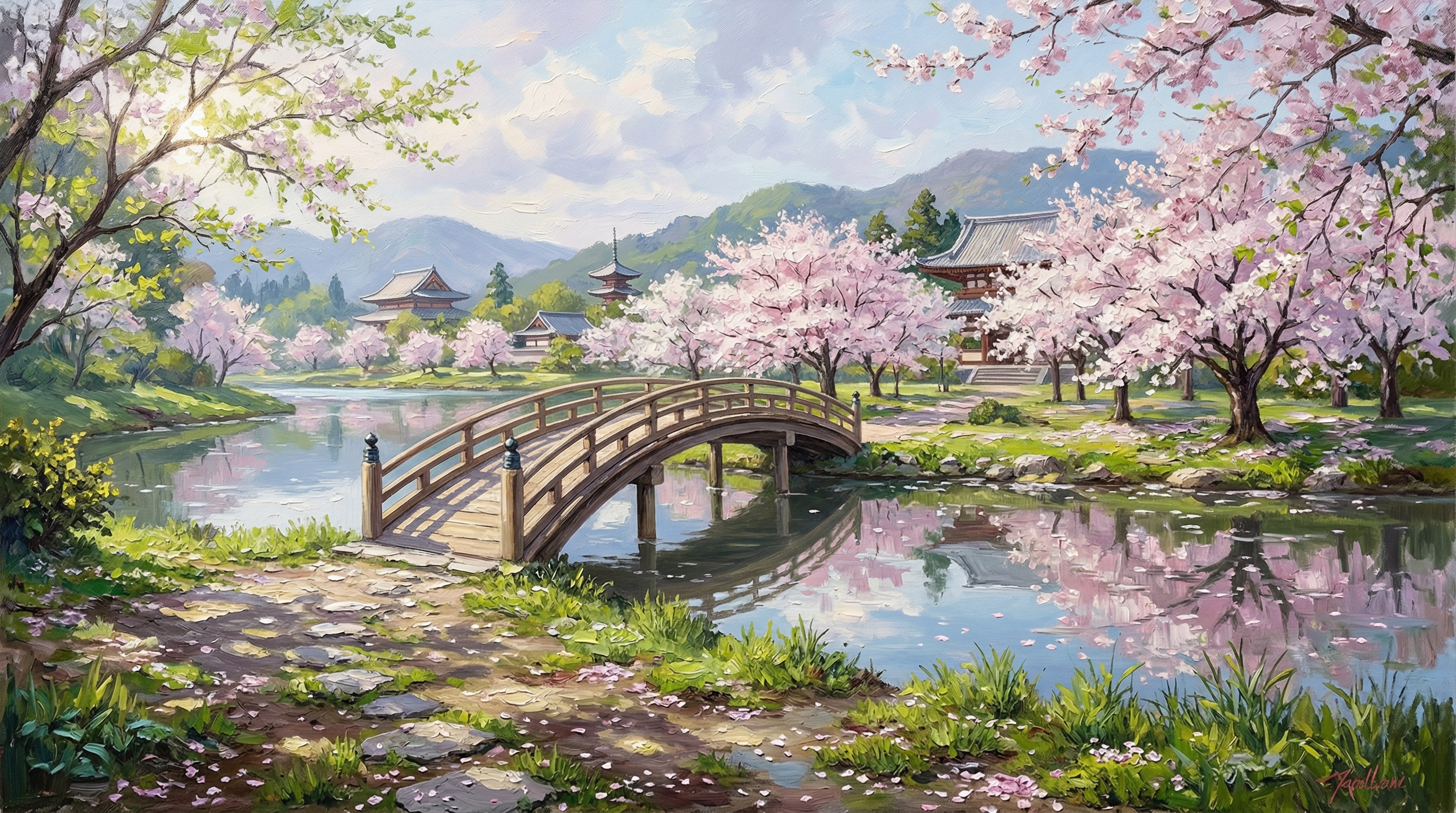
The Bridge of Spring's Awakening
Critique
1. Introduction This oil painting depicts a serene traditional Japanese landscape during the peak of the cherry blossom season. The composition centers on a curved wooden bridge that arches gracefully over a tranquil pond, surrounded by lush gardens and historical architecture. The artist employs a vibrant and luminous color palette to evoke the refreshing atmosphere of a bright spring day. This work serves as a visual celebration of cultural heritage and the cyclical beauty of nature, rendered with rhythmic brushwork and a strong sense of spatial depth. 2. Description In the foreground, a stone-paved path leads the viewer's eye toward a prominent arched bridge constructed from light-colored wood. The bridge's reflection is clearly visible in the calm blue water of the pond, which also mirrors the surrounding cherry trees and the sky. Several cherry trees in full bloom, characterized by dense clusters of pale pink blossoms, are situated along the banks. In the background, traditional Japanese buildings, including a multi-storied pagoda and temple halls, are nestled among rolling green hills and distant mountains under a soft, cloud-filled sky. 3. Analysis The painting is structured around the strong diagonal of the bridge, which acts as a focal point and creates a sense of movement. The artist uses varied brushstrokes, from the short, energetic dabs for the cherry blossoms to the smoother, broader strokes for the water and sky. The color scheme is dominated by the complementary relationship between the pink blossoms and the vibrant green foliage, balanced by the neutral tones of the wooden bridge and stone paths. Lighting is handled effectively, with bright highlights on the bridge and trees suggesting a sunlit environment that enhances the overall clarity. 4. Interpretation and Evaluation This work can be interpreted as an idealized representation of harmony between human construction and the natural world. The inclusion of the pagoda and temple structures reinforces the connection to Japanese tradition and spirituality. Technically, the artist demonstrates a high level of skill in capturing the delicate texture of the blossoms and the complex reflections on the water's surface. The composition is well-balanced, providing a sense of peace and contemplation. The painting successfully conveys the emotional uplifting often associated with the arrival of spring and the viewing of cherry blossoms. 5. Conclusion A close examination of the work reveals a sophisticated integration of architectural detail and organic form. The initial impression of a picturesque scene is deepened by the artist's attention to light and shadow, which brings a sense of life to the landscape. Ultimately, the painting stands as a testament to the enduring appeal of traditional seasonal imagery. It effectively bridges the gap between realistic representation and an atmospheric, painterly style, leaving the viewer with a lasting impression of tranquility and cultural beauty.
Same Subcategory
 Harmony of the Crimson Leaves
Similar Artworks
 Tranquility in the Zen Garden
 Spring's Fleeting Embrace
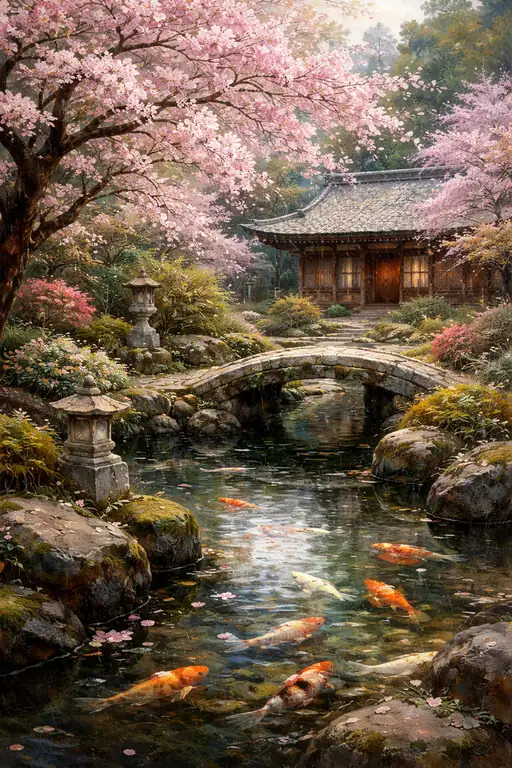 Reflections in the Koi Pond
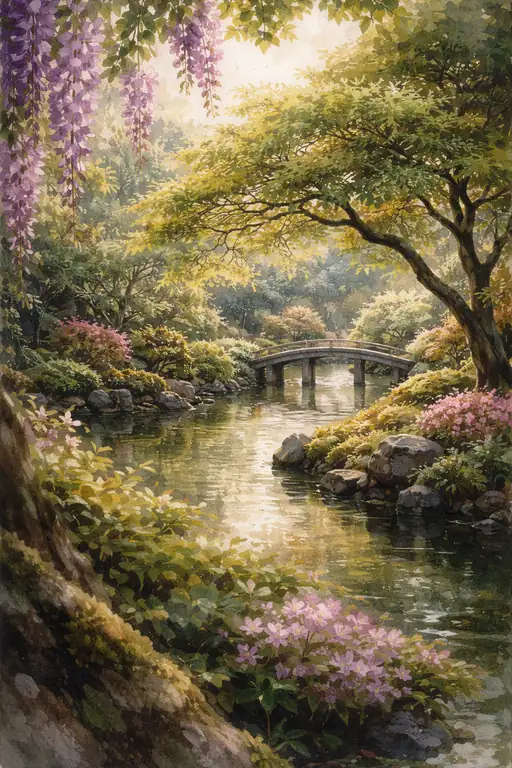 Twilight Beneath the Wisteria Bridge
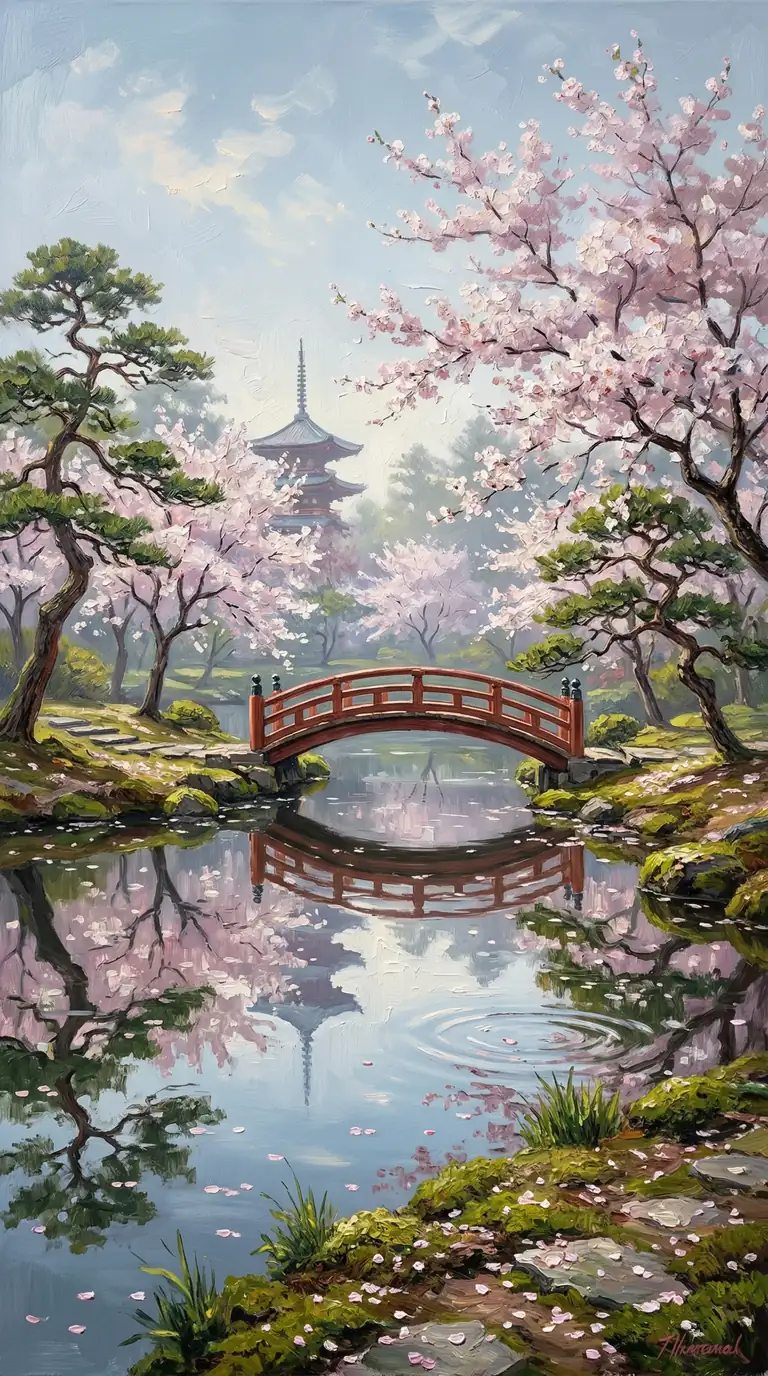 Harmony in Red and Pink: The Eternal Spring Garden
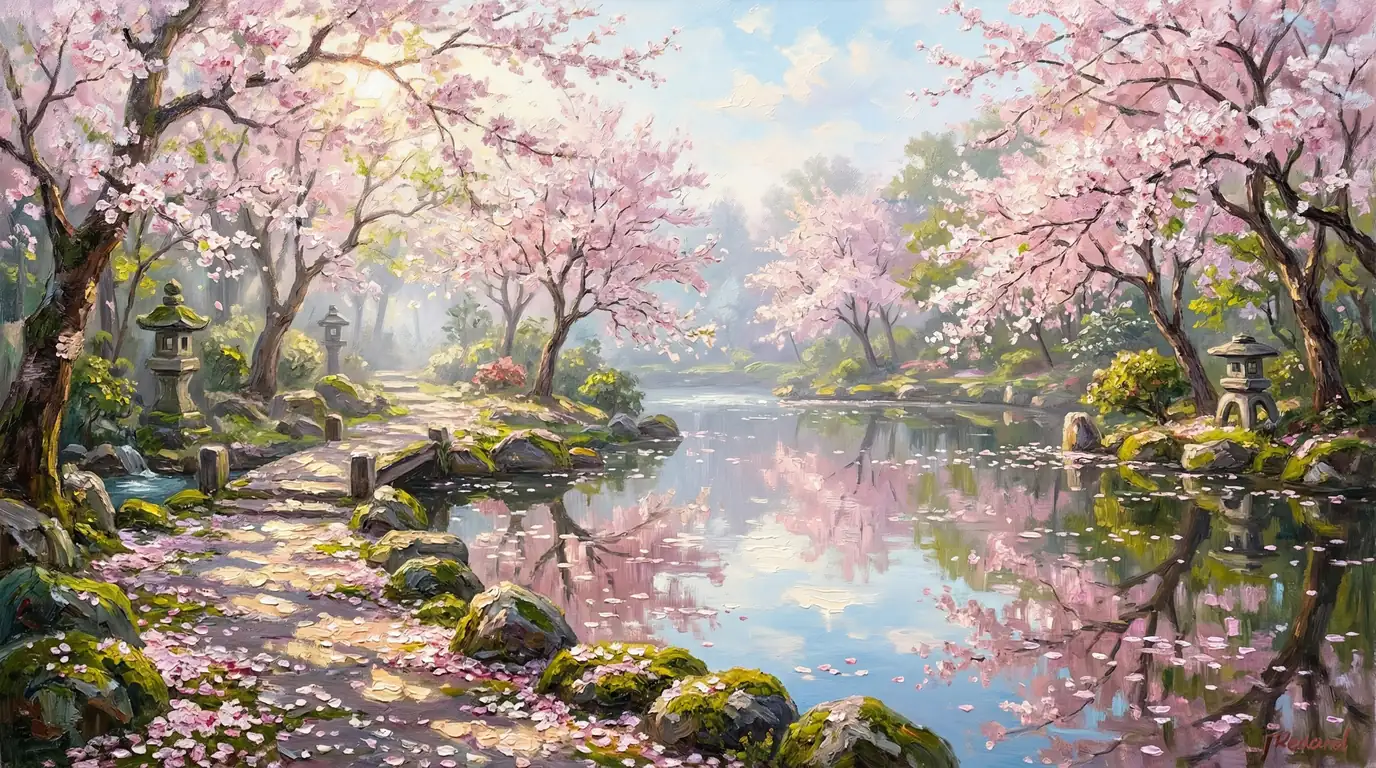 Serenity at the Spring Pond
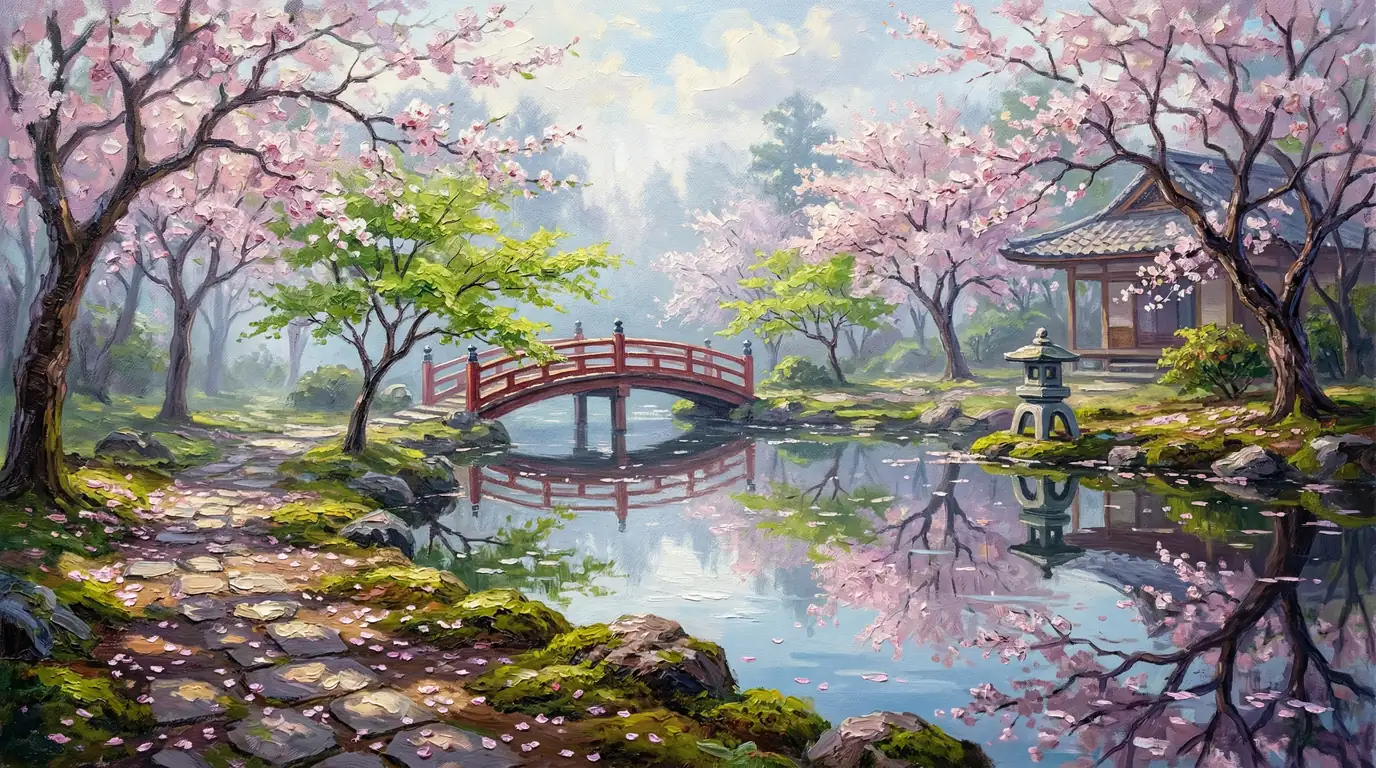 Spring Awakening at the Arched Bridge
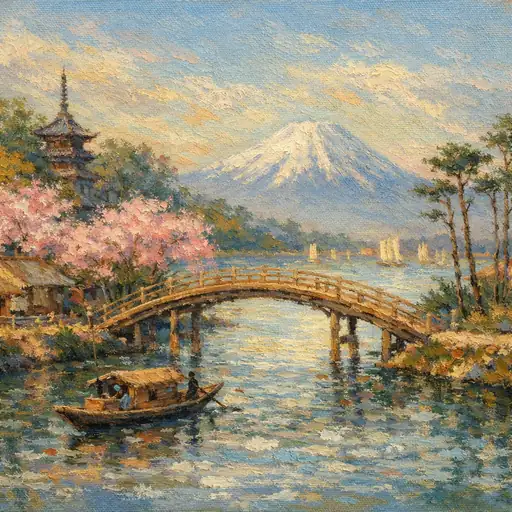 Bridge to Spring: Mount Fuji, Pagoda, and Cherry Blossoms over Tranquil Waters
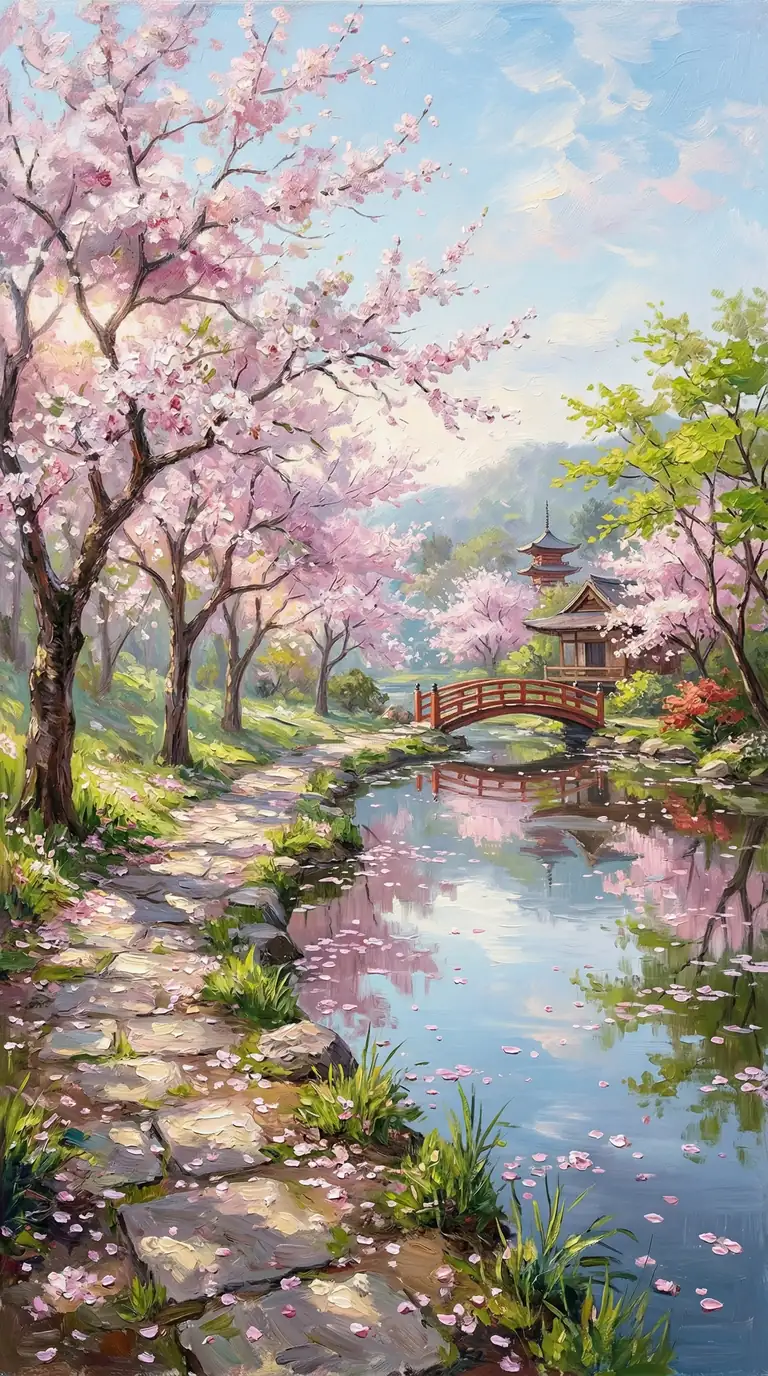 Ethereal Bloom: A Spring Daydream
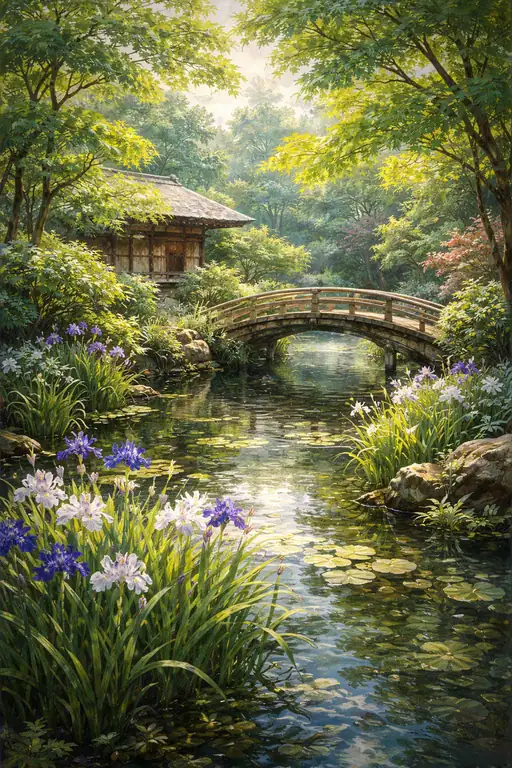 Morning Reflection on the Wooden Arch