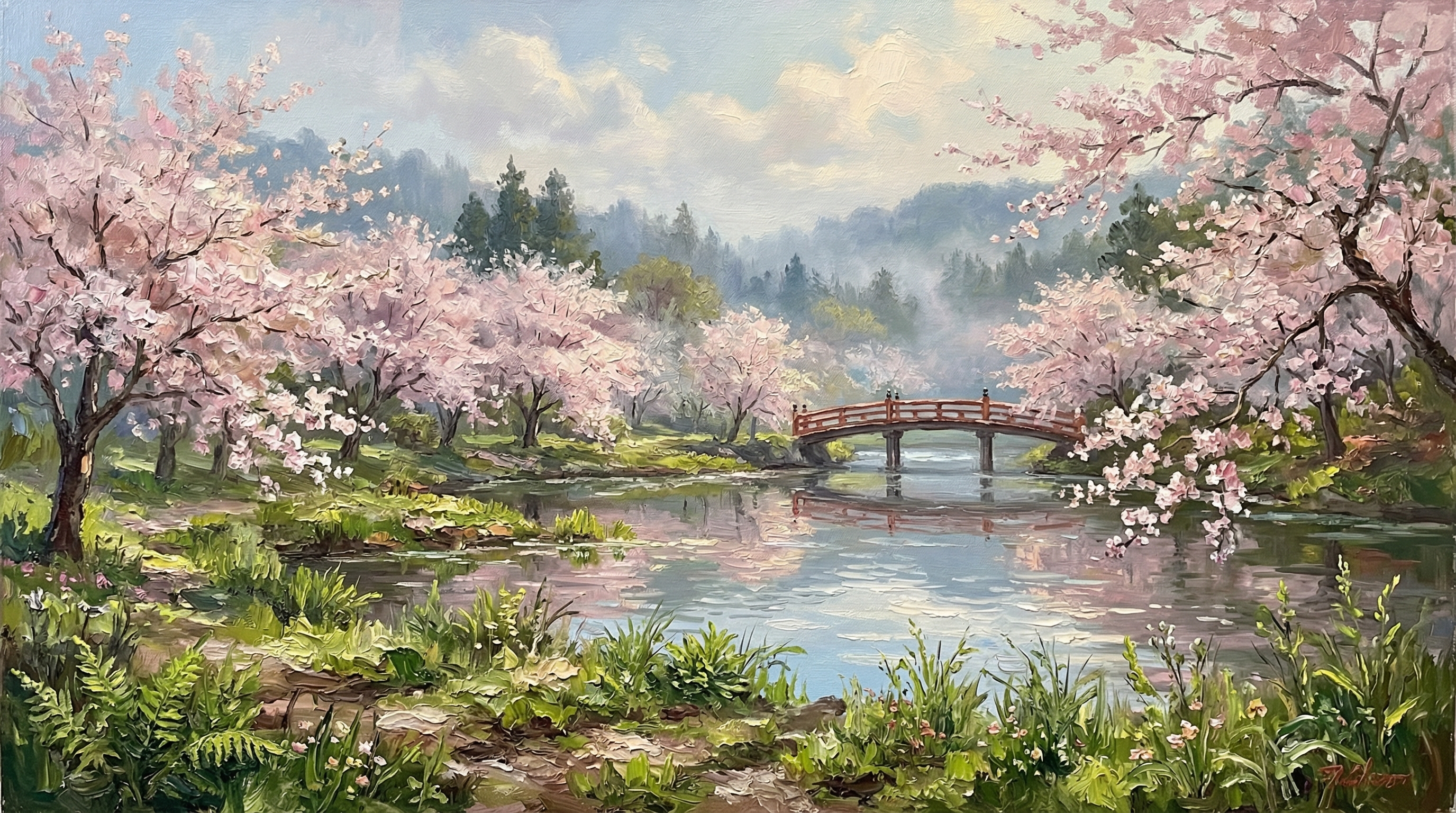
Whispers of the Vermilion Bridge
Critique
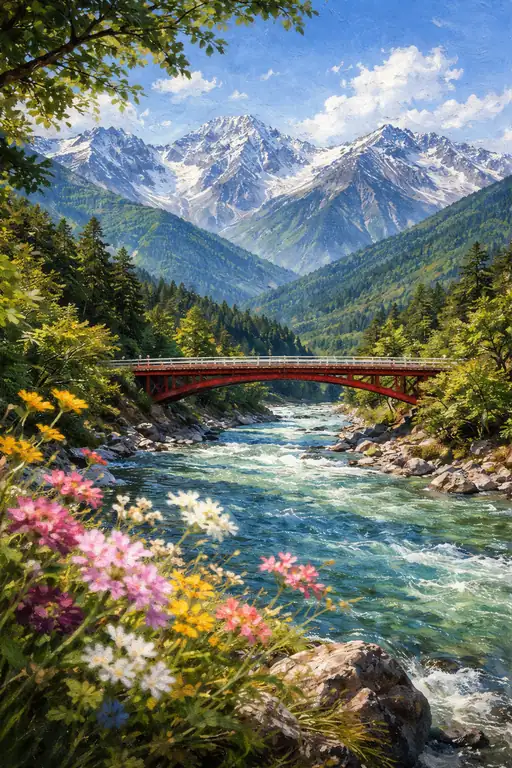
1. Introduction This oil painting presents a lyrical view of cherry blossoms in full bloom along a tranquil riverbank. The composition is centered on a traditional red wooden bridge that arcs gracefully over the water, serving as a focal point amidst the soft pink canopy. The work captures the quintessential atmosphere of a Japanese spring, where the delicate beauty of the flowers creates a dreamlike, ephemeral landscape. This painting serves as an exploration of light, color, and the rhythmic patterns found within a flowering garden. 2. Description The mid-ground is dominated by a row of cherry trees, their branches laden with thick clusters of pale pink blossoms. A vibrant red bridge crosses the calm river in the center, its reflection shimmering on the water’s surface. In the foreground, a grassy bank with hints of wildflowers and ferns provides a lush green base for the scene. The background consists of soft, misty hills and evergreen trees under a bright, overcast sky, which diffuses the light and softens the overall color palette. 3. Analysis The artist utilizes a delicate color palette of pinks, soft blues, and varying shades of green, with the bold red of the bridge providing a necessary visual anchor. A thick impasto technique is employed for the cherry blossoms, giving them a tactile, three-dimensional quality that contrasts with the smoother rendering of the sky and water. The composition is balanced horizontally, with the line of the river and the bank leading the eye across the frame. The use of atmospheric perspective in the distant hills adds a sense of depth and quietude to the environment. 4. Interpretation and Evaluation The painting successfully communicates the joyful and celebratory mood of the Hanami season. The contrast between the permanent structure of the bridge and the fleeting nature of the blossoms invites reflection on the passage of time and the seasonal cycles of life. Technically, the artist’s ability to convey the volume and lightness of the flower clusters through heavy brushwork is highly effective. The work demonstrates a sophisticated sense of harmony and a masterful command of the oil medium to capture a specific sensory experience of spring. 5. Conclusion While the initial impression is one of gentle softness, a closer look reveals the energetic and confident execution of the brushwork. The artist has managed to balance the complexity of the floral details with the simplified forms of the landscape and architecture. This painting encourages the viewer to immerse themselves in the serene beauty of a spring day and to appreciate the cultural significance of the flowering trees. Ultimately, the work stands as a beautiful and technically accomplished tribute to the enduring allure of the Japanese spring landscape.
Same Subcategory
 Evening's Solace by the Stone Bridge
 Vanguard of the Roaring River
Similar Artworks
 Serenade of the Heron's Oriental Haven
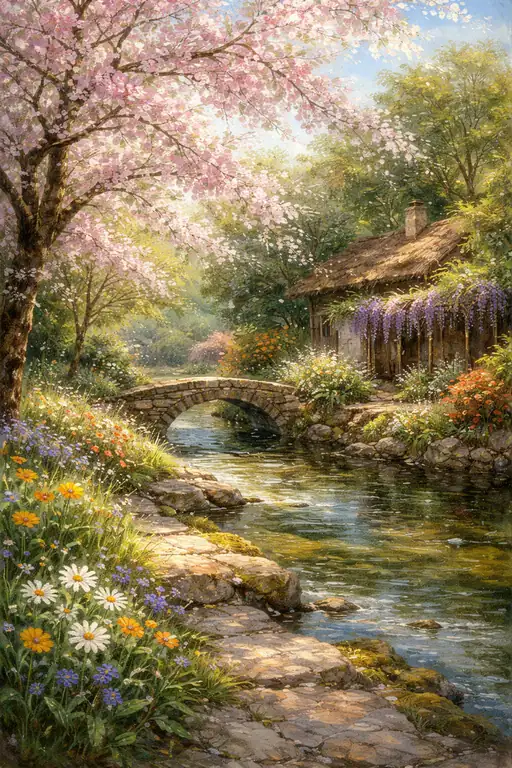 Spring's Eternal Arch
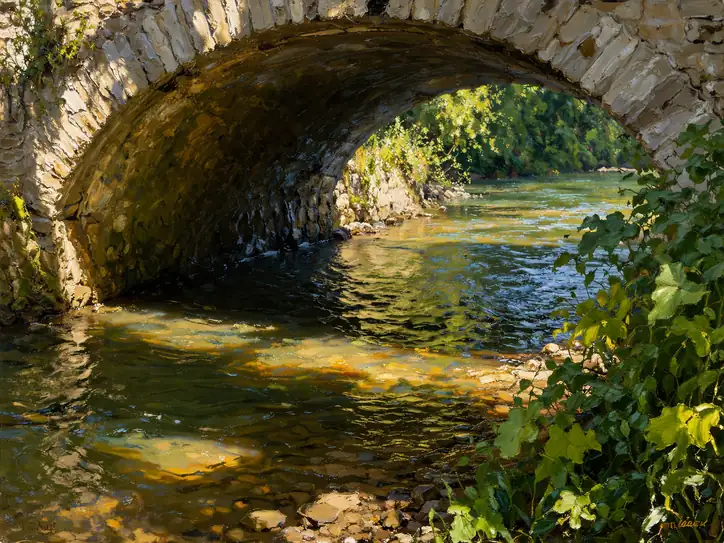 A Gentle Summer Breeze Across the Timeless Stream
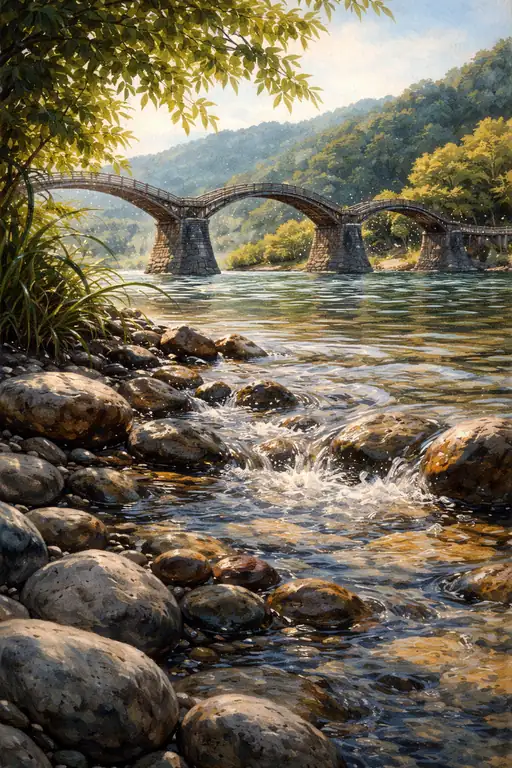 The Arching Flow of Time
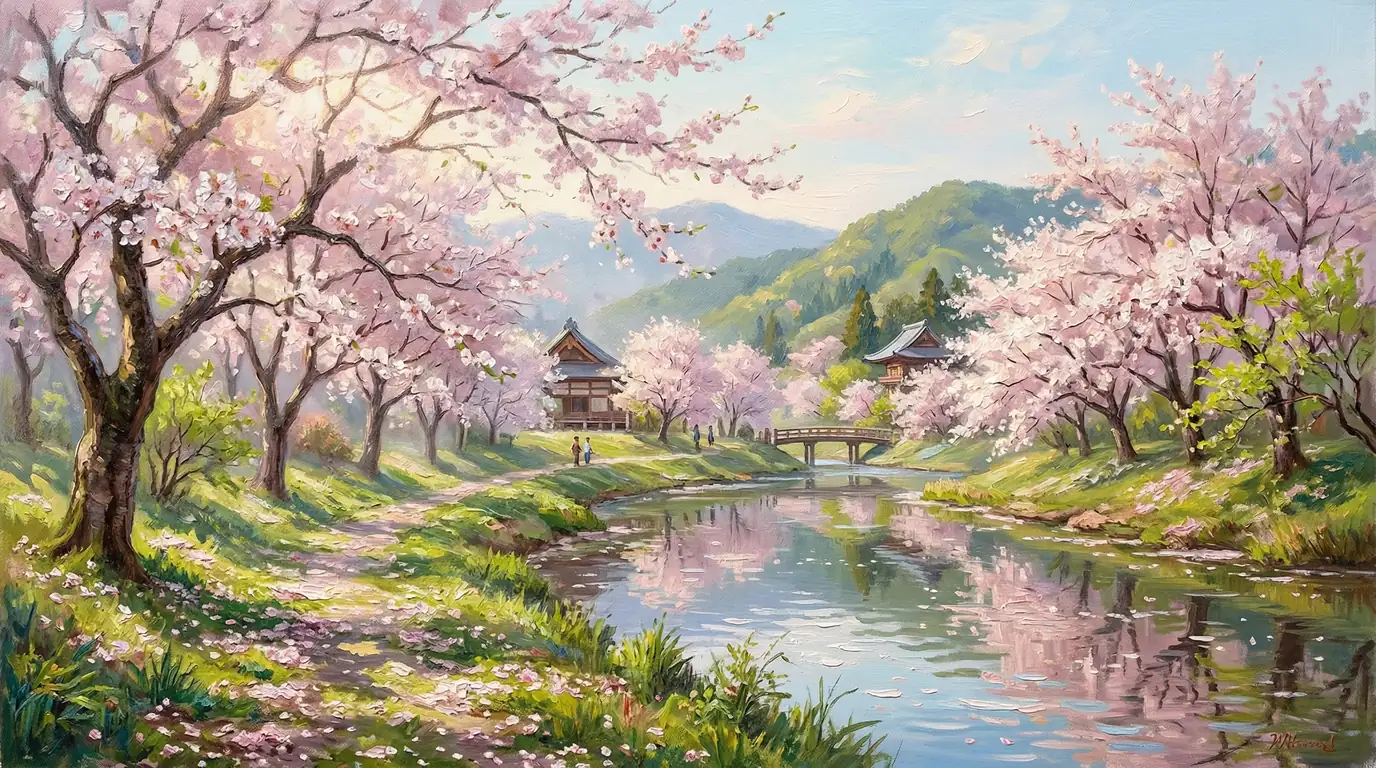 The River's Pink Embrace
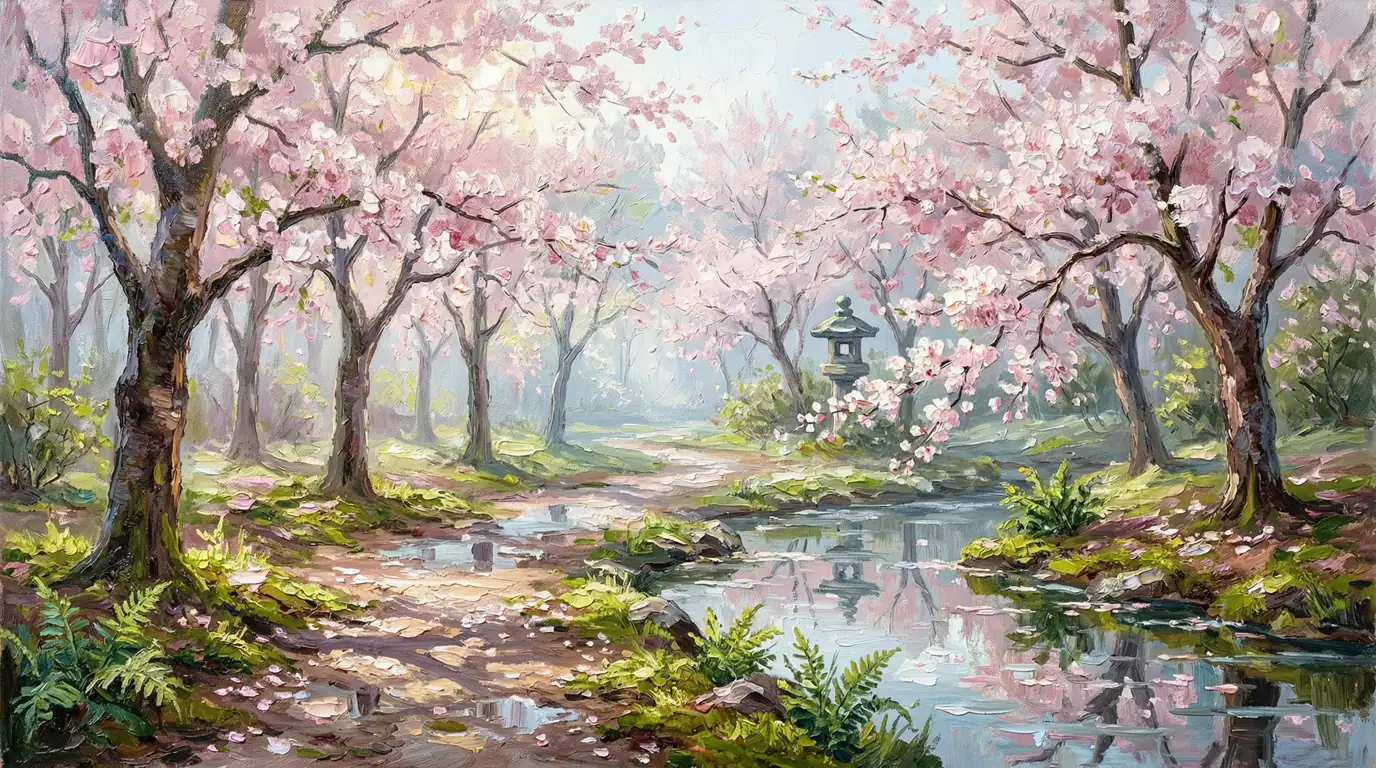 Whispers of the Stone Lantern
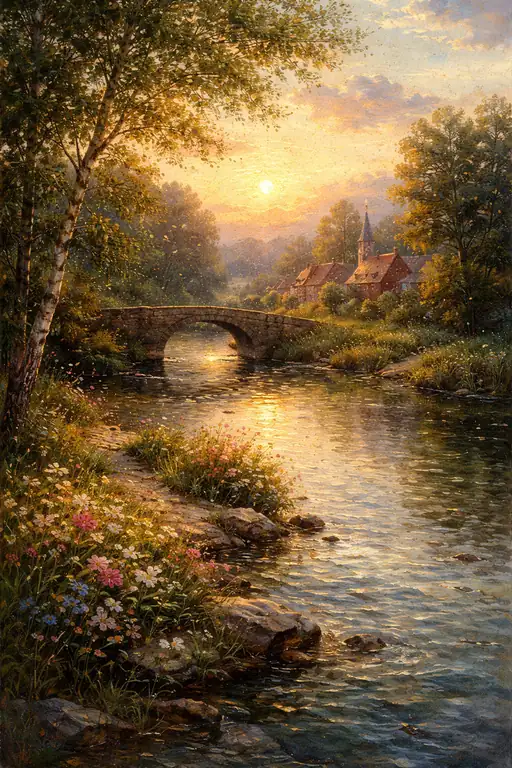 Golden Echoes of the River
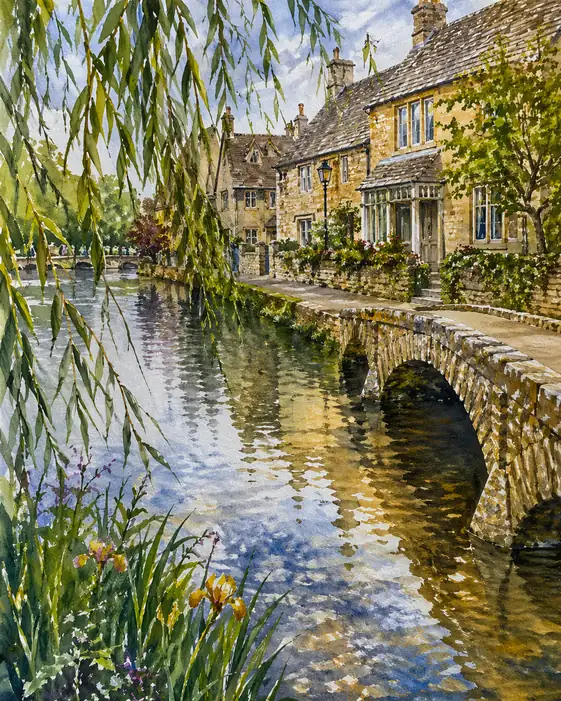 Cotswolds Elegance
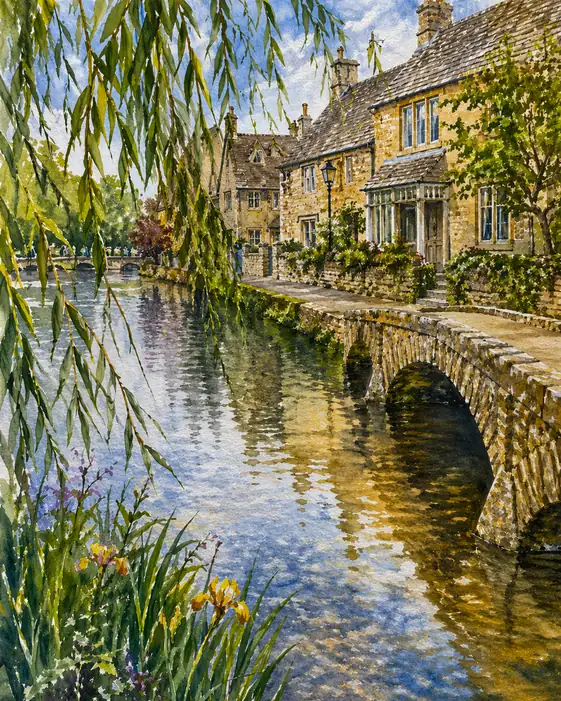 Bourton-on-the-Water in Bloom
 The Crimson Gateway to the Snow Peaks