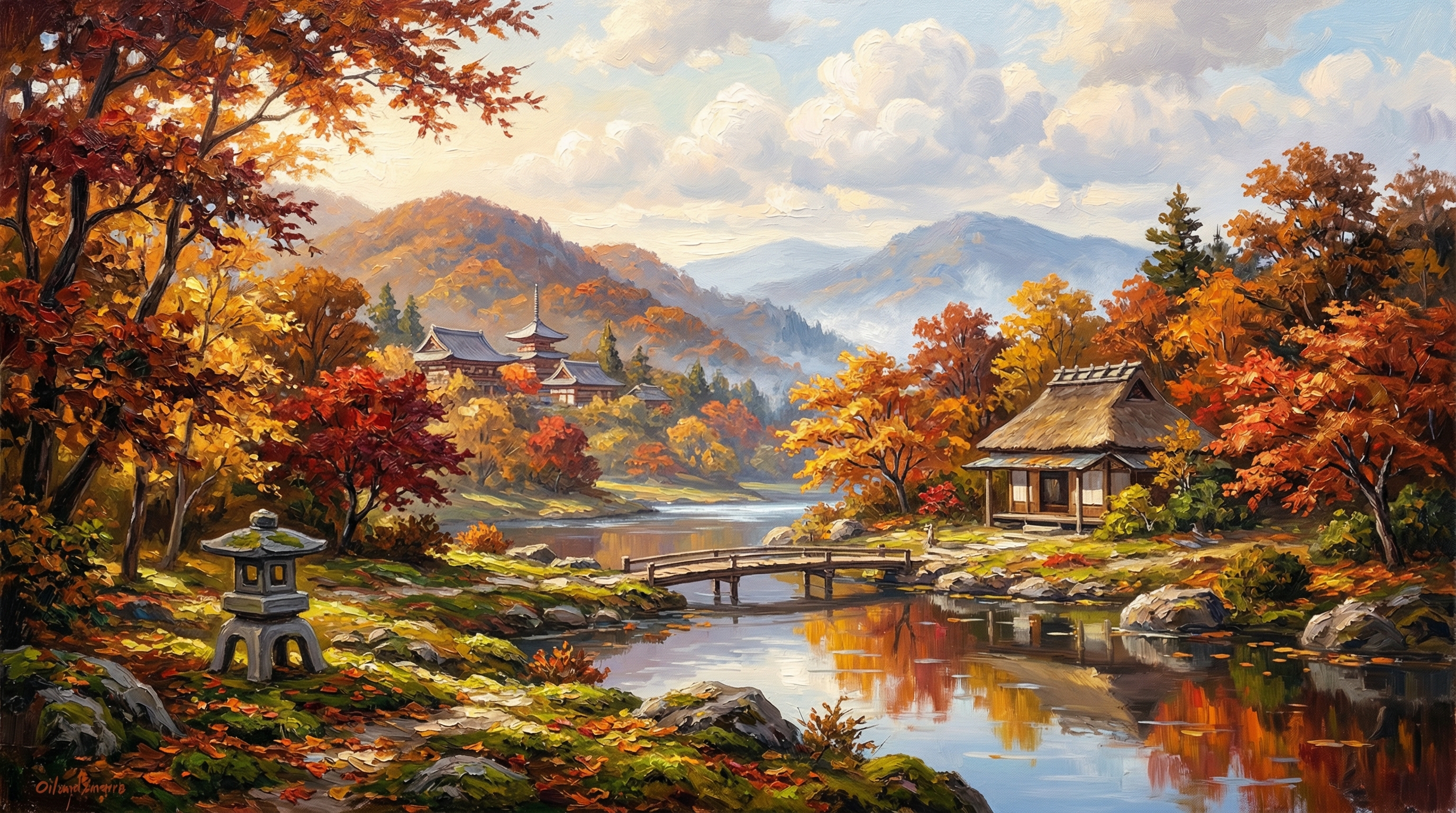
Autumn Panorama of the Thatched Village
Critique
1. Introduction This oil painting depicts a panoramic view of a traditional Japanese landscape nestled within a mountain valley during the autumn season. The composition features a harmonious blend of architectural elements, including a thatched-roof cottage and distant temple structures, integrated into a vibrant natural setting. The work captures the essence of a tranquil, rural life where human habitation exists in balance with the changing seasons. The painting serves as a celebration of cultural heritage and the timeless beauty of the Japanese countryside. 2. Description In the foreground, a traditional stone lantern stands on the left, overlooking a calm body of water that reflects the surrounding foliage. A small wooden bridge crosses the river, leading toward a rustic thatched-roof house on the right. In the distance, the rooftops of a temple and a slender pagoda emerge from a dense forest of red and orange maple trees. The background is dominated by soft, mist-covered mountains that recede into a pale, cloudy sky, creating a sense of vast atmospheric depth. 3. Analysis The artist employs a vivid and diverse color palette, utilizing saturated oranges, deep reds, and bright yellows to convey the intensity of the autumn leaves. The composition is structured around the winding river, which guides the viewer's eye from the foreground stone lantern to the distant temple and mountains. Energetic, visible brushstrokes provide a sense of movement and vitality to the sky and water, while more controlled strokes define the structural details of the buildings. The use of atmospheric perspective, rendered through the soft blues and grays of the distant peaks, enhances the scale of the valley. 4. Interpretation and Evaluation The painting successfully evokes a feeling of nostalgia and peace, representing an idealized vision of the Japanese landscape. The inclusion of both humble domestic architecture and grand religious structures suggests a community where everyday life and spiritual practice are deeply intertwined with nature. Technically, the rendering of reflections on the water surface is particularly effective, adding a layer of tranquility to the dynamic brushwork found elsewhere. The work demonstrates a strong command of landscape composition and a sophisticated use of color to establish a unified seasonal mood. 5. Conclusion A detailed examination reveals that while the brushwork is expressive and free, the underlying structure of the landscape is meticulously planned to maintain visual balance. The artist has managed to capture the specific light and atmosphere of a crisp autumn day in the mountains. This work encourages the viewer to appreciate the enduring harmony between traditional architecture and the natural environment. Ultimately, the painting stands as a vibrant and evocative tribute to the aesthetic and spiritual qualities of the Japanese rural landscape.
Same Subcategory
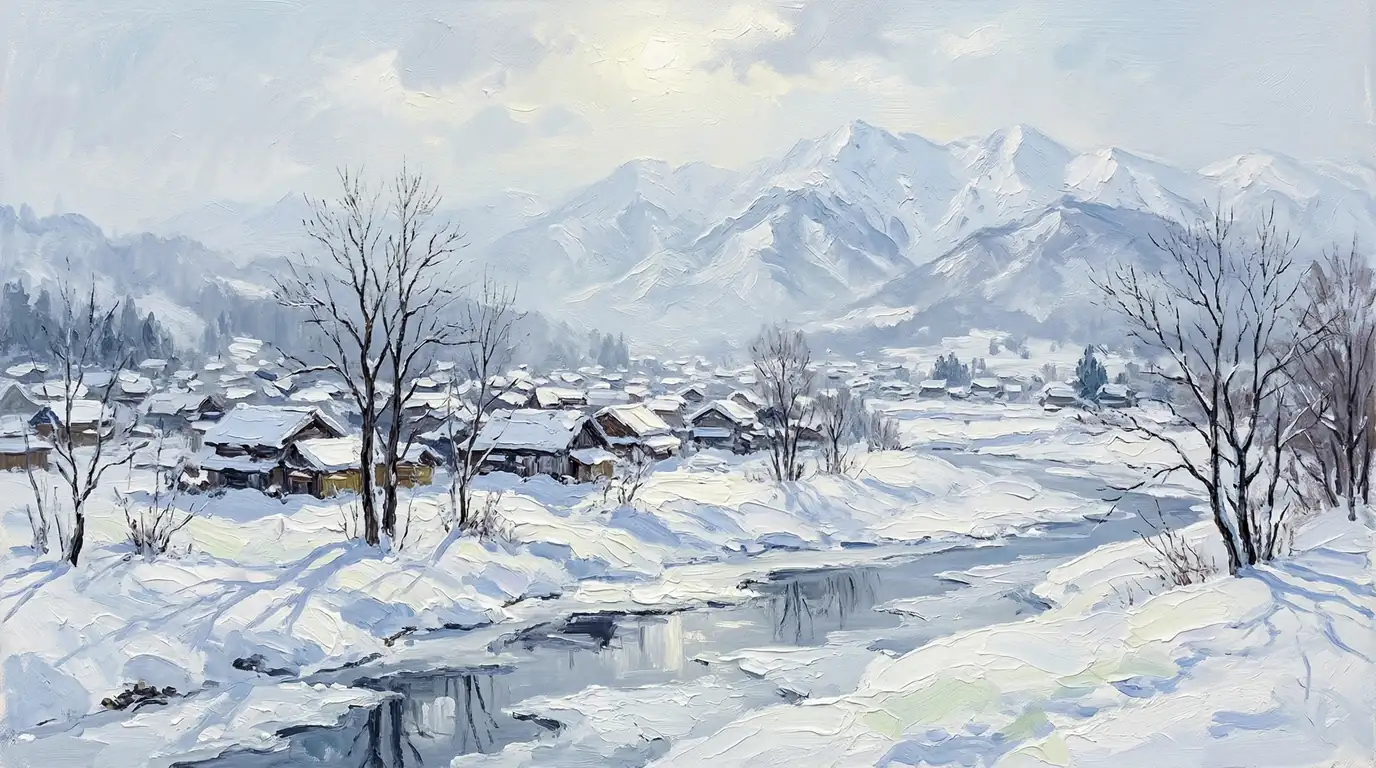 Silent Winter in the Hidden Valley
Similar Artworks
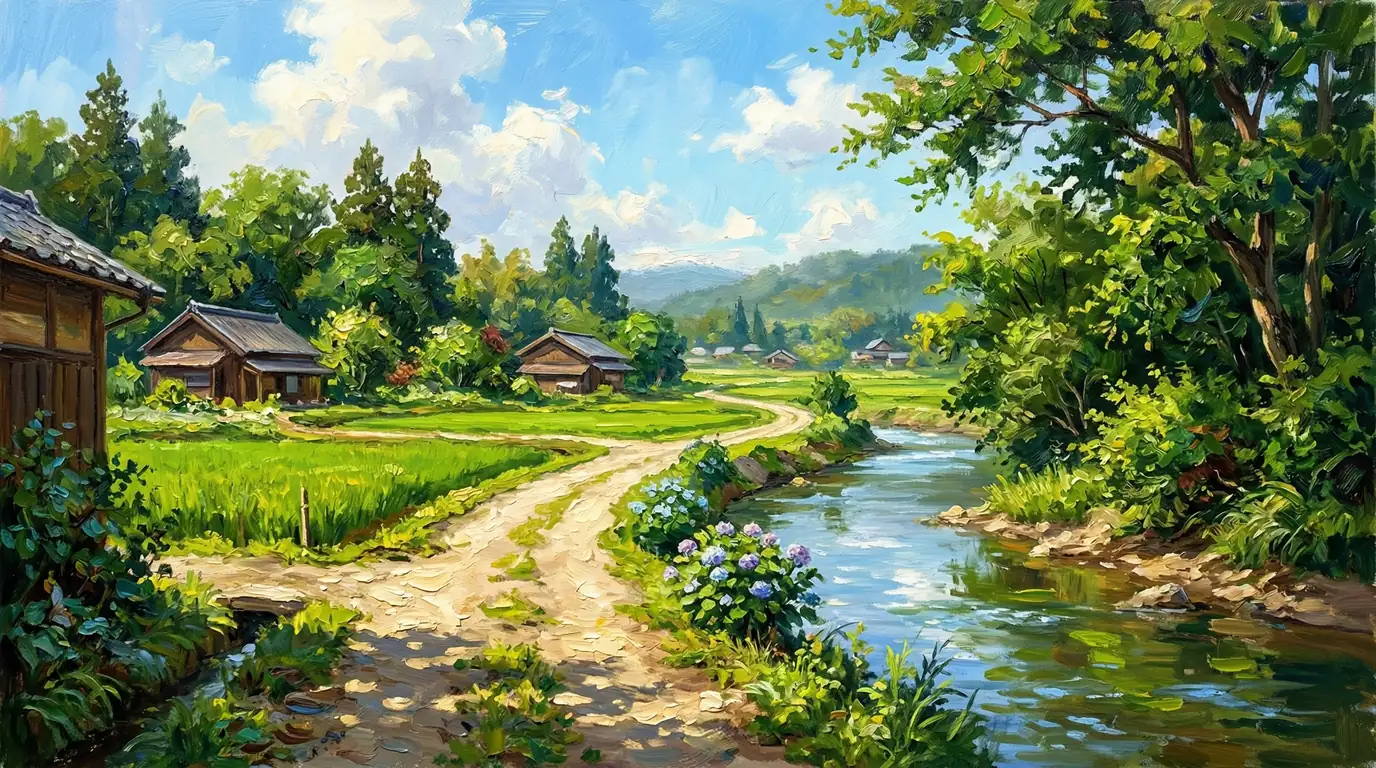 Hydrangea Bloom by the Singing River
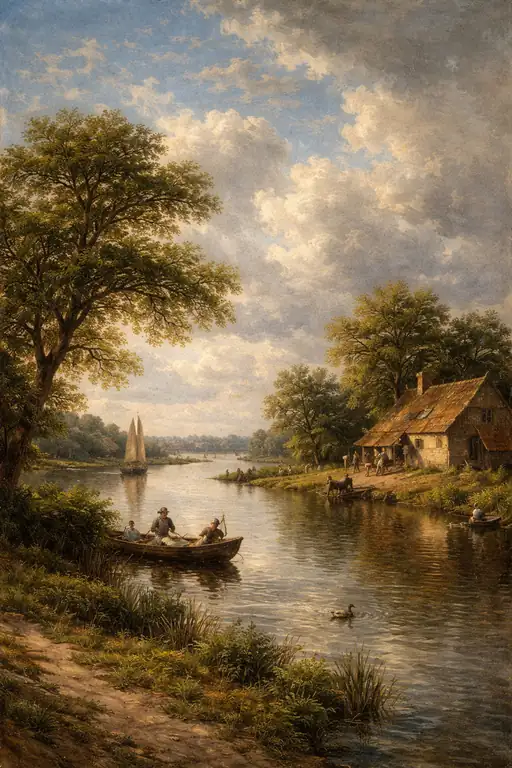 The River's Gentle Song
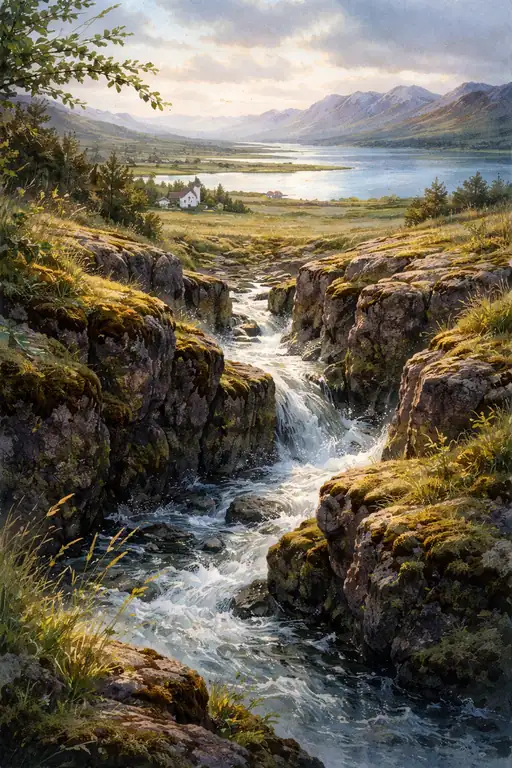 Whispers of the Emerald Valley
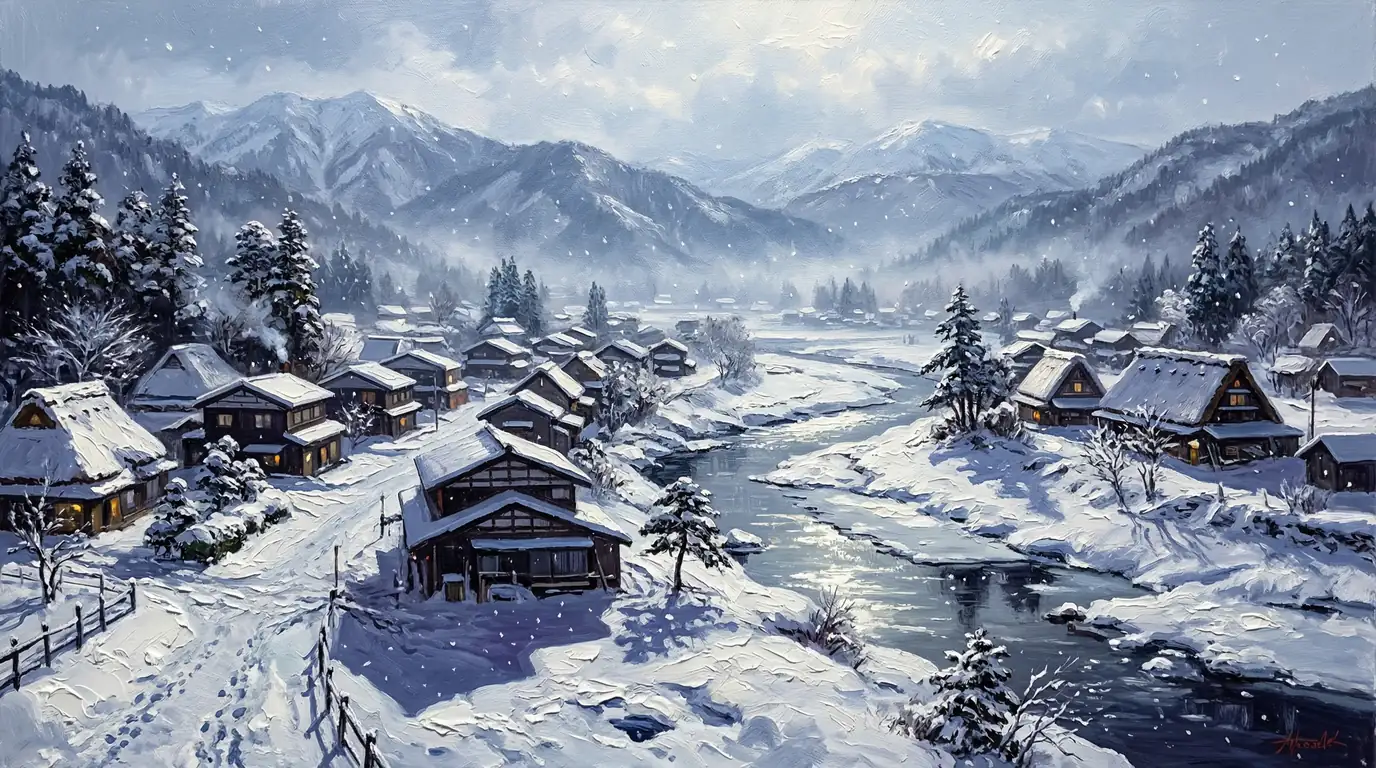 Whispering Snow in the Heart of Silence
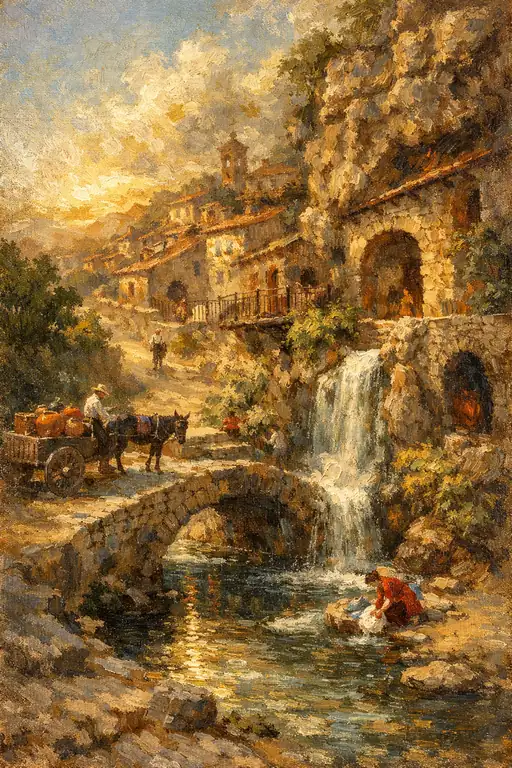 The River's Song at Sunset
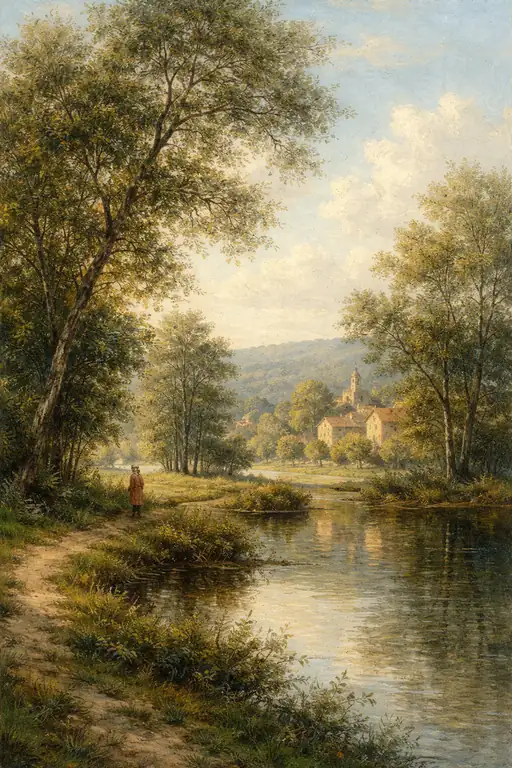 Reflections of a Serene Sanctuary
 Porvoo Riverside: A Golden Afternoon
 A Balcony in the Alpine Village
 Tranquil Reverie by the Reeds
 Golden Hour Reflections