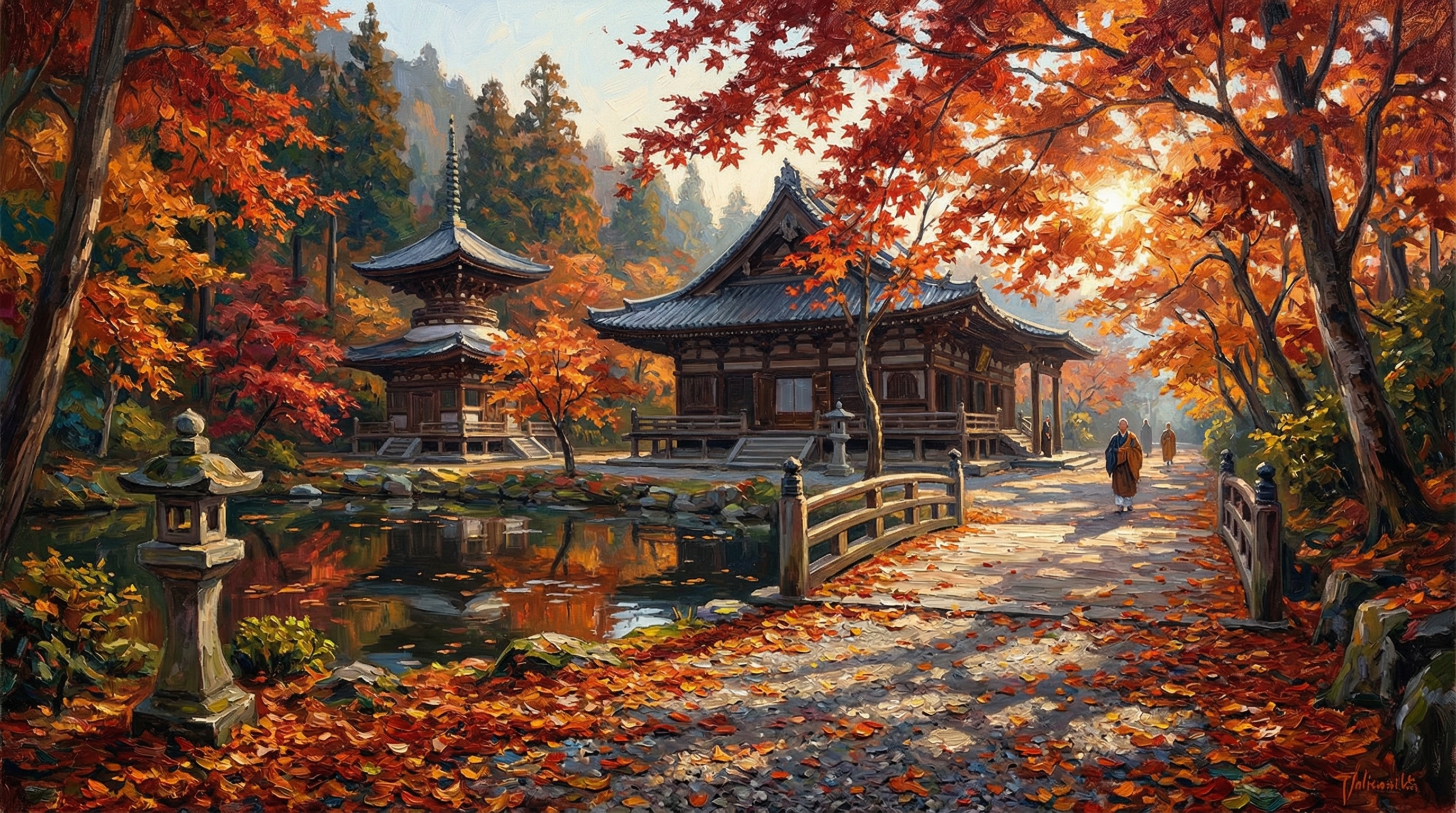
Spiritual Autumn at the Pagoda
Critique
1. Introduction This oil painting presents a traditional Japanese temple complex during the height of autumn. The composition centers on a majestic wooden hall and a multi-tiered pagoda, nestled within a forest of vibrant red and orange maples. A sense of spiritual tranquility and seasonal transition permeates the scene, inviting the viewer to contemplate the intersection of architectural heritage and natural cycles. The work employs a rich, textural approach to capture the ephemeral beauty of the autumn foliage and the enduring presence of the sacred site. 2. Description In the middle ground, a traditional wooden hall with a curved roof stands prominently, while a three-story pagoda rises to its left. To the right, a sunlit path leads into the scene, where a solitary figure in monastic robes walks toward the foreground. The foreground is filled with a dense carpet of fallen leaves, and a stone lantern stands beside a still pond that reflects the fiery colors of the maples. Sunlight filters through the canopy in the upper right, casting long, soft shadows across the wooden bridge and the stone-paved walkway. 3. Analysis The artist utilizes a warm, analogous color palette dominated by ochre, vermilion, and deep sienna, which establishes a cohesive seasonal atmosphere. The composition is balanced through the placement of the architectural elements on the left against the open, sun-drenched path and figures on the right. Rapid, impasto brushstrokes create a sense of movement in the leaves and texture in the wooden structures and stone path. The contrast between the dark, solid silhouettes of the buildings and the brilliant, translucent quality of the sunlit foliage enhances the depth and luminosity of the space. 4. Interpretation and Evaluation The painting successfully evokes the concept of mono no aware, the poignant awareness of the impermanence of all things. The juxtaposition of the ancient, stable temple structures with the fleeting brilliance of the autumn leaves serves as a powerful metaphor for the passage of time. Technical skill is evident in the handling of light and shadow, which provides a dramatic focus and guides the viewer's eye through the complex landscape. The work demonstrates a strong command of composition and a sophisticated use of color to convey a specific emotional and spiritual state. 5. Conclusion While the initial impression is one of overwhelming color, a closer examination reveals a meticulously structured environment that balances man-made and natural elements. The artist has managed to capture not just a visual scene, but a specific atmosphere of reverence and quietude. This painting serves as a testament to the enduring appeal of traditional themes when rendered with modern expressive techniques. Ultimately, the work offers a profound reflection on the harmony between human spirituality and the inevitable transformations of the natural world.
Same Subcategory
Similar Artworks
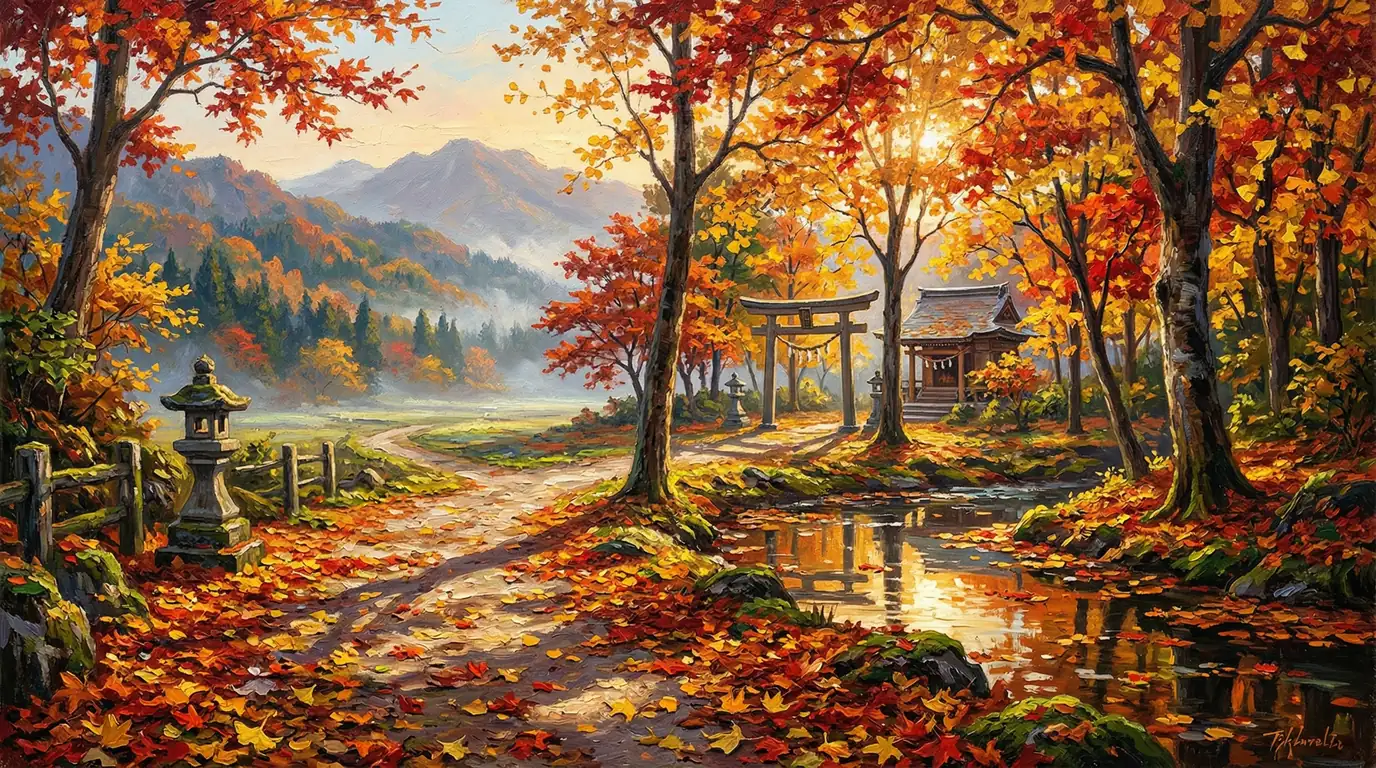 Sanctuary of the Misty Mountains
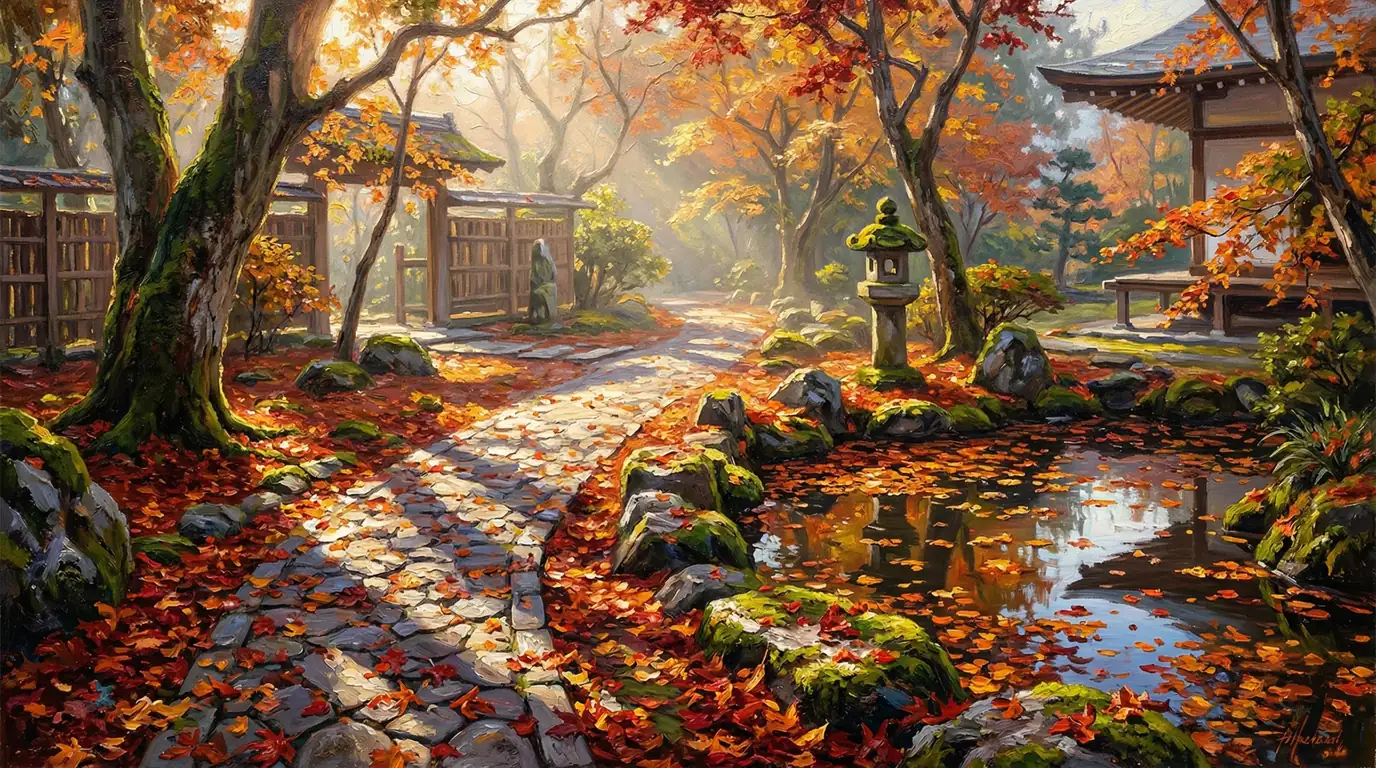 Golden Autumn in the Zen Garden
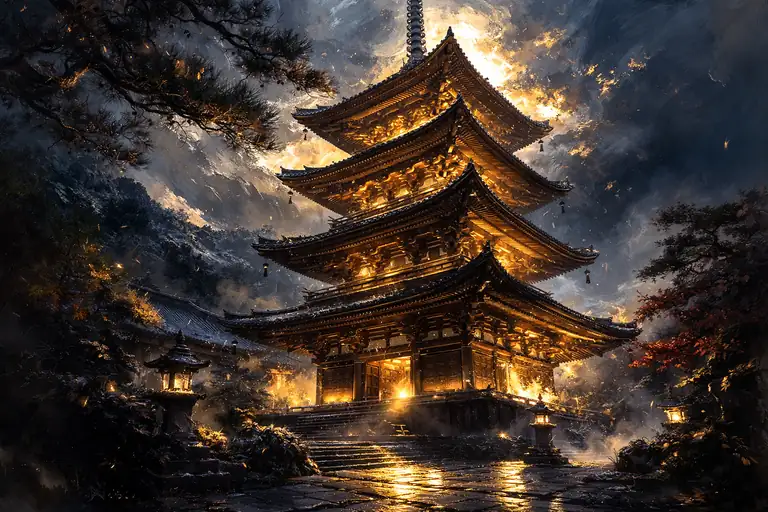 The Eternal Sentinel
 The Fiery Glow of the Sunset Pagoda
 Autumn's Golden Reverie
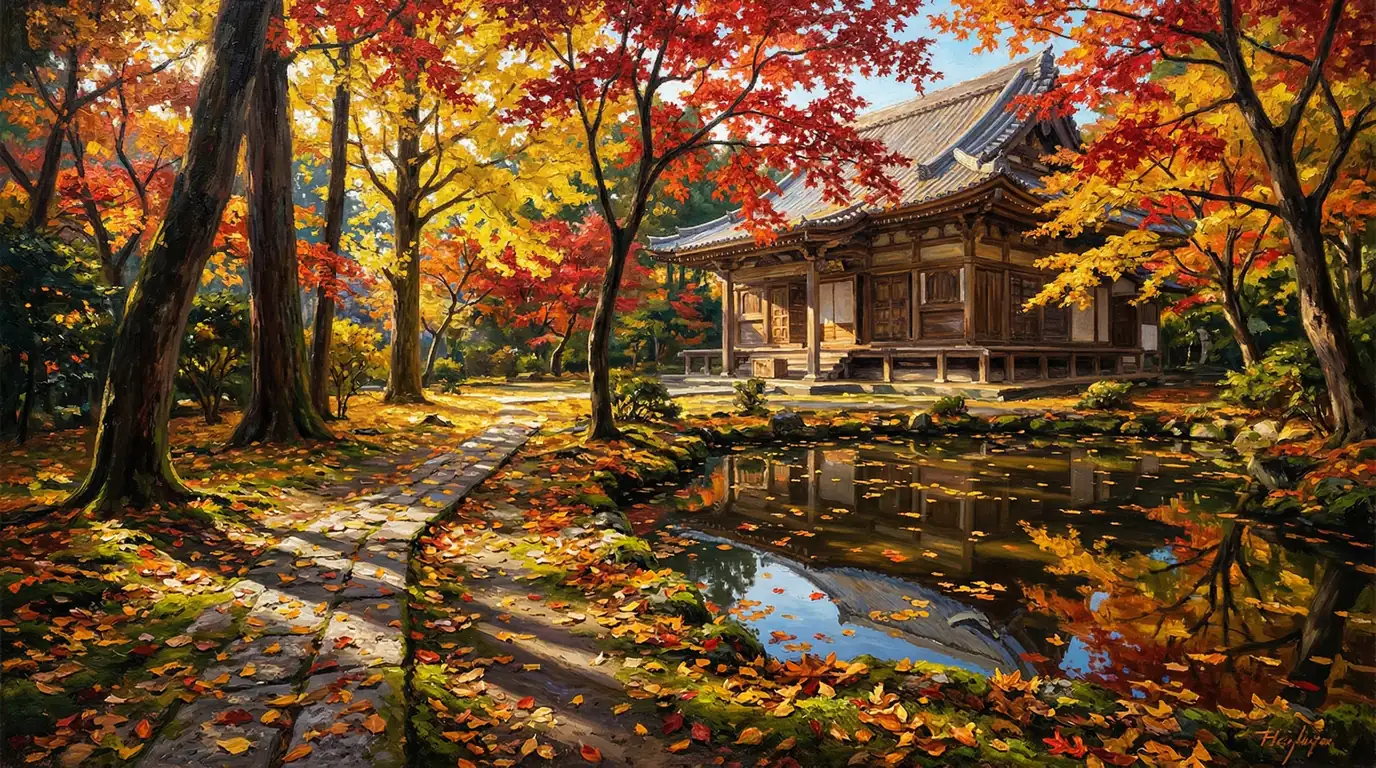 Crimson Reflections at the Temple Pond
 Enduring Companions in the Autumn Light
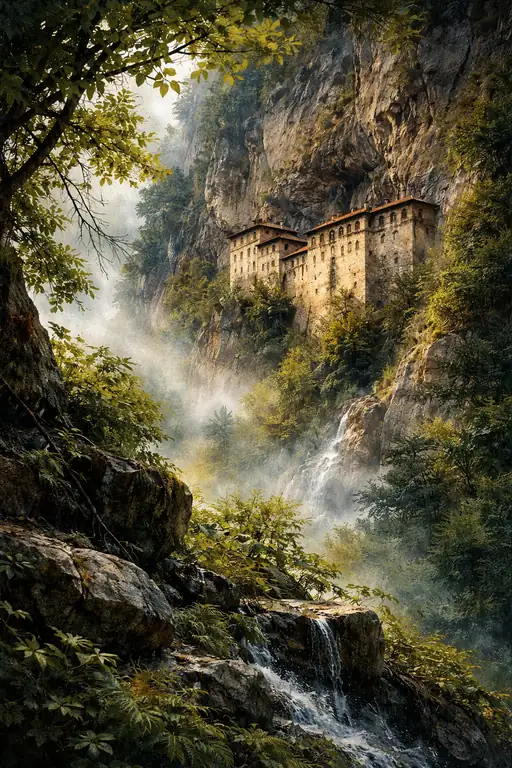 Sanctuary Within the Misty Cliffs
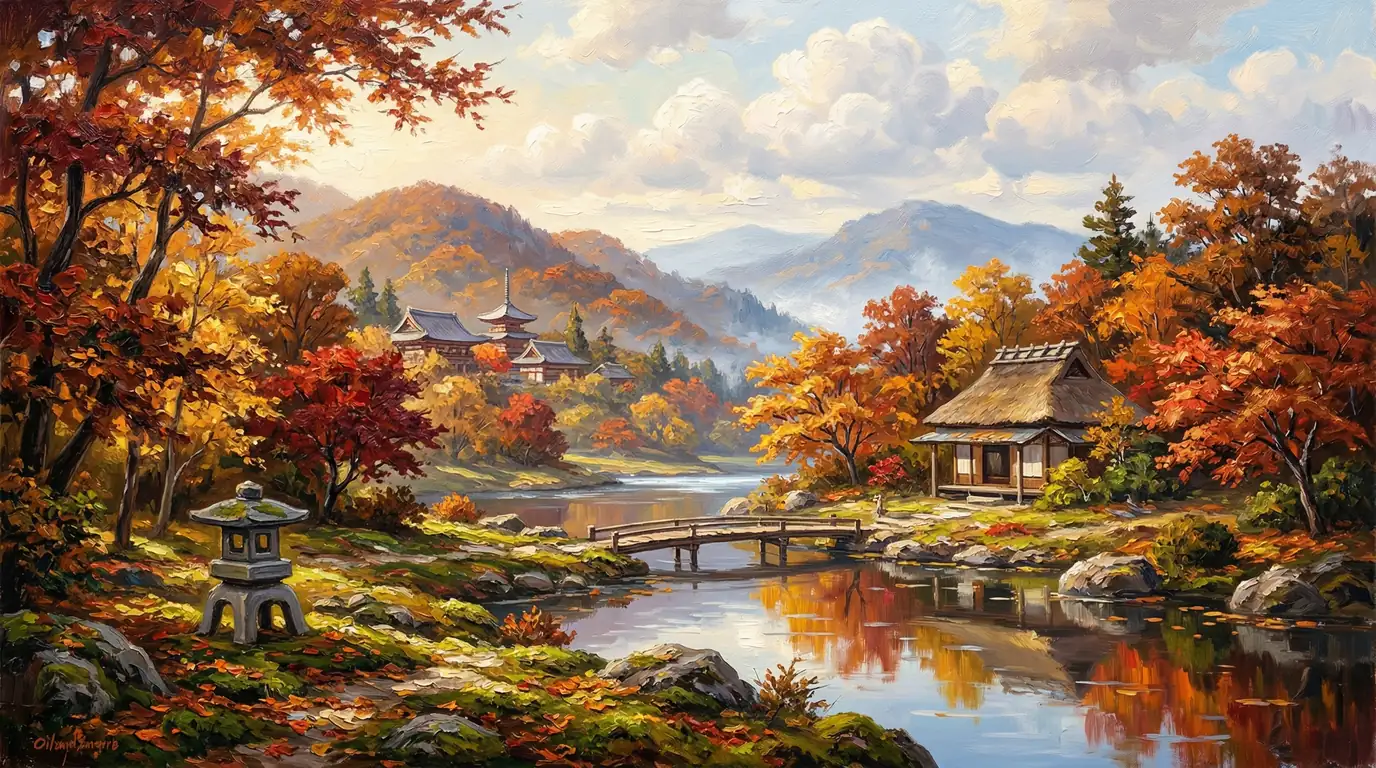 Autumn Panorama of the Thatched Village
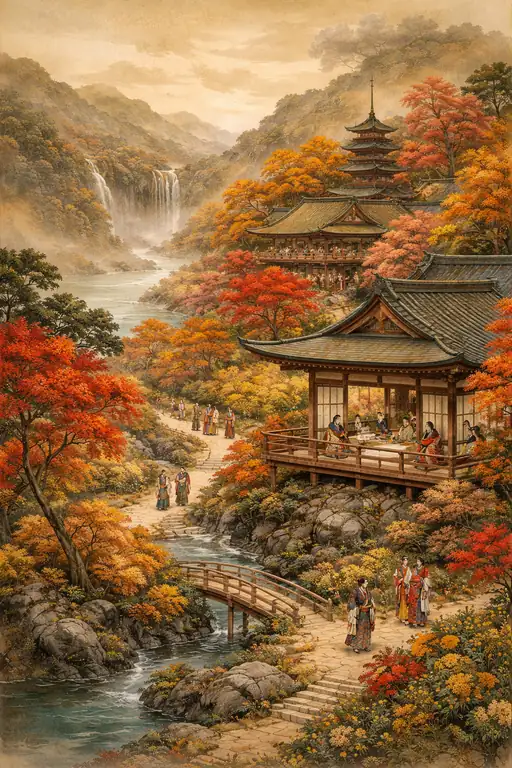 Crimson Canopy