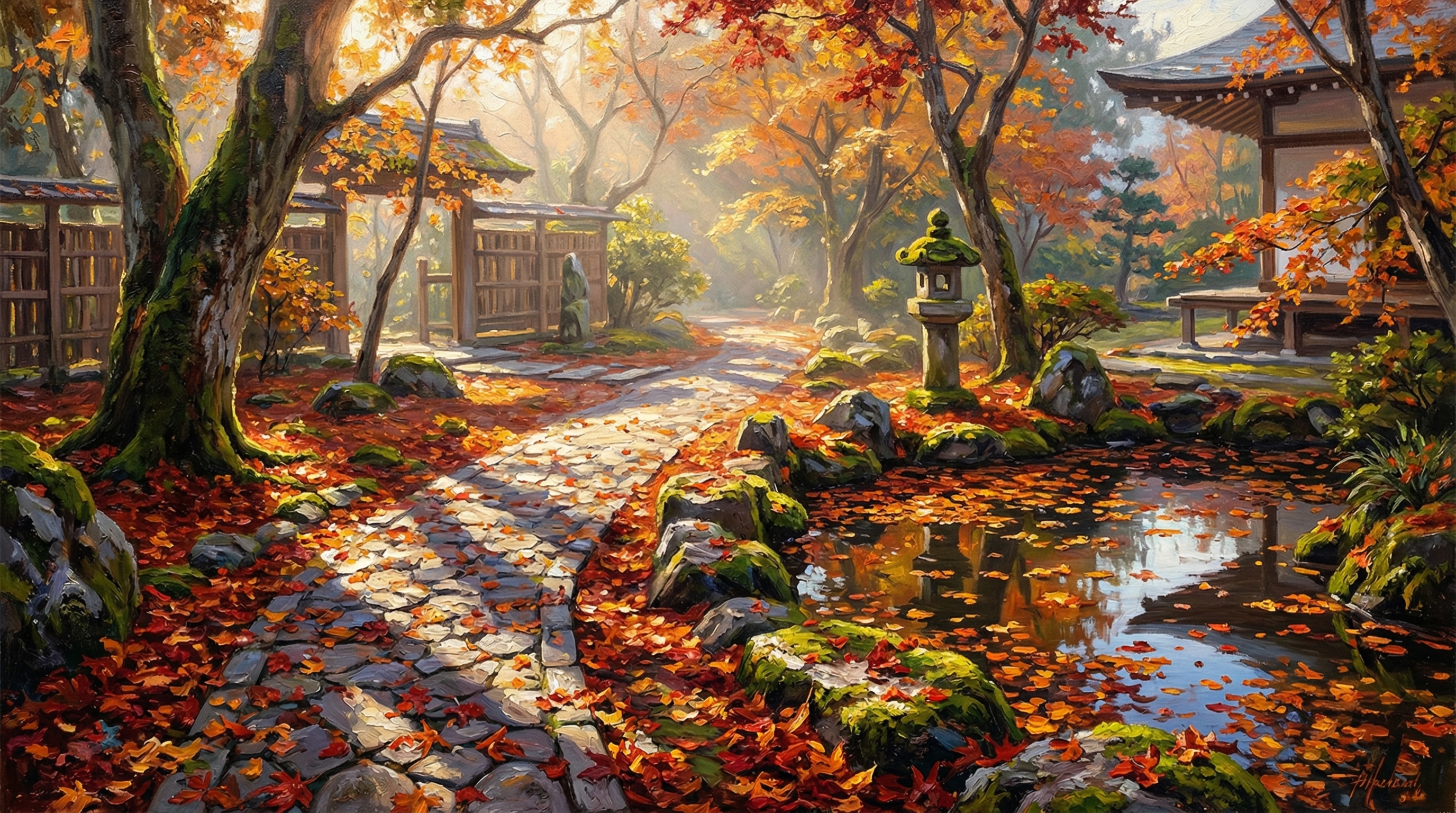
Golden Autumn in the Zen Garden
Critique
Introduction This oil painting captures the vibrant essence of a traditional Japanese garden during the peak of autumn. The scene is centered around a winding stone path that leads the viewer through a landscape of fiery maple trees and serene architectural elements. The artist utilizes a dynamic interplay of light and shadow to emphasize the seasonal transformation and the tranquil atmosphere of the sacred space. Description In the foreground, a path of irregular gray stones is partially covered with fallen crimson leaves, leading towards a sun-drenched clearing. To the right, a weathered stone lantern stands near a reflective pond where floating leaves create a mosaic of color on the water's surface. A traditional wooden building with an elegant tiled roof occupies the upper right corner, while the background is filled with a dense canopy of red and orange foliage illuminated by golden sunlight. Analysis The composition is masterfully balanced, using the diagonal line of the path to create a sense of movement and depth. The artist employs a rich impasto technique, where thick layers of paint are applied with vigorous brushstrokes to suggest the organic textures of bark, moss, and leaves. A warm palette dominated by vermilion, ochre, and deep greens is punctuated by brilliant highlights of white and yellow, effectively simulating the effect of dappled sunlight filtering through the trees. Interpretation and Evaluation The work reflects a deep appreciation for the transitory beauty of nature, a core theme in Japanese aesthetics known as "mono no aware." The technical skill is particularly evident in the rendering of reflections on the pond and the atmospheric mist that softens the distant trees. This painting succeeds in conveying a sense of spiritual stillness, inviting the observer to contemplate the harmonious relationship between man-made structures and the natural world. Conclusion In conclusion, this piece is a compelling celebration of autumn's ephemeral splendor and cultural heritage. The integration of meticulous detail with expressive brushwork results in a visually stimulating and emotionally resonant experience. The viewer is left with a lasting impression of the garden's enduring grace, marking this work as a significant contribution to contemporary landscape painting.
Same Subcategory
 Mist Over the Crimson Path
Similar Artworks
 Echoes of the Crimson Bridge
 Echoes of Golden Leaves
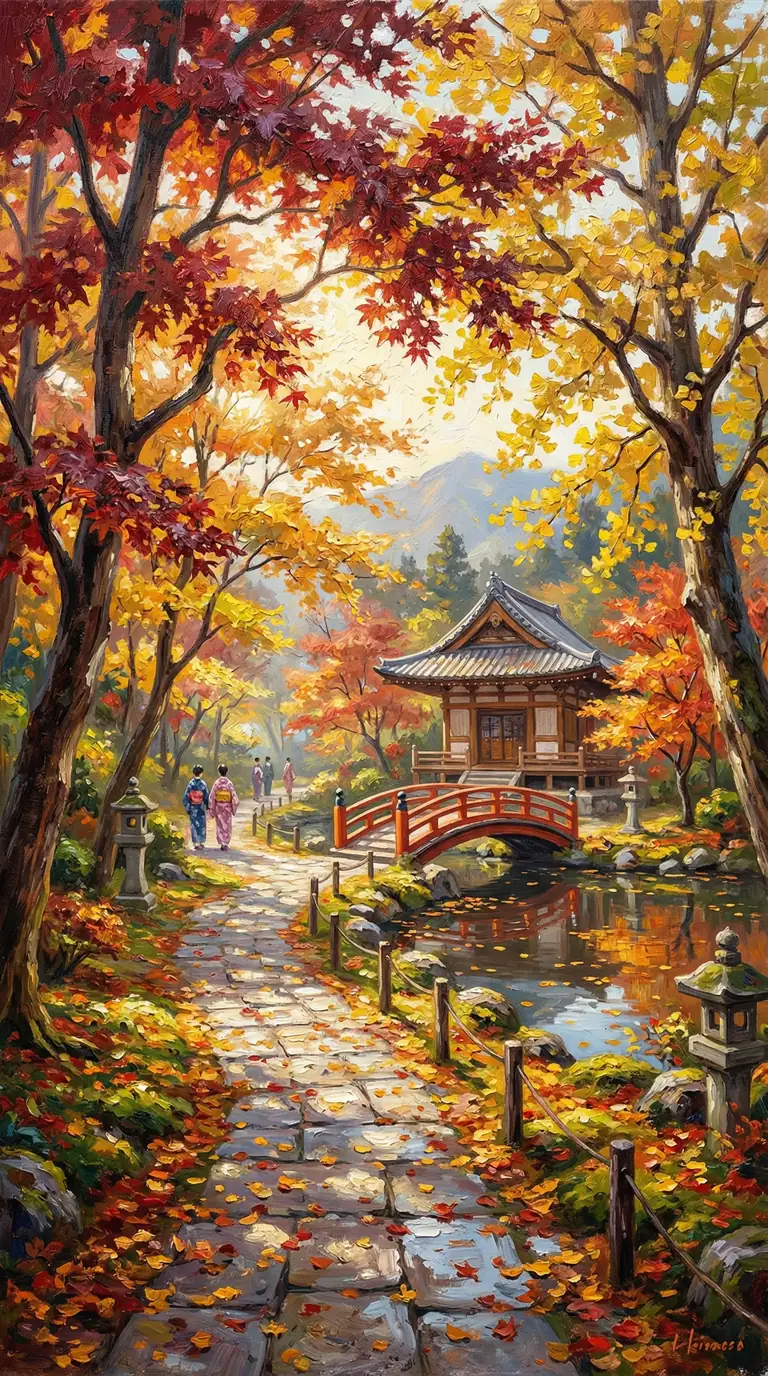 Crimson Canopy: The Golden Echoes of Autumn
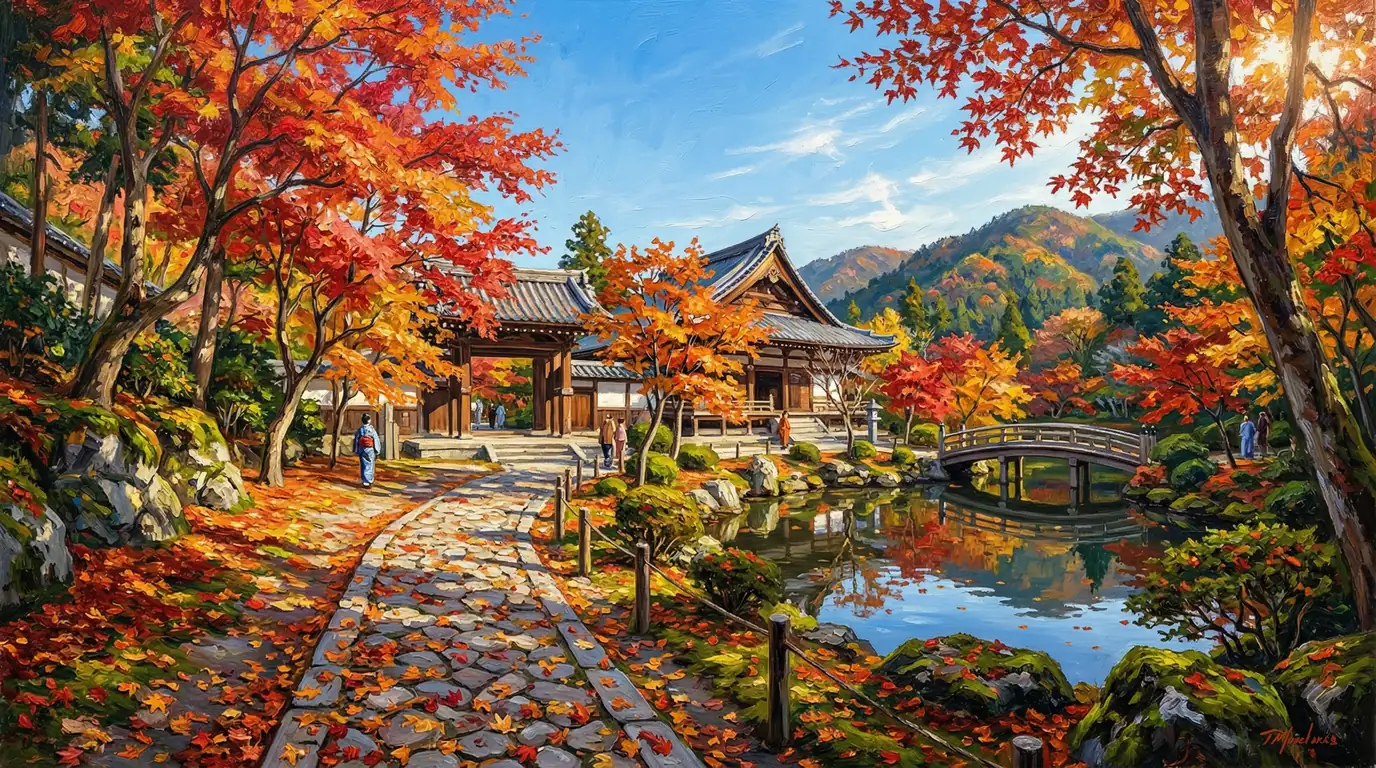 Autumn's Ephemeral Mirror
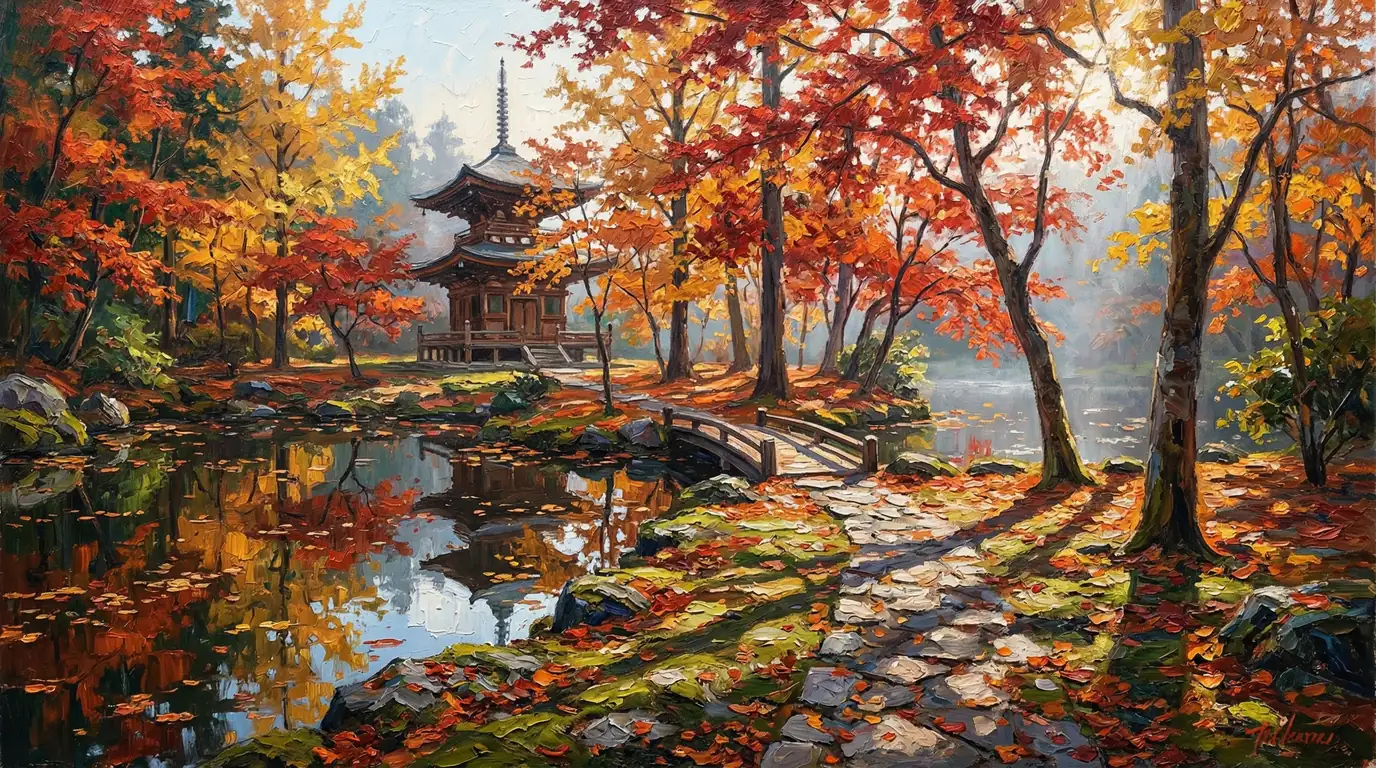 Symphony of Autumn Colors
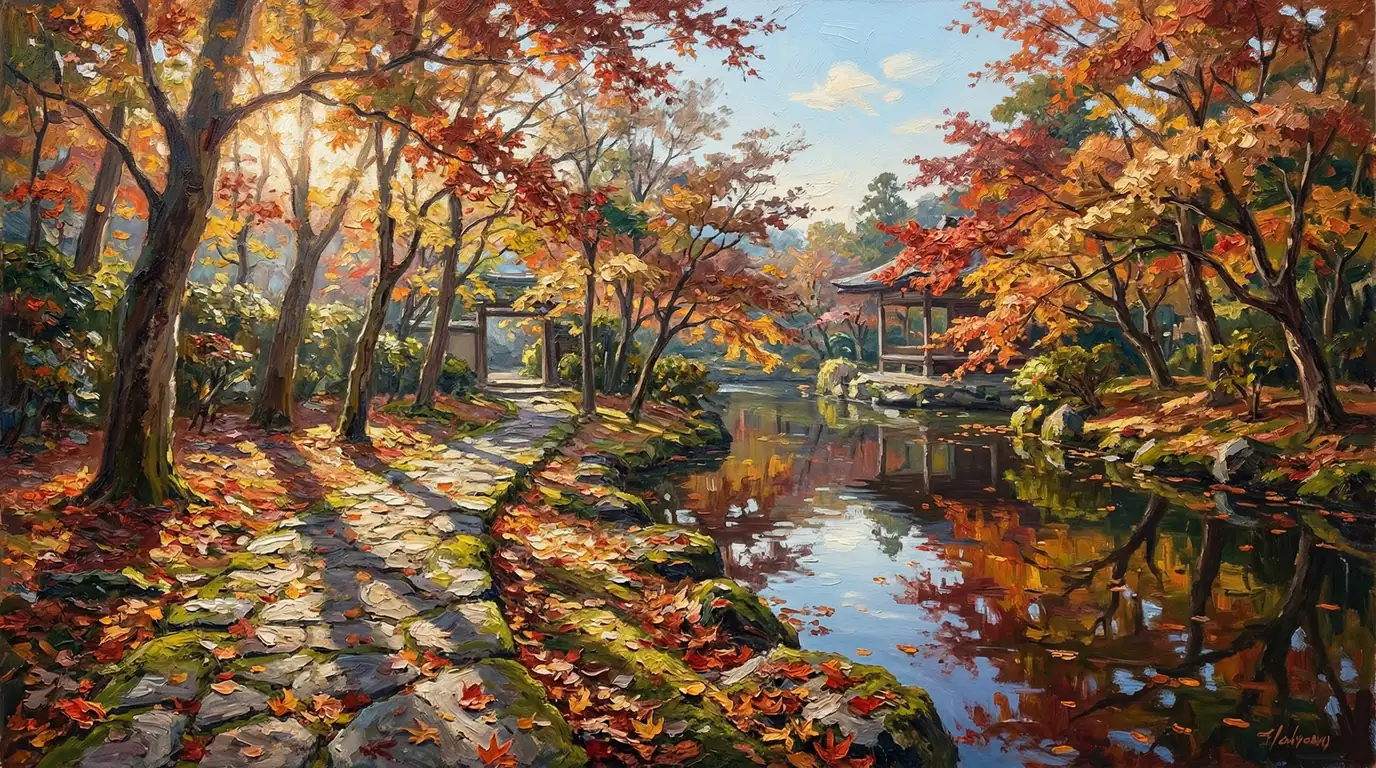 Crimson Canopy of Dreams
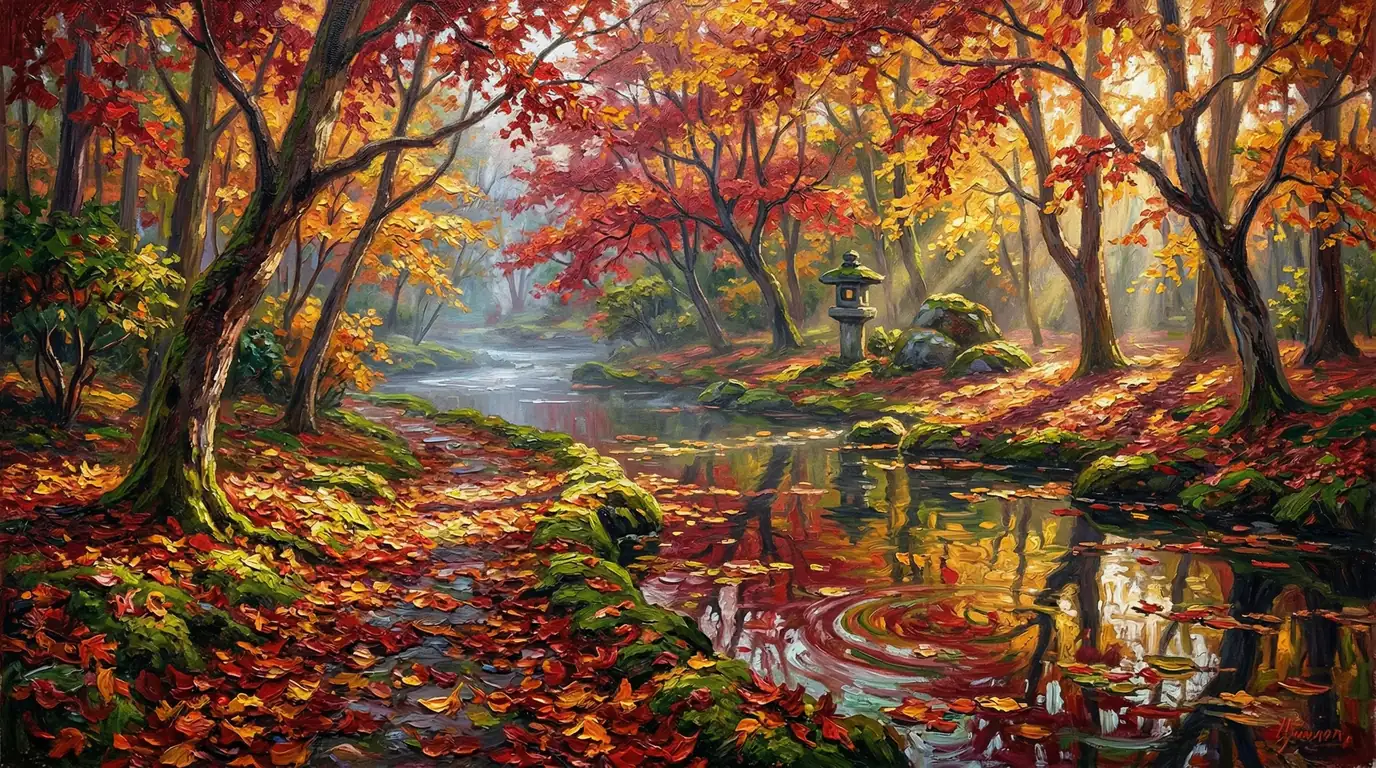 Autumn Glow along the Stream
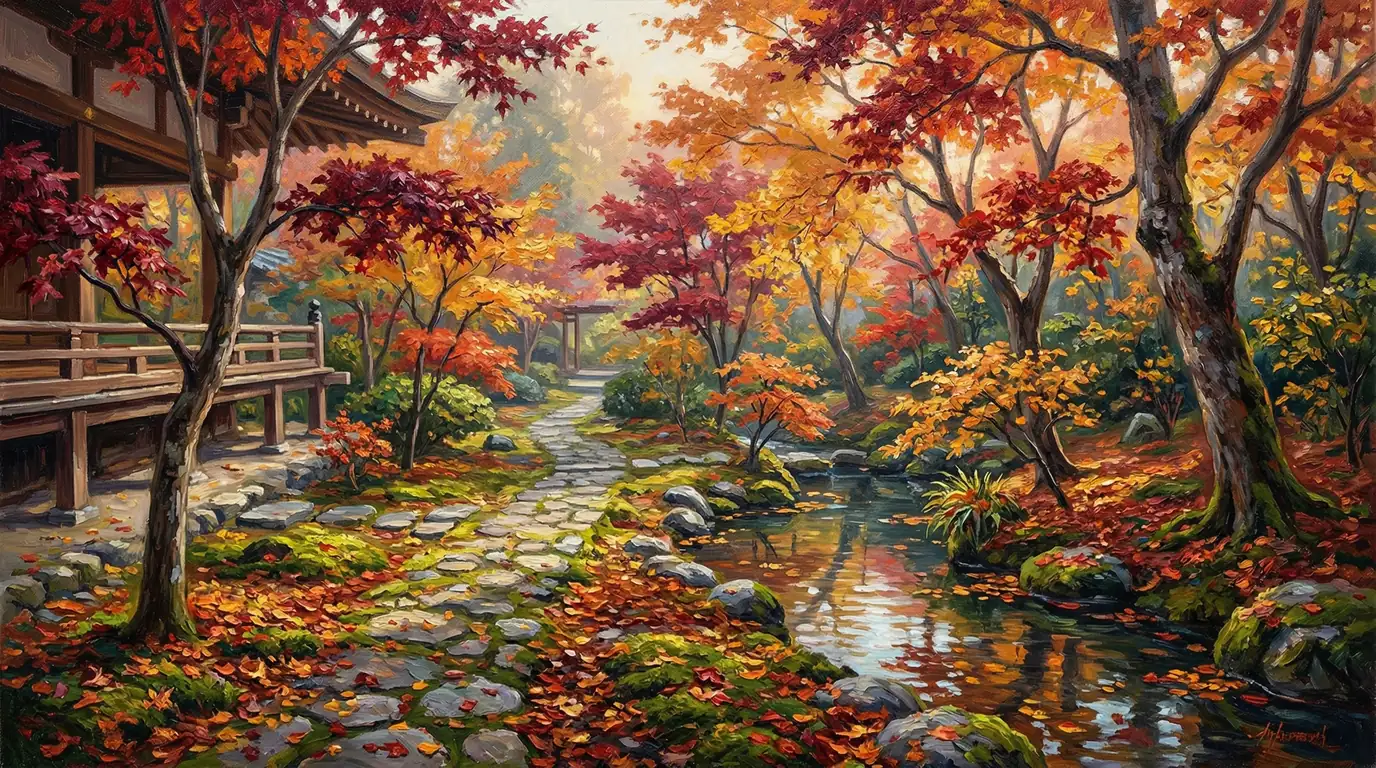 Golden Leaves by the Teahouse
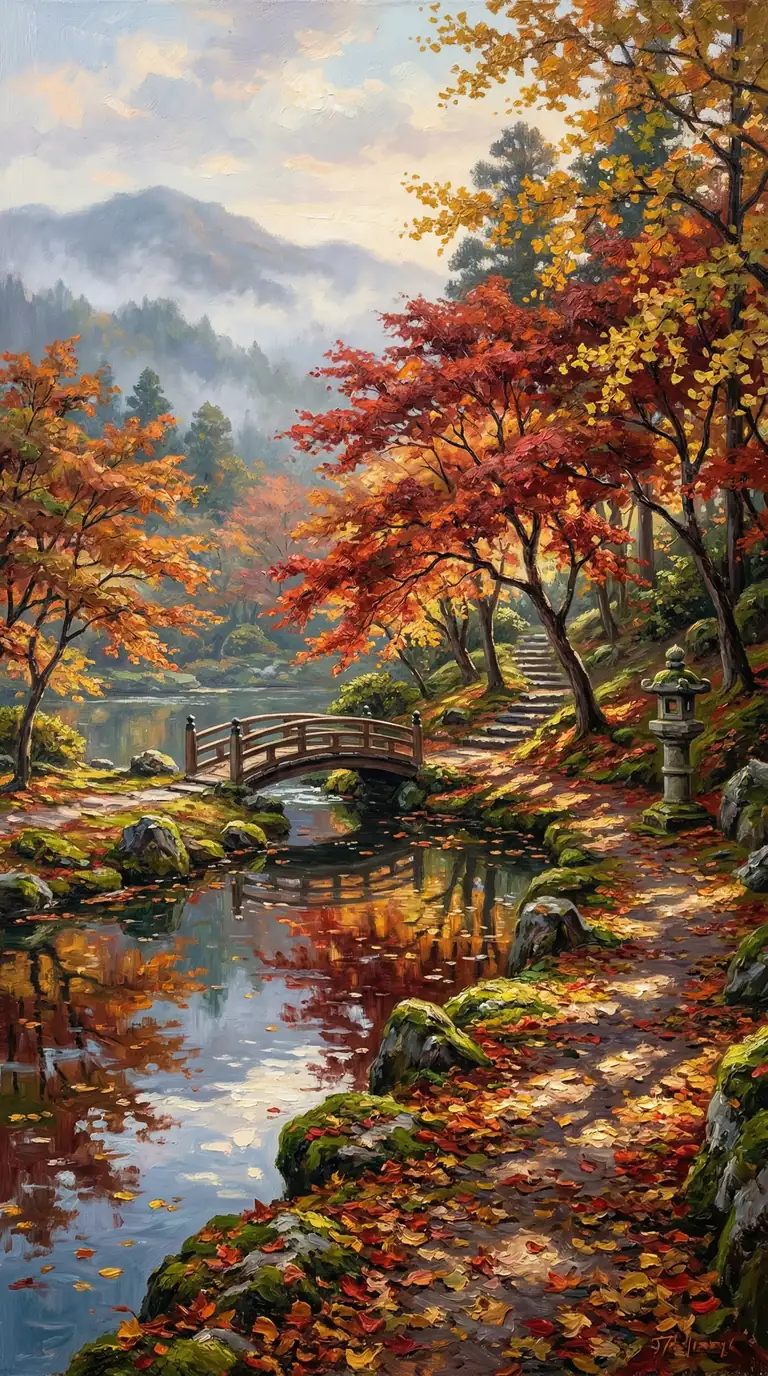 Whispering Crimson: Serenity in the Autumn Garden
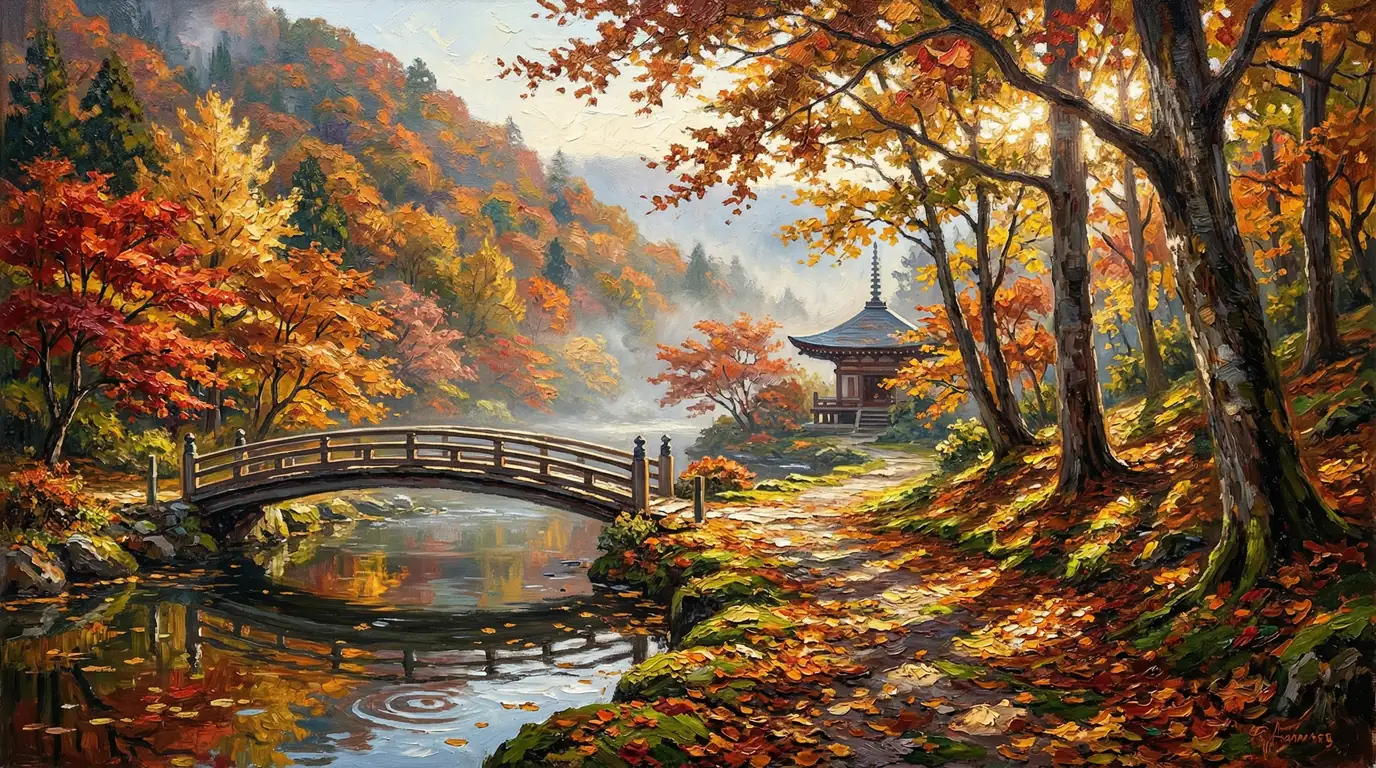 Echoes of the Golden Temple