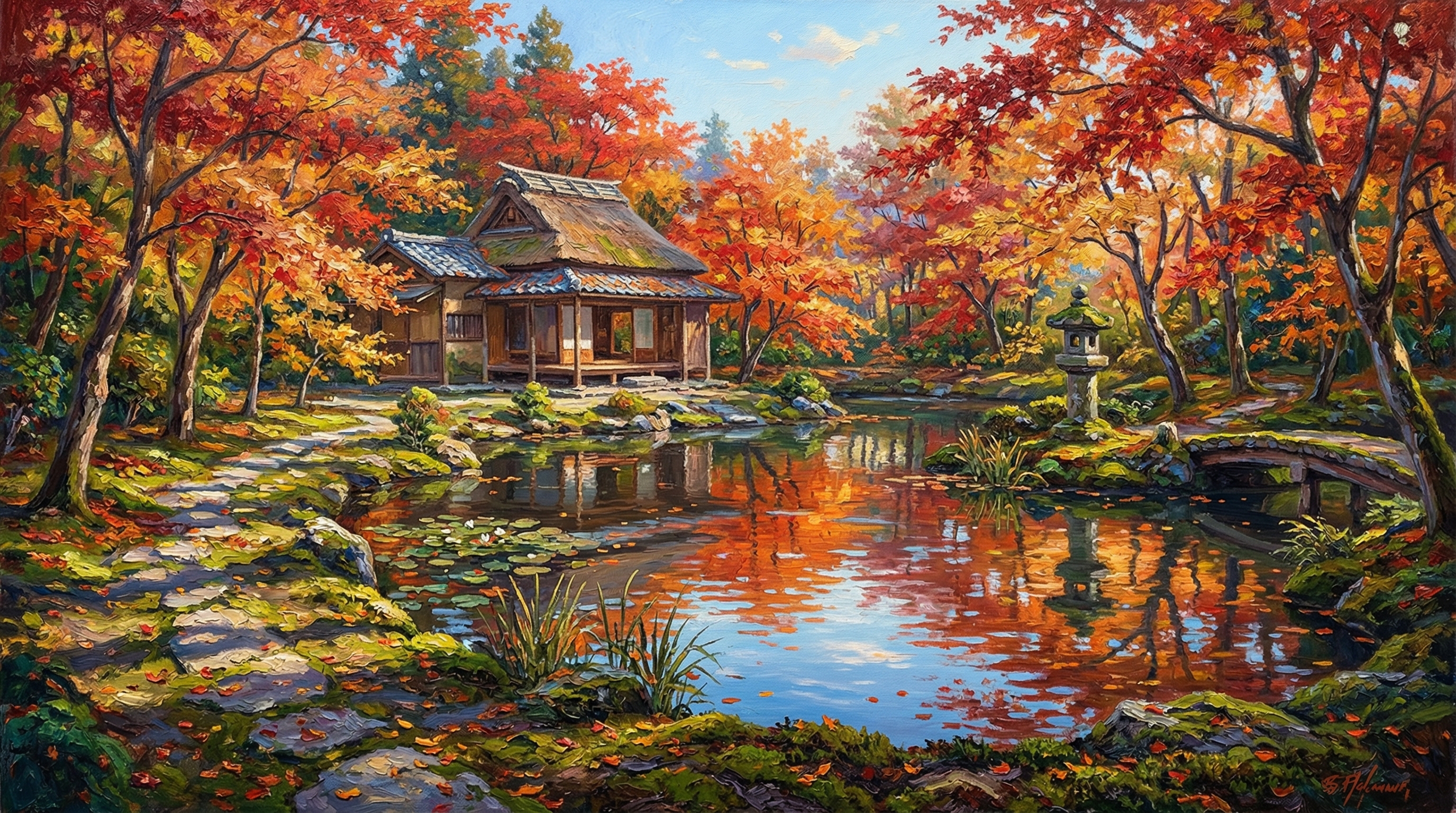
Harmony of the Crimson Leaves
Critique
1. Introduction This vibrant oil painting captures the quintessential beauty of a Japanese garden in the peak of autumn, where traditional architecture and fiery foliage create a scene of profound harmony. The work celebrates the meticulous design of nature and human craftsmanship, offering a serene glimpse into a culturally significant landscape. Through a rich application of color and texture, the scene radiates with the warmth of the season. 2. Description The composition is centered around a traditional thatched-roof house with wooden verandas, positioned at the edge of a tranquil pond. The pond’s surface acts as a mirror, reflecting the brilliant blue sky and the intense reds and oranges of the overhanging maple trees. In the midground, a stone lantern stands near a small, arched wooden bridge, adding classical elements to the garden’s design. The foreground features a winding stone path bordered by moss and fallen leaves, while the background is filled with a dense canopy of autumn trees under a clear, bright sky. 3. Analysis The artist employs a dynamic impasto technique, using bold, expressive brushstrokes to create a highly textured surface that pulses with energy. The color palette is exceptionally saturated, dominated by fiery crimsons, burnt oranges, and golden yellows, which are balanced by the cool blues of the water and sky. The lighting is bright and direct, enhancing the luminosity of the leaves and creating crisp, well-defined reflections on the water’s surface. 4. Interpretation and Evaluation This work successfully conveys the spirit of "aki-no-naka," or the heart of autumn, evoking a sense of peaceful contemplation and aesthetic pleasure. The integration of the house and garden elements suggests a lifestyle deeply connected to the seasonal rhythms of the natural world. The technical execution of the complex reflections and the varied textures of thatch, stone, and foliage demonstrates a high level of artistic skill, imbuing the scene with a timeless, idyllic quality. 5. Conclusion By skillfully combining architectural precision with the wild brilliance of autumn colors, the painting invites the viewer to experience the tranquility of a traditional Japanese sanctuary. The initial impression of a vivid, colorful landscape matures into a deeper appreciation for the structured beauty and spiritual calm of the garden. This piece remains a masterful and evocative tribute to the enduring charm of the Japanese autumn.
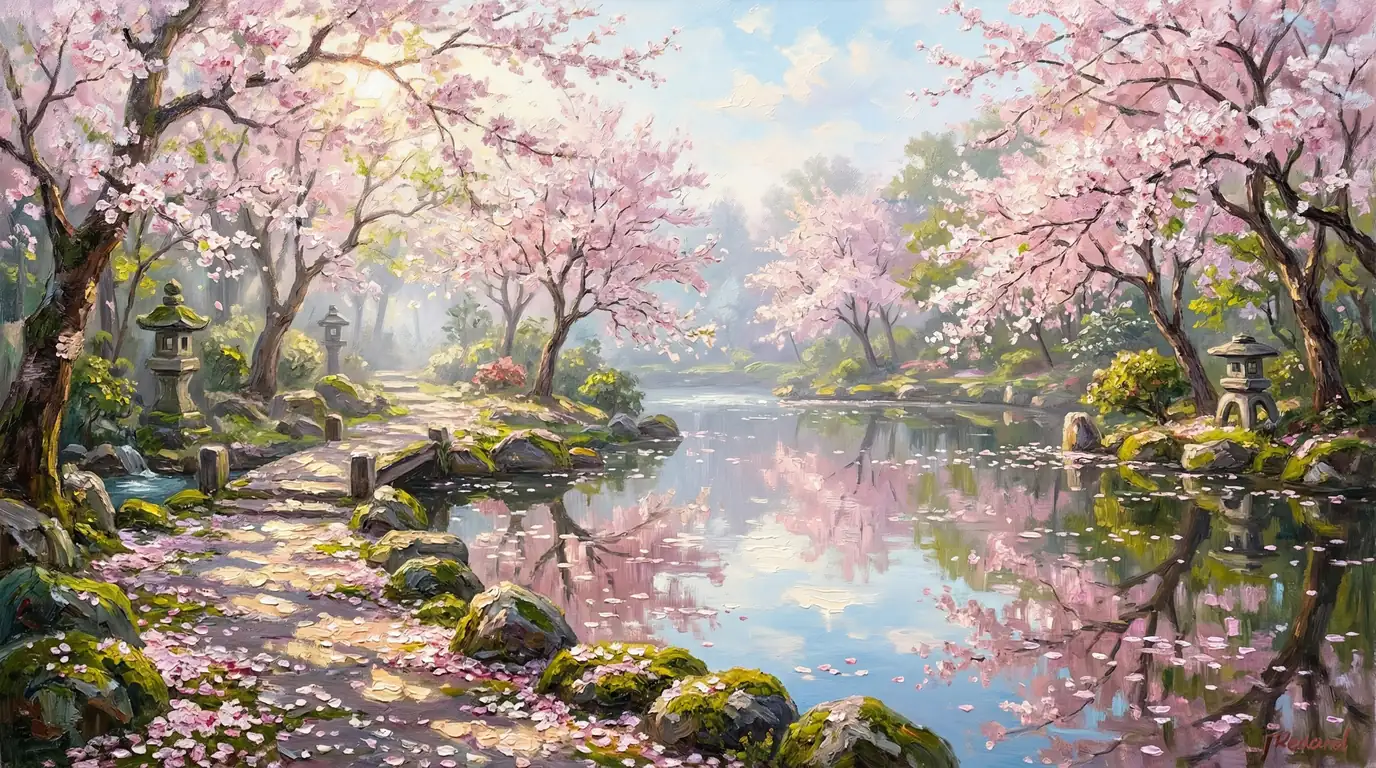 Serenity at the Spring Pond
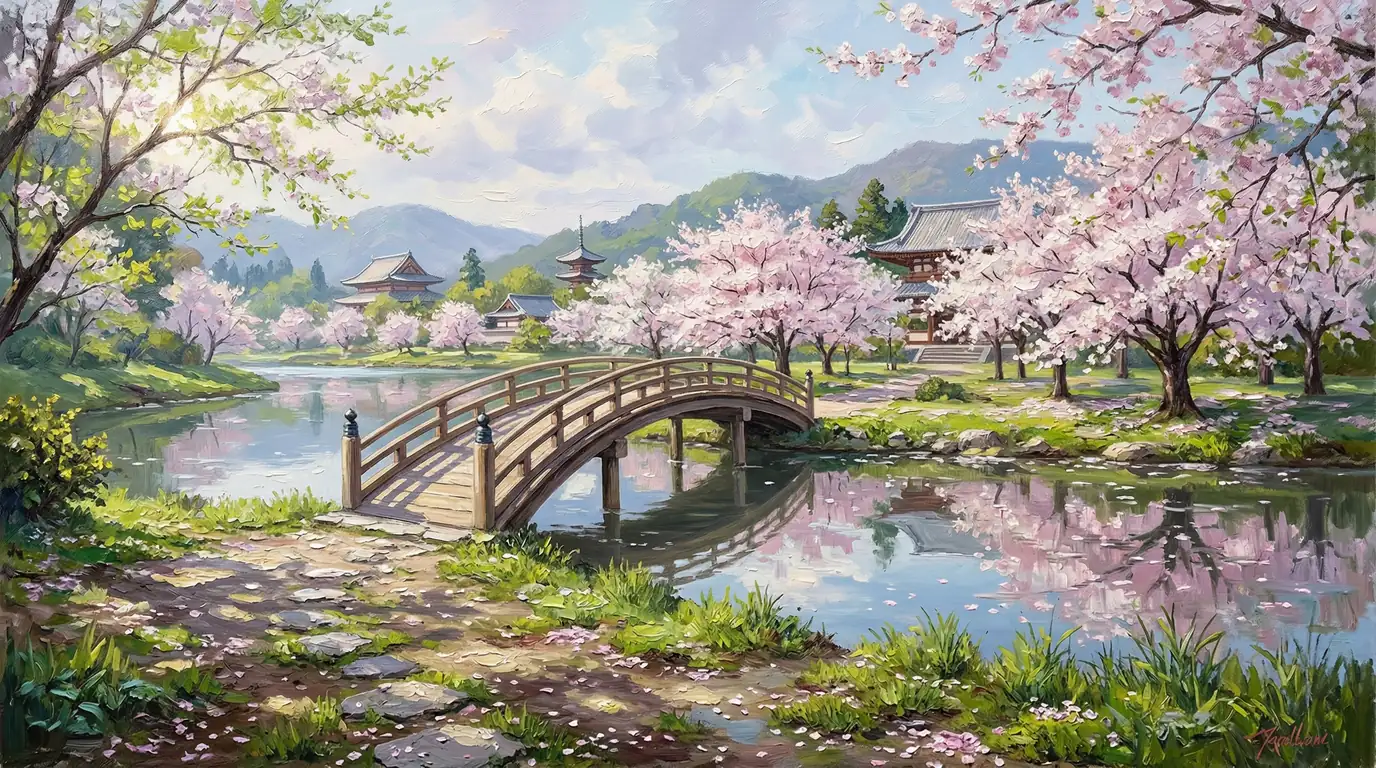 The Bridge of Spring's Awakening
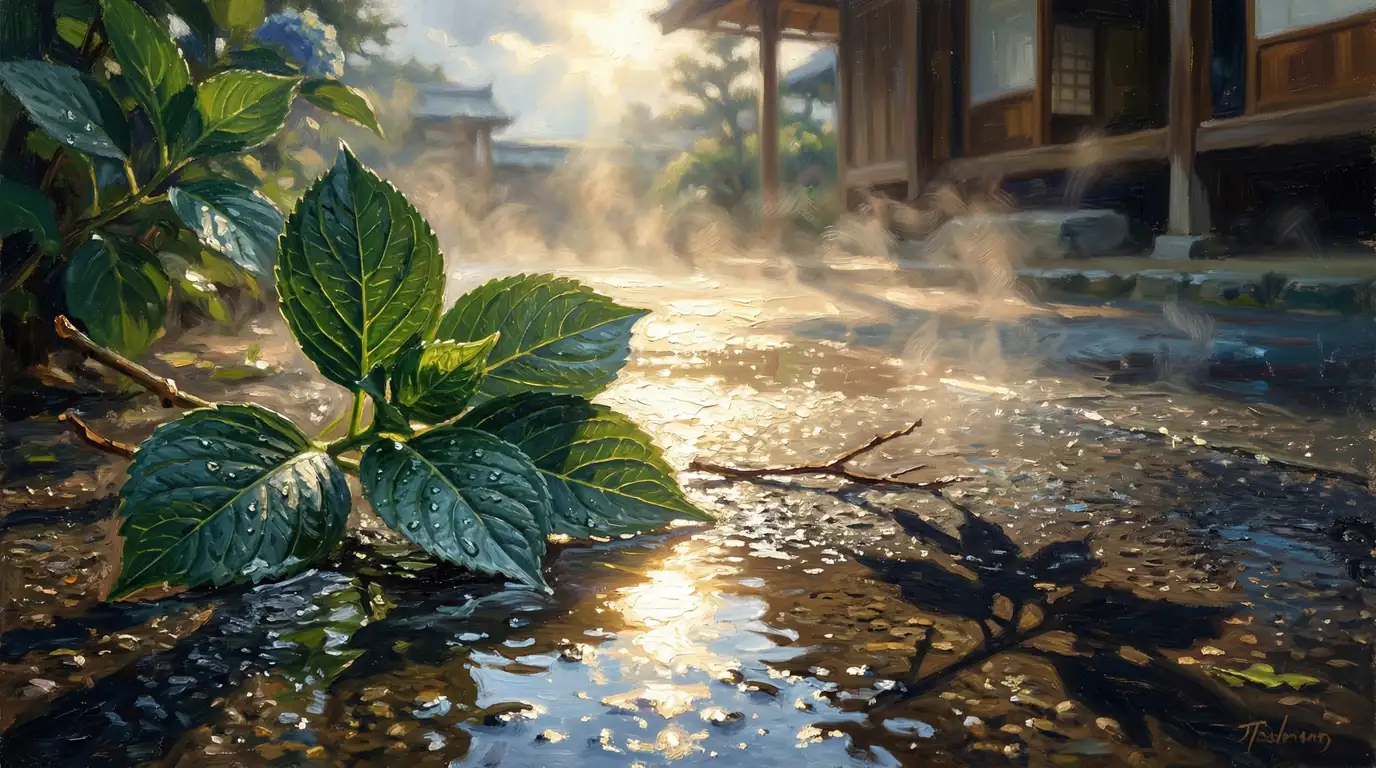 Silver Dreams in the Ethereal Grove
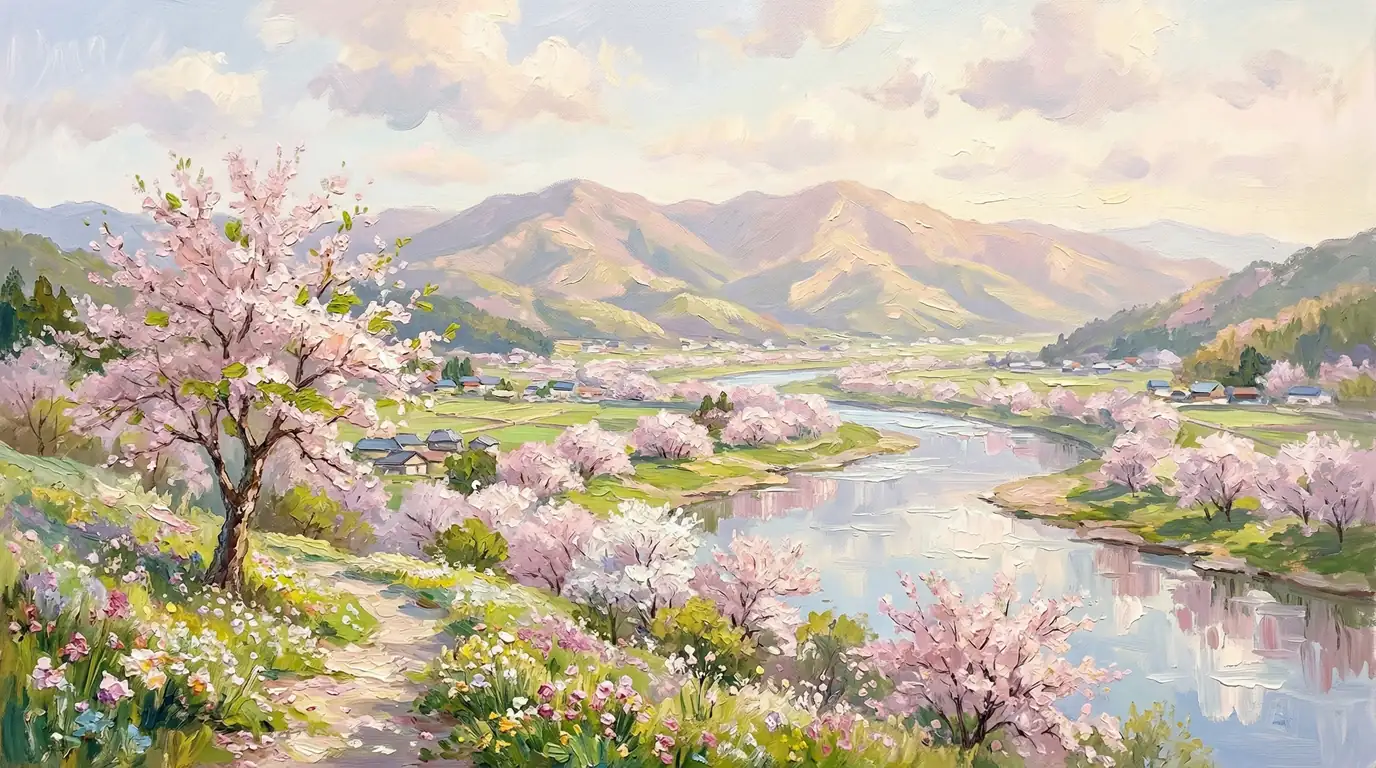 Whispers of the Spring Valley
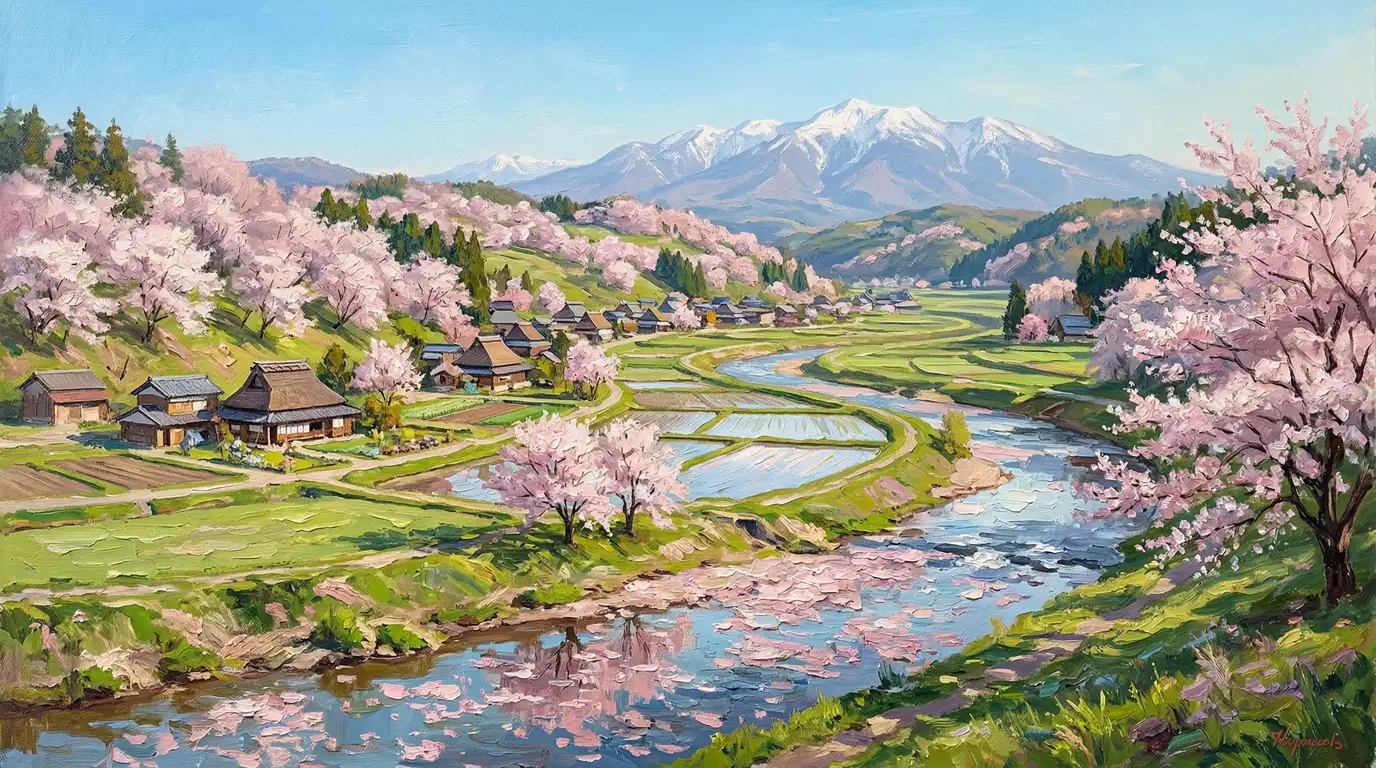 Village Embraced by Sakura
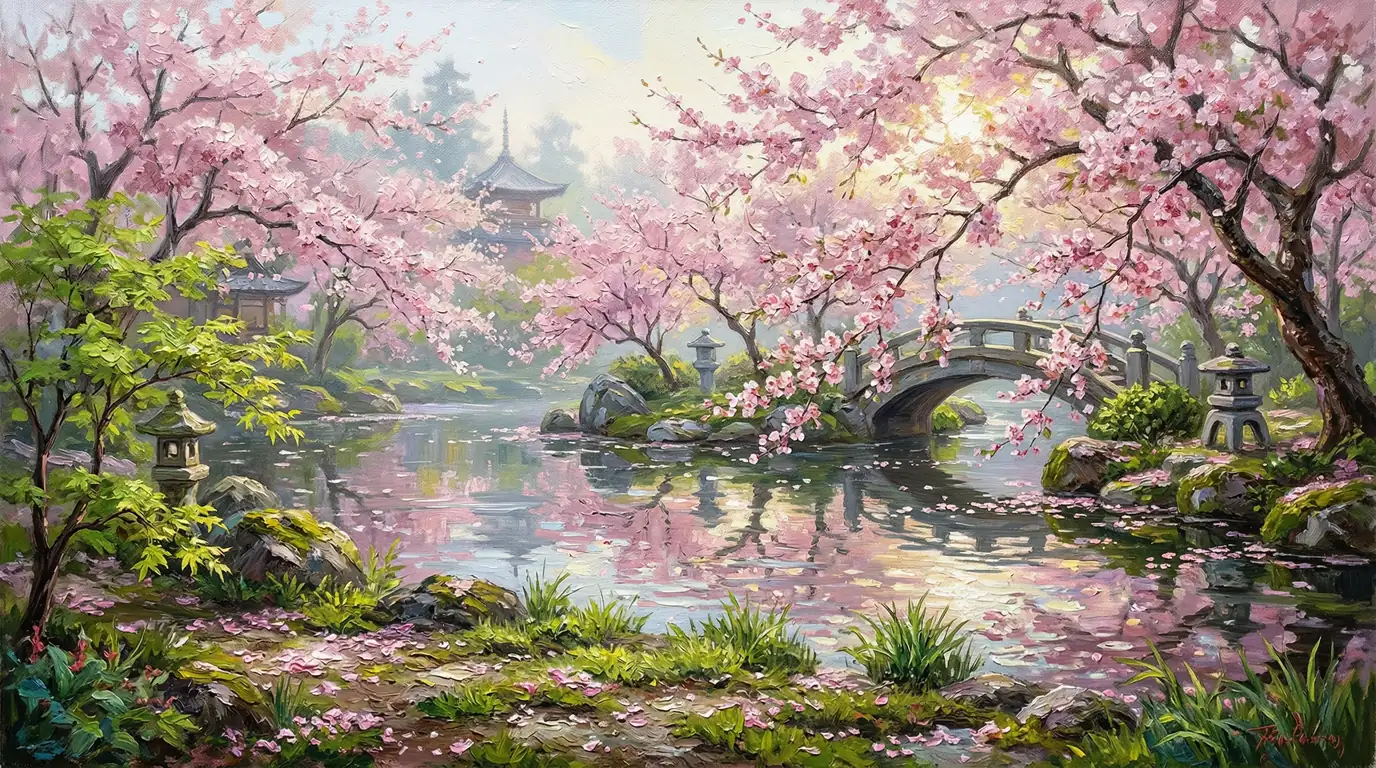 Innocence in Pastel Light
 Frost on the Silent Twig
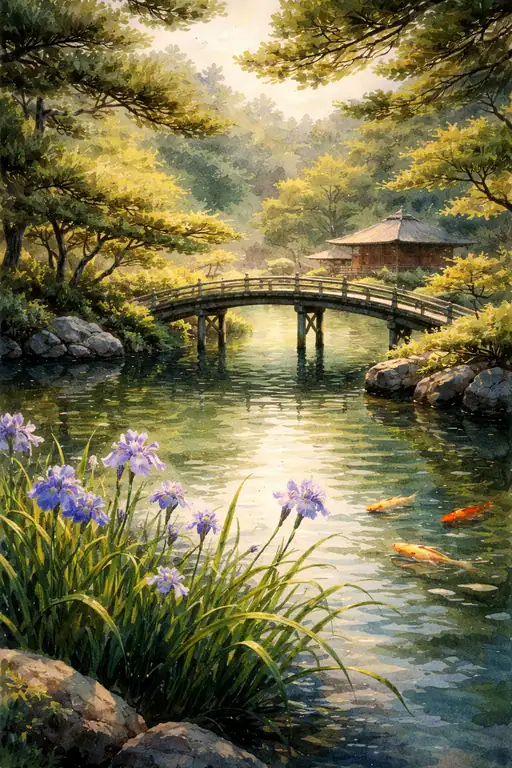 Whispers of the Golden Pond
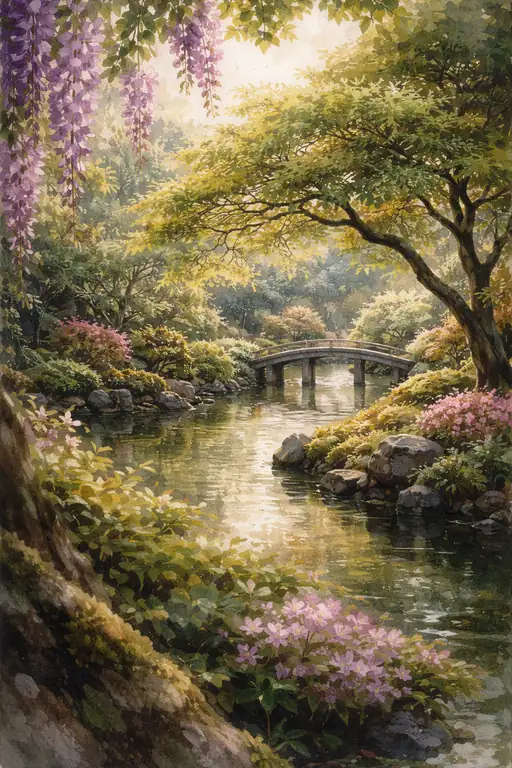 Twilight Beneath the Wisteria Bridge
 Autumn's Quiet Tapestry
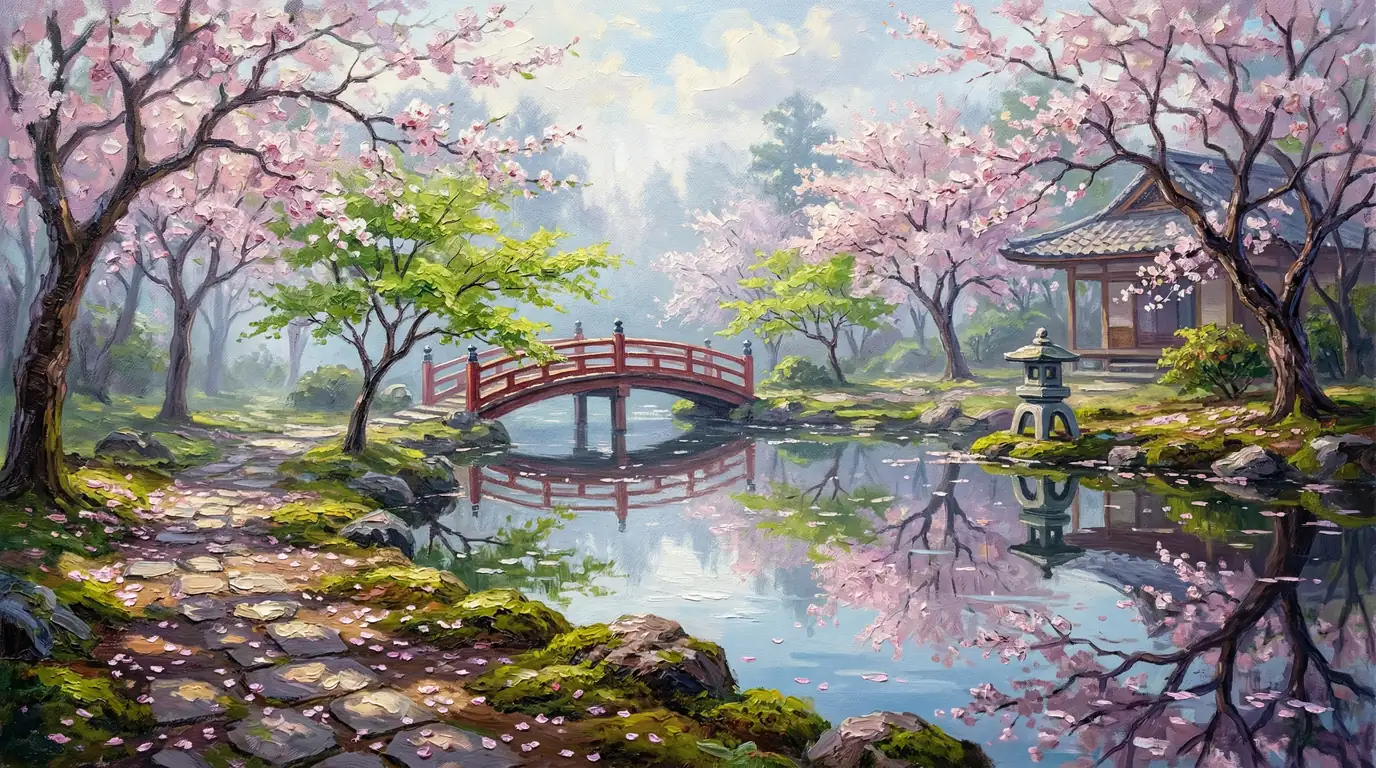 Spring Awakening at the Arched Bridge
 The Endless Flow of Time