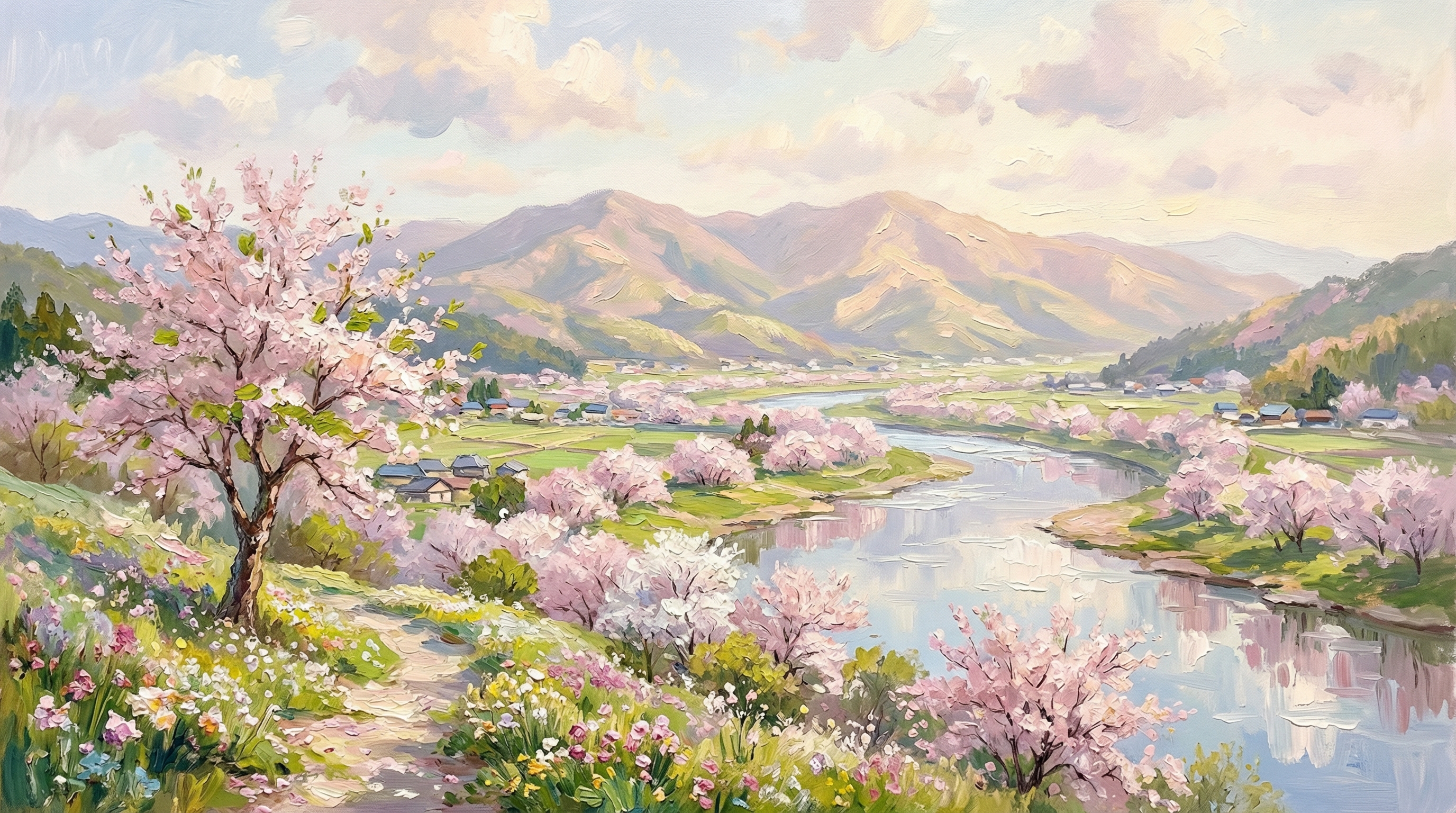
Whispers of the Spring Valley
Critique
1. Introduction This expansive oil painting captures the ephemeral beauty of spring in a rural Japanese valley, where cherry blossoms blanket the landscape in soft hues of pink and white. The scene offers a wide-angle perspective of a winding river that serves as the lifeblood of a quiet, nestled community. Through a delicate balance of color and light, the work evokes a sense of renewal and the serene passing of time. 2. Description In the foreground, a vibrant cherry tree stands prominently on a grassy slope, its branches heavy with blossoms and interspersed with small, green leaves. The ground beneath is a tapestry of wildflowers in various shades of yellow and purple. A wide, tranquil river flows through the center of the valley, reflecting the pale sky and the pink canopies that line its banks. Small clusters of traditional houses with dark roofs are scattered throughout the midground, surrounded by meticulously cultivated fields. In the distance, gentle, undulating mountains rise to meet a sky filled with soft, voluminous clouds. 3. Analysis The artist utilizes an impressionistic style, characterized by short, rhythmic brushstrokes that create a sense of movement within the foliage and the flowing water. The color palette is dominated by a harmonious blend of pastels, including soft pinks, pale blues, and light greens, which contribute to the hazy, atmospheric quality of the spring day. The composition follows a graceful S-curve formed by the river, leading the viewer’s eye from the immediate foreground deep into the mountain range. 4. Interpretation and Evaluation This work successfully conveys the "mono no aware" or the poignant appreciation of the fleeting nature of beauty associated with the cherry blossom season. The integration of human habitation within the natural landscape suggests a peaceful coexistence and a lifestyle attuned to the seasons. The technical mastery of the reflections and the atmospheric perspective gives the scene a dreamlike quality, elevating it from a simple landscape to a poetic meditation on spring. 5. Conclusion By skillfully combining a grand scale with intimate natural details, the painting invites the viewer to immerse themselves in the tranquility of the Japanese countryside. The initial impression of a vibrant, colorful valley matures into a deeper appreciation for the delicate balance and harmony of the environment. This piece remains an evocative and masterful tribute to the timeless allure of the spring season.
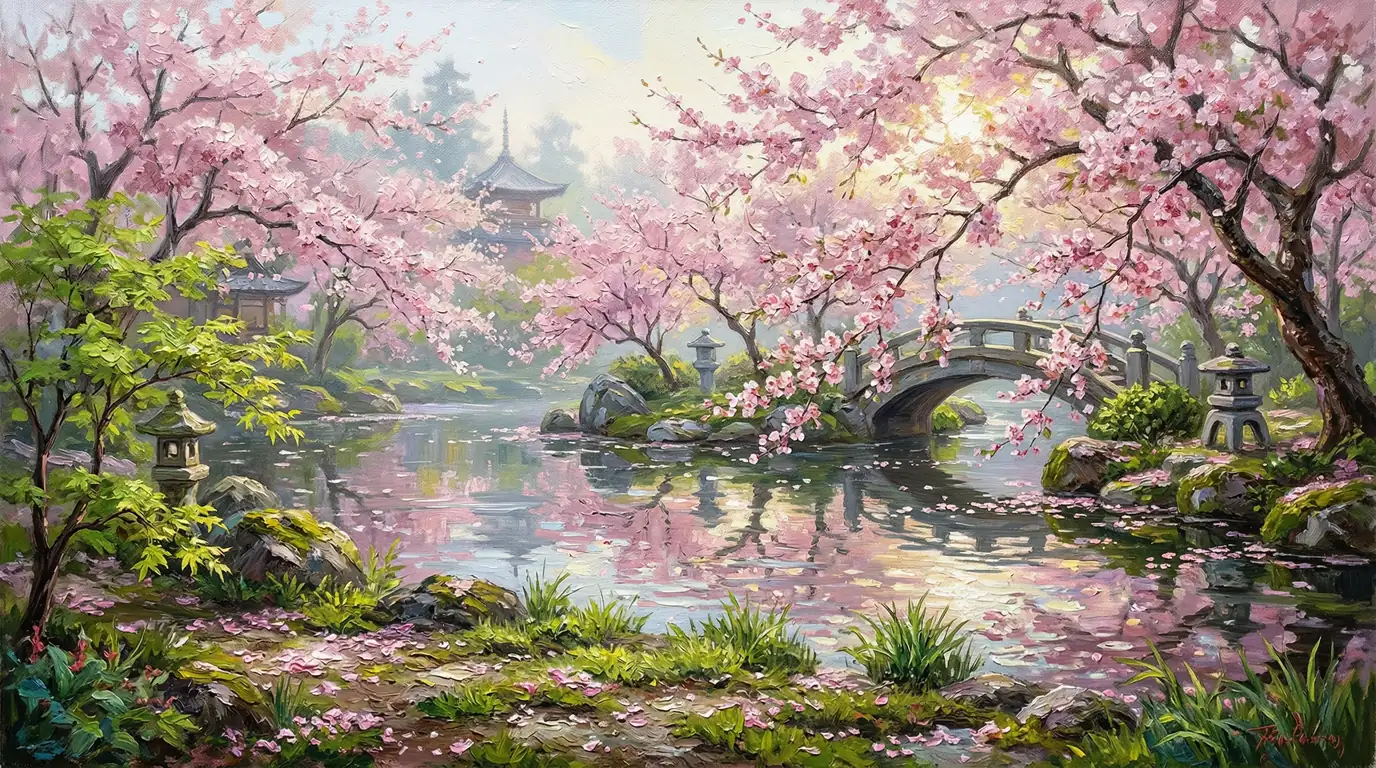 Innocence in Pastel Light
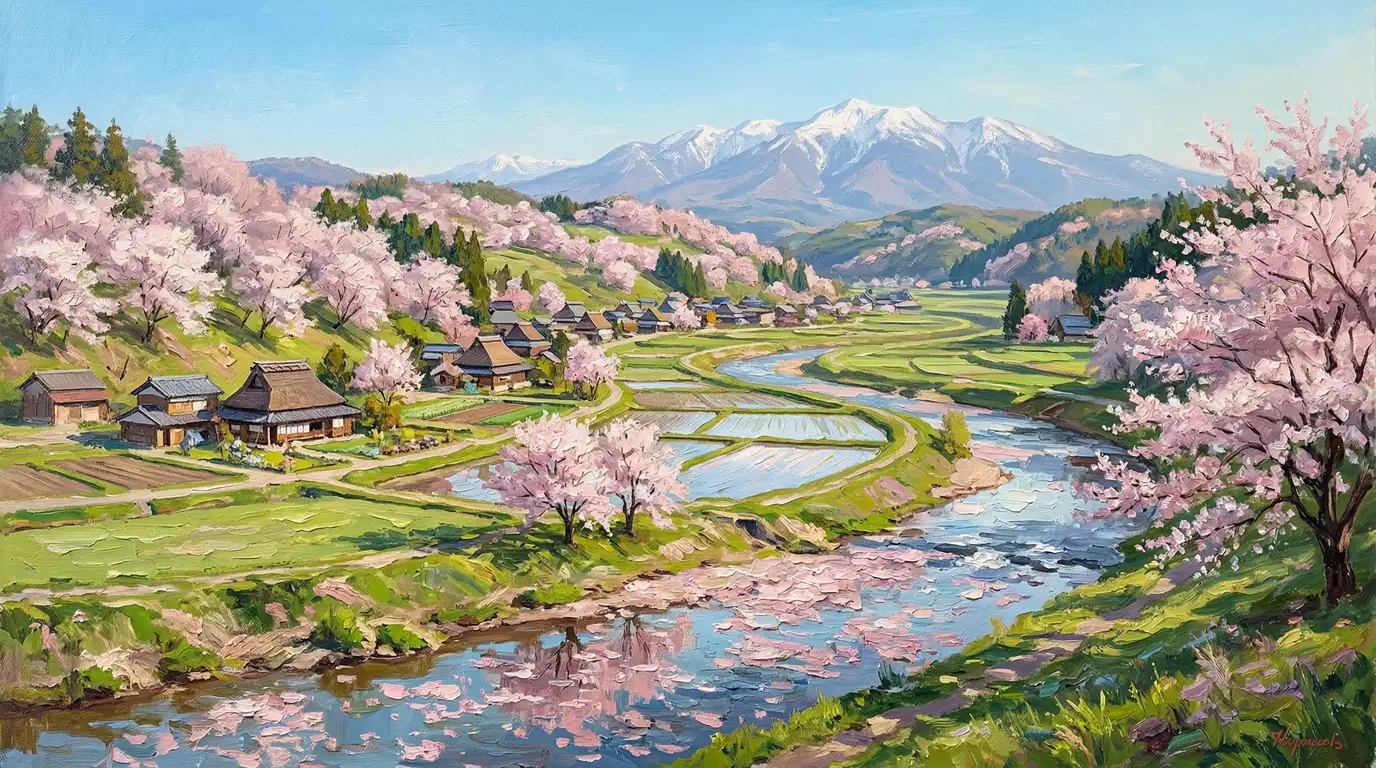 Village Embraced by Sakura
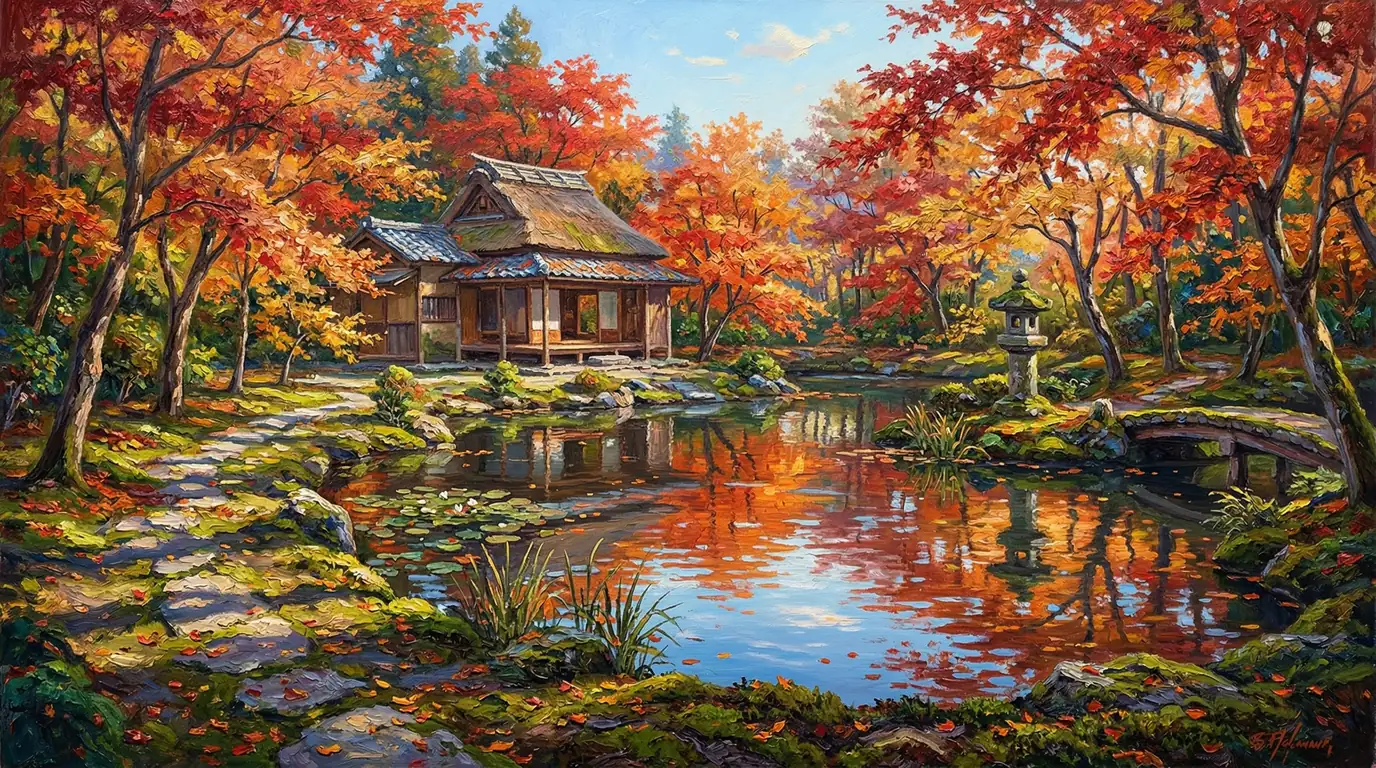 Harmony of the Crimson Leaves
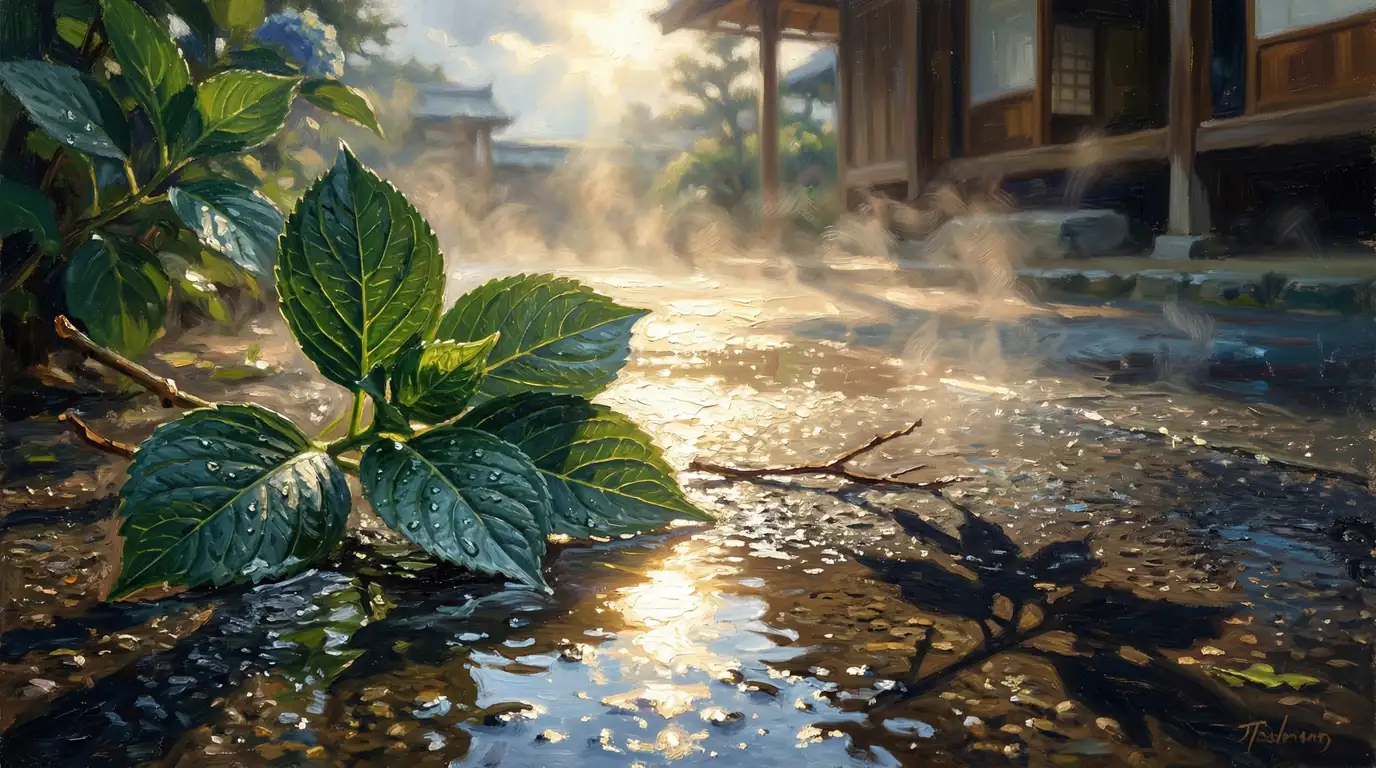 Silver Dreams in the Ethereal Grove
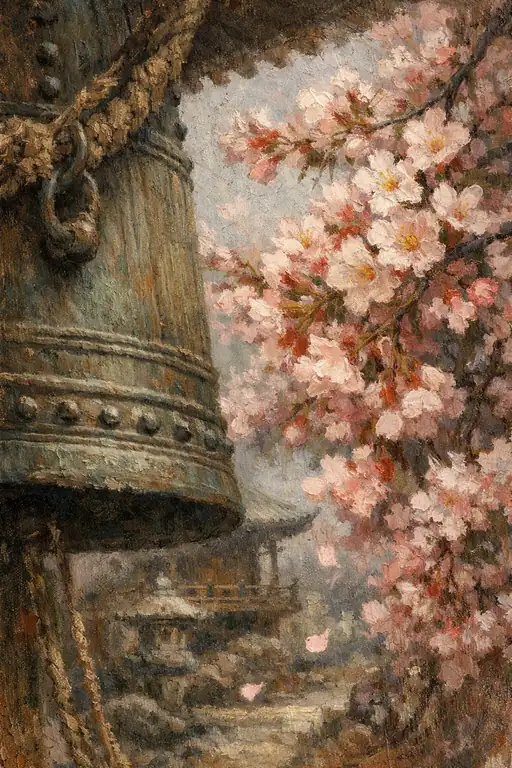 Journey Beyond the Azure Horizon
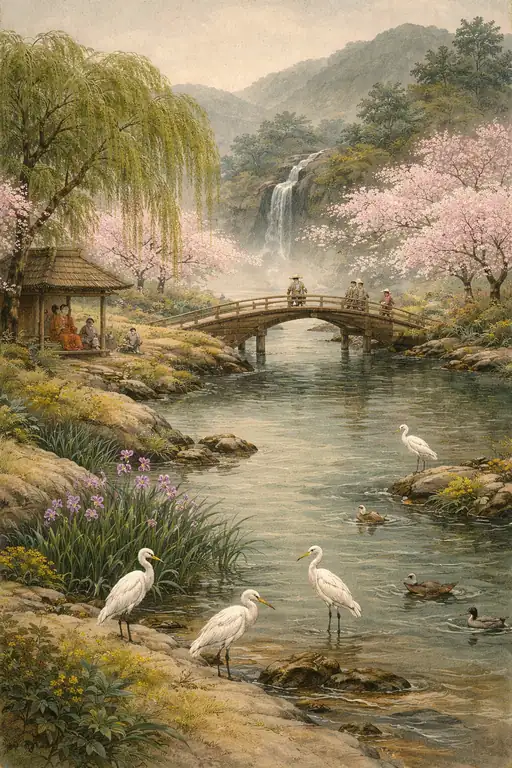 Dance of the Egrets in Spring
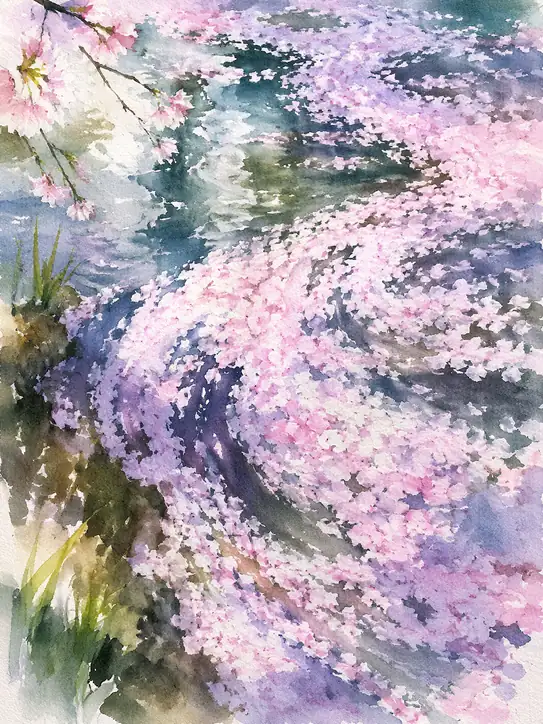 The Pathos of Spring
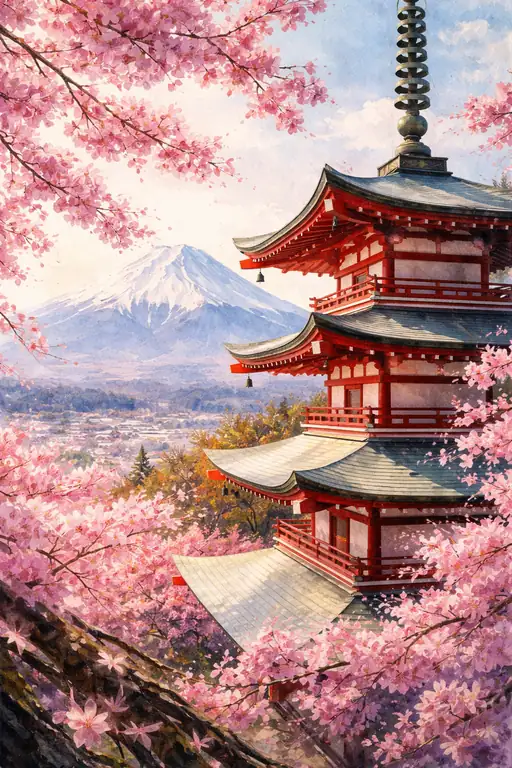 Spring Awakens the Sacred Peak
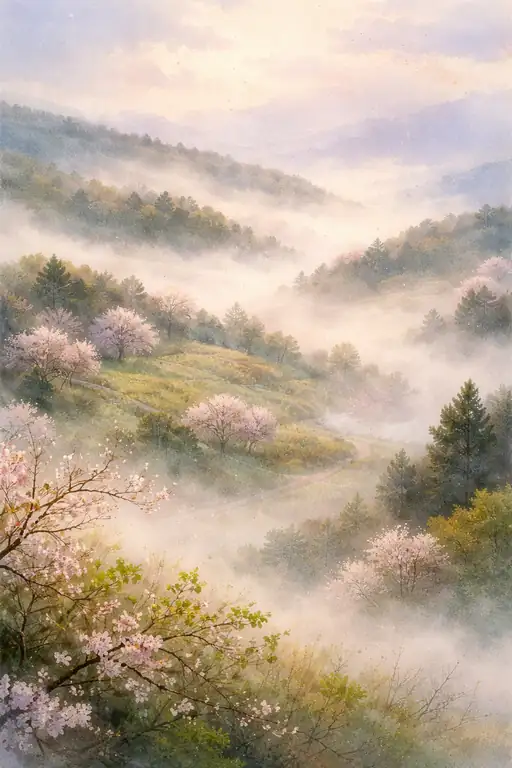 Where Empires Slept
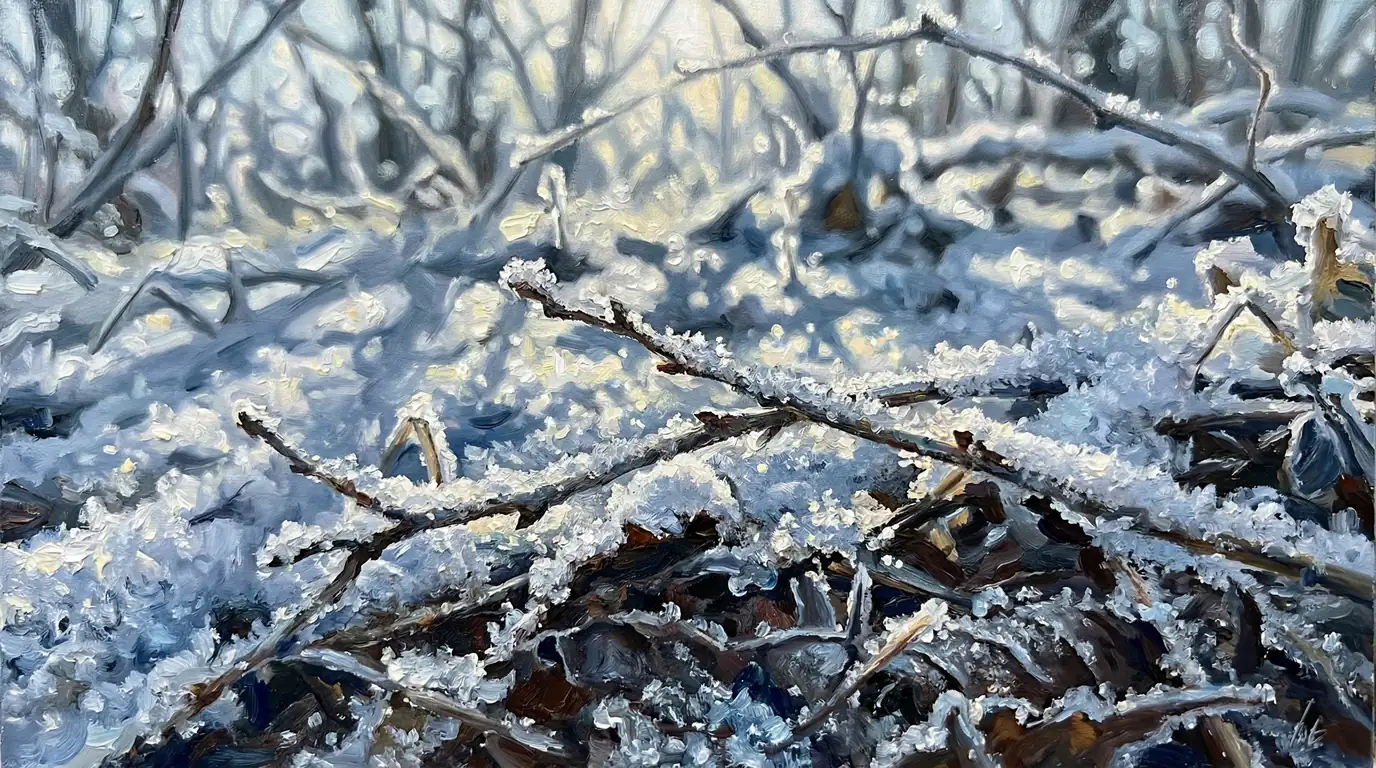 Frost on the Silent Twig