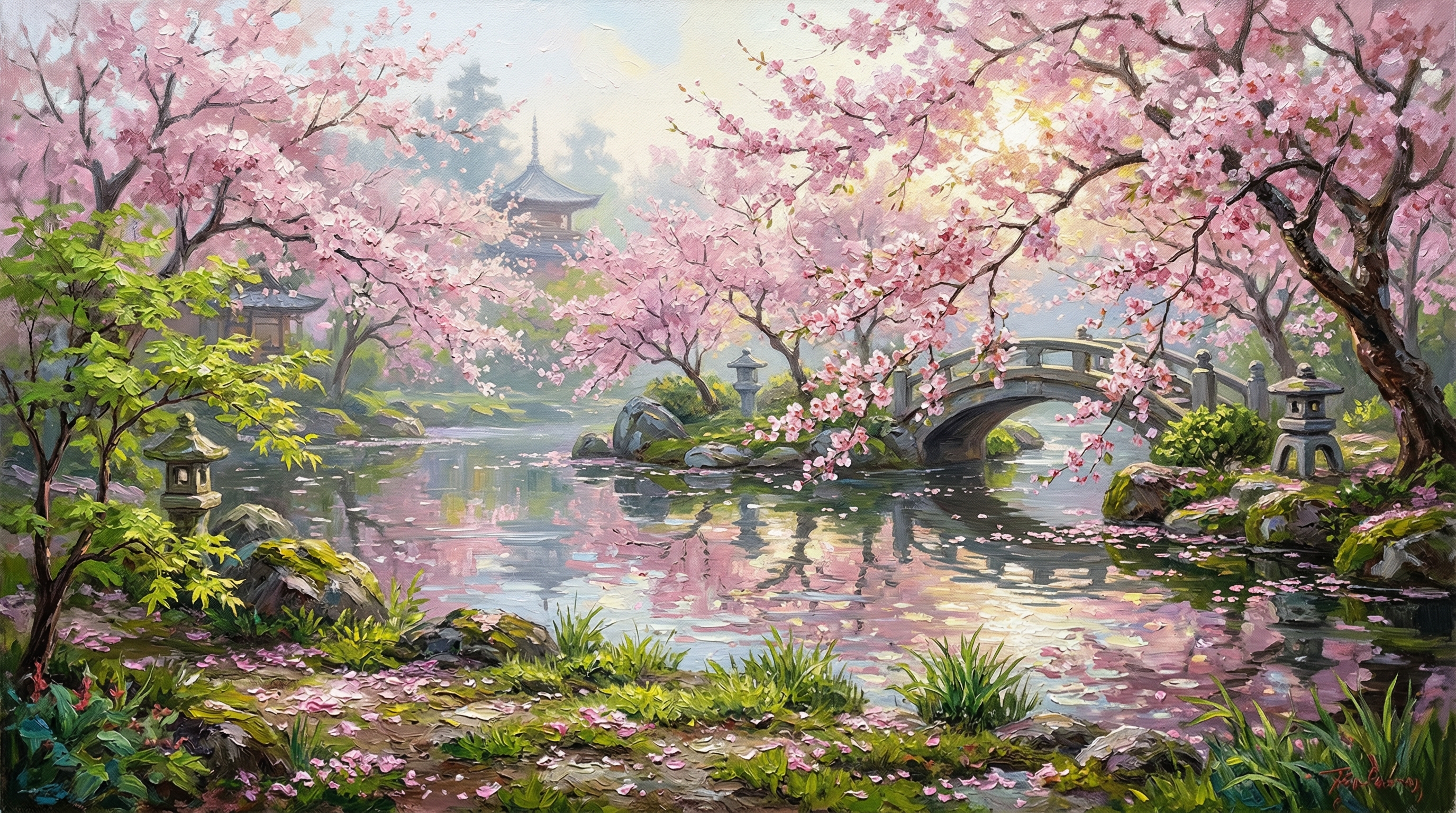
Innocence in Pastel Light
Critique
1. Introduction This enchanting painting captures the peak of spring in a traditional Japanese garden, where cherry blossoms create a delicate canopy of pink over a tranquil pond. The work explores the ephemeral beauty of the "sakura" season, a time of renewal and aesthetic contemplation. By integrating cultural symbols like the stone bridge and pagoda with the natural splendor of the blossoms, the artist creates a scene that is both deeply rooted in tradition and visually dynamic. 2. Description The foreground features a grassy bank scattered with fallen pink petals, leading to a calm pond that reflects the soft colors of the sky and trees. An arched stone bridge crosses a narrow part of the water on the right, while stone lanterns are strategically placed among the rocks and greenery. In the background, a multi-tiered pagoda rises through a light morning mist, surrounded by more flowering trees that blur into the hazy atmosphere. 3. Analysis The artist utilizes a circular composition, with cherry branches arching from both sides to frame the central pond and the distant pagoda. The color palette is dominated by a range of pinks—from pale blush to deep rose—which are balanced by the fresh greens of the new leaves and the cool grays of the stone structures. Expressive, short brushstrokes create a sense of movement in the blossoms and a shimmering quality on the water's surface, enhancing the misty, ethereal light. 4. Interpretation and Evaluation The painting successfully evokes a sense of "mono no aware," the pathos of things, through its focus on the beautiful yet short-lived cherry blossoms. The technical execution of the light is particularly effective; the way the morning sun filters through the hazy air gives the scene a dreamlike, transcendental quality. The balance between the detailed rendering of the foreground elements and the atmospheric softening of the background demonstrates a high level of control over depth and perspective. 5. Conclusion An initial impression of a picturesque garden scene matures into a deeper appreciation for the artist's ability to capture the spiritual essence of a Japanese spring. This work is more than a mere depiction of a landscape; it is a meditation on the fleeting nature of beauty and the enduring presence of cultural heritage. It remains an exceptionally well-crafted example of seasonal landscape painting that appeals to both the eye and the spirit.
Same Subcategory
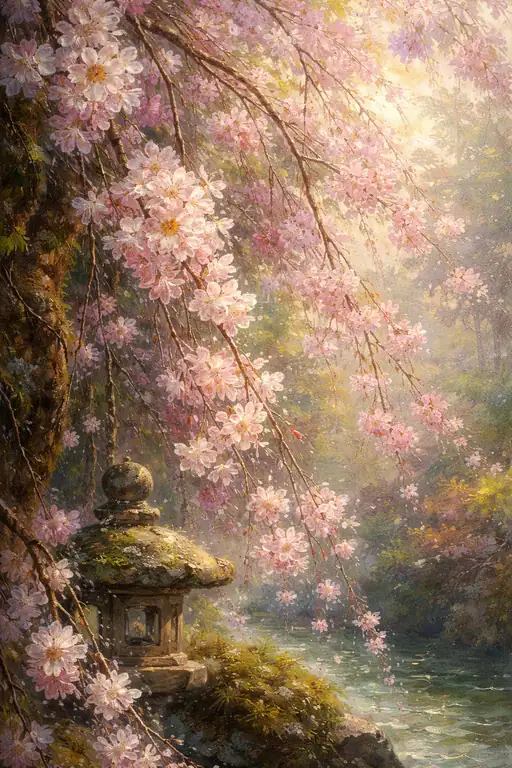 The Weeping Cherry's Golden Reverie
Similar Artworks
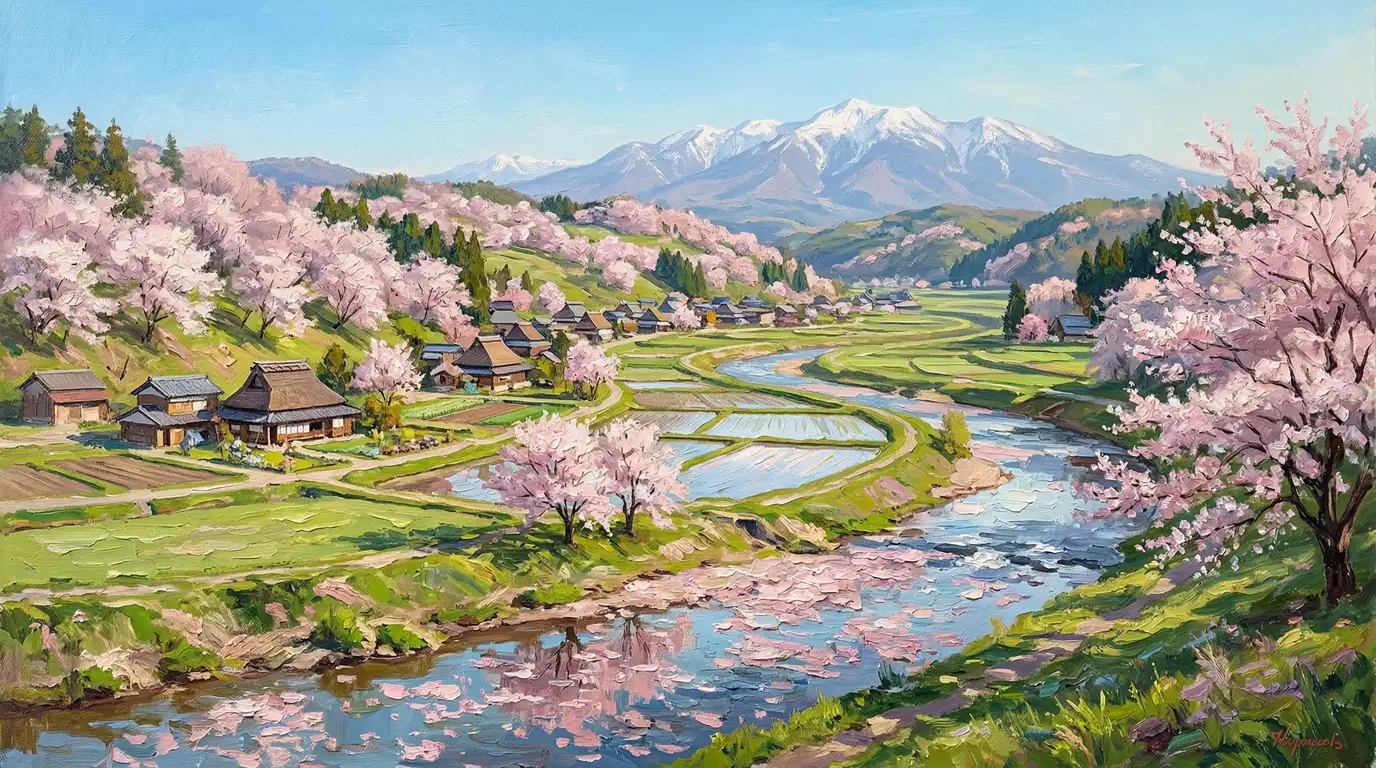 Village Embraced by Sakura
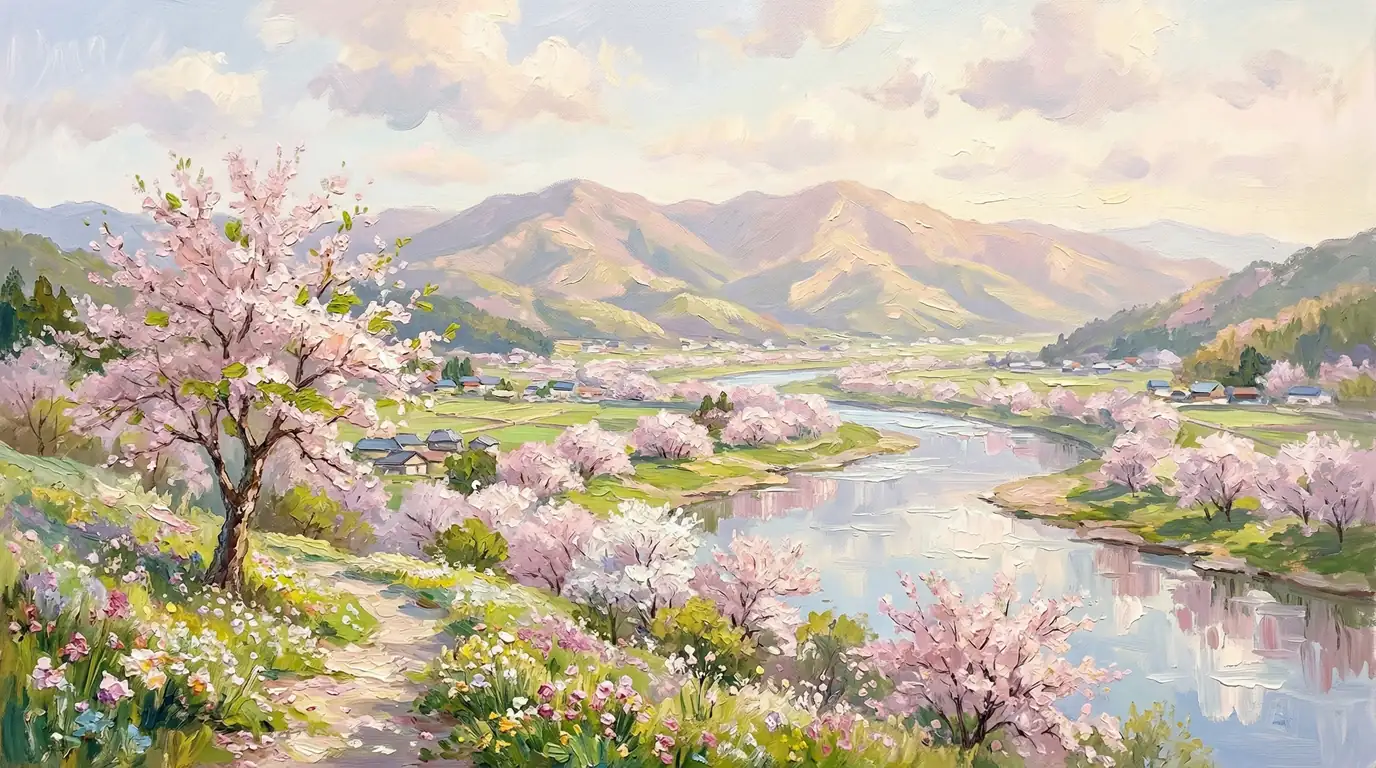 Whispers of the Spring Valley
 Journey Beyond the Azure Horizon
 Harmony of the Crimson Leaves
 Silver Dreams in the Ethereal Grove
 Spring Whispers in the Valley of Blossoms
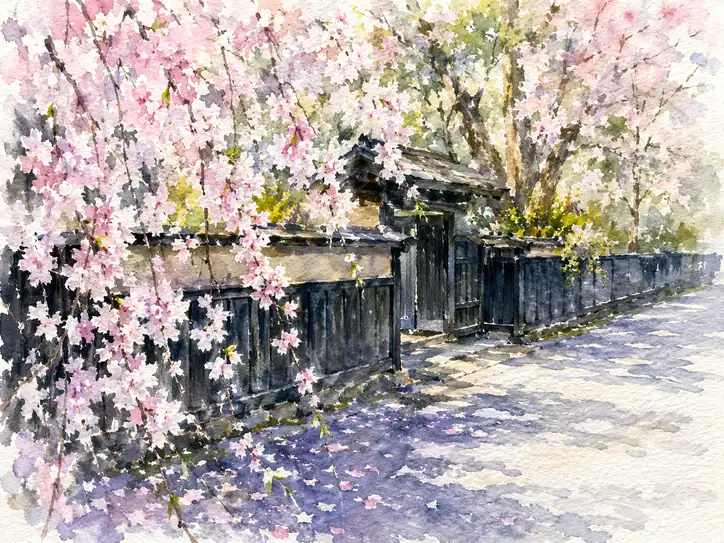 Whispers of the Weeping Spring
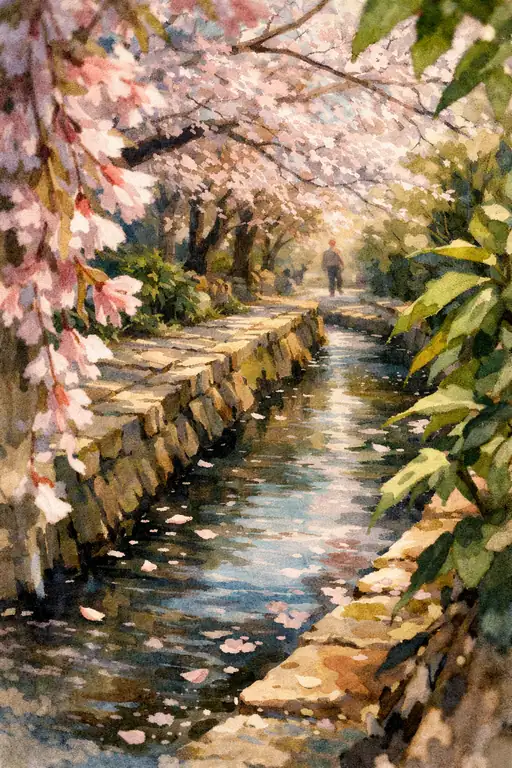 Petals Adrift on the Gentle Flow
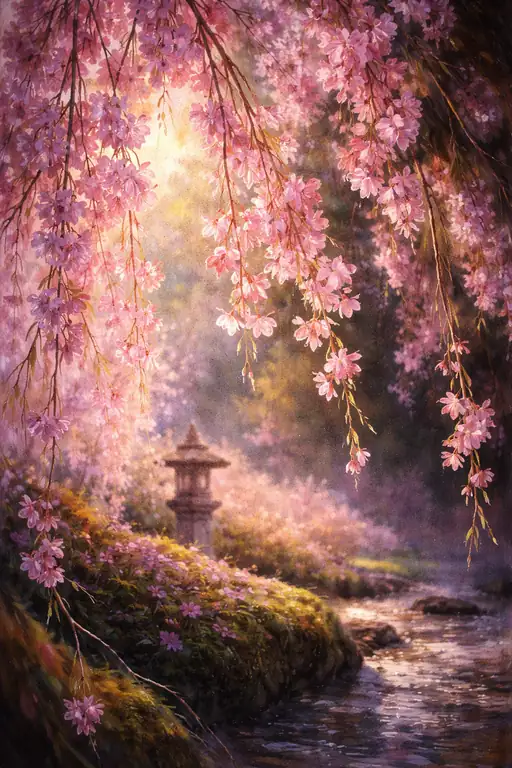 Spring's Ethereal Embrace
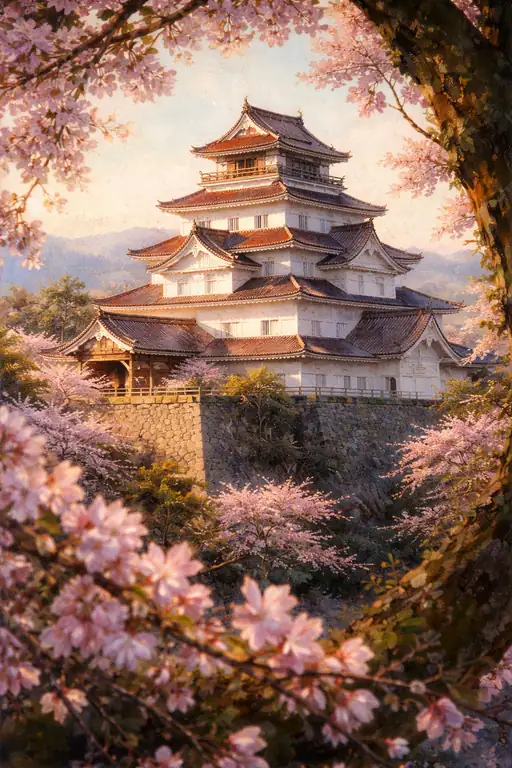 Spring's Embrace of the Ancient Citadel