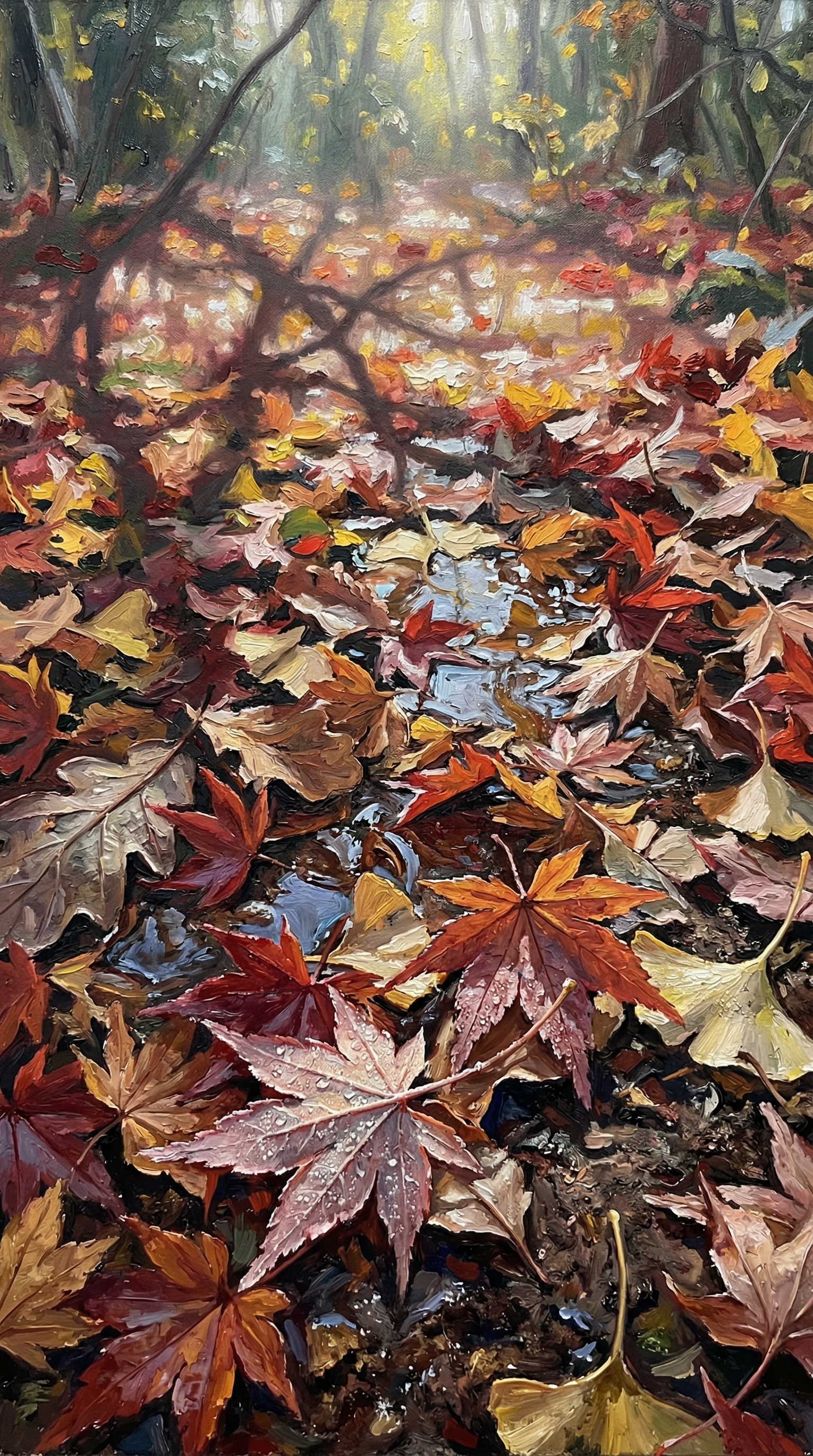
Fallen Embers of the Forest Floor
Critique
1. Introduction This landscape painting captures autumn through a unique low-angle perspective focused on the forest floor. A rich tapestry of maple and ginkgo leaves dominates the foreground, creating a detailed texture. By blurring the background, the work emphasizes the poetic beauty found in the small details of the seasonal transition. 2. Description The foreground features a meticulous rendering of fallen leaves—maple, ginkgo, and oak. Clear water droplets rest on several leaves, shimmering in the light. Between the foliage, patches of damp earth and small puddles reflect the sky. In the background, misty woods melt into a soft backlight, where warm sunbeams gently envelop the scene with a golden glow. 3. Analysis A shallow depth of field defines the composition. Meticulous brushwork renders veins and water droplets with clarity, while the background is abstracted into blocks of color suggesting space. The palette weaves together reds, yellows, and earthy browns, recreating nature's tonal gradations. The technique balances sharp realism in the foreground with an airy touch in the rendering of background light. 4. Interpretation and Evaluation The artwork explores natural cycles through the fragments of fallen leaves. The contrast between transient water droplets and decaying foliage evokes a sense of both ending and renewal. Technically, the artist demonstrates exceptional skill in differentiating textures and capturing light refraction. The balanced composition shows a high degree of observation and expressive power, elevating a macro-view into an artistic statement. 5. Conclusion The work crystallizes the beauty of autumn through sophisticated technique. The initial impression of vibrant color matures into a deeper insight into natural harmony. By rediscovering universal value within a common scene, the artist has produced a landscape of significant merit and contemplation.
Same Subcategory
Similar Artworks
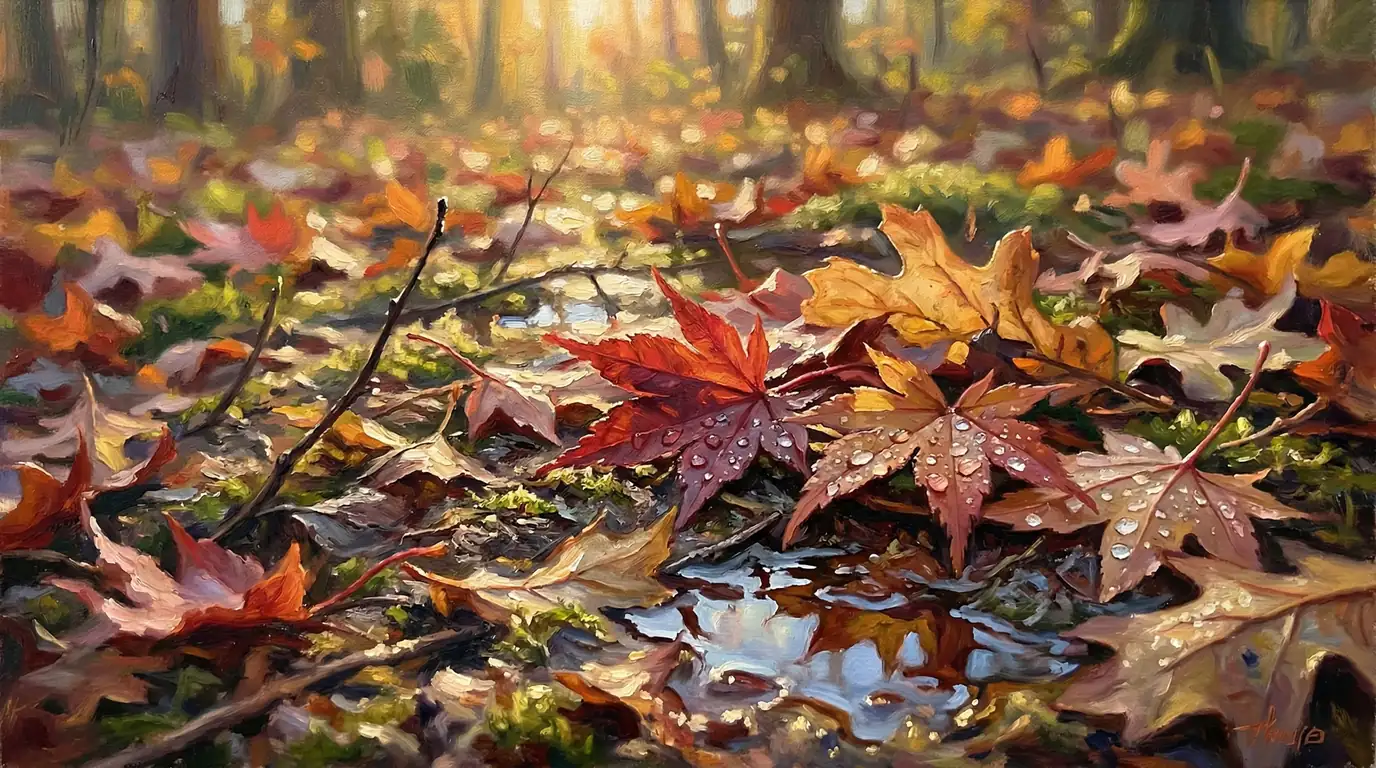 Tears of the Fallen Maple
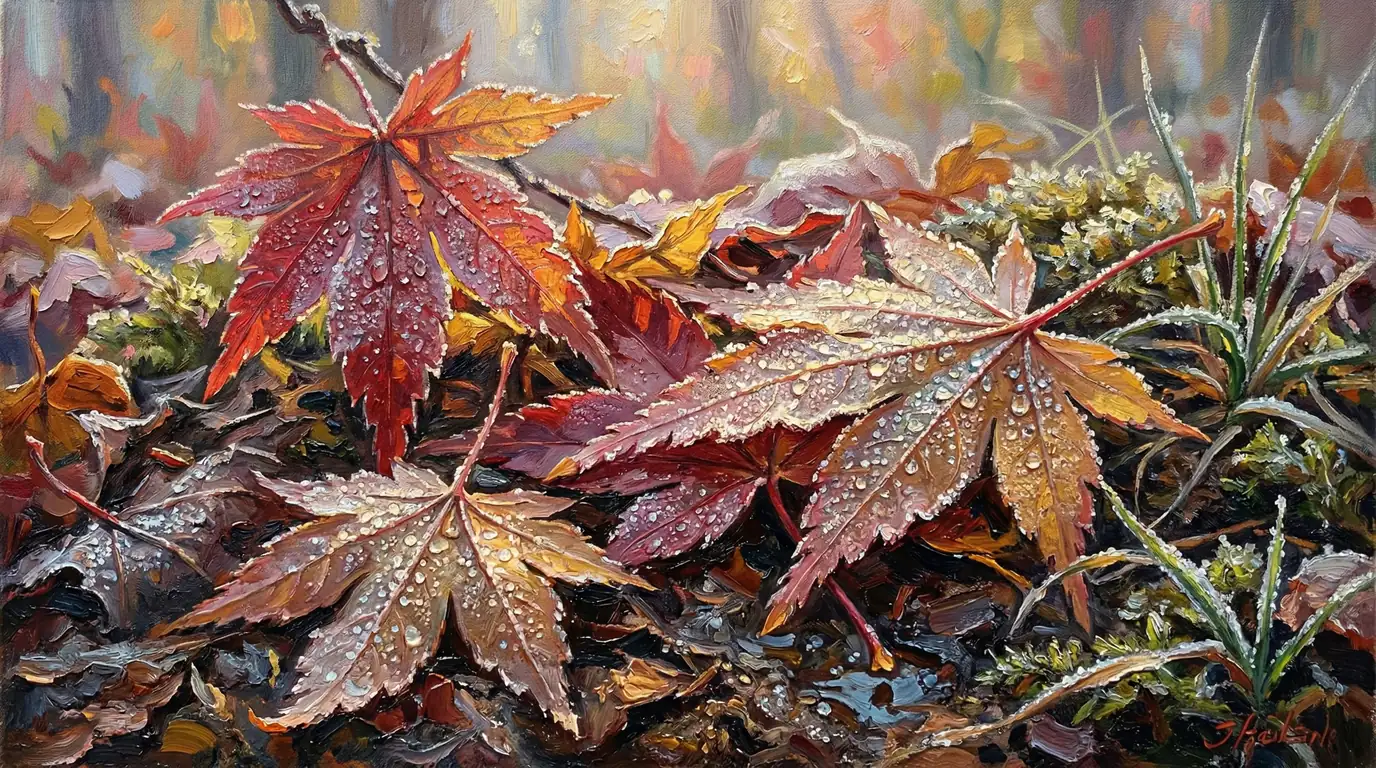 Tears of the Autumn Morning
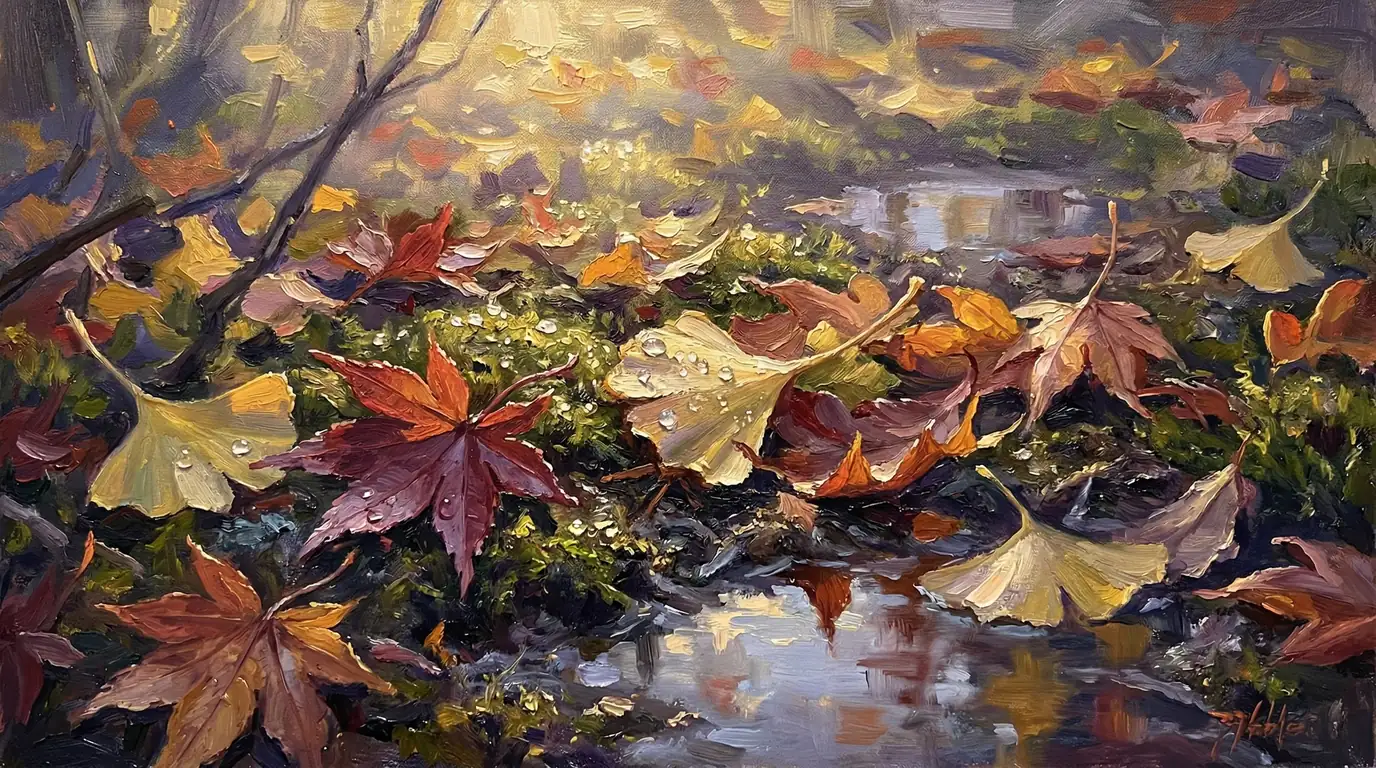 Golden Whispers on a Damp Canvas
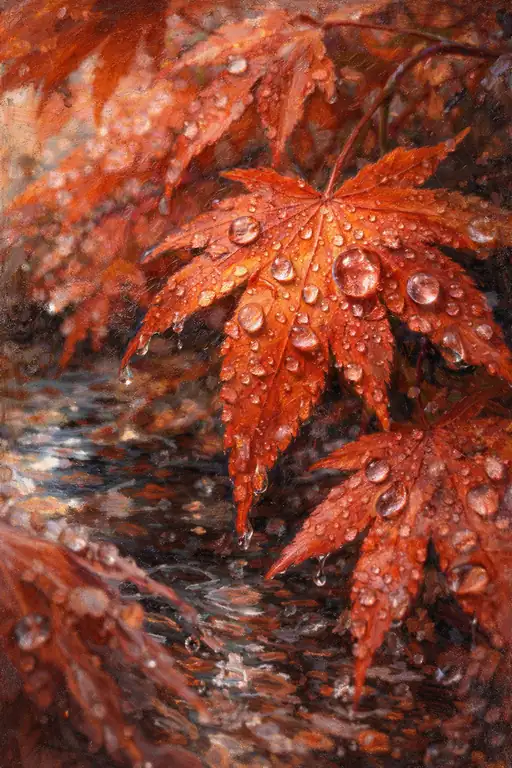 Glistening Embers of Fall
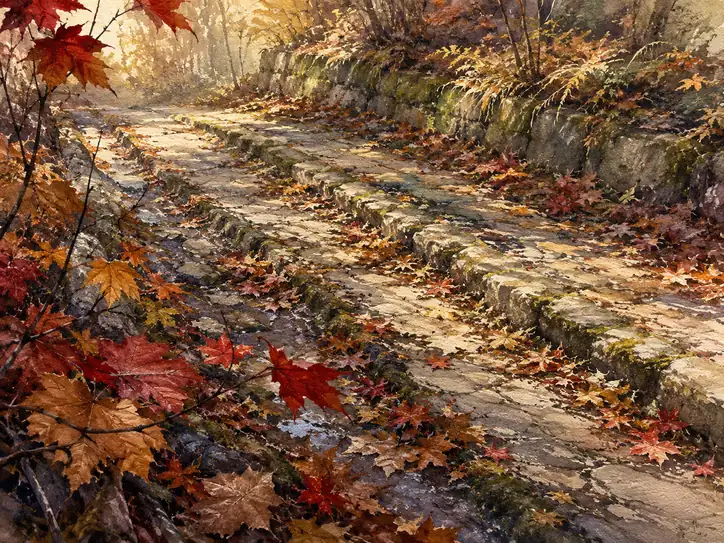 The Soft Footsteps of Autumn
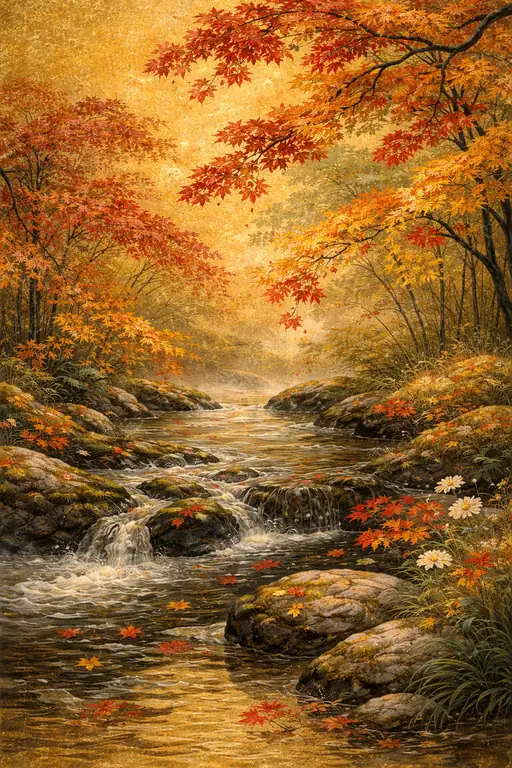 Golden Flow Through the Rocks
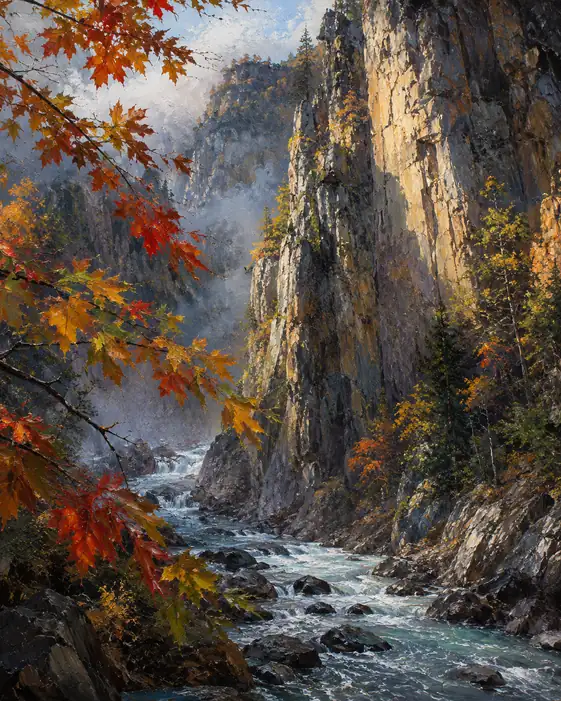 Autumn Whispers in the Sunlit Gorge
 Ascension Through the Autumn Canopy
 Whispers of the Autumn Dew
 Whispers of the Slumbering Forest