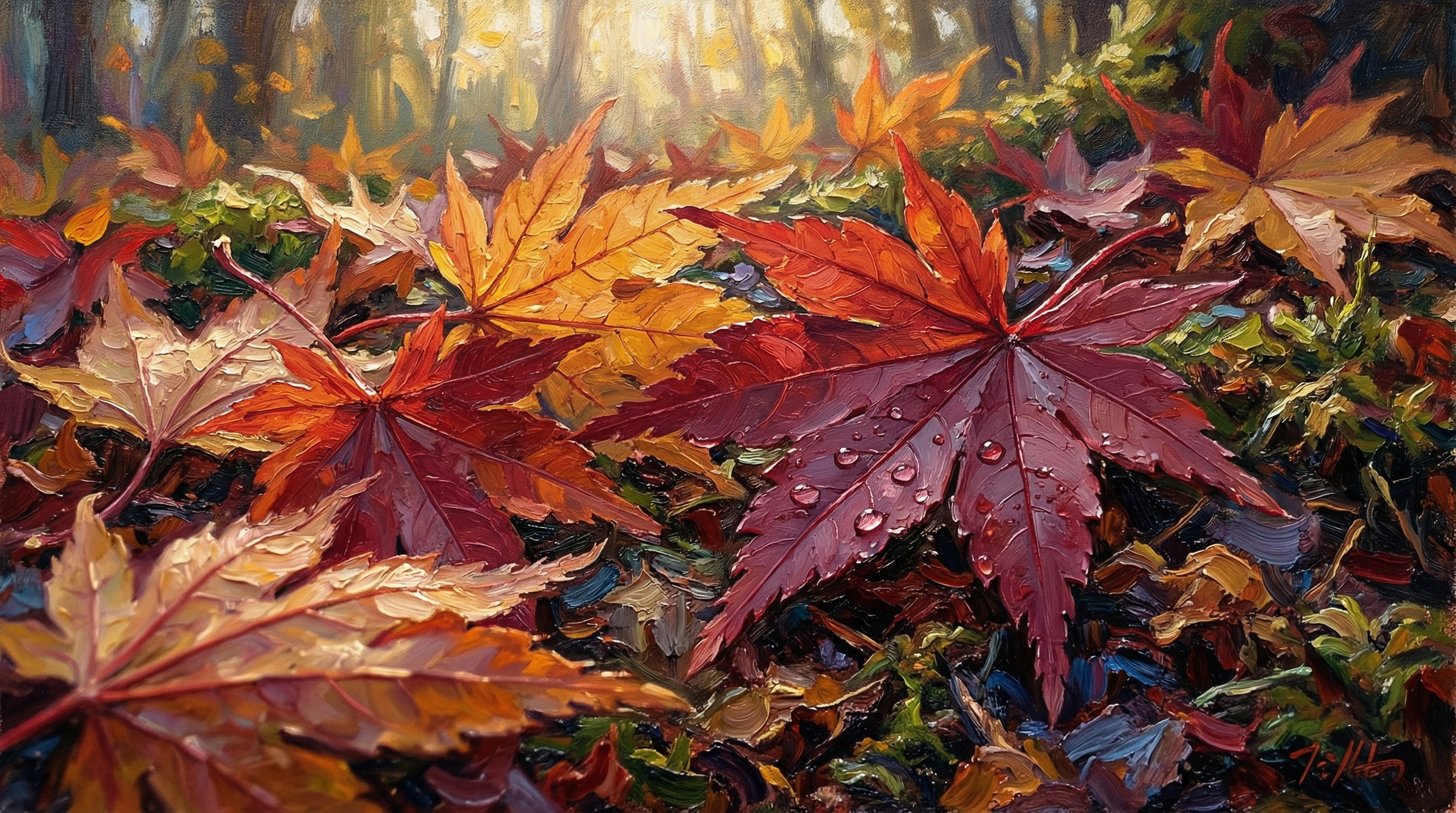
Fallen Leaves in the Autumn Forest
Critique
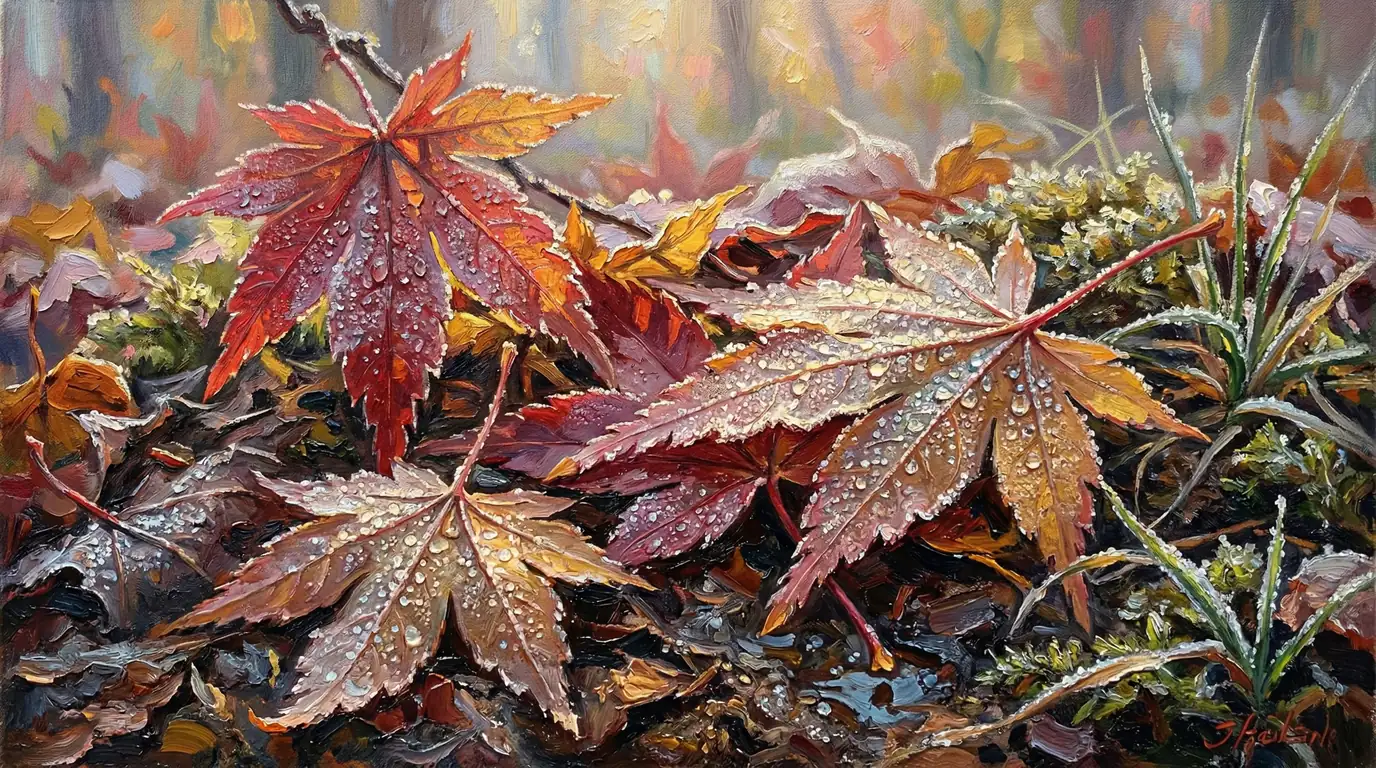
1. Introduction This oil painting presents an evocative depiction of fallen autumn leaves. Captured from an extremely low angle, the composition offers a close-up perspective that emphasizes nature’s seasonal cycle. The rich color palette and textured brushwork bring life to the subject, inviting the viewer to rediscover significance in small natural details. 2. Description The foreground is dominated by a large, deep red maple leaf with glistening water droplets. Behind it, a tapestry of yellow and orange leaves covers the forest floor. Soft light filters through background trees, creating a sense of depth. While foreground leaves are detailed, the background transitions into a play of light. 3. Analysis The artist employs a bold impasto technique that adds a physical dimension to the work. Thick application of paint highlights the veins of the central leaf and the water droplets. The warm color scheme creates a vibrant contrast against cooler shadows. This arrangement creates a rhythmic flow that guides the eye. 4. Interpretation and Evaluation Beyond its realistic portrayal, the work serves as a symbolic reflection on life's ephemeral nature. The light on the water droplets captures a fleeting moment of beauty within seasonal decay. This low perspective elevates a common scene to an artistic level. This painting successfully integrates technical mastery with emotional depth. 5. Conclusion Observation reveals how a simple scene of fallen leaves transforms into a drama of light and color. The artist’s ability to harness oil paint to express the harmony of natural details is core to its value. The initial impression of seasonal lyricism matures into a deeper understanding of formal intent. It is compelling.
Same Subcategory
Similar Artworks
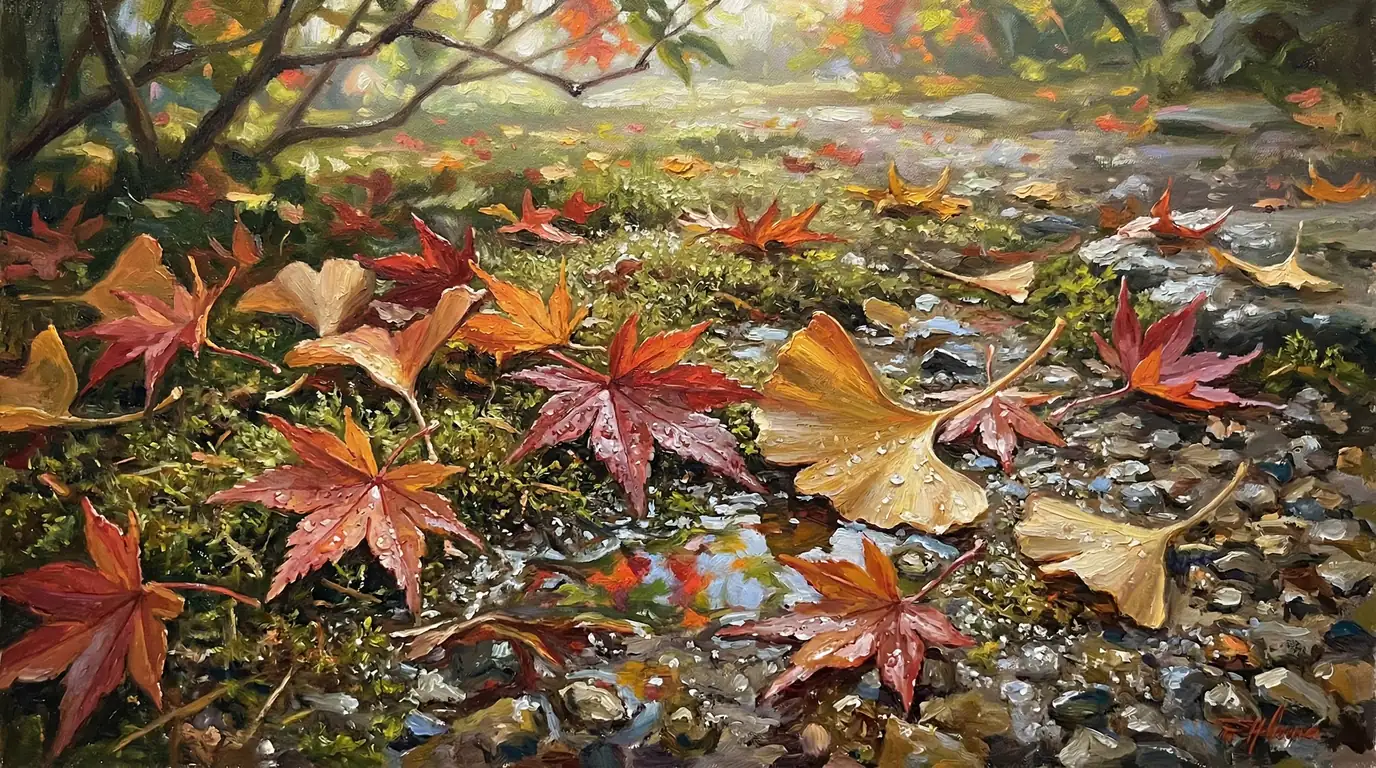 The Earth's Fiery Shroud
 Forest Floor Impressions
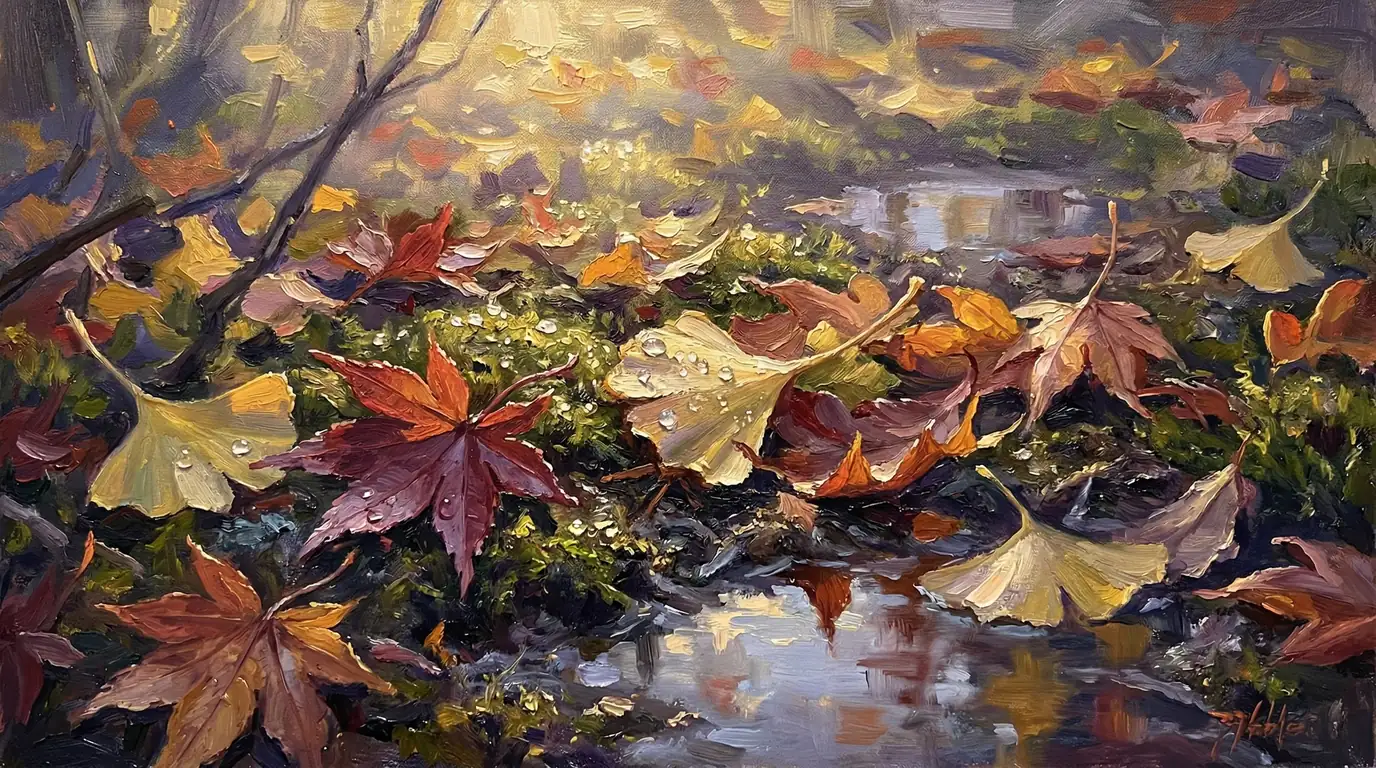 Golden Whispers on a Damp Canvas
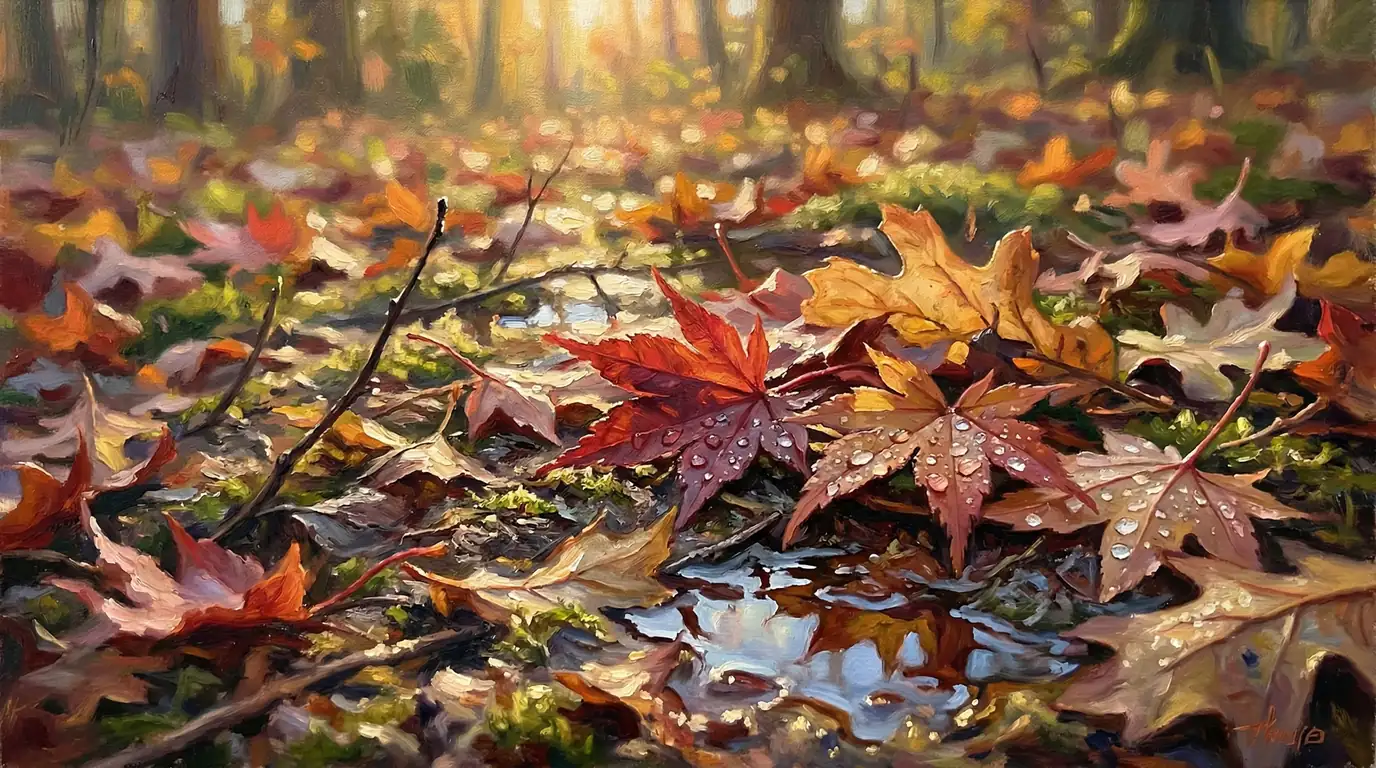 Tears of the Fallen Maple
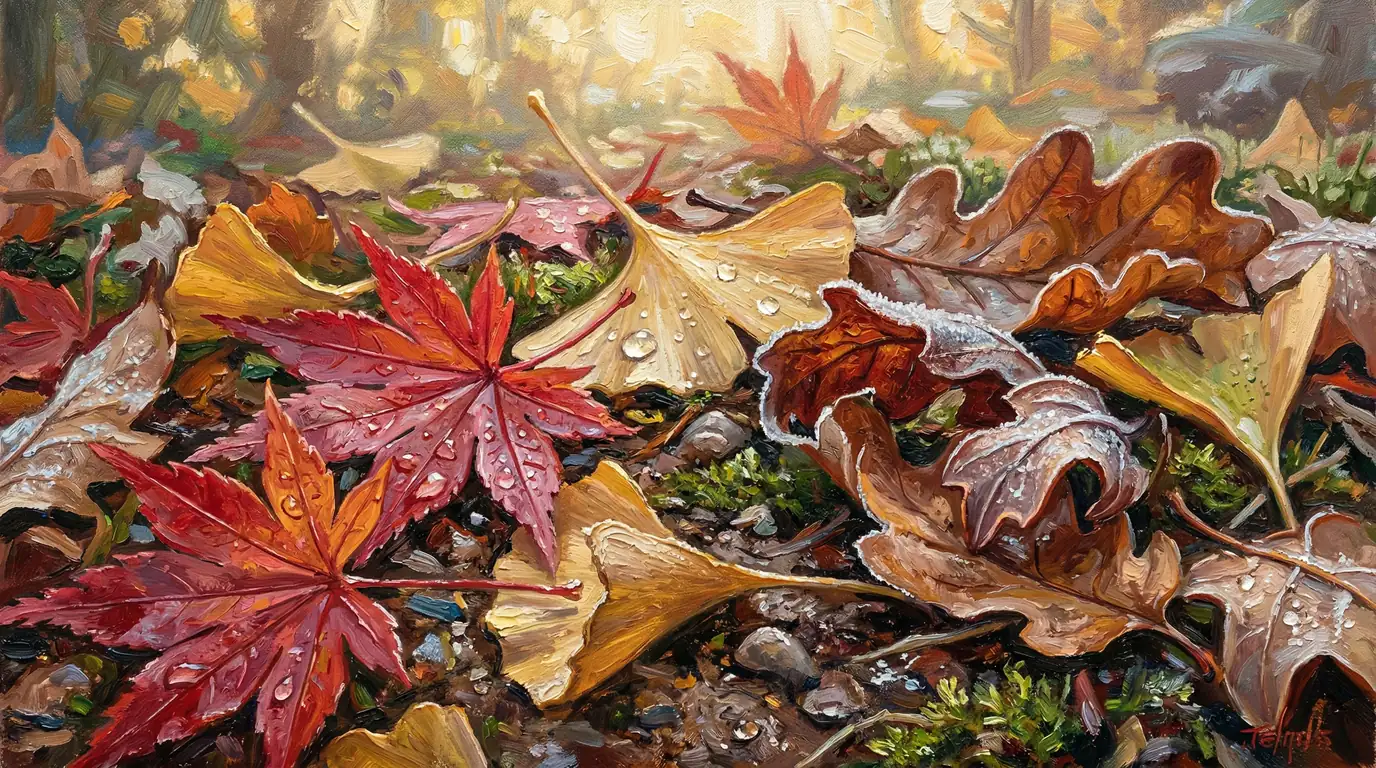 Fading Beauty of the Forest Floor
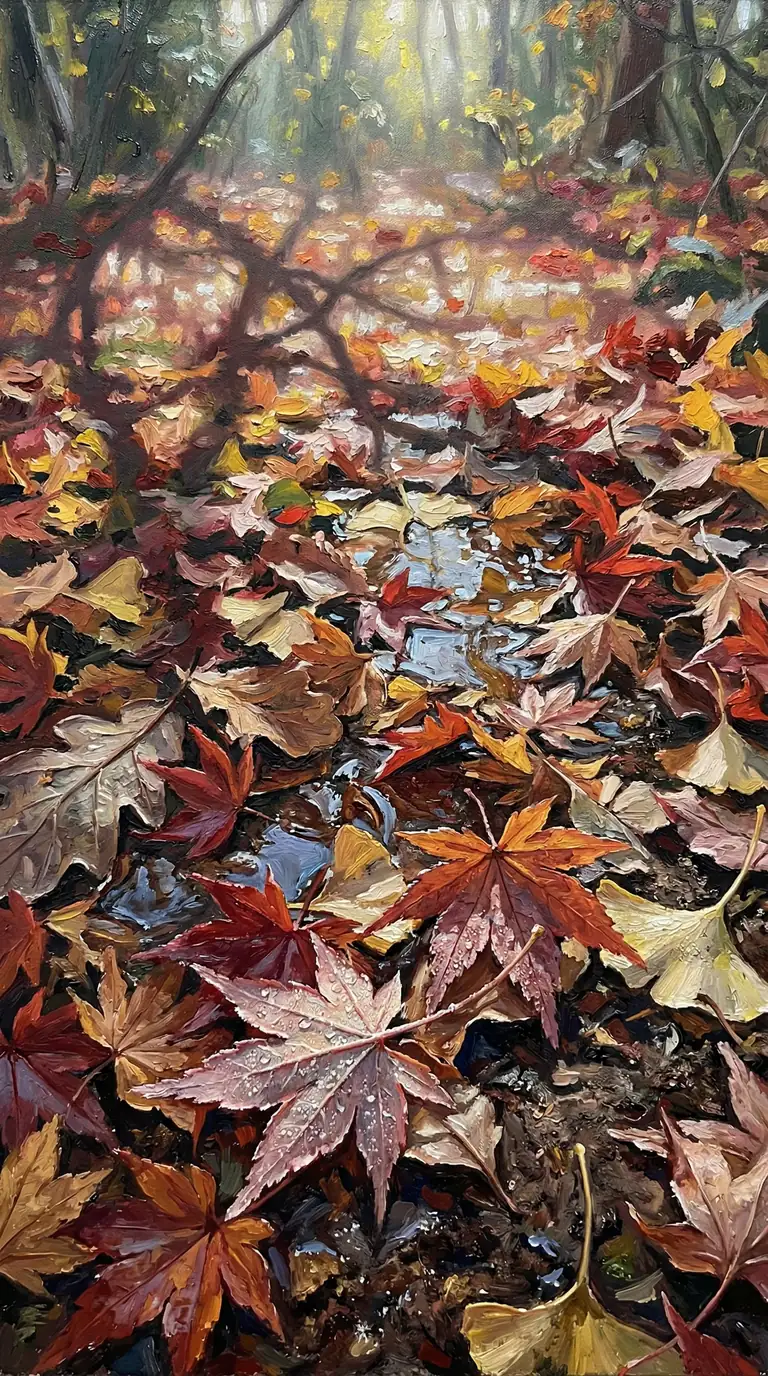 Fallen Embers of the Forest Floor
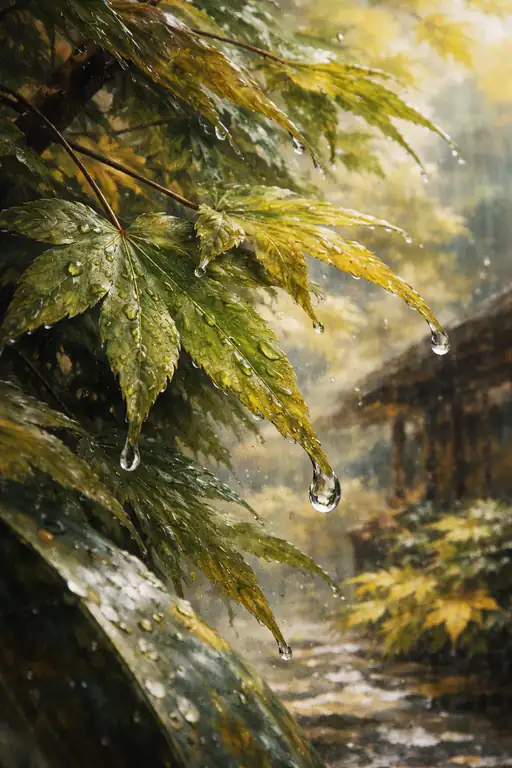 Tears of the Autumn Canopy
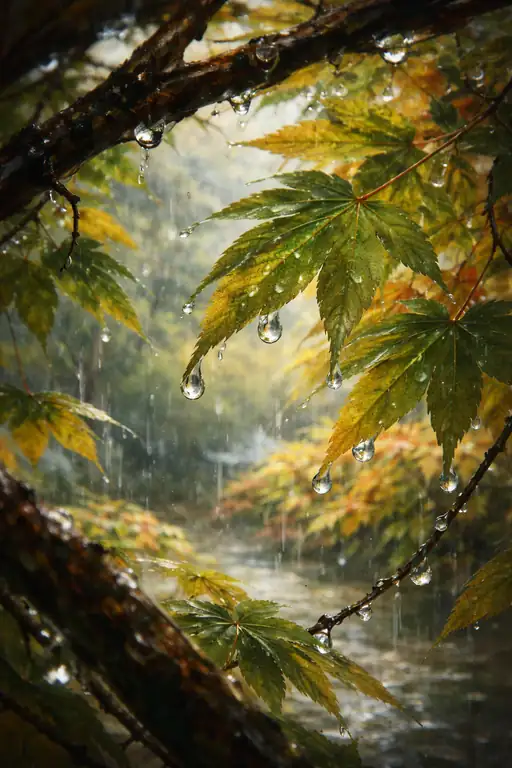 River Flowing Through the Majestic Forest
 Tears of the Autumn Morning
 Crimson Tears of the Passing Year