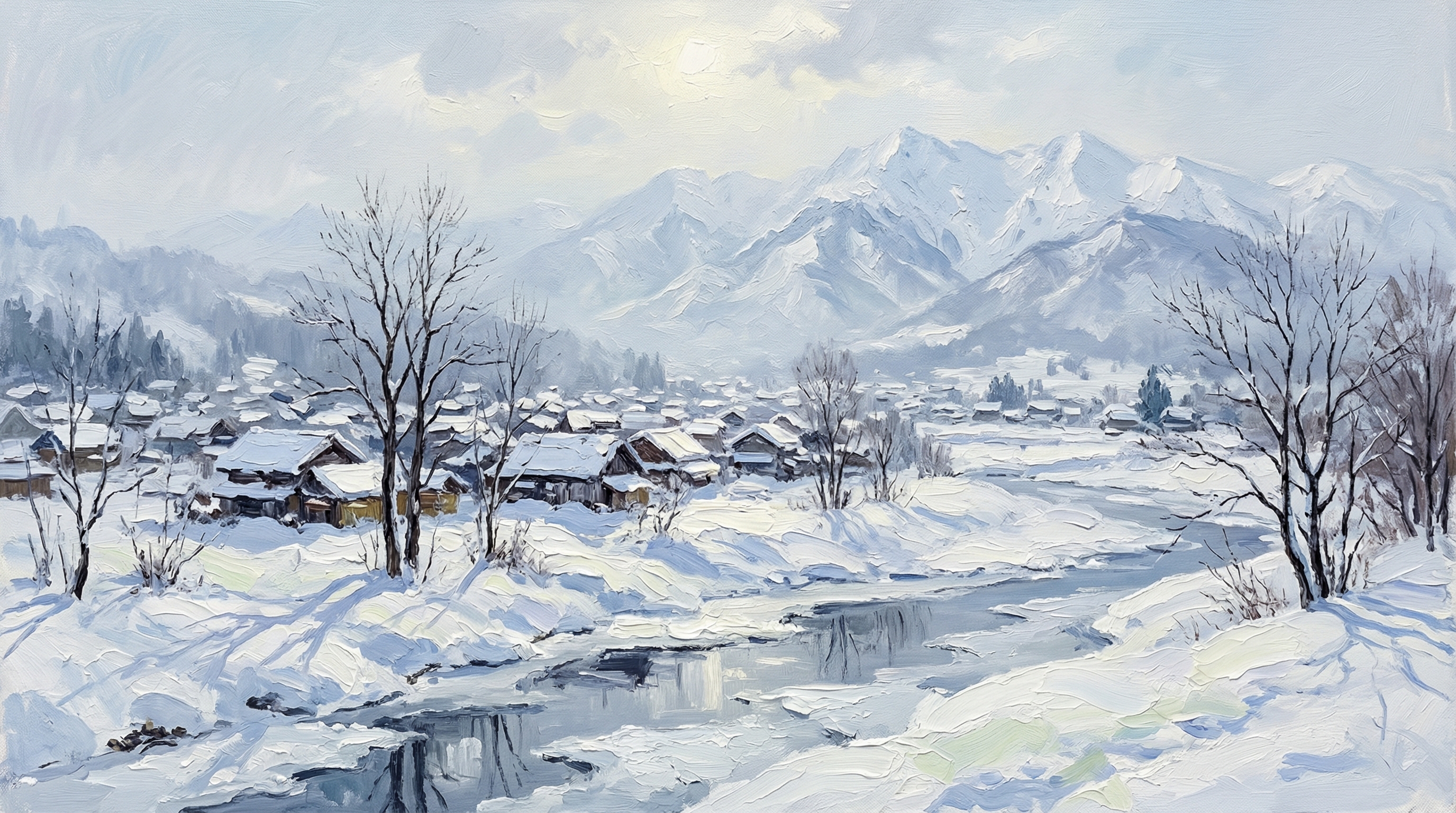
Silent Winter in the Hidden Valley
Critique
1. Introduction This evocative landscape painting captures the breathtaking beauty of a Japanese mountain village blanketed in the deep snows of midwinter. The composition features a cluster of traditional houses nestled in a valley, with a clear, semi-frozen river winding through the foreground and majestic snow-capped peaks rising in the background. Through a masterful application of light and deep textural detail, the artist creates a sense of profound stillness and the enduring charm of rural life within nature's most challenging season. The work invites the viewer to experience the silence of a secluded sanctuary. 2. Description The foreground is dominated by a winding river that perfectly reflects the cool, bright sky and the skeletal forms of bare-branched trees along its banks. Along the riverside, traditional wooden houses stand partially buried in thick, white mounds of snow. In the middle ground, the village stretches toward the base of the mountains, suggesting a vast, interconnected community. The background consists of grand, undulating mountain ranges that dominate the horizon, their surfaces rendered with bold, expressive brushstrokes that capture the complex interplay of light and shadow on the ice. 3. Analysis The artist utilizes a sophisticated palette centered on various shades of white, cool blue-greys, and the warm, grounding tones of the architectural structures. Lighting is bright and lively, as if captured on a clear winter morning, which enhances the overall feeling of peace and introspection. Technologically, the extensive use of impasto creates a three-dimensional quality for the snow and mountain surfaces, making them appear tangible and full of weight. This textural intensity is particularly effective on the rooftops and the riverbanks, where the snow seems to have significant volume. 4. Interpretation and Evaluation This work successfully explores the theme of human resilience and the quiet dignity of life within the vastness of the natural world. The village, a symbol of community and endurance, stands as a central figure of warmth against the cold, expansive backdrop of the mountains. Technically, the rendering of the heavy, wet snow on the varied geological and architectural surfaces is exceptional, demonstrating a high level of skill in capturing light as it interacts with white surfaces. The composition remains well-balanced, effectively using the river to lead the eye. 5. Conclusion While the initial impression is one of simple seasonal beauty, a deeper examination reveals a complex study of light, texture, and the emotional resonance of rural stillness. The painting stands as a significant tribute to the contemplative grace of the mountain village. It achieves a lasting impact through its harmonious integration of realistic detail and bold textural work, effectively inviting the observer to pause and appreciate the transient yet powerful moments of the natural world in its state of quiet, wintry rest and magnificent endurance.
Same Subcategory
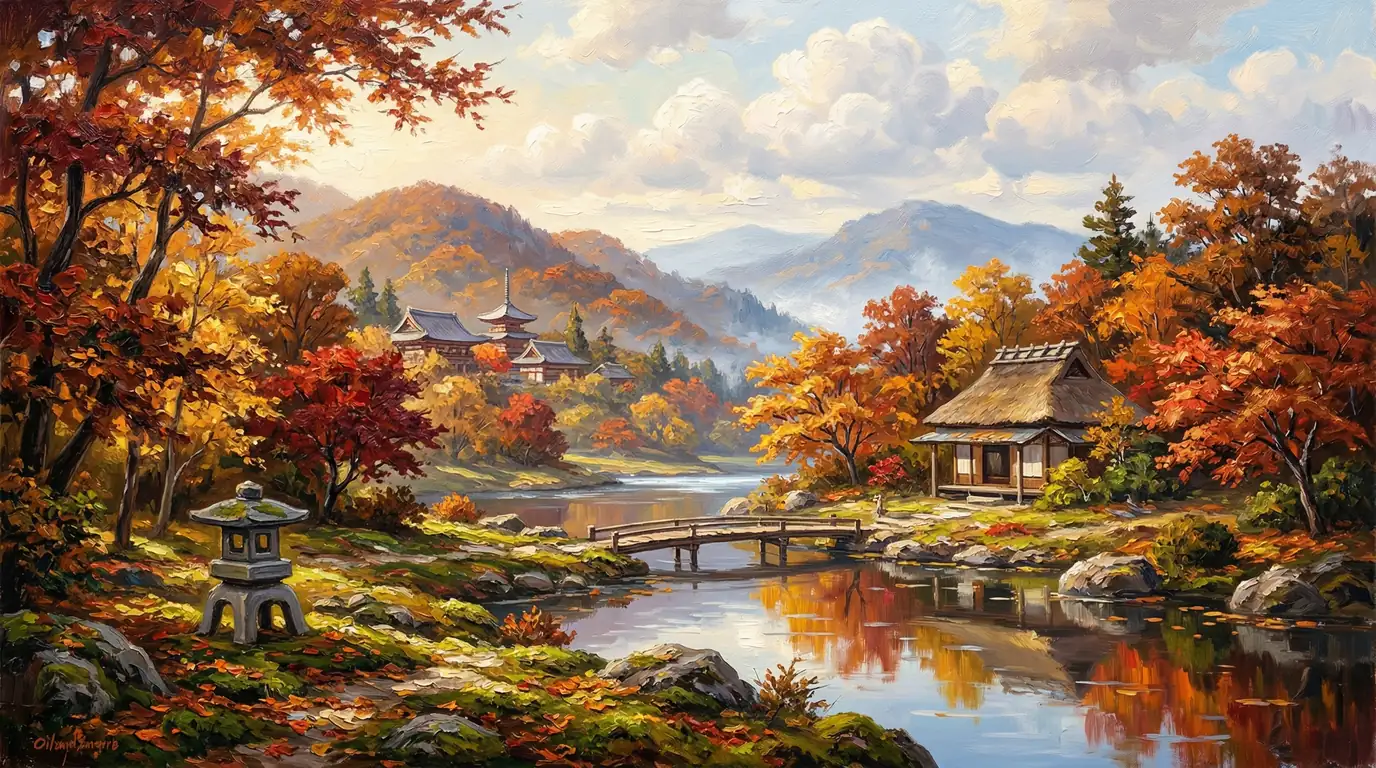 Autumn Panorama of the Thatched Village
Similar Artworks
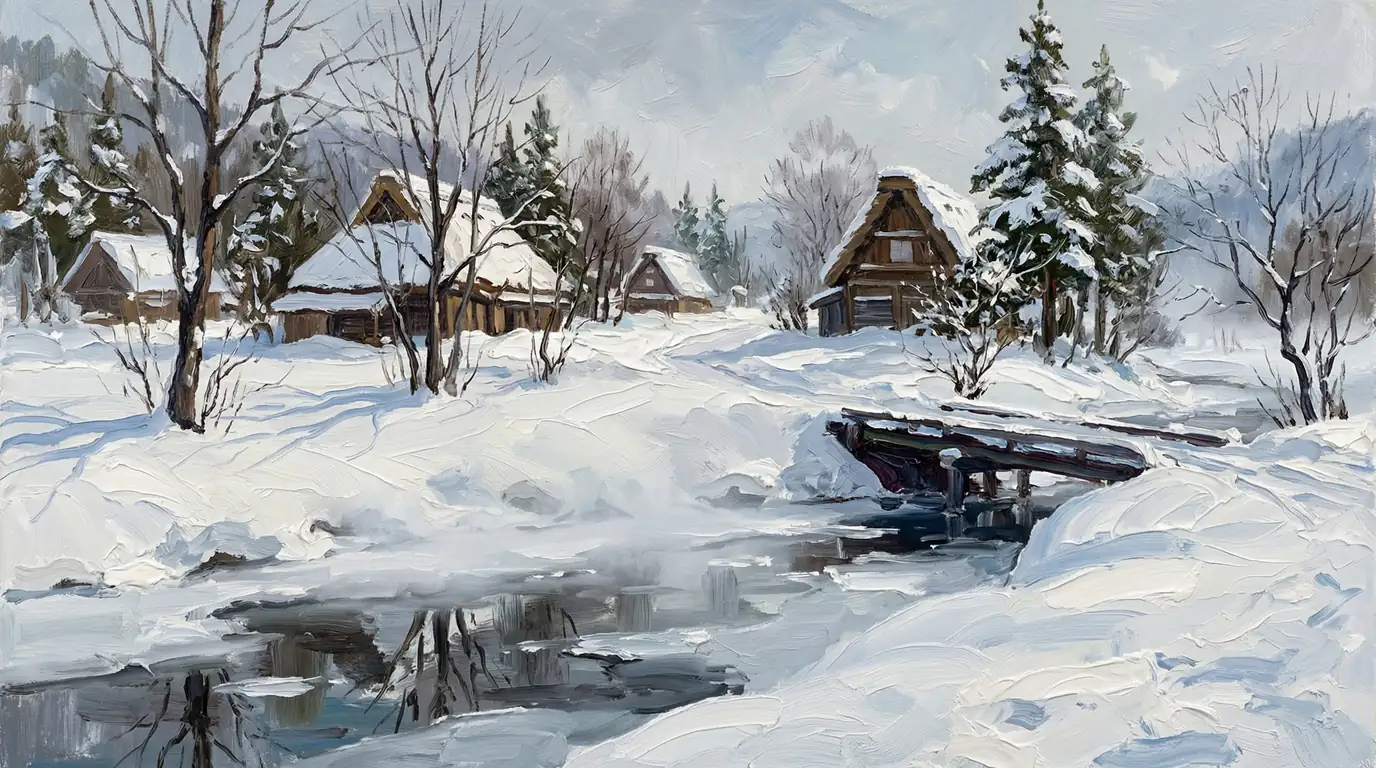 Nostalgic Slumber of the Snowy Hamlet
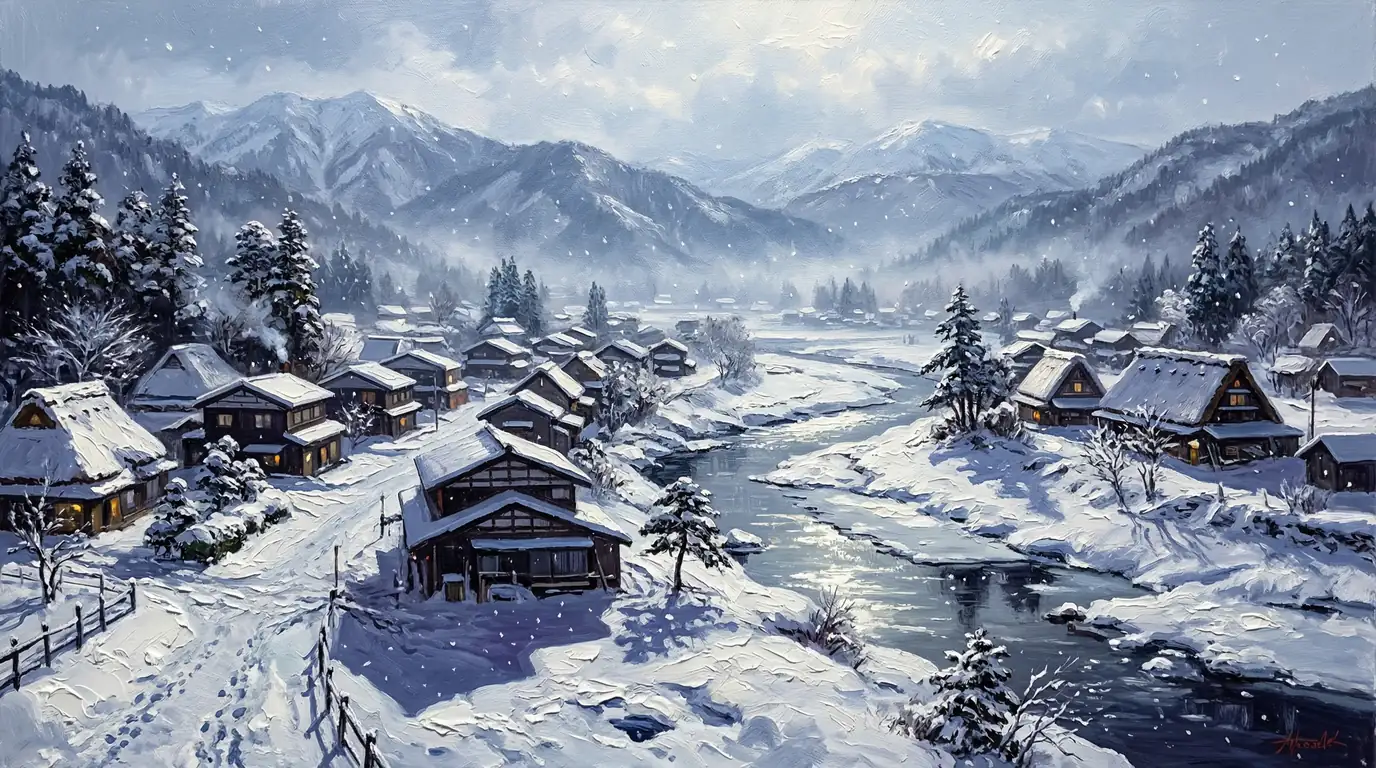 Whispering Snow in the Heart of Silence
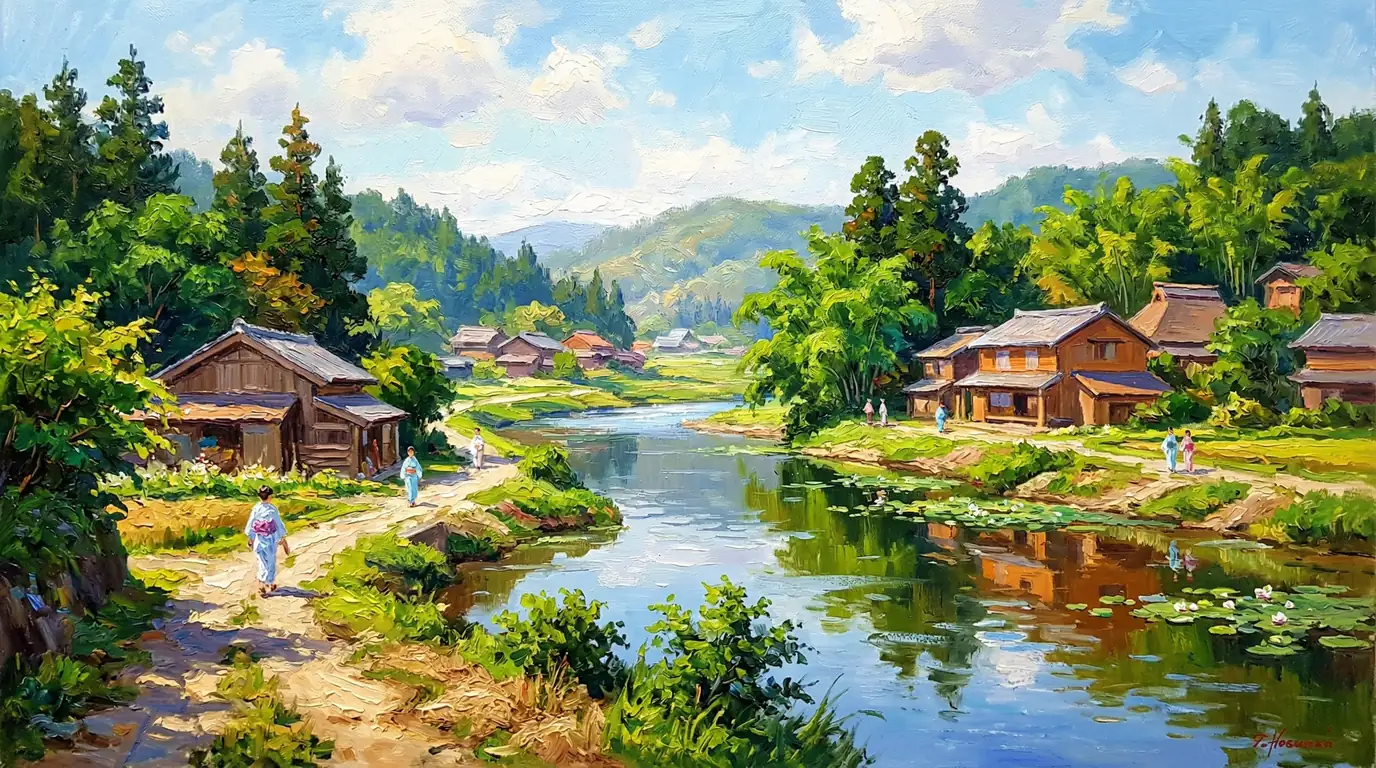 Summer Memories by the River
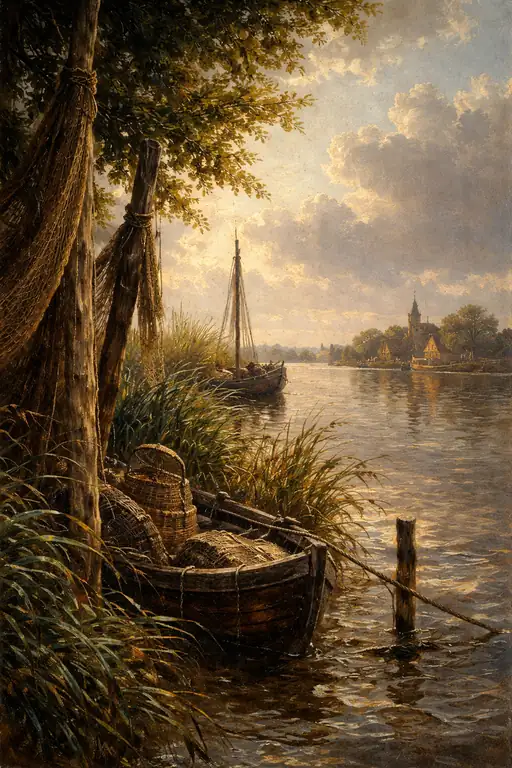 Tranquil Reverie by the Reeds
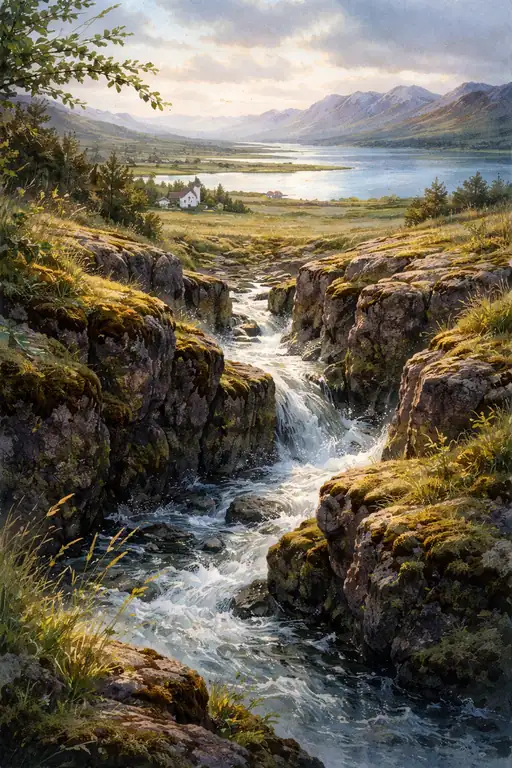 Whispers of the Emerald Valley
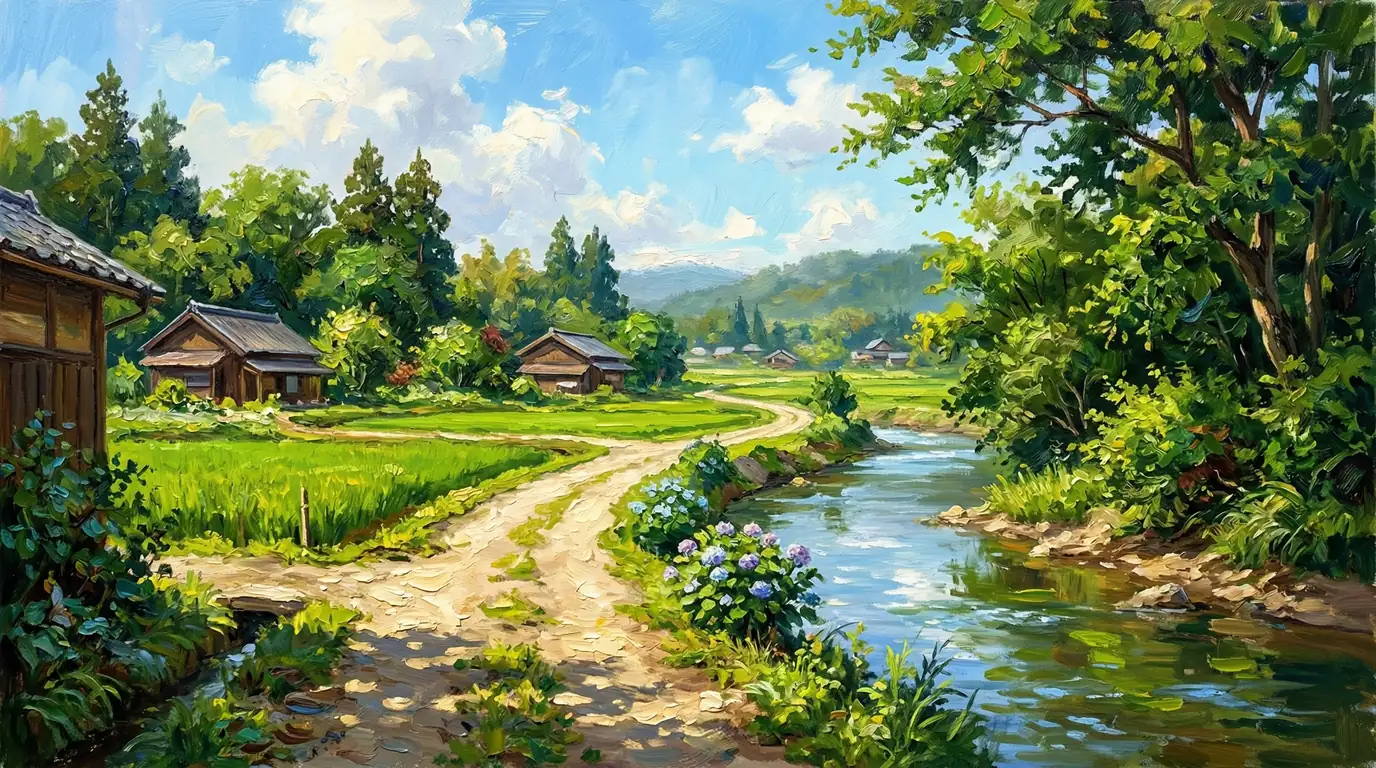 Hydrangea Bloom by the Singing River
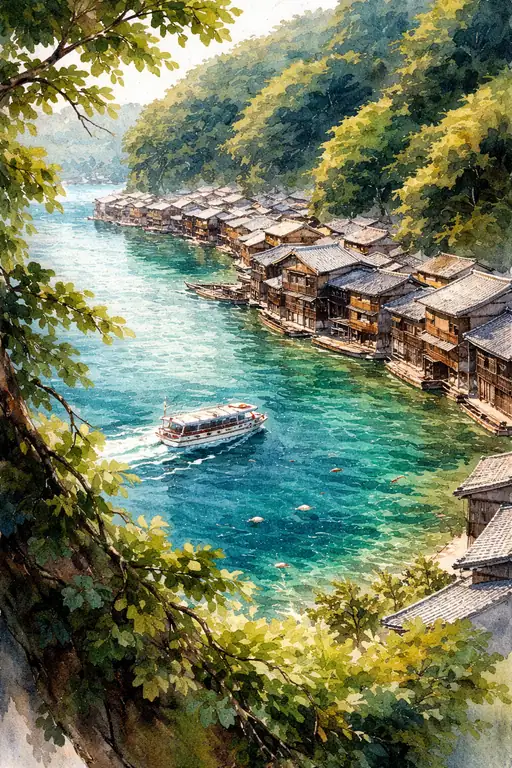 Emerald Embrace of the Coastal Haven
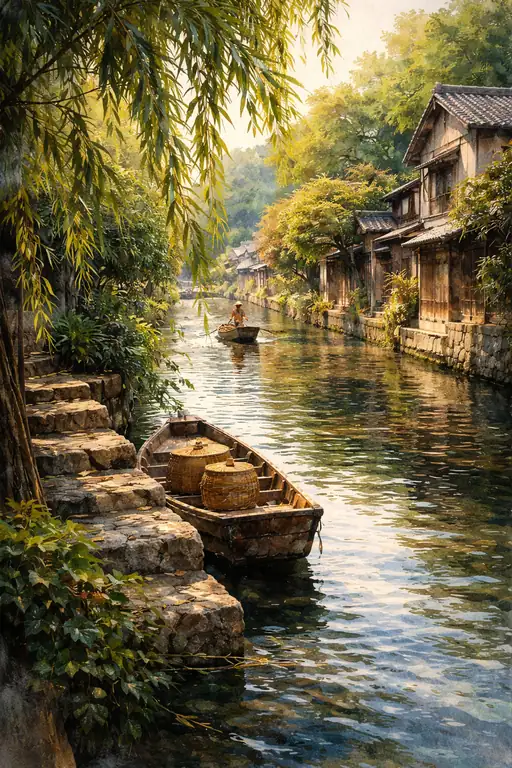 Peaceful Passage Through the Historic Water Town
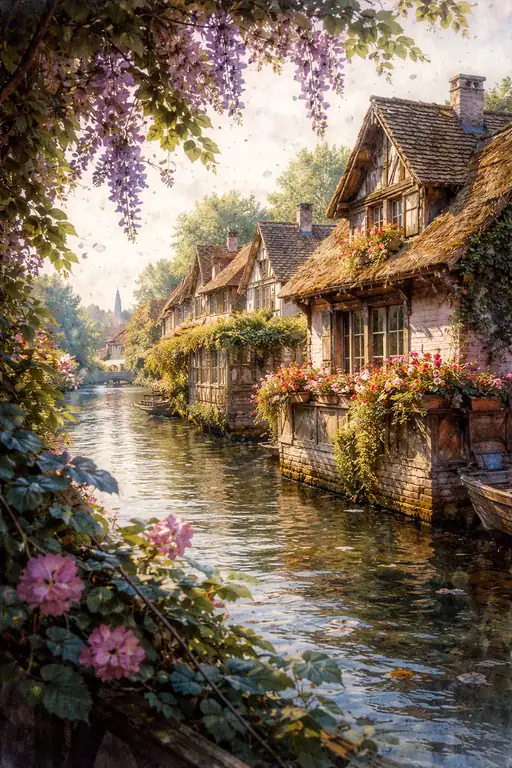 Wisteria's Reflection on the Quiet Canal
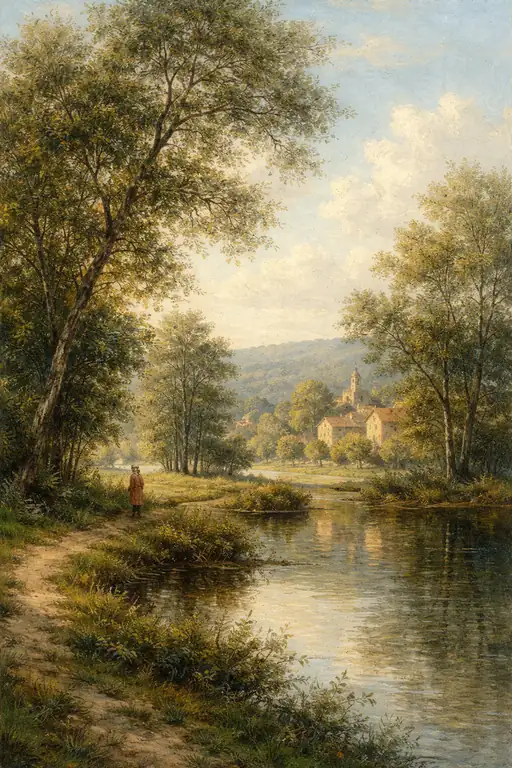 Reflections of a Serene Sanctuary