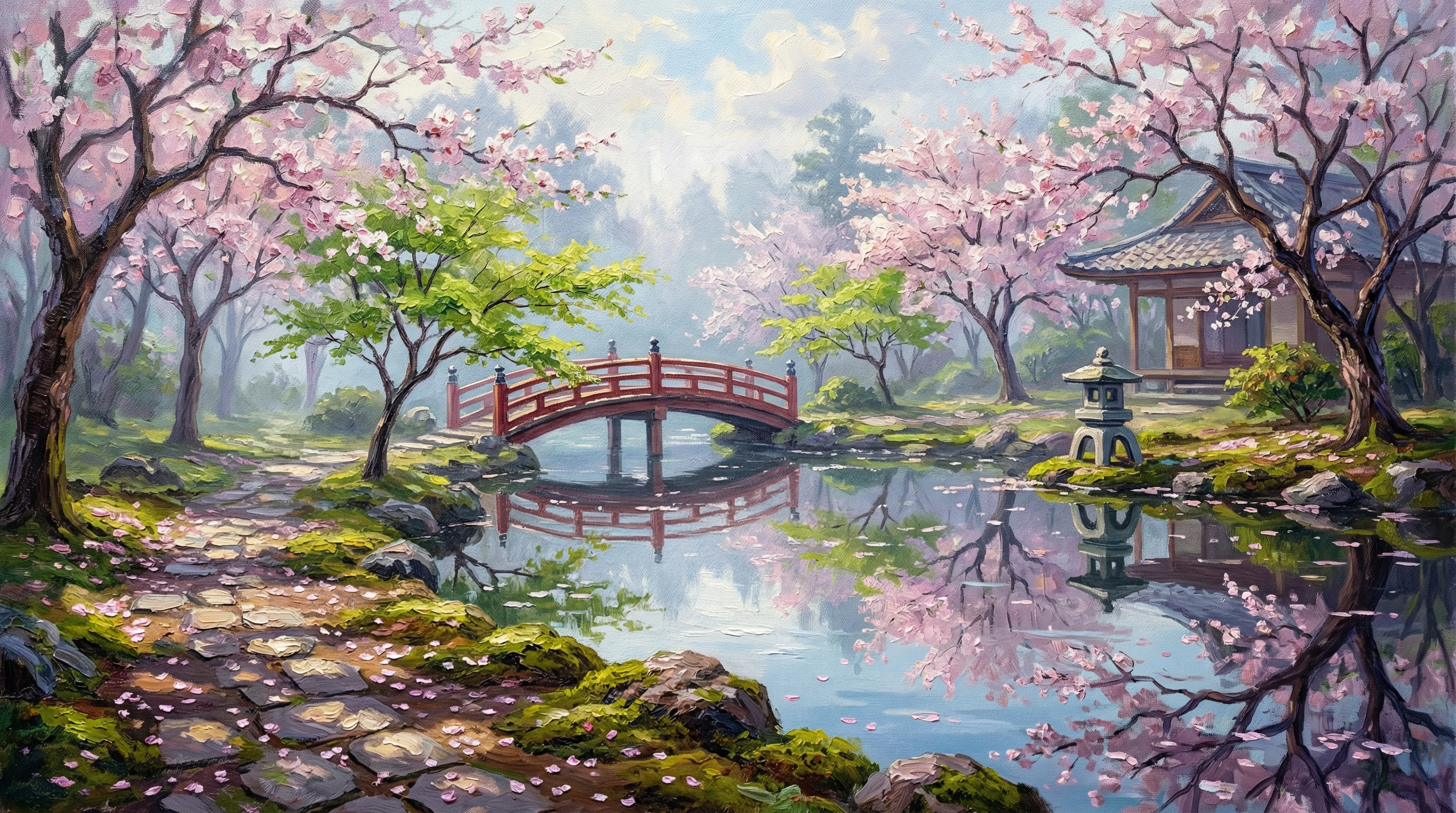
Spring Awakening at the Arched Bridge
Critique
1. Introduction This vibrant landscape painting captures the breathtaking beauty of spring in a traditional Japanese garden, where cherry blossoms are in full, radiant bloom. The composition features an iconic red arched bridge spanning a calm pond, reflecting the soft pinks of the surrounding sakura trees. Through a masterful application of bright colors and deep textural detail, the artist creates a sense of joyful renewal and the timeless elegance of the Japanese garden during the cherry blossom season. The work invites the viewer to experience the serene, celebratory atmosphere of a secluded sanctuary. 2. Description The foreground is dominated by a cobblestone path scattered with delicate pink petals, leading the eye toward the central red bridge. To the right, the calm pond perfectly reflects the sky and the intricate architecture of a traditional tea house nestled among the trees. A classic stone lantern, or ishidoro, stands as a sturdy anchor near the water's edge. In the background, layers of soft, misty cherry trees create an expansive sense of floral abundance, while the light-filled sky suggests a clear, optimistic spring afternoon, adding to the atmosphere. 3. Analysis The artist utilizes a brilliant and diverse palette centered on varied shades of pink, fresh greens, and the striking vermillion of the bridge. Lighting is bright and lively, as if captured in the mid-morning sun, which enhances the overall feeling of prosperity and vital energy. Technologically, the extensive use of impasto creates a three-dimensional quality for the blossoms and foliage, making them appear tangible and full of life. This textural intensity is particularly effective on the cherry boughs, where the petals seem to shimmer in the light. 4. Interpretation and Evaluation This work successfully explores the theme of seasonal renewal and the harmonious relationship between human design and natural beauty. The cherry blossoms, symbols of transience and the beauty of life, stand as central figures of seasonal celebration alongside the enduring forms of the bridge and tea house. Technically, the rendering of the delicate petals on the varied organic and architectural surfaces is exceptional, demonstrating a high level of skill in capturing light. The composition is dynamic and well-balanced, effectively using the flowing lines of the bridge. 5. Conclusion While the initial impression is one of simple seasonal charm, a deeper examination reveals a complex study of light, texture, and the emotional resonance of springtime renewal. The painting stands as a significant tribute to the contemplative yet celebratory beauty of the Japanese garden. It achieves a lasting impact through its harmonious integration of realistic architectural detail and bold textural work, effectively inviting the observer to pause and appreciate the transient yet powerful moments of the natural world in its state of vibrant, blooming life.
Same Subcategory
 Spring's Gentle Embrace
Similar Artworks
 Tranquility in the Zen Garden
 Serenity of the Gilded Pavilion
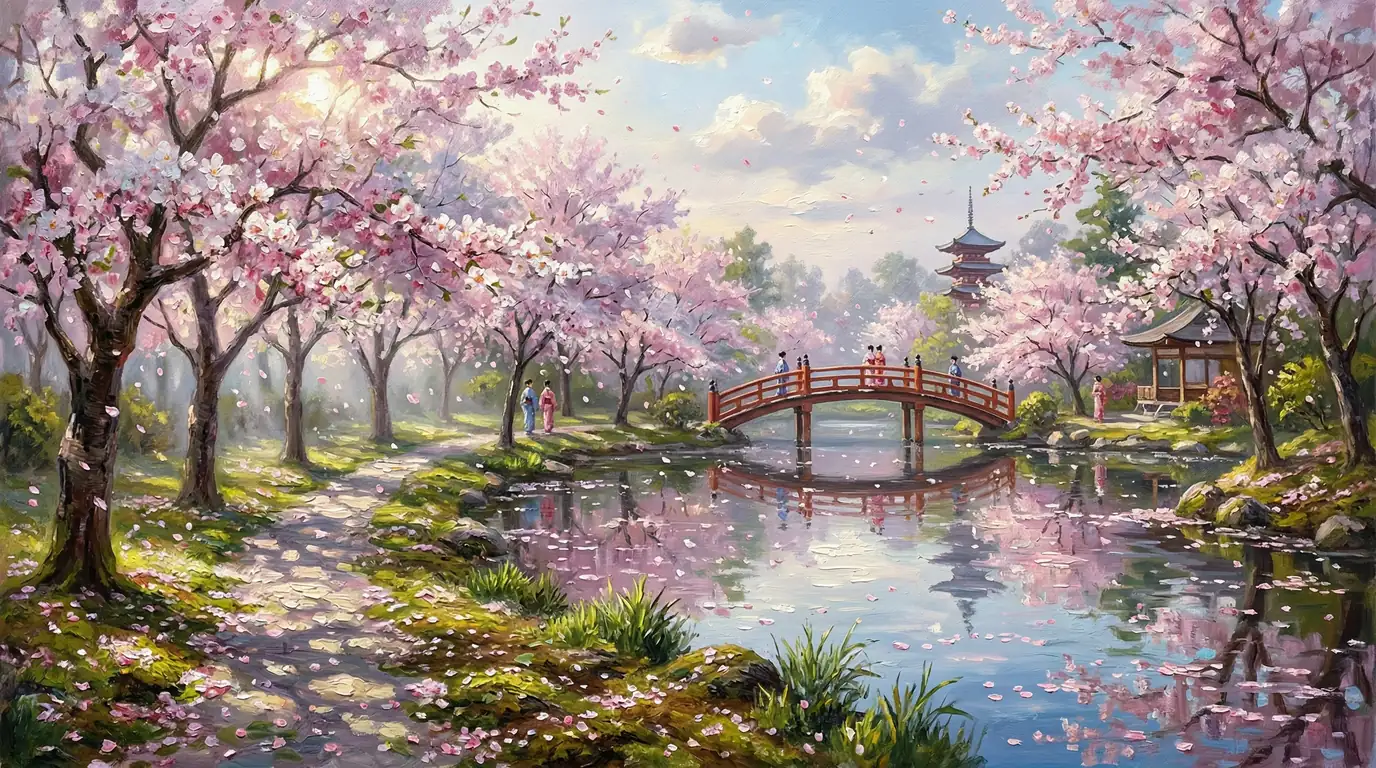 Spring's Fleeting Embrace
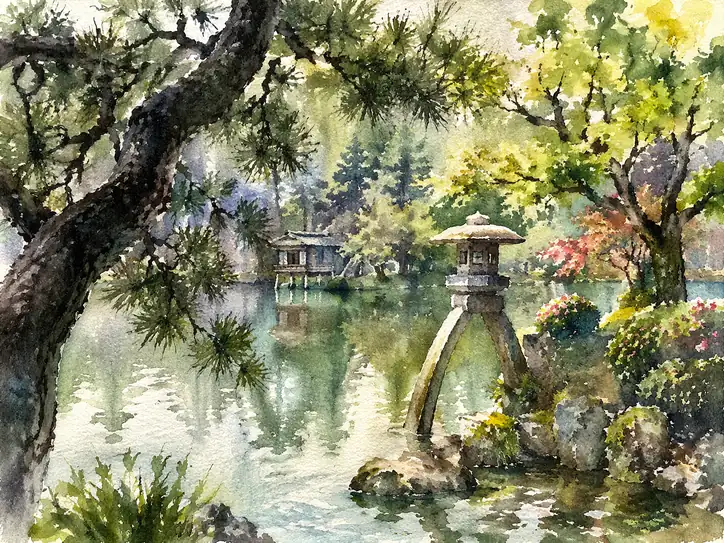 Quiet Reflections by the Stone Guardian
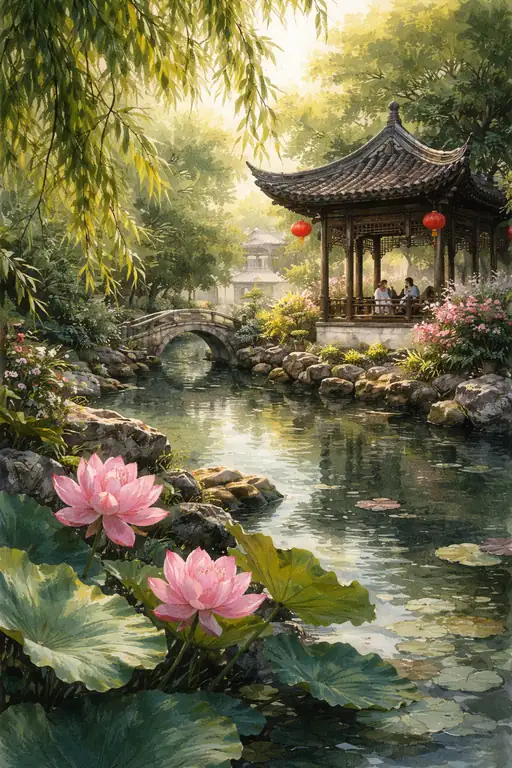 Tranquility in Bloom: The Lotus Pavilion
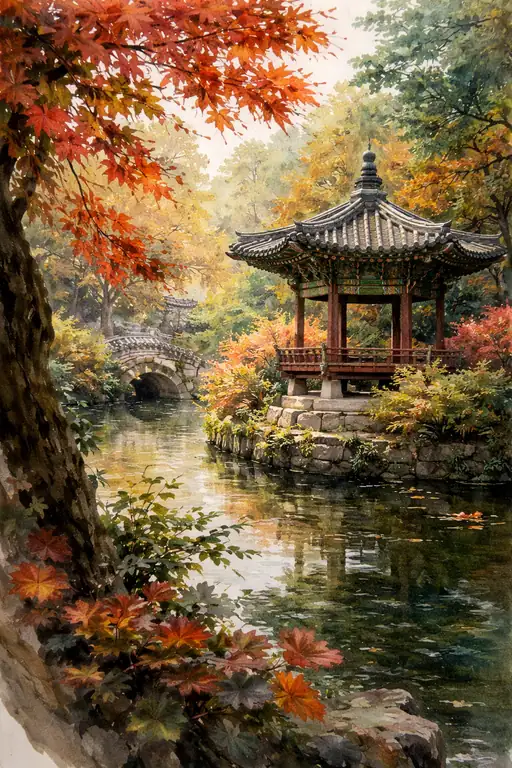 Crimson Leaves Reflected in Autumn's Mirror
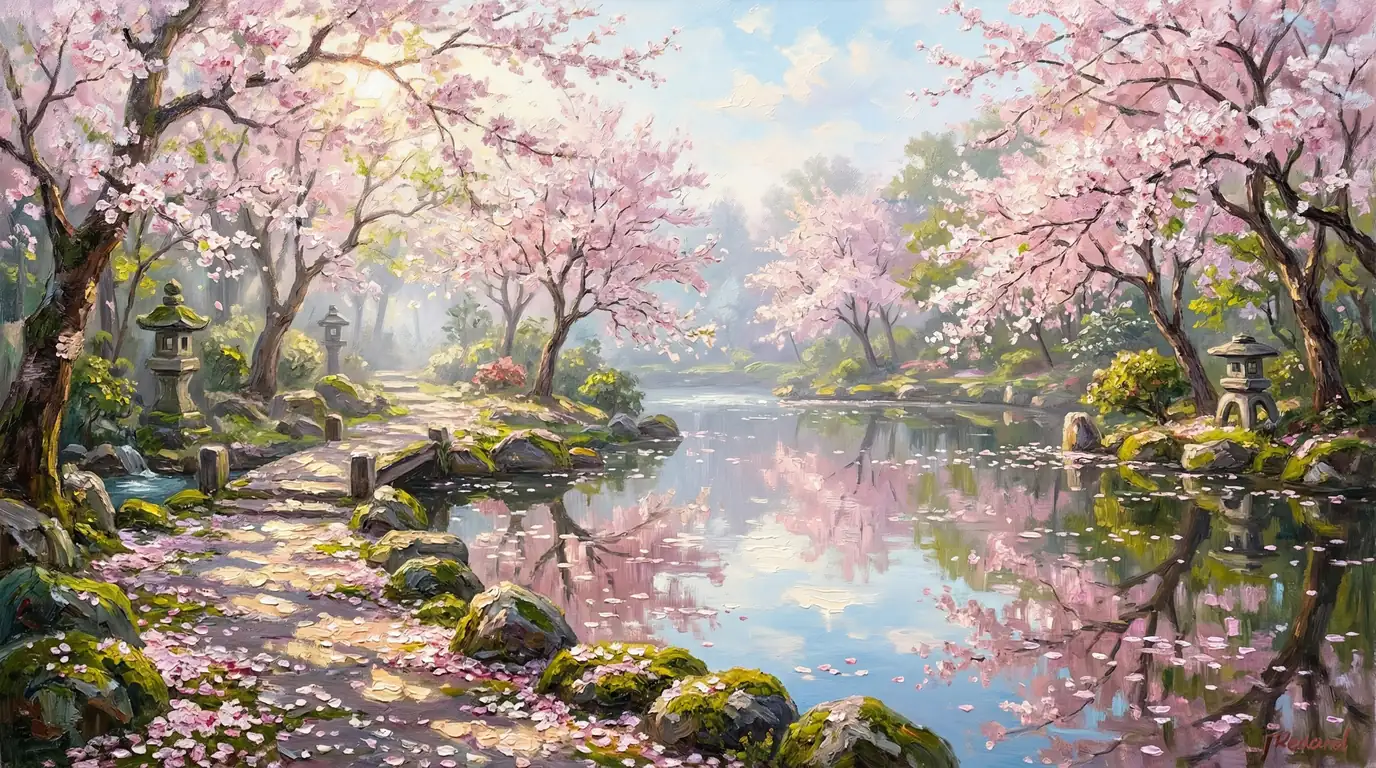 Serenity at the Spring Pond
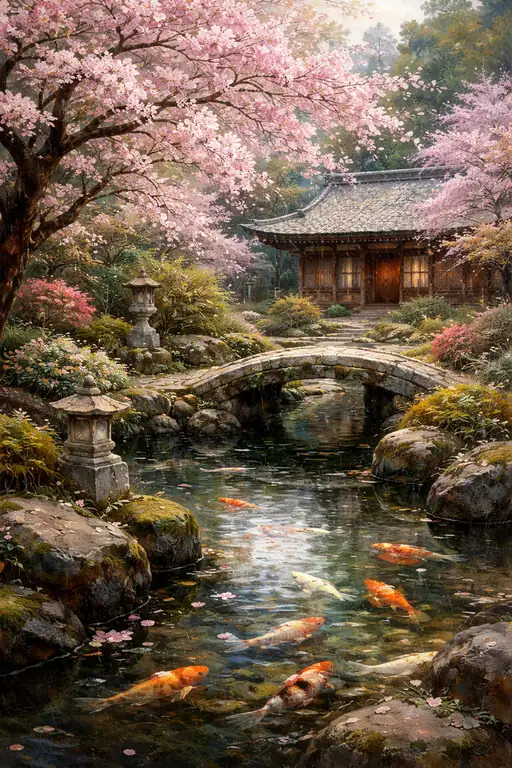 Reflections in the Koi Pond
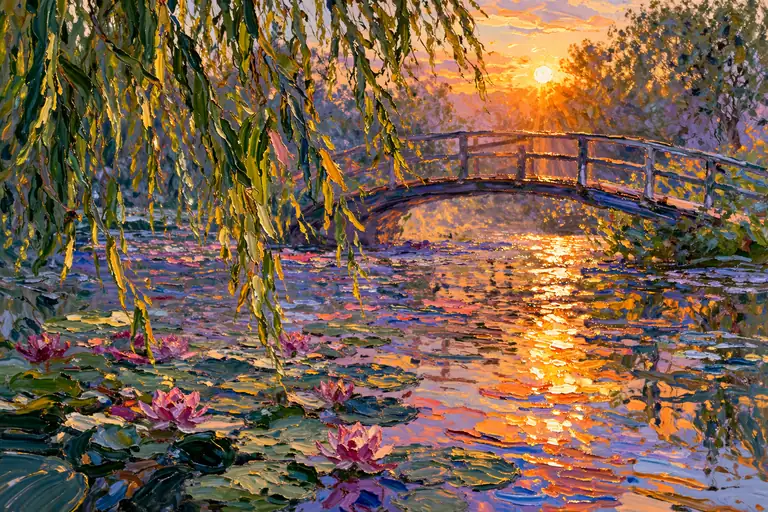 Golden Reflection of the Serene Pond
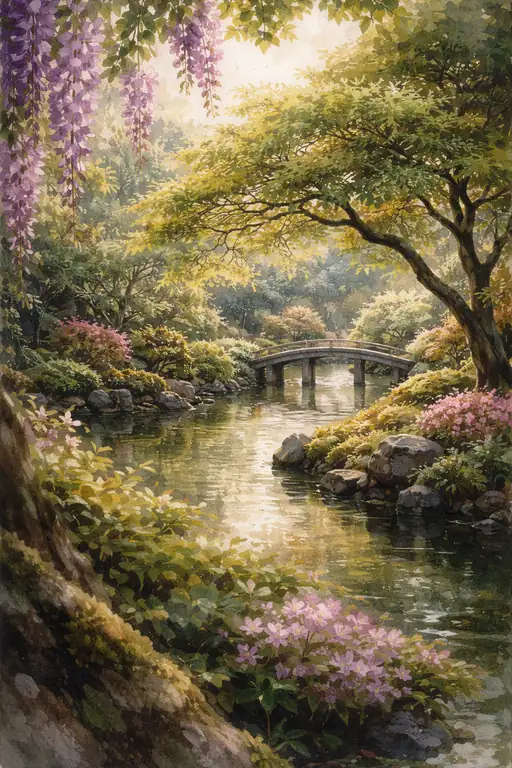 Twilight Beneath the Wisteria Bridge