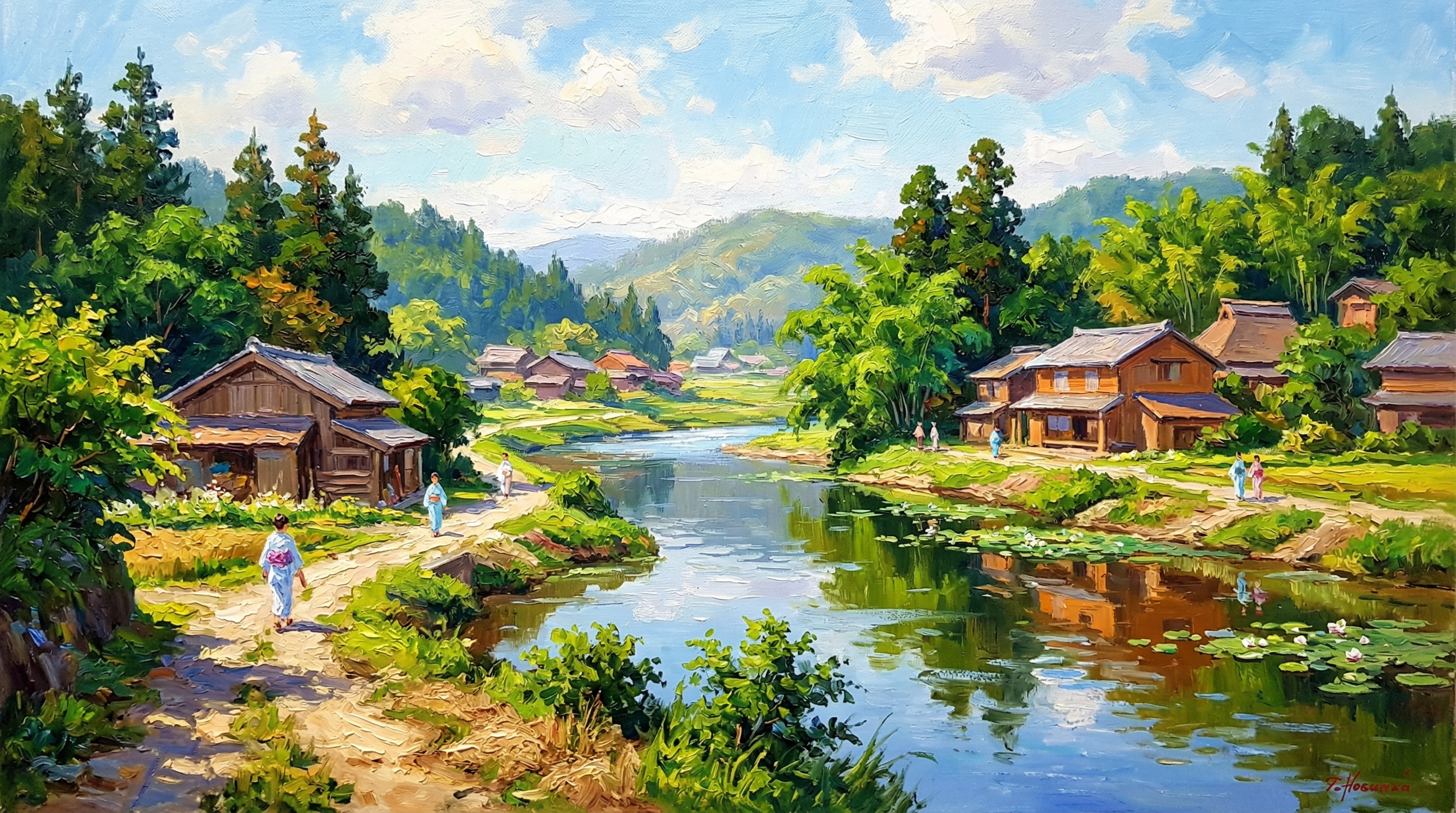
Summer Memories by the River
Critique
1. Introduction This vibrant landscape painting captures the serene beauty of a Japanese rural village during the peak of summer. The composition features a clear, reflective river winding through a valley of traditional wooden houses and lush, forested hills. Through a masterful application of bright, sun-drenched colors and deep textural detail, the artist creates a sense of profound peace and the timeless charm of the Japanese Satoyama landscape. The work invites the viewer to experience the nostalgic atmosphere of a quiet, sunlit afternoon in the countryside. 2. Description The foreground is dominated by a winding dirt path where several figures in traditional yukatas are seen walking, adding a sense of human presence and communal life. To the right, the calm river reflects the brilliant blue of the sky and the warm, earthy tones of the riverside houses. Clusters of water lilies float on the surface, their white petals catching the light. In the background, rolling green hills and dense bamboo groves provide a protective enclosure for the village, while fluffy white clouds dot the expansive summer sky above. 3. Analysis The artist utilizes a brilliant and expansive palette centered on varied greens, sky-blues, and the warm, grounding tones of the architectural structures. Lighting is bright and direct, as if captured on a clear midsummer day, which enhances the overall feeling of optimism and vital energy. Technologically, the extensive use of impasto creates a three-dimensional quality for the foliage and clouds, making them appear tangible and full of life. This textural intensity is particularly effective on the sun-lit treetops and the reflections in the water. 4. Interpretation and Evaluation This work successfully explores the theme of seasonal vitality and the harmonious relationship between human tradition and natural beauty. The Satoyama scene, a symbol of sustainable living and communal heritage, stands as a central figure of cultural pride and peaceful coexistence. Technically, the rendering of the light on the varied organic and architectural surfaces is exceptional, demonstrating a high level of skill in capturing color and atmosphere. The composition is balanced and dynamic, effectively using the diagonal lines of the path and river. 5. Conclusion While the initial impression is one of simple seasonal charm, a deeper examination reveals a complex study of light, texture, and the emotional resonance of rural memory. The painting stands as a significant tribute to the contemplative yet lively beauty of the Japanese landscape. It achieves a lasting impact through its harmonious integration of realistic detail and bold textural work, effectively inviting the observer to pause and appreciate the transient yet powerful moments of the natural world in its state of vibrant, sunlit life.
Same Subcategory
Similar Artworks
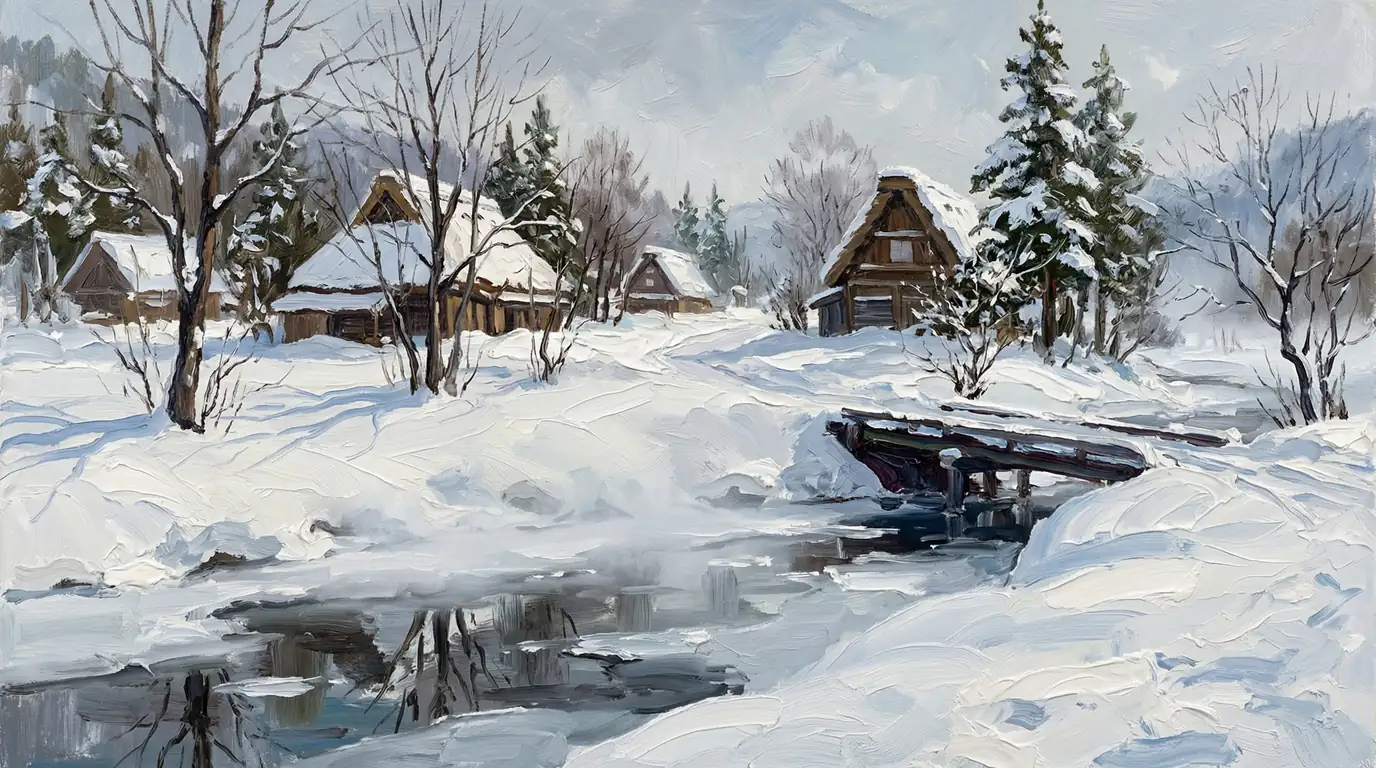 Nostalgic Slumber of the Snowy Hamlet
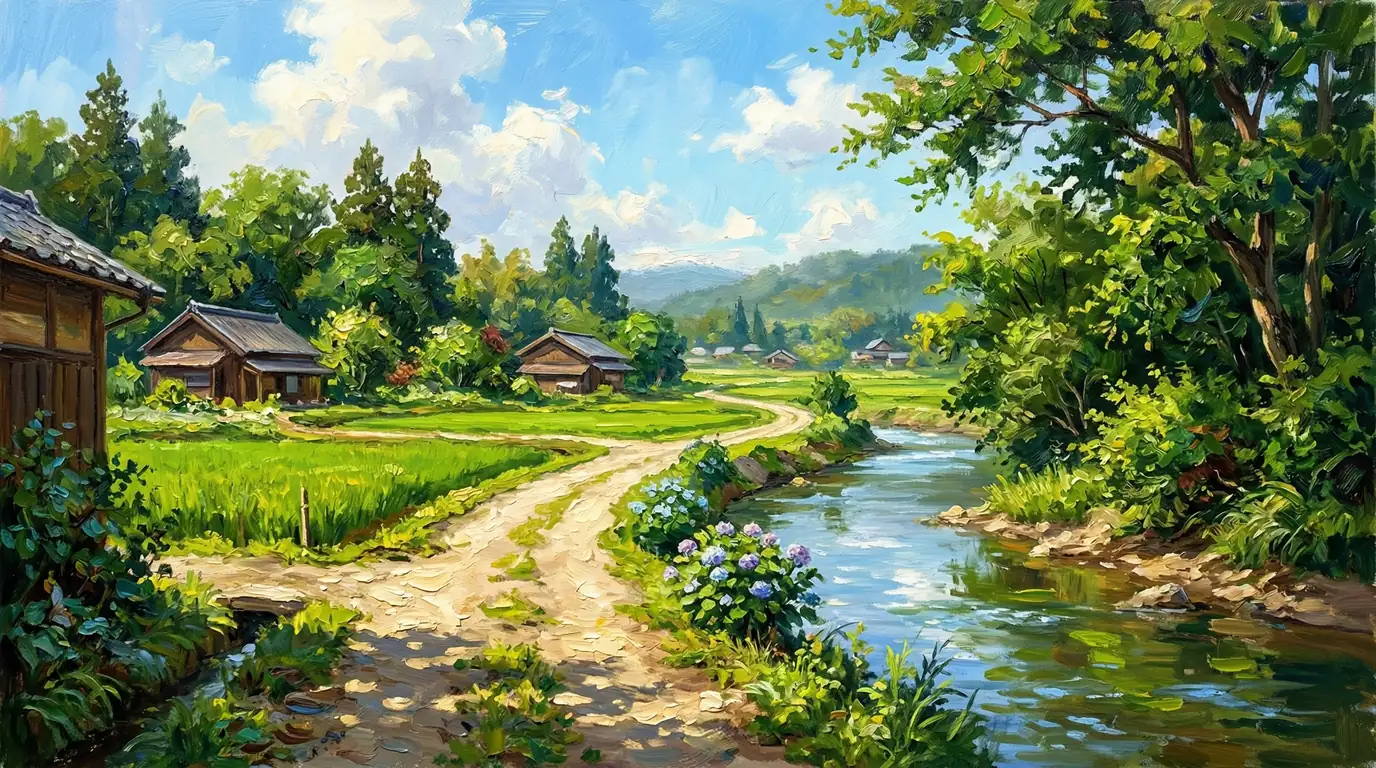 Hydrangea Bloom by the Singing River
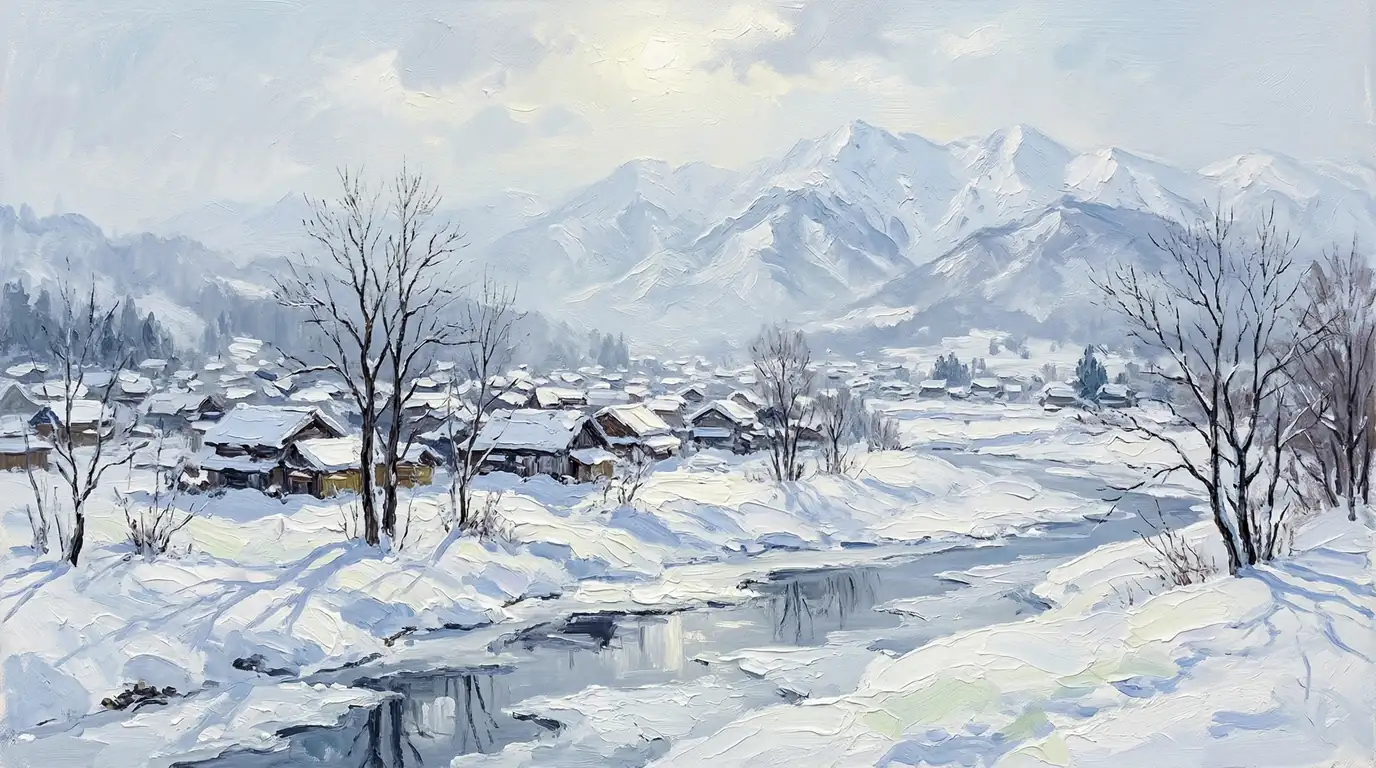 Silent Winter in the Hidden Valley
 Tranquil Reverie by the Reeds
 Whispering Snow in the Heart of Silence
 Reflections of a Serene Sanctuary
 The River's Gentle Song
 Whispers of the Emerald Valley
 Emerald Embrace of the Coastal Haven
 Peaceful Passage Through the Historic Water Town