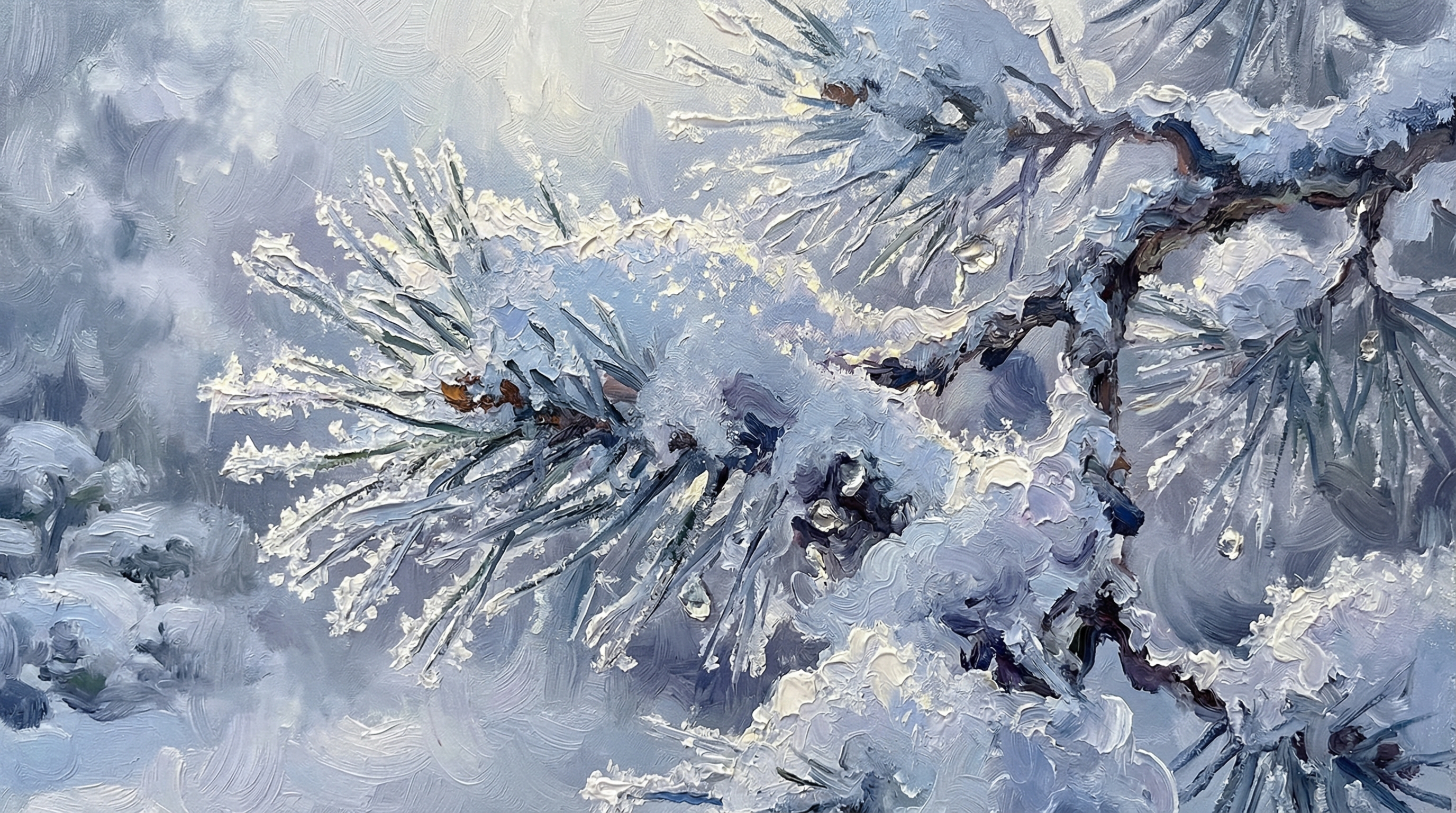
Embrace of the Winter Mantle
Critique
1. Introduction This intimate, close-up landscape painting captures the delicate yet powerful beauty of a snow-covered pine tree. The composition focuses entirely on the textural interplay between the rugged pine needles and the thick, billowy mounds of white snow. Through a masterful use of impasto and a cool, limited color palette, the artist evokes the quiet stillness of a winter morning, inviting the viewer to appreciate the fine details of nature in its state of rest. The work serves as a poetic meditation on the resilience and silent grace of evergreen foliage during a heavy snowfall. 2. Description The canvas is dominated by several densely packed pine branches stretching across the composition. Each branch is heavily laden with thick, white snow, applied with bold, visible brushstrokes that emphasize its weight and volume. Beneath the crystalline layer, the dark, sharp needles of the pine are visible, providing a stark structural contrast to the soft, rounded forms of the snow. The background is a soft, blurred wash of misty blue-greys, suggesting a vast, snow-filled atmosphere beyond the immediate subject, adding to the sense of depth and atmospheric perspective. 3. Analysis The artist utilizes a sophisticated palette centered on various shades of white, cool linden blue-greys, and the deep, grounding tones of the pine bark. Lighting is soft and diffuse, creating subtle shadows and highlights on the varied surfaces of the snow and foliage. The primary technical feature is the extensive use of impasto; the paint for the snow is applied with such thickness that it takes on a three-dimensional quality, making it appear tangible. This textural intensity is particularly effective on the pine boughs, where the snow seems to cling to every needle. 4. Interpretation and Evaluation This work successfully explores the theme of patience and the hidden vitality of winter. The pine tree, a symbol of longevity and strength, stands as a central figure of resilience against the winter elements. Technically, the rendering of the heavy, wet snow on the organic surfaces is exceptional, demonstrating a high level of skill in capturing light and shadow on white surfaces. The composition is focused and well-balanced, effectively using the diagonal lines of the branches to create a sense of movement and dynamic energy within a quiet scene. 5. Conclusion While the initial impression is one of simple seasonal detail, a deeper examination reveals a complex study of light, texture, and the emotional resonance of silence. The painting stands as a significant tribute to the contemplative beauty of the winter garden. It achieves a lasting impact through its harmonious integration of realistic detail and bold textural work, effectively inviting the observer to pause and appreciate the transient yet powerful moments of the natural world in its state of rest and quiet endurance.
Same Subcategory
 A Single Dewdrop Holding the Weeping Bamboo
Similar Artworks
 Frost Kissed Pine Needles
 Stones That Breathe Time
 Sculpture of the Winter Pine
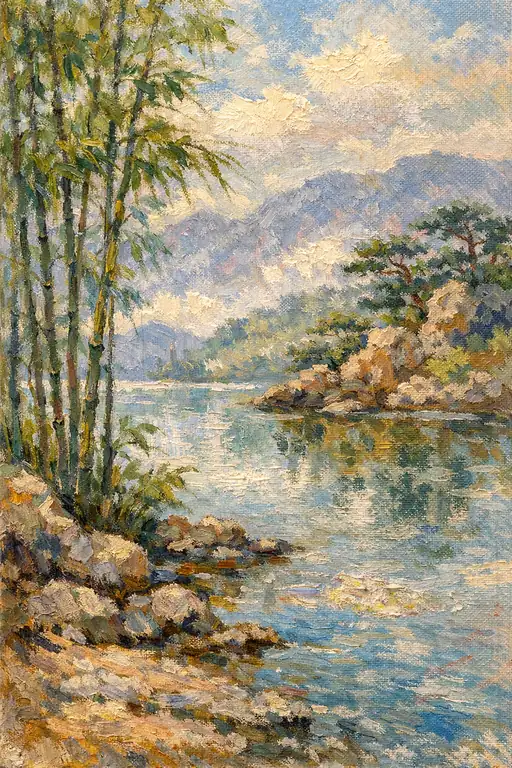 Whispers of the Bamboo Shore
 Echoes in the Heartwood
 The Poetics of Autumn's Falling Drop
 Golden Awakening of the Dew
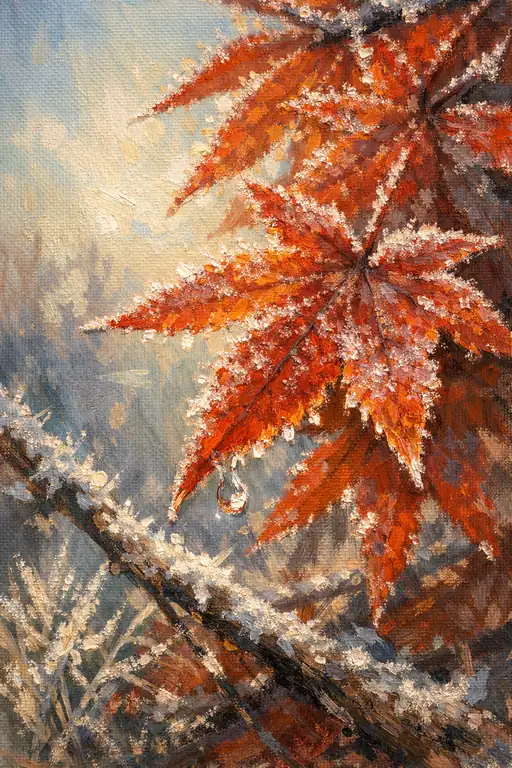 The Frost's Final Embrace
 Winter's Fragile Jewels in the Morning Light
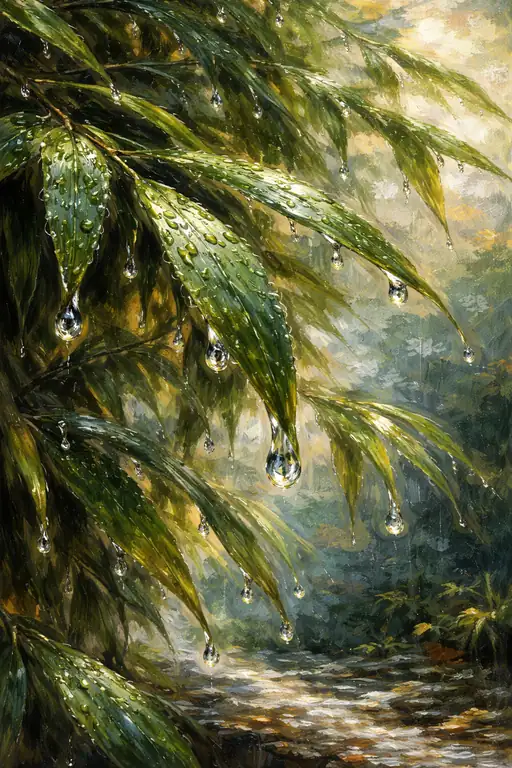 Echoes from the Crimson Horizon