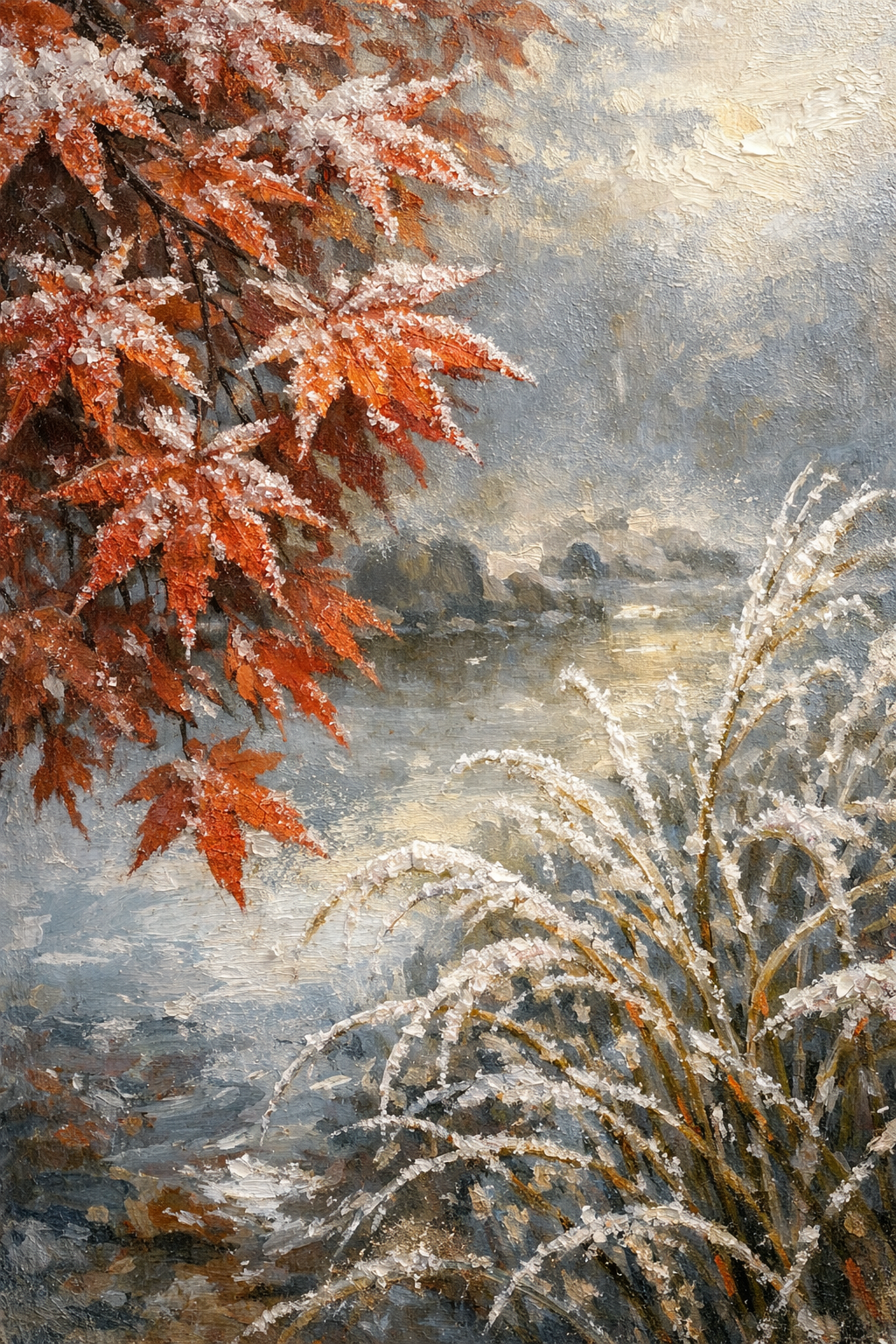
The Silent Embrace of Early Winter
Critique
1. Introduction This painting is a landscape focusing on the boundary between late autumn and early winter. The contrasting arrangement of red maple leaves and white frosted pampas grass lyrically depicts the deepening signs of winter. This work captures the delicate transitions of the Japanese seasons into a serene scene using heavy oil painting techniques. 2. Description In the upper left, maple branches holding red leaves covered in white frost hang down. Diagonally, in the lower right, pampas grass crowned with snow-like frost grows in clusters. In the background, misty water surfaces and distant mountains are drawn in pale colors. Throughout the screen, the texture of frost and snow is expressed with striking brushstrokes, physically recreating the cold, damp air of winter. 3. Analysis Formally, the diagonal composition provides stability, while the central empty space emphasizes spatial expansion. Regarding color, the contrast between the warm colors of the maple and the cold grays and whites of the grass and background visually symbolizes the clash of seasons. The powerful brushwork and impasto highlights give dynamic vitality to the quiet scene by reflecting light. 4. Interpretation and Evaluation This work can be interpreted as focusing on the permanence of beauty and the necessity of change in nature. The maple leaves enduring frost symbolize the final brilliance of life, while the whiteness of the pampas grass suggests compassion. The painter's descriptive power is rich, showing a high achievement based on a unique aesthetic sense that conveys atmospheric conditions and moisture effectively. 5. Conclusion What initially appeared as a lyrical realistic painting of autumn leaves reveals itself as a philosophical work depicting the cycle of nature. It is a highly accomplished masterpiece that captures the sacred beauty dwelling in the gaps between seasons.
Same Subcategory
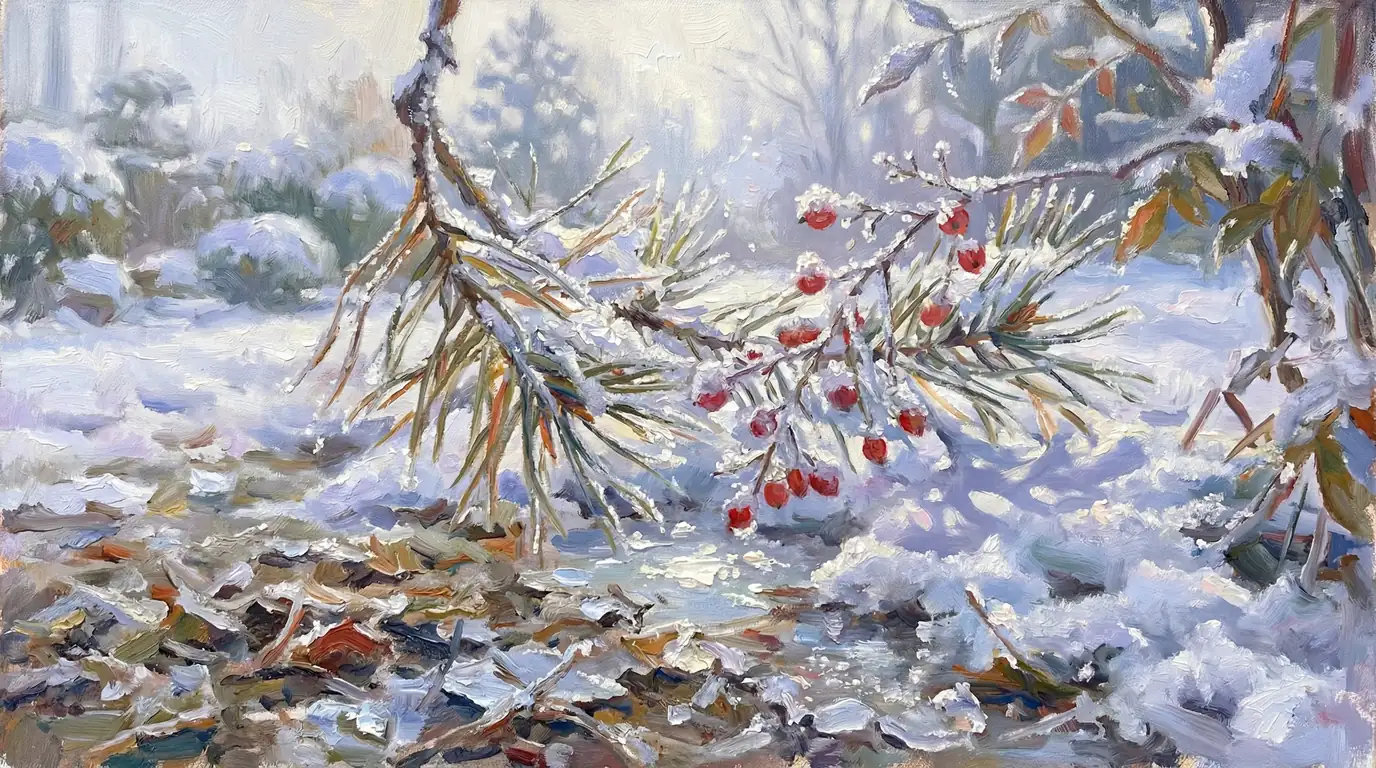 Silent Slumber Under the Frost
Similar Artworks
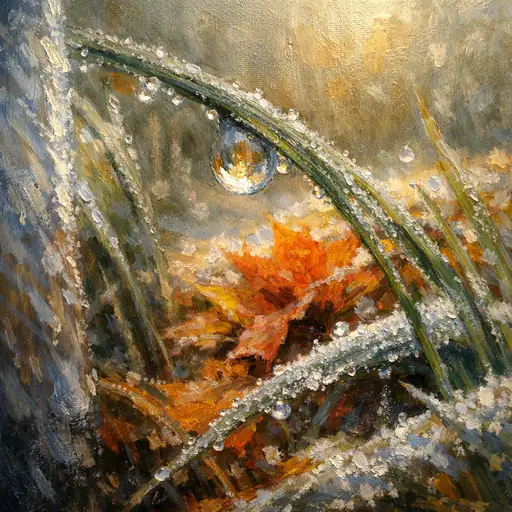 Tears of the Winter Dawn
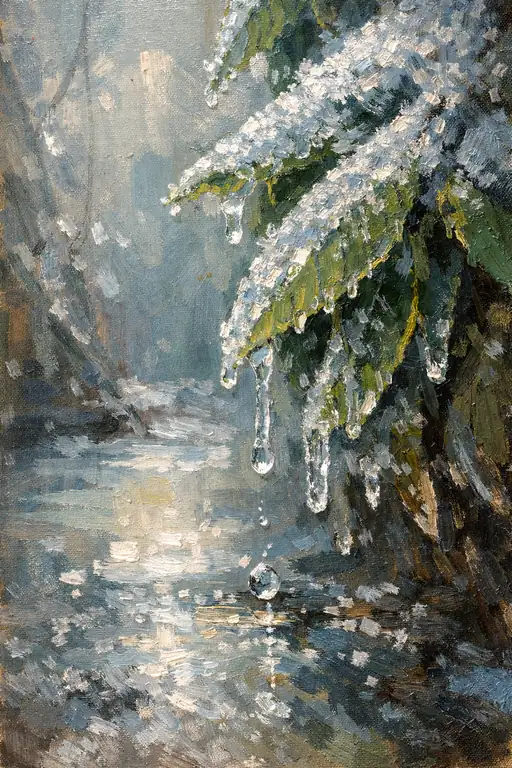 The Winter's Tear Before Spring
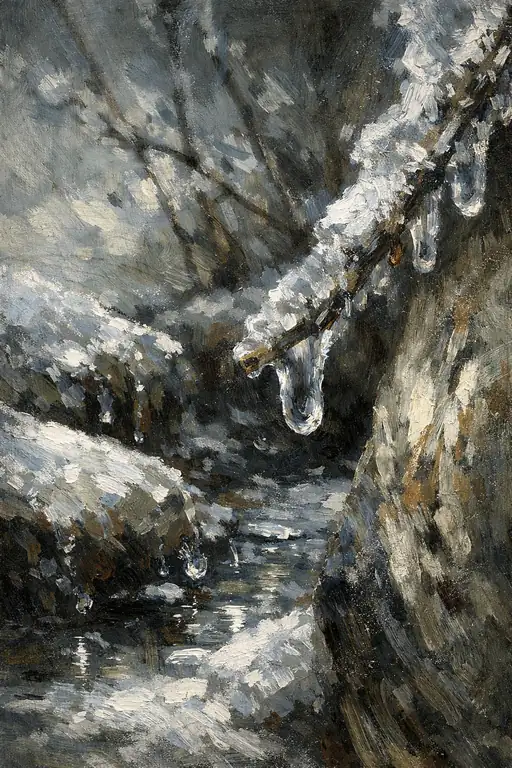 Frozen Silence
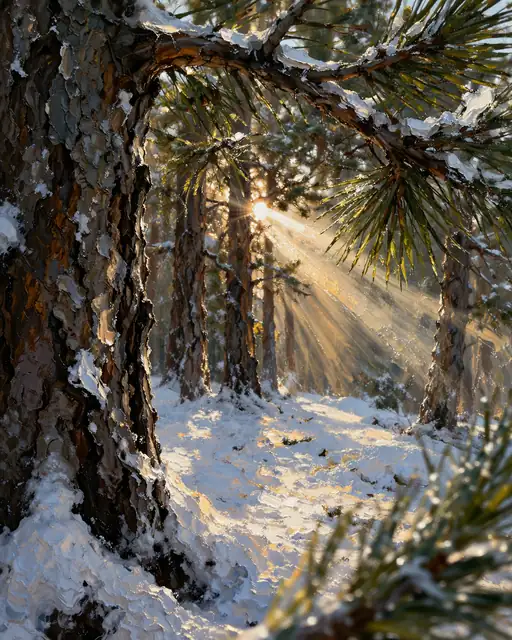 Dawn's Embrace in the Slumbering Woods
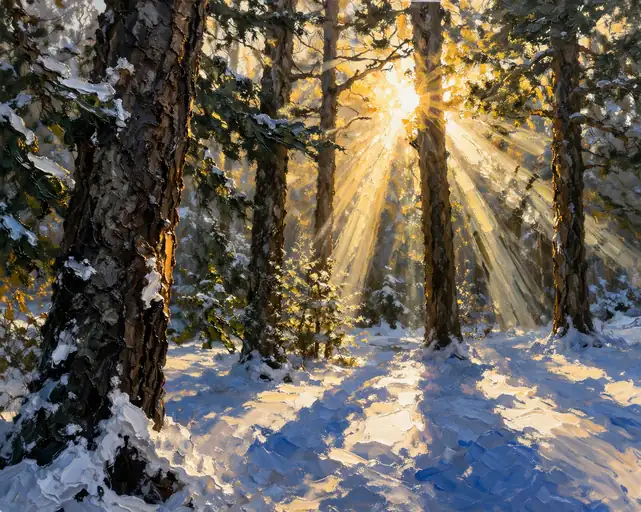 Golden Silence of the Winter Pines
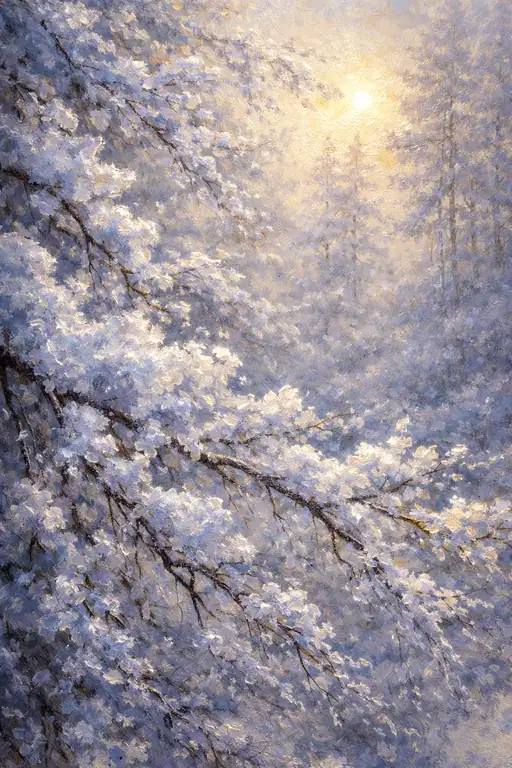 Golden Glow in the Frosty Woods
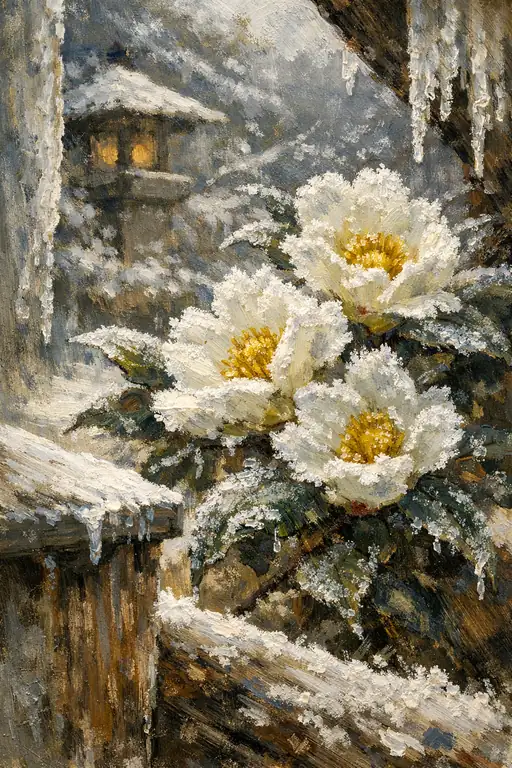 Winter's Soft Embrace
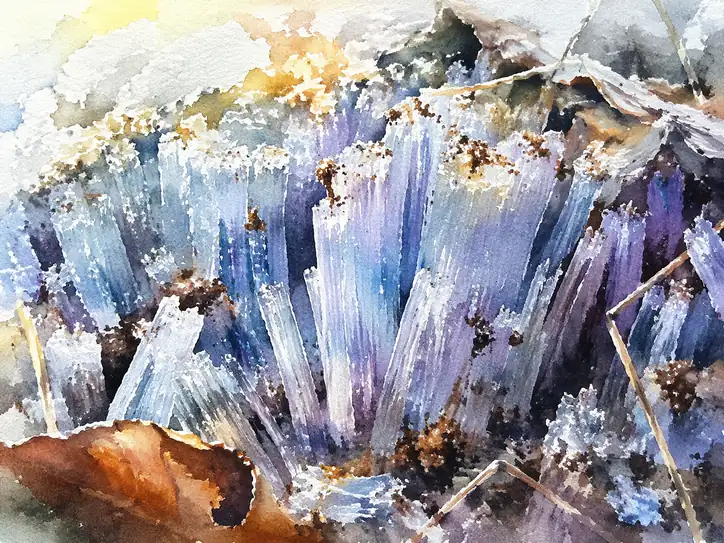 Crystalline Slumber: The Frost's Morning Delicate Crown
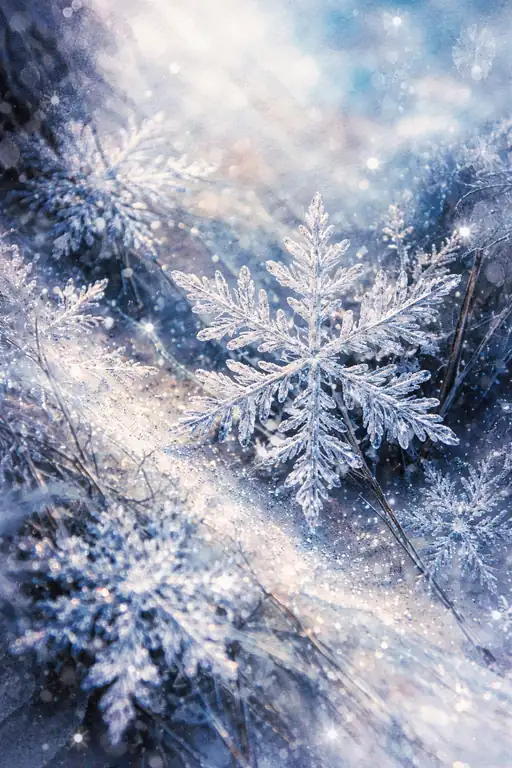 Crystal Snowflakes in Macro
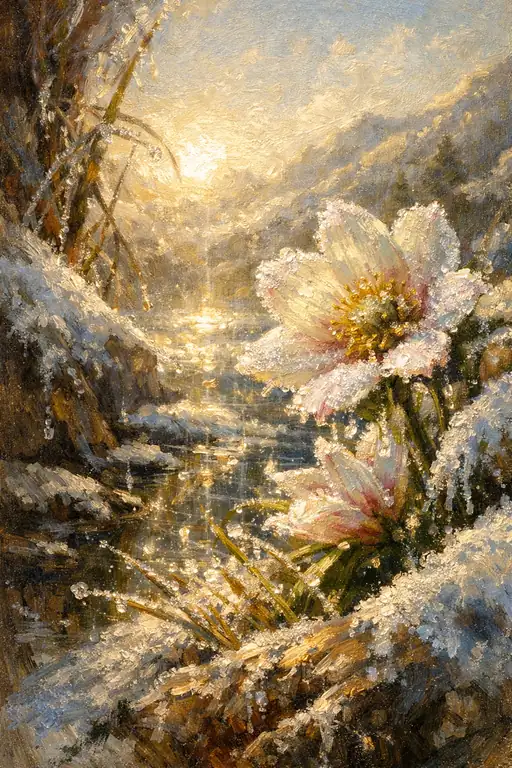 Resilience in the Winter's Embrace