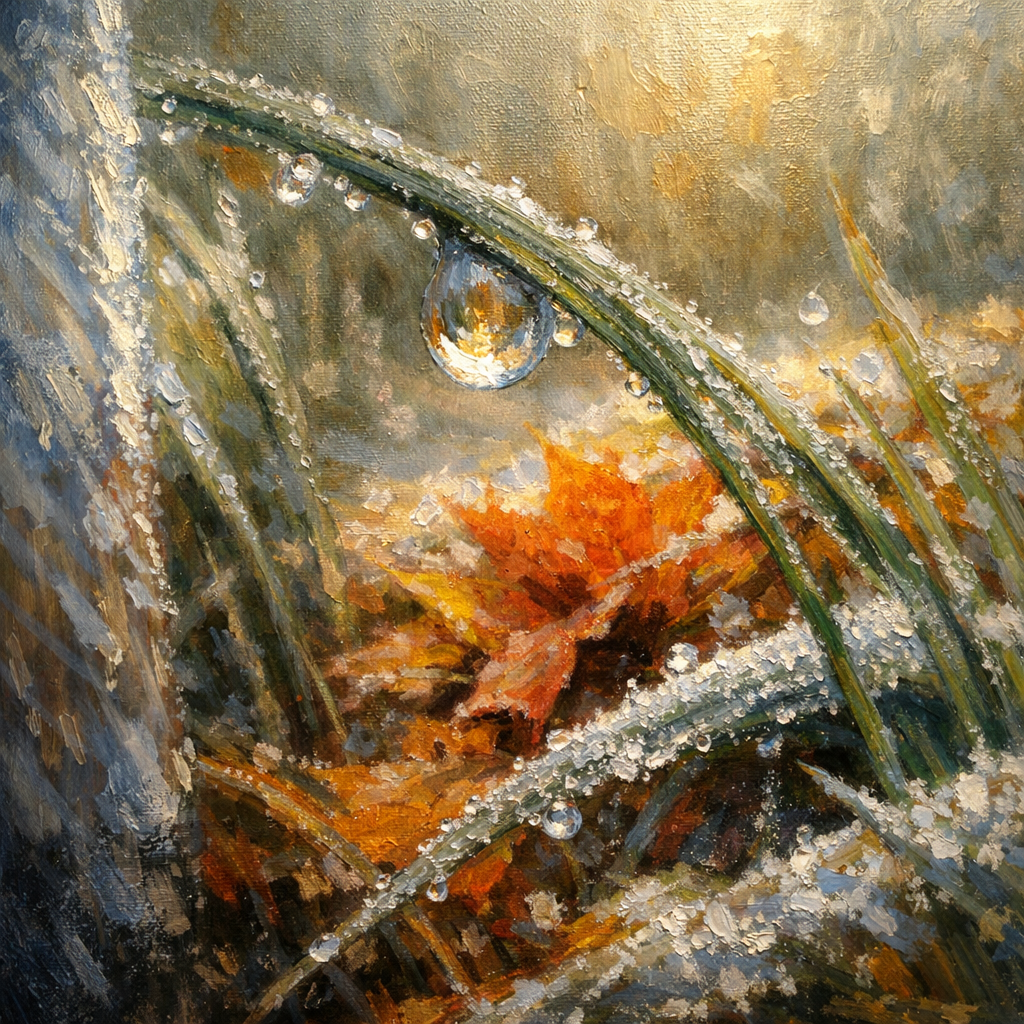
Tears of the Winter Dawn
Critique
1. Introduction This painting is a still life condensing the silence of a winter morning, featuring frosted grass and a water droplet. Through an extremely close perspective, microscopic natural activities are depicted like a grand drama. This work captures a momentary radiance often overlooked in the changing seasons and preserves it eternally on canvas with solid formative power. 2. Description Near the top center, a large water droplet hangs from a frosted blade of grass. Inside the droplet, the surrounding landscape is reflected upside down, glowing gold from sunlight. In the background, a vibrant orange withered leaf is blurred, forming a contrast with the cold white frost. The frost particles on the grass are recreated with thick paint, giving them a realistic, cold and hard texture. 3. Analysis The gently curving line of the grass adds movement and concentrates the gaze on the central droplet. Regarding color, the contrast between cold whites and warm oranges effectively expresses the chilly winter air and sunlight. The skillful use of different brushstrokes emphasizes material reality by contrasting the smooth droplet with the rough texture of the frost particles. 4. Interpretation and Evaluation This work focuses on the contrast between fragility and vitality. The water droplet, holding light despite the freezing cold, symbolizes the pure beauty of the world. The painter's descriptive power is extremely high, with expressions reflecting deep observation of light refraction. The original composition and contrast of textures are highly praised as a modern still life of great depth. 5. Conclusion What initially appeared as a mere record of winter details reveals itself as a spiritual work that evokes a sense of cosmic expansion. It is a highly accomplished masterpiece that draws profound beauty from a minute fragment of nature.
Same Subcategory
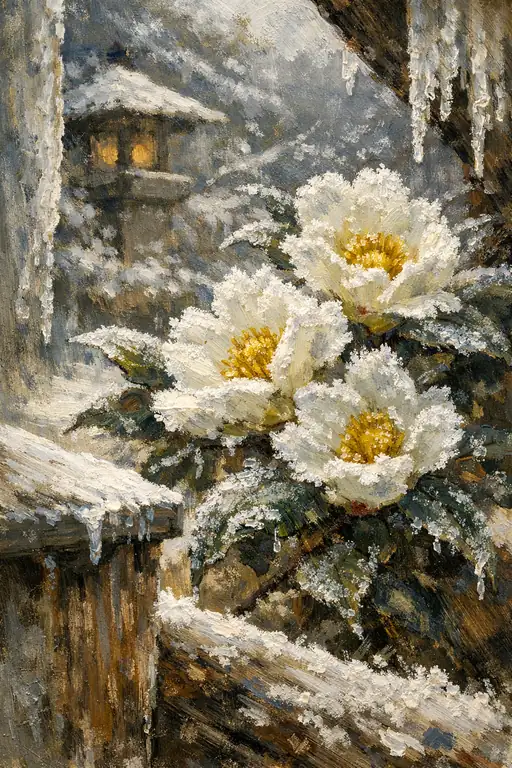 Winter's Soft Embrace
Similar Artworks
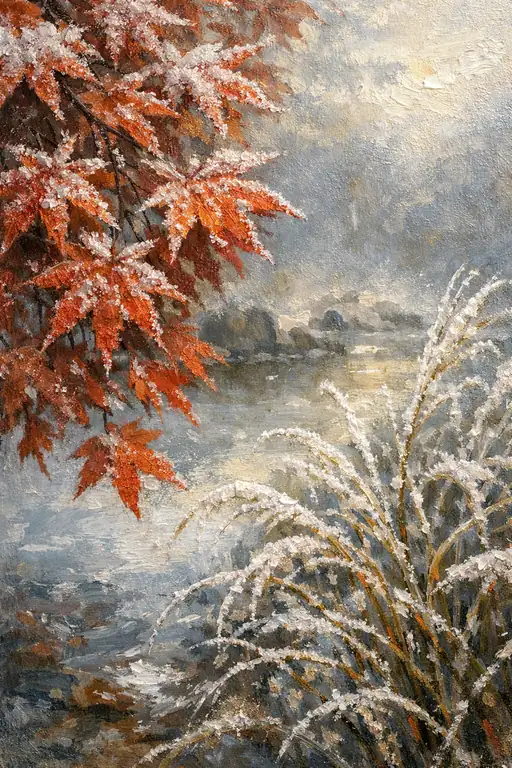 The Silent Embrace of Early Winter
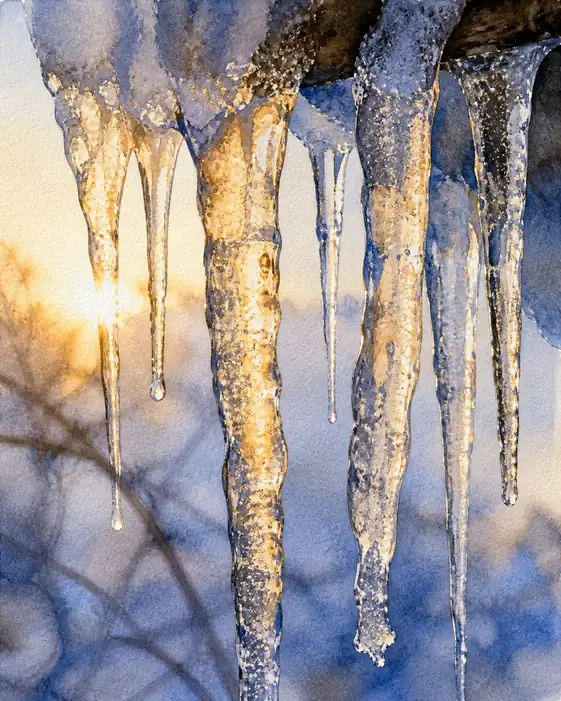 The Golden Threshold: Where Ice Meets Fire
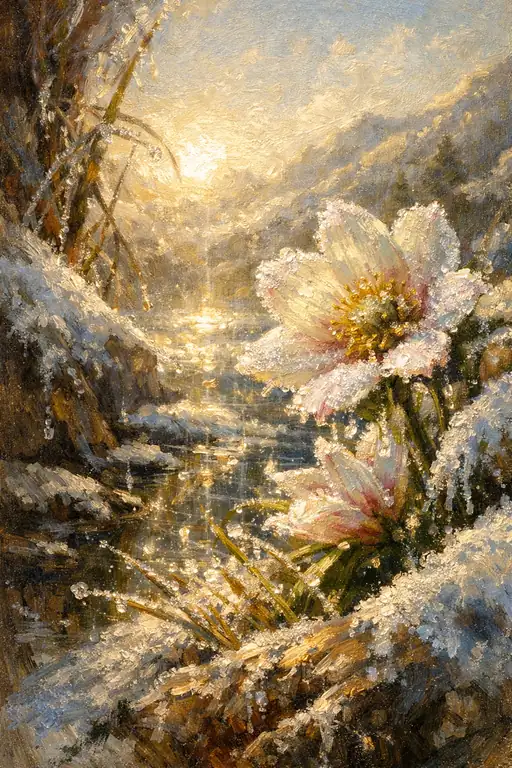 Resilience in the Winter's Embrace
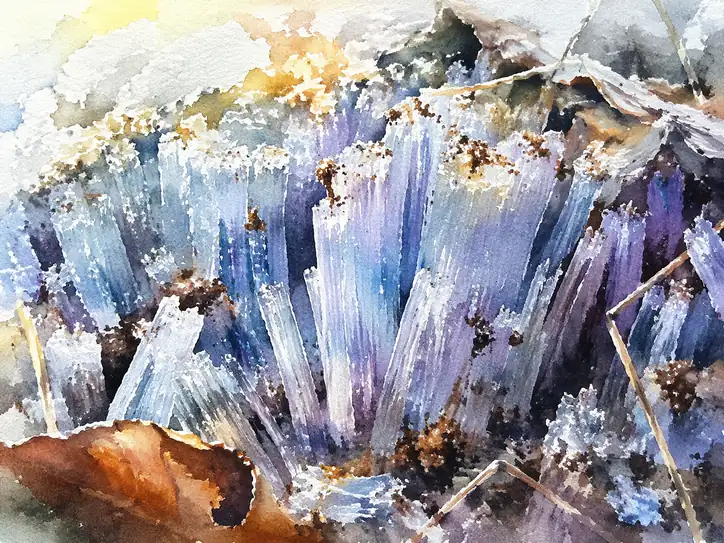 Crystalline Slumber: The Frost's Morning Delicate Crown
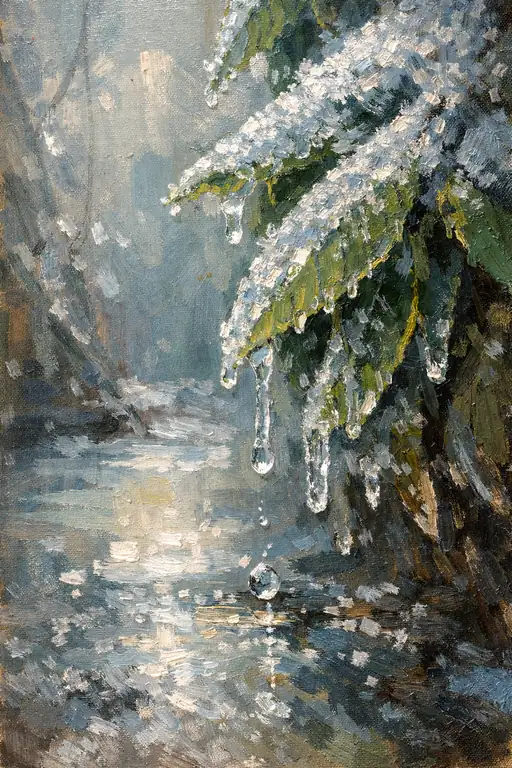 The Winter's Tear Before Spring
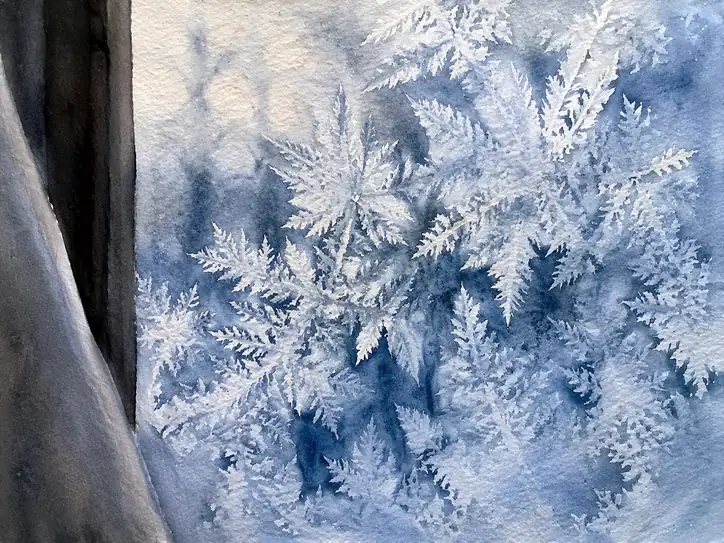 Silent Breath of Frost
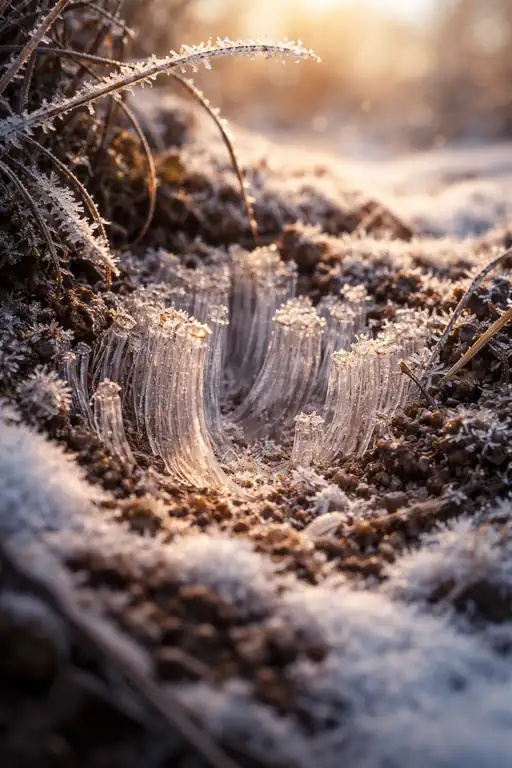 Fragile Spires of the Winter Dawn
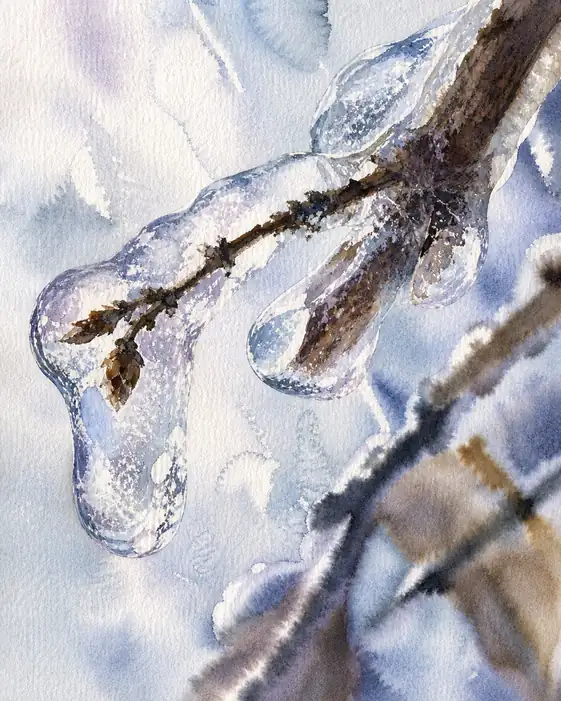 Waiting for Spring in a Crystal Cloak
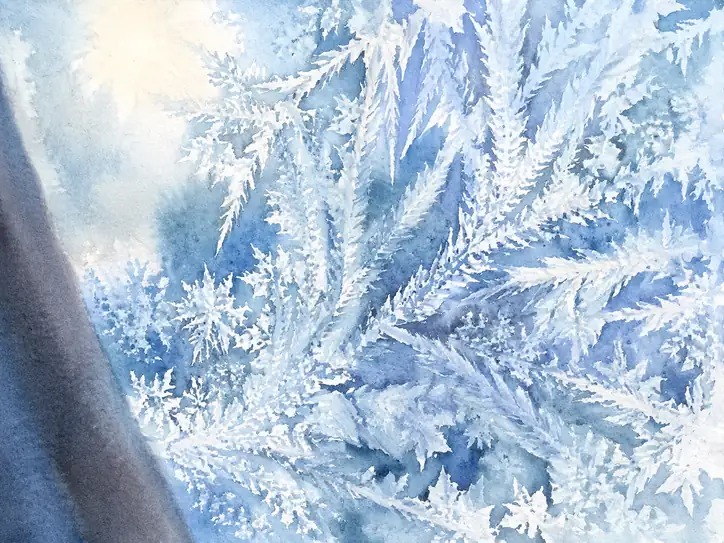 Frozen Whispers of the Winter Pane
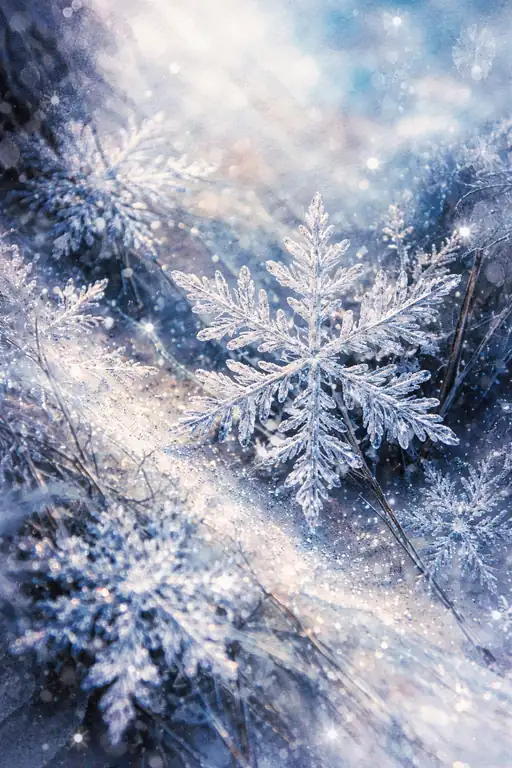 Crystal Snowflakes in Macro