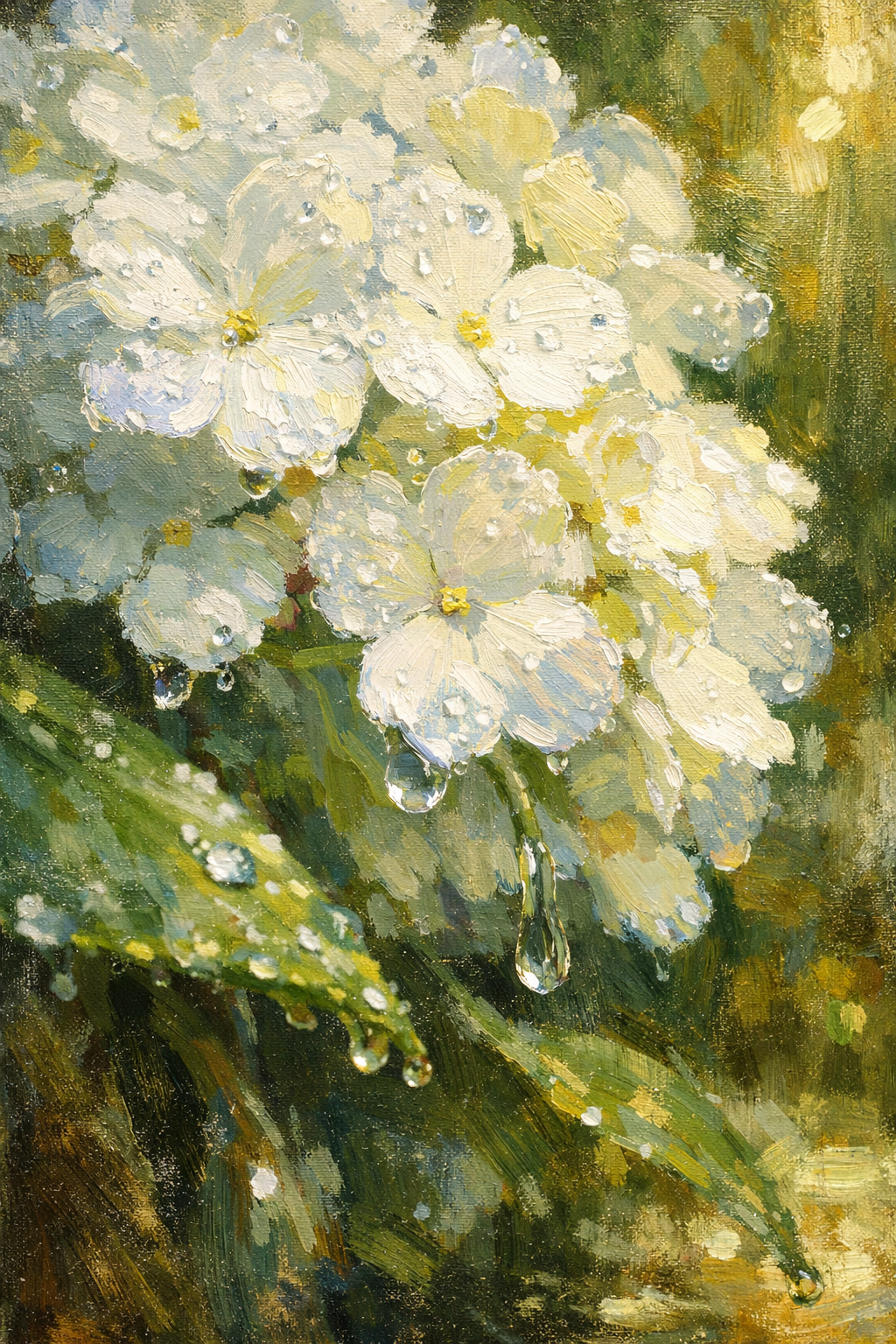
Tears of the Hydrangea
Critique
1. Introduction This oil painting presents a delicate and atmospheric close-up of white hydrangea flowers laden with fresh water droplets. The composition captures a moment of natural purity, utilizing a soft light that seems to emanate from within the cluster of blossoms. The artist employs a painterly approach that combines broad, textured brushstrokes with minute details to convey the essence of a damp, garden environment. This work invites the viewer to appreciate the fleeting beauty of nature through its focused and intimate perspective. 2. Description The canvas is dominated by a dense arrangement of white flowers with subtle yellow centers, filling the upper and central portions of the frame. Large, verdant green leaves occupy the lower left, providing a stark color contrast to the pale petals. Numerous transparent water droplets are scattered across the surfaces of the flowers and leaves, some hanging precariously and reflecting the light. The background is a blurred tapestry of greens and earthy tones, suggesting a lush, foliage-filled setting beyond the immediate subject. 3. Analysis The artist uses a limited but effective color palette of whites, creams, and various shades of green, which creates a harmonious and refreshing visual effect. Light is diffused across the petals, emphasizing their delicate overlapping layers and soft textures. The water droplets are rendered with remarkable precision, using sharp highlights and shadows to create a convincing illusion of three-dimensionality. The brushwork alternates between thick impasto on the petals and smoother, more fluid strokes for the falling water, creating a dynamic sense of movement. 4. Interpretation and Evaluation This work can be interpreted as a study of the interplay between light, moisture, and botanical form. The emphasis on the water droplets suggests a renewal of life and the transient quality of a morning dew or a recent rainfall. Technically, the artist demonstrates a high level of skill in capturing the reflective properties of liquid against the matte surface of the petals. The composition is well-balanced, with the diagonal line of the leaf in the foreground providing a strong structural element that leads the eye toward the central blossoms. 5. Conclusion A thorough analysis of this painting reveals a deep sensitivity to the subtle nuances of light and shadow in a natural setting. The initial focus on the white blossoms expands into an appreciation for the meticulously rendered details of the water droplets. This piece successfully combines a bold, Impressionistic technique with a refined attention to detail, resulting in a serene and technically accomplished botanical study.
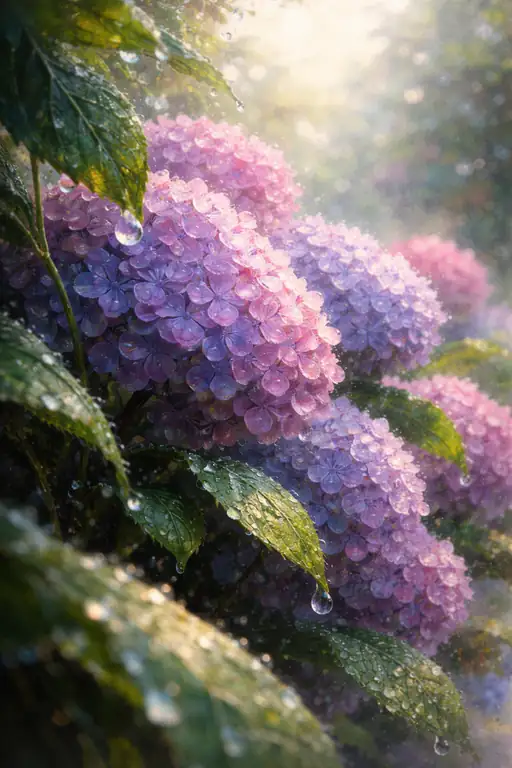 Prisms of the Gentle Storm
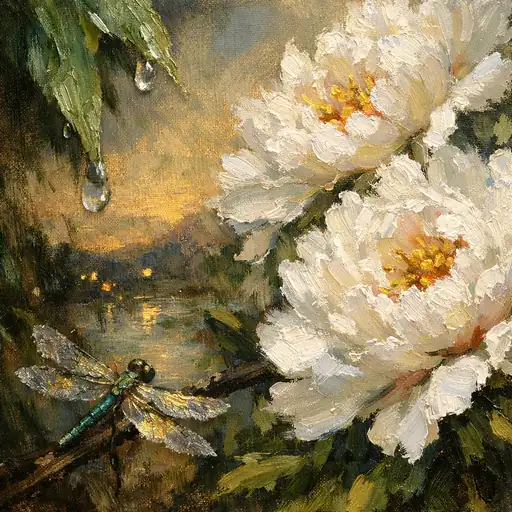 Twilight's Final Kiss
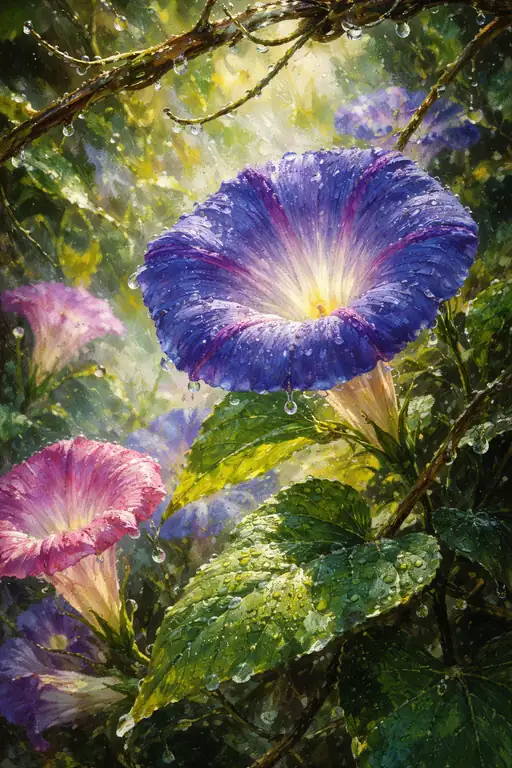 Morning Glories Weeping Dew
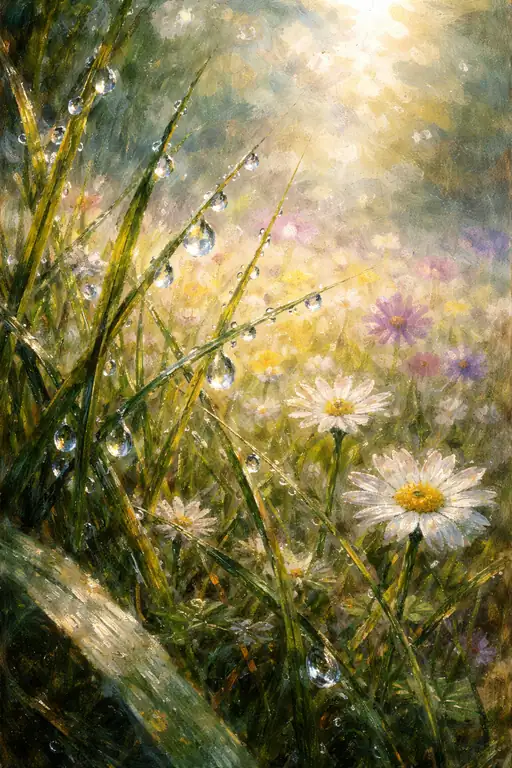 Tears of the Morning Dew
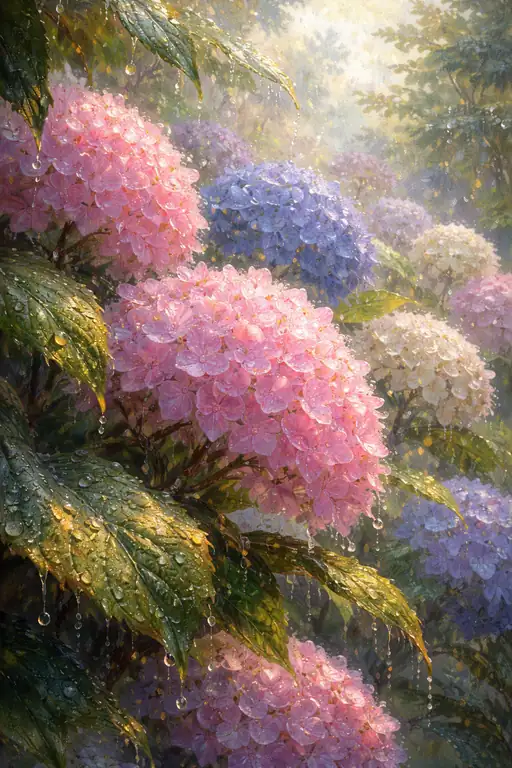 Tears of the Hydrangea: Petals Weeping in the Spring Rain
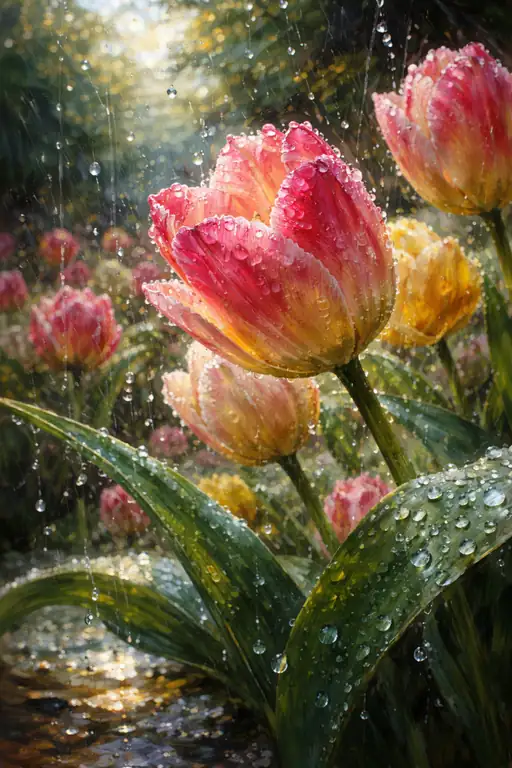 Tears of Spring on Petals
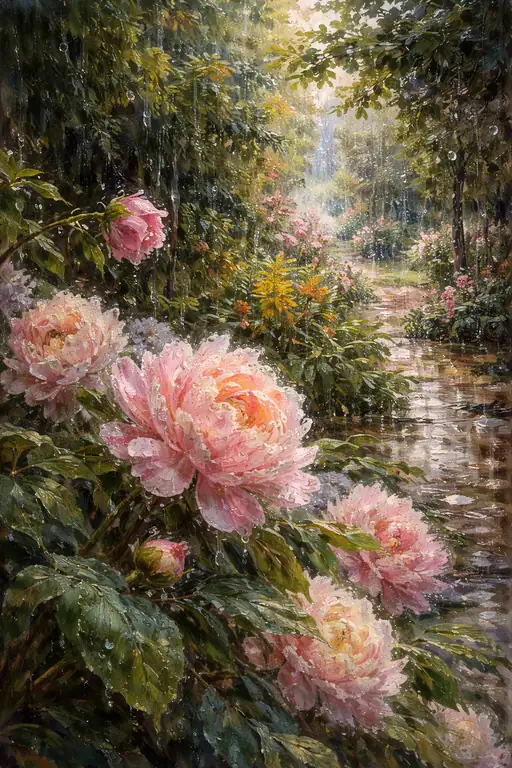 Tears of the Garden in Gentle Rain
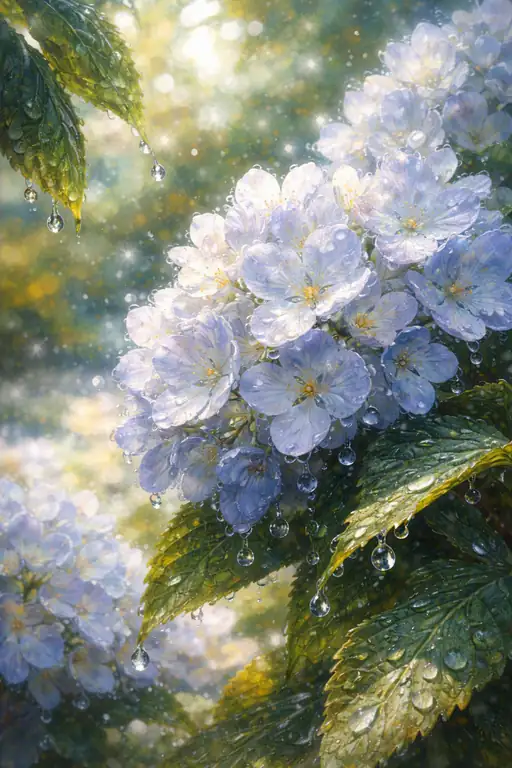 Breath of the Summer Rain
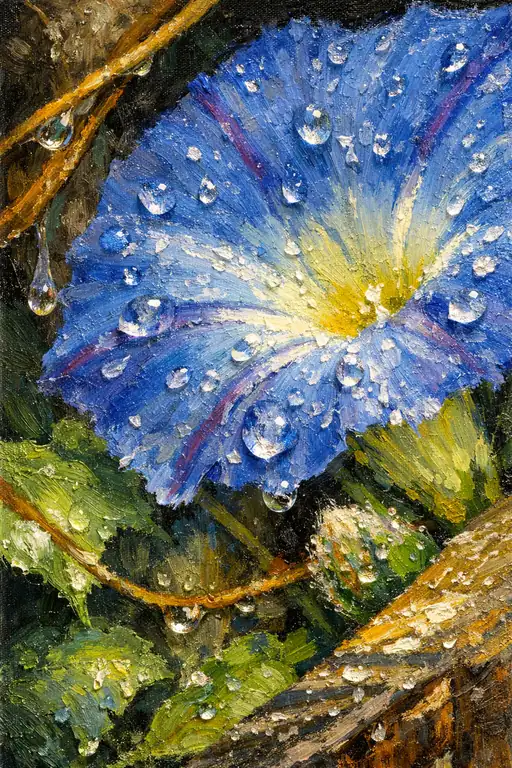 Azure Morning's Crystal Tears
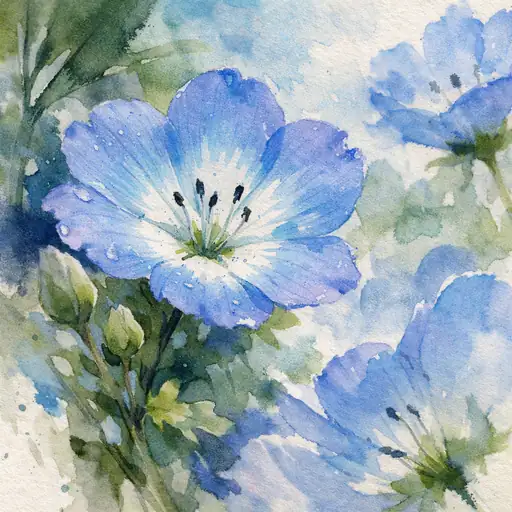 A Sea of Azure Dreams
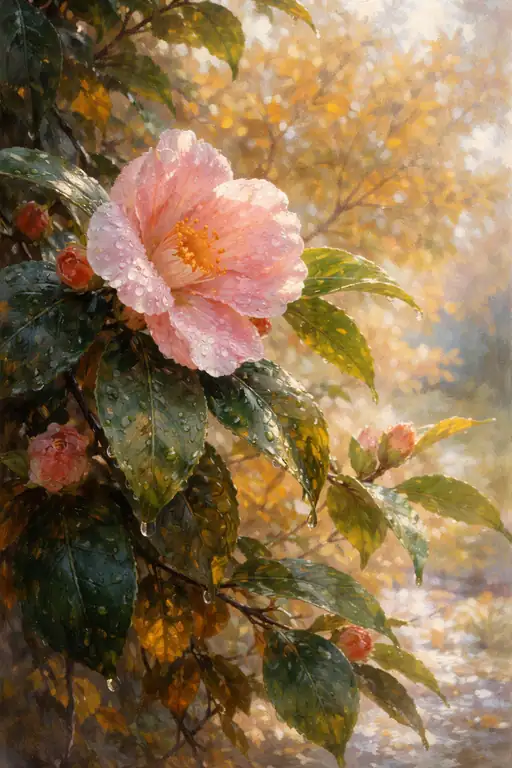 Radiance After the Rain