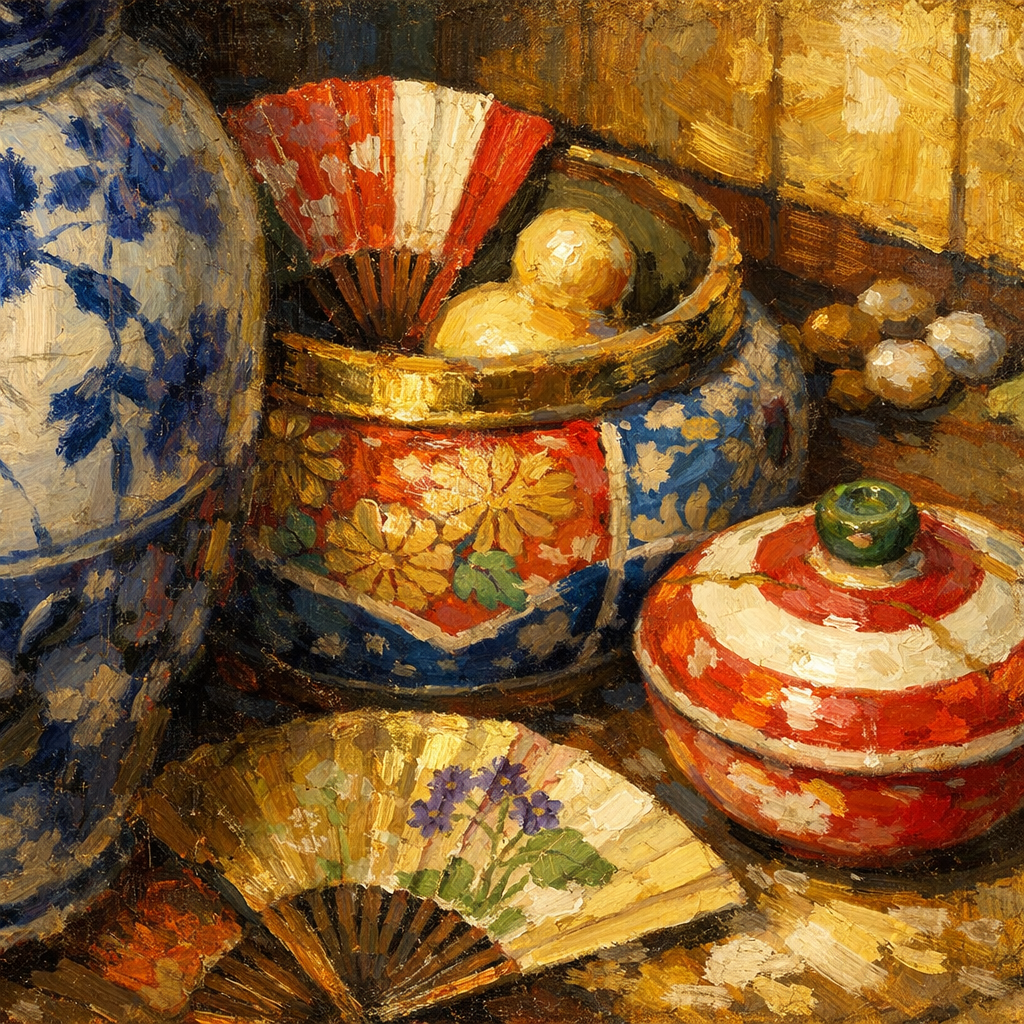
Whispers of Antiquity
Critique
1. Introduction This oil painting presents a dense and vibrant still life arrangement of traditional Japanese decorative objects. The composition focuses on a collection of ceramic vessels and folding fans, captured with thick, expressive brushstrokes that suggest an Impressionistic influence. The interplay between the elaborate patterns of the artifacts and the intense, warm lighting creates a rich visual experience that invites close inspection of the various textures. 2. Description The canvas is populated by several prominent objects, including a large blue and white porcelain vase on the left side. Beside it stands a wide, ornate bowl decorated with floral motifs in red, gold, and blue, containing a partially opened red fan and a golden gourd. In the lower right, a smaller, striped ceramic container with a green knob sits firmly, while a gold-leaf fan with delicate purple blossoms lies in the foreground. The background consists of textured vertical panels that glow with a golden hue, reflecting the dominant light source. 3. Analysis The artist employs a warm color palette dominated by golds, reds, and deep blues, which provides a sense of material opulence. Light originates from the upper right, casting soft shadows that define the rounded volumes of the ceramics and the delicate folds of the fans. The brushwork is highly tactile, with visible impasto that adds physical depth to the golden surfaces and highlights. This textured approach balances the intricate ornamental details of the pottery, unifying the diverse objects through a consistent painterly rhythm. 4. Interpretation and Evaluation The work serves as a celebration of cultural heritage and the aesthetic beauty of everyday ornamental items. By choosing a close-up perspective, the artist emphasizes the formal qualities of the objects over their functional purposes, elevating them to subjects of contemplative study. The technical execution is remarkable for its ability to convey both the solidity of the glazed clay and the fragility of the paper fans. The composition successfully guides the viewer's eye across the decorated surfaces, creating a harmonious balance between the varied shapes and patterns. 5. Conclusion A close examination of this still life reveals a sophisticated understanding of light and material presence. The initial impression of a crowded arrangement evolves into an appreciation for the meticulous way the artist has captured the reflective qualities of each surface. This painting demonstrates an excellent command of texture and color, resulting in a compelling tribute to traditional craftsmanship.
Same Subcategory
Similar Artworks
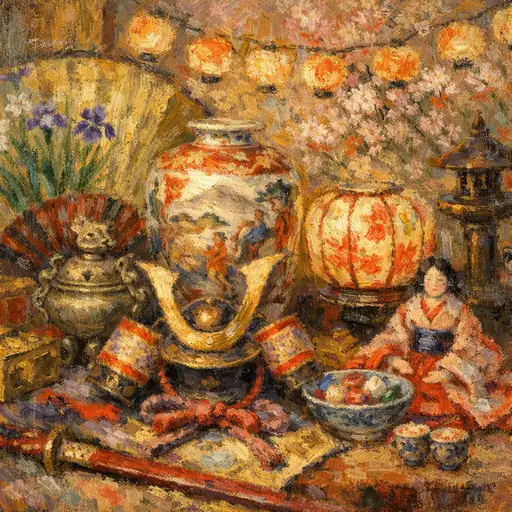 Memories in the Lantern Light
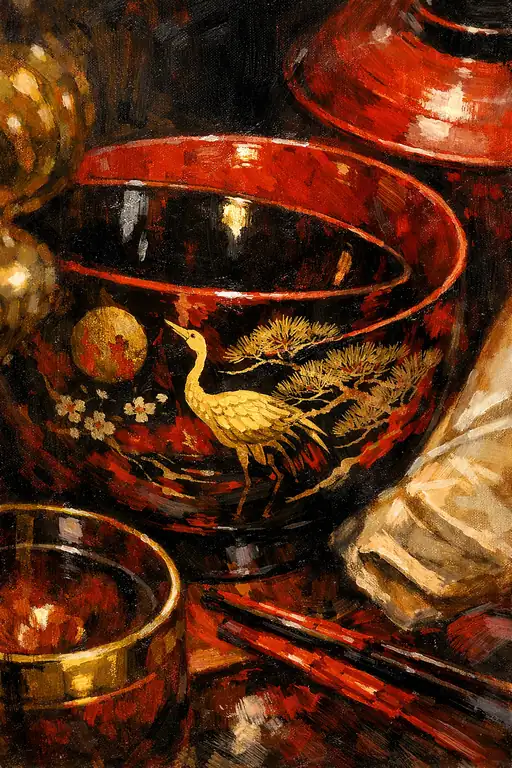 Golden Grace of the Crane's Flight
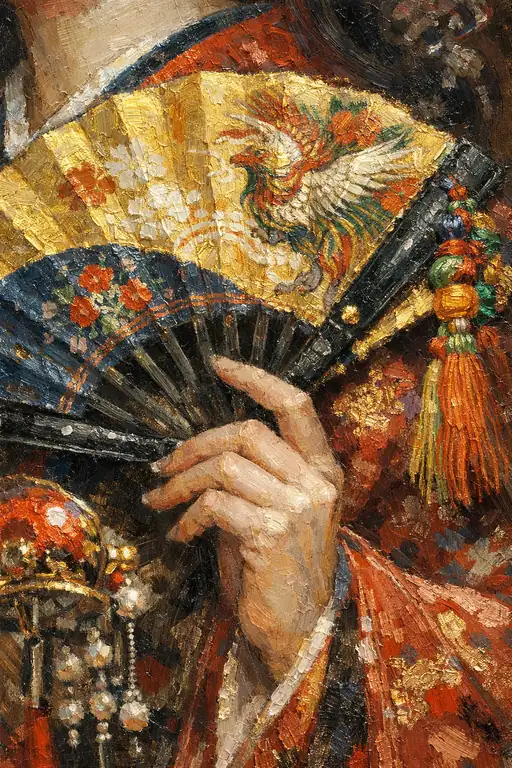 Dance of the Crimson Phoenix
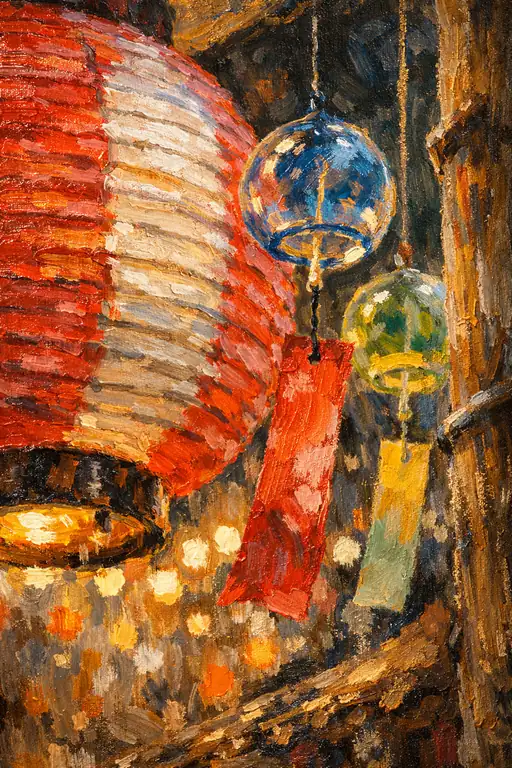 Whispers of the Golden Sun
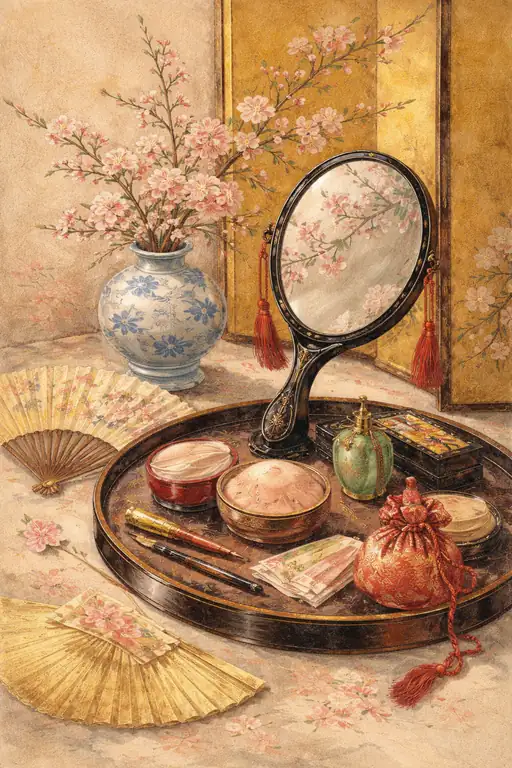 Spring's Eternal Reflection
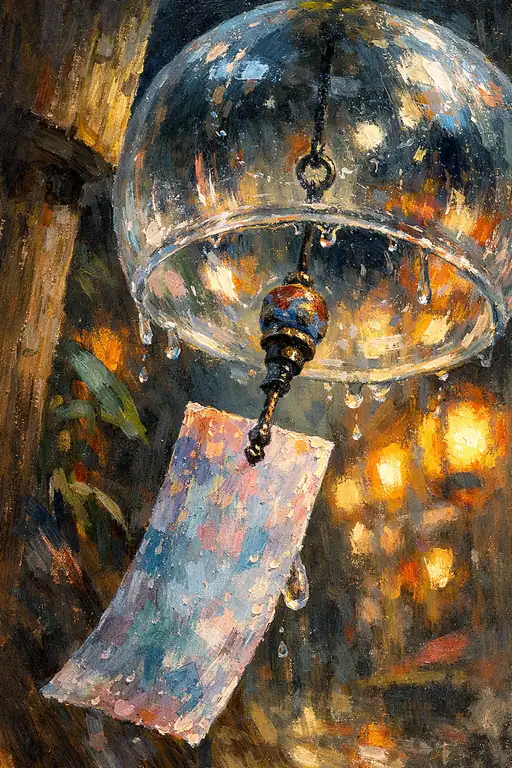 Raindrop on a Traditional Glass Wind Chime
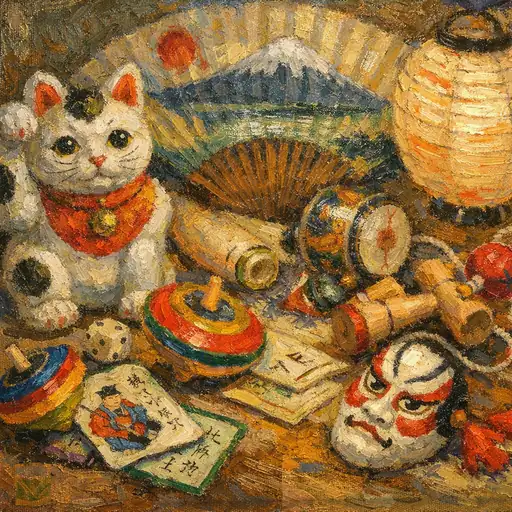 Echoes of Playtime Past
 Warm Glowing Alley Paper Lantern
 The Beauty of Becoming Whole Again
 Dancing Ripples in the Sunlit Garden: A Koi's Peaceful Journey