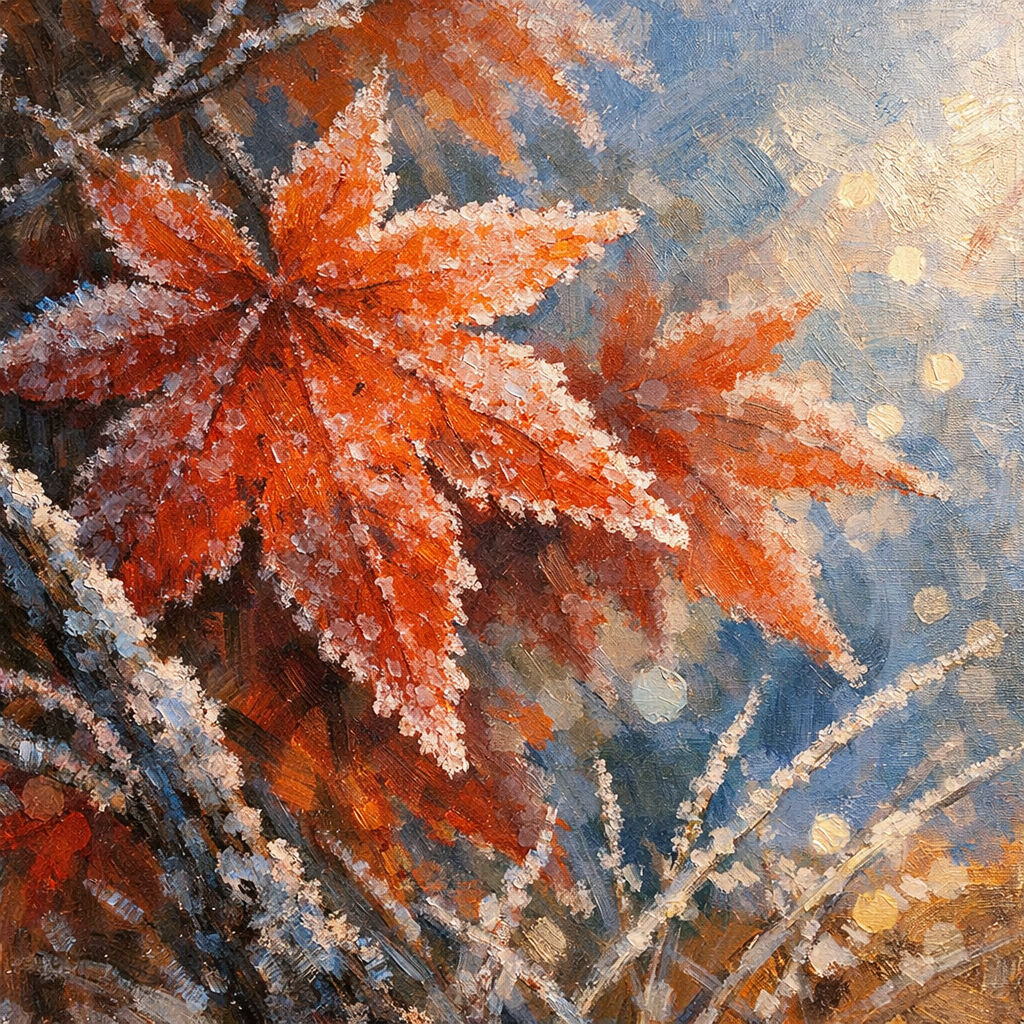
Frozen Embers of the Autumn Sun
Critique
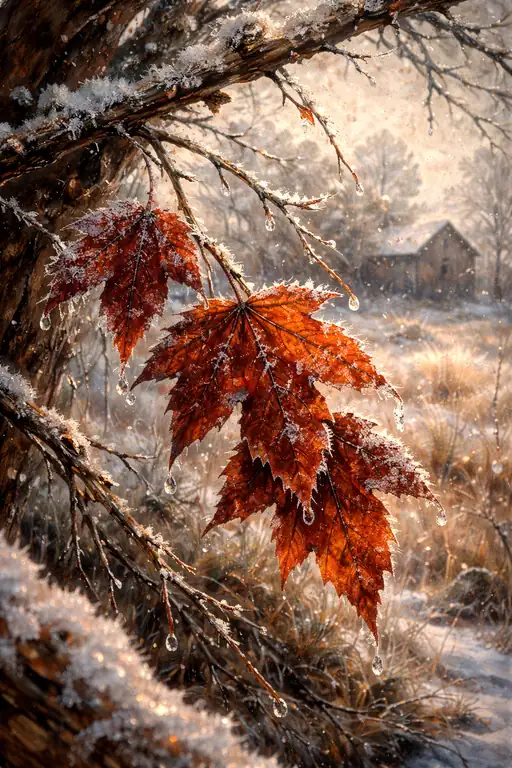
1. Introduction This oil painting masterfully captures a symbolic moment of seasonal transition from late autumn to early winter. Focusing on a close-up of frosted maple leaves, the composition presents the delicate yet powerful beauty of natural forms. From an educational standpoint, the work is an excellent example of how contrasting color temperatures and tactile textures can stimulate the viewer's sensory imagination. This critique will analyze the formal qualities of the piece, emphasizing the rendering of the frost and the atmospheric light. 2. Description The central focus consists of vibrant orange maple leaves layered together, their edges and surfaces covered with dense, white ice crystals. The slender twigs supporting the leaves are also frozen white, signaling the arrival of a cold winter morning. The background features a soft blend of blue and golden light, with bokeh effects suggesting sunlight filtering through a forest. Bold, thick brushstrokes distinguish the hard texture of the frozen leaves from the ephemeral quality of the surrounding air. 3. Analysis A prominent formal characteristic is the vivid contrast between warm and cool tones. The fiery reds of the autumn leaves and the cold blues of the frost and background enhance each other, creating a pleasant visual tension. Compositionally, the sharp diagonal lines of the branches introduce a dynamic rhythm, evoking a sense of life within the stillness of the landscape. The impasto technique used for the frost goes beyond visual whiteness, recreating the physical density and complex reflections of ice crystals. 4. Interpretation and Evaluation The work successfully portrays the intersection of life and death within the natural cycle. The encroachment of frost upon the autumn leaves serves as a reminder of the irreversible flow of time, while the background light hints at the hope of a new season. The balance between bold brushwork and meticulous detail is highly sophisticated, demonstrating a deep engagement with traditional landscape painting alongside a modern focus on material texture and emotional resonance. 5. Conclusion In conclusion, this piece is a remarkable synthesis of texture and color that expresses the quiet beauty of seasonal change. While the initial attraction lies in the brilliant autumn hues, further contemplation draws the viewer into the intricate details of the frost and the spatial depth of the background. Rooted in profound respect for nature and keen observation, the work invites us to cherish the transience of the seasons, leaving a lasting impression of the vitality of art.
Same Subcategory
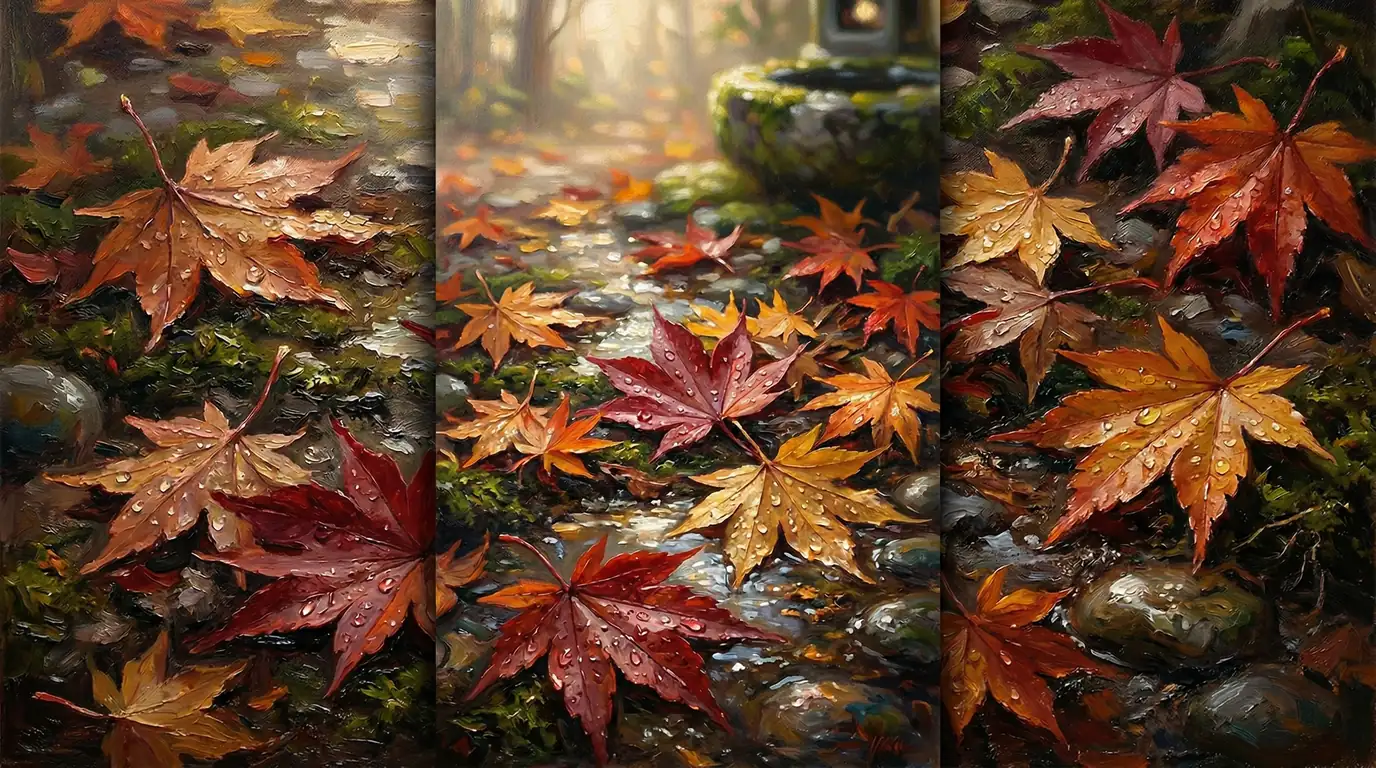 Crimson Tears of the Passing Year
Similar Artworks
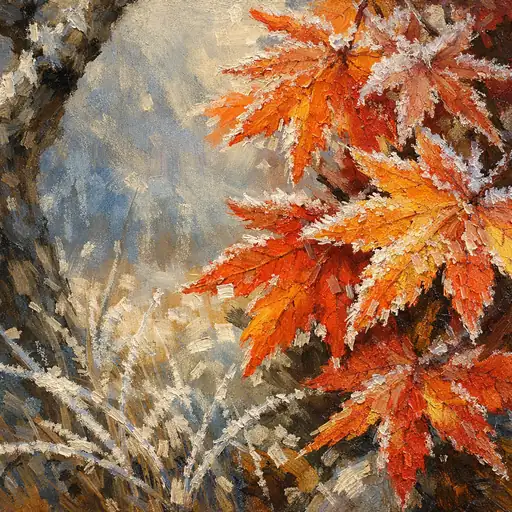 Winter's Embrace on Crimson Fire
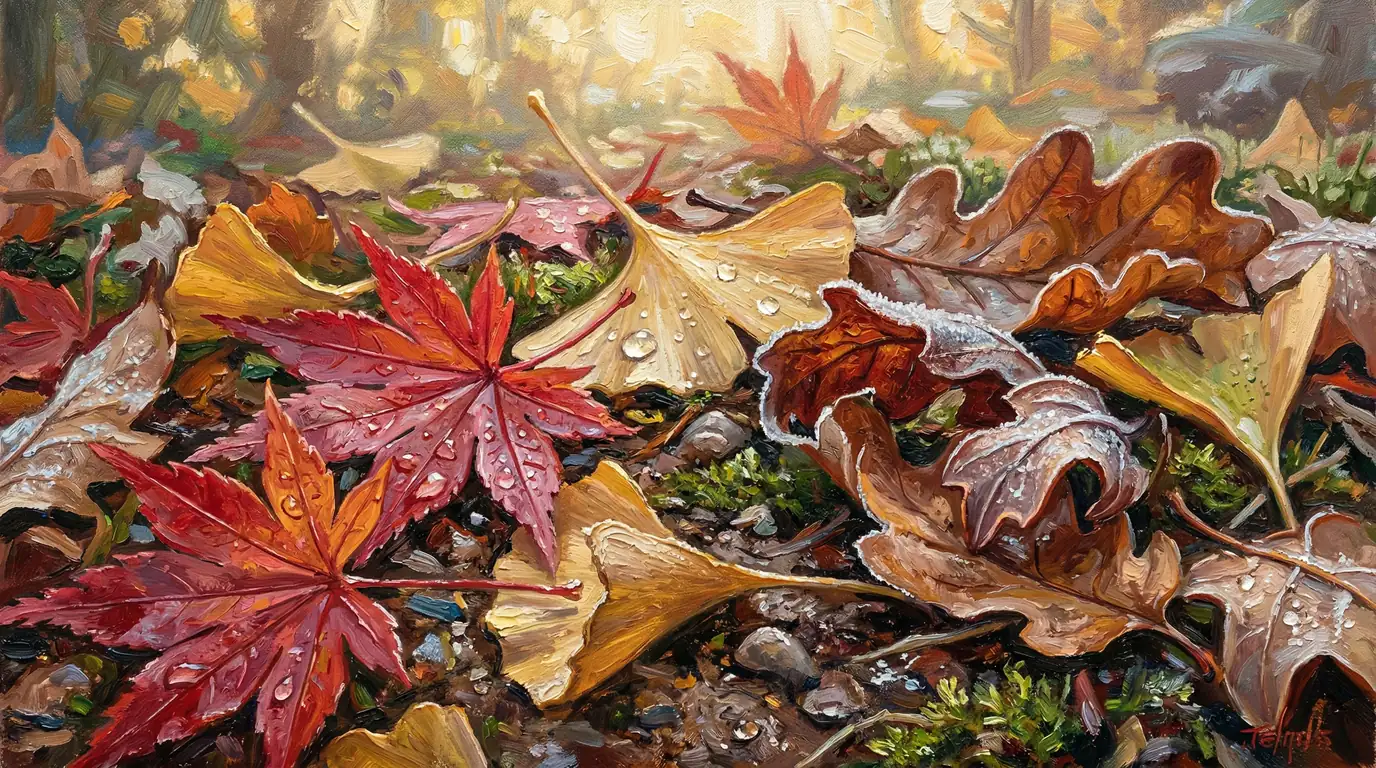 Fading Beauty of the Forest Floor
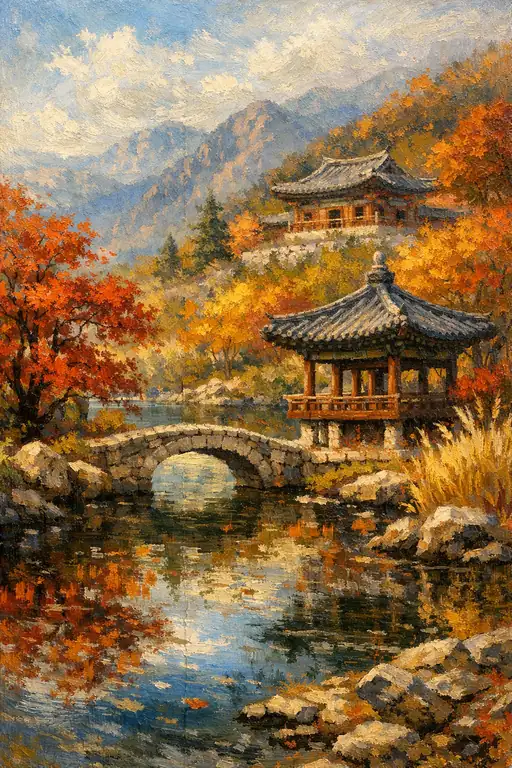 Autumn Flame Over the Bridge
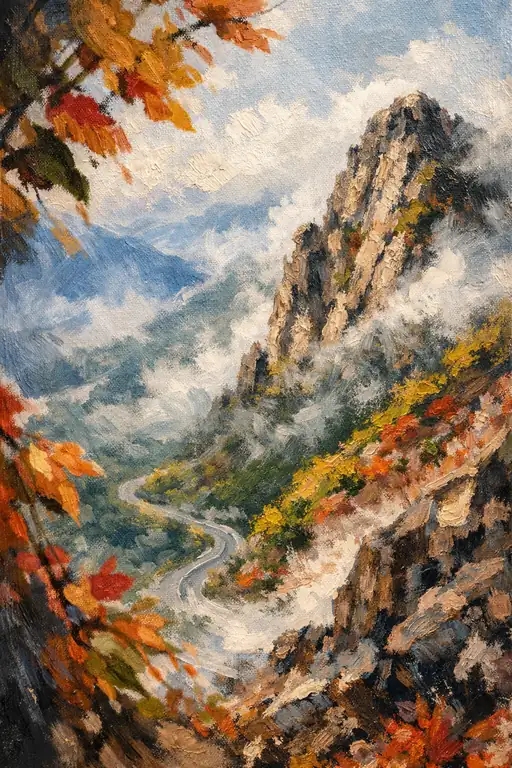 The Golden Serpent: A Journey Through Misty Heights
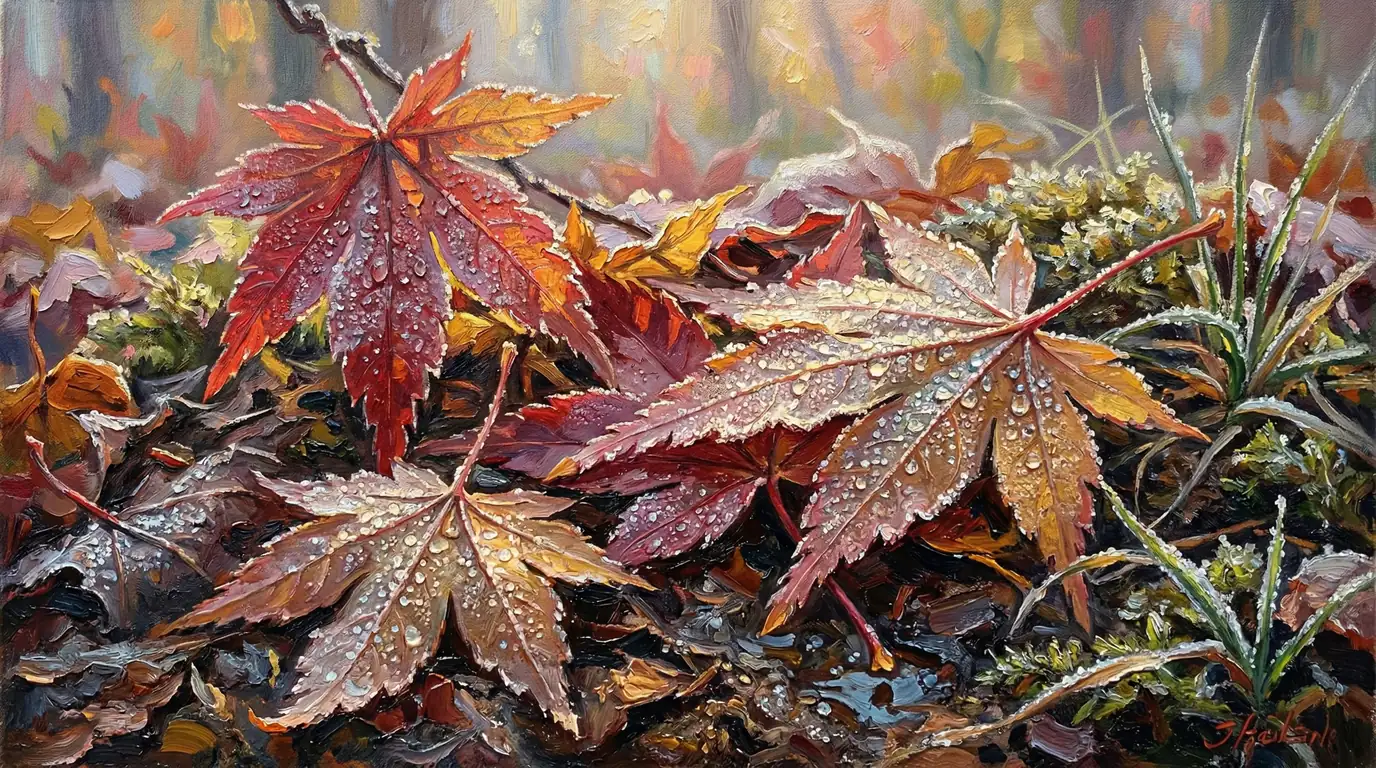 Tears of the Autumn Morning
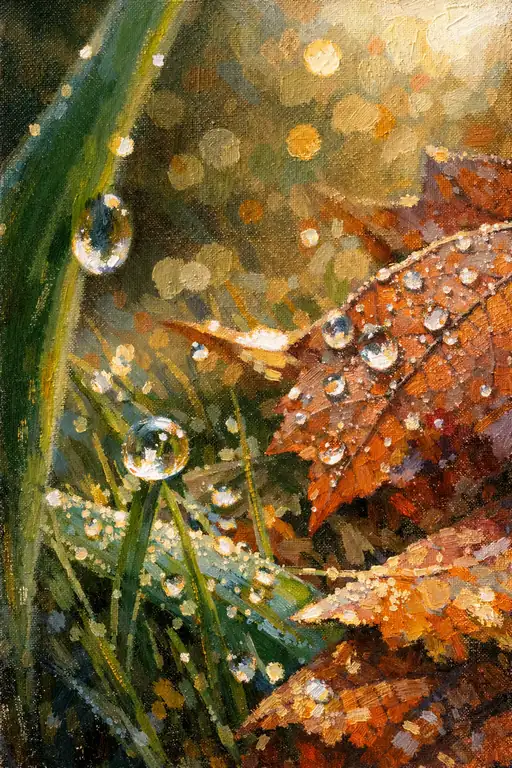 Whispers in the Dew
 The Golden Corridor
 Golden Whispers on a Damp Canvas
 Dance of the Autumn Wind
 The Last Ember of Autumn's Breath