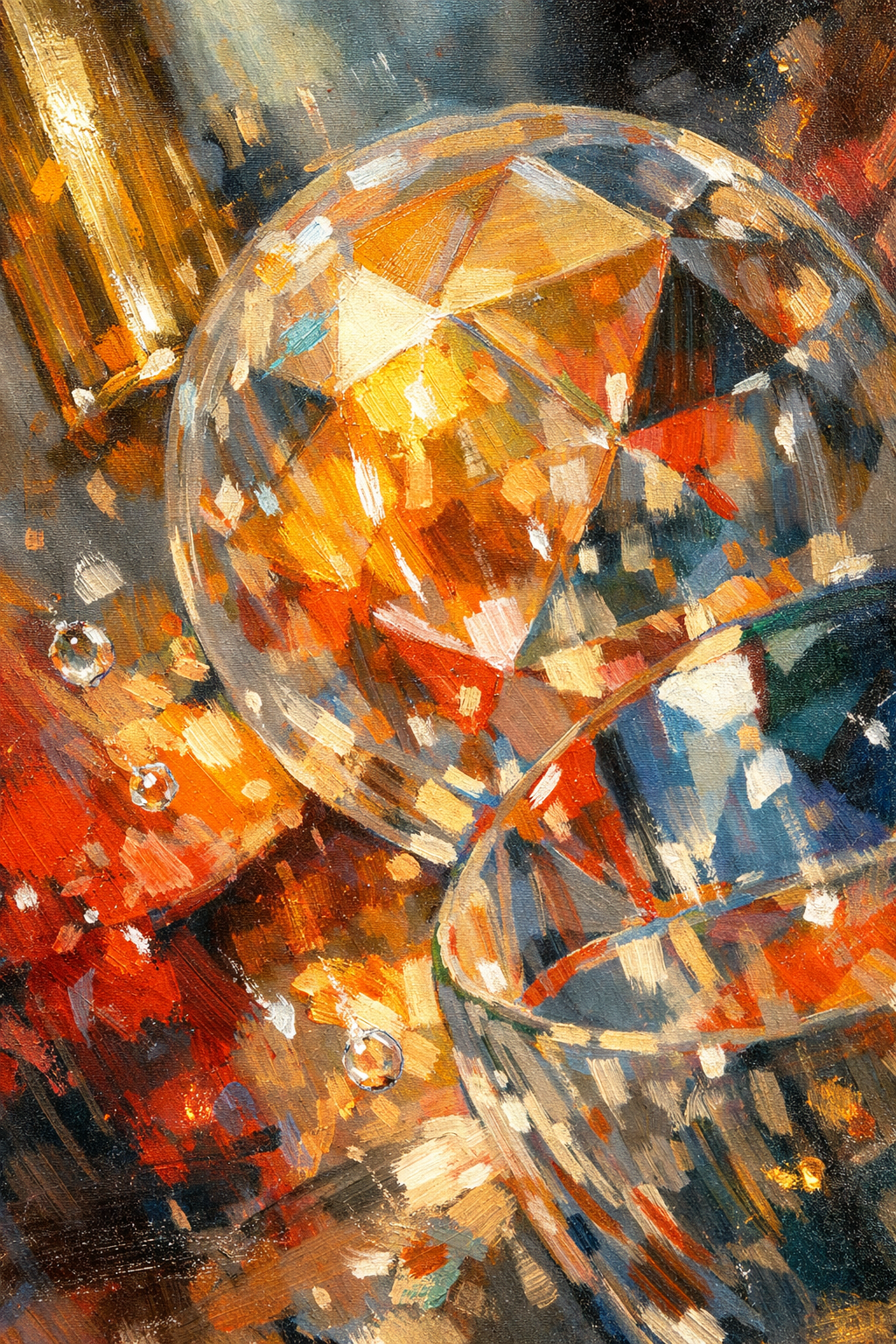
Luminous Fractures of a Waking Dream
Critique
1. Introduction This work is a stylized still life that focuses on the interplay of light and glass. The composition features two prominent spherical objects that appear to capture and refract light in a series of sharp, geometric facets. The dynamic brushwork and vibrant color palette create an atmosphere of energy and translucence. 2. Description The canvas is dominated by two main spheres, one positioned centrally and the other partially visible in the lower right. These spheres are not smooth but are constructed from numerous rectangular and triangular patches of color. The color scheme is predominantly warm, with intense oranges, yellows, and reds, contrasted by cooler strokes of blue, green, and white. Several smaller, clear bubbles or droplets are scattered throughout the left and center regions, adding a sense of liquid transparency. 3. Analysis The artist utilizes a vigorous, impasto-like technique where visible brushstrokes define both form and light. The sharp, blocky strokes within the spheres simulate the way light is faceted within a crystalline structure. The use of high-contrast lighting—brilliant whites against deep, shadowy blues—enhances the three-dimensional quality of the glass objects. The diagonal arrangement of the spheres and the directional strokes create a sense of movement, guiding the viewer's eye across the sparkling surface. 4. Interpretation and Evaluation The work explores the transient nature of light through a heavy, tactile medium. The fragmentation of the forms suggests that reality is composed of numerous small, distinct moments of perception. The technical execution is highly effective, as the chaotic application of paint surprisingly resolves into a coherent image of light and glass when viewed as a whole. The originality lies in the juxtaposition of rigid, geometric facets with a fluid, expressive painting style. 5. Conclusion In summary, the painting successfully transforms a traditional still life subject into a modern exploration of optical phenomena. What initially appears as a disorganized collection of color patches reveals itself to be a sophisticated study of light and transparency. This evolution in understanding highlights the artist's ability to manipulate paint to represent the intangible qualities of light.
Same Subcategory
 Heart of the Luminous Cavern
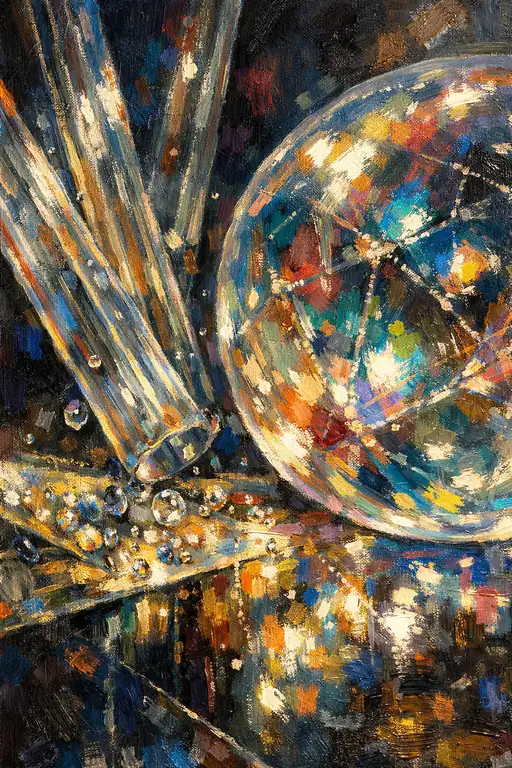 Prismatic Echoes of Light
Similar Artworks
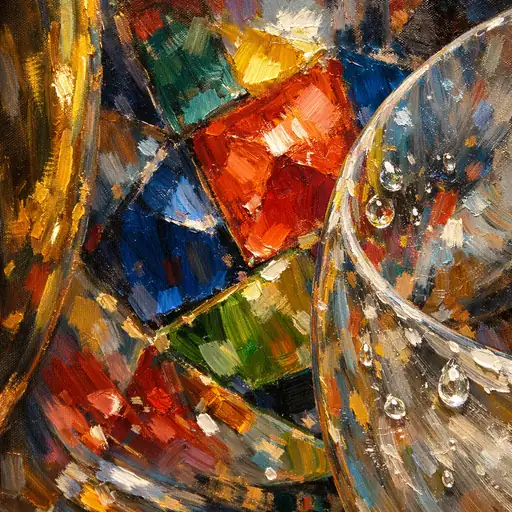 A Labyrinth of Chromatic Glass
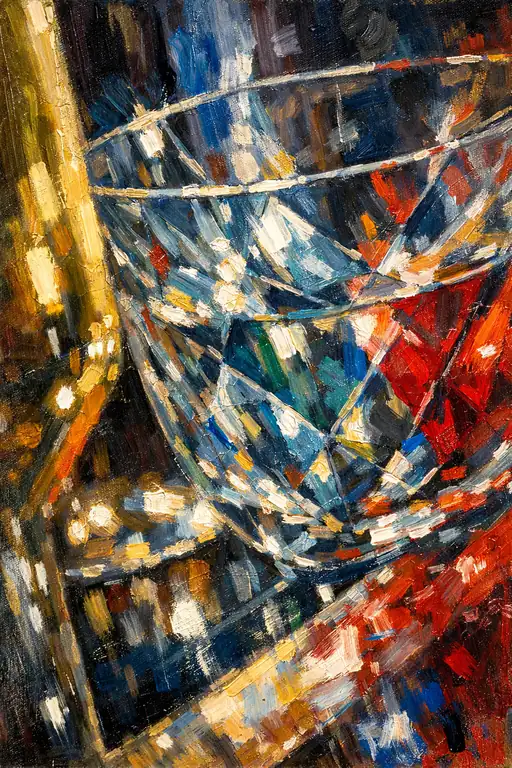 The Fractured Light of Memory
 My World Reflected in a Single Droplet
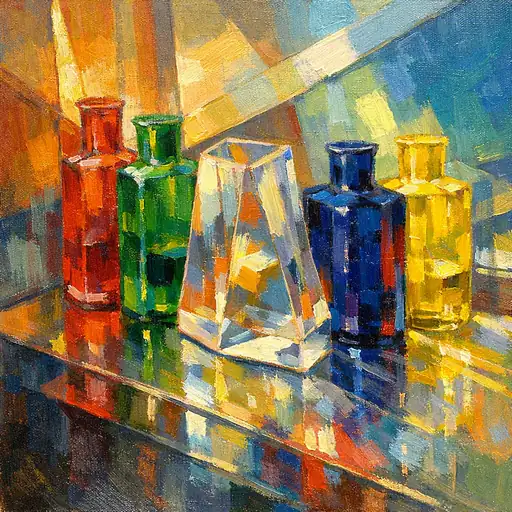 Prismatic Refractions
 Symphony of Refracted Memories
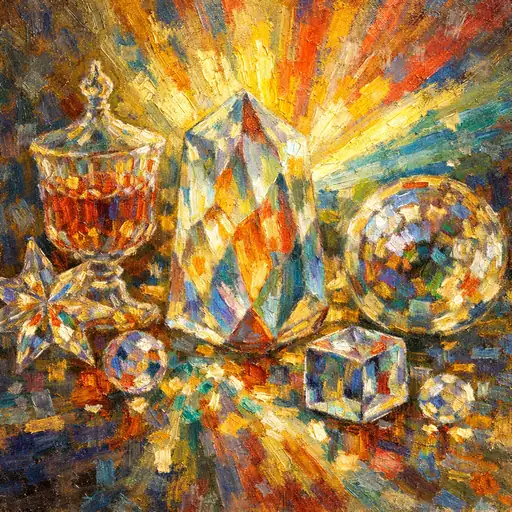 Prismatic Radiance: A Symphony of Refracted Light
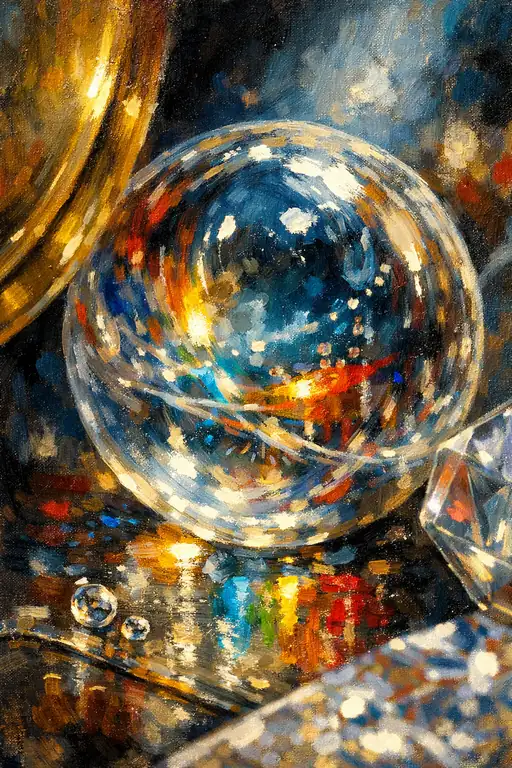 The Sphere of Luminous Dreams
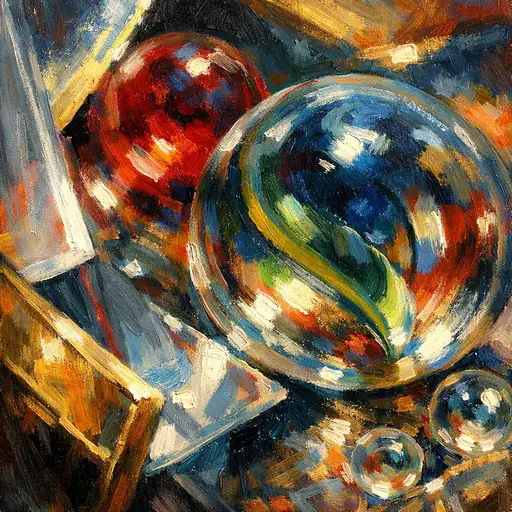 A Childhood Collection in Glass
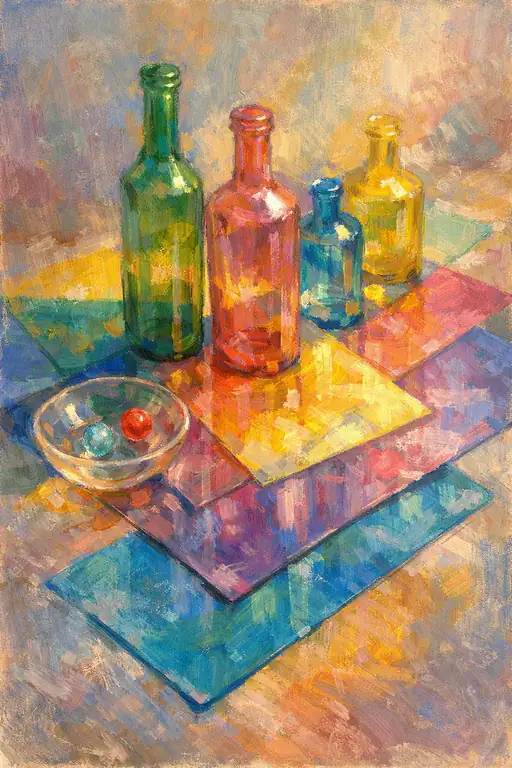 Prismatic Harmony
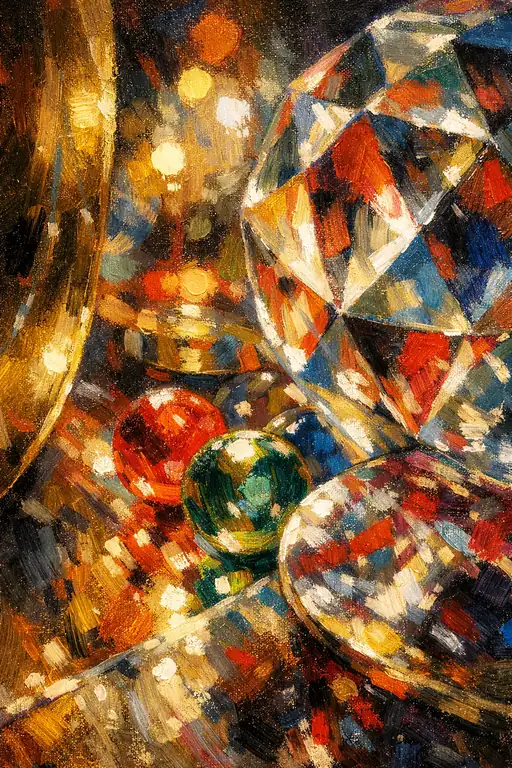 Kaleidoscope of Shattered Light