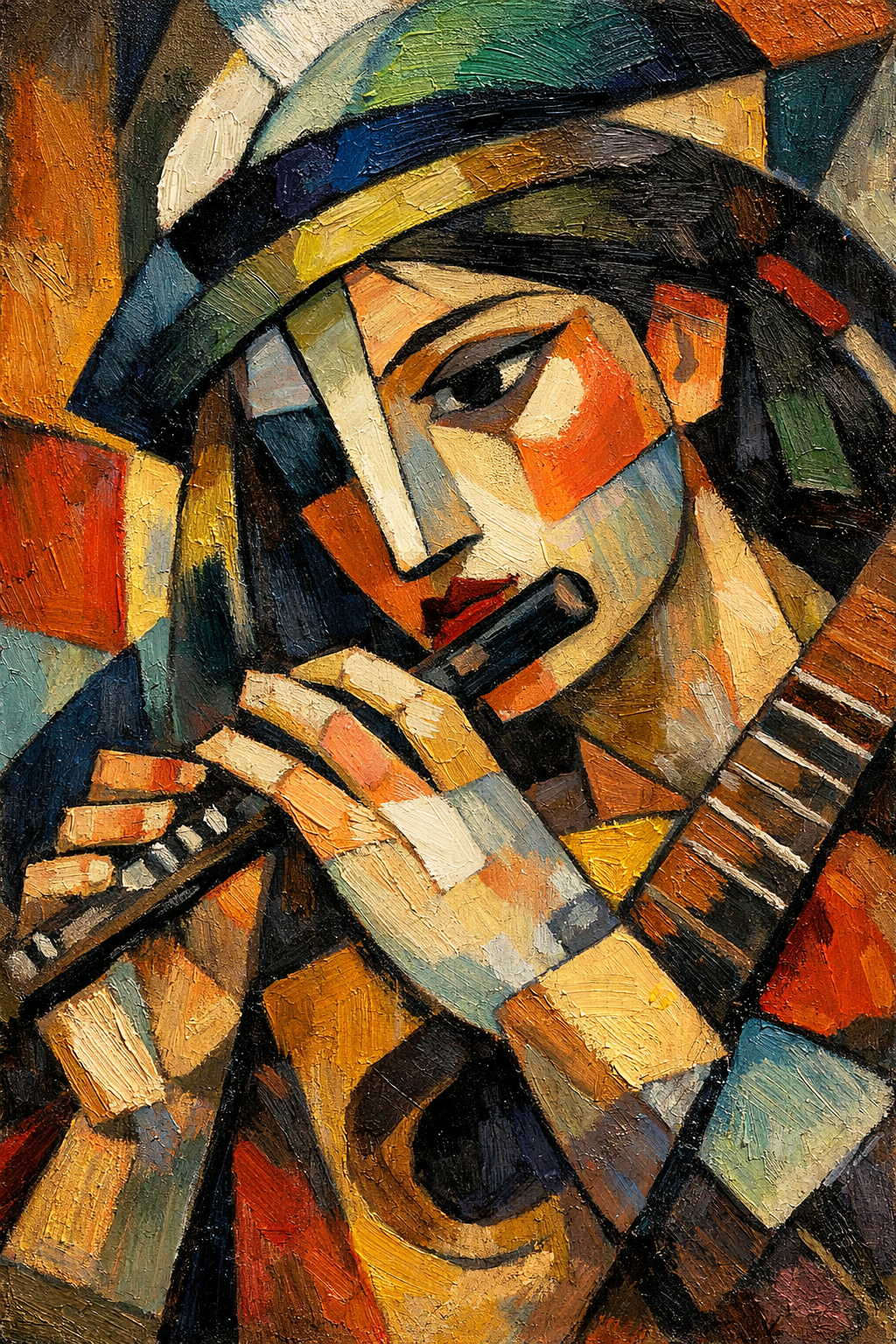
Fractured Melody of the Cubist Muse
Critique
1. Introduction This artwork is a Cubist portrait of a musician playing instruments, constructed through an intricate assembly of multifaceted planes. The composition employs a heavy impasto oil technique, which imbues the piece with a profound sense of vitality and physical presence. While no specific model or setting is identified, the work clearly aims to deconstruct the invisible essence of music into visual fragments. The viewer is immediately captivated by the geometrically divided features of the face and the delicate, rhythmic movement captured in the hands. 2. Description In the center of the frame, a figure is depicted holding a flute-like wind instrument to their lips. The face is fragmented with sharp lines, utilizing a multi-perspective approach where frontal and profile views appear to coexist simultaneously. Beneath the hands, the neck of a stringed instrument is visible, suggesting a fantastical arrangement where the figure engages with multiple musical elements at once. The color palette is dominated by warm earth tones of brown, orange, and yellow, accented by cool blues and greens, creating a complex, mosaic-like pattern across the canvas. 3. Analysis The excellence of this painting lies in its ability to trap a fluid rhythm within a static portrait. Each subdivided color plane shines independently yet contributes to a harmonious whole that conveys the figure's movement and breath. Light does not originate from a single external source; instead, it seems to radiate from the individual facets themselves, giving the entire composition an internal glow. The brushwork is vigorous, and the physical texture of the layered paint acts as a visual metaphor for the vibrations of the music being performed. 4. Interpretation and Evaluation This work is a masterful redefinition of a traditional subject through a modern formal language. It is remarkable that despite the radical deconstruction of form, the performer's concentration and inner passion remain palpable. The color harmony evokes a sense of musical polyphony, possessing a synesthetic quality that stimulates the viewer's sense of hearing. The artist's skill in capturing the essential energy of life through the intellectual process of fragmentation and reconstruction is exceptionally high. 5. Conclusion Ultimately, the painting offers a rich artistic experience where sight and sound intersect. Within the fragmented forms, the joy of "performance"—a universal human activity—is distilled and preserved. Transcending the formal beauty of Cubism, this piece successfully anchors the abstract energy of music with powerful brushstrokes, resulting in a highly accomplished work of portraiture.
Same Subcategory
Similar Artworks
 The Melancholy of the Azure Dream
 Luminescence: The Girl with the Stained Glass Glow
 Geometric Rhythms in Bold Hues
 Melody of the Fragmented Soul
 Kaleidoscopic Vision
 Dynamic Intersections of Form and Void
 The Jewel of Her Gaze
 A Broken Melody Lingers
 The Crimson Impulse Within
 Shattered Gaze of a Vivid Soul