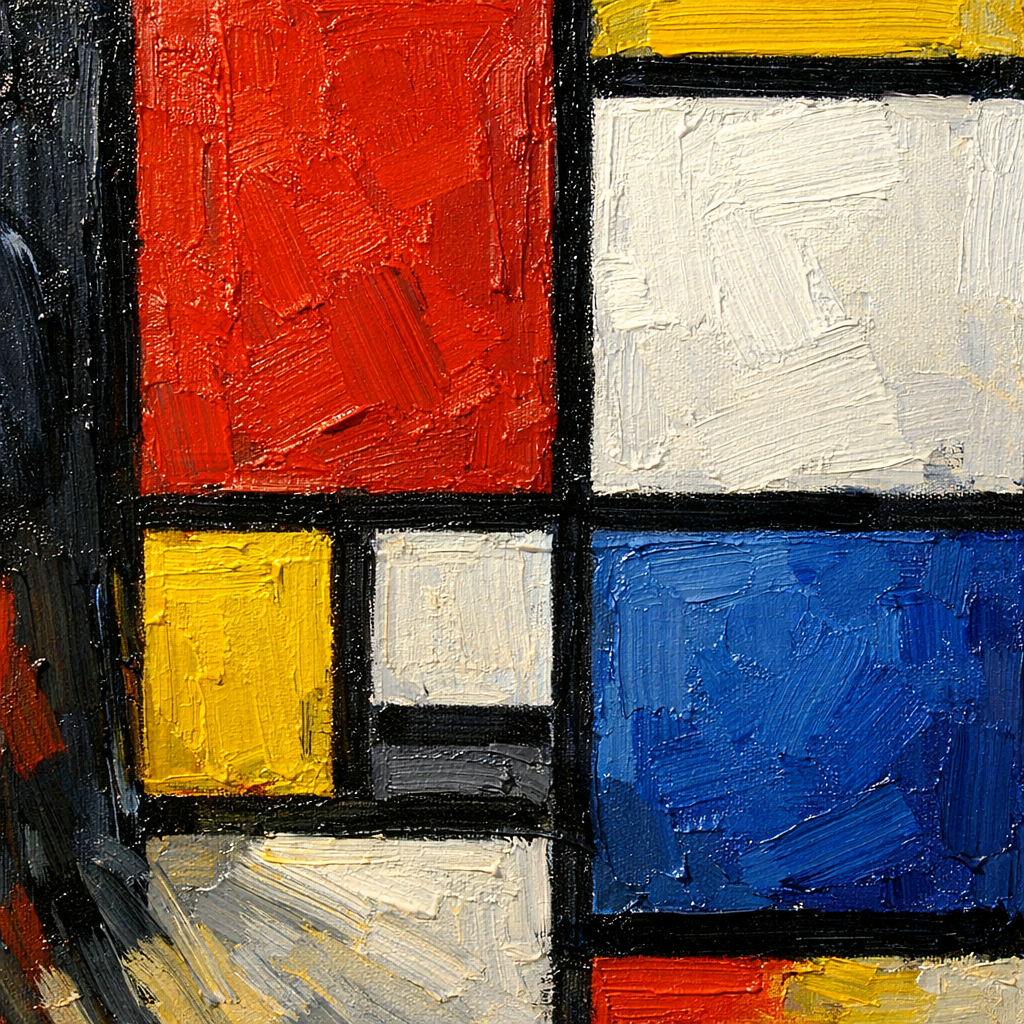
Equilibrium within the Primary Grid
Critique
1. Introduction This artwork is a geometric abstract painting characterized by a grid-like composition of primary colors and black lines. Reminiscent of the De Stijl movement, the piece utilizes red, yellow, blue, and neutral tones arranged in a structured manner. While the artist’s background and date of production remain unknown, the work stands out due to the juxtaposition of rigid order and rich, tactile oil texture. The viewer is immediately drawn to the balance of the composition and the unique harmony created by the physical presence of the paint. 2. Description The canvas is divided into various rectangular sections by thick, black horizontal and vertical lines. A large red plane dominates the upper left area, situated above a yellow rectangle and smaller sections of white and gray. To the right, a prominent white rectangle sits above a vibrant blue field, with fragments of red and yellow appearing at the very bottom of the frame. Notably, the paint is applied with visible, heavy brushstrokes, creating a textured surface with significant depth rather than smooth, flat areas of color. 3. Analysis The core of this work lies in the contrast between its static, linear structure and its dynamic materiality. While the black grid provides a sense of mathematical order and stability, the impasto layers of paint catch the light, adding a subtle liveliness to the color planes. In terms of color theory, the primary hues enhance each other's saturation, while the white spaces function as visual breaths, introducing a light rhythm to the whole. The relationship between the lines and the heavy texture creates an unexpected sense of three-dimensionality. 4. Interpretation and Evaluation This painting can be evaluated as an ambitious attempt to introduce the artist’s physical presence into the typically cold logic of pure abstraction. In contrast to the impersonality sought by early abstract pioneers, the deliberate retention of brushstrokes emphasizes the raw, human aspect of the creative process. The artist's ability to evoke deep spirituality from simple primary colors is exceptional, and the composition is masterfully executed. This original technical choice transforms a familiar style into an entirely fresh visual experience. 5. Conclusion Ultimately, the artwork represents a sophisticated balance between order and emotion, or theory and sensation. While the viewer is first struck by the formal arrangement, the eloquent language of the paint’s texture gradually becomes more captivating. It is a high-quality piece that possesses a timeless, universal aesthetic while maintaining a powerful and distinct individual character.
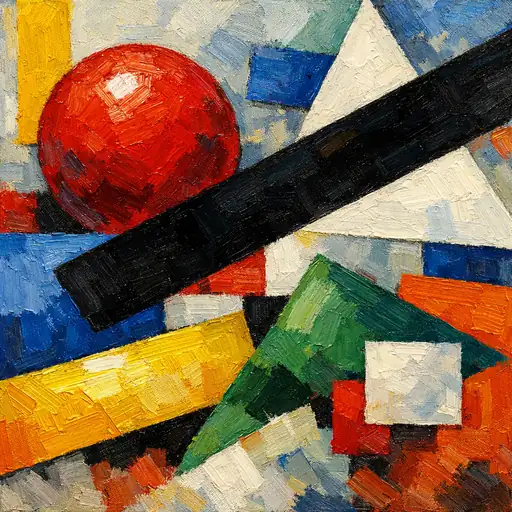 Suprematist Intersection of the Void
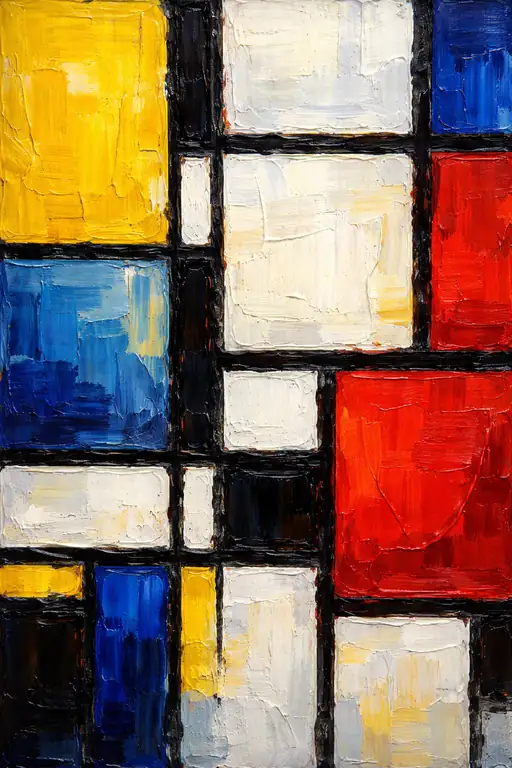 Order and Impulse
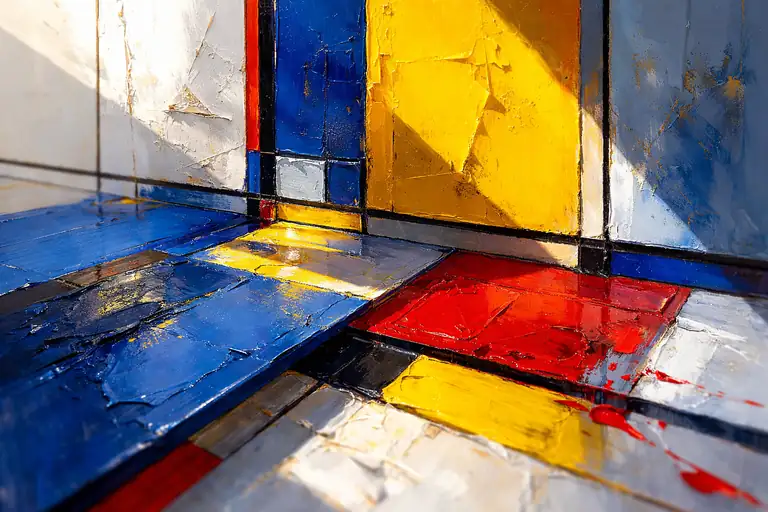 Symphony of the Concrete Soul
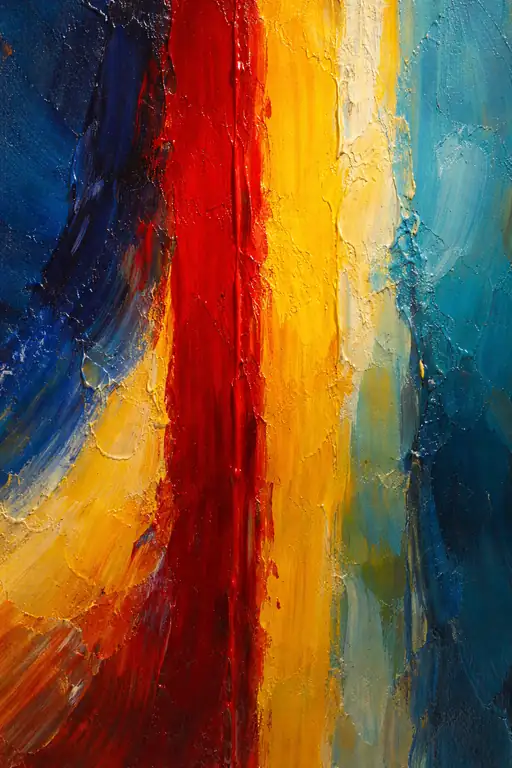 Echoes of the Abstract Mind
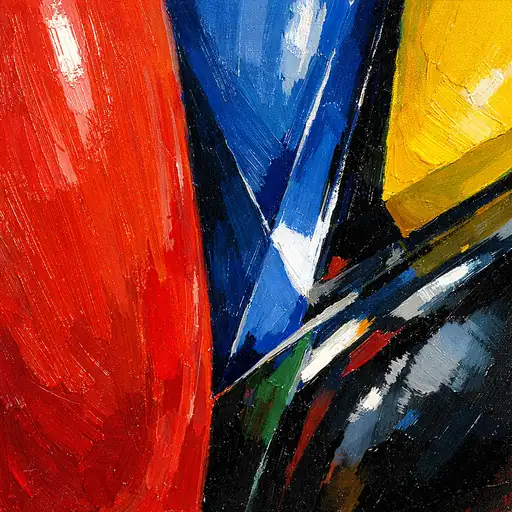 Collision of Primary Truths
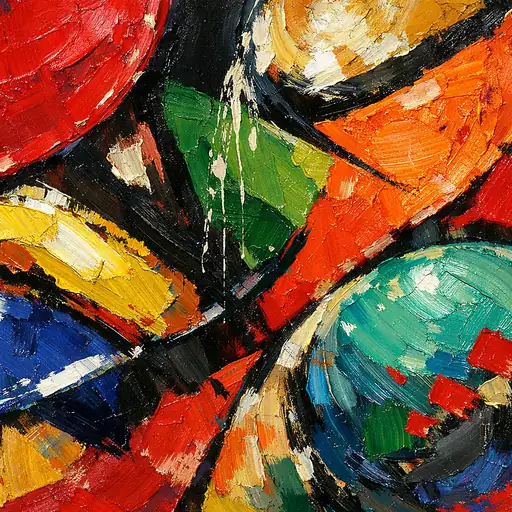 Tears and Tides of Time
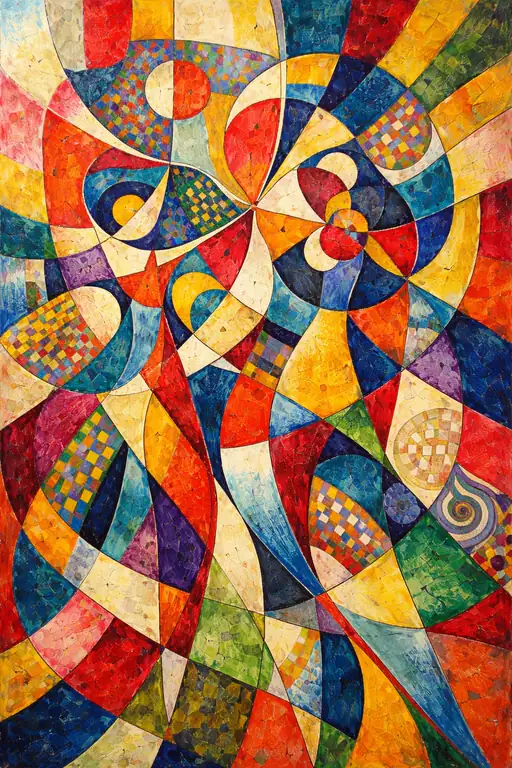 Rhapsody in Geometric Fire
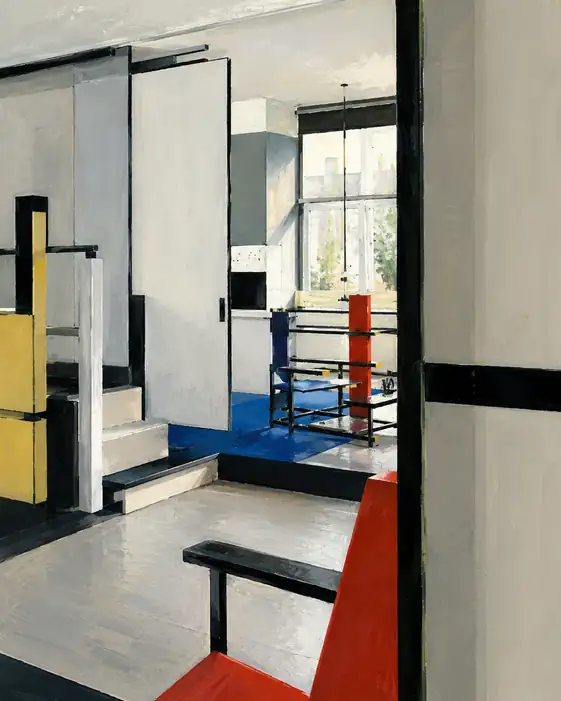 Warmth Within the Geometry
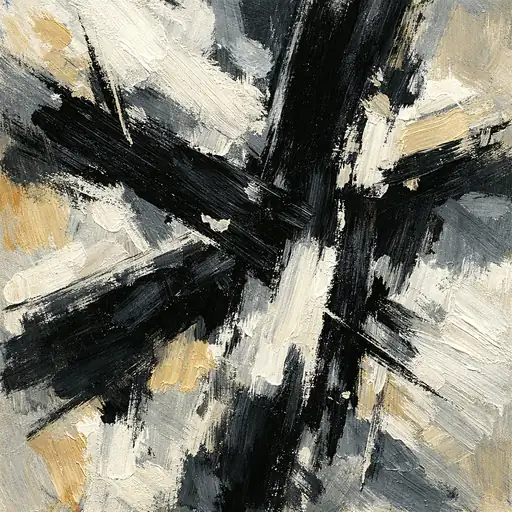 Echoes of a Shattered Soul
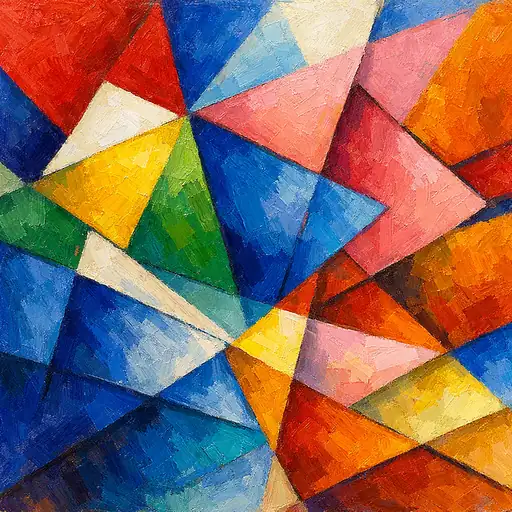 Colorful Abstract Geometry of Triangles