Convergence of Prismatic Dreams
Critique
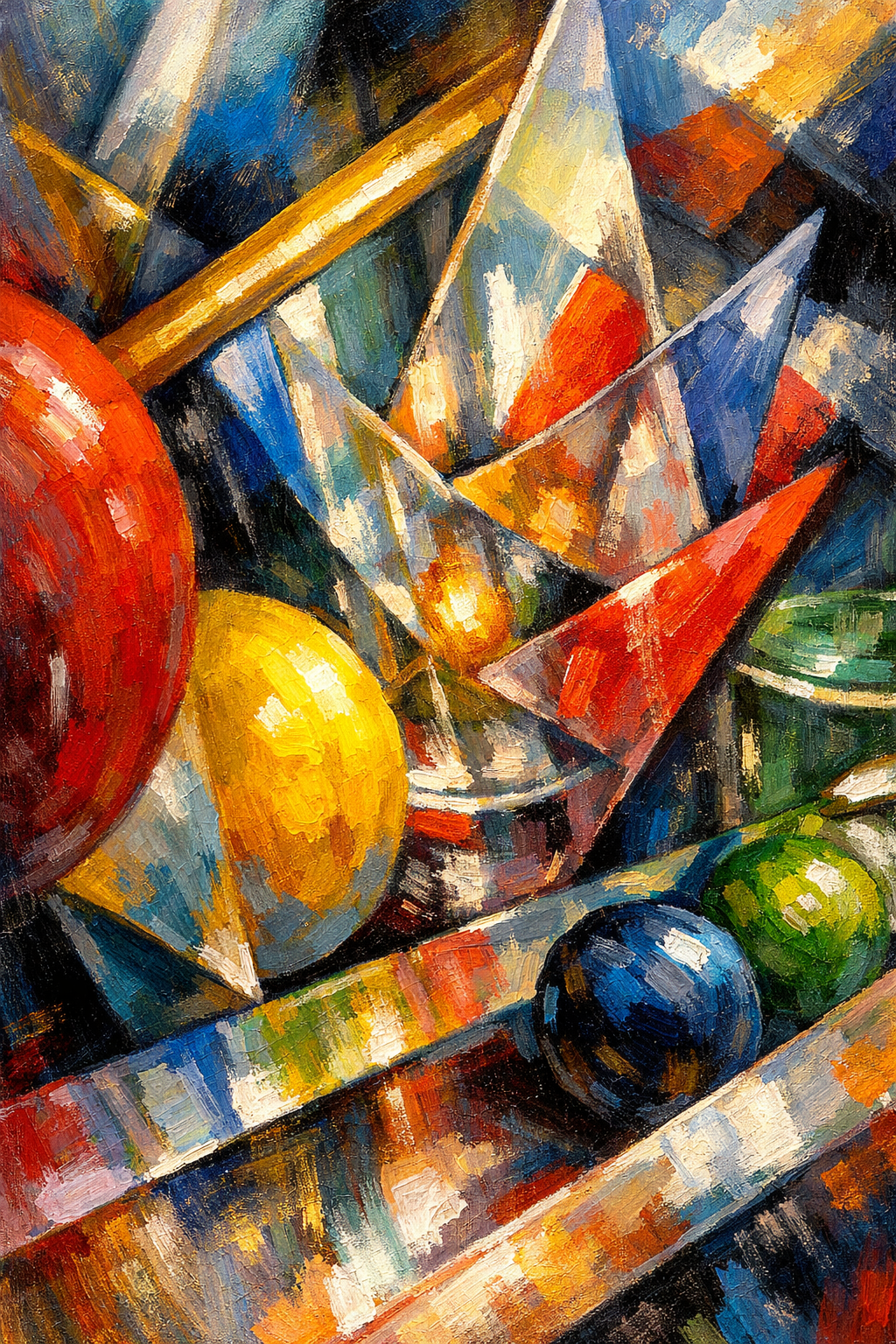
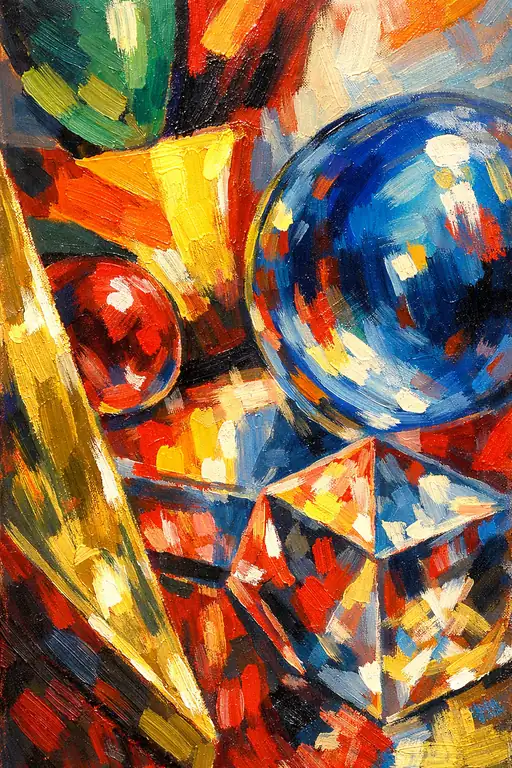
1. Introduction This artwork is a vibrant still life that skillfully combines geometric abstraction with a bold, painterly approach. Created with thick, visible brushstrokes, the piece emphasizes the tactile quality of oil on canvas. While the specific historical background and year of production remain unknown, the work clearly draws inspiration from the Cubist tradition, focusing on the deconstruction of forms. The viewer is immediately engaged by the high-density color palette and the dynamic arrangement of shapes. 2. Description The composition features a variety of primary geometric forms, such as spheres and sharp, triangular structures. On the left side, a large red circular form dominates the foreground, while yellow, blue, and green spheres are positioned across the mid-ground and lower right. The background is composed of overlapping, sail-like triangular planes that create a sense of depth. A prominent yellow diagonal beam cuts across the upper portion of the frame, providing a structural anchor. Brilliant white highlights are scattered throughout, suggesting a play of reflected light. 3. Analysis The strength of this painting lies in its rhythmic use of color contrast and structural layering. The primary colors are strategically distributed to create a visual balance, with secondary hues like orange and green adding complexity. The brushwork is rhythmic and fragmented, blending Impressionist light capture with Cubist structural analysis. By utilizing numerous diagonal lines, the artist transforms a static subject into a scene full of movement and energy, leading the eye across the canvas in a spiral fashion. 4. Interpretation and Evaluation This work represents a successful elevation of everyday forms into the realm of pure aesthetic expression. The interaction between simple shapes and a sophisticated color scheme builds a self-contained world that is both orderly and expressive. The artist's handling of light is particularly noteworthy; it appears to emanate from within the colors themselves rather than from an external source. The combination of technical precision and creative originality makes this a significant contribution to modern abstract painting. 5. Conclusion Ultimately, the painting offers a profound visual experience through the harmonious union of color and form. What initially appears as a chaotic cluster of shapes reveals itself to be a meticulously structured masterpiece of balance. This work successfully transcends the boundaries of traditional still life, capturing the raw energy of visual perception through a unique artistic lens.
Same Subcategory
 Suprematist Intersection of the Void
Similar Artworks
 Dynamic Symphony of Shapes
 Mechanical Pulse
 Collision of Primal Echoes
 Colorful Abstract Geometry of Triangles
 The Bold Pulse of Colors
 Rhythm of the Prism Bubbles
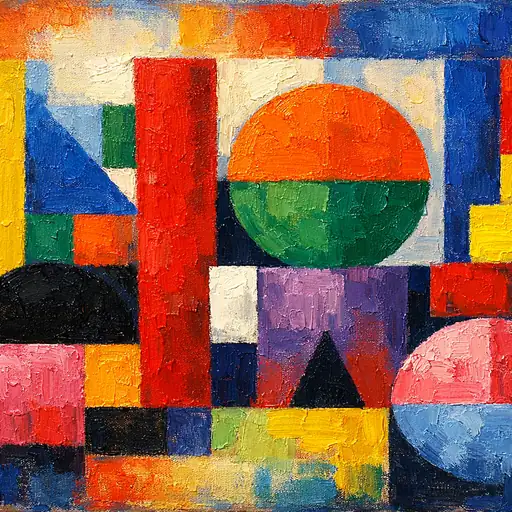 Symphony of the Primal Spectrum
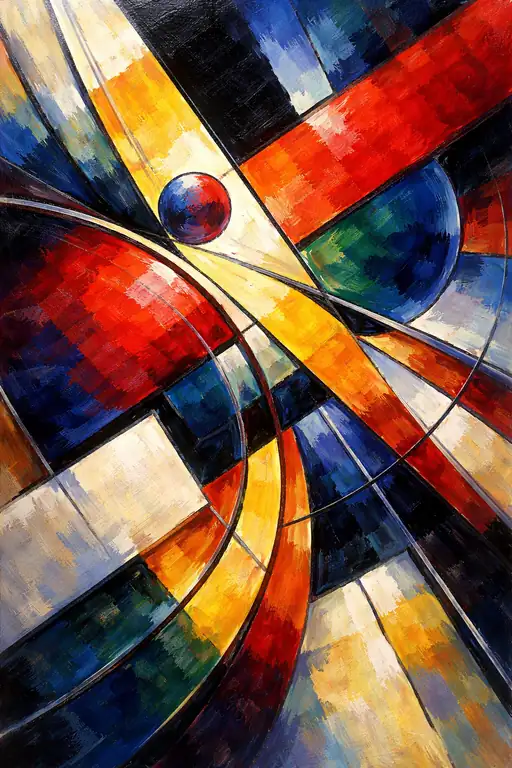 Symphony of the Vanguard
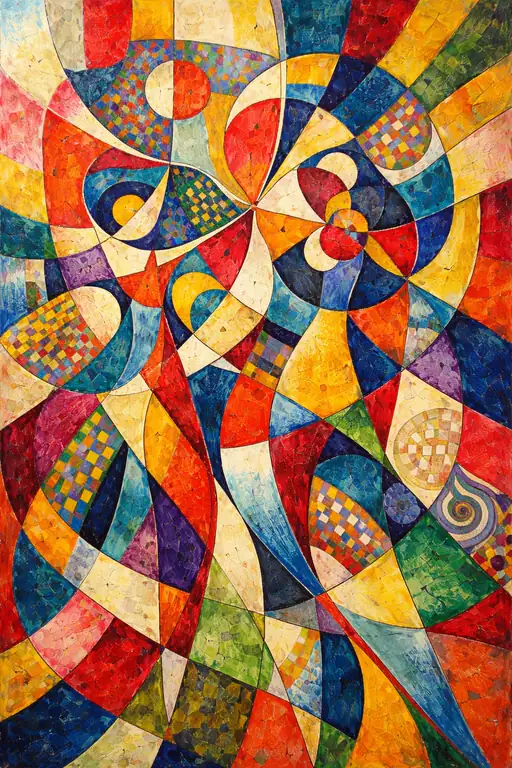 Rhapsody in Geometric Fire
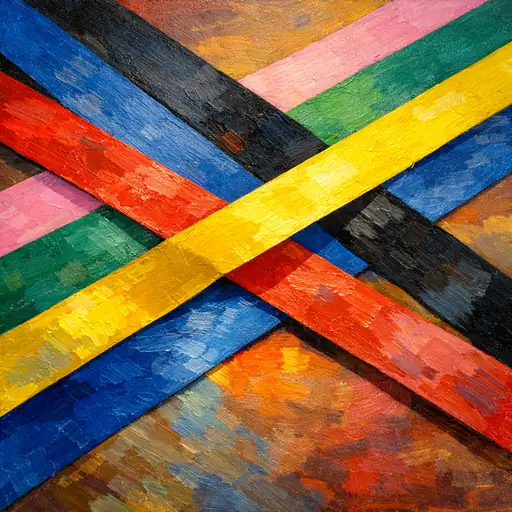 Intersection of Colors: Modern Abstract Painting Woven by Dynamic Strokes