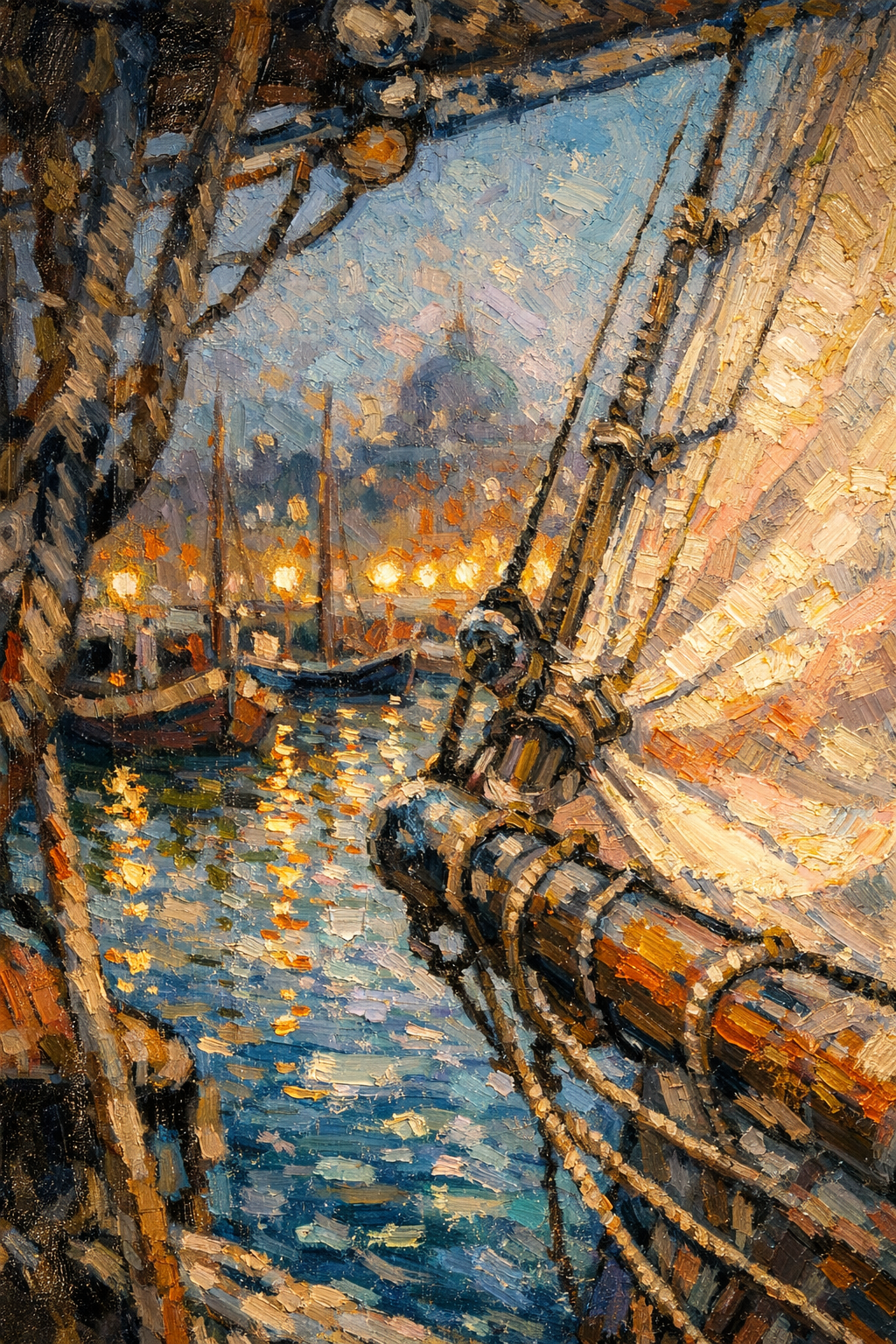
Lullaby of the Glowing Harbor
Critique
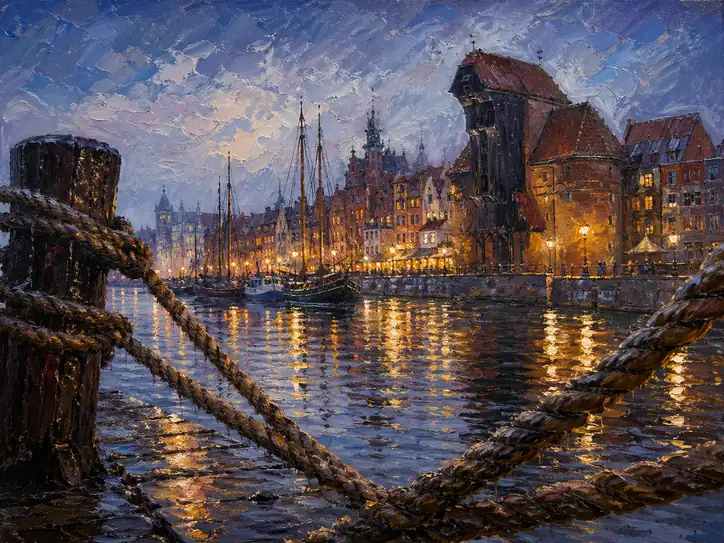
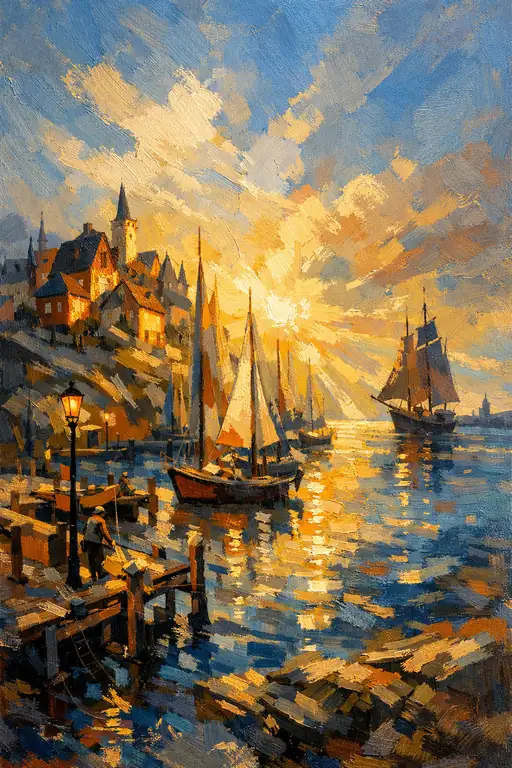
1. Introduction This oil painting presents a nocturnal harbor scene, capturing the serene interaction between maritime industry and architectural grandeur. The composition is defined by its dramatic perspective, which positions the viewer directly onto the deck of a vessel. The work explores the atmospheric effects of artificial light reflecting upon a body of water during the evening hours. 2. Description The foreground is dominated by the intricate details of a ship’s mast and heavy rigging, rendered with substantial texture. To the right, a large sail catches the warm glow of distant lanterns, while ropes stretch diagonally across the frame. In the mid-ground, smaller boats are moored, and a prominent domed structure rises against a hazy, twilight sky in the far background. 3. Analysis The artist employs a vigorous impasto technique, using short and thick brushstrokes to build a sense of physical presence. The color palette is built upon a primary contrast between deep cerulean blues and vibrant cadmium oranges. This chromatic tension effectively mimics the shimmering quality of light as it dances across the undulating surface of the harbor water. 4. Interpretation and Evaluation The painting successfully conveys a romanticized vision of a coastal city, likely inspired by the unique topography of Venice. The technical execution prioritizes the sensory experience of light and movement over precise anatomical or architectural accuracy. The structural integrity of the foreground elements provides a grounded counterpoint to the more ethereal, almost abstracted treatment of the distant cityscape. 5. Conclusion A close examination reveals how the fragmented application of paint coalesces into a cohesive and evocative atmosphere. The initial focus on the heavy wooden rigging eventually gives way to an appreciation of the luminous reflections. This work stands as a testament to the power of texture in creating a profound sense of place and temporal depth.
Same Subcategory
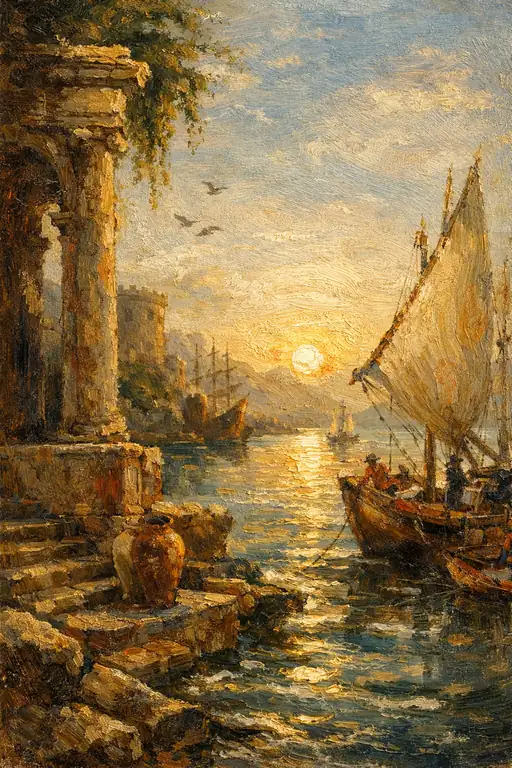 The Harbor's Golden Slumber
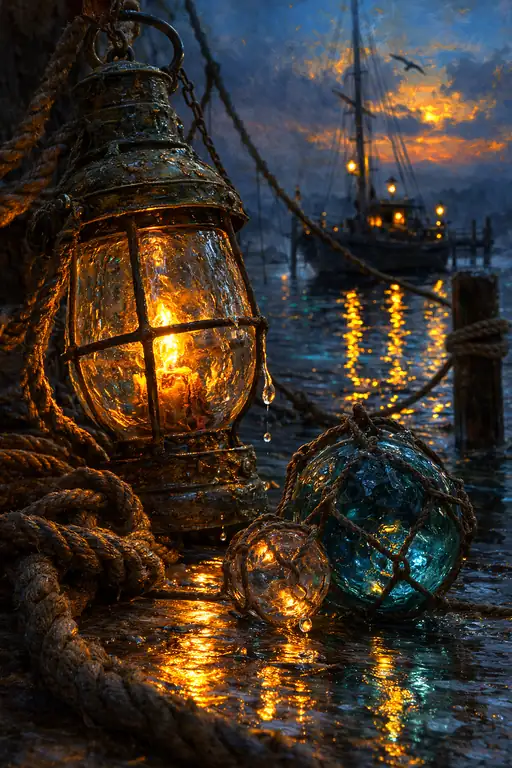 Vessel of Twilight's Embrace
Similar Artworks
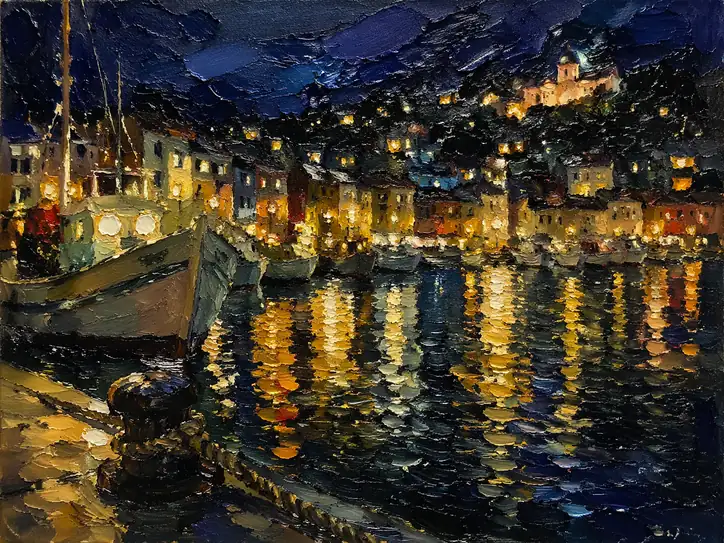 Golden Threads of the Nocturnal Harbor
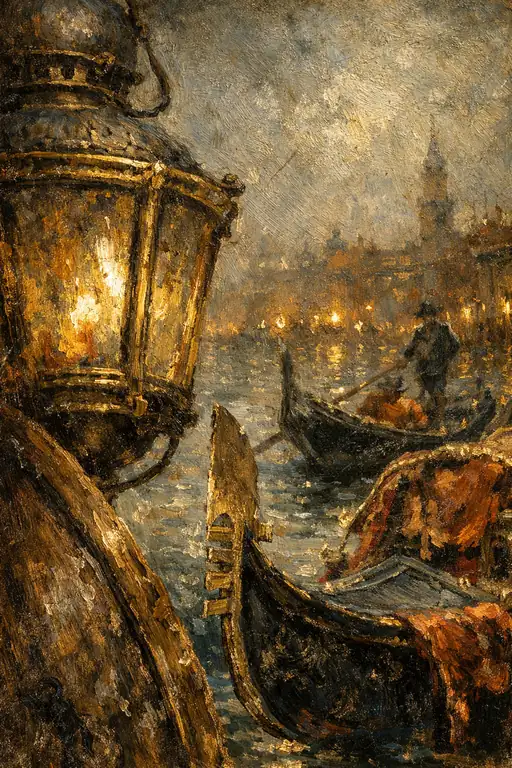 Nocturnal Glow
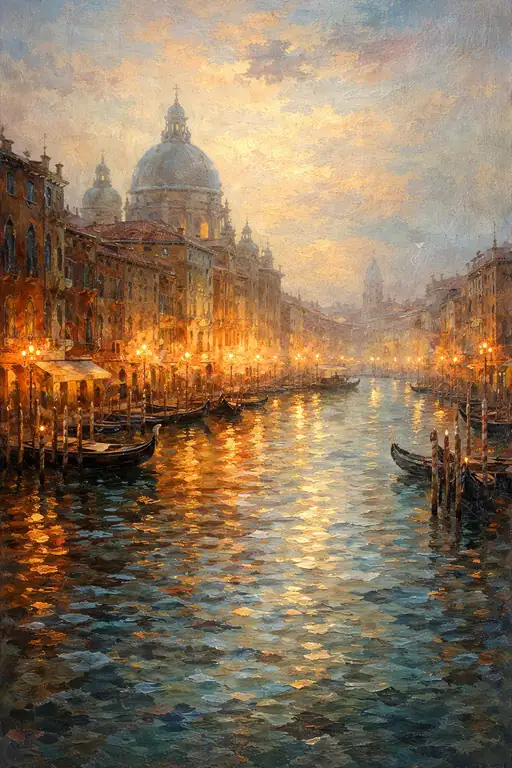 Twilight Illusion on the Grand Canal
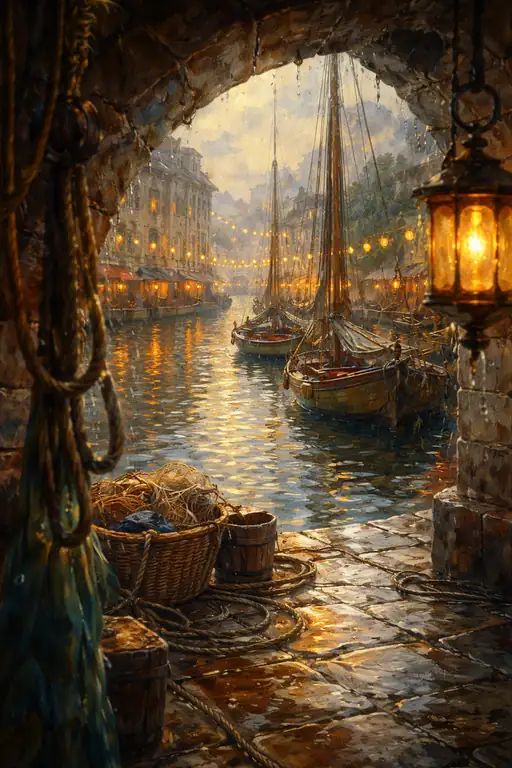 Nostalgia of the Water City Melting into Dusk
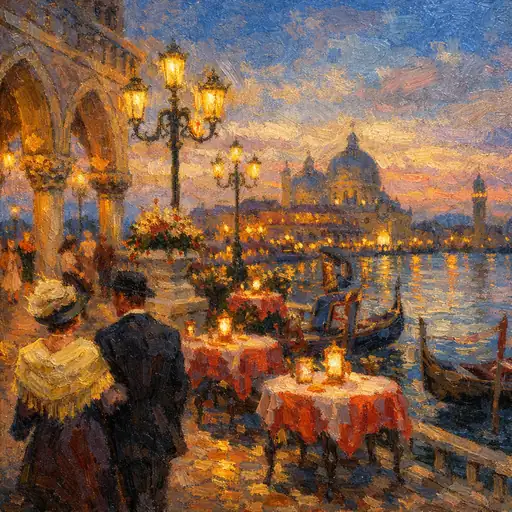 Golden Glow of the Grand Canal
 Sails of Memory in the Dusk
 Twilight Contemplation at the Harbor
 Golden Threads Upon the Velvet Night
 Awakening of the Golden Maritime Echoes
 The Ocean's Last Sigh Before Slumber