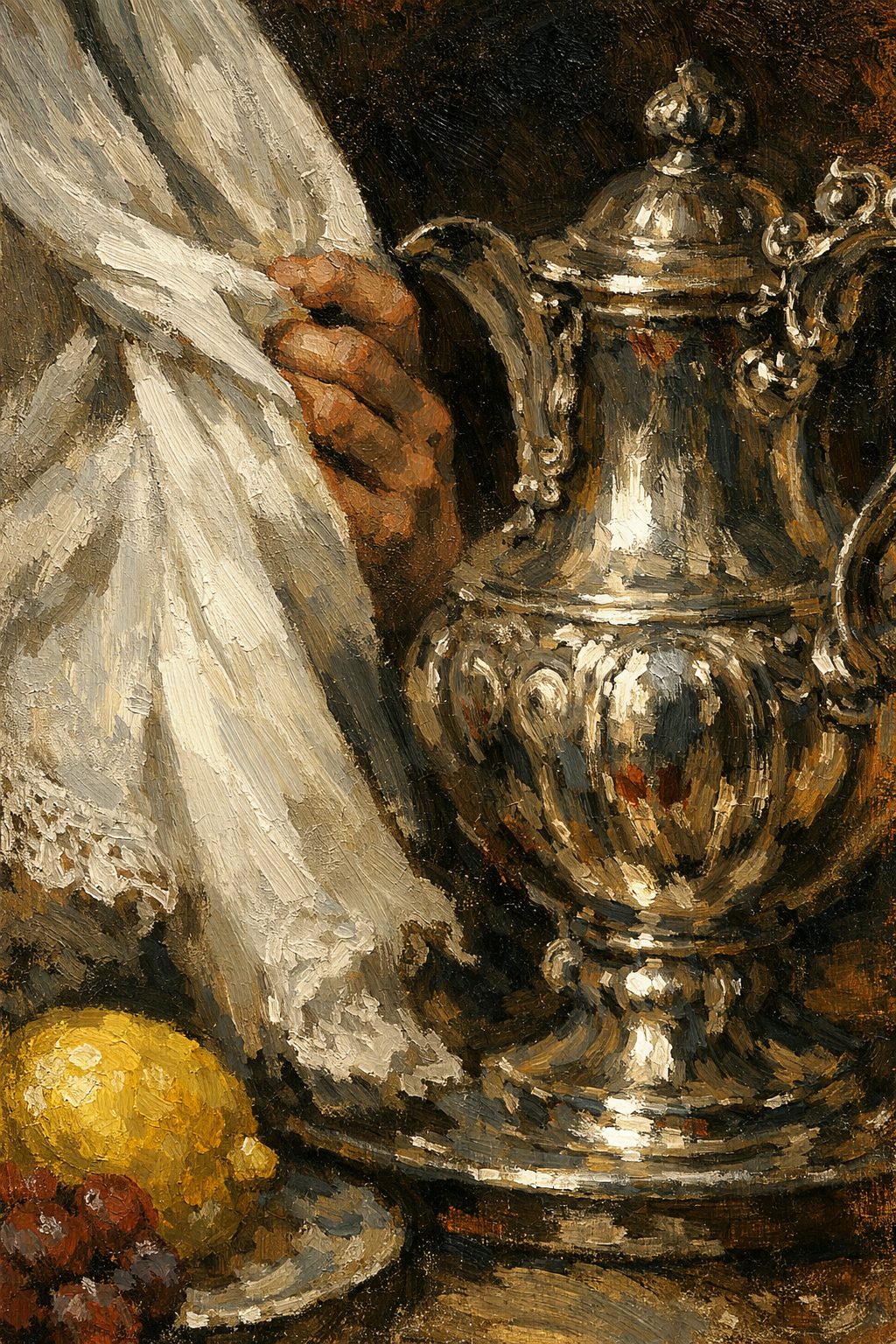
A Gentle Grasp on Fleeting Time
Critique
Introduction This composition is a sophisticated still life that integrates human presence through the inclusion of a hand interacting with the objects. The work focuses on the tactile qualities and reflective surfaces of a silver pitcher, a white lace cloth, and various fruits. It demonstrates a keen interest in the interplay of light and material, rendered in a rich, painterly style. Description The right side of the frame is dominated by an ornate silver pitcher with a highly reflective surface, displaying complex highlights and shadows. To the left, a human hand holds a delicate white cloth with lace trim, its folds rendered with thick, expressive impasto. In the lower-left corner, a bright yellow lemon and a cluster of dark grapes rest on a shallow plate, providing a necessary pop of color against the dark, neutral background. Analysis The artist uses a strong, focused light source that emphasizes the varying textures of the subjects. The metallic sheen of the pitcher is created through sharp, high-contrast strokes of white and grey, while the lace cloth is depicted with a heavy, sculptural application of paint. The color palette is primarily earthy and muted, which allows the brilliant yellow of the lemon and the metallic reflections to become the focal points of the arrangement. Interpretation and Evaluation By combining inanimate objects with a human hand, the work transcends the traditional boundaries of still life, suggesting a narrative of domestic labor or preparation. The technical execution is exceptional, particularly in the artist's ability to differentiate between the hardness of the metal and the softness of the fabric. The composition is tightly cropped, which increases the intimacy of the scene and forces the viewer to confront the materiality of the paint itself. Conclusion While the subject matter is rooted in the classical still life tradition, the energetic brushwork and heavy impasto lend the piece a modern vitality. The initial focus on the objects eventually gives way to an appreciation of the abstract patterns of light and shadow. This work stands as a compelling study of texture and form, successfully capturing the inherent beauty found in everyday domestic items.
Same Subcategory
Similar Artworks
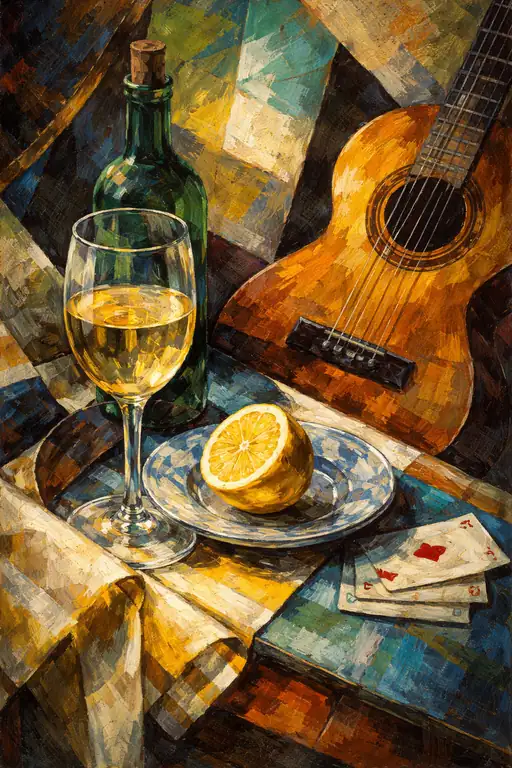 Citrus Illusions on a Geometric Plate
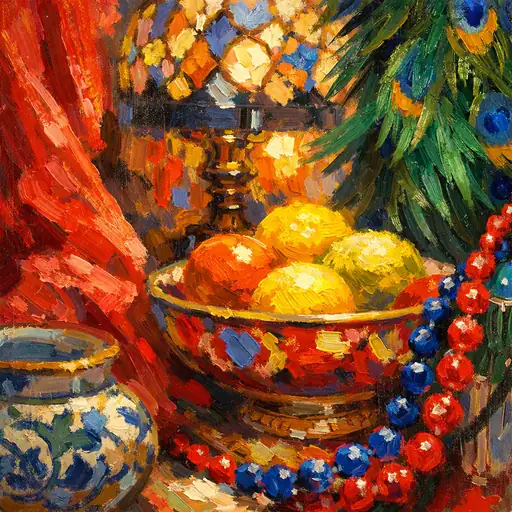 A Vibrant Ode to the Simple Things
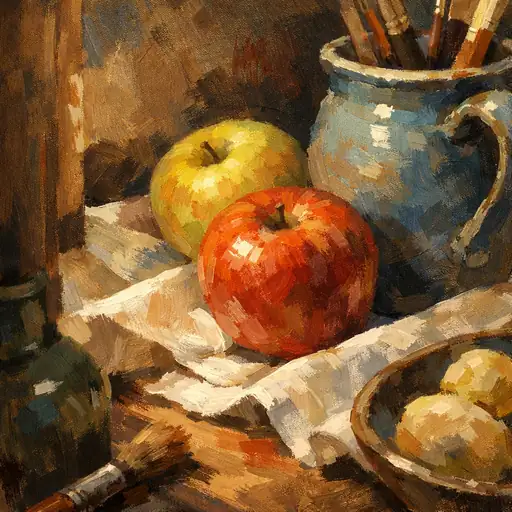 The Painter's Silent Reverie
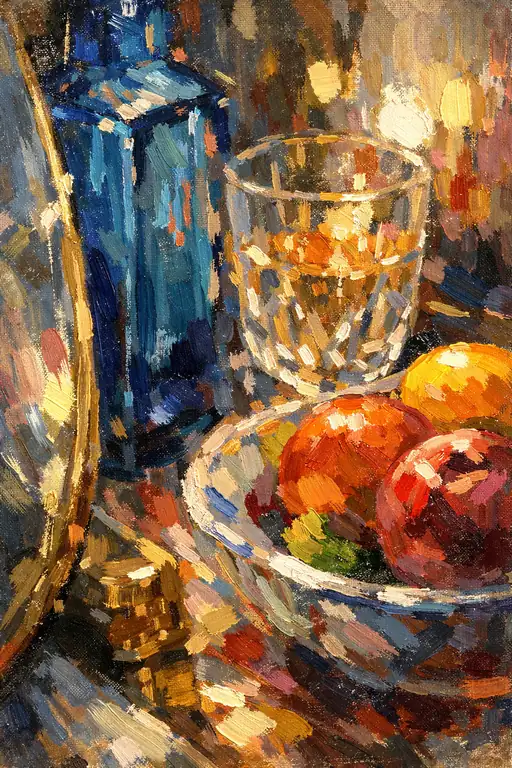 Whispers of the Cobalt Glass
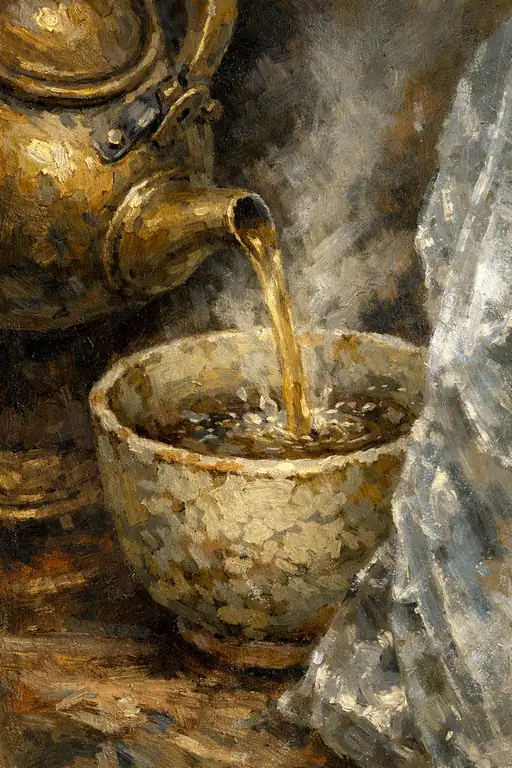 Golden Warmth Pouring into the Silence of Bronze
 Gilded Secrets of the Pomegranate
 Symphony of Glass and Sugar
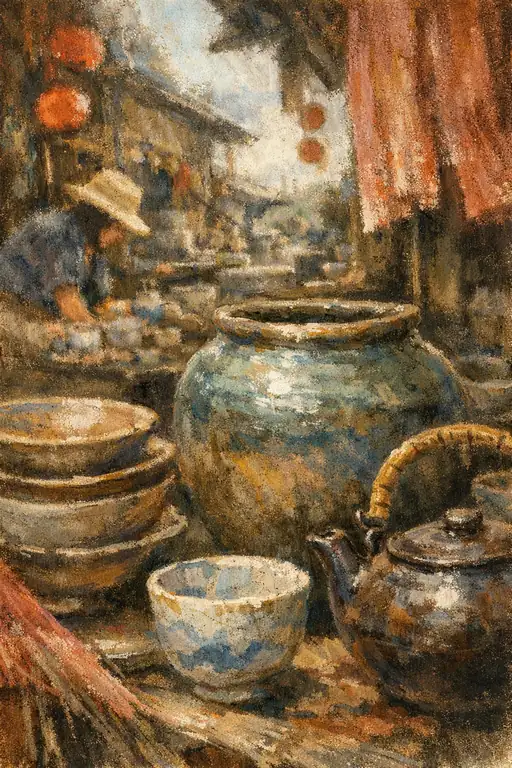 Echoes of Clay and Craft
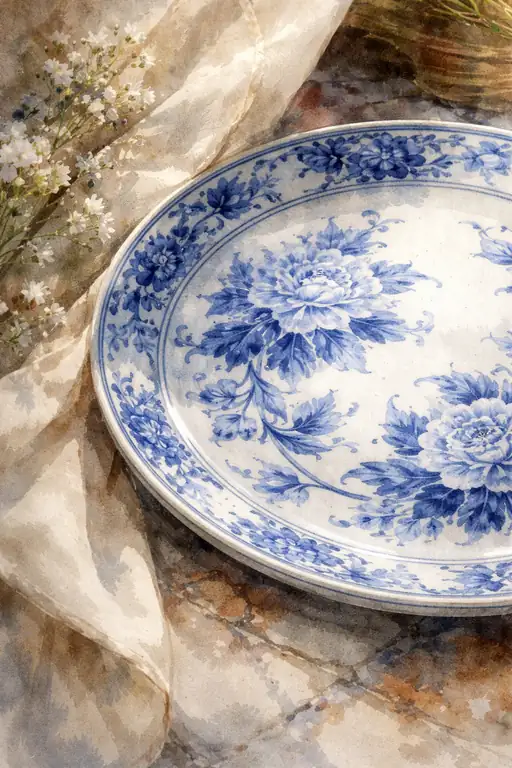 Grace Woven in Blue and White
 A Warm Embrace in Porcelain