Soul of the High Winds
Critique
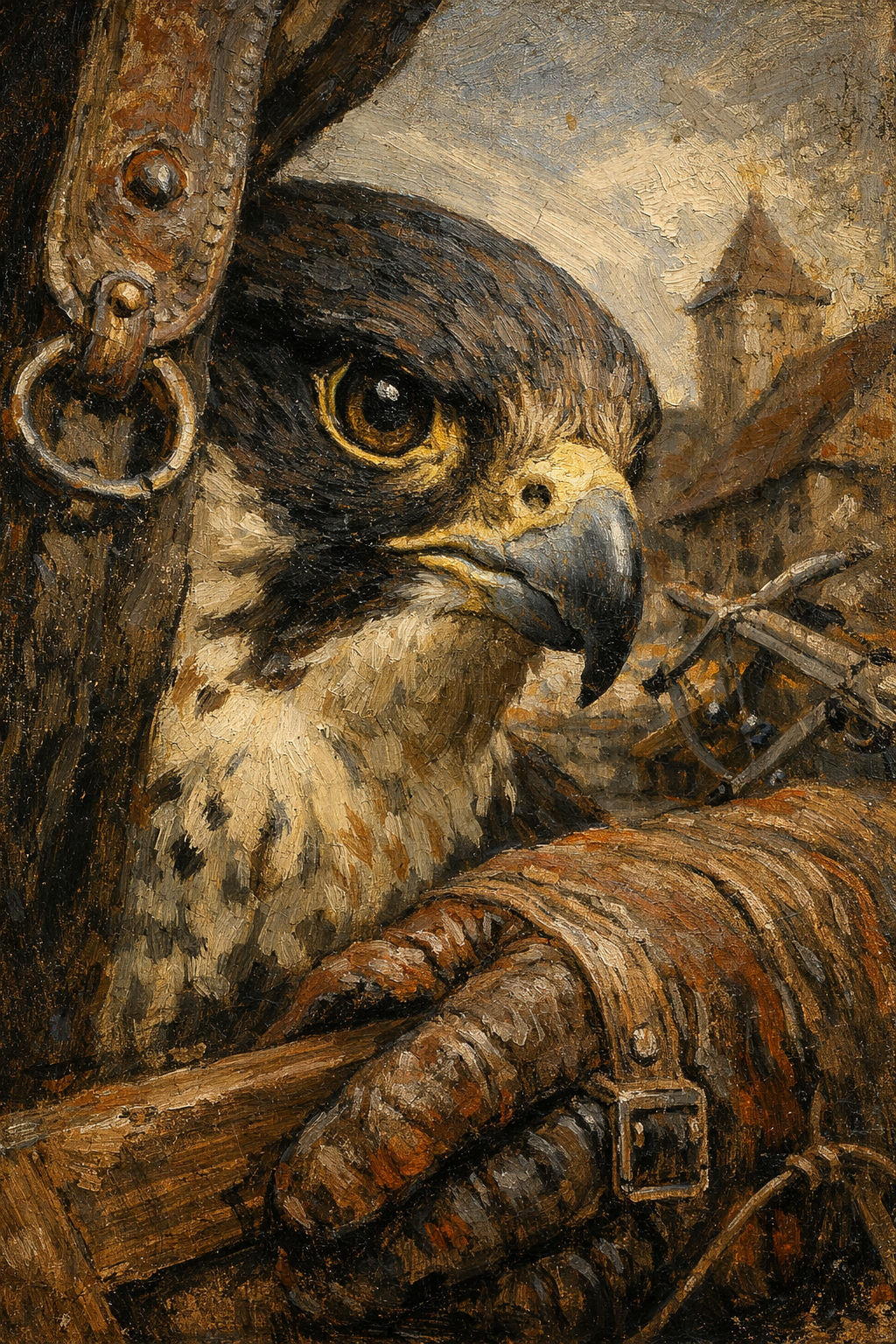
1. Introduction This oil painting presents a focused study of a falcon, centered on the ancient tradition of falconry. The composition immediately captures the viewer's attention through its intimate proximity to the subject, establishing a direct connection between the observer and the raptor. It serves as a tribute to the intersection of nature and human artifice, set against a historical backdrop that suggests a medieval or Renaissance context. 2. Description The artwork features a peregrine falcon perched upon a thick, textured leather falconry glove. The bird’s head is the primary focus, with its sharp, hooked beak and a gleaming, highly detailed eye that reflects light with crystalline clarity. Its plumage is rendered with varying shades of brown, cream, and charcoal, showing meticulous feather patterns. In the soft-focus background, a stone tower and the skeletal frame of a crossbow mechanism are visible, grounding the scene in a specific historical era. 3. Analysis The artist employs a warm, earthy palette dominated by ochres, umbers, and deep blacks, which enhances the rustic and historical feel of the piece. The lighting is directed from the side, casting subtle shadows that define the falcon's facial structure and the heavy folds of the leather glove. Dynamic diagonal lines are created by the crossbow and the positioning of the bird’s perch, giving the static image a sense of underlying energy. Visible, thick brushstrokes provide a tactile quality to the feathers and stone. 4. Interpretation and Evaluation This piece effectively communicates the sharp alertness and predatory grace of the falcon through exceptional rendering of the eye. The inclusion of the crossbow and the distant tower suggests a narrative of readiness and the disciplined world of medieval hunting. Technically, the artist demonstrates strong command over texture and atmospheric perspective. The composition is well-balanced, though the dense background elements slightly compete with the bird's silhouette for the viewer's focus. 5. Conclusion The initial impression of a straightforward animal portrait evolves into a complex narrative about historical human-animal relationships as the background details become more prominent. The work successfully blends biological accuracy with a rich, historical atmosphere. Ultimately, the painting stands as a powerful evocation of the focused intensity required in the art of falconry and the enduring allure of these majestic birds.
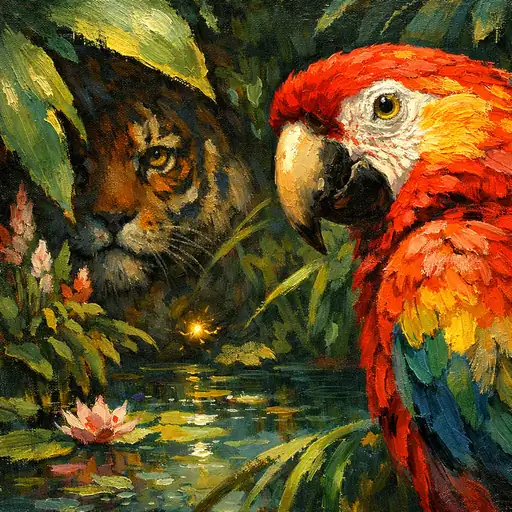 The Silent Breath of the Jungle
 Fierce Shadows of the Untamed Forest
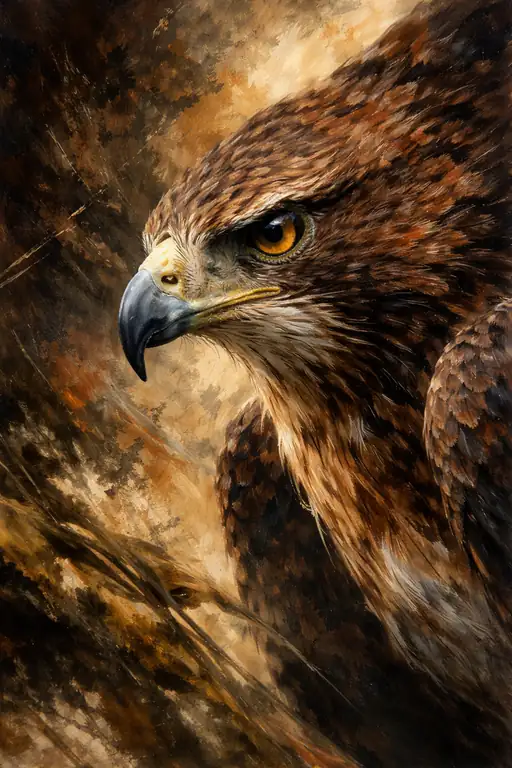 Gaze of the Wilderness
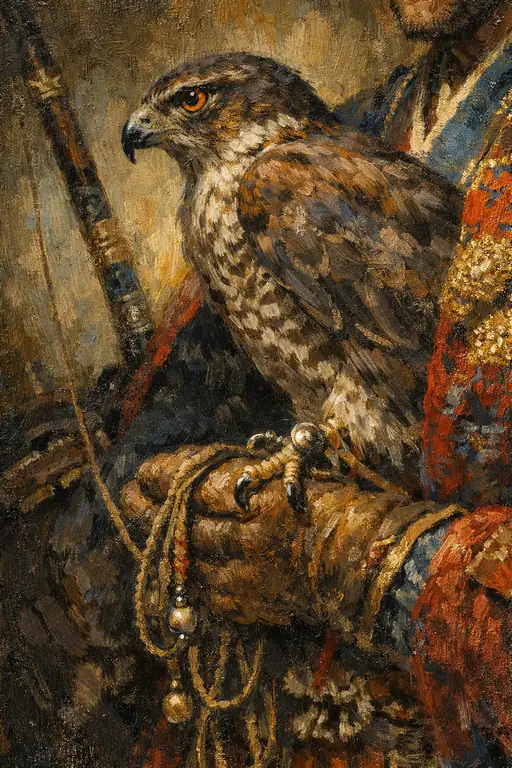 Noble Silence Before the Flight
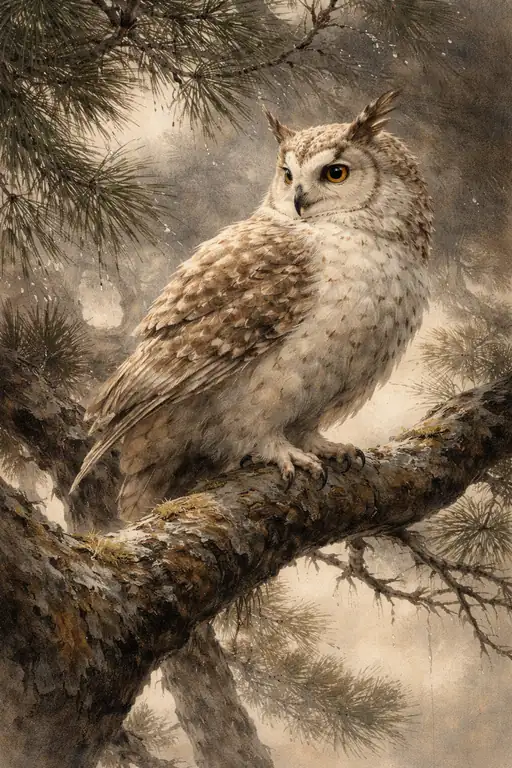 Watcher of the Mist-Clad Pines
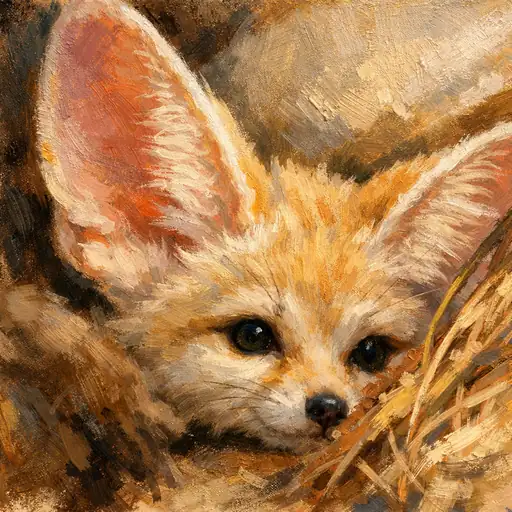 Alert Watcher of the Painted Desert
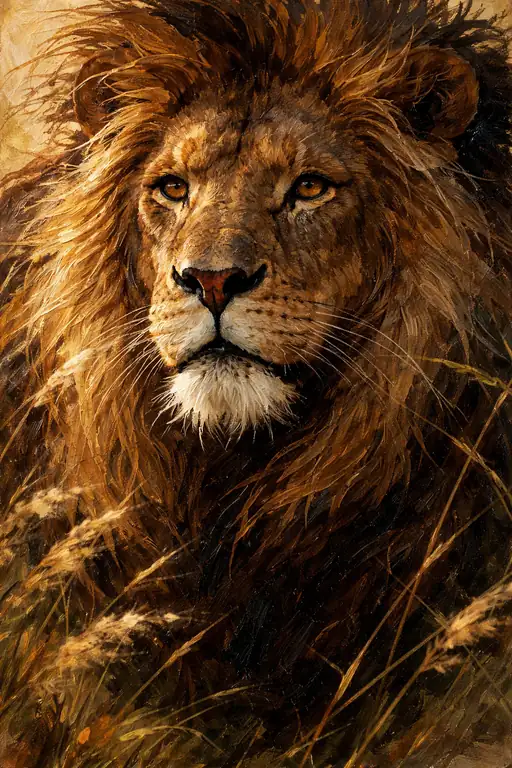 A King's Silent Endurance
 Curiosity Among the Daisies
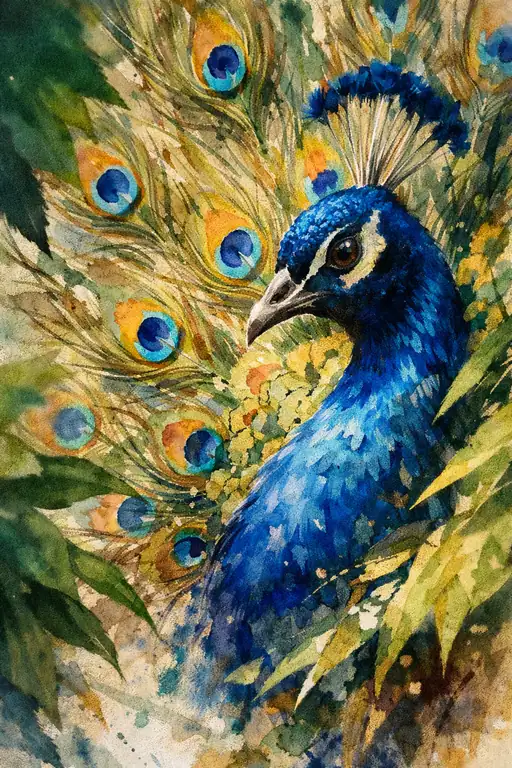 Sapphire Majesty Unveiled
 Serenade of the Babbling Brook
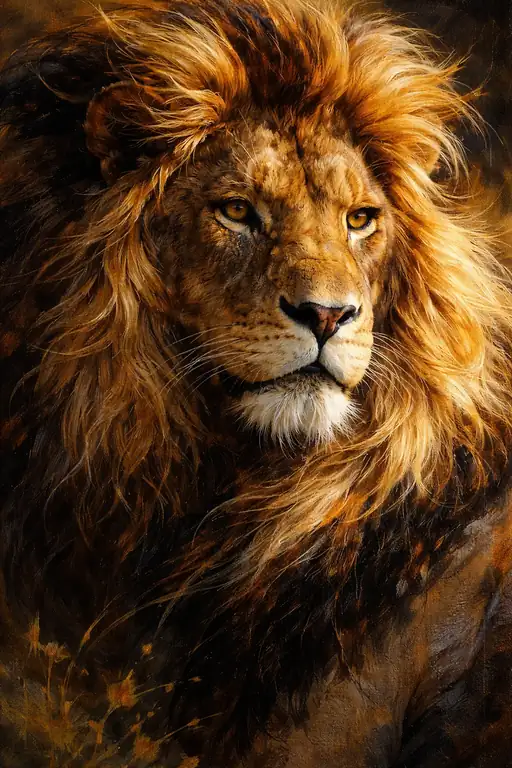 Golden Reverie of the Fields
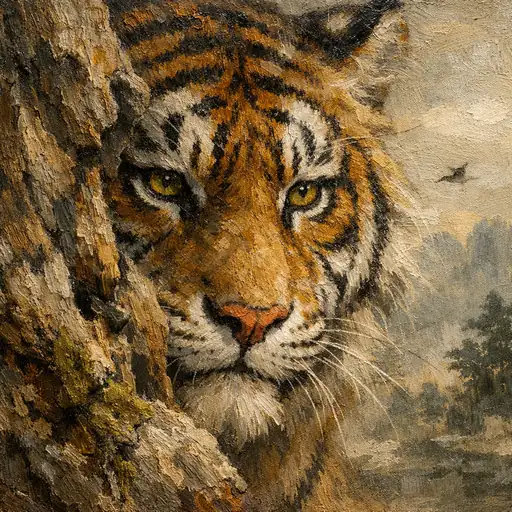 Gaze from the Silent Canopy