Tracing the Horizons of Curiosity
Critique
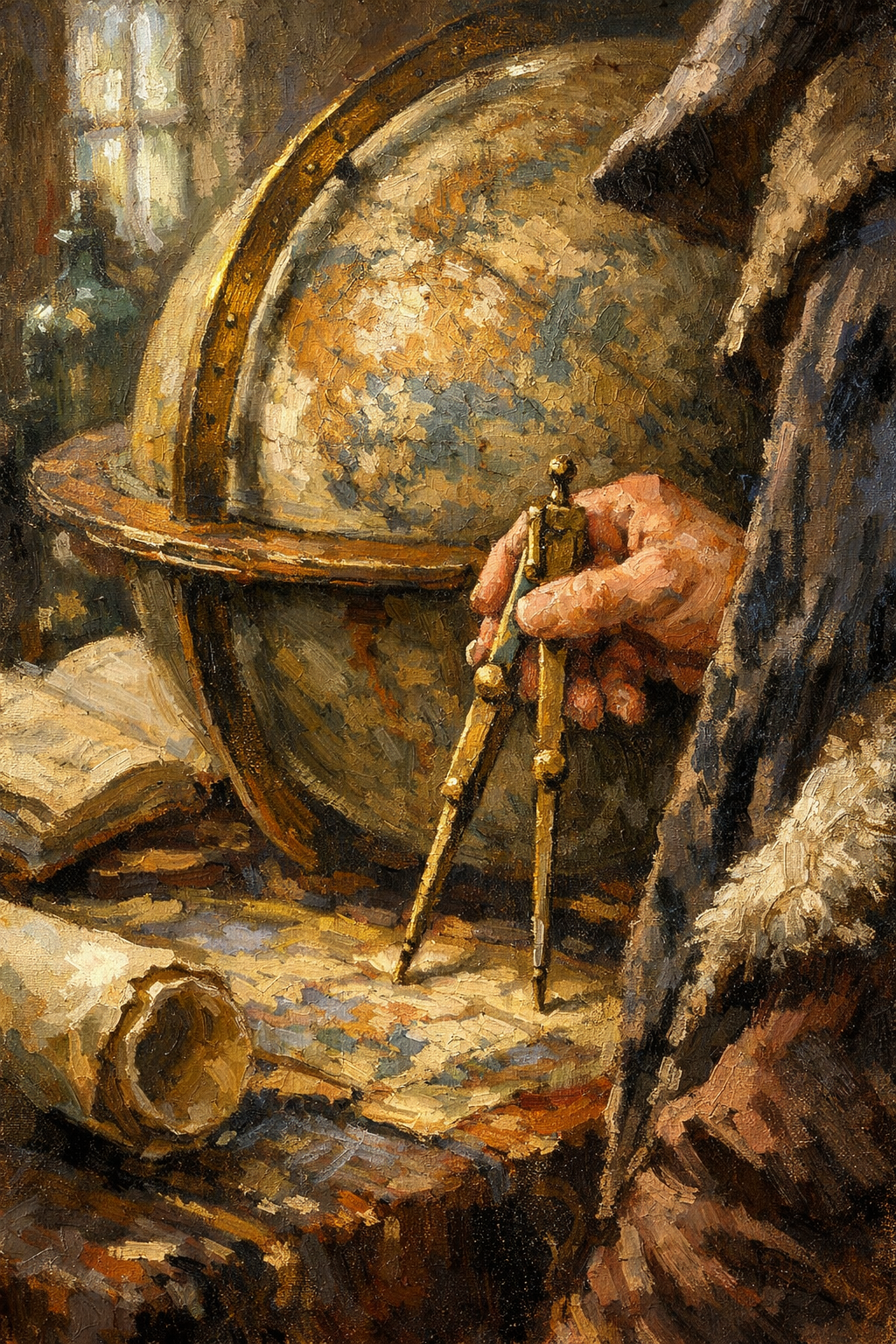
1. Introduction This oil painting features a globe, maps, and a hand using dividers, evoking a sense of intellectual exploration. The motifs, reminiscent of the Age of Discovery, are rendered through a heavy impasto technique that emphasizes the weight of history. It is a work that captures the essence of human curiosity and the systematic pursuit of knowledge. 2. Description A large, aged globe dominates the left side of the frame. In front of it, a weathered hand holds a metallic divider, measuring coordinates on a chart spread across the desk. Open books and rolled scrolls are scattered nearby, suggesting an environment of intense study. The palette is dominated by warm ochre and deep browns, with soft light filtering through the scene. 3. Analysis The color scheme creates a rich harmony of metallic glints and warm skin tones. Bold, textured brushstrokes define the crinkled surface of the parchment and the patina of the globe. The diagonal alignment of the divider serves as a focal point, introducing a dynamic element into the arrangement. Chiaroscuro is subtly applied to lend volume to the forms while maintaining a scholarly atmosphere. 4. Interpretation and Evaluation The work symbolically captures the intersection of science and labor in the quest for global understanding. The artist uses the thickness of paint to create a tactile sense of reality, showing a strong command of traditional techniques. By focusing on the hand, the composition transforms still-life objects into a narrative of active inquiry. This piece is technically accomplished and original in its presentation. 5. Conclusion Observers are drawn into the scene by the movement of the hand, experiencing the tension of a moment dedicated to uncovering the unknown. The rich textures created by the brushwork convey the enduring nature of the materials and the knowledge they contain. Ultimately, the painting stands as a powerful visualization of the human drive to map the world, executed with exceptional skill.
 The Last Horizon
 Whispers of the Old Cartographer
 Dreams of the New World
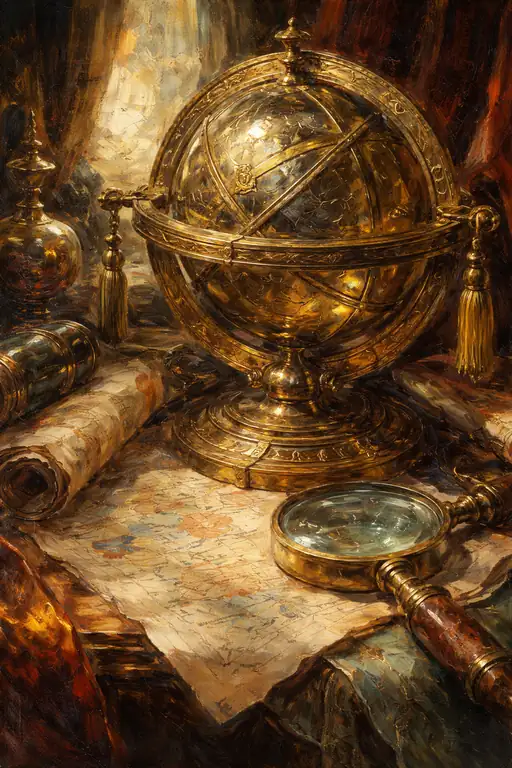 The Golden Map
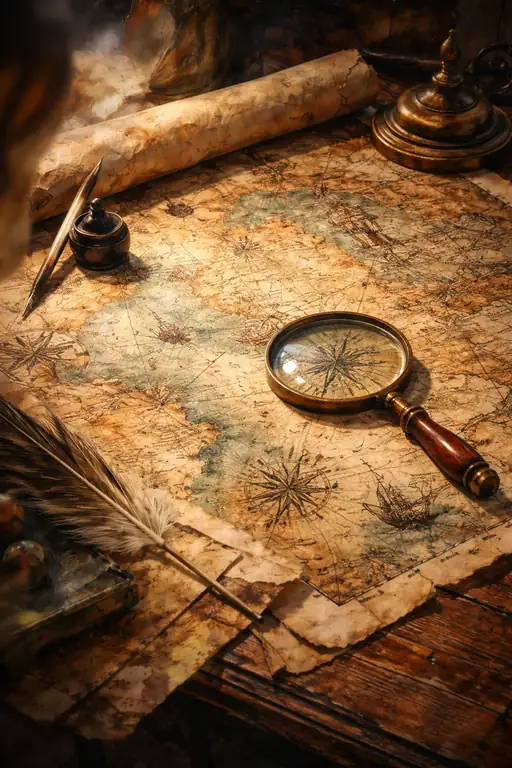 Navigating the Unknown
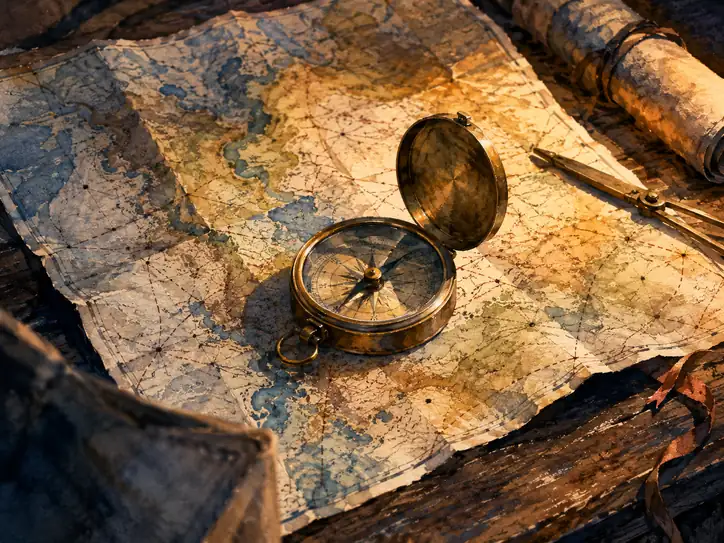 The Voyager's Silent Resolve
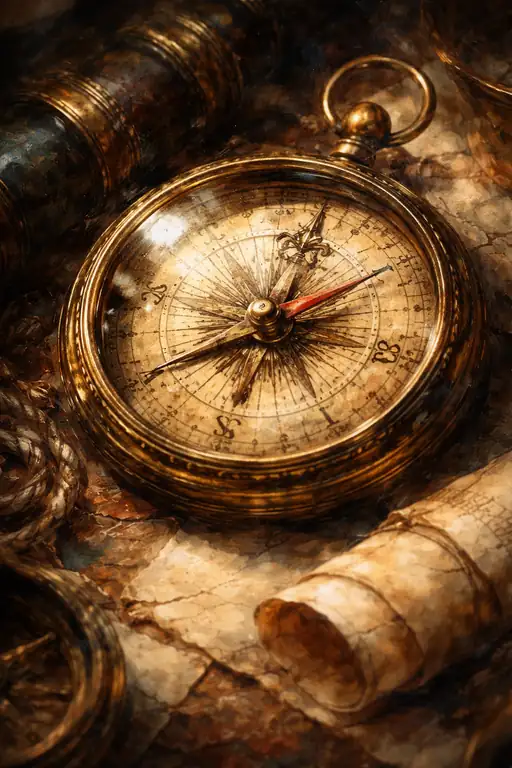 The Compass that Knows My Heart's Direction
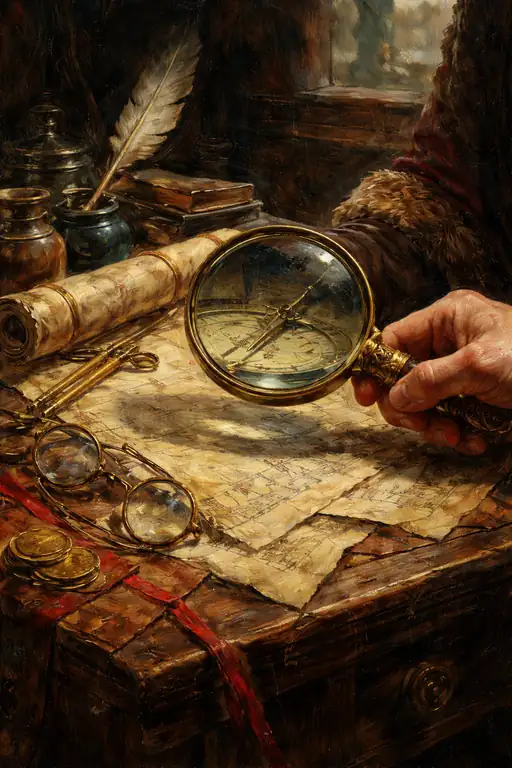 Horizons Yet Unseen
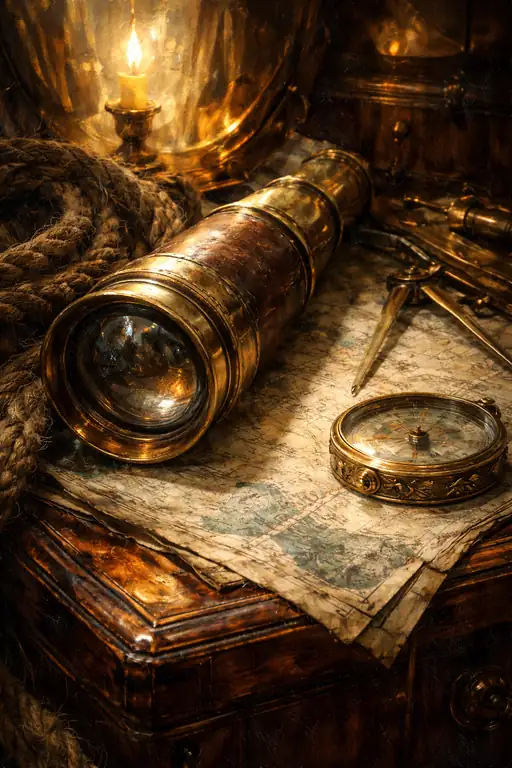 Whispers of the Uncharted Sea
 The Cartographer's River
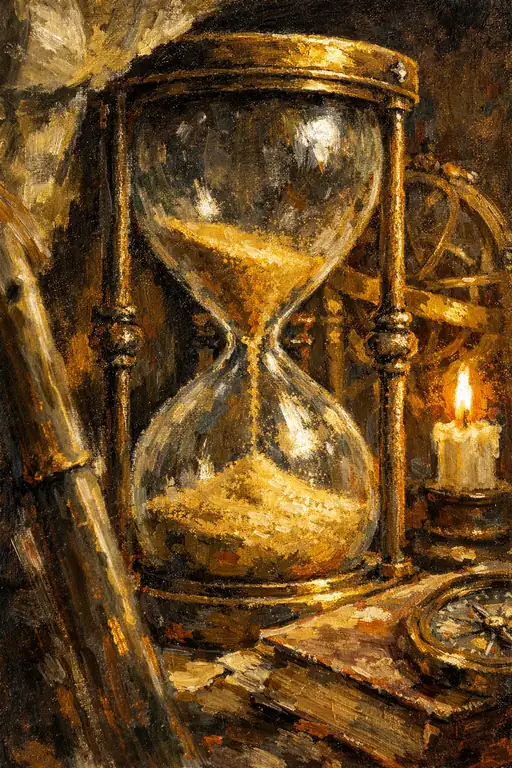 Echoes in the Falling Sand