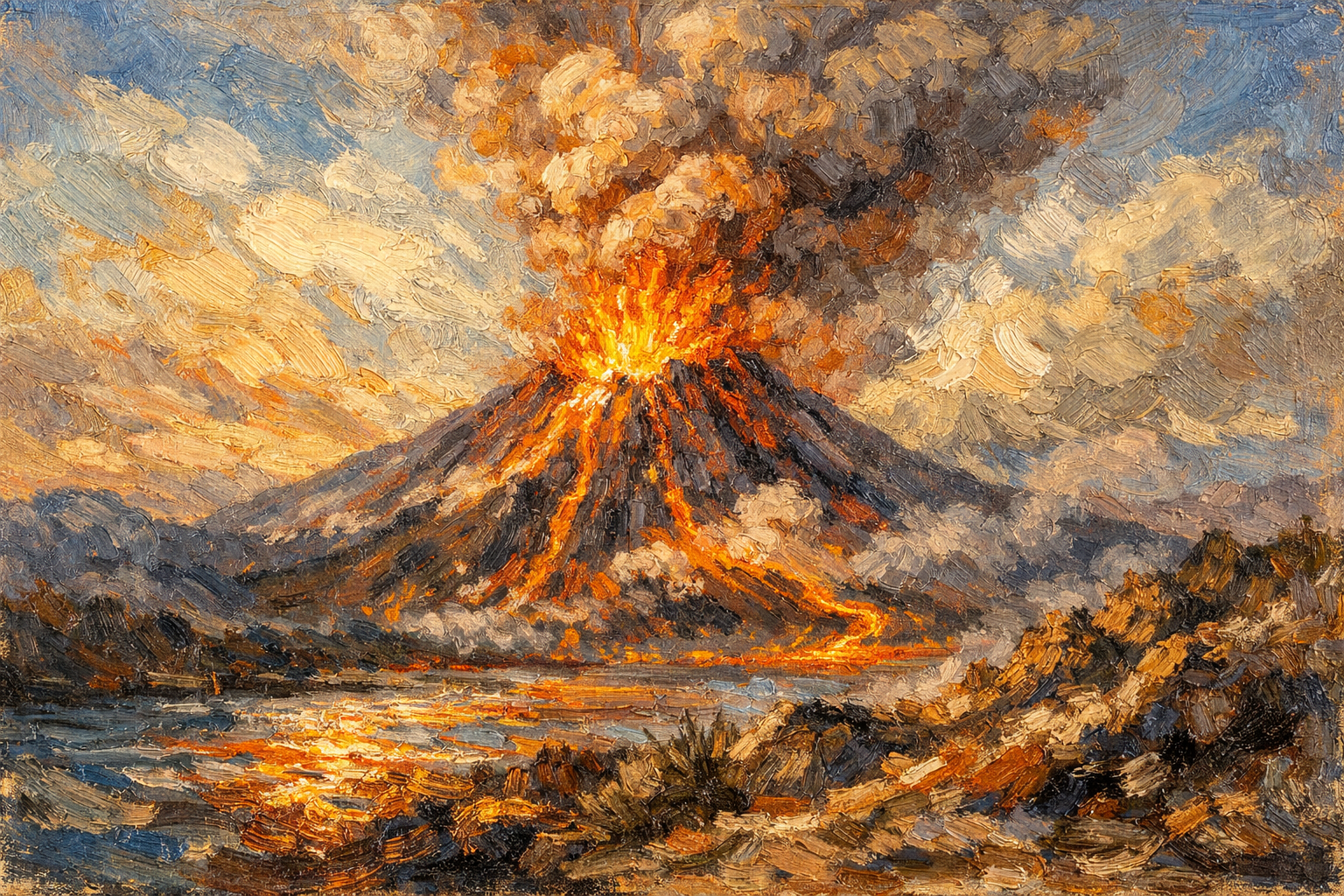
The Earth's Fiery Cry
Critique
1. Introduction This dramatic oil painting depicts the raw power of nature through the scene of a volcanic eruption, executed in an intense impressionist style. The composition is centered on the erupting peak, which serves as a source of both light and destructive energy. The work captures the sublime beauty and terrifying force of a geological event, rendered with a visceral sense of texture. 2. Description In the center of the frame, a massive volcano spews molten lava and thick, billowing smoke into a turbulent sky. Streams of bright orange and red lava flow down the slopes, carving paths through the dark mountain rock. In the foreground, a body of water reflects the intense, fiery glow from the peak, while the surrounding land is obscured by shadows and drifting ash. 3. Analysis The artist employs an extremely heavy impasto technique, where the paint is applied in thick, sculptural layers that mimic the ruggedness of the volcanic terrain. The palette is dominated by incandescent yellows, oranges, and reds, which are set against the somber tones of charcoal gray and deep blue. Short, chaotic brushstrokes in the smoke contrast with the long, fluid strokes representing the flowing lava. 4. Interpretation and Evaluation The painting successfully conveys the overwhelming scale and heat of the eruption. By focusing on the interplay of light and shadow, the artist emphasizes the transformative power of fire. The technical execution is exceptional, as it manages to maintain a sense of form amidst the chaotic application of paint, resulting in a composition that feels both spontaneous and carefully structured. 5. Conclusion Moving from the initial shock of the fiery colors to an appreciation of the complex textural layers reveals a deep fascination with elemental forces. This work is a powerful testament to the expressive potential of the oil medium. Ultimately, it stands as a hauntingly beautiful study of nature at its most violent and awe-inspiring.
Same Subcategory
Similar Artworks
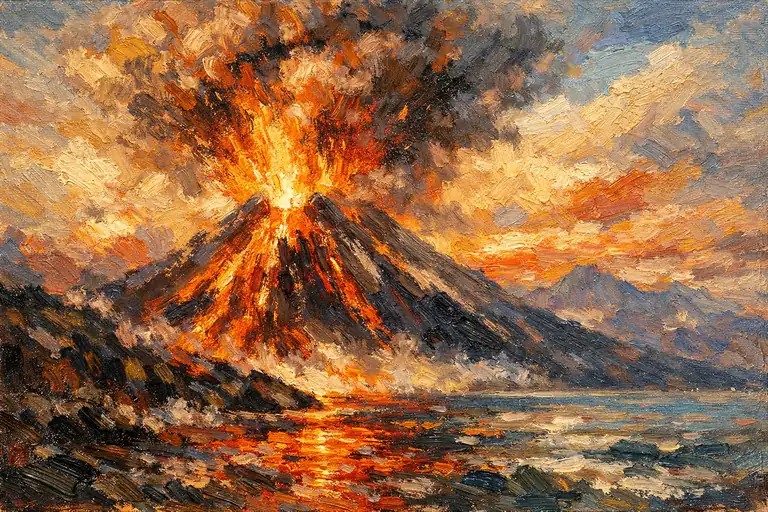 Dance of the Primordial Flame
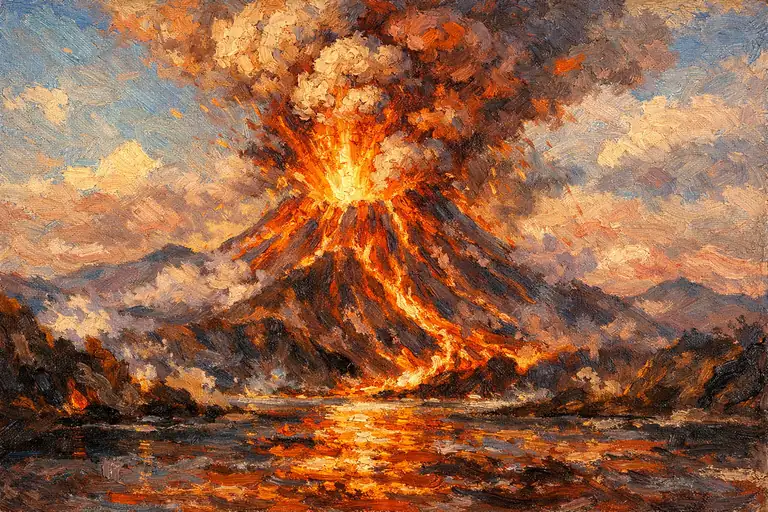 Passion Etched in Magma
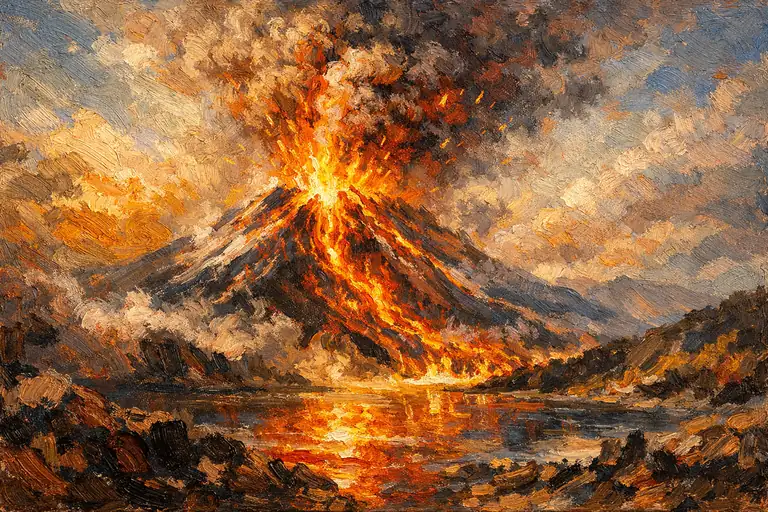 Heaven and Earth Ablaze
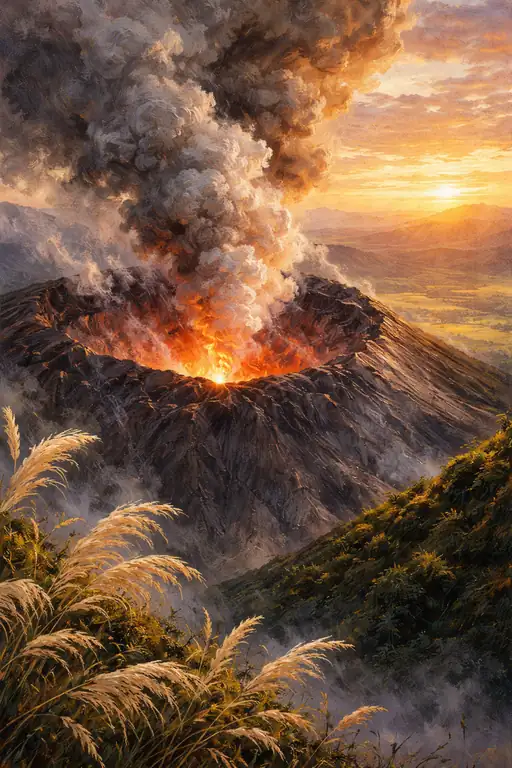 Symphony of the Burning Earth
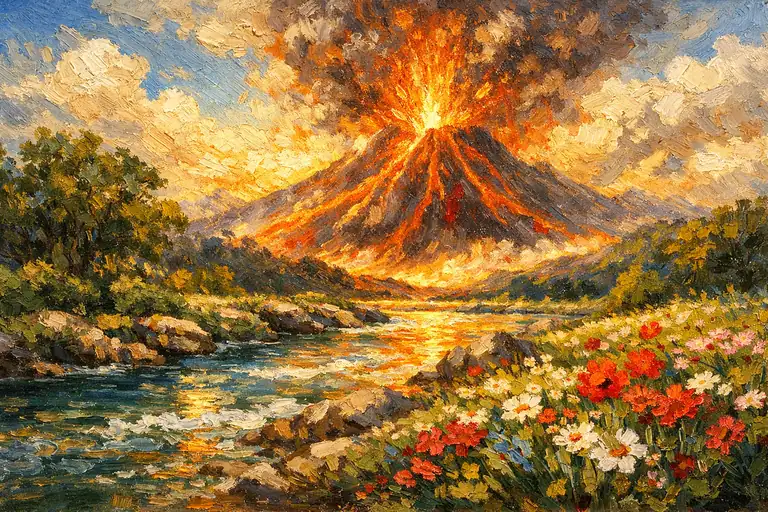 The Breath of the Earth's Fire
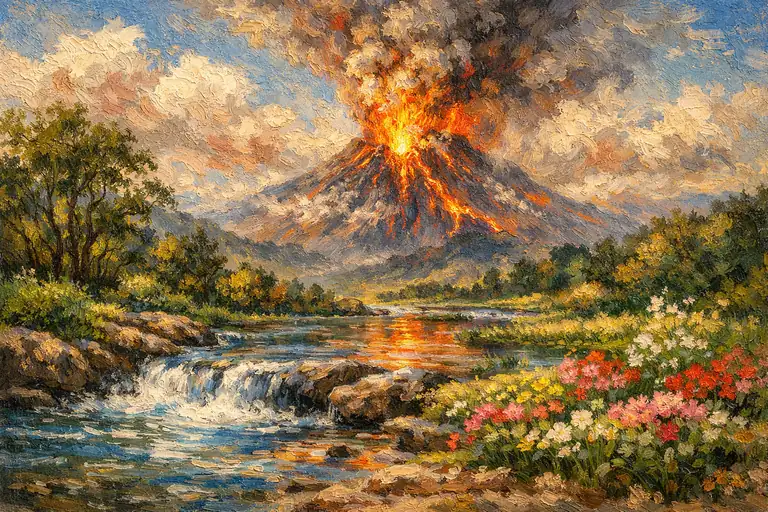 The Sublime Echoes of Destruction
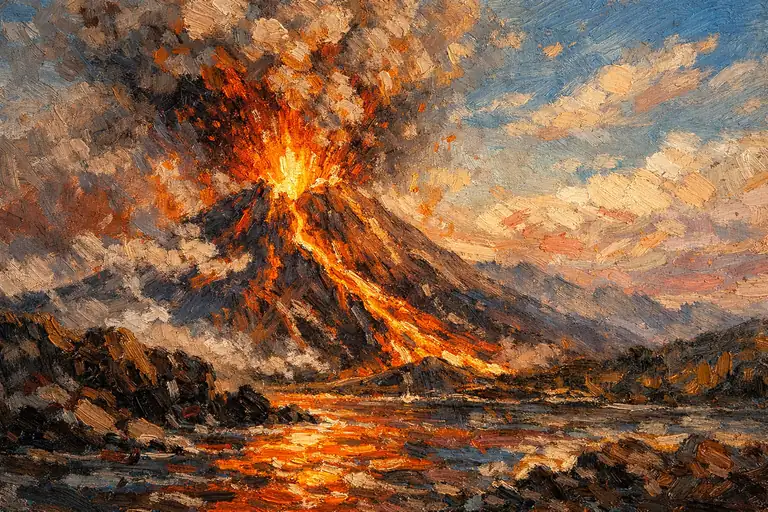 Where Silence Meets the Inferno
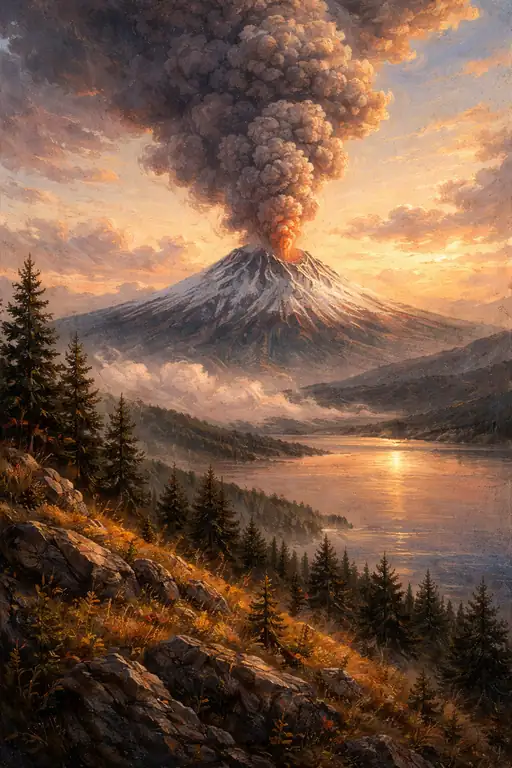 Majestic Fury Beneath the Setting Sun
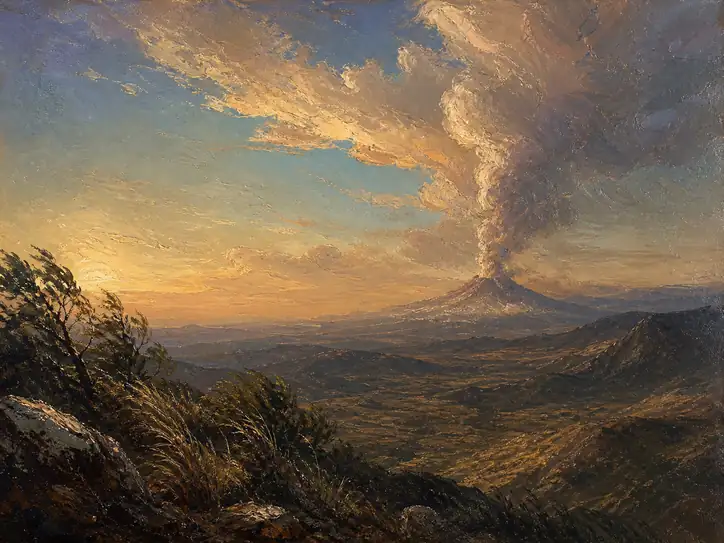 A Golden Farewell to the Sleeping Giant
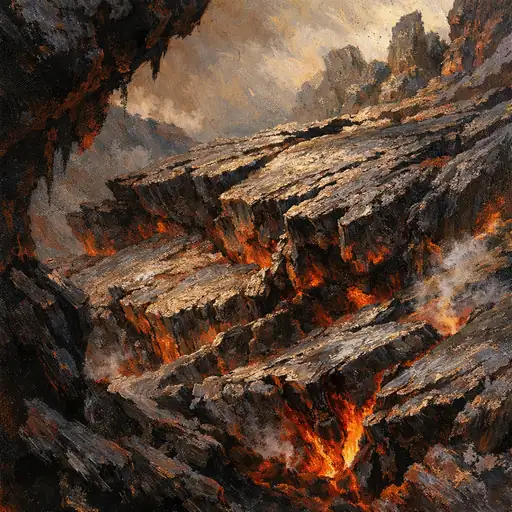 Tears of the Earth's Core