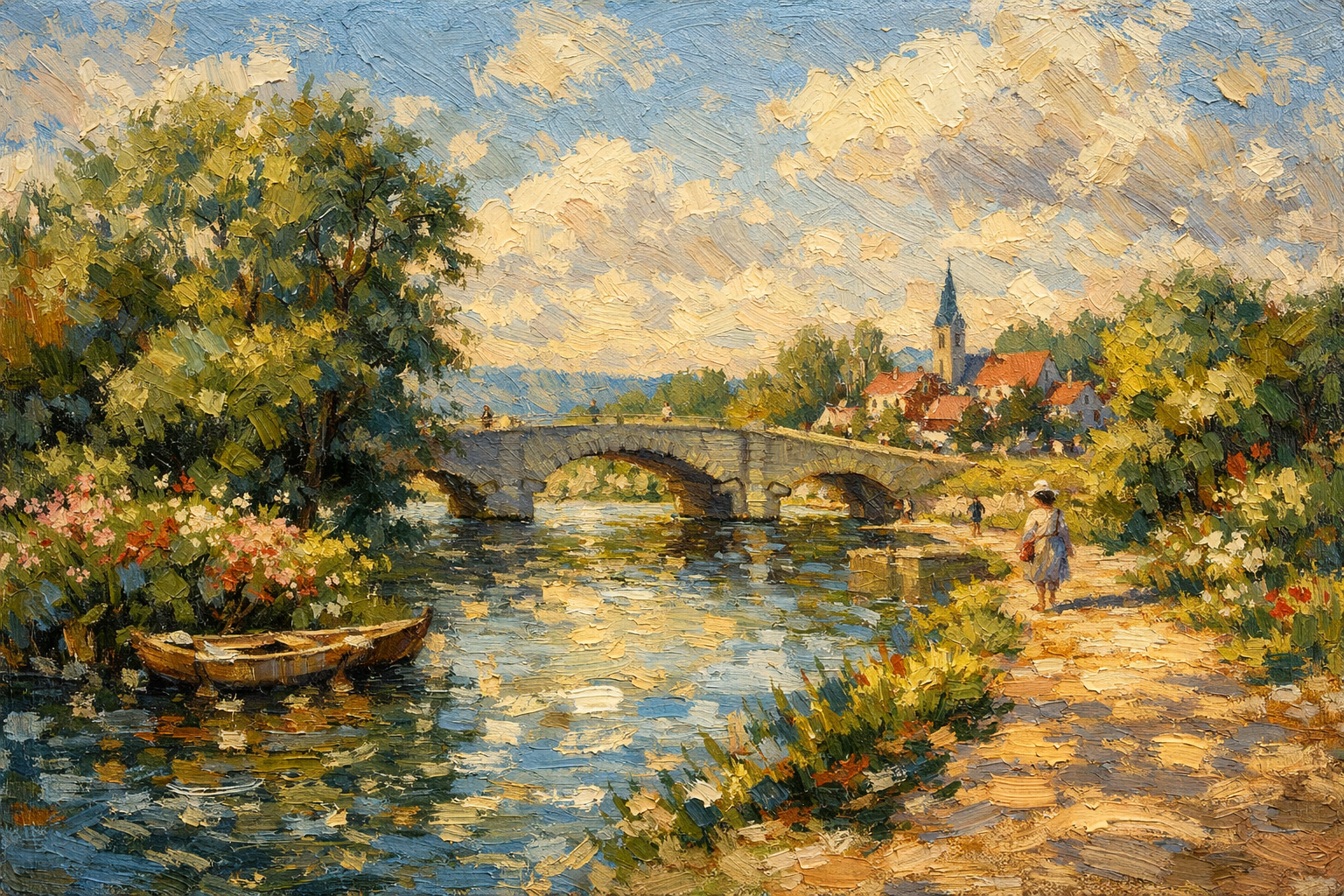
A Symphony of Flowing Light
Critique
1. Introduction This oil painting presents a vibrant river scene captured in a late 19th-century impressionist style. The composition is balanced by lush foliage on the left and a sun-drenched path on the right, leading the viewer's eye toward a central stone bridge. The overall atmosphere is one of tranquil afternoon light, reflecting the peaceful coexistence of nature and human architecture. 2. Description In the foreground, a small wooden boat is moored near a dense thicket of green trees and pink flowers. A stone bridge with multiple arches spans the calm water, connecting the two banks. On the right, a solitary figure walks along a dirt path, while the far background reveals a quaint village dominated by a slender church spire under a sky filled with textured clouds. 3. Analysis The artist employs a heavy impasto technique, where thick layers of paint create a physical texture that enhances the play of light. Short, energetic brushstrokes define the ripples in the water and the leaves of the trees. The palette is rich with golden yellows, deep greens, and cerulean blues, using complementary colors to suggest the warmth of the sun and the coolness of the shadows. 4. Interpretation and Evaluation The work succeeds in capturing a fleeting moment of light and atmosphere, characteristic of the Plein Air tradition. The diagonal path provides a strong sense of depth, drawing the viewer into the scene. The technical execution shows a high degree of skill in using color to create form and volume without relying on precise outlines, resulting in a cohesive and emotionally resonant image. 5. Conclusion Moving from a general impression of brightness to a deeper appreciation of the textured surface, one finds a masterful study of light. The painting serves as a reminder of the enduring beauty found in everyday landscapes. It effectively conveys a sense of timelessness through its traditional subject matter and expressive application of paint.
Same Subcategory
Similar Artworks
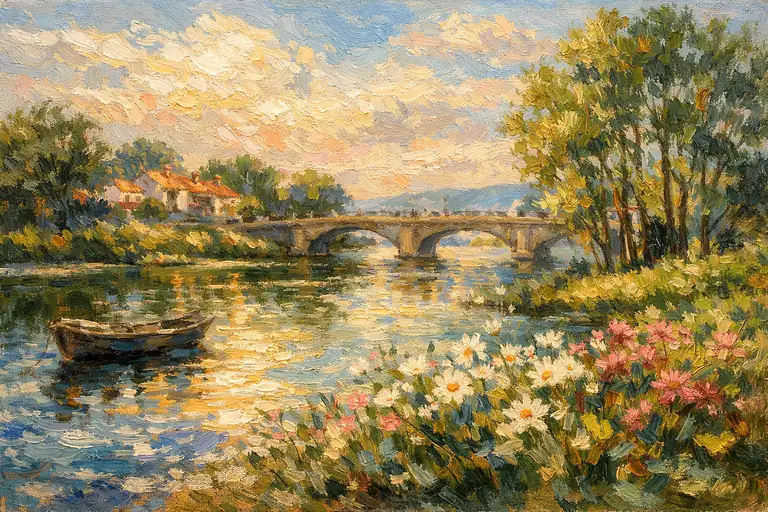 Evening's Solace by the Stone Bridge
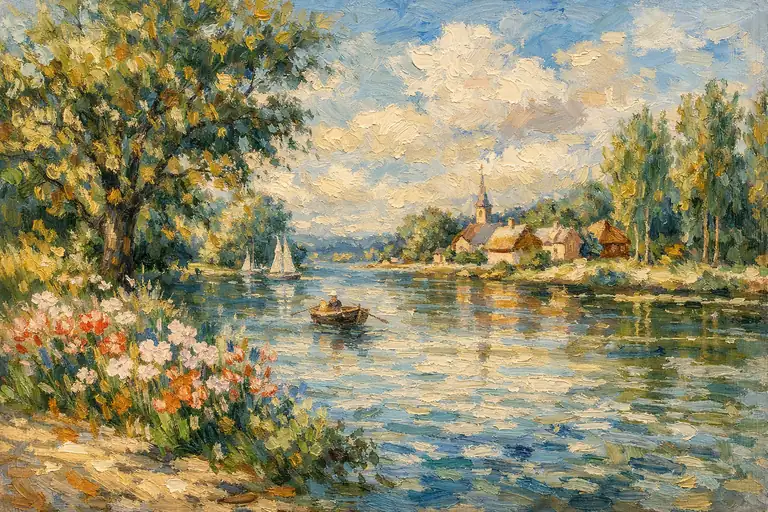 A Gentle Breath on the River
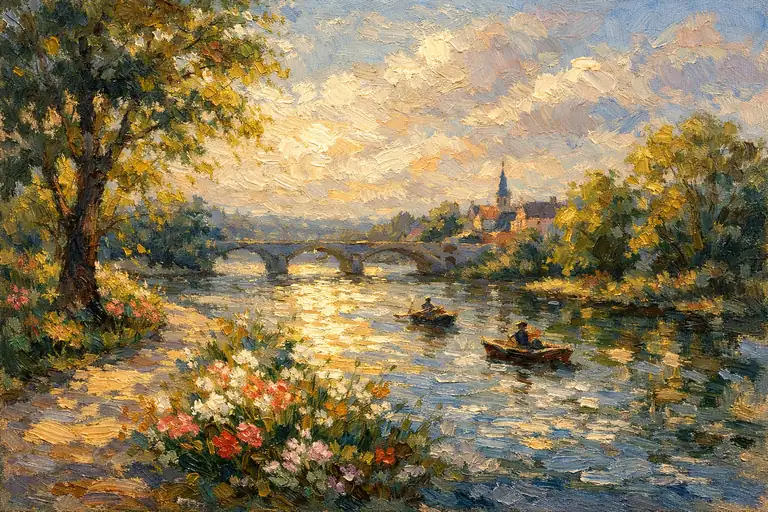 The Golden Hour's Embrace
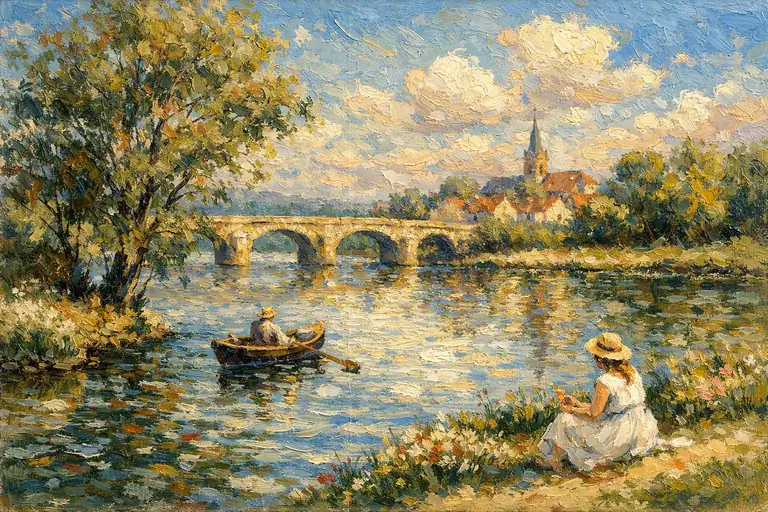 Sunlight Whispers to the Bridge
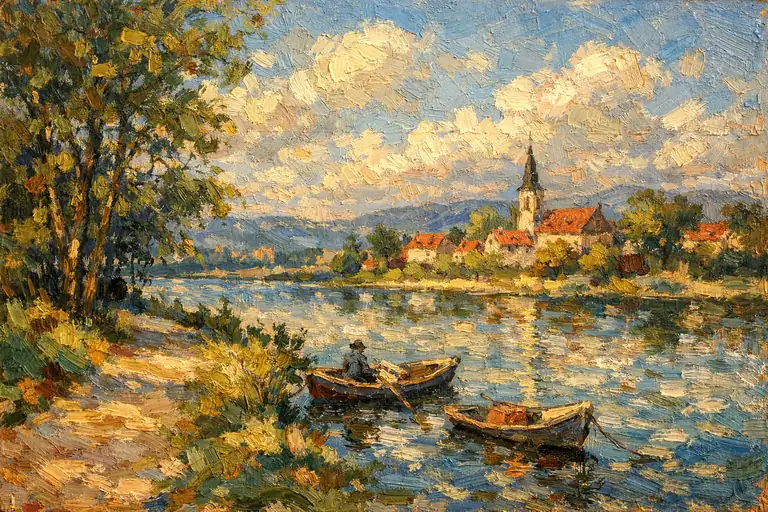 The Lively Pulse of the Current
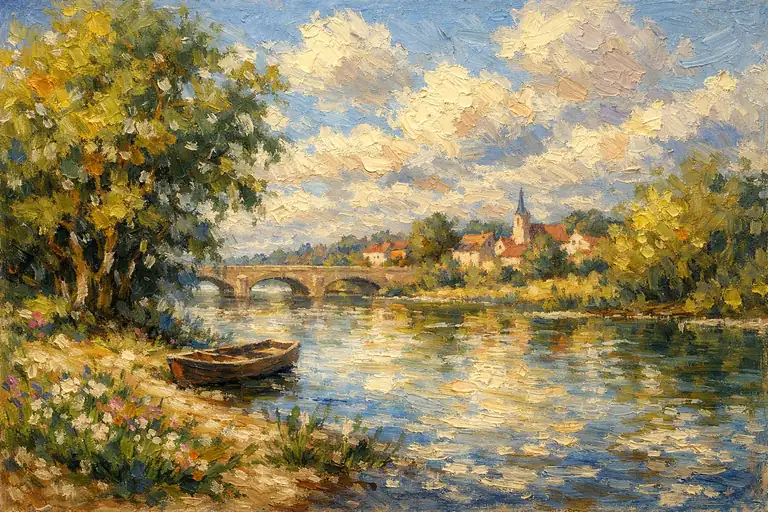 Where the Sky Sleeps on the Water
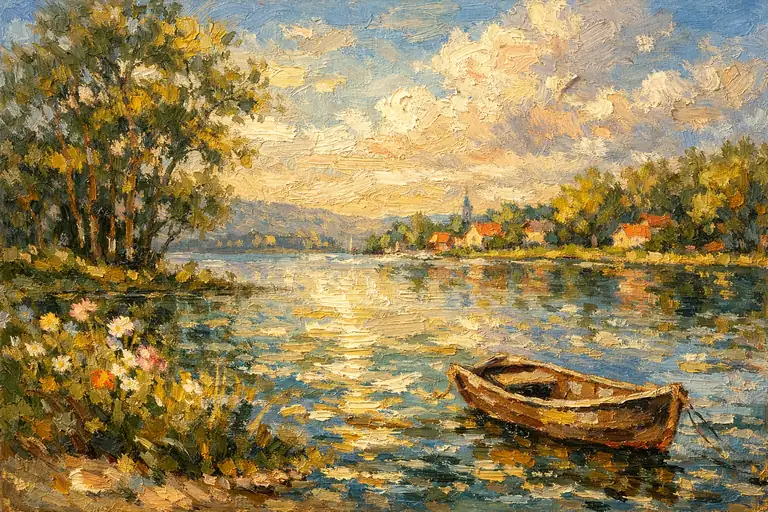 Serenade on the Placid Lake
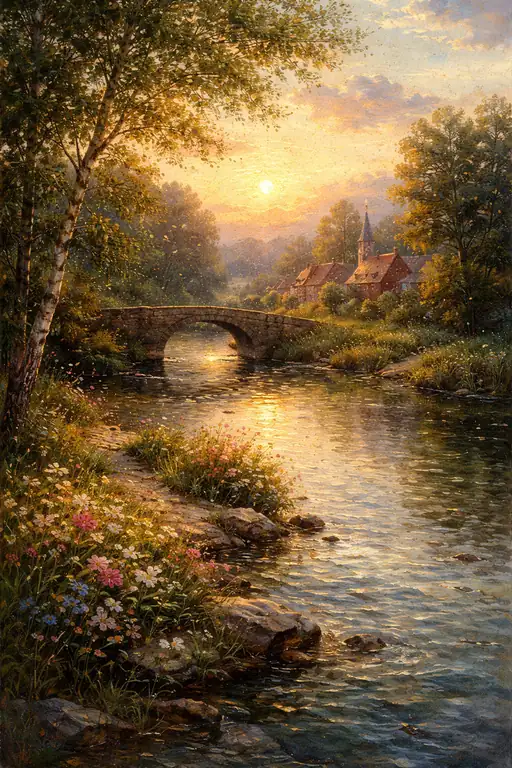 Golden Echoes of the River
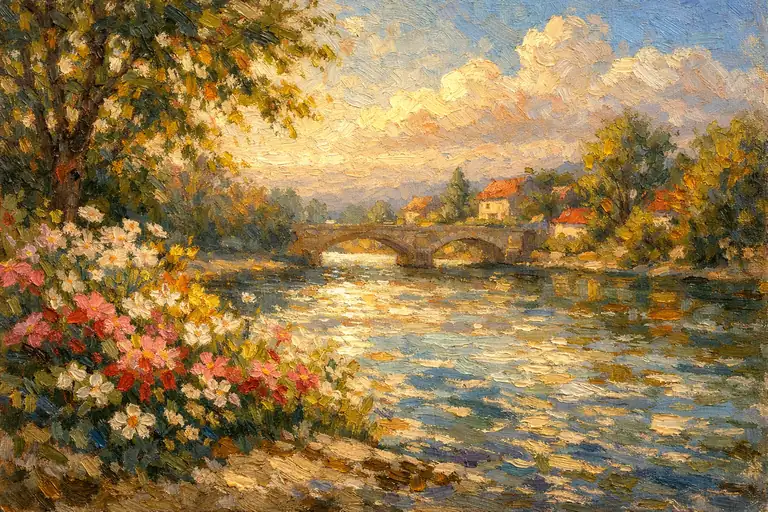 Sun-Drenched Memories by the River
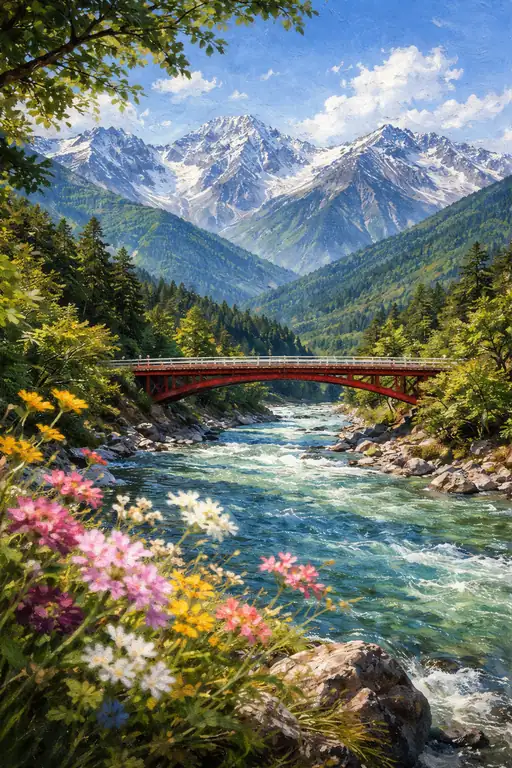 The Crimson Gateway to the Snow Peaks