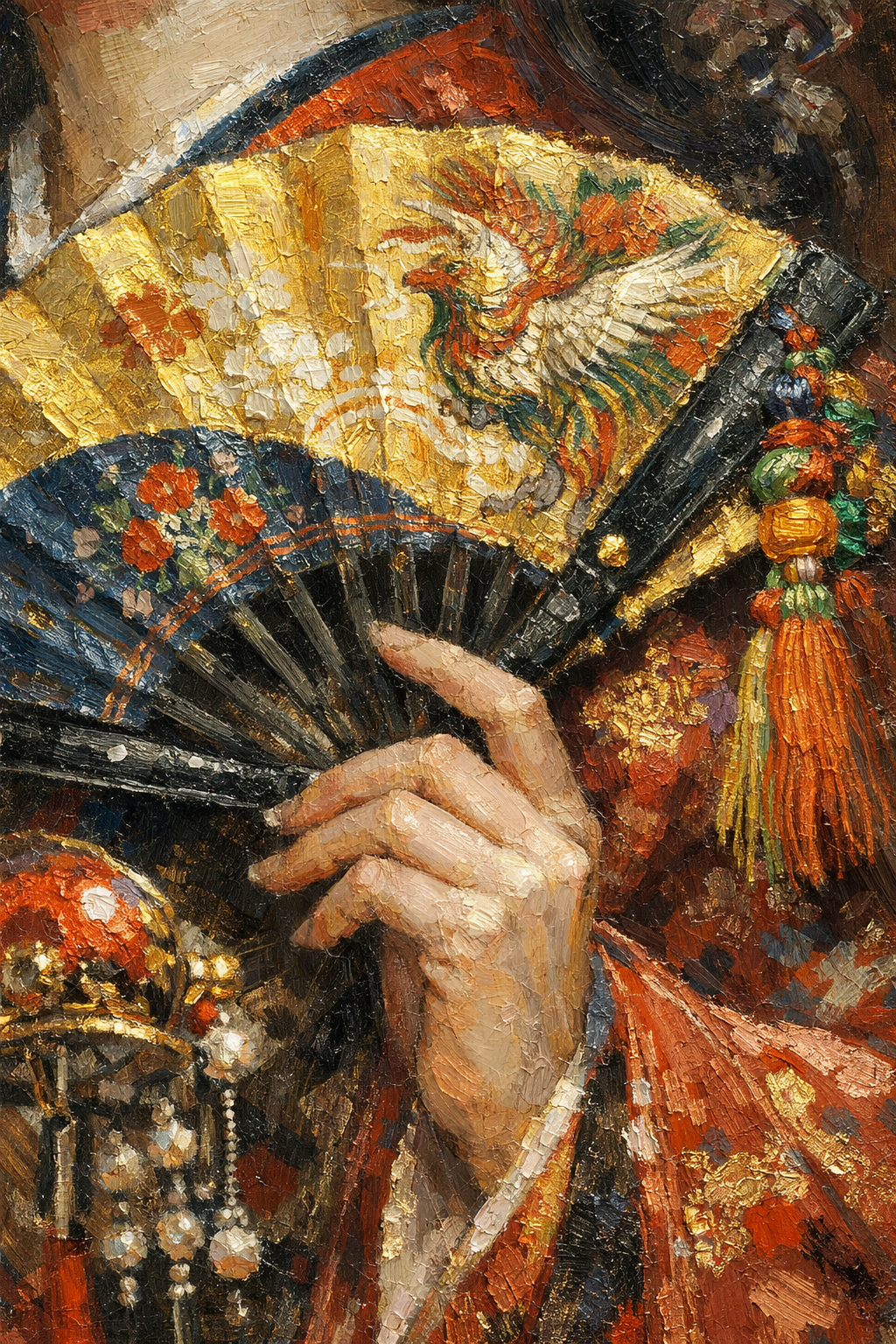
Dance of the Crimson Phoenix
Critique
1. Introduction This oil painting presents a magnificent close-up of a hand holding ornate folding fans, rendered with an extraordinary intensity of color and texture. The work explores the intersection of human form and exquisite craft, utilizing heavy impasto to create a visually rich and tactile experience. 2. Description The composition centers on a finely detailed hand grasping two decorative fans. The primary fan is gilded, featuring a vibrant depiction of a phoenix in red and green, while a second, darker fan with floral patterns is partially visible behind it. Elaborate tassels in orange and green hang from the wrist, and intricate jewelry composed of pearls and golden filigree occupies the lower left corner. The figure is dressed in a deep red garment adorned with golden patterns, the fabric depicted with thick, energetic strokes of paint. 3. Analysis The artist employs a dynamic composition where the converging lines of the fans and decorative elements create a sense of movement and visual density. The palette is dominated by opulent gold and brilliant crimson, punctuated by the cooler tones of the green tassels and navy blue fan. The application of paint is remarkably thick, with the physical ridges of the impasto reflecting light in complex ways across the surface. This technique is particularly effective in defining the muscular structure of the hand and the three-dimensional quality of the ornamental details. 4. Interpretation and Evaluation The painting serves as a powerful meditation on the concept of ceremonial beauty and the art of adornment. Its technical execution is superb, demonstrating a mastery of varied textures that range from the supple skin of the hand to the rigid elegance of the gilded fans. By blending traditional East Asian motifs with a bold, expressive style, the work offers a fresh perspective on classical aesthetics, emphasizing the vitality and material weight of cultural symbols. 5. Conclusion Through its vibrant color harmony and compelling materiality, the piece succeeds in capturing the spiritual and physical essence of opulence. While initial focus is drawn to the dazzling use of gold and red, a prolonged study reveals the profound skill involved in harmonizing such complex elements into a unified and evocative whole.
Same Subcategory
Similar Artworks
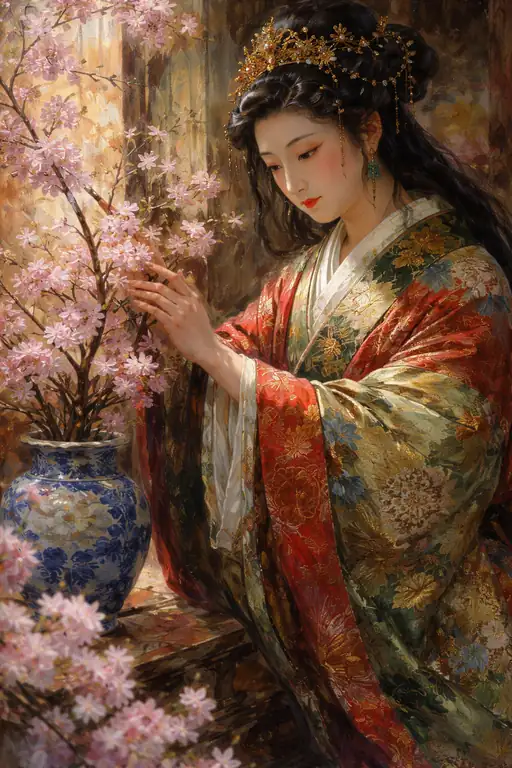 Contemplation Beneath the Spring Petals
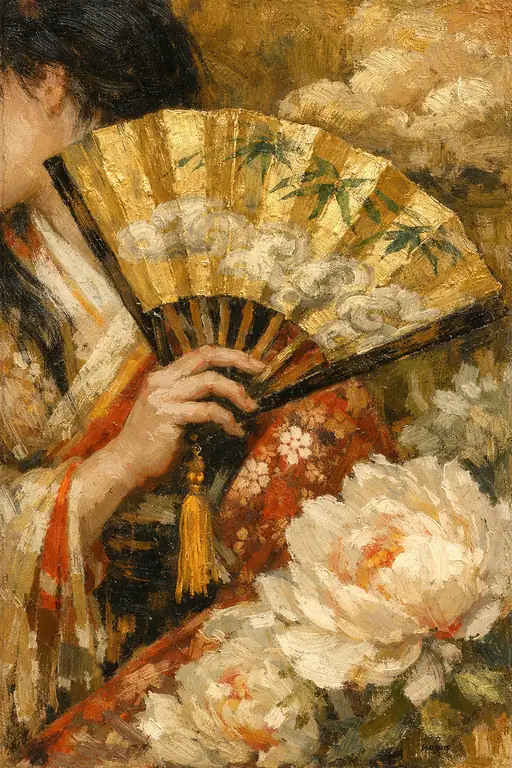 Elegance of the Peony and Golden Fan
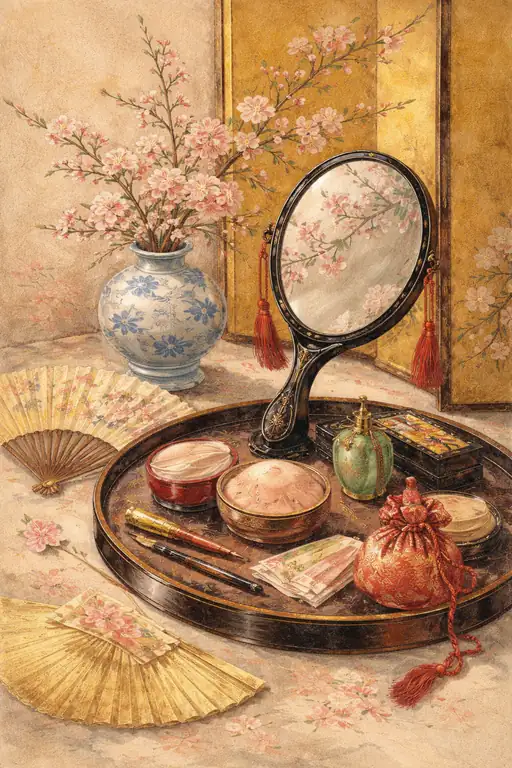 Spring's Eternal Reflection
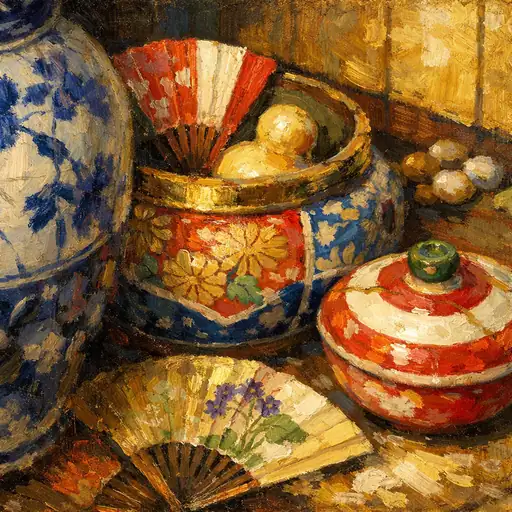 Whispers of Antiquity
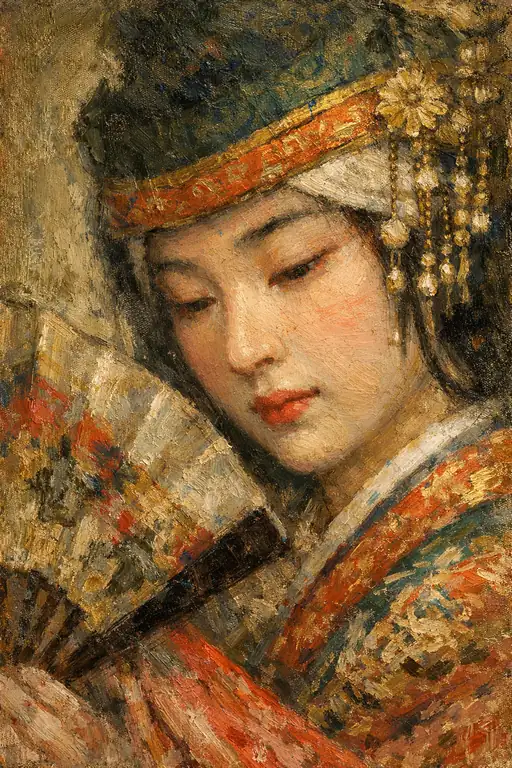 A Graceful Gaze Through Time
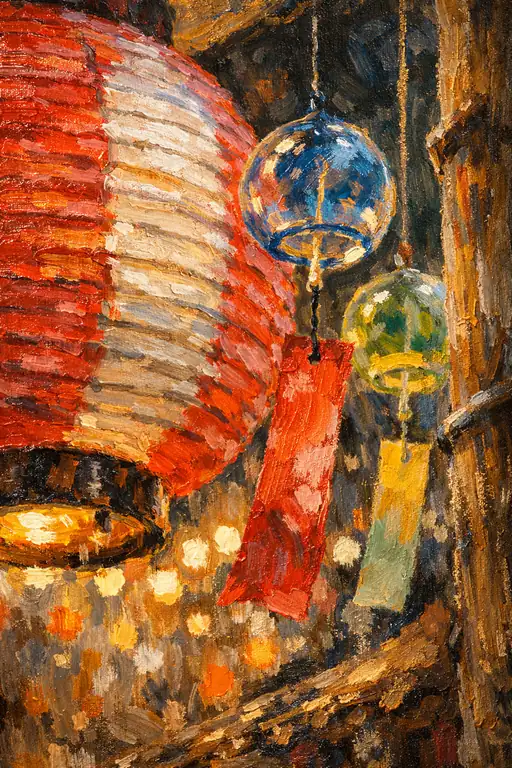 Whispers of the Golden Sun
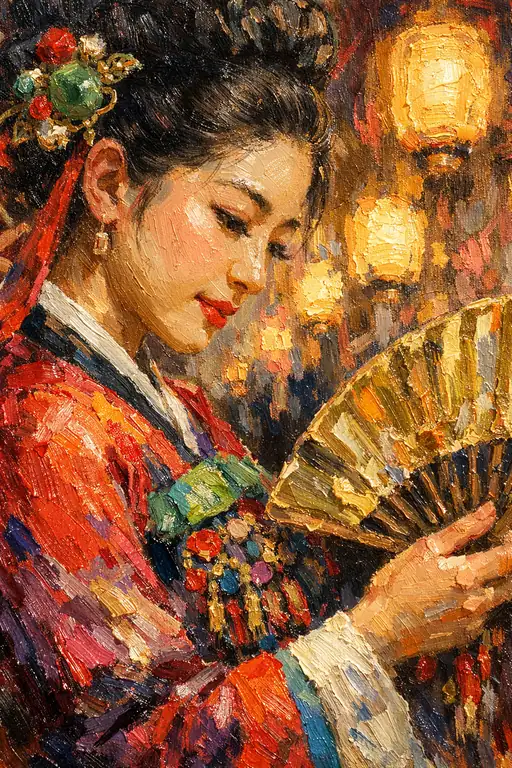 Golden Embers of Forgotten Evenings
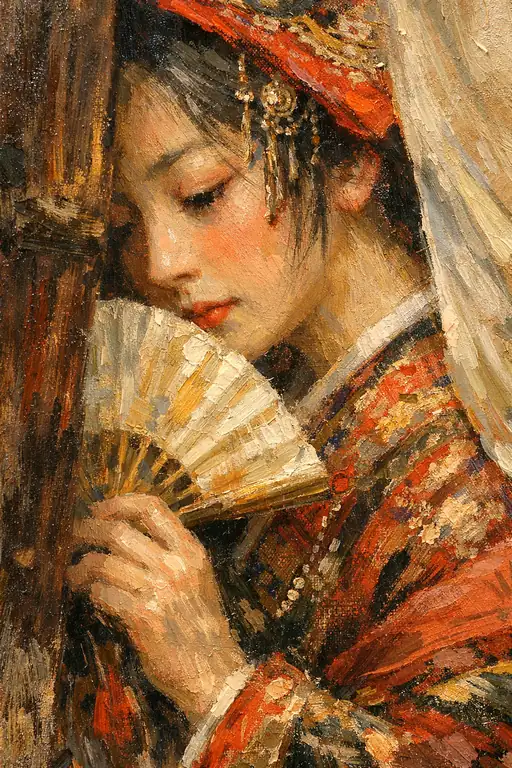 Veiled Elegance Beyond the Fan
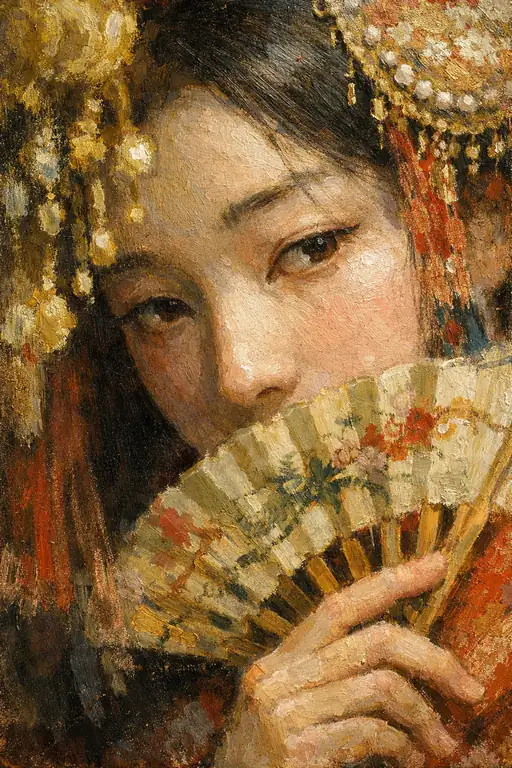 Secrets Concealed Behind the Fan
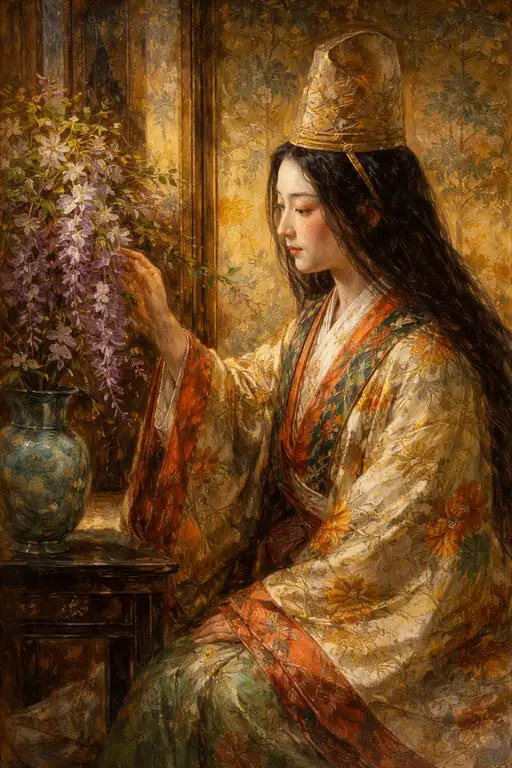 Wisteria Blooms in Golden Silence