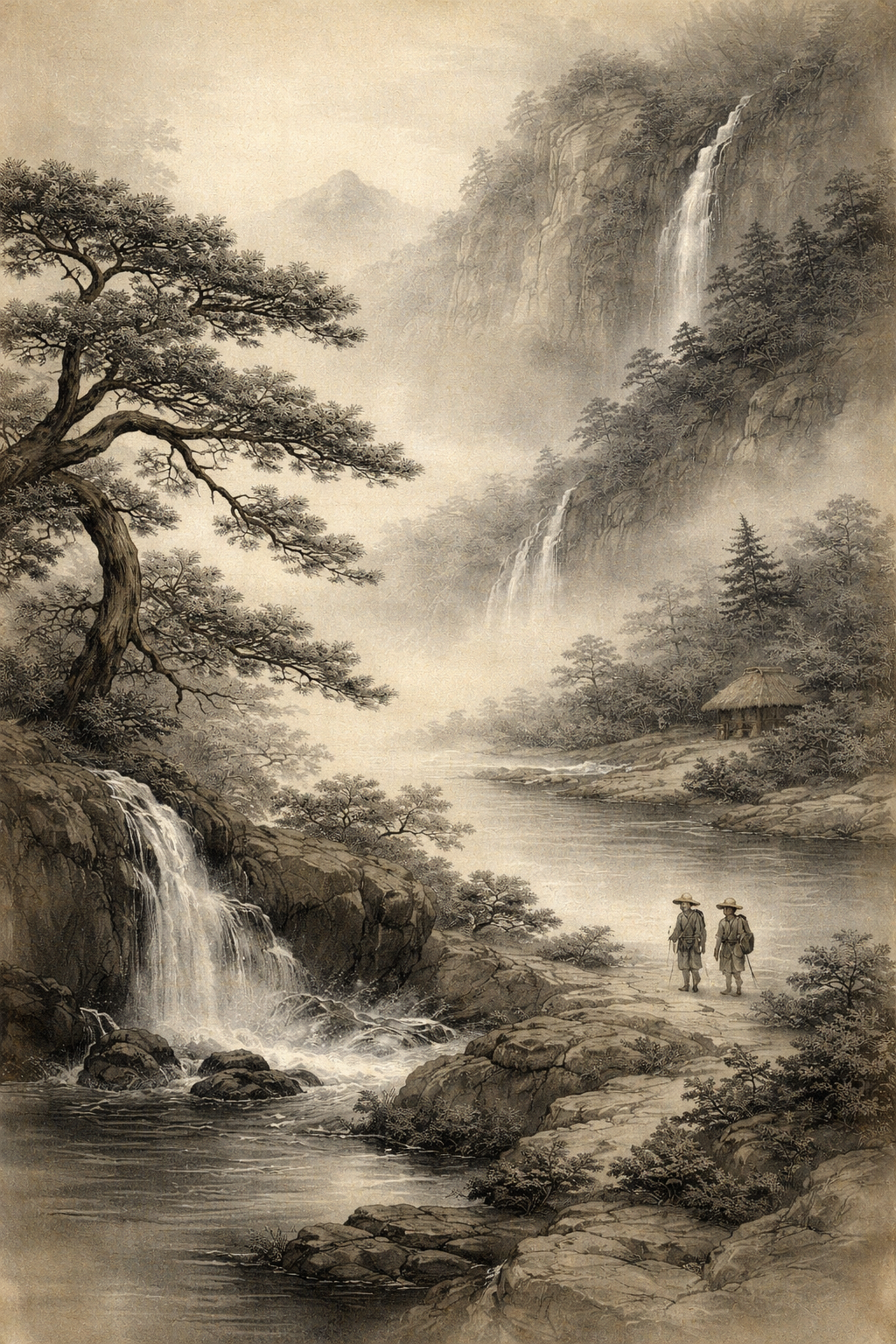
Wandering Through the Mist of Eternity
Critique
1. Introduction This monochrome landscape painting, executed in the traditional East Asian style, presents a serene and majestic scene of mountains and water. The work utilizes a monochromatic palette to capture the profound beauty of nature through sophisticated ink-wash techniques. 2. Description In the foreground, a gnarled pine tree stands prominently on the left, overlooking a cascading waterfall that flows into a river. Two travelers wearing traditional straw hats are depicted walking along the riverbank on the right. In the middle ground, a small thatched-roof hut sits nestled among trees, while distant waterfalls plunge from misty cliffs into the hazy depths of the valley. 3. Analysis The composition achieves balance through the interaction between the solid presence of the pine tree and the ephemeral nature of the mist. The artist employs varied brushwork and ink density to define the rugged texture of the rocks and the delicate foliage of the trees. Atmospheric perspective is masterfully applied, using subtle gradations of tone to create a sense of vast distance and spiritual depth. 4. Interpretation and Evaluation The artwork explores the harmonious relationship between humanity and the vastness of the natural world. Its technical execution is remarkable, particularly in the detailed rendering of the pine needles and the fluid movement of the water. The piece successfully evokes a sense of timelessness and tranquility, demonstrating a high level of artistic skill in managing complex spatial relationships within a limited color scheme. 5. Conclusion Through its meticulous detail and evocative use of space, the painting offers a profound meditation on the essence of the landscape. Initial focus on the intricate details gradually gives way to a broader appreciation of the overall atmospheric harmony, marking it as a significant achievement in traditional landscape art.
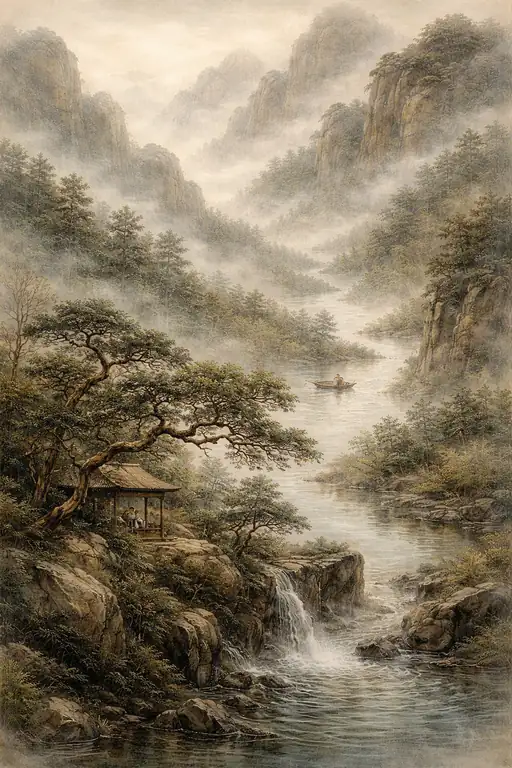 Sanctuary of the Drifting Mist
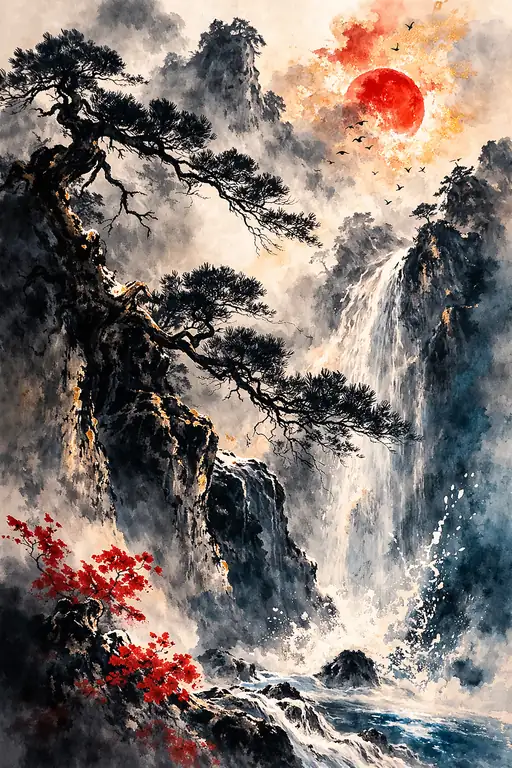 Alchemist's Light
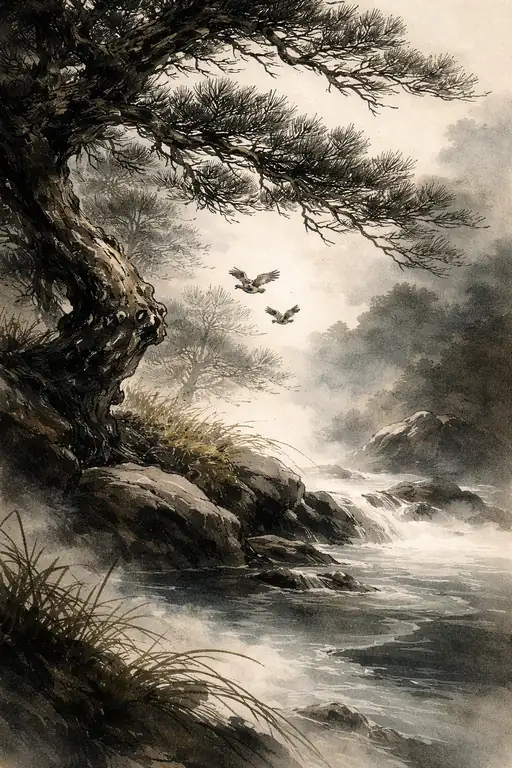 Eternal Vigor of the Ancient Pine
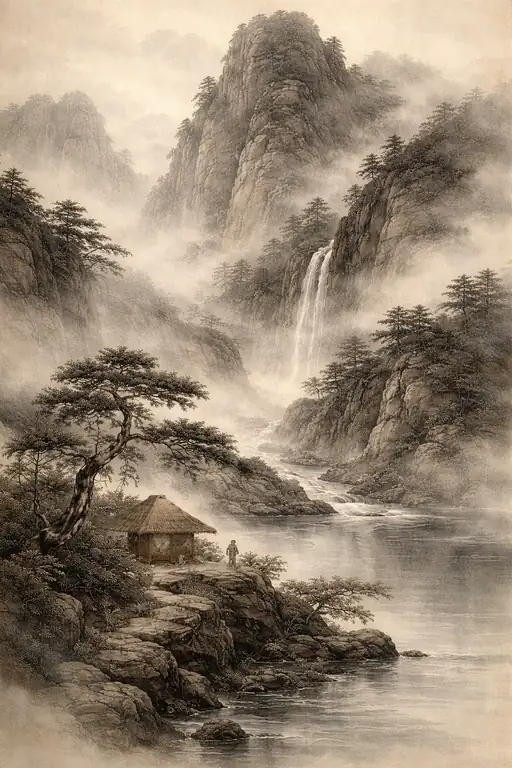 Echoes of the Ink Peaks
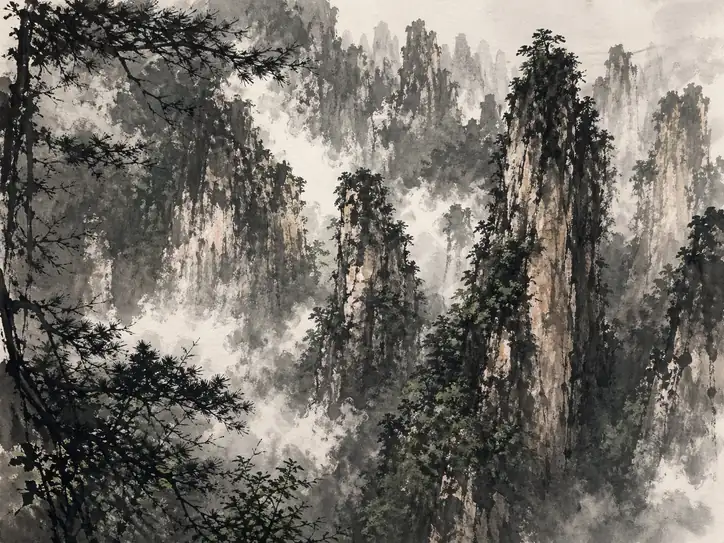 The Silent Breath of Ancient Peaks
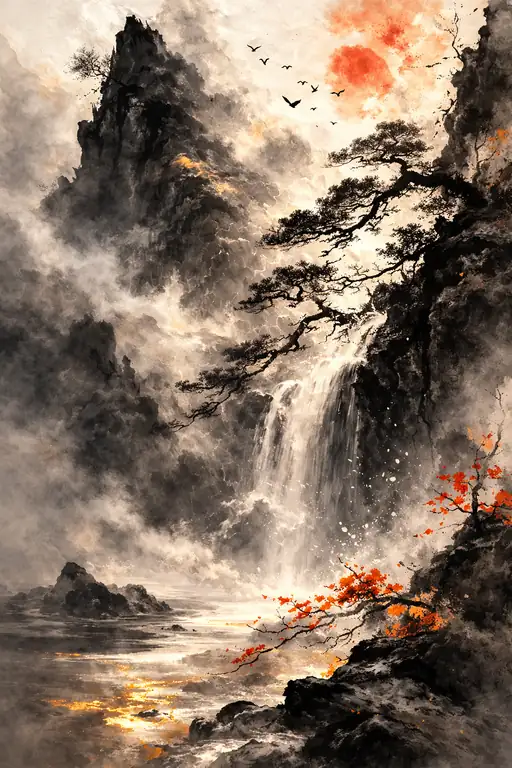 Wings of Illumination
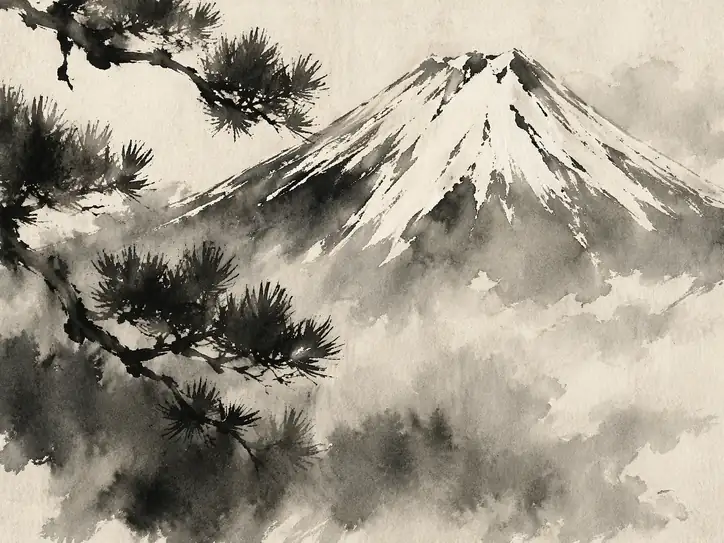 Breath of the Ancient Pine
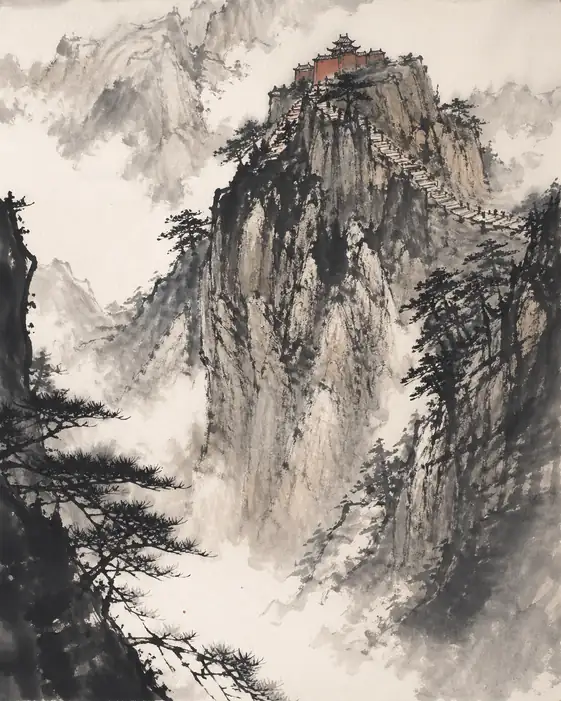 Stairway to the Divine Silence
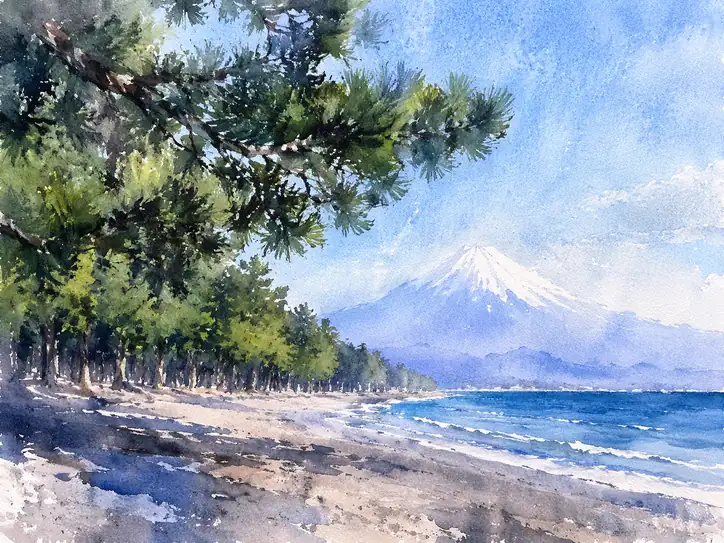 Whispers of the Winter Peak
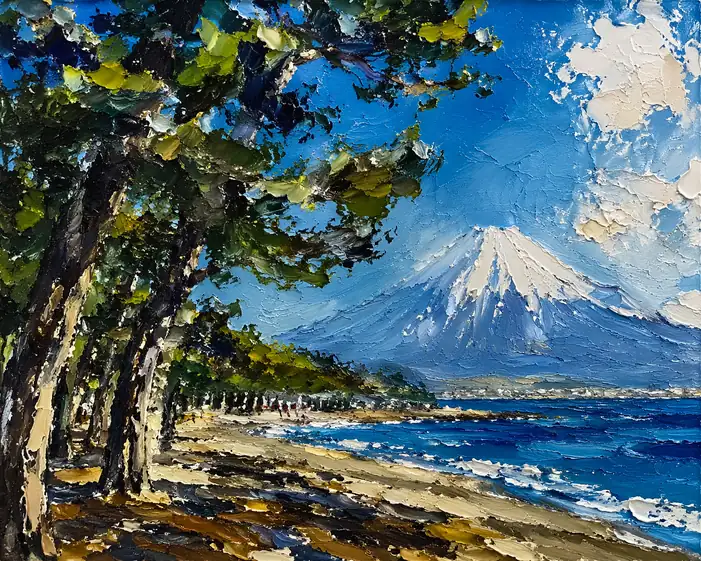 Majestic Shoreline Echoes