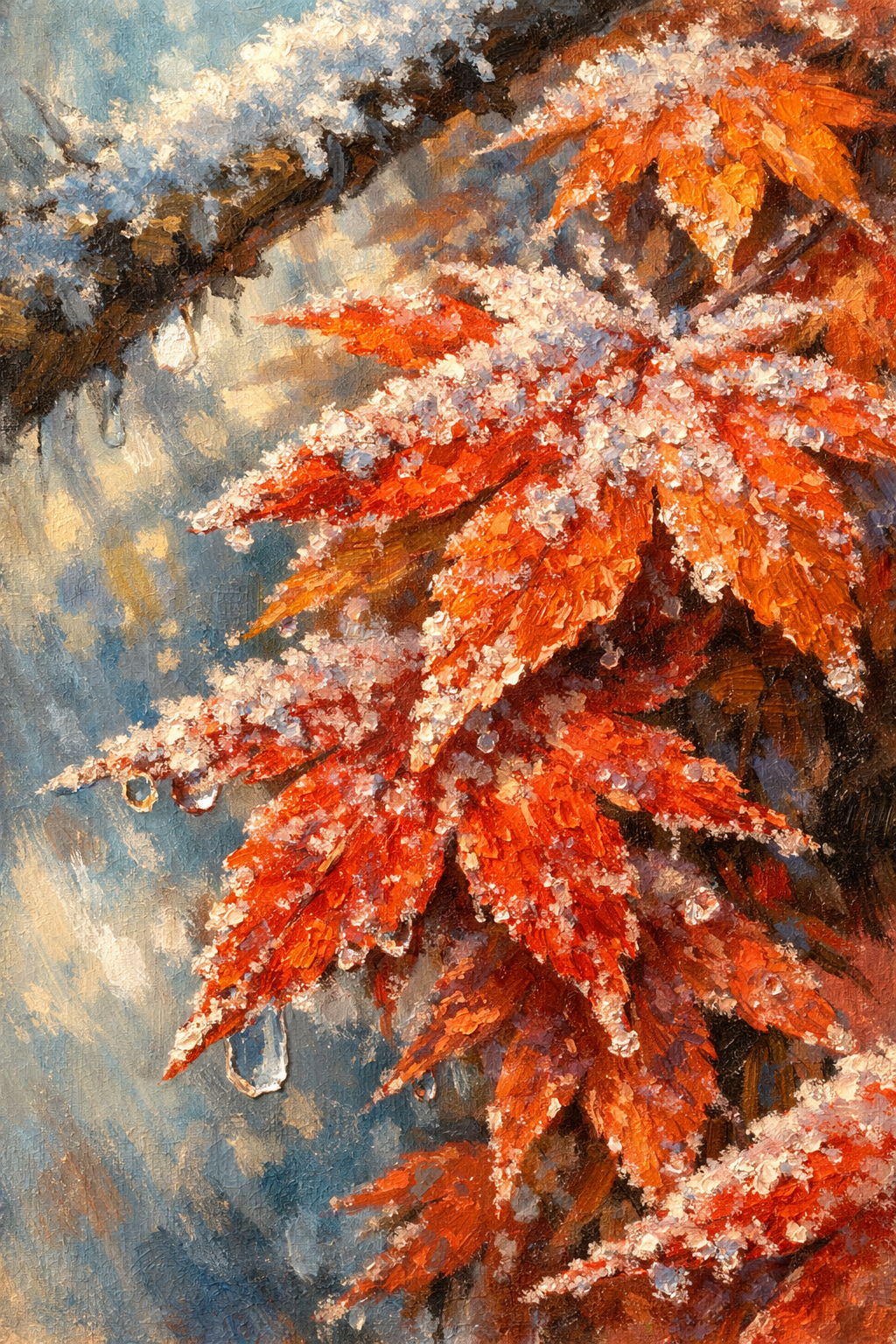
A Solitary Leaf's Winter Elegy
Critique
1. Introduction This oil painting presents a striking close-up of vibrant orange maple leaves partially covered by a fresh layer of snow or frost. The composition is a vertical study that captures the dramatic transition between seasons, contrasting the warmth of autumn with the cold arrival of winter. Through a heavy, textured application of paint, the artist creates a tactile and sensory experience that brings the natural scene to life. The work exemplifies a masterful use of color and impasto technique to convey the delicate yet resilient beauty of nature in flux. 2. Description The canvas is dominated by a cluster of bright orange maple leaves that cascade down from the upper right. Fine white highlights and thick dabs of white paint represent the crystalline structure of snow and frost clinging to the edges and surfaces of the foliage. Several translucent water droplets are seen hanging from the tips of the leaves, suggesting the process of melting and the ephemeral nature of the moment. The background is a cool, mottled blue and grey, providing a contrasting backdrop that makes the warm oranges of the leaves appear even more intense. The dark, bark-covered branch from which the leaves emerge is visible at the top, anchoring the composition. 3. Analysis The artist’s technique is characterized by a vigorous use of impasto, where thick layers of paint create a physical relief on the canvas surface. This adds a sense of three-dimensional reality to the snow and the organic texture of the leaves. The color palette is built on the strong complementary contrast between the fiery oranges and the cool, atmospheric blues of the background. Lighting is diffused, consistent with an overcast winter day, yet it is used effectively to highlight the wet surfaces of the melting droplets and the rough texture of the snow. The diagonal arrangement of the leaves creates a sense of natural growth and movement, leading the eye downward through the frame. 4. Interpretation and Evaluation This work can be interpreted as a meditation on the cyclical nature of time and the beauty found in moments of transition and vulnerability. The juxtaposition of the warm, living leaf and the cold, crystalline snow serves as a metaphor for the struggle and harmony between opposing forces in nature. The painting is highly successful in its ability to translate a fleeting atmospheric condition into a permanent and powerful visual statement. The artist’s command of texture is particularly noteworthy, as it allows the viewer to almost feel the coldness of the snow and the dampness of the thawing leaves. It is a sophisticated example of how impressionistic techniques can be used to capture both the physical and emotional essence of a landscape. 5. Conclusion In summary, the painting is a vivid and emotionally resonant exploration of the natural world’s seasonal changes. The bold use of color and texture creates a work that is both visually arresting and deeply evocative of a specific time and place. The initial impression of high-contrast beauty matures into a deeper appreciation for the delicate balance of the ecosystem it portrays. Ultimately, the work stands as a testament to the power of observation and the artist’s ability to find monumental beauty in a single branch of leaves. The interplay between the melting snow and the resilient autumn foliage remains the piece's most captivating and memorable element.
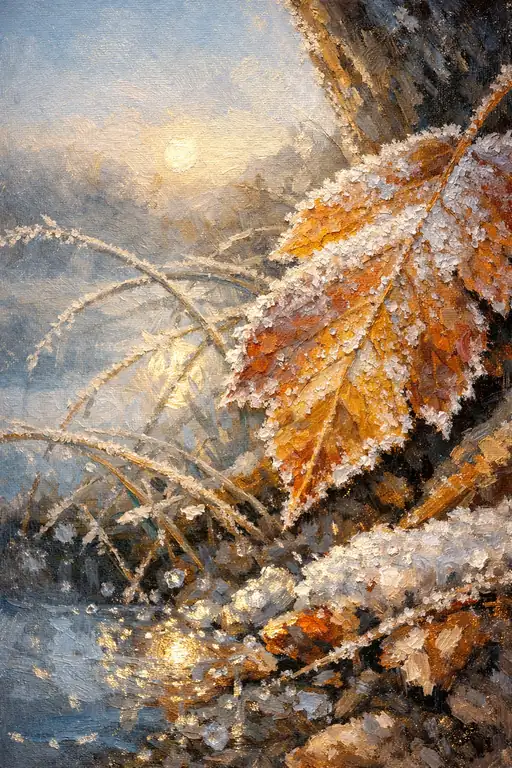 Frost's Gentle Kiss on Autumn
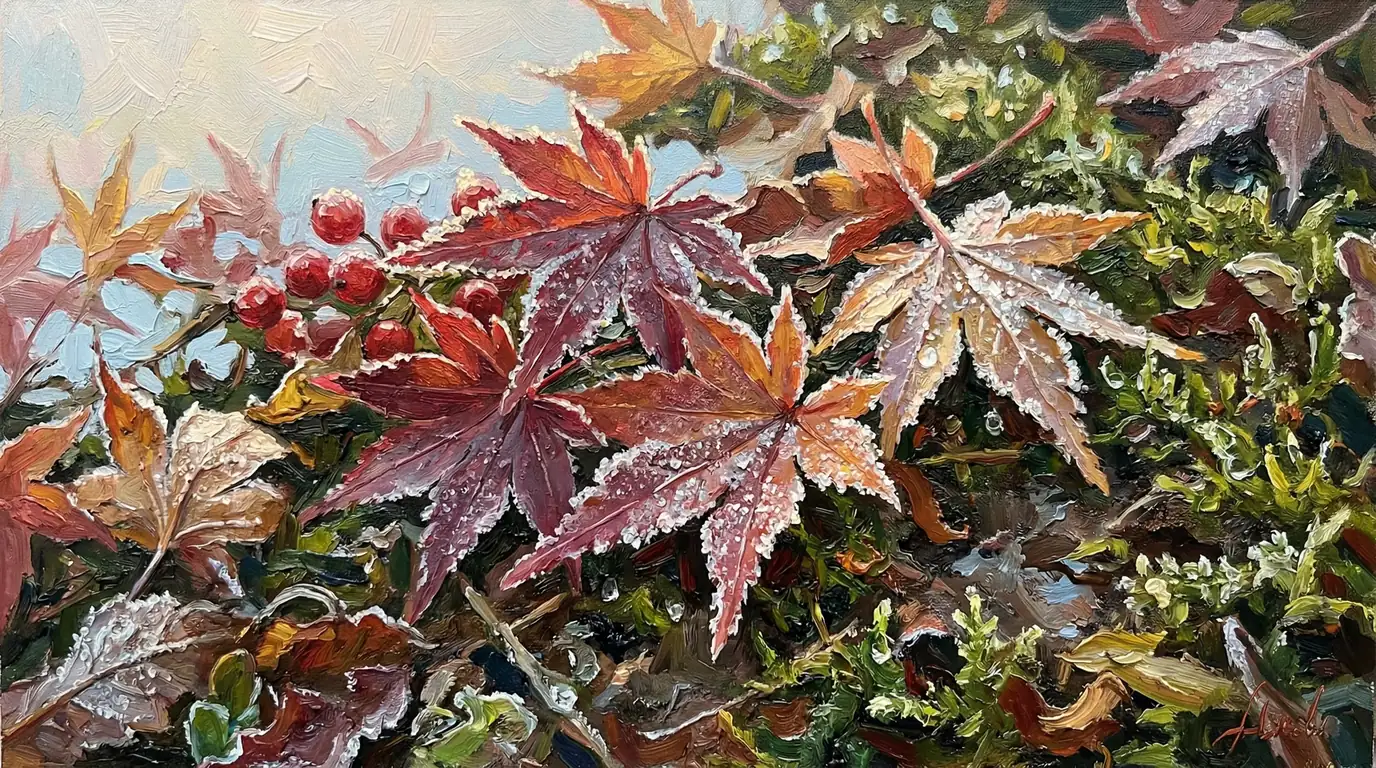 Breath of the Frozen Dawn
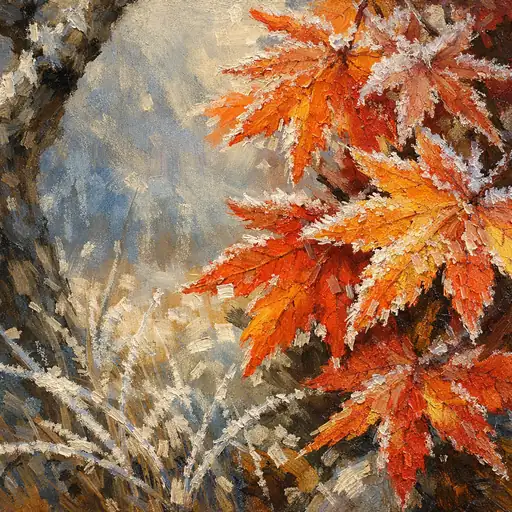 Winter's Embrace on Crimson Fire
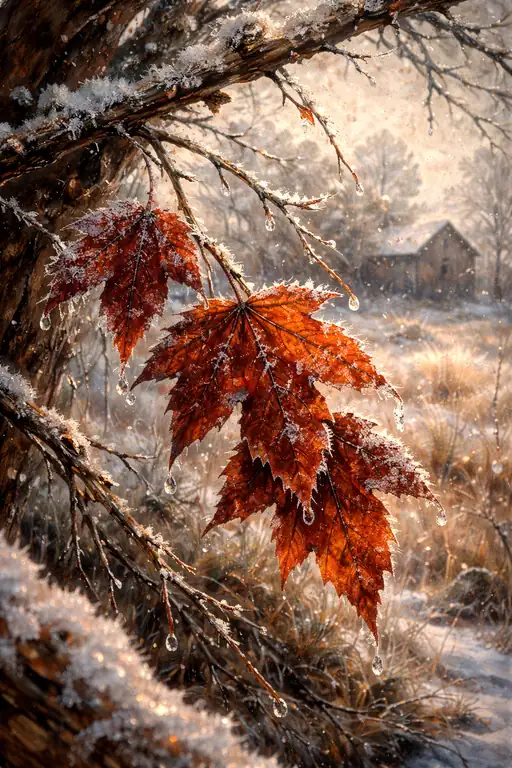 The Last Ember of Autumn's Breath
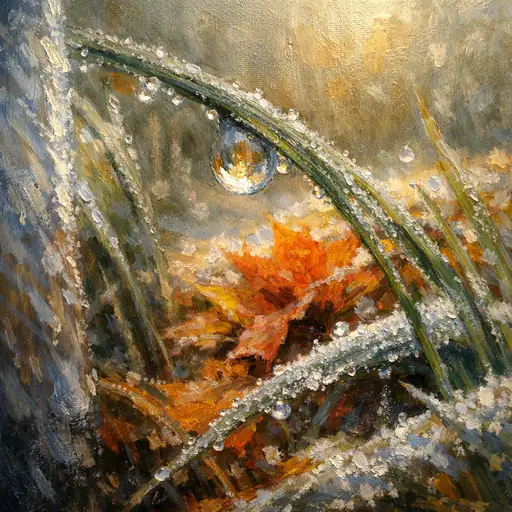 Tears of the Winter Dawn
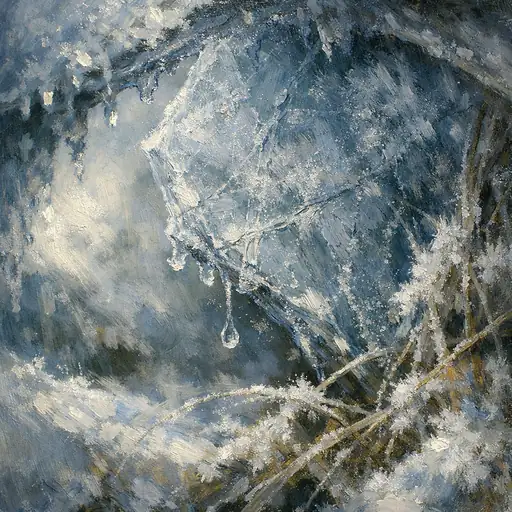 Frost's Delicate Tear
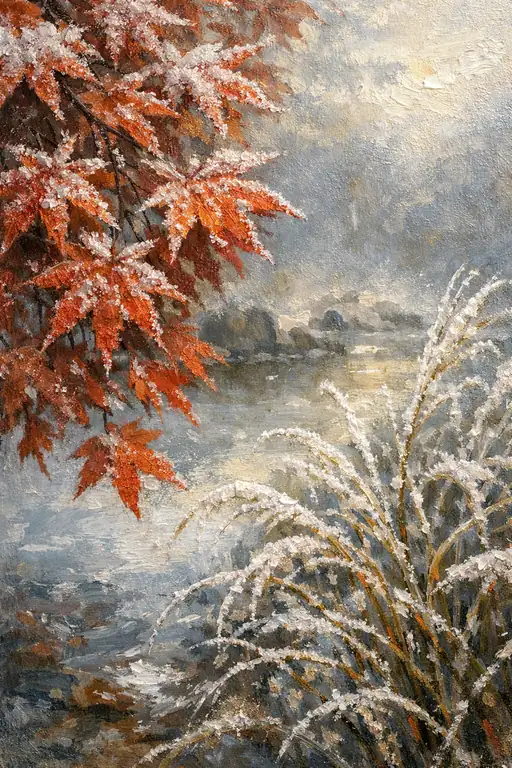 The Silent Embrace of Early Winter
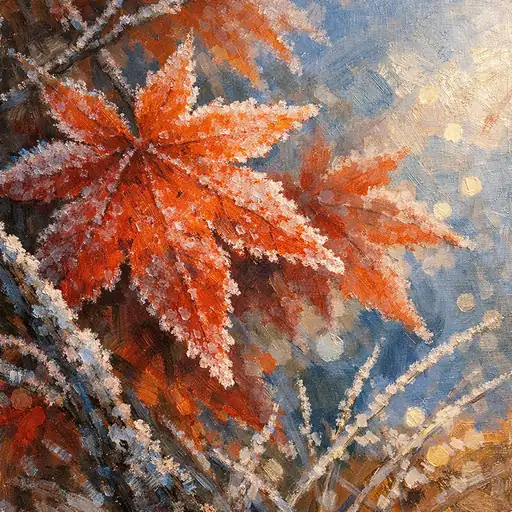 Frozen Embers of the Autumn Sun
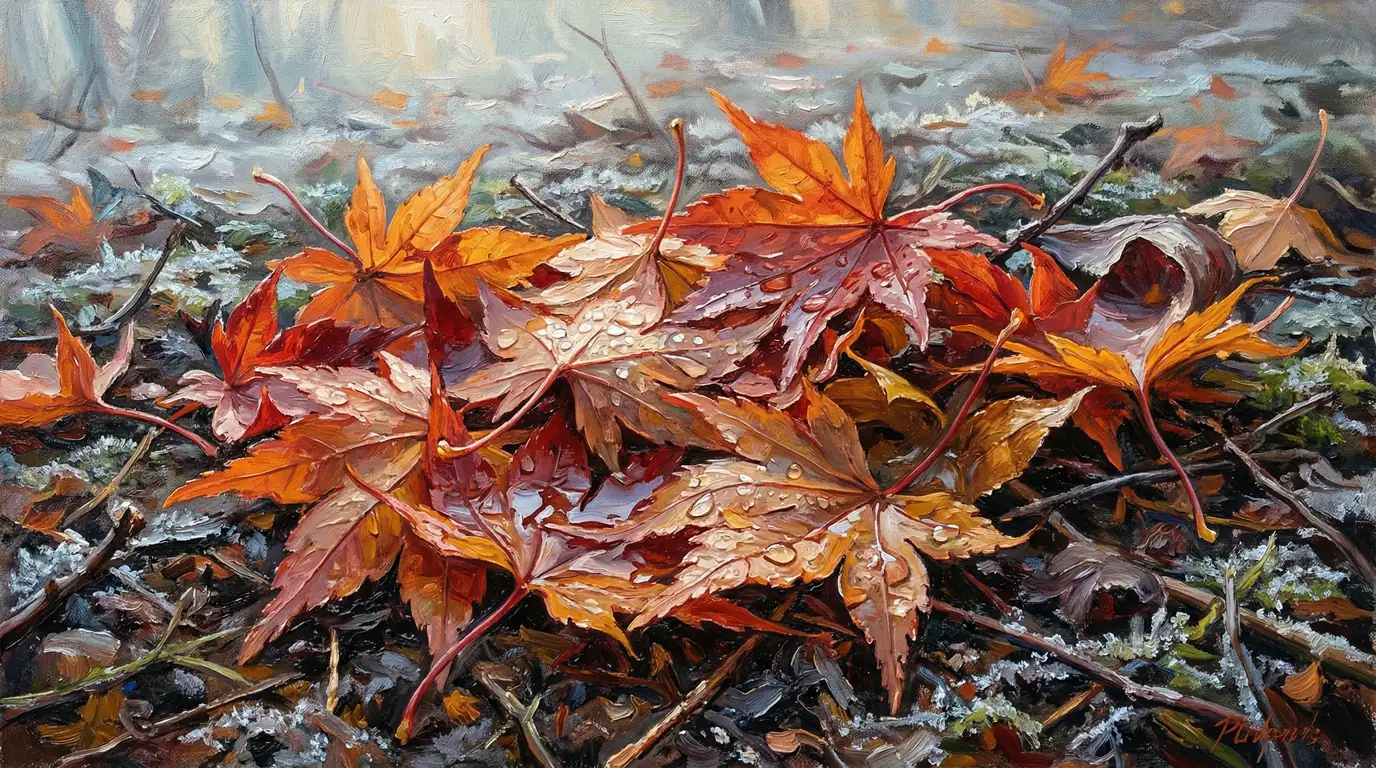 The Last Waltz of Autumn
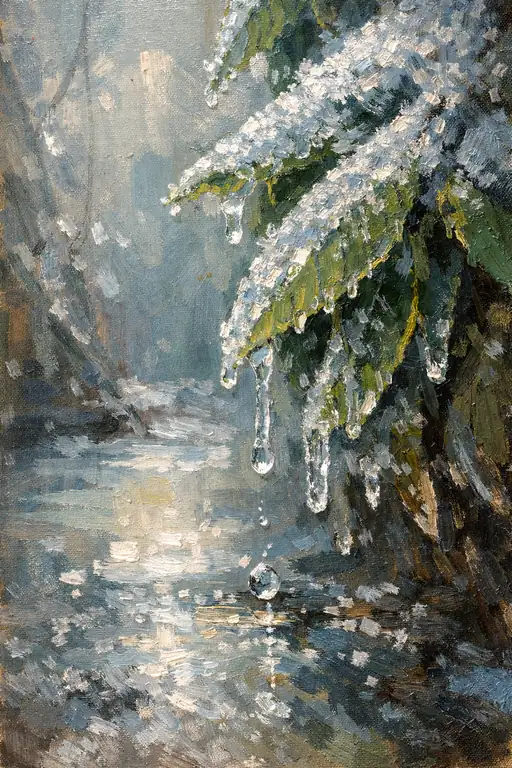 The Winter's Tear Before Spring