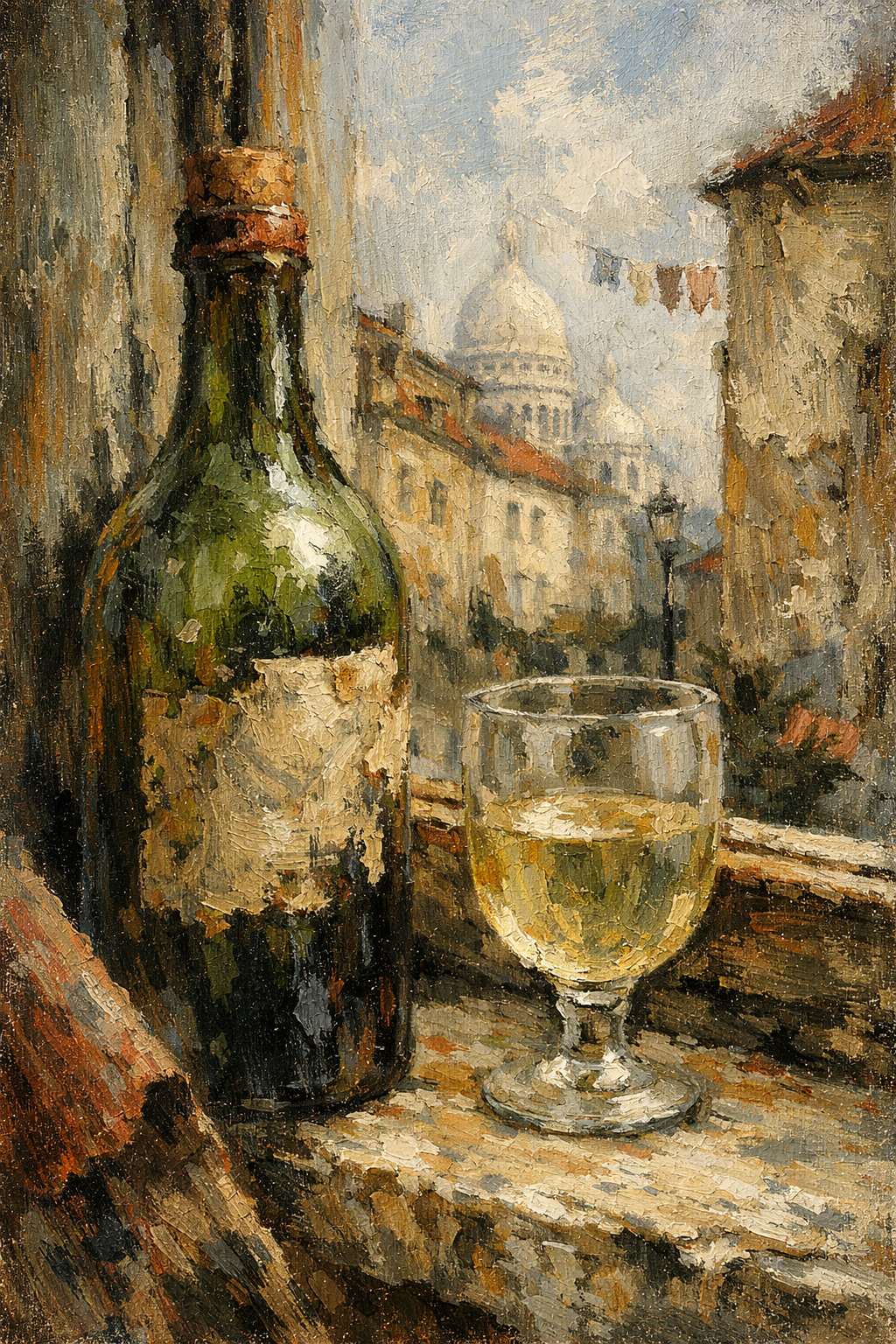
Morning Dreams Over Parisian Skies
Critique
1. Introduction This evocative oil painting combines the intimacy of a still life with the expansive beauty of an urban landscape. Centered on a windowsill, the composition bridges the gap between the private interior and the historic city beyond. Through its light-filled atmosphere and expressive brushwork, the work captures a fleeting moment of repose, inviting the viewer to share in a quiet afternoon of contemplation. 2. Description In the foreground, a dark green glass bottle with a worn label and a cork stopper stands next to a simple glass filled with white wine. These objects rest on a textured, weathered windowsill that shows signs of age. Looking through the window, the background reveals a sunlit cityscape characterized by tall, narrow buildings and a grand, white-domed basilica rising above the horizon. A string of laundry hangs between buildings, adding a touch of everyday life to the historic view. 3. Analysis The artist employs an impressionistic technique, using short, rhythmic brushstrokes to build form and light. The color palette is naturalistic, featuring muted ochres and grays for the architecture, which contrast with the vibrant green of the bottle and the sparkling pale yellow of the wine. Natural light floods the scene from the window, creating soft shadows and highlighting the various textures of glass, stone, and fabric. The perspective is handled skillfully, creating a clear sense of distance between the window and the far-off cathedral. 4. Interpretation and Evaluation This work can be interpreted as a celebration of the simple pleasures found within the context of a rich cultural history. The wine and bottle represent a personal moment of enjoyment, while the view of the basilica places this moment within the enduring life of the city. The technical execution is commendable for its ability to convey a sense of place and mood through a loose yet precise application of paint. It successfully evokes the unique light and atmosphere of a European capital. 5. Conclusion In conclusion, the painting is a masterful synthesis of domestic still life and architectural study. While the initial impression is one of nostalgic charm, the careful composition and vibrant use of light provide a refreshing and modern vitality. The artist’s ability to find beauty in the ordinary arrangement of a window ledge confirms the work’s significant aesthetic value. It remains a poetic tribute to the harmony between the individual and their environment.
 Resonating Silence: The Touch of Spring Light
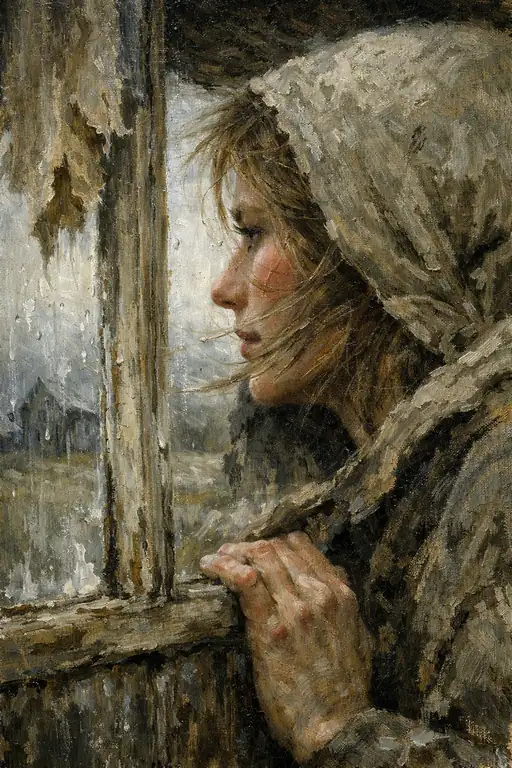 The Rain's Unspoken Promise
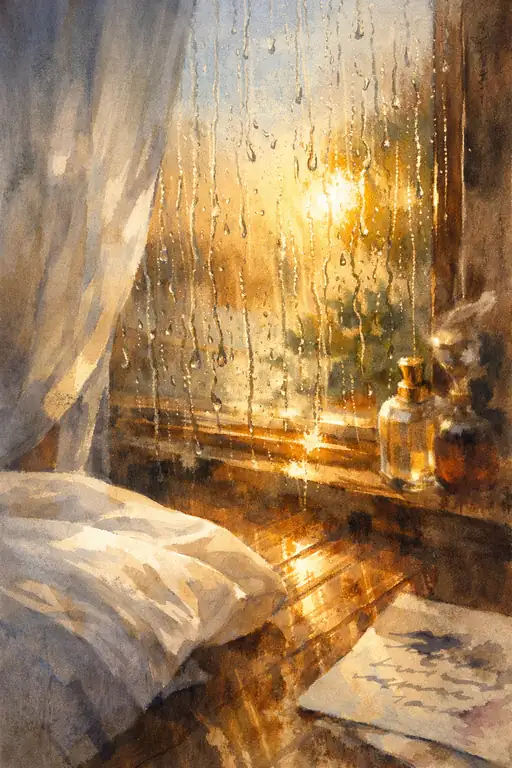 Tears of the Afternoon Glass
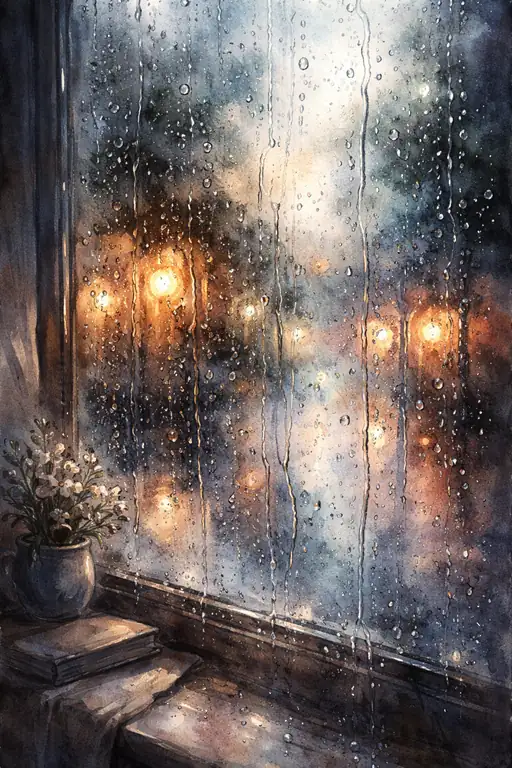 Whispers of a Rainy Evening
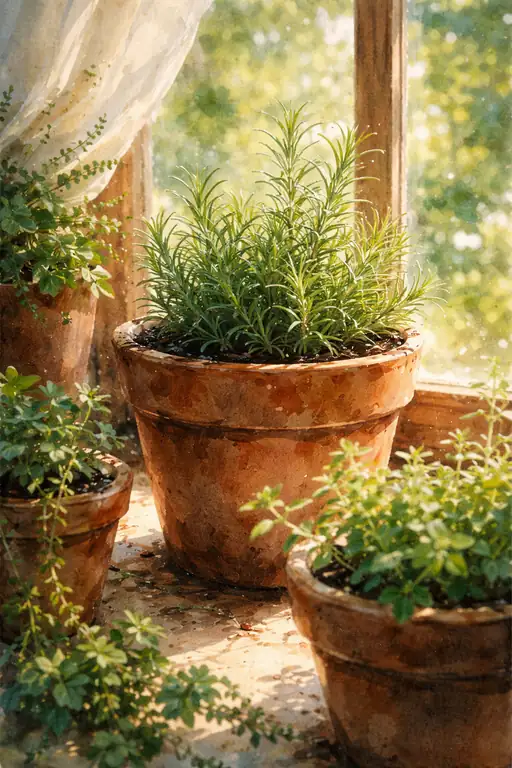 A Quiet Morning with Rosemary
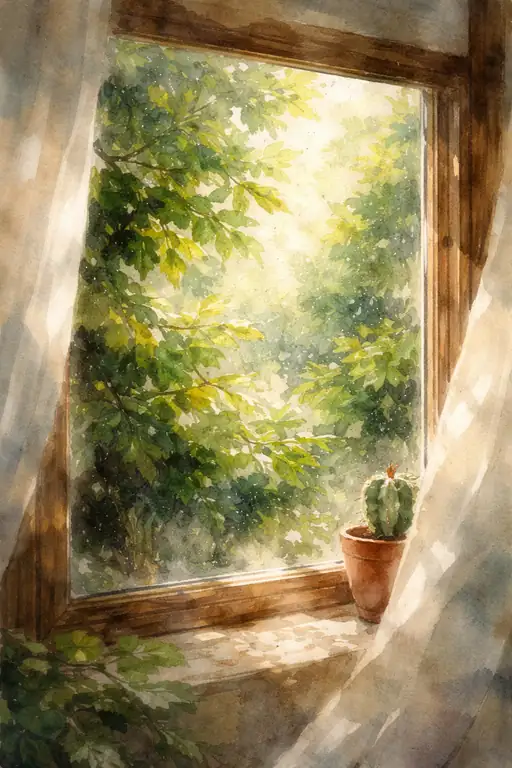 Morning Sunlight on the Windowsill
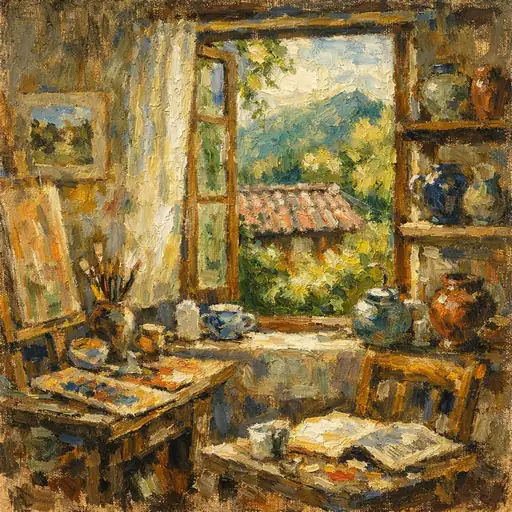 Window to the Soul: The Sunlit Atelier
 Dancing Light Through the Window
 Quiet Contemplation
 Tears of the Windowpane
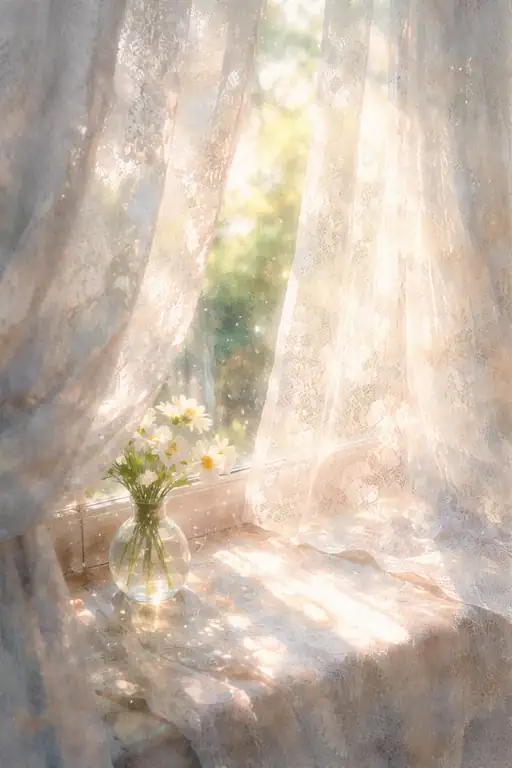 Morning Radiance
 Cozy Contemplation: Winter Windowsill