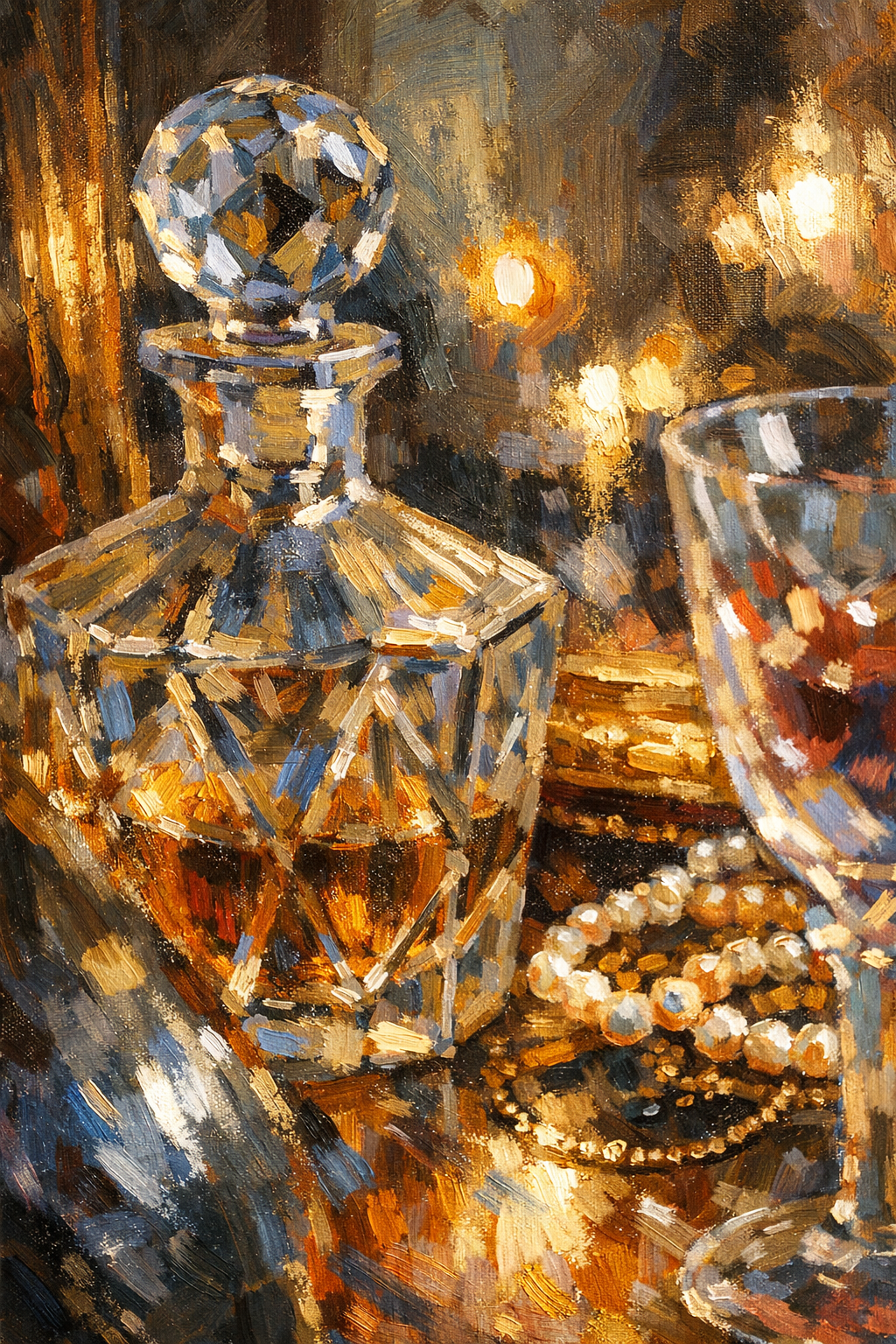
Echoes in the Prism of Amber
Critique
1. Introduction This oil painting presents a dynamic still life that prioritizes the visceral experience of light and texture over literal representation. The composition is tightly cropped, focusing the viewer’s attention on the interplay between crystalline surfaces and organic forms. Through its bold application of paint and heightened color palette, the work captures a sense of immediate, sparkling energy that elevates the traditional still life into an expressive exploration of medium. 2. Description The primary subjects are a faceted crystal decanter filled with an amber-colored liquid, a partially visible wine glass, and a coiled strand of pearls. These objects rest on a dark, reflective surface that catches broken glints of light. The background is composed of soft, blurred orbs of golden light, creating a sense of warmth and depth. The entire scene is rendered with thick, visible brushstrokes that give the objects a rugged, tangible presence. 3. Analysis The artist employs a vigorous impasto technique, where the physical thickness of the paint mimics the fragmented reflections on the crystal’s surface. The color palette is built on a strong contrast between radiant ochres and ambers and the deep, cool tones of the shadows. Light is treated as a physical substance, broken into distinct patches of color that dance across the canvas. The brushwork is gestural and spontaneous, yet it accurately defines the complex geometry of the decanter. 4. Interpretation and Evaluation The work can be interpreted as a celebration of the materiality of both the objects depicted and the paint itself. By breaking down the forms into mosaic-like strokes of color, the artist emphasizes the fleeting and subjective nature of perception. The technical execution is impressive for its ability to convey clarity and sparkle through such a heavy, textured medium. It reflects a masterly control over light and shadow within a restricted and high-impact composition. 5. Conclusion In summary, the painting is a powerful demonstration of how texture can be used to intensify the representation of light. While the initial impression may be one of chaotic color, a closer study reveals a sophisticated understanding of form and reflection. The artist successfully transforms a classic arrangement into a modern, tactile experience that resonates with visual and physical energy. This work stands as a testament to the enduring power of expressive still life.
Same Subcategory
Similar Artworks
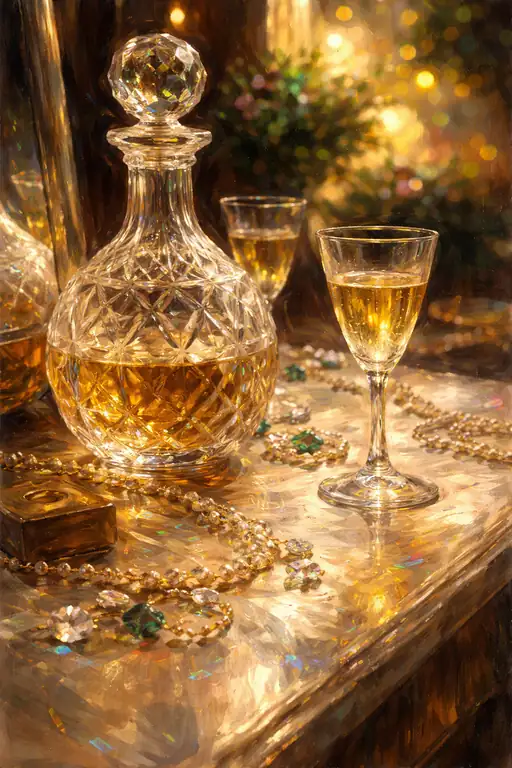 Tears of Amber and Crystal Light
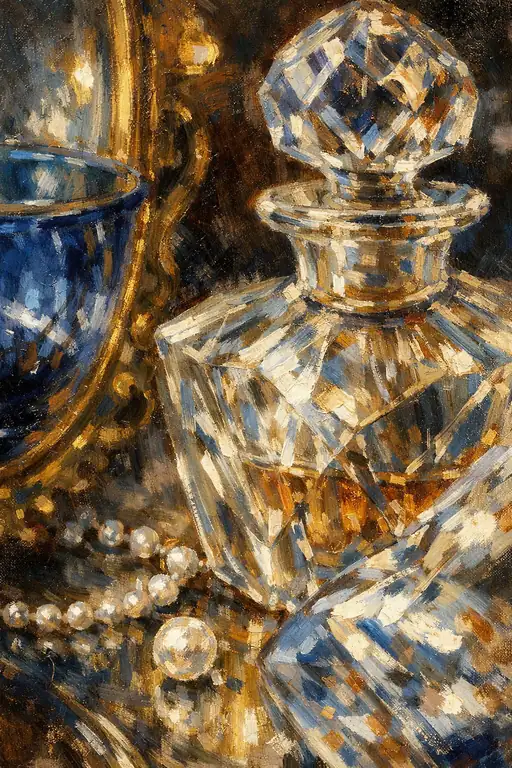 Luminous Reflections of the Crystalline Era
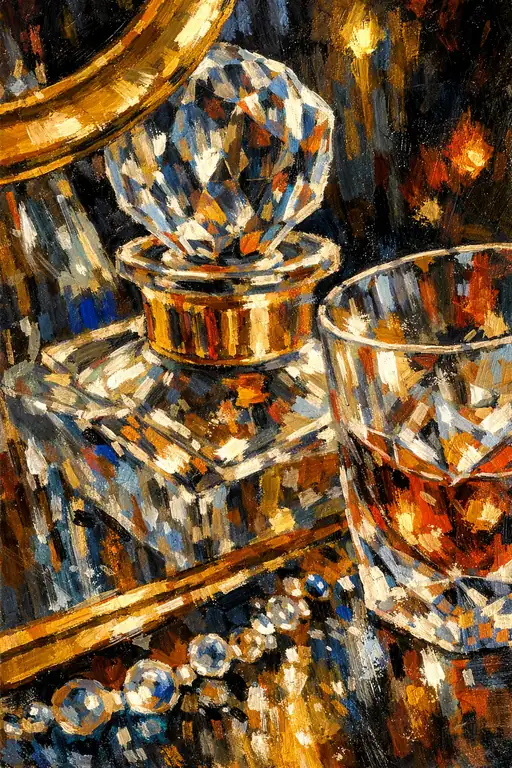 Evening's Refraction
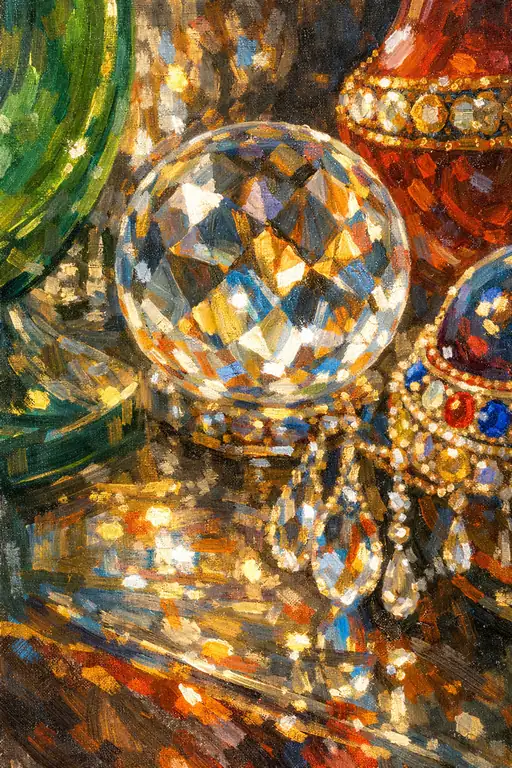 The Fragile Brilliance of Captured Light
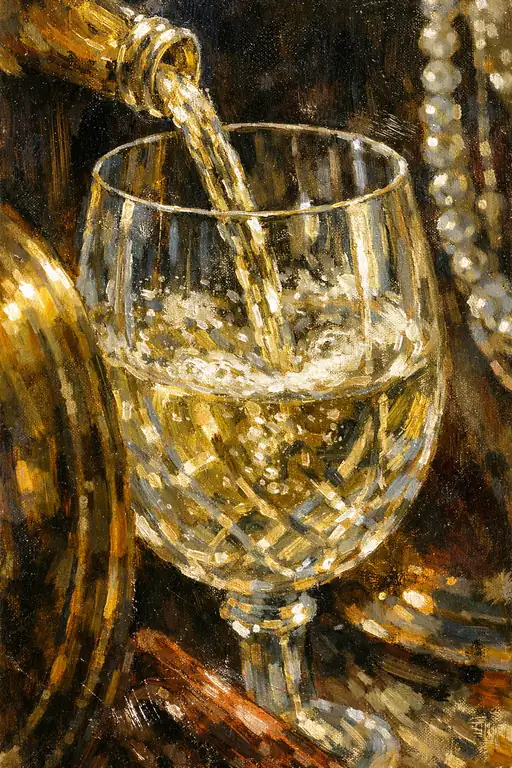 Amber Drops Filling the Joy
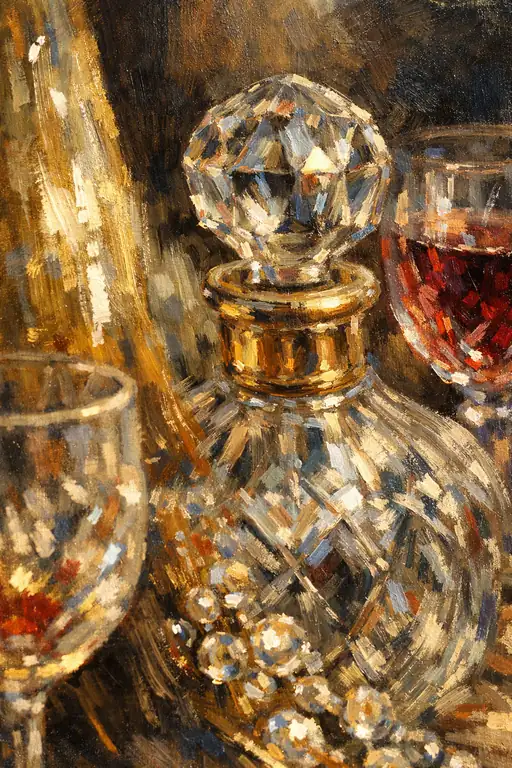 Echoes of Elegance in Crystal
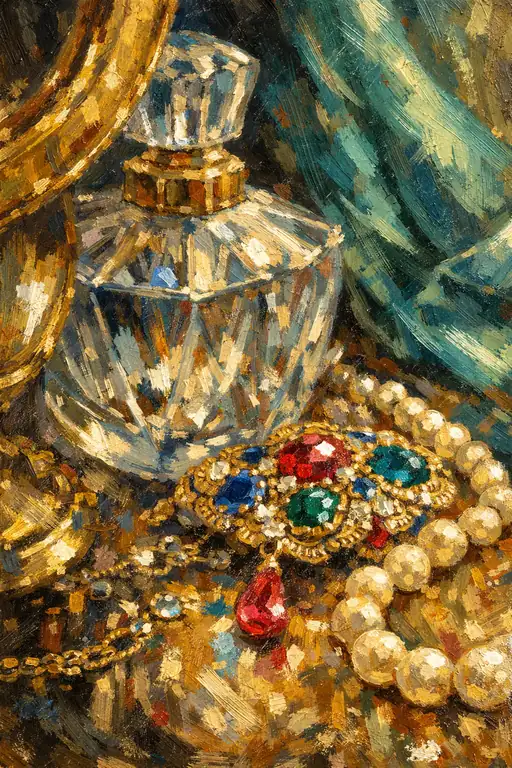 Whispers of Opulence
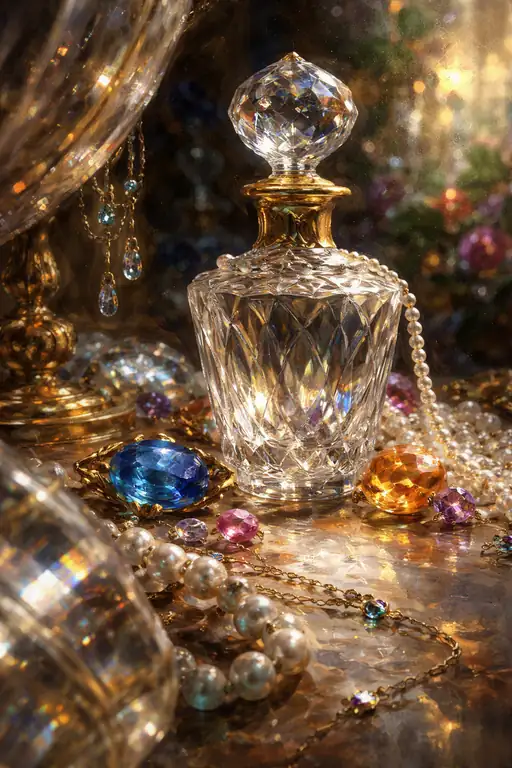 Echoes of a Gilded Accumulation
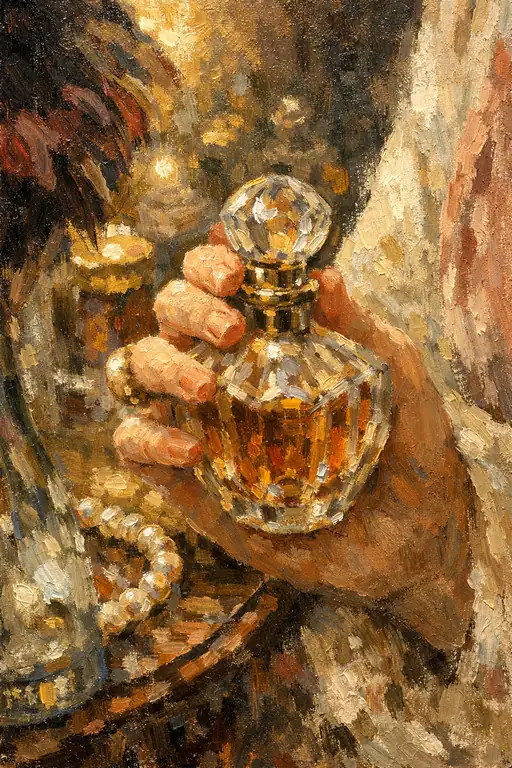 Golden Glow of Elegant Contemplation
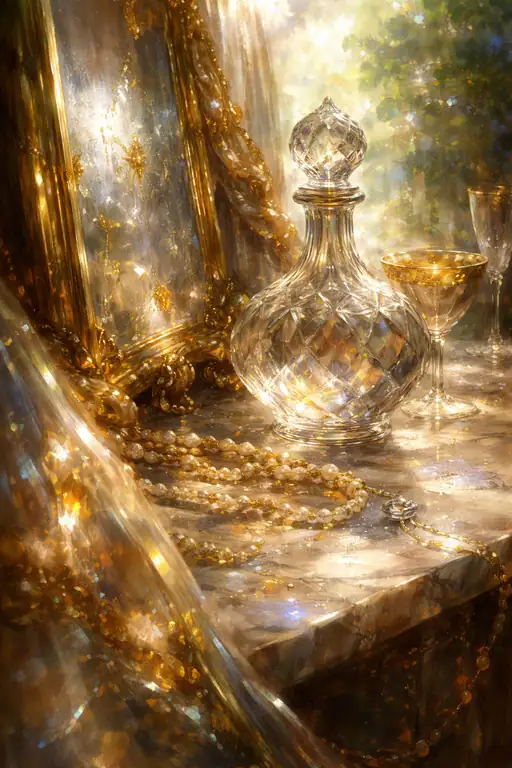 Reflections of Elegance