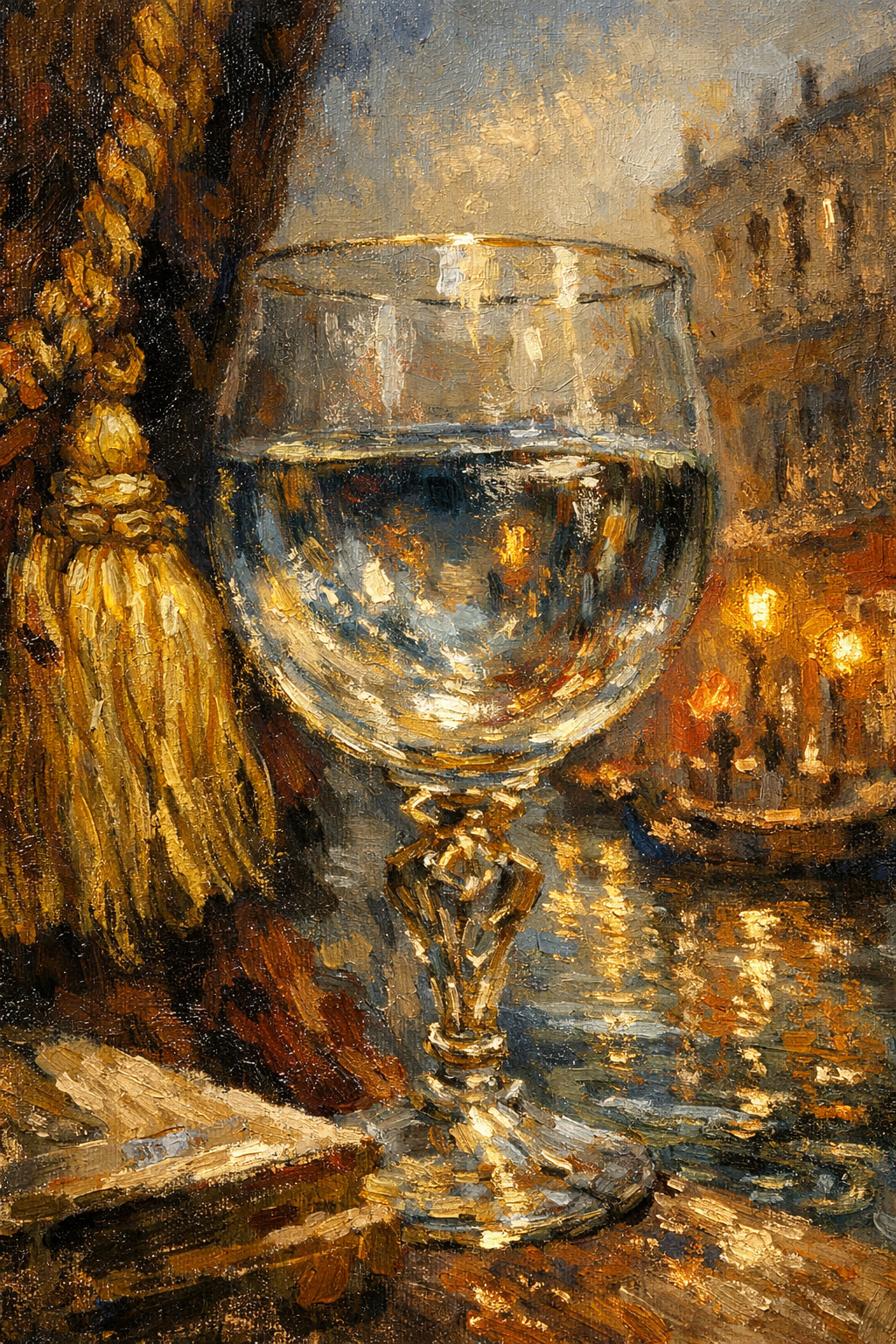
Golden Echoes in the Velvet Night
Critique
1. Introduction This oil painting presents a sophisticated still life set against a luminous nocturnal cityscape. The composition centers on a crystalline glass filled with water, positioned prominently in the foreground. This primary subject is flanked by a decorative golden tassel on the left, while the background reveals a shimmering body of water reflecting city lights. The artist employs a rich, textured approach to capture the interplay between light, glass, and liquid. 2. Description The glass occupies the vertical center of the frame, its transparent surface catching numerous highlights from an unseen light source. Within the vessel, the water exhibits subtle ripples and complex reflections of the surrounding warm environment. To the left, a heavy curtain tassel with intricate braided textures is rendered in deep ochre and gold tones. The background depicts a canal or harbor at night, where architectural silhouettes and streetlamps create a rhythmic pattern of orange and yellow reflections on the dark water. 3. Analysis Technically, the work is characterized by a bold impasto technique that adds physical depth to the canvas. The brushstrokes are thick and deliberate, particularly in the rendering of the golden tassel and the light reflections on the water. This tactile quality contrasts with the delicate, almost ethereal representation of the glass itself. The color palette is dominated by warm earth tones and brilliant yellows, which are effectively balanced by the cool, silvery blues within the glass and the deeper shadows of the background. 4. Interpretation and Evaluation The painting successfully navigates the challenge of depicting transparency and light through heavy medium. The contrast between the solid, ornate tassel and the fragile, clear glass creates a compelling visual tension. By blurring the lines between the interior still life and the exterior urban landscape, the work suggests a quiet moment of contemplation. The mastery of light is evident in how the distant city glow is refracted through the water-filled glass, unifying the entire scene into a cohesive atmosphere. 5. Conclusion This piece demonstrates a remarkable ability to translate the fleeting qualities of light and reflection into a durable, textured form. The initial focus on the glass gradually expands to include the atmospheric depth of the nocturnal city. It is a testament to the evocative power of oil painting in capturing both material reality and atmospheric mood. The final impression is one of elegance and technical proficiency, leaving the viewer with a profound sense of late-evening tranquility.
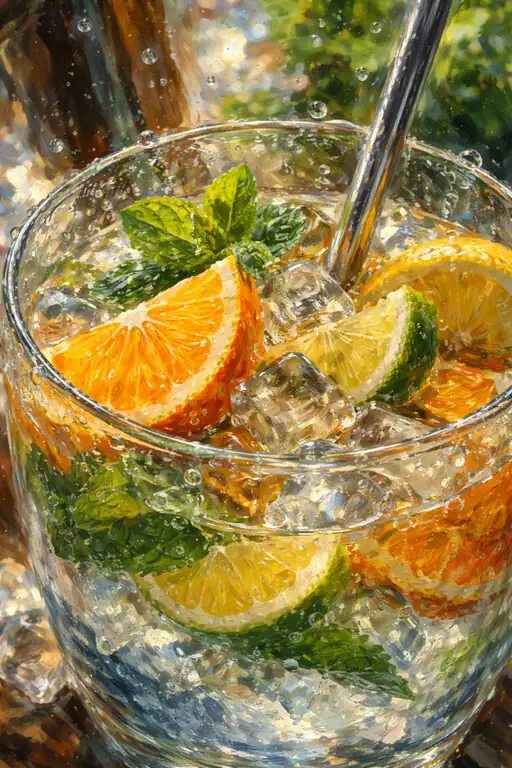 Symphony of Citrus and Ice
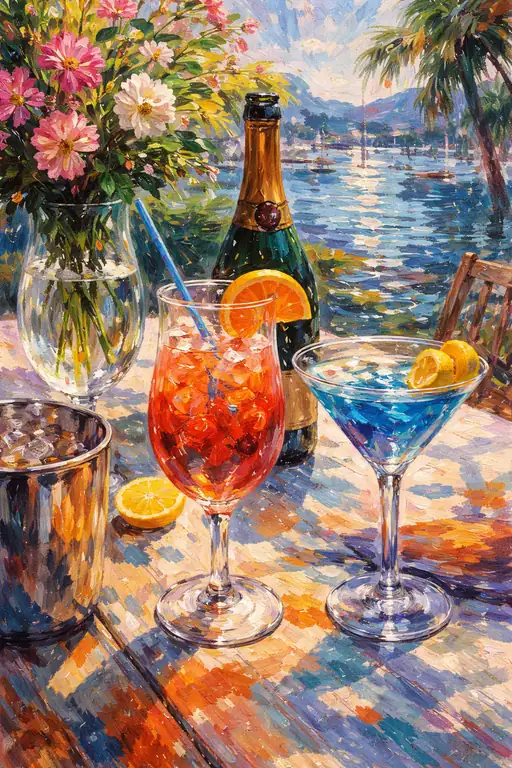 Golden Bubbles in the Summer Breeze
 A Toast to the Evening Glow
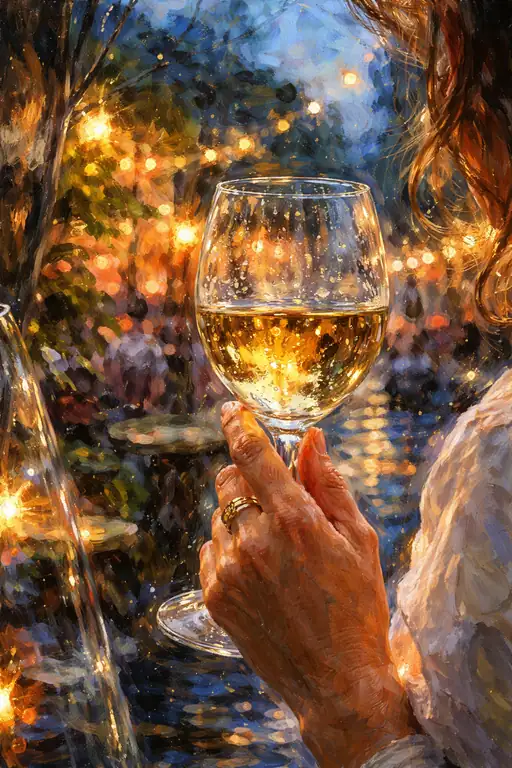 A Toast to the Evanescent Night
 Echoes of a Crimson Evening
 Crimson Wine Reflections
 Amber Meditation
 Reflections in Amber Glass
 Amber Temptation Illuminating the Dusk
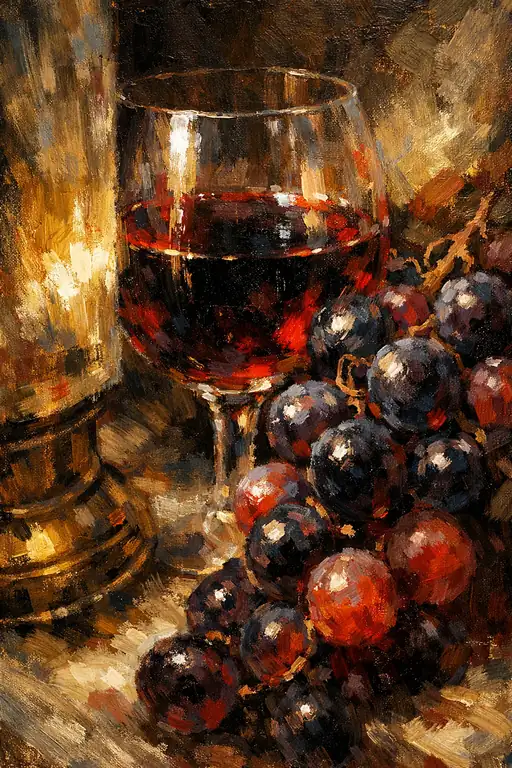 Crimson Nectar of the Night
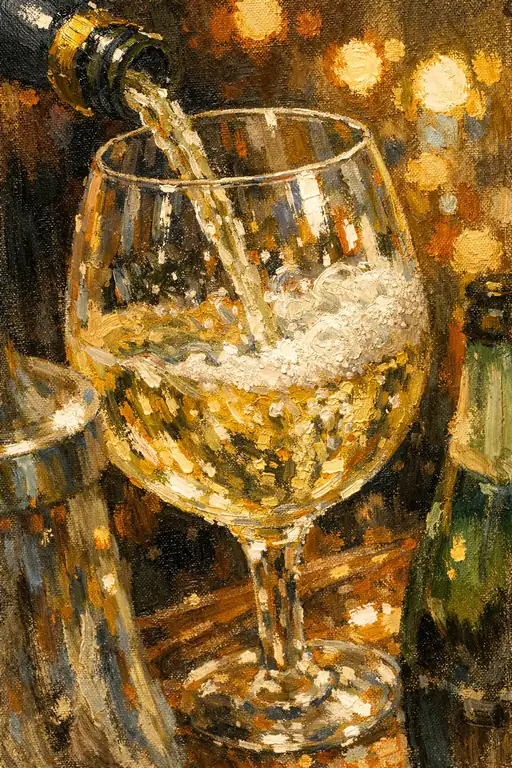 Effervescent Joy in Golden Hues
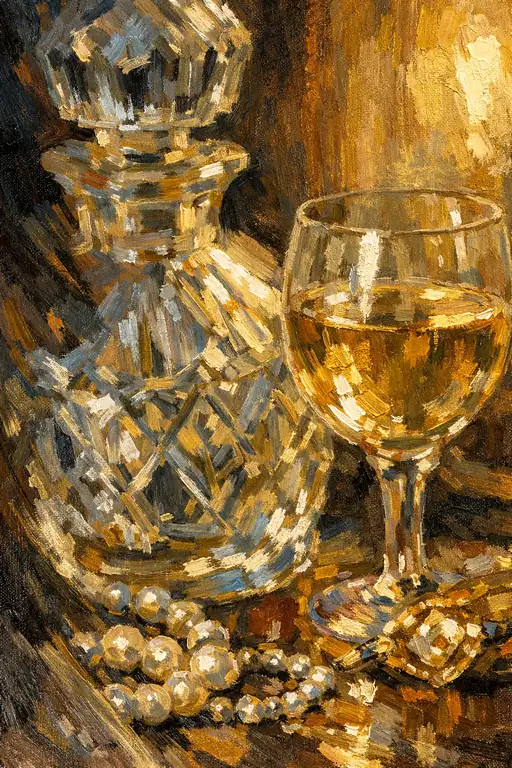 Amber Refractions of Passion