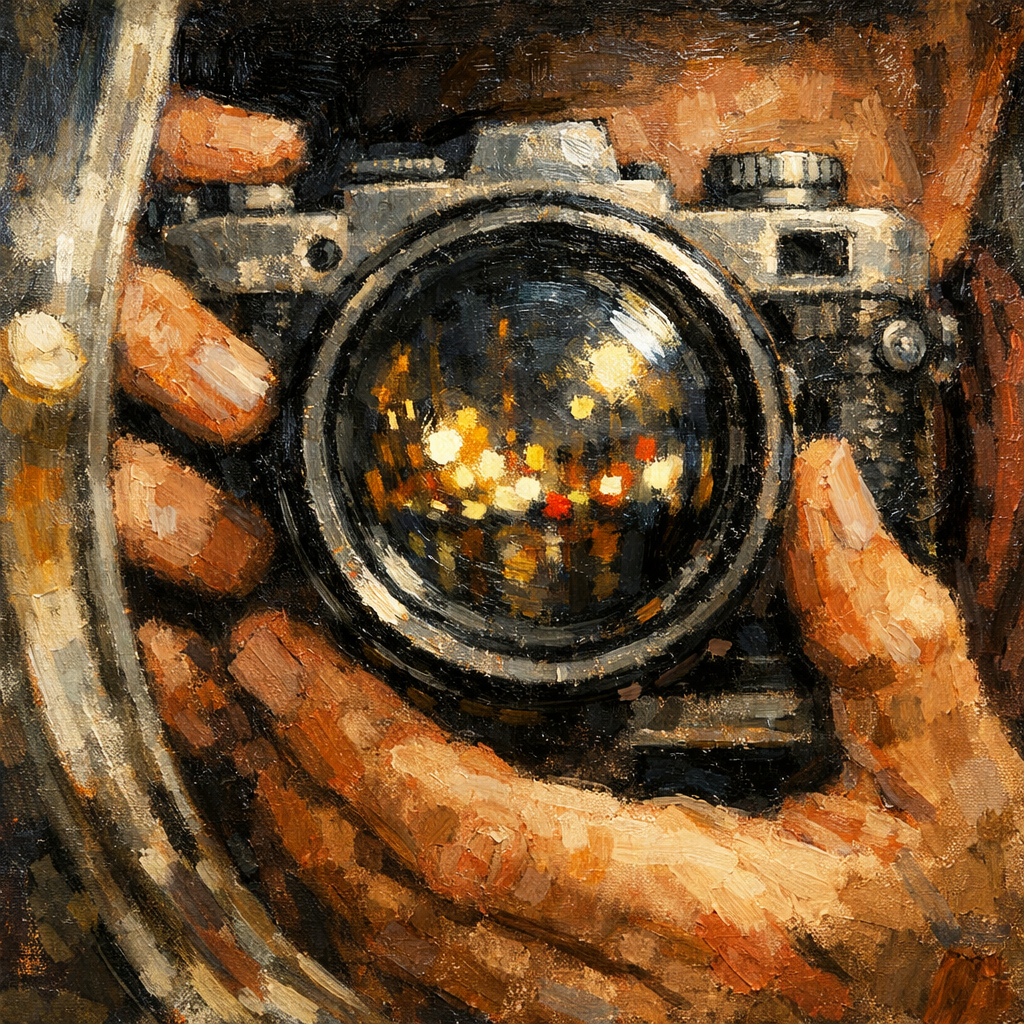
Cradling the Eye of Memory
Critique
1. Introduction This oil painting presents an intimate, close-up view of a pair of hands cradling a vintage-style camera. The work focuses on the intersection between the human touch and the mechanical tool used to capture light. By centering the composition on the camera lens, the artist invites the viewer to consider the act of seeing and the preservation of fleeting moments. 2. Description The central element of the painting is a large, circular camera lens that reflects a warm, shimmering scene of golden bokeh lights. A pair of hands, rendered in earthy tones of ochre and sienna, grips the camera body with a sense of deliberate care. The background is a dark, indeterminate space that allows the metallic silver of the camera and the glow of the reflections to stand out. The entire surface is characterized by a thick, expressive impasto technique that adds a physical weight to both the skin and the metal. 3. Analysis The composition is built around the strong circular form of the lens, which serves as the visual anchor of the piece. The artist uses a palette dominated by warm browns and oranges, contrasted with the cool grays of the camera body. Light is handled skillfully, particularly in the way the reflections within the glass suggest a vibrant, out-of-focus urban environment. The diagonal arrangement of the hands creates a frame within a frame, drawing the eye toward the center of the mechanical apparatus. 4. Interpretation and Evaluation The painting can be interpreted as a celebration of the photographic process and the human desire to document experience. The contrast between the soft, fleshy texture of the hands and the hard, cold surfaces of the camera highlights the relationship between the observer and the observed. This work displays a high degree of technical mastery in its use of texture to represent light. The decision to focus on the reflection rather than a direct view of the subject adds a layer of depth and poetic mystery to the evaluation. 5. Conclusion Through its bold brushwork and thoughtful composition, the painting elevates a modern tool into a subject of classic artistic inquiry. The initial impression of a mechanical object quickly shifts to an appreciation for the warmth and humanity behind the lens. It stands as a powerful testament to the enduring fascination with the visual world and the tools we use to understand it.
Same Subcategory
Similar Artworks
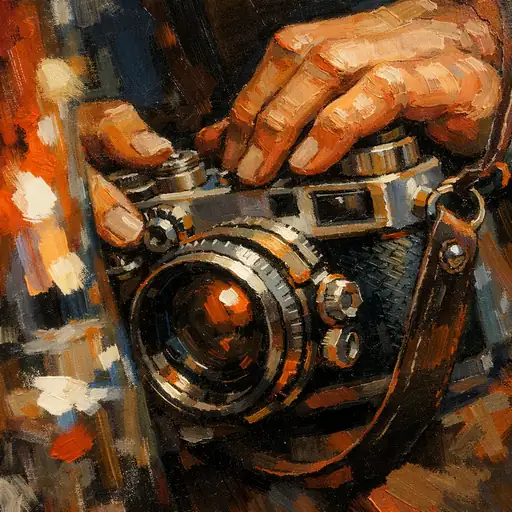 The Weight of Memory in Silver
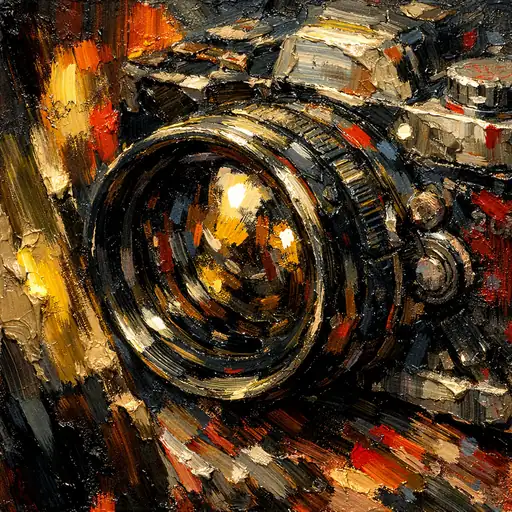 The Mechanical Eye That Captures Time
 The Transient Sun Caged in Glass
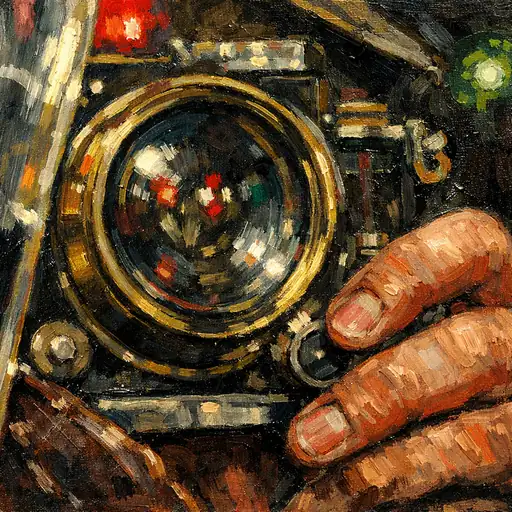 The Touch of Time
 The Quiet Resonance of Creation
 The Analog Eye's Fractured Memory
 The Eye of Endless Wonder
 Gilded Memories in the Mirror
 Holding the Weight of Painted Time
 Echoes in the Falling Sand