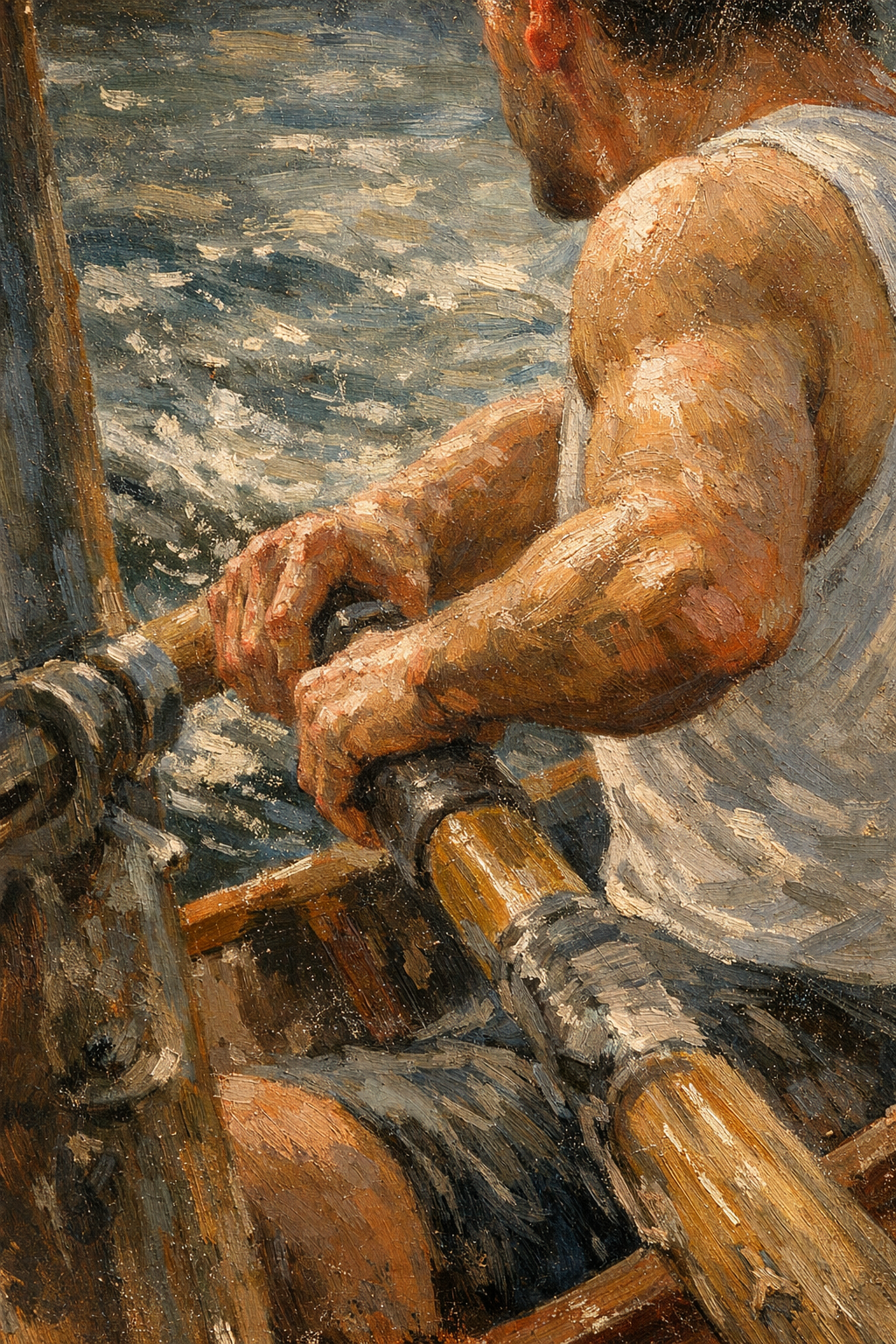
Rhythm of the Oar
Critique
1. Introduction This oil painting presents an intimate and powerful study of physical labor, focusing on the act of rowing. The composition emphasizes the muscular strain and the mechanical coordination required to propel a vessel through water. It captures a moment of intense concentration and physical effort, rendered with a rugged, expressive technique. 2. Description The artwork features a close-up view of a man's muscular right arm and shoulder as he grips a large wooden oar. He wears a simple white tank top, which provides a bright contrast to his sun-reddened skin. The background depicts the churning, reflective surface of the water, while the lower portion of the frame shows the dark wooden interior of the boat and the man's leg. The paint is applied in thick, visible layers, creating a highly textured surface that emphasizes the anatomical details of the muscles and the grain of the wood. 3. Analysis The artist utilizes a tight, diagonal composition that directs the viewer's focus to the point of contact between the man's hands and the oar. The color palette is composed of warm flesh tones, earthy browns for the boat and oar, and cool, shimmering blues and greys for the water. The heavy impasto technique is particularly effective in depicting the play of light on the muscular surface and the turbulent water, adding a sense of weight and materiality to the scene. The lighting appears to come from the upper left, highlighting the contours of the subject's physique. 4. Interpretation and Evaluation The work celebrates the raw strength of the human form through its visceral application of paint. The choice of a close-up perspective removes the broader context of the journey, focusing instead on the immediate, repetitive reality of the labor itself. The textural quality of the impasto makes the exertion feel almost palpable, as if the viewer can feel the tension in the muscles and the roughness of the wood. The artist's ability to balance anatomical realism with expressive brushwork demonstrates a high level of technical proficiency and artistic vision. 5. Conclusion Ultimately, the painting transforms a mundane task into a heroic exploration of human endurance and physical capability. The initial focus on the impressive muscularity of the subject evolves into a deeper appreciation for the harmonious relationship between the laborer and his tools. It stands as a testament to the dignity of work and the expressive power of the oil medium.
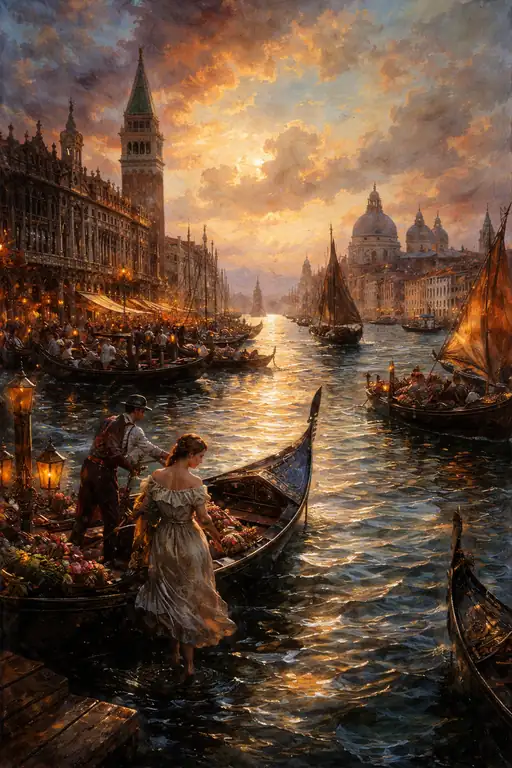 Romantic Reflections on the Venetian Canal
 Gondola's Golden Goodbye
 Golden Hour on the Grand Canal
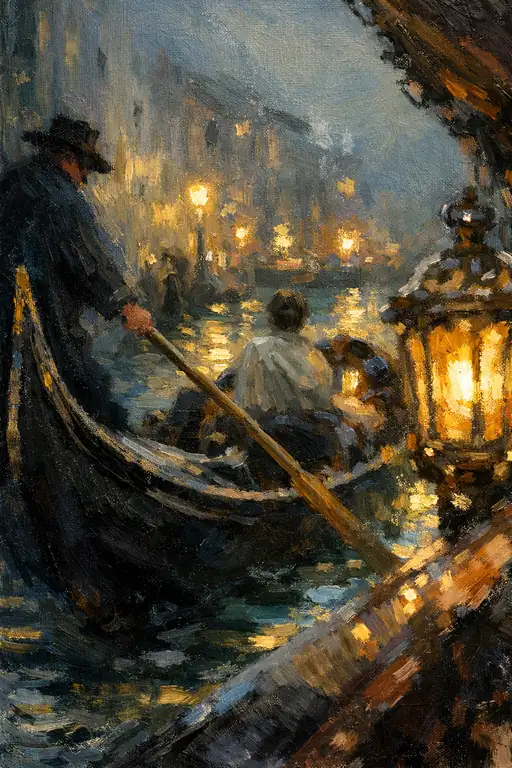 Nocturnal Serenity
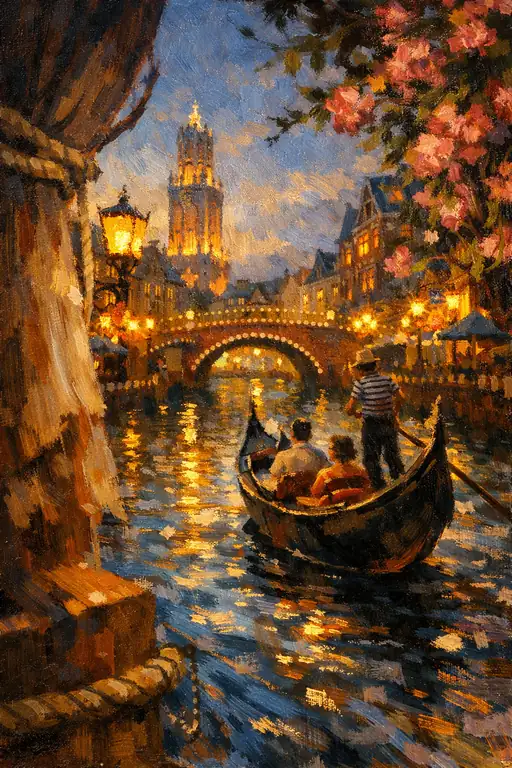 Golden Silhouettes in the Midnight Canal
 Twilight's Embrace on the Grand Canal
 Backwater Serenade
 The Timeless Arrangement
 Golden Harvest Dreams
 Golden Wake at the Fading of the Venetian Sun
 Light Through the Cave