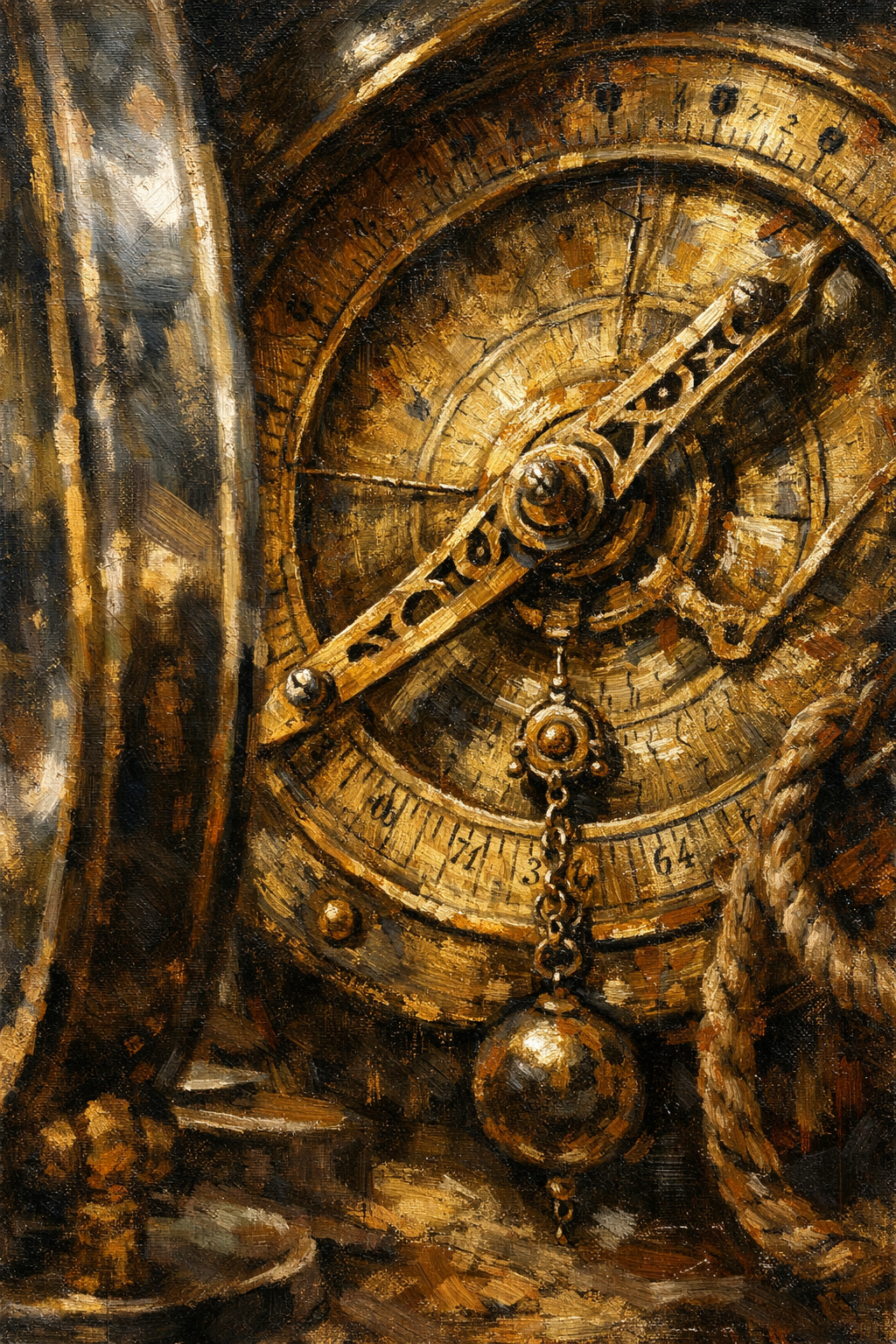
Clockwork Dreams of the Starlit Navigators
Critique
Introduction The work is a detailed still-life oil painting that focuses on the intricate components of a complex, antique metallic instrument. It emphasizes the historical and mechanical aesthetics of the object, which is presented through a dramatic and highly focused close-up view. The painting celebrates the intersection of functional design and artistic representation, drawing the viewer into a world of early scientific exploration and craftsmanship. Description The central subject is a circular device constructed from weathered brass or gold-toned metal, featuring multiple nested dials, scales with inscribed numerals, and a rotating pointer. A heavy metallic weight or pendulum hangs from a delicate chain directly below the main dial, adding a sense of gravitational presence. To the left, a portion of a larger curved structure is visible, while a thick, weathered rope enters the frame from the right, suggesting a nautical or laboratory setting. Analysis The composition utilizes radial lines centered on the instrument's pivot, which creates a strong sense of precision and visual balance. The lighting is theatrical and directional, with a primary light source from the upper left that generates brilliant highlights on the metallic edges and leaves other areas in deep, rich shadow. The brushwork is expressive yet deliberate, employing short and textured strokes to simulate the varying reflective qualities and the aged patina of the metal surfaces. Interpretation and Evaluation This painting masterfully captures the tactile qualities of diverse materials, from the cold glint of polished metal to the rough fibers of the frayed rope. It successfully conveys a sense of intellectual curiosity and the silent passage of time through the depiction of worn, historical equipment. The artist's control over the warm, monochromatic golden palette and the dramatic use of chiaroscuro elevates the mechanical object to a subject of significant aesthetic value. Conclusion The work transforms a technical and utilitarian instrument into a profound object of visual contemplation and artistic beauty. The viewer's initial curiosity regarding the specific function of the device is eventually replaced by an admiration for its intricate craftsmanship and the artist's ability to manipulate light. It remains an evocative piece that effectively bridges the gap between scientific inquiry and artistic observation through its meticulous and sensitive rendering.
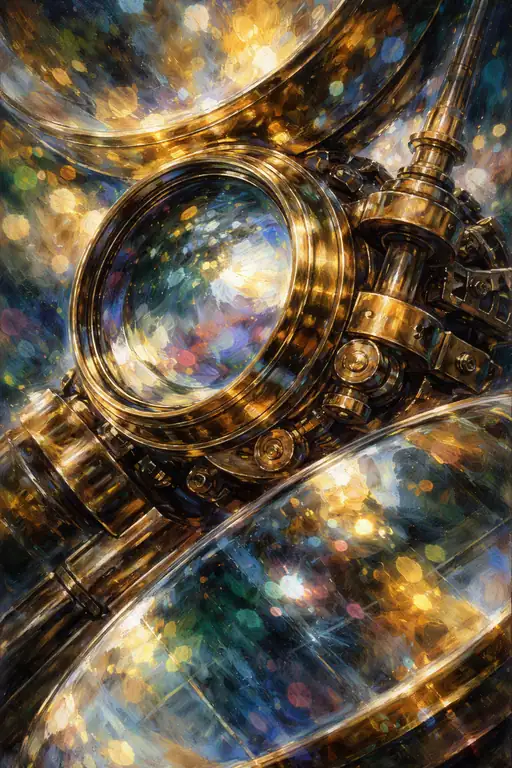 The Clockwork Gaze of Eternity
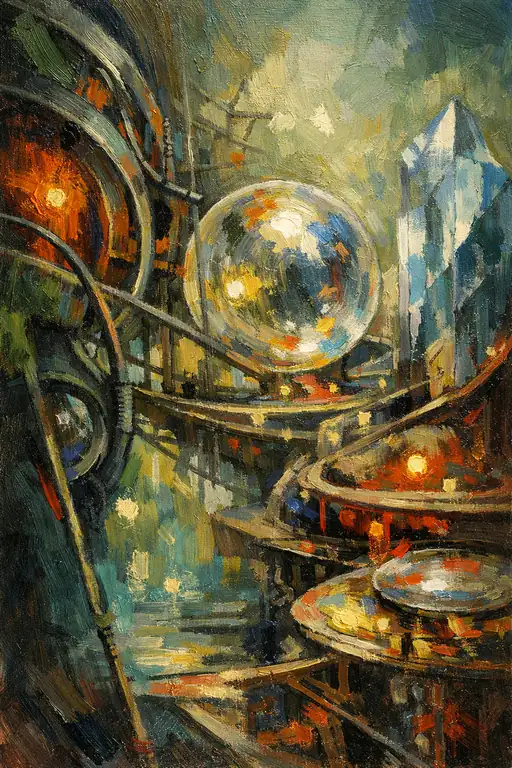 Symphony of the Crystal Spheres
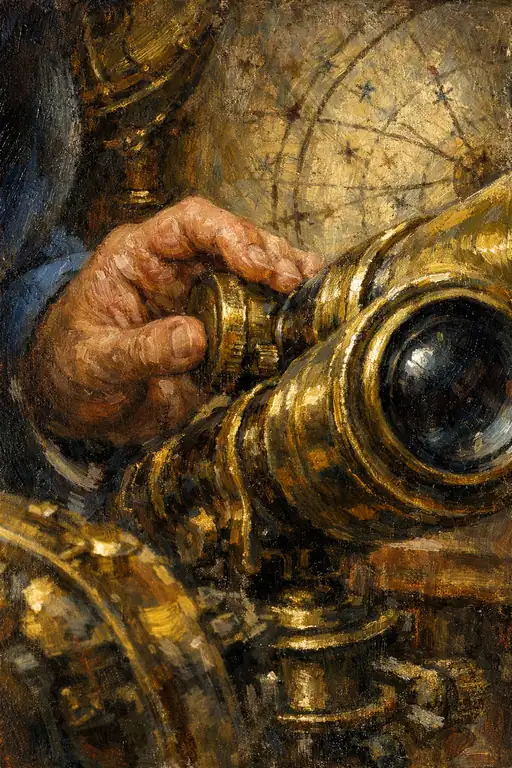 Guiding the Heavens: The Touch of Discovery
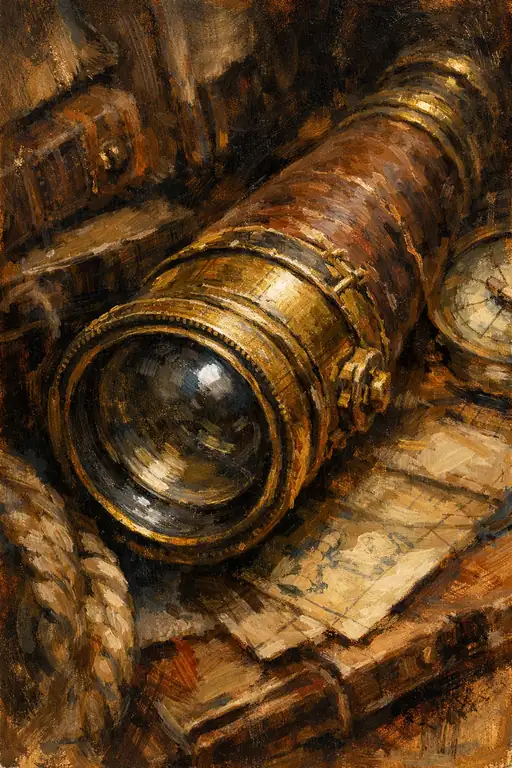 Echoes of the Uncharted Sea
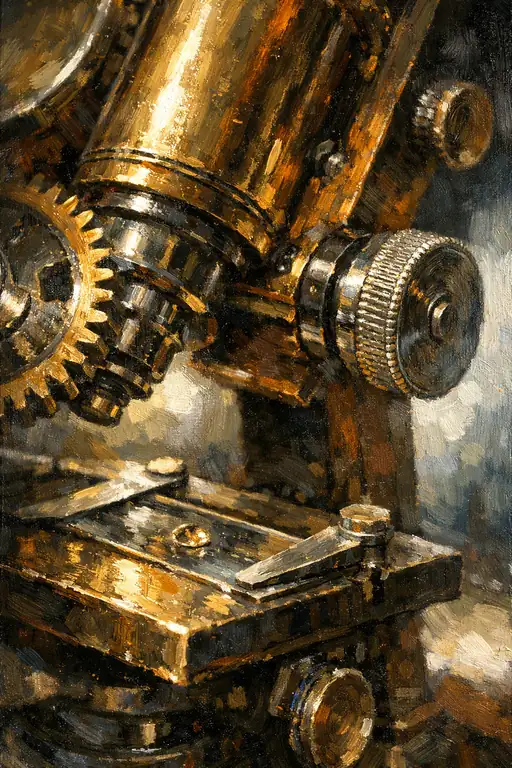 Gears of Forgotten Truths
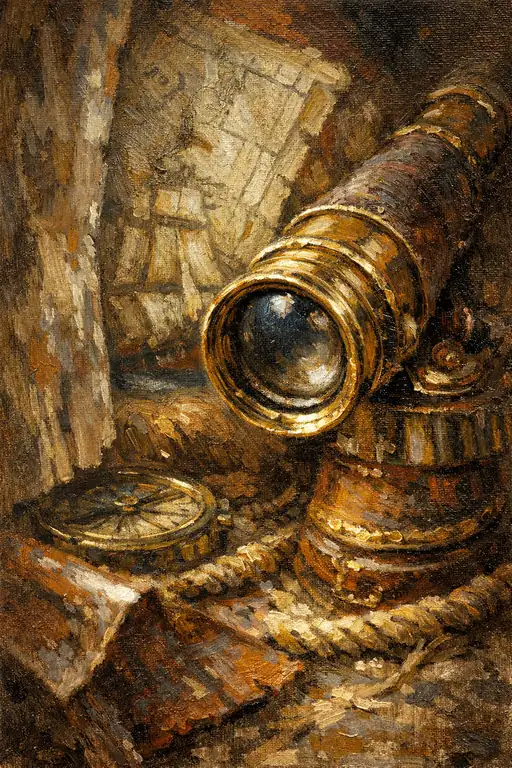 Voyage Through Amber Dust
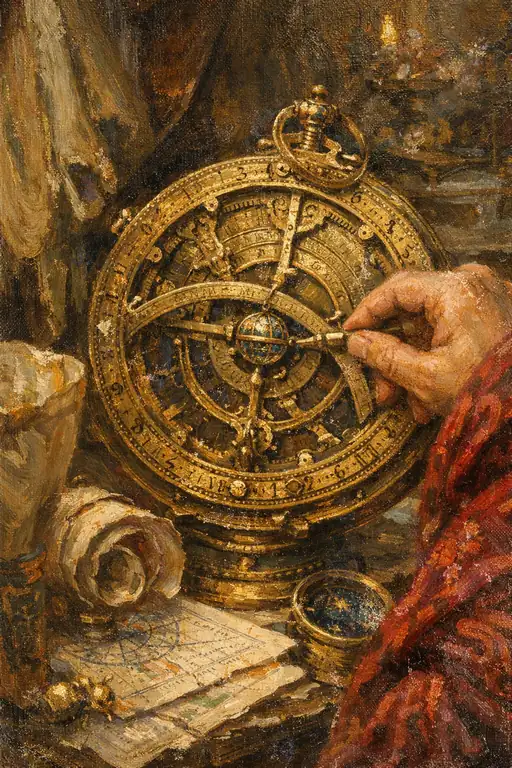 Grasping the Celestial Mysteries
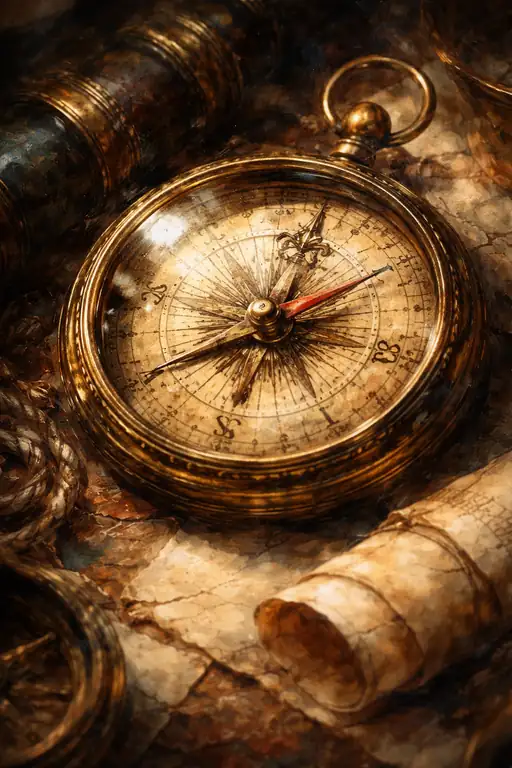 The Compass that Knows My Heart's Direction
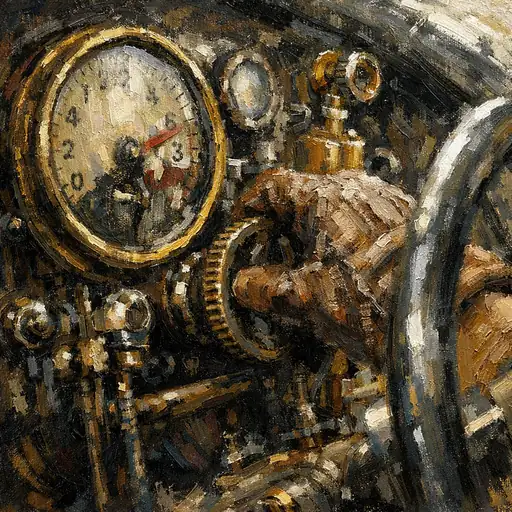 The Heartbeat of Iron
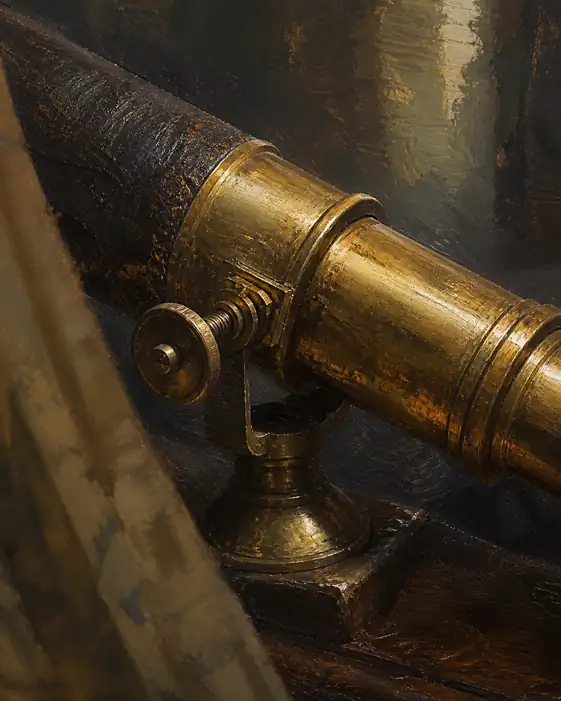 Echoes of an Endless Horizon
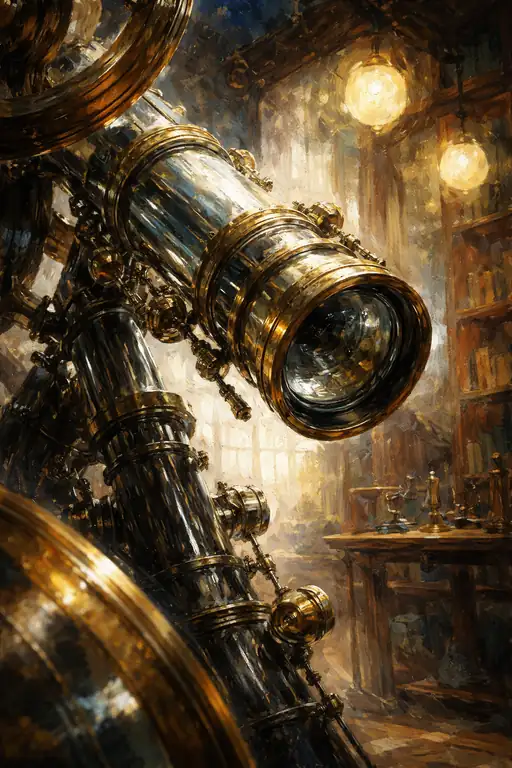 The Scholar's Cosmos
 Reaching for the Horizon