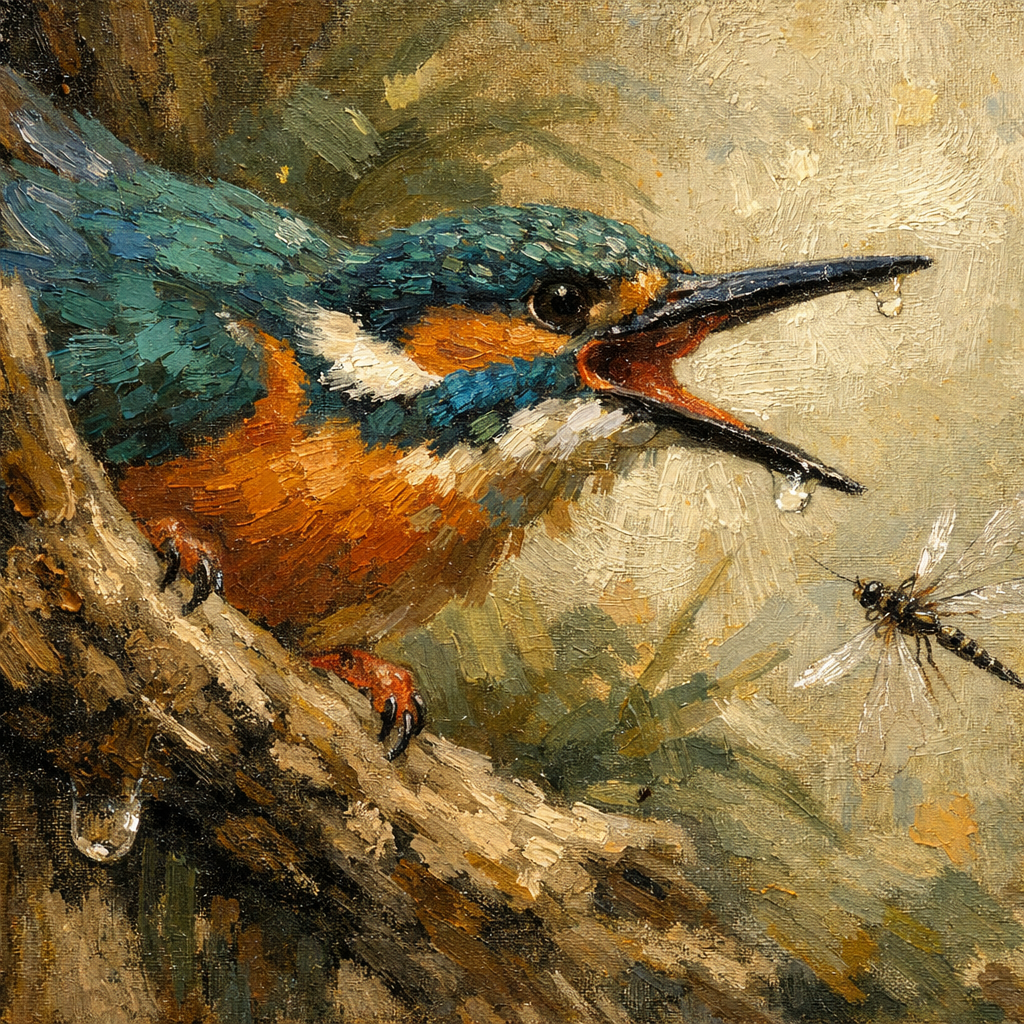
Solitude of the Winter Moon
Critique
1. Introduction This oil painting captures a dynamic and fleeting moment in the life of a kingfisher. The work focuses on the intense energy of the natural world, depicting the bird in a dramatic pose as it interacts with its environment. Through a combination of bold texture and careful attention to detail, the painting brings a sense of immediacy and life to its avian subject, inviting the viewer into a high-stakes moment of natural behavior. 2. Description The kingfisher is positioned on the left, perched on a rough, mossy branch. Its beak is wide open, with crystal-clear water droplets clinging to the tips, suggesting a recent dive. In the lower right corner, a winged insect is depicted in mid-flight, creating a narrative of predator and prey. The bird’s plumage is a rich tapestry of teal, white, and burnt orange, rendered with thick, expressive strokes. The background is a soft blend of neutral greens and browns, allowing the central action to stand out. 3. Analysis The artist uses a heavy impasto technique to emphasize the ruggedness of the branch and the layered quality of the bird's feathers. This physical texture contrasts beautifully with the delicate, translucent rendering of the water droplets and the insect’s wings. The composition is built around a strong diagonal formed by the bird’s body and beak, which points directly toward the flying insect. Light is used to highlight the moisture on the beak and the bird’s sharp eye, adding a layer of realism to the expressive painterly style. 4. Interpretation and Evaluation This work can be interpreted as a study of the precision and raw vitality inherent in nature. The technical mastery is evident in the artist's ability to convey movement and tension within a still image. By capturing the kingfisher at the exact moment of an open-beak cry or hunt, the artist elevates a common natural occurrence into a dramatic event. The choice to include small details like water droplets adds a level of sophistication that balances the broader, more gestural brushwork. The painting is an excellent example of capturing animal behavior with emotional resonance. 5. Conclusion In conclusion, the painting is a vibrant celebration of life’s smaller, yet no less dramatic, interactions. While the initial impression is one of movement and color, the viewer is soon drawn to the intricate details that suggest a larger story. The work stands as a testament to the artist's ability to fuse energetic, textured application with moments of acute observation, resulting in a compelling and memorable portrayal of the natural world.
Same Subcategory
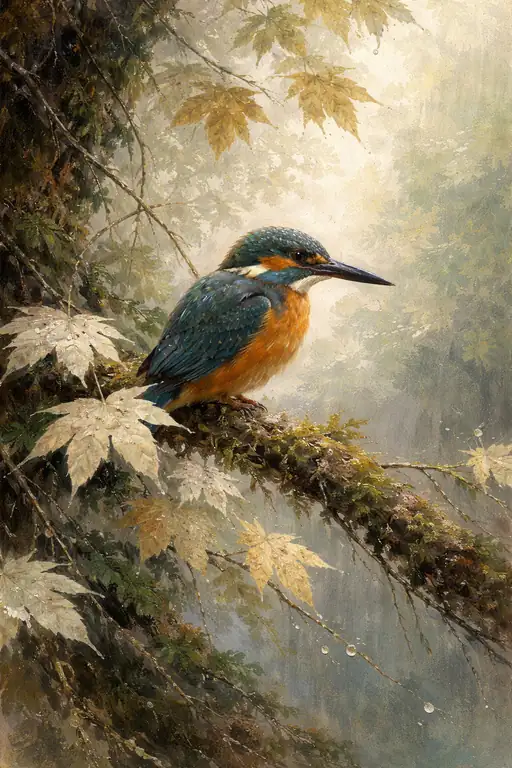 The Silent Kingfisher's Gaze
Similar Artworks
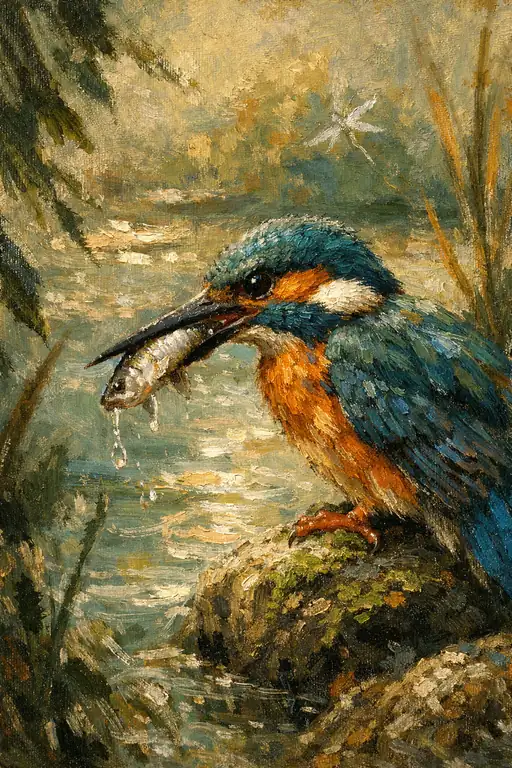 The Thrill of the Hunt Painted in Flashes of Teal and Gold
 The Sapphire Guardian of the Stream
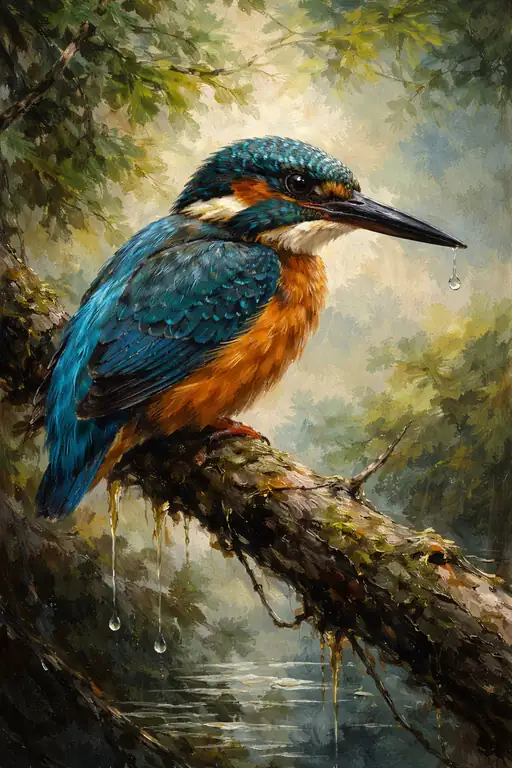 A Splash of Sapphire in Stillness
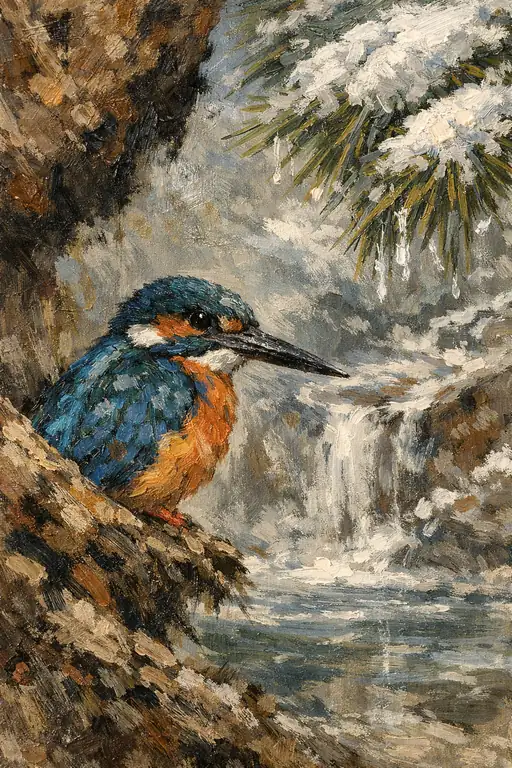 Song of the Raging Sea
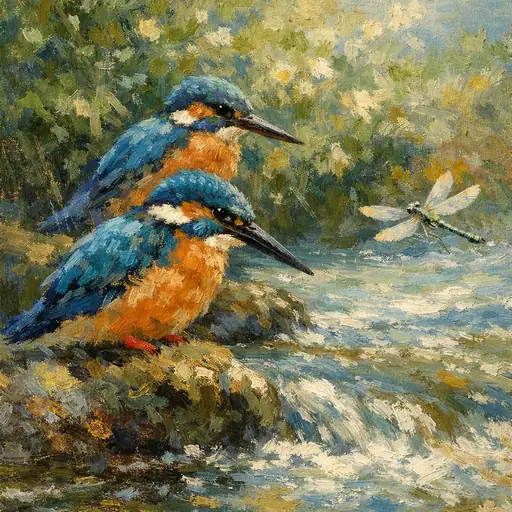 Whispers of the Rushing Stream
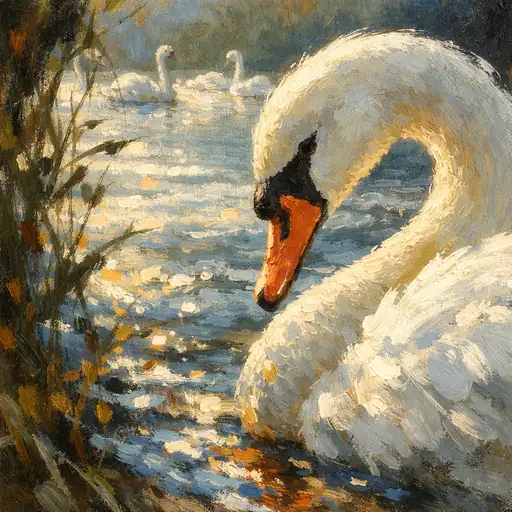 Golden Grace on the Lake
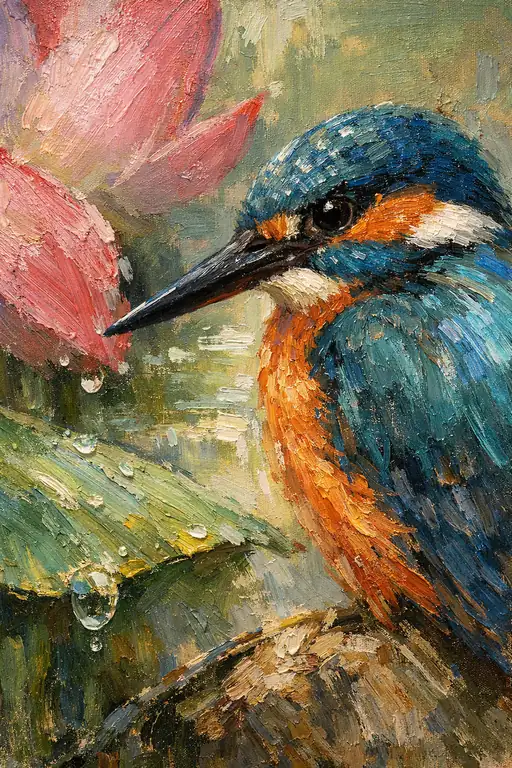 A Fleeting Radiance by the Lotus
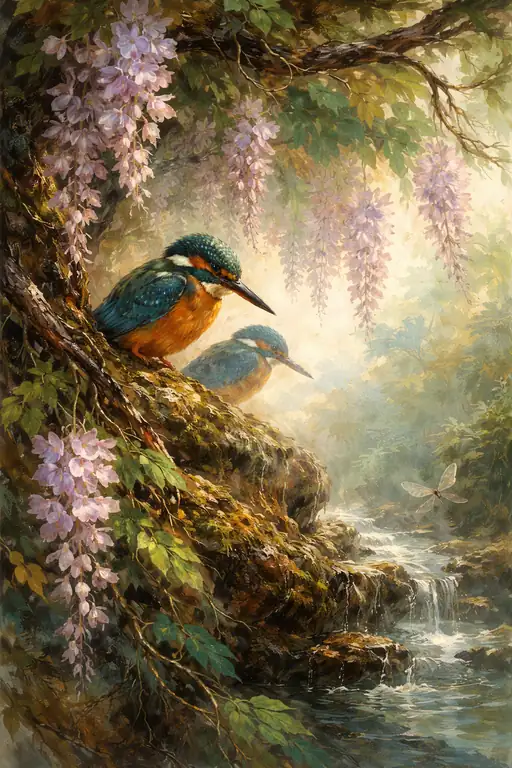 Love's Dance Beneath the Wisteria
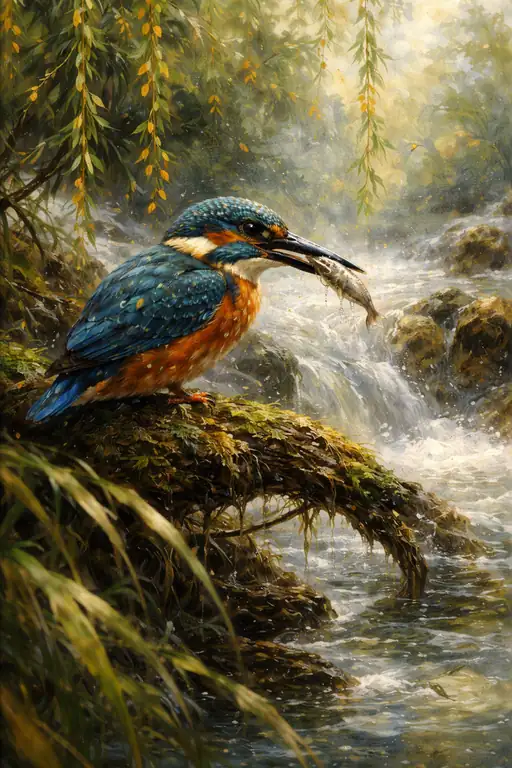 Triumph of the Sapphire Kingfisher
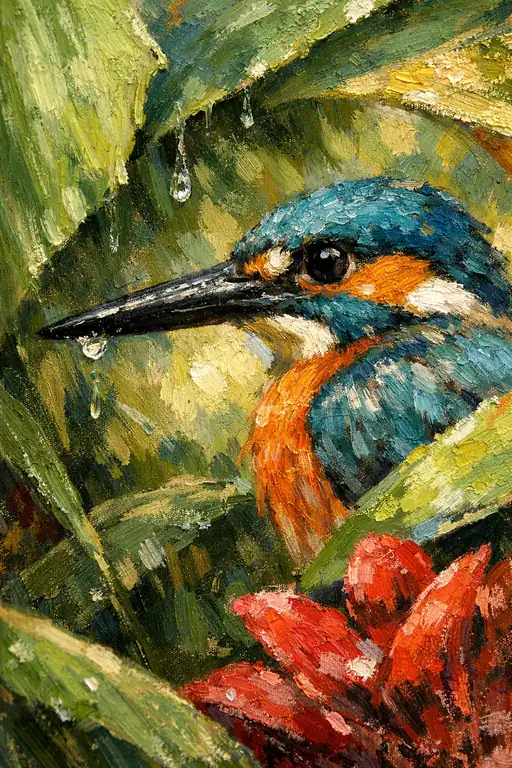 Jewel in the Downpour